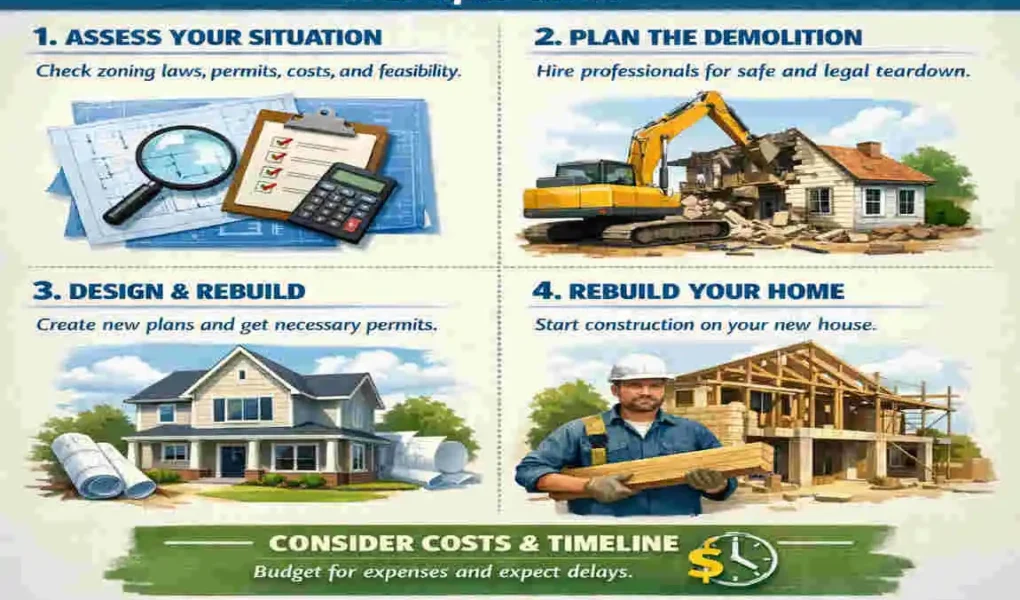
Can I demolish my house and rebuild? Yes, in many cases you can, but it is not usually as simple as tearing it down and starting over. You must check local rules, permits, zoning laws, property restrictions, utility connections, and the total cost before you begin.
Many homeowners choose this path when the old home needs major repairs, the layout no longer works, or they want a modern home built for their current lifestyle. Rebuilding can be a smart move, but it takes planning.
Can I Demolish My House and Rebuild?
Yes, But You Usually Need Approval
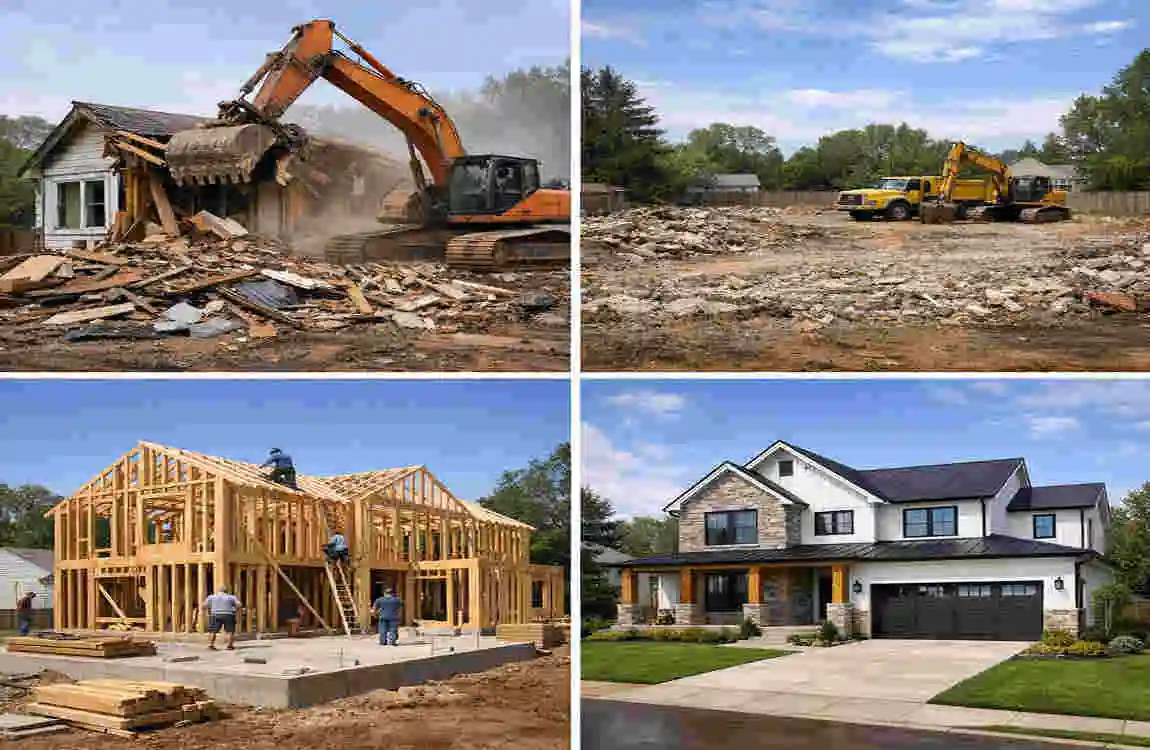
In most places, you cannot just knock down a house without permission. You may need a demolition permit before work starts, and you will also need building permits for the new home.
Local authorities want to ensure the project complies with safety rules, zoning laws, and land-use requirements. This helps prevent problems with neighbors, utilities, and public safety.
If you skip this step, you could face delays, fines, or even be forced to stop the project.
Check Your Property’s Zoning Rules
Zoning rules tell you what you can build on your land. They may control:
- Lot size
- Setbacks from property lines
- Building height
- Maximum floor area
- Property use
- Historic or conservation limits
This matters because your new house may not be allowed to be larger, taller, or differently shaped than the old one. So before you make plans, check what your land legally allows.
Check for Easements and Property Restrictions
Even if zoning looks fine, there may be other limits on your property.
These can include:
- Utility easements
- HOA rules
- Deed restrictions
- Shared access areas
- Other legal agreements
An easement may let a utility company access part of your land. A homeowners association may also have design rules. These restrictions can affect where you build and how you rebuild.
Why Demolish and Rebuild Instead of Renovating?
The Existing House Needs Major Repairs
Sometimes a house has too many serious problems to make renovation worth it. Common issues include:
- Structural damage
- Foundation problems
- Heavy water damage
- Old electrical systems
- Outdated plumbing
If repairs are large and expensive, starting fresh may be easier and better in the long run.
You Want a Completely New Layout
Rebuilding gives you the chance to design a home that better fits your life. You can create:
- Open floor plans
- More bedrooms or bathrooms
- Brighter living spaces
- Energy-efficient features
- Better storage and flow
If your current house feels cramped or awkward, a rebuild can solve those problems in one project.
Rebuilding May Offer Better Long-Term Value
A new home often means less maintenance, better energy efficiency, and modern construction standards. That can save money over time.
You also get a home that uses the lot more effectively. For many homeowners, that long-term value can make rebuilding worth the effort.
What Should I Check Before Demolishing My House?
Review Local Building Regulations
Before you make any decision, speak with your local planning or building department. They can tell you:
- What permits you need
- What size home you can build
- Whether demolition is allowed
- Whether extra approvals are required
This step helps you avoid expensive mistakes later.
Get a Professional Property Assessment
A professional inspection helps you understand what you are working with. You may need:
- Structural inspection
- Land survey
- Soil or foundation check
- Utility review
This is important because the land may have hidden issues that affect the rebuild.
Check Utility Connections
You must plan for all utility services before demolition and rebuilding.
Common utilities include:
- Electricity
- Gas
- Water
- Sewer
- Internet and telecommunications
These services usually need to be safely disconnected before demolition and reconnected during the rebuild.
Look for Hazardous Materials
Older homes may contain harmful materials that need special handling. These can include:
- Asbestos
- Lead-based materials
- Mold
- Other hazardous building products
If these materials are present, they must be removed safely by trained professionals. This can affect both cost and timeline.
How Much Does It Cost to Demolish and Rebuild a House?
Costs vary a lot depending on location, house size, site conditions, materials, labor, permits, and finishes. A small house in one area may cost far less than a large custom home in another.
Expense What It May Include
Demolition Labor, equipment, debris removal
Permits Demolition and construction approvals
Site preparation Clearing, grading, excavation
Design Architect, engineer, plans
Construction Labor and building materials
Utilities New or upgraded connections
Landscaping Driveway, yard, fencing, planting
Contingency Unexpected project costs
Demolition Costs
Demolition costs depend on the size of the house and how hard it is to remove. Costs may rise if:
- The site is hard to access
- The structure is large or complex
- Hazardous materials are present
- A lot of debris must be hauled away
New Construction Costs
The cost of building the new home depends on the design and level of finish.
- Basic construction is simpler and more affordable
- Mid-range construction includes better materials and more features
- High-end construction can cost much more because of custom details
Local labor and material prices also matter a lot.
Don’t Forget Soft Costs
Soft costs are the non-building expenses that people often forget. These may include:
- Architectural fees
- Engineering
- Surveys
- Permits
- Inspections
- Financing charges
- Temporary housing
These costs can add up quickly, so they should be included in your budget from the start.
Step-by-Step Process to Demolish and Rebuild a House
Research Local Requirements
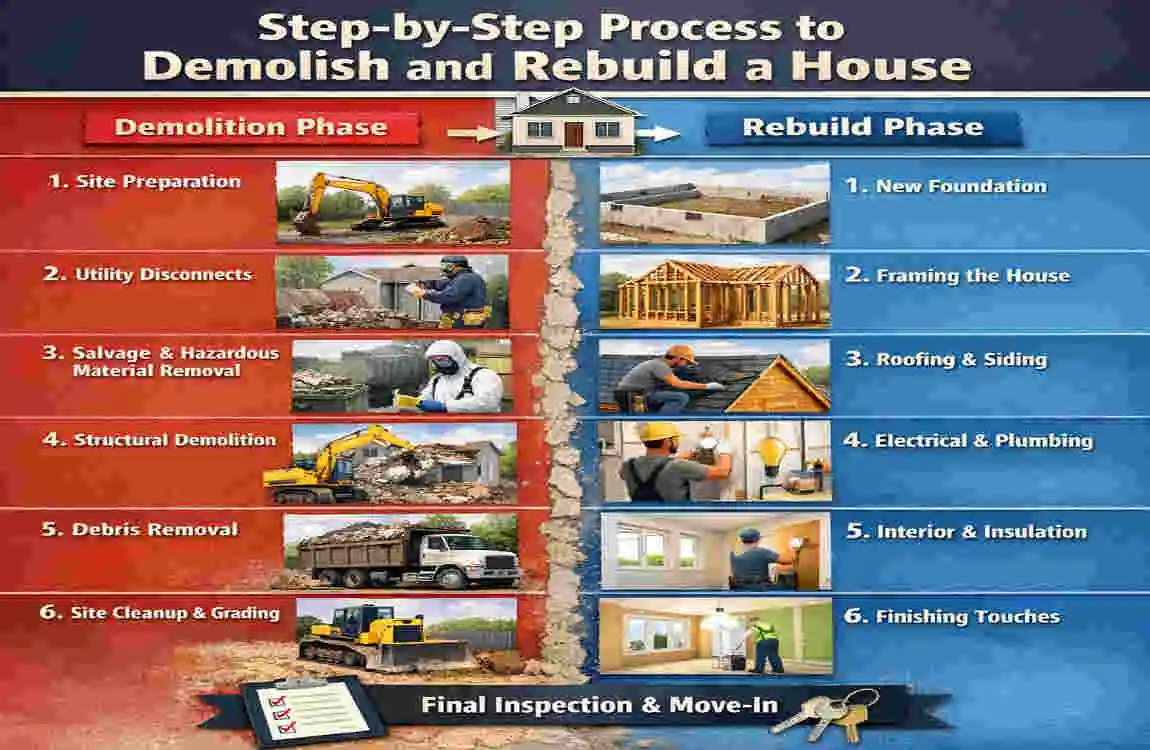
Start by checking zoning rules, permits, and rebuilding limits. This gives you a clear picture of what is possible.
Decide If Rebuilding Is Financially Smart
Compare the cost of demolition plus new construction with the cost of renovation. Sometimes rebuilding makes more sense. Other times, renovation is the better deal.
Create Your New House Plan
Work with a professional to design the new home. You will need plans for layout, structure, and major systems.
Apply for Required Permits
Get all required approvals before work begins. This usually includes demolition and construction permits.
Disconnect Utilities
Arrange safe shutoff for water, gas, electricity, and other services before demolition starts.
Demolish the Existing House
Hire a qualified demolition contractor. They will follow safety rules and handle debris removal properly.
Prepare the Building Site
After demolition, the land must be cleared and ready for construction. This may include:
- Removing leftover debris
- Grading the land
- Preparing the foundation area
- Checking utility routes
Build the New House
Construction usually moves through stages such as foundation, framing, roofing, plumbing, electrical, insulation, drywall, and finishes.
Complete Inspections
Inspectors may need to check the work at different stages. Final approval is usually required before you can move in.
Can I Keep the Same Foundation When Rebuilding?
Sometimes yes, but not always. A foundation may only be reused if it is still in good condition and meets current code requirements.
A professional should check:
- Foundation strength
- Soil conditions
- Structural design
- Building-code compliance
In many cases, using the old foundation may not be safe or practical. It depends on the condition of the structure and the design of the new home.
Demolish and Rebuild vs. Renovate
FactorDemolish & RebuildRenovate
Design freedom High Limited by existing structure
Construction time Usually longer Often shorter
Upfront cost Can be higher May be lower
Structural issues Start fresh Old problems may remain
Energy efficiency Easier to optimize Depends on current home
Customization Extensive Moderate to high
When Rebuilding May Make More Sense
Rebuilding is often a better choice when:
- The home has serious structural damage
- The layout does not work anymore
- You want a fully customized design
- The house needs major modernization
When Renovation May Be Better
Renovation may be the smarter option when:
- The structure is still strong
- Your budget is limited
- You want to keep original features
- Only part of the home needs work
Common Mistakes to Avoid
Here are some mistakes that can cause delays and extra costs:
- Demolishing before getting approvals
- Underestimating the full budget
- Ignoring zoning or setback rules
- Forgetting utility disconnection
- Choosing the cheapest contractor only
- Skipping a contingency fund
- Starting without final plans
- Not planning for temporary housing
A little planning now can save a lot of stress later.
How Long Does It Take to Demolish and Rebuild a House?
The timeline depends on project size, location, permits, weather, and contractor availability.
A typical rebuild may include:
- Planning and design
- Permitting
- Utility disconnection
- Demolition
- Site preparation
- Construction
- Inspections
- Final approval
Some projects move quickly, while others take many months. Custom homes usually take longer than simple rebuilds.
Is Demolishing and Rebuilding Worth It?

It can be worth it if your current home is outdated, damaged, or poorly designed. It may also be a smart choice if the land itself is valuable and you want to maximize its use.
Before deciding, think about:
- The condition of the current house
- The value of the land
- Renovation costs
- Rebuilding costs
- Your ideal home design
- Your long-term plans
- Available financing
- Local property values
The cheapest option is not always the best option. Sometimes rebuilding offers greater comfort, lower upkeep, and stronger long-term value.
Tips for Planning a Successful Rebuild
- Set a realistic budget
- Hire qualified professionals
- Check local rules early
- Keep extra money for surprises
- Choose durable materials
- Plan the layout before building starts
- Get multiple contractor estimates
- Include energy-saving features
- Allow extra time for delays
These simple steps can make the process smoother and less stressful.
Frequently Asked Questions
Can I demolish my house and rebuild on the same lot?
Yes, in many cases you can. However, you must first check zoning rules, permits, setbacks, building codes, and property restrictions.
Do I need permission to demolish my house?
Usually, yes. Most places require a demolition permit or some form of local approval.
Is it cheaper to demolish and rebuild or renovate?
It depends on the condition of the house, the size of the project, and local construction costs. Renovation may cost less upfront, but rebuilding can offer better long-term value.
Can I rebuild a bigger house after demolition?
Possibly, but only if the new design follows local rules for lot coverage, height, setbacks, and zoning.
Can I live in my house during demolition and rebuilding?
Usually, no. A full demolition and rebuild normally requires you to move out temporarily.
| Step | What to Know |
|---|---|
| Check Local Rules | Confirm zoning, building codes, and demolition requirements with your local authority. |
| Get Permits | You may need separate demolition and building permits before starting work. |
| Inspect the Property | Check the structure, utilities, soil, and possible hazardous materials before demolition. |
| Plan the New Home | Create architectural plans that meet current building and zoning requirements. |
| Check Utilities | Arrange for electricity, gas, water, and sewer services to be safely disconnected or relocated. |
| Estimate Costs | Budget for demolition, permits, design, construction, utility work, and unexpected expenses. |