If you have ever wondered what the average amperage of a house is, you are not alone. Many homeowners only think about electrical service when something starts tripping, flickering, or failing to work properly.
In simple terms, house amperage is the amount of electrical power your home’s main service can handle at one time. It affects how many appliances you can use, how safe your system is, and whether your home can support modern things like EV chargers, big HVAC units, and kitchen appliances.
What Is the Average Amperage of a House?
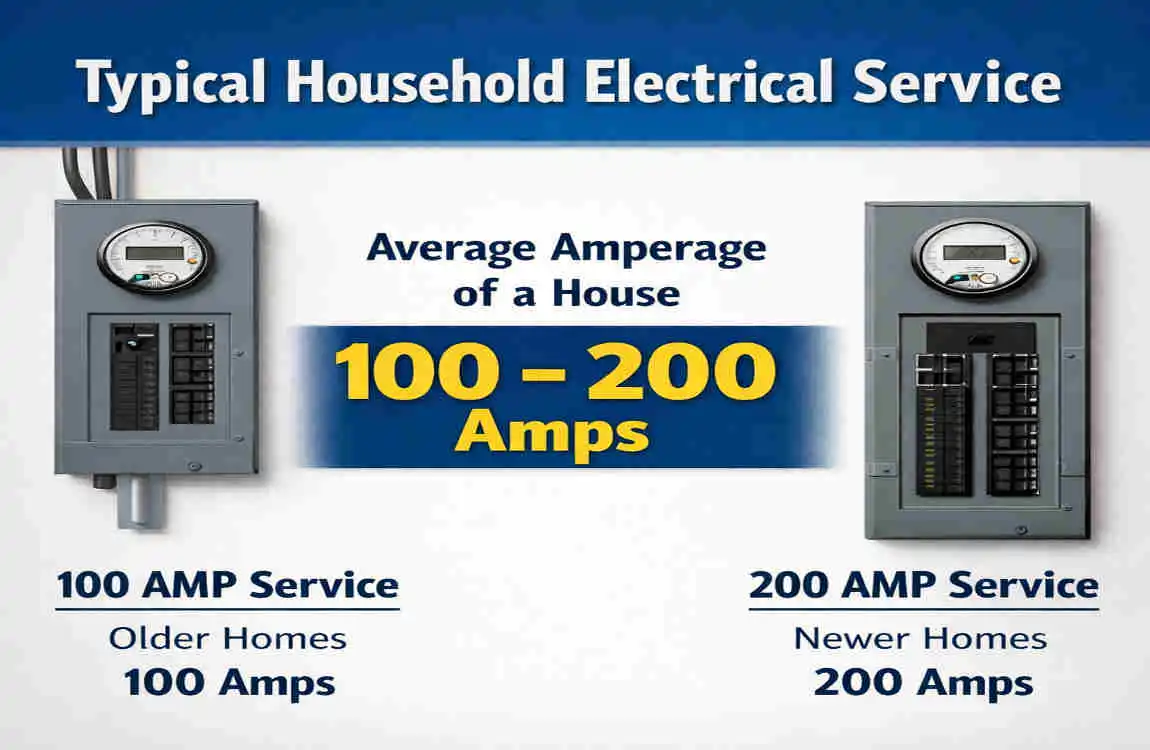
Definition of House Amperage
House amperage is the electrical service capacity for your home. It tells you how much current your electrical system can safely carry.
A simple way to think about it is this: amps are like the width of a pipe, volts are the pressure, and watts are the total power being used. The wider the electrical “pipe,” the more devices your home can run at once.
Average Amperage in Modern Homes
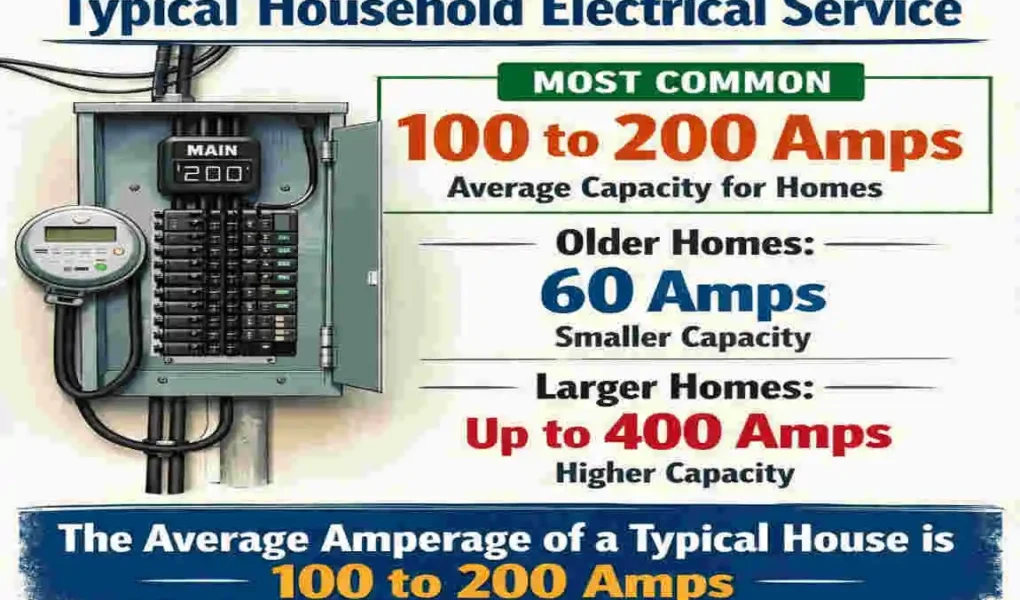
Most homes today use 200-amp service. That is the modern standard for many new houses and remodeled homes.
Here is a general breakdown:
- 100 amps: Common in older or smaller homes
- 150 amps: Often found in average family homes
- 200 amps: Most common in modern homes
- 400 amps: Usually used in large luxury homes or properties with heavy power use
If you are asking what the average amperage of a house is, the short answer is 200 amps for most modern homes.
Why House Amperage Is Important
Supports Electrical Safety
A properly sized electrical service helps keep your home safer. If the system is too small, it can become overloaded, causing breakers to trip frequently.
Powers Modern Appliances
Today’s homes use more electricity than homes from the past. Air conditioners, dryers, ovens, computers, and chargers all need a steady power supply.
Prevents Circuit Overloads
When too many things run at once on a weak system, problems can happen. A higher-capacity service helps reduce stress on the panel and wiring.
Increases Home Value
Buyers often prefer homes with a robust electrical system. A modern panel can make a property more attractive, especially if upgrades are planned.
Common Residential Electrical Service Sizes
Service SizeSuitable ForTypical Home Size
60 Amps Older homes Small houses
100 Amps Basic households Small to medium homes
150 Amps Average family homes Medium homes
200 Amps Modern homes Medium to large homes
400 Amps Luxury properties Large custom homes
How to Determine Your Home’s Amperage
Check the Main Breaker
Look at your main breaker inside the electrical panel. The number printed on it often shows the service size, such as 100 or 200 amps.
Read the Electrical Panel Label
Many panels have a label or stamp that lists the total rating. This can be found on the panel door or inside the box.
Review Home Inspection Reports
If you bought the home recently, the inspection report may already list the electrical service size.
Ask a Licensed Electrician
If you are unsure, this is the safest option. A licensed electrician can confirm the service size and tell you whether it is enough for your needs.
Factors That Affect the Average Amperage of a House
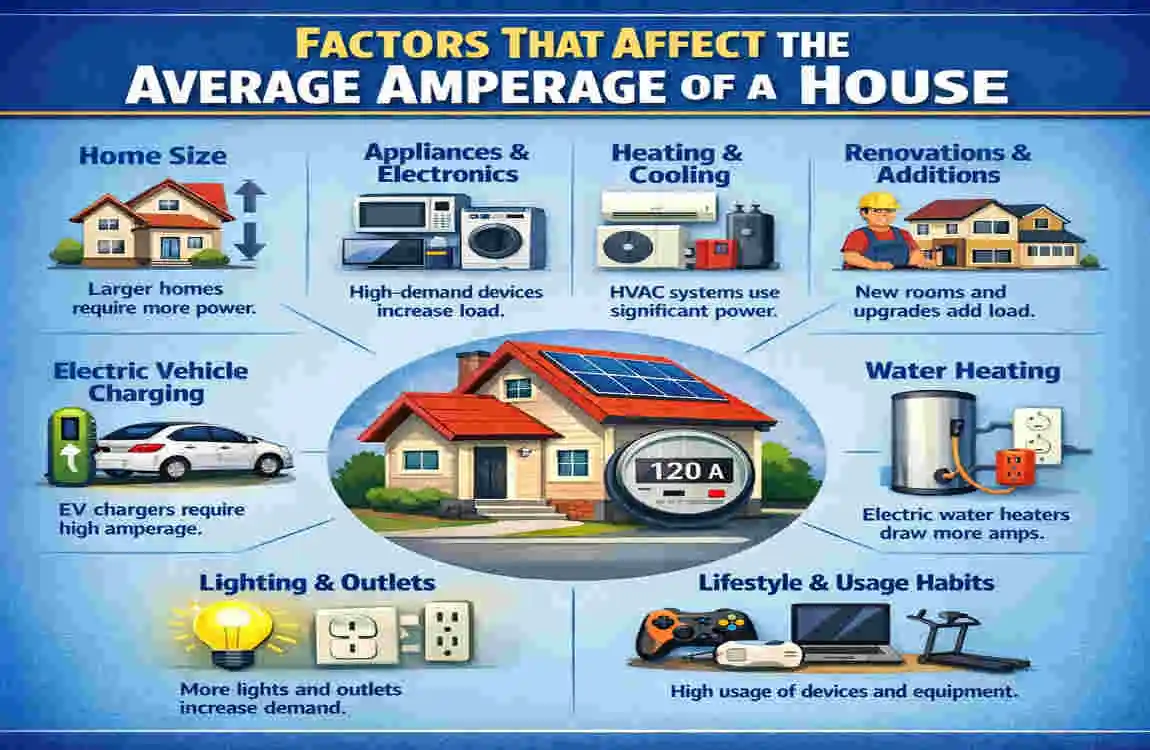
Home Size
Larger homes usually need more power because they often have more rooms, lights, and appliances.
Number of Occupants
More people often means more devices, more cooking, more laundry, and more electrical use.
Heating and Cooling Systems
HVAC systems can use a lot of power, especially central air conditioners and electric heating.
Electric Vehicle Chargers
EV chargers can draw a heavy load, so homes with these devices often benefit from 200 amps or more.
Smart Home Devices
Smart thermostats, lighting, cameras, and home systems may not use much power individually, but they add up.
Electric Water Heaters and Dryers
These appliances can use a large amount of electricity, especially when several run at the same time.
Is a 100-Amp Service Enough?
Homes That Can Use 100 Amps
A 100-amp panel can still work for some smaller homes with fewer appliances and lighter electricity use.
Limitations of 100-Amp Panels
The issue comes when the home has modern demands. A 100-amp system may feel tight if you run central air, electric heat, or several large appliances.
Signs You Need an Upgrade
If breakers trip often or you cannot add new circuits, your home may need more capacity.
Why 200-Amp Service Is the Modern Standard
Supports Today’s Appliances
A 200-amp system can handle most household needs more comfortably than smaller service sizes.
Future-Proofs Your Home
If you plan to add a hot tub, EV charger, workshop, or remodel, 200 amps gives you more room to grow.
Better for Home Additions
Room additions, finished basements, and new kitchen equipment can all increase electrical demand.
Handles High Electrical Demand
A modern home often has many devices running at once. A 200-amp service gives the system more flexibility.
Signs Your House Needs More Amperage
Frequently Tripped Breakers
If your breakers trip often, your home may be asking for more power than the system can provide.
Flickering Lights
Lights that dim or flicker when appliances start up can be a warning sign.
Burning Smell Near Panel
Any burning smell near the panel is a serious issue. You should contact an electrician right away.
Limited Space for New Circuits
If your panel is full and cannot accept more circuits, upgrading may be the best solution.
Installing EV Chargers or Solar Systems
These additions often require careful electrical planning and may require an increase in your service size.
How Much Power Does a Typical Home Use?
Daily Electricity Consumption
Most homes do not use full panel capacity all day. The service size shows the maximum the home can handle, not constant use.
Peak Electrical Demand
Peak demand happens when several things run together, like the oven, AC, and dryer at once. That is when service size matters most.
Appliances That Consume the Most Power
Some of the biggest power users include:
- Air conditioners
- Electric ovens
- Water heaters
- Clothes dryers
- EV chargers
Average Amperage Requirements for Common Appliances
Appliance Approximate Amps
Refrigerator 3–8 A
Microwave 10–15 A
Electric Oven 30–50 A
Clothes Dryer 20–30 A
Air Conditioner 15–60 A
Water Heater 20–30 A
EV Charger 30–60 A
Can You Upgrade Your Home’s Electrical Service?
When an Upgrade Is Recommended
You may need an upgrade if your current panel cannot safely support your daily use or plans.
Upgrade Process
The process usually includes replacing the panel, updating wiring if needed, and connecting the new service size to the utility supply.
Permit and Inspection Requirements
Most upgrades need permits and inspections. This helps make sure the work meets safety rules.
Typical Upgrade Costs
Costs vary by location and home condition, but many upgrades from 100 to 200 amps fall in the $1,500 to $4,000 range.
Tips to Manage Electrical Load Efficiently
Avoid Overloading Circuits
Try not to plug too many heavy appliances into the same circuit.
Use Energy-Efficient Appliances
Efficient appliances can lower demand and reduce stress on the system.
Schedule High-Power Appliances Wisely
Avoid running several big appliances at the same time if your system is limited.
Perform Regular Electrical Inspections
A routine inspection can catch problems early and help keep your home safe.
Common Myths About House Amperage
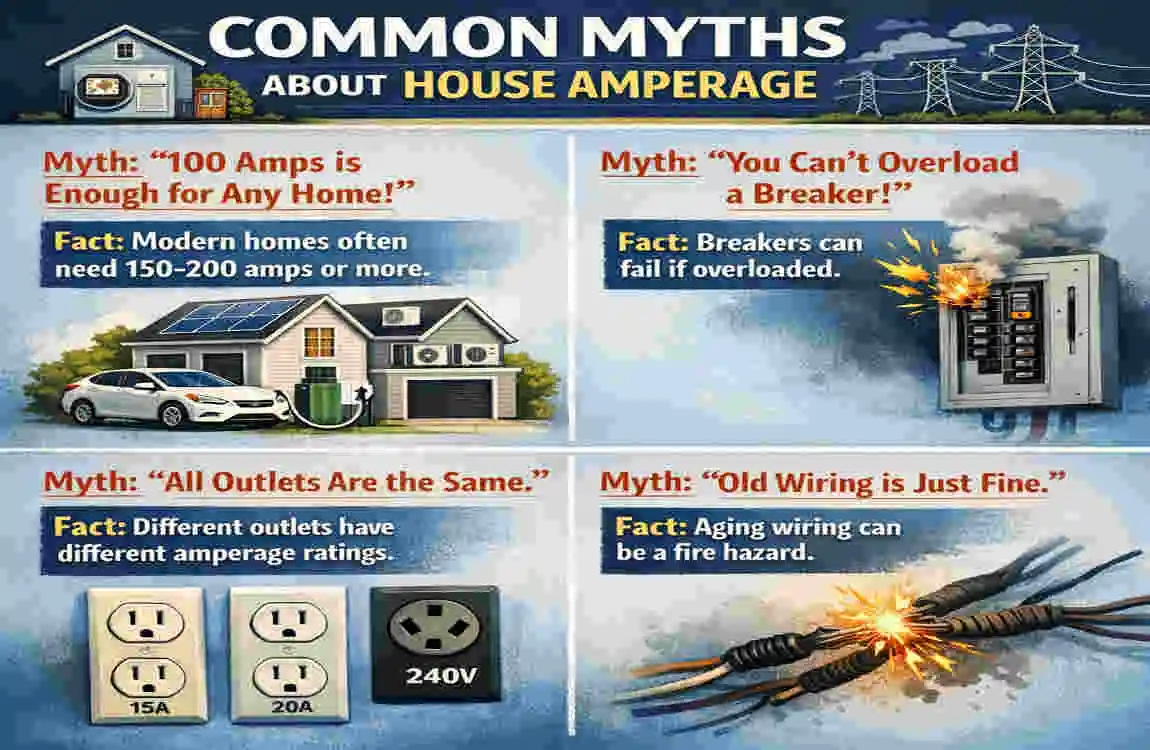
Bigger Panels Always Lower Electric Bills
This is false. A bigger panel gives you more capacity, but it does not automatically reduce bills.
Every Home Needs 400 Amps
Not true. Most homes do fine with 200 amps, and many smaller homes need less.
More Amps Mean More Electricity Usage
More amps mean more available capacity, not higher usage by itself.
Older Panels Are Always Unsafe
Older panels are not always unsafe, but they should be checked to make sure they are still in good condition.
Frequently Asked Questions
What is the average amperage of a house?
Most modern homes have 200-amp electrical service, while many older homes use 100 amps.
Is 100 amps enough for a house?
Yes, for some smaller homes, but larger homes or homes with many appliances often need more.
How do I know if my home has 100 or 200 amps?
Check the main breaker or panel label, or ask a licensed electrician.
Can I upgrade from 100 amps to 200 amps?
Yes. A licensed electrician can upgrade the service if your home and utility setup allow it.
Does a larger house require more amperage?
Usually yes, because larger homes often have more appliances and higher power demand.
How much does it cost to upgrade electrical service?
It often costs $1,500 to $4,000, depending on the home and local labor rates.
| Feature | Details |
|---|---|
| Average Residential Service | 200 amps (most modern homes) |
| Older Homes | 60–100 amps (common in homes built before the 1980s) |
| Small Homes/Apartments | Typically 100 amps is sufficient |
| Large Homes (2,500+ sq. ft.) | Usually 200–400 amps, depending on electrical demand |
| High-Power Homes | 400 amps may be needed for EV chargers, hot tubs, workshops, or multiple HVAC systems |
| Typical Voltage (U.S.) | 120/240 volts single-phase service |
| Common Main Breaker Sizes | 100A, 150A, 200A, 225A, and 400A |
| Signs You Need More Amperage | Frequent breaker trips, flickering lights, overloaded circuits, or adding major appliances |
| Best Choice for New Homes | 200-amp service provides capacity for modern appliances and future upgrades |
| How to Check Your Home’s Amperage | Look at the rating on the main circuit breaker inside the electrical panel. |