If you want to sell your home with confidence, you first need to understand how to value a mobile home correctly. Pricing it too high can scare buyers away. Pricing it too low can cost you real money.
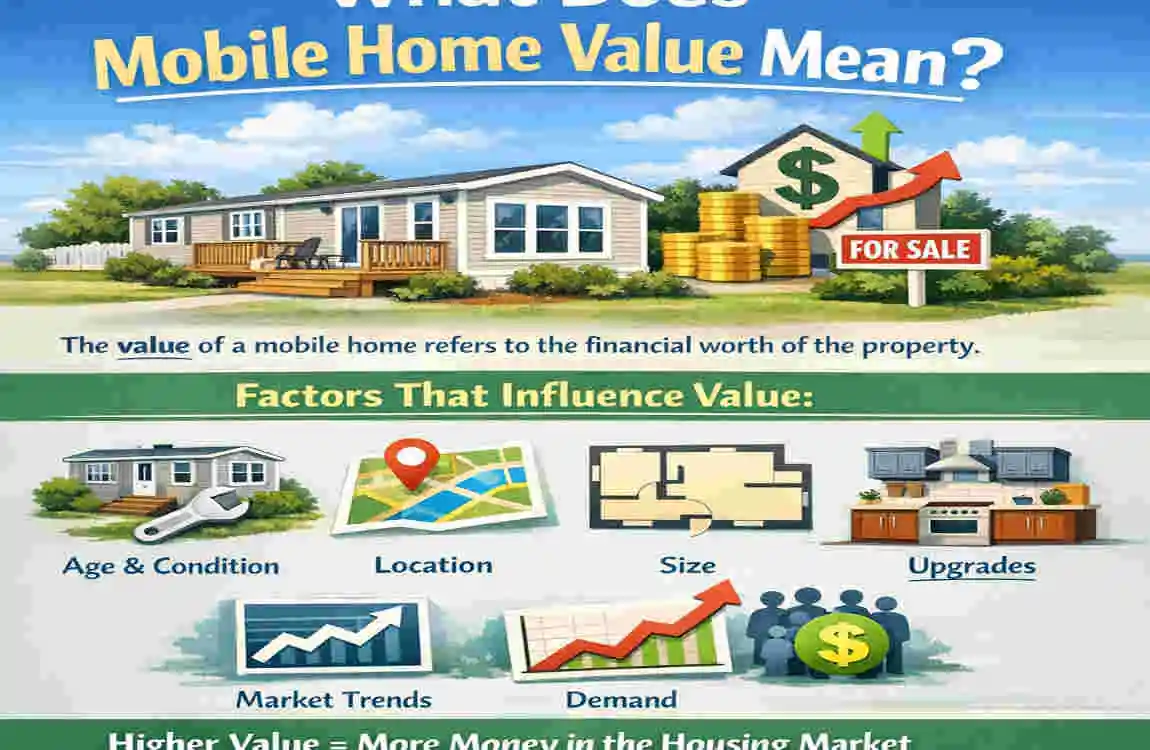
A mobile home is not valued the same way as a regular house, so it helps to look at the right factors from the start. Things like the home’s age, condition, size, upgrades, and location all matter. In some cases, whether you own the land can significantly affect the value.
What Does Mobile Home Value Mean?
Market Value vs. Assessed Value
When people talk about home value, they often mean different things. Market value is the price a buyer is likely to pay in the real world. It depends on demand, condition, location, and recent sales.
Assessed value is different. This is the number used by local tax authorities to calculate property taxes. It does not always match what a buyer would pay. In many cases, the assessed value is lower or based solely on tax records, not on current market conditions.
If you want to know how to value a mobile home for selling, focus mostly on market value. That is the number that matters most to buyers.
Why Mobile Homes Appreciate or Depreciate
Mobile homes do not always behave like traditional houses. Some hold value well, while others lose value faster over time.
A mobile home may appreciate if it is well-built, well-maintained, on owned land, and in a strong market. It may depreciate if it is older, poorly maintained, or located in an area with weak demand.
This is why you need to look at the whole picture, not just the age of the home.
Factors That Affect Mobile Home Value
Age of the Mobile Home
Age is one of the most important value factors. In general, newer homes tend to sell for more because they often need fewer repairs and meet newer building standards.
Older homes can still be valuable, but they may lose value if buyers expect expensive repairs or updates. If your mobile home is older, do not worry too fast. Good care, repairs, and upgrades can still make a big difference.
Size and Floor Plan
Bigger homes usually bring in more interest, especially if the layout feels practical. A home with two bathrooms, a roomy kitchen, and a good living area can often attract stronger offers.
The floor plan matters as much as square footage. A smart layout can make a smaller home feel larger and more useful. Buyers often pay more for a home that feels easy to live in.
Overall Condition
Condition plays a major role in pricing. Buyers pay attention to things they can see right away, like walls, floors, windows, roof condition, and plumbing.
A clean, solid home with few issues will usually sell faster and at a better price than a home that needs major work. Even small problems can affect buyer confidence.
Location and Neighborhood
Where the mobile home sits can significantly affect its value. A home in a safe, clean, and convenient area usually has more appeal than one in a less desirable location.
If the mobile home is in a park, the park’s reputation matters too. Good management, neat surroundings, and useful amenities can support a higher price.
Land Ownership vs. Leased Lot
This is a very important point. If you own the land under the mobile home, that usually adds more value. Buyers often like the control and long-term stability that comes with land ownership.
If the home sits on a leased lot, the value may be lower because the buyer also has to pay monthly lot rent. That extra cost can affect what buyers are willing to offer.
Home Upgrades and Renovations
Upgrades can improve value if they are practical and appealing. Things like new flooring, updated cabinets, modern lighting, or a remodeled bathroom can help your home stand out.
Not every upgrade gives the same return. Simple, clean, modern improvements often work better than expensive custom choices that may not suit every buyer.
Energy Efficiency Features
Energy-saving features are becoming more important to buyers. Good insulation, double-pane windows, energy-efficient appliances, and a reliable heating or cooling system can make the home more attractive.
These features can also help the buyer save money later, which makes your asking price easier to justify.
Local Market Demand
Even a well-kept home will struggle if there are not many buyers in the area. Local demand affects value significantly.
If mobile homes are selling quickly nearby, you may be able to price yours a little higher. If the market is slow, you may need a more competitive price to attract attention.
How to Value Mobile Home Step by Step
Gather Basic Property Information
Start by collecting all the basic details about the home. You will want to know:
- Year built
- Size in square feet
- Number of bedrooms and bathrooms
- Type of foundation
- Whether the land is included
- Major upgrades or repairs
- Current condition
This information gives you a clear starting point for accurately valuing a mobile home.
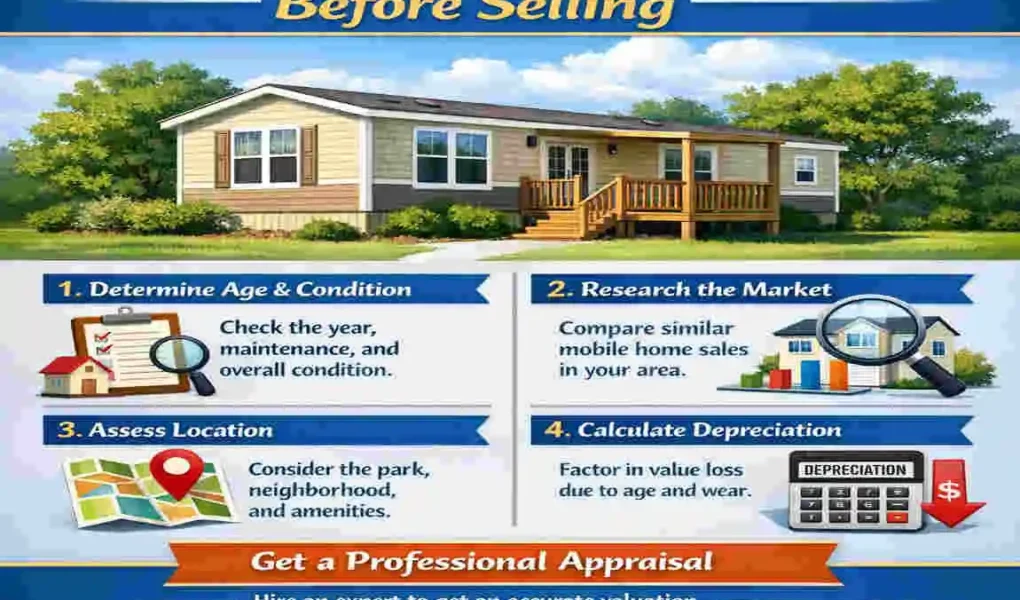
Check Comparable Mobile Home Sales
Next, look at similar homes that have sold recently in your area. These are often called comps. Try to find homes that are close in size, age, condition, and location.
Recent sales matter more than old listings. A home that sold last month gives a much better idea of current demand than one that sat on the market for a year.
Estimate Current Market Trends
You should also consider the broader market. Are homes selling fast right now? Are prices rising or falling? Is demand strong in your area?
Even a beautiful home can lose value if the market is soft. On the other hand, a strong market can help your home sell for more.
Calculate Replacement Cost
The replacement cost is the cost to build a similar mobile home today. This can help you understand a baseline value, especially for newer homes.
It is not the only factor, but it gives useful context. If replacement cost is much higher than your asking price, your home may be a good deal.
Consider Depreciation
Depreciation means the home loses value over time. Like a car, many mobile homes decline in value as they age, especially if they are not updated.
Still, depreciation is not the whole story. Good maintenance, land ownership, and strong local demand can soften the effect.
Compare with Online Valuation Tools
Online tools can give you a quick estimate, but they should not be your only source. They often miss details like upgrades, land value, and local demand.
Use them as a starting point, then compare the results with real sales data and your home’s actual condition.
Different Methods to Value a Mobile Home
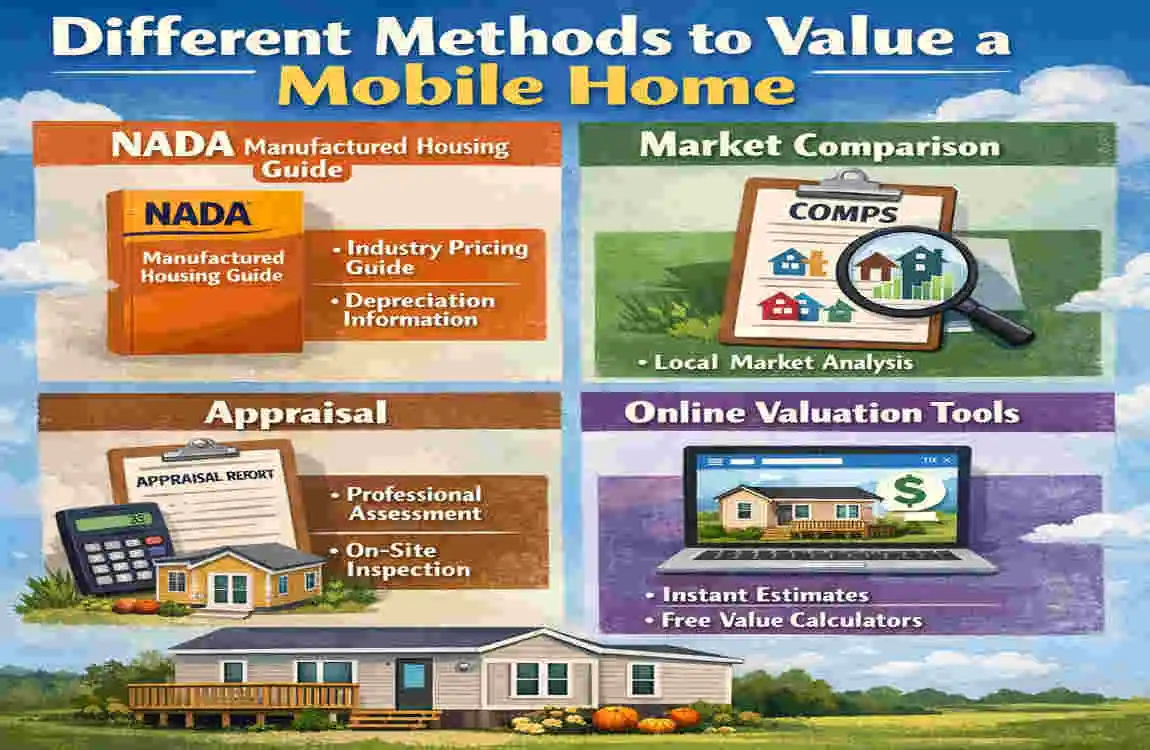
Sales Comparison Approach
This is usually the most useful method. It looks at what similar mobile homes have recently sold for. If your home is close in age, size, and condition, the sales comparison approach can be very helpful.
This method works best when there are enough nearby sales to compare.
Cost Approach
The cost approach looks at how much it would cost to replace the home, then subtracts depreciation. It works well for newer homes or homes with special features.
It may not always reflect the exact market price, but it helps you understand the home’s built value.
Income Approach
If the mobile home is used as a rental, the income approach can help. This method looks at how much money the home produces over time.
Buyers who are investors often pay attention to rental income, vacancy rates, and operating costs. This method is especially useful for income properties.
Professional Appraisal
A professional appraiser gives the most detailed opinion of value. They look at the home, compare sales, and consider the local market.
If you are unsure about pricing, an appraisal can help you avoid a costly mistake.
Mobile Home Value Checklist
Factor Why It Matters
Age Older homes often lose value
Size Larger homes typically sell for more
Condition Well-maintained homes attract buyers
Location Strong markets increase value
Land Included Adds significant value
Upgrades Modern features improve pricing
Roof & Foundation Major structural factors
Market Demand Influences final selling price
Ways to Increase Mobile Home Value Before Selling
Improve Curb Appeal
First impressions matter. A neat outside area can make buyers more interested before they even step inside.
You do not need a huge budget. Trim weeds, sweep walkways, clean siding, and add a little fresh landscaping if needed.
Repair Minor Damage
Small problems can make the home feel less cared for. Fix loose handles, leaky faucets, cracked tiles, or broken trim before you list it.
These small repairs may seem minor, but they can improve buyer trust and help your home sell faster.
Update Flooring
Flooring is one of the first things buyers notice. Worn carpet or damaged vinyl can make a home feel older than it is.
Please replace the tired flooring with something clean and durable. Even a modest update can make a big difference.
Paint Interior and Exterior
Fresh paint can transform a mobile home quickly. Neutral colors help the space feel brighter, cleaner, and more modern.
You want the home to feel move-in ready. That simple feeling can support a better price.
Upgrade Kitchen and Bathroom
These rooms matter a lot to buyers. You do not need a full remodel. Small changes like new fixtures, cabinet handles, mirrors, or countertops can help.
Focus on updates that make the space look clean, bright, and usable.
Improve Energy Efficiency
If you can improve insulation, seal drafty windows, or install better appliances, you may increase buyer interest.
Many buyers like homes that save money on utilities. That makes energy improvements a smart selling point.
Deep Clean the Home
A spotless home feels more valuable—clean floors, windows, appliances, bathrooms, and every corner you can reach.
A deep clean does not cost much, but it can make your home feel much more move-in ready.
Common Pricing Mistakes Sellers Should Avoid
Overpricing
This is one of the biggest mistakes. If the price is too high, buyers may skip your listing completely.
A home that sits too long can start to look less desirable, even if the home itself is in good shape.
Ignoring Local Market Data
Some sellers guess based on emotion or personal investment. But the market does not care what you spent.
You need to look at what buyers are actually paying right now in your area.
Skipping Necessary Repairs
If you ignore obvious problems, buyers may lower their offers or walk away. They often expect room in the price for repairs.
Fixing issues early usually gives you better control over the sale.
Forgetting Closing Costs
Your sale price is not the same as your final take-home amount. You still need to account for closing costs, commissions, and possible repair credits.
This matters when deciding your target asking price.
Not Getting an Appraisal
If your home has unusual features, a professional appraisal can help. It gives you a more reliable estimate of value than guessing.
Should You Hire a Professional Appraiser?
Benefits of Professional Valuation
A professional appraiser can help you price your luxury home with more confidence. They know how to compare similar sales and spot details that affect value.
This is helpful if your home has unique features, land included, or major improvements.
When an Appraisal Is Worth the Cost
An appraisal is often worth it when you are unsure about value, selling in a changing market, or trying to avoid underpricing a good home.
If you want a stronger pricing strategy, this step can be a smart investment.
Typical Appraisal Costs
Appraisal costs vary by location and home type. The price may feel like an extra expense, but it can save you from making a larger pricing mistake.
Tools That Help Estimate Mobile Home Value
Online Home Value Calculators
These tools can provide a fast estimate. They are easy to use and helpful for a rough starting point.
Still, they should not replace local research.
Manufactured Home Pricing Guides
Pricing guides can help you understand common value ranges for different home types and ages.
They are useful when you want a broader view of the market.
Local Real Estate Listings
Active listings show what sellers are asking. Sold listings show what buyers are actually paying. Both are useful, but sold listings matter more.
County Property Records
Property records can help you confirm ownership details, tax values, and land information. This is especially useful when land ownership affects the price.
Tips for Selling Your Mobile Home Faster
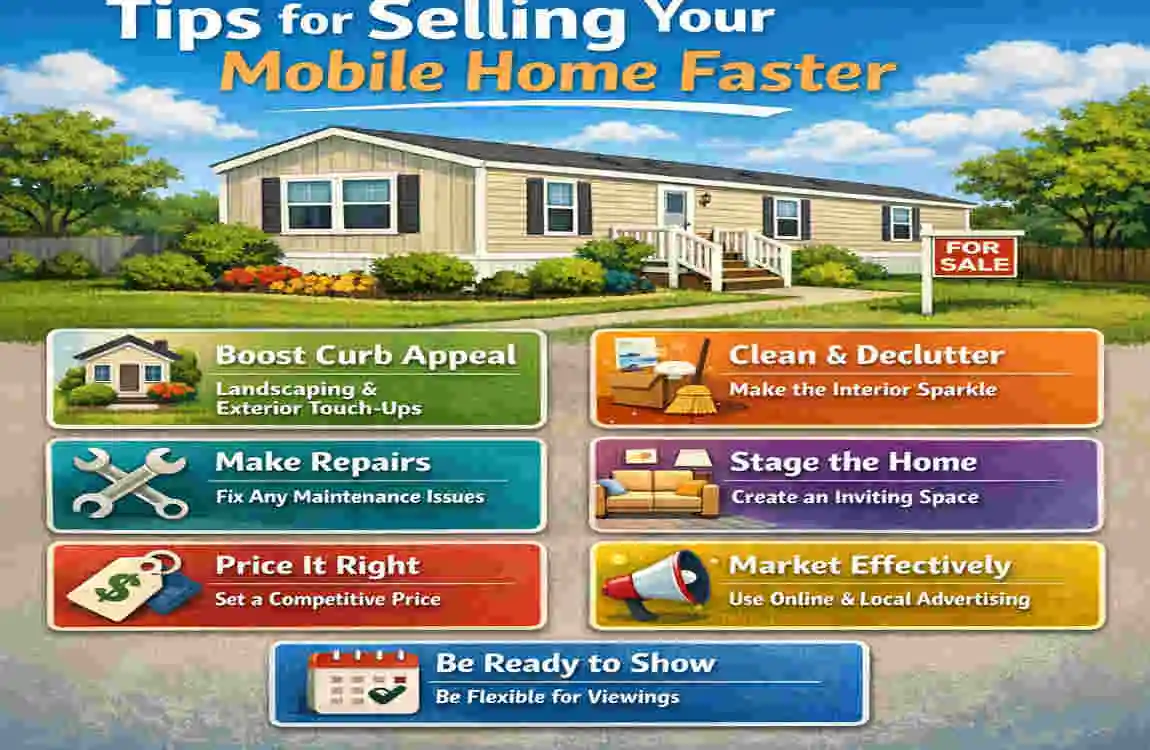
If you want the sale to move quickly, follow these simple tips:
- Price competitively
- Use high-quality photos
- Prepare all ownership documents
- Highlight upgrades
- Market on multiple platforms
- Be flexible with negotiations
These steps help create more buyer interest and reduce delays.
Frequently Asked Questions
What is the best way to value a mobile home?
The best way is to compare recent local sales, review the home’s condition, and consider whether the land is included.
How do I determine the market value of my mobile home?
Look at similar homes that sold recently, check your home’s condition, and study current local demand.
Does owning the land increase mobile home value?
Yes. Owning the land usually adds value because it gives the buyer more long-term control and less monthly cost.
Can renovations increase my mobile home’s selling price?
Yes, especially practical upgrades like flooring, paint, kitchen updates, and bathroom improvements.
How much does a mobile home appraisal cost?
The cost depends on location and home type, but it is often worth paying for a more accurate price.
Do older mobile homes lose value?
Often yes, but good maintenance, strong location, and useful upgrades can help reduce the loss.
Should I use online valuation tools before selling?
Yes, but only as a starting point. Combine them with local sales data and your home’s condition.
What documents are needed when valuing a mobile home?
You should gather title papers, tax records, repair history, and details about upgrades, land, and square footage.
| Valuation Factor | Why It Matters | Impact on Home Value |
|---|---|---|
| Age of the Home | Newer mobile homes generally have higher resale value. | High |
| Overall Condition | Well-maintained homes attract more buyers and better offers. | High |
| Size & Floor Plan | Larger homes with functional layouts are worth more. | High |
| Location | Homes in desirable parks or neighborhoods sell for higher prices. | High |
| Land Ownership | Owning the land usually increases the property’s value. | High |
| Recent Upgrades | Renovated kitchens, bathrooms, roofing, or flooring add value. | Medium–High |
| Comparable Sales | Compare prices of similar mobile homes recently sold nearby. | High |
| Manufacturer & Model | Reputable brands often retain value better over time. | Medium |