A plumbing vent is a small but very important part of your home’s plumbing system. It helps air move through the pipes, lets sewer gases escape safely, and keeps drains working the way they should. Without proper venting, your sinks, toilets, and tubs may drain slowly or make strange sounds.
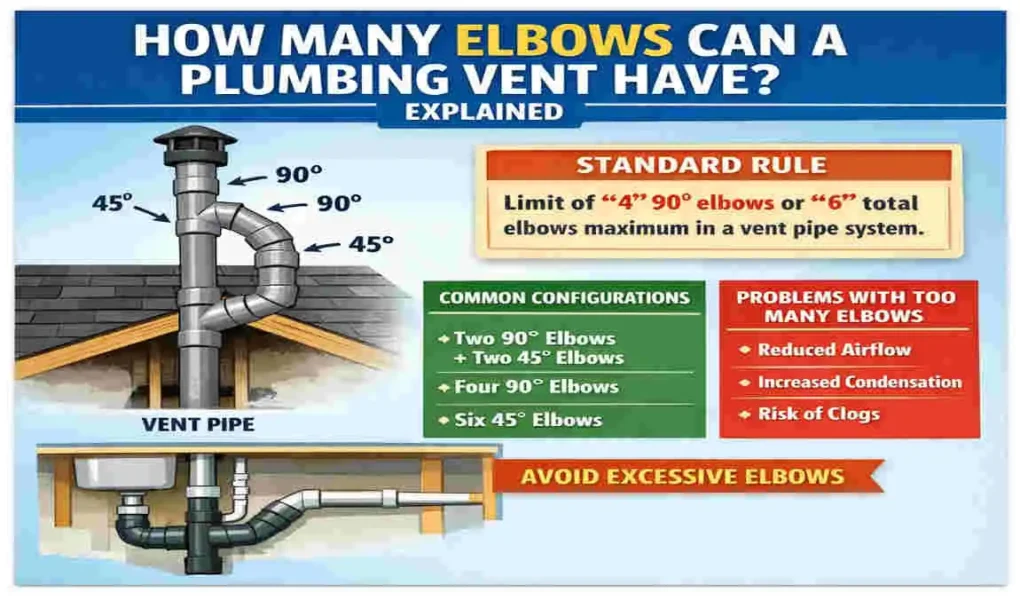
That is why many homeowners ask, how many elbows can a plumbing vent have? The answer is not always the same for every home. Plumbing vents can have elbows, but the plumbing vent elbow limit depends on pipe size, vent layout, and local plumbing code.
What Is a Plumbing Vent and Why Is It Important?
The Main Purpose of a Plumbing Vent
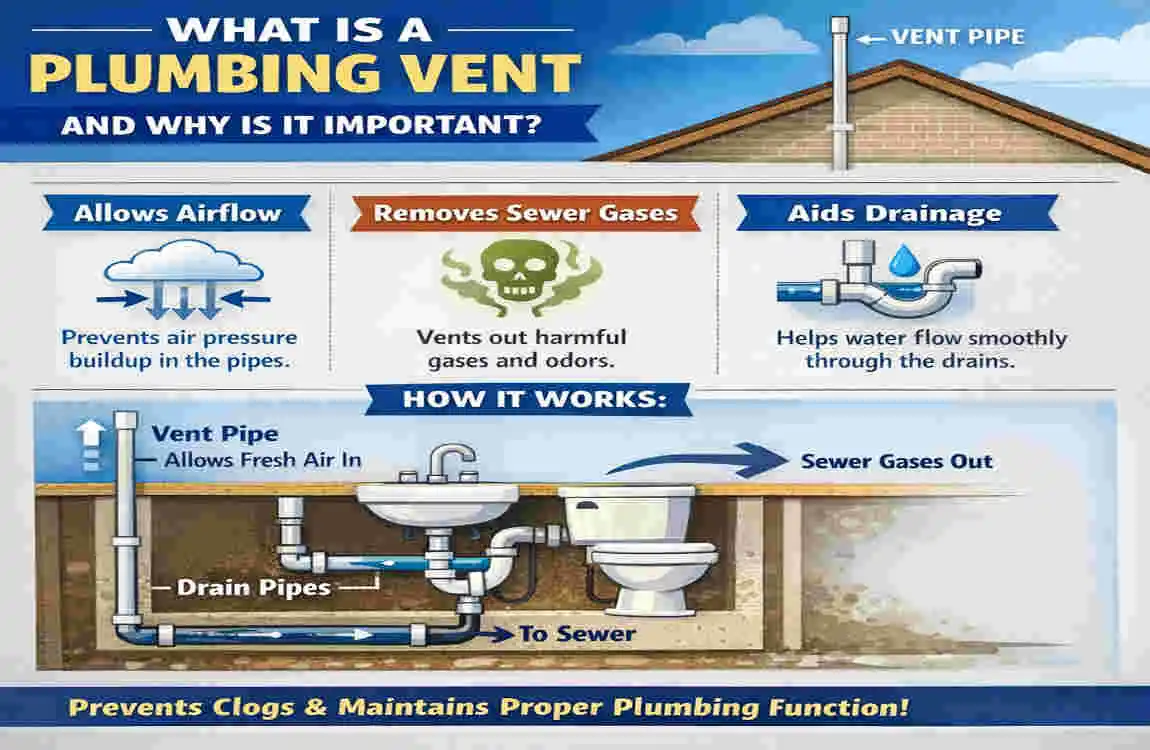
A plumbing vent does more than many people realize. Its job is to help the drainage system breathe.
Here’s what it does:
- Lets sewer gases escape safely
- Keeps air pressure balanced inside the drain pipes
- Helps water flow smoothly through the system
- Protects water traps from being sucked dry
When a vent works properly, your drains usually stay quiet and steady. When it does not, you may hear bubbling, gurgling, or even notice bad odors.
Common Types of Plumbing Vents
There are several kinds of vents used in homes. The exact type depends on the plumbing setup.
- Traditional roof vents
- These run up through the roof and release air outside.
- Individual vents
- These serve one fixture, like a sink or toilet.
- Common vents
- These serve two fixtures that are close together.
- Wet vents
- These carry both air and some wastewater.
- Air admittance valves (AAVs)
- These let air in when needed without going through the roof.
Each type follows different rules, but they all serve the same basic purpose: helping the drain system work properly.
How Many Elbows Can a Plumbing Vent Have?
General Rule for Plumbing Vent Elbows
There is no single universal number that applies to every plumbing vent. The exact answer depends on the system’s design and the local code.
That said, plumbers usually try to keep bends to a minimum. Every elbow adds some resistance to airflow. A vent can still work with elbows, but too many bends may reduce performance.
So if you are wondering how many elbows can a plumbing vent have, the practical answer is this:
- A vent can have a few elbows
- More elbows may be allowed if the layout is correct
- The system must still meet plumbing installation rules
Typical Number of Allowed Elbows
In many residential systems, plumbers use:
- 1 to 2 elbows without major issues
- More elbows only when the design requires it
- Smooth routing instead of sharp, crowded bends
This does not mean every vent should stop at two elbows. It just means that in many homes, a simple design works best.
The important thing is not only the number of elbows but also how they are placed, the angles they use, and whether the vent still has proper airflow.
Why Fewer Elbows Are Better
Fewer bends usually mean a better vent system. That is because:
- Air moves more easily
- Blockages are less likely
- Maintenance becomes simpler
- The vent works more efficiently
If you can keep the route straighter, do it. A clean and direct path is usually the smartest choice.
How Plumbing Vent Elbows Affect Airflow
Increased Resistance Inside the Pipe
Every time a vent changes direction, air has to work harder to move through it. A bend creates resistance, just like a curve in a road slows traffic.
A few bends may not cause a problem. But when the vent has too many sharp turns, airflow can weaken. That can affect the whole drainage system.
Impact on Drain Performance
Too many elbows in a vent pipe can lead to several common problems:
- Slow drainage
- Gurgling sounds
- Sewer odors
- Poor venting
- Empty traps
These issues often show up when air cannot move freely through the plumbing system. The pipes need a proper balance of air and water to work well.
Difference Between Drain Pipes and Vent Pipes
It helps to remember that drain pipes and vent pipes do different jobs.
- Drain pipes carry wastewater away
- Vent pipes move air and gases
Because vent pipes mainly move air, they still need the right size and shape. Too many plumbing vent pipe bends can reduce the vent’s ability to do its job.
Plumbing Code Rules About Vent Pipe Bends
Understanding Local Plumbing Codes
The rules for vent pipes are not the same everywhere. Local plumbing codes can vary from city to city or state to state.
Two common code systems are:
- International Plumbing Code (IPC)
- Uniform Plumbing Code (UPC)
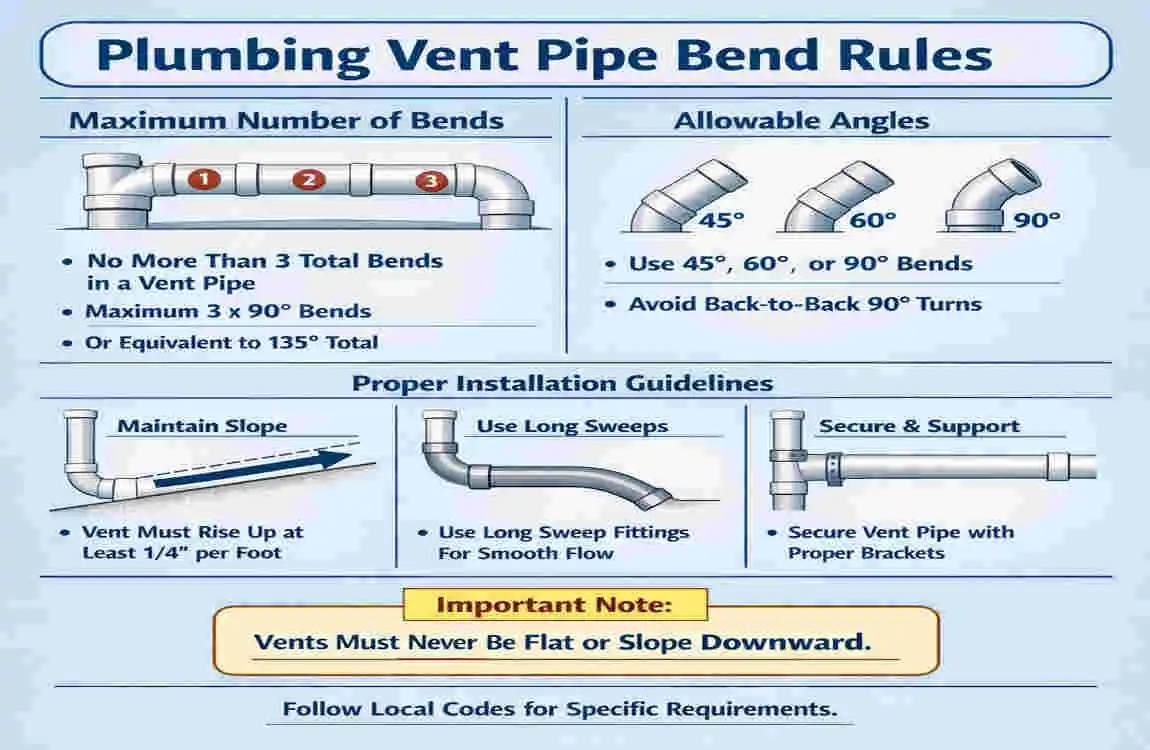
These codes help ensure plumbing systems are safe and operate correctly. They may give rules about vent slope, pipe size, elbow placement, and how vents connect to fixtures.
Horizontal and Vertical Vent Requirements
A vent usually starts vertically, but in some cases, it can turn horizontally. That said, the transition must follow code rules.
Some things codes often care about are:
- Where the vent begins
- How soon it can turn
- The slope of horizontal sections
- The height of the vent above fixtures
A horizontal vent section that is installed wrong can trap water or reduce airflow. That is why proper angle and placement matter so much.
Why Professional Installation Matters
Plumbing codes can be detailed, and small mistakes can become big problems later. A professional plumber can help make sure the system is safe, legal, and efficient.
This is especially important if you are:
- Remodeling a bathroom
- Adding a new fixture
- Rerouting a vent
- Dealing with repeated drain issues
A good installation can save you from expensive repairs later.
Common Plumbing Vent Elbow Problems
Using Too Many Sharp Turns
One of the most common problems is simply using too many bends. Sharp turns make the vent harder to use and harder to clean.
If the vent system feels crowded or overcomplicated, airflow may suffer.
Incorrect Elbow Placement
Elbows also cause trouble when they are placed in the wrong spot.
For example:
- A bend too close to a fixture can affect airflow
- Poor alignment can create stress in the pipe
- Bad angles can reduce the vent’s efficiency
The layout should always support smooth airflow from the fixture to the vent opening.
Wrong Elbow Size
Not all elbows are the same. Some are sharper, while others create a gentler turn.
Here is a simple comparison:
Elbow TypeBasic EffectCommon Use
45-degree elbow Smoother airflow Often preferred
90-degree elbow Sharper turn Used when space is tight
In many cases, 45-degree bends are better because they are easier on airflow. A 90-degree elbow can still work, but using too many of them may create more resistance.
Best Practices for Installing Plumbing Vent Elbows
Keep the Vent Route as Straight as Possible
The best vent layout is often the simplest one. Try to plan the shortest and cleanest route possible.
A straighter path usually means:
- Better airflow
- Less restriction
- Easier maintenance
Use Proper Elbow Angles
When possible, use smoother bends instead of sharp ones.
A few good rules to follow:
- Use 45-degree elbows when you can
- Avoid unnecessary 90-degree turns
- Keep changes in direction simple
Choose the Correct Pipe Size
Pipe size matters just as much as elbow count. A vent that is too small may not move air well, even if it has only a few bends.
The right size depends on:
- The fixture being vented
- The number of connected fixtures
- The plumbing code in your area
Follow Manufacturer and Code Requirements
Always use approved plumbing materials and follow local rules. The best layout in one house may not work in another.
That is why the answer to how many elbows can a plumbing vent have always depends on the full system, not just one part of it.
Can a Plumbing Vent Run Horizontally?
When Horizontal Vent Runs Are Allowed
Yes, in many systems, a vent can run horizontally for part of its path. But it must be done the right way.
Horizontal vent sections usually need:
- Proper slope
- Proper height above fixtures
- Correct pipe support
- Code-compliant routing
Risks of Poor Horizontal Vent Installation
If a horizontal vent is installed badly, it can cause problems such as:
- Water pooling inside the pipe
- Reduced airflow
- Blockages
- Bad smells
- Drainage trouble
So yes, horizontal runs are possible, but they need care and proper planning.
Signs Your Plumbing Vent Has Too Many Elbows
Common Warning Signs
If your vent has too many bends or poor routing, you may notice:
- Bubbling drains
- Slow sink or tub drainage
- Bad sewer smells
- Empty toilet traps
- Gurgling noises
These are all signs that air may not be moving through the system the way it should.
How to Diagnose Vent Problems
You do not always need to open the wall right away. Start with simple checks.
- Inspect the roof vent opening for blockages
- Look for signs of poor installation
- Check whether one fixture affects another
- Notice whether the problem gets worse after heavy use
If the issue keeps coming back, the vent layout may need to be improved.
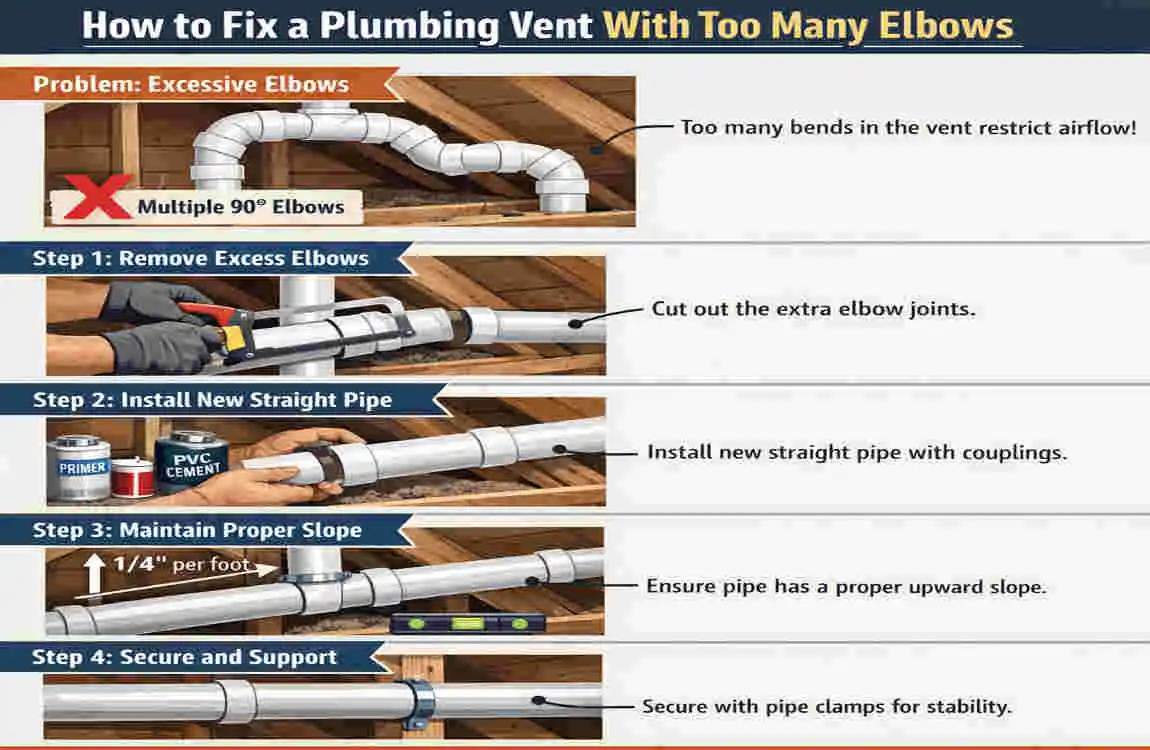
How to Fix a Plumbing Vent With Too Many Elbows
Simplify the Vent Layout
If possible, remove unnecessary bends and make the route more direct. A simpler layout is often the best fix.
Replace Incorrect Elbows
Sometimes the problem is not the number of elbows, but the type used. Replacing a sharp or poorly placed elbow can improve airflow.
Hire a Professional Plumber When Needed
If the vent needs major changes, a licensed plumber is the safest choice. This is especially true when:
- The vent goes through the roof
- The layout needs to be redesigned
- Code compliance is unclear
- Drain problems keep happening
Plumbing Vent Elbows: DIY vs Professional Installation
When DIY May Be Possible
A homeowner may be able to handle minor vent work if:
- The section is easy to reach
- The change is small
- The repair does not affect the roof
- The local code is clear
When to Call a Plumber
You should call a pro when the job is more complicated.
That includes:
- Roof vent work
- Major rerouting
- Hidden pipe changes
- Recurring drain issues
- Possible code violations
A simple mistake in vent design can affect the whole system, so it is better to be careful.
Frequently Asked Questions
Q: How many elbows can a plumbing vent have?
There is no single universal limit. It depends on pipe size, vent design, and local plumbing code. Keeping elbows to a minimum is usually best.
Q: Can a plumbing vent have a 90-degree elbow?
Yes, it can. But too many sharp turns may reduce airflow, so plumbers often try to use fewer 90-degree elbows.
Q: Are 45-degree elbows better for plumbing vents?
Yes, 45-degree elbows usually create smoother airflow and are often preferred when space allows.
Q: Can too many elbows cause plumbing problems?
Yes. Too many bends can restrict airflow, cause slow drainage, and create gurgling or odor issues.
Q: How far can a plumbing vent run horizontally?
That depends on fixture type, pipe size, and local plumbing code. Horizontal runs must follow proper slope and placement rules.
Q: Do plumbing vents need to go straight through the roof?
No. They can bend, but the layout must still meet plumbing code requirements and allow good airflow.
| Topic | Simple Explanation |
|---|---|
| Maximum Vent Elbows | Plumbing codes generally allow bends in vent pipes, but fewer elbows are recommended for better airflow. |
| Recommended Number of Elbows | Try to keep vent pipes to 1–2 elbows whenever possible. |
| 90-Degree Elbows | Too many 90° bends can restrict airflow and increase the chance of clogs or poor venting. |
| 45-Degree Elbows | Preferred over 90° elbows because they create smoother airflow through the vent system. |
| Code Requirements | The exact number of allowed elbows depends on local plumbing codes and pipe size. |
| Horizontal Vent Runs | Long horizontal sections with multiple bends may require special approval or additional design considerations. |
| Best Practice | Design vents with the shortest, straightest route from the drain system to the roof. |
| Professional Tip | A licensed plumber should check vent layouts to ensure proper drainage, pressure balance, and code compliance. |