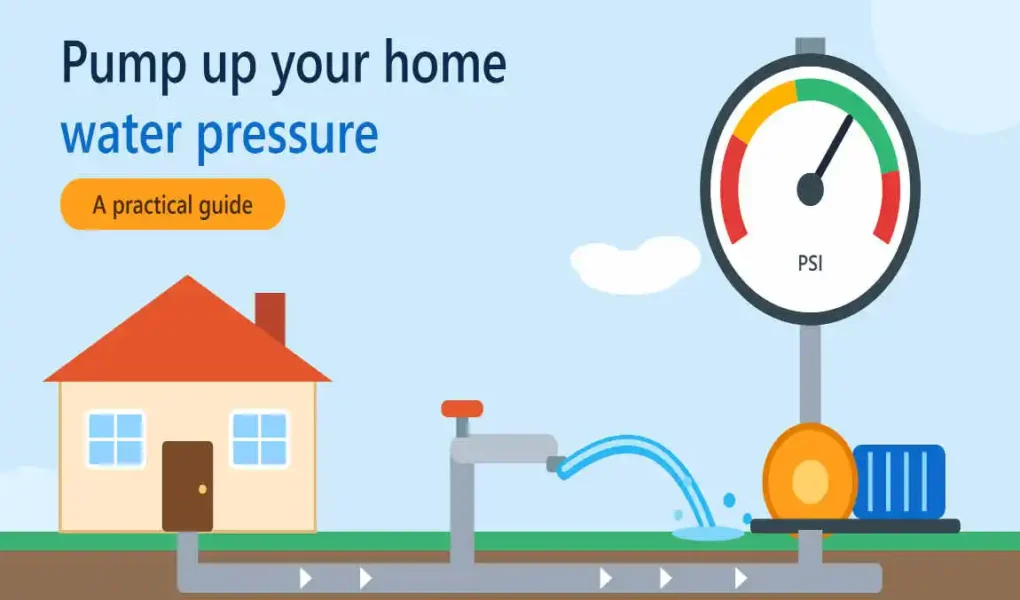
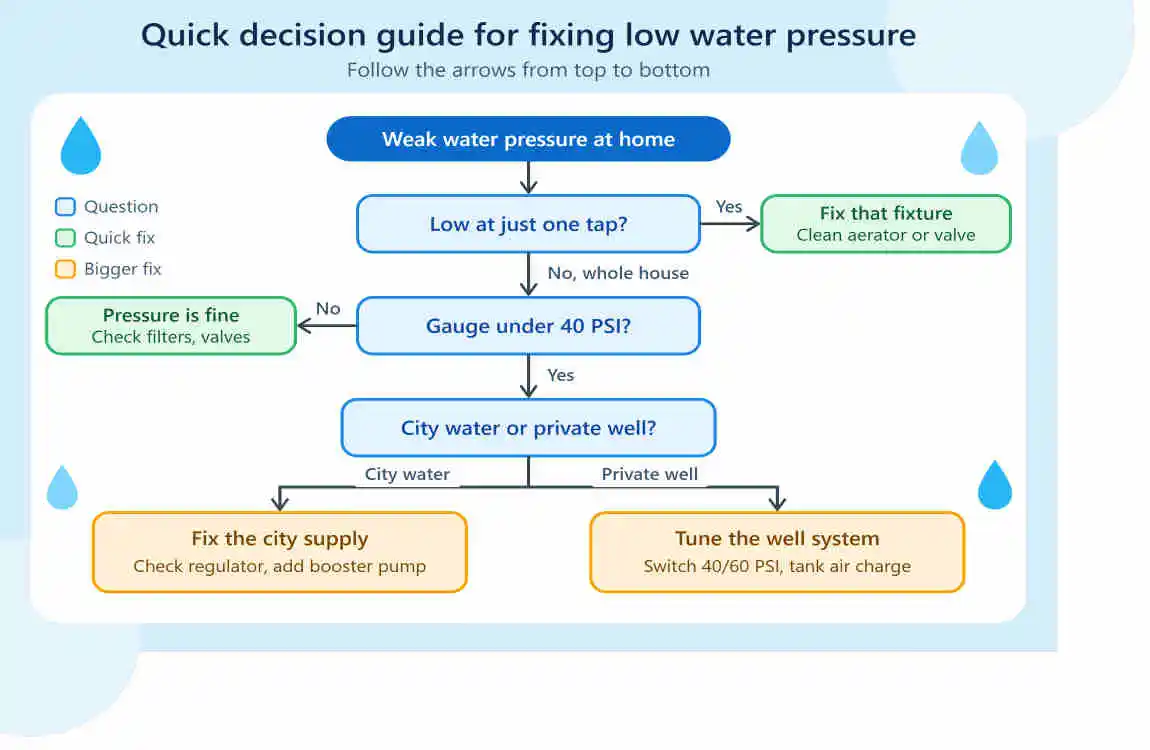
To increase water pressure in a house with a pump, first measure your pressure with a gauge. If it is under about 40 psi and your pipes, valves and regulator are fine, install a booster pump on the main line (add a pressure tank if the system calls for one). On a private well, you can also raise the pressure switch setting by a few psi. Keep the final pressure between 40 and 60 psi, and never above 80 psi.
Why is my water pressure low in the first place?
Low pressure has a handful of common causes: weak supply from the water utility, a partly closed valve, a failing pressure regulator, clogged or corroded pipes, a leak, or (on a well) a pump or pressure switch that is set too low or worn out. Fixing the cheap stuff first can save you the cost of a pump. Home improvement experts at Lowe’s suggest checking your gauge reading, regulator and valves before moving on to a booster.
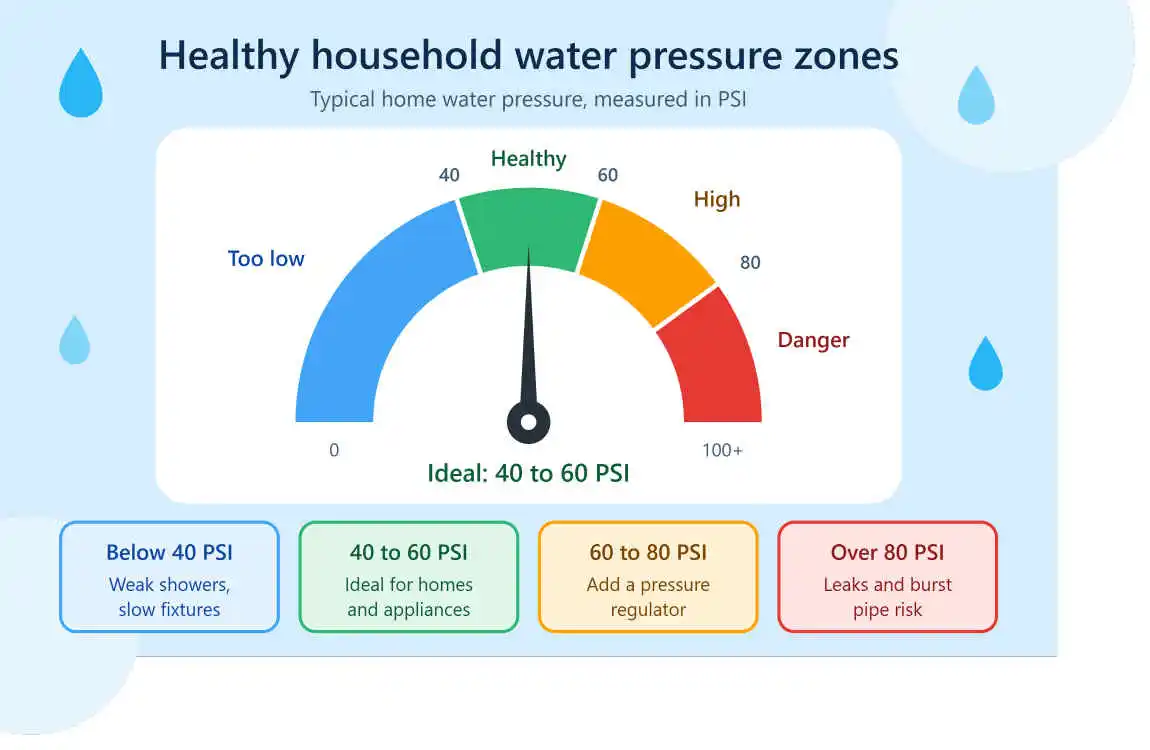
How do I measure my water pressure?
- Buy a water pressure gauge with a hose-thread fitting.
- Turn off all taps and appliances (washing machine, dishwasher, ice maker).
- Screw the gauge onto an outdoor hose bib or the washing machine connection and turn the valve fully open.
- Read the dial. Test again at different times of day, since municipal pressure often drops during peak use.
If you are on city water, you can also ask your water department for a pressure reading. The pros at Family Handyman describe 45 to 55 psi as an ideal reading, which matches the 40–60 psi target above.
What should I check before buying a pump?
A pump can mask problems that are cheaper to fix. Before you spend money, check these:
- Main shutoff and meter valves: make sure they are fully open.
- Pressure regulator: a worn or poorly set pressure-reducing valve can choke pressure. These typically last 10–20 years, according to HomeAdvisor.
- Leaks: a hidden leak steals pressure. Watch your meter with every fixture off; if it moves, you have a leak.
- Pipes: old galvanized pipe clogs with mineral buildup. A pump will not fix that fully. As the team at Inspection Support points out, if pressure stays low after adding a booster, the pipes are probably the problem.
Which type of pump should I use?
The right pump depends on where your water comes from.
| Your situation | Best pump option | What it does |
|---|---|---|
| City water, low pressure at the main | Inline booster pump (with or without a small pressure tank) | Boosts incoming pressure before it reaches your plumbing |
| Private well, pressure swings or feels weak | Adjusted pressure switch, correct tank pre-charge, or a constant-pressure (variable speed) system | Raises or steadies pressure from the well system |
| Only one upstairs bathroom is weak | Small point-of-use shower or booster pump | Targets a single zone instead of the whole house |
| Whole house low pressure, big household | Booster pump plus pressure tank | Boosts pressure and reduces pump on/off cycling |
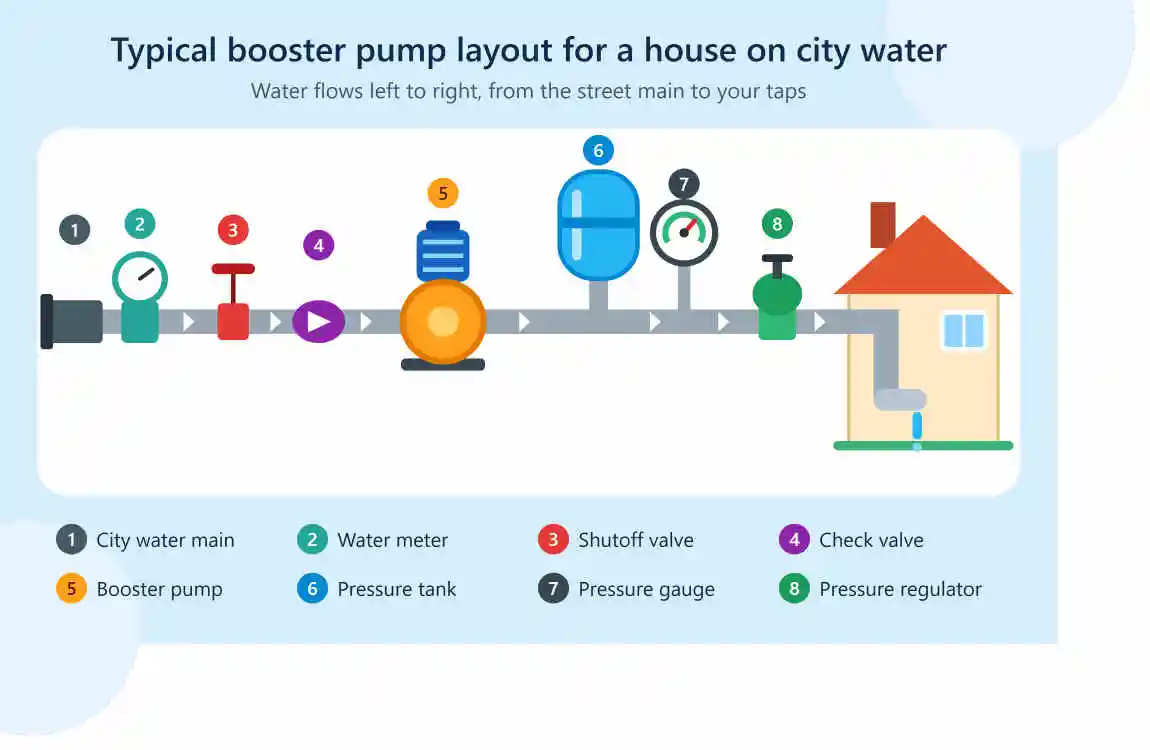
How do I install a water pressure booster pump?
If you are comfortable with basic plumbing and electrical work, installation follows a standard pattern. When in doubt, hire a licensed plumber; the pros at This Old House demonstrate a booster install that lifts pressure from about 35 psi to roughly 50 psi.
- Pick the location. Choose a dry, accessible spot right after the main shutoff valve, near an electrical outlet.
- Turn off water and power. Close the main valve and drain the line by opening a low tap.
- Cut into the main line. Add shutoff valves before and after the pump and a union fitting for easy service.
- Connect the pump. Follow the arrow showing flow direction. Use the manufacturer’s recommended pipe size.
- Add the pressure tank (if included). This reduces on/off cycling. Fine Homebuilding notes the pump outlet feeds the tank and the tank feeds the house lines, as explained in its water pressure guide.
- Wire it safely. Use a GFCI-protected outlet or a licensed electrician for hard-wiring.
- Prime, restore water and test. Open a faucet to purge air, power on, then check for leaks and read your gauge.
- Fine-tune. Keep final pressure within 40–60 psi.
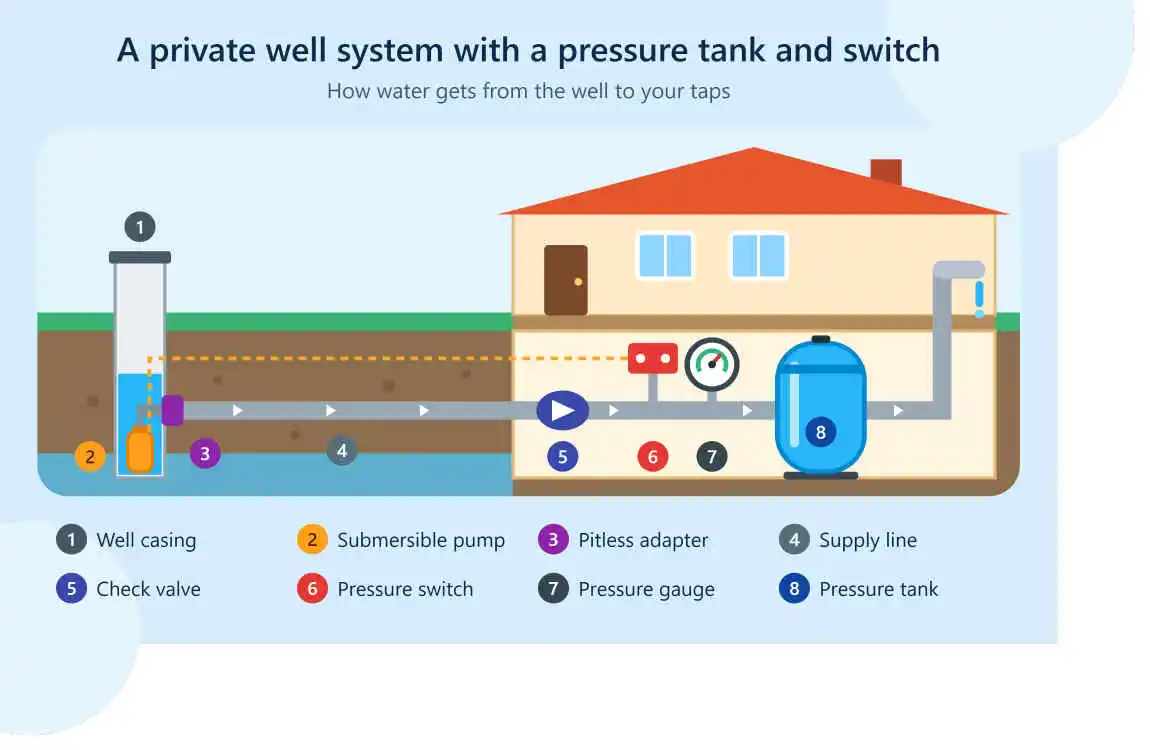
How do I increase water pressure with a well pump?
Private wells use a pump, a pressure tank and a pressure switch. According to InspectAPedia, switches are typically set to operate in the 30–50 psi range. Fine Home building explains that with a pump system, the pressure you feel swings between the switch’s cut-in and cut-out points, and that adjusting the pressure switch is the main way to raise it without adding equipment.
Adjusting the pressure switch (basic overview)
- Cut power to the pump at the breaker. Never open the switch cover with power on.
- Open the switch cover and find the large spring nut (sets cut-in and cut-out) and the smaller spring nut (sets the gap between them).
- Turn the large nut clockwise in small increments (about a quarter to half turn) to raise both settings.
- Restore power, run water, and watch the gauge. Repeat in tiny steps if needed.
- Check the tank’s air pre-charge. It should sit roughly 2 psi below the cut-in setting (with the tank empty and the pump off).
Heads up: a higher setting makes the pump cycle more and use more electricity. Keep the cut-out well under 80 psi and below the rating on your tank, pump and fixtures. If you are unsure, call a well contractor.
Does a bigger pressure tank increase pressure?
No. Fine Homebuilding states that enlarging the tank gives you more stored water, which reduces pressure swings and helps during a power outage, but does not necessarily raise the pressure itself.
What does a water pressure booster pump cost?
According to Bob Vila, most home water pressure booster pumps run roughly $200 to $400, with some costing considerably more. Add plumbing parts, a tank if needed, and labor if you hire a pro. Variable-speed, constant-pressure systems cost more up front but deliver steadier pressure and can reduce wear from constant cycling.
What are the risks of boosting pressure?
- Too much pressure: The City of Tustin notes that sustained pressure above 80 psi can damage on-site plumbing and fixtures, and local rules typically require a regulator at that level.
- Weak or old pipes: Lowe’s advises consulting a plumber before installing a booster, because extra pressure can strain pipes that cannot handle it.
- No extra water: A pump moves water; it cannot create supply the source does not have. A low-yield well may still run dry.
- Water heater and appliances: If pressure creeps up, consider a pressure-reducing valve and a thermal expansion tank.
A Pedia also explains that many plumbing codes set a maximum static pressure of 80 psi, so check local rules before you finalize your settings.
What are the latest trends in home water pressure boosting?
Homeowners are increasingly choosing quieter, energy-efficient variable speed booster pumps. These adjust motor speed to demand, which can provide steady pressure without a large tank. Inspect A Pedia discusses these tankless variable-speed booster setups as an alternative to a traditional pump and tank. Smart pumps with pressure monitoring and leak alerts are also becoming more common, so check product specifications for these features.
Frequently asked questions
How can I increase water pressure in my house with a pump?
Measure your pressure first. If it is below roughly 40 psi and your pipes and regulator are fine, install a booster pump after the main shutoff valve. On a well, raise the pressure switch setting slightly or install a constant-pressure system.
What is a good water pressure for a house?
Between 40 and 60 psi is a comfortable target for most homes. Pressure above 80 psi is generally considered too high.
How much does a booster pump cost?
Most household units run about $200 to $400, with larger or variable-speed models costing more. Installation, fittings and a pressure tank can add to the total.
Do I need a pressure tank with a booster pump?
Not always, but a tank reduces how often the pump starts and stops and smooths out pressure. Tankless variable-speed systems are another option.
Can I install a booster pump myself?
If you are comfortable with basic plumbing and electrical safety, yes. Otherwise hire a licensed plumber, especially for well systems or hard-wired connections.
Why is my water pressure still low after installing a pump?
Common causes are clogged or undersized pipes, a partly closed valve, a leak, or a pump that is too small for your demand.
Final thoughts
A booster pump can transform a weak shower into a strong one, but only when it is matched to the real cause of low pressure. Measure first, fix cheap problems, choose the right pump for city or well water, and keep your final pressure in the 40–60 psi sweet spot. If your plumbing is old or you are unsure, a short visit from a licensed plumber is cheap insurance.