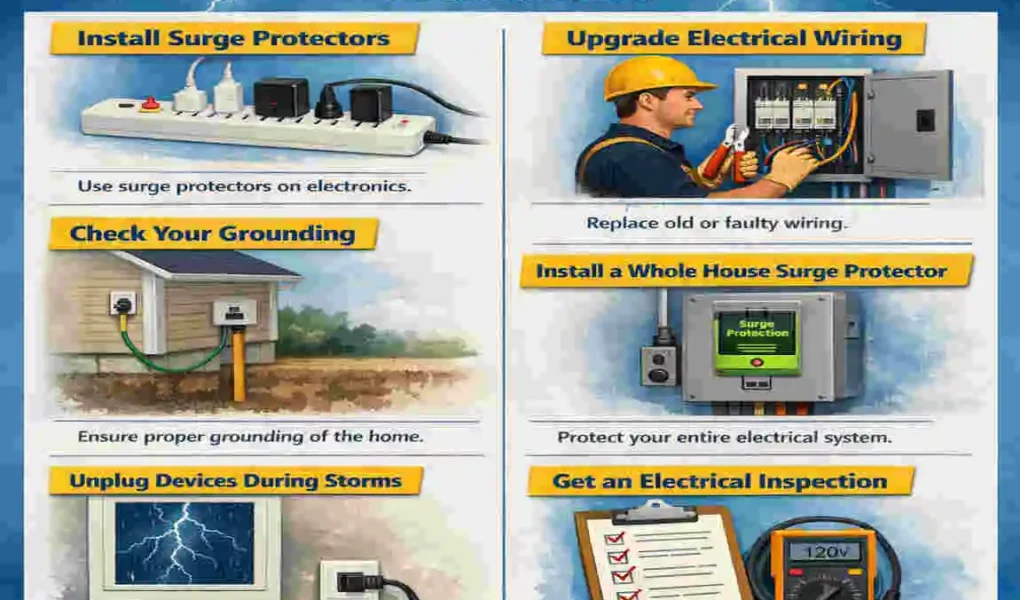
A power surge is a sudden jump in voltage. In simple terms, it means your home gets more electricity than it is designed to handle for a short moment. Even a brief spike can stress appliances, damage sensitive electronics, and pose safety risks in your home. In many cases, these voltage spikes are small and easy to miss. But over time, repeated electrical fluctuations can quietly wear down your devices and wiring.
The good news is that most home electrical surges have clear causes and can often be fixed. Some happen inside the house because of overloaded circuits, old wiring, or large appliances switching on and off. Others come from outside, such as grid switching, storms, or lightning. If you live, you already know how common outages, monsoon weather, and power restoration surges can be. That makes understanding power surge causes even more important.
| Cause of Power Surge | Prevention and Solution |
|---|---|
| High-Powered Appliances | Ensure large appliances like ACs or dryers are on dedicated circuits; avoid running too many simultaneously . |
| Faulty or Old Wiring | Have a professional electrician inspect your home for loose connections, worn insulation, or outdated wiring . |
| Grid Issues/Lightning | Install a whole-home surge protector to shield the entire property from external voltage spikes . |
| Overloaded Circuits | Avoid using extension cords as permanent power sources and use surge-protected power strips for electronics . |
| Power Restorations | Unplug sensitive electronics during power outages or electrical storms to prevent damage when the grid restarts . |
Common Causes of Power Surges

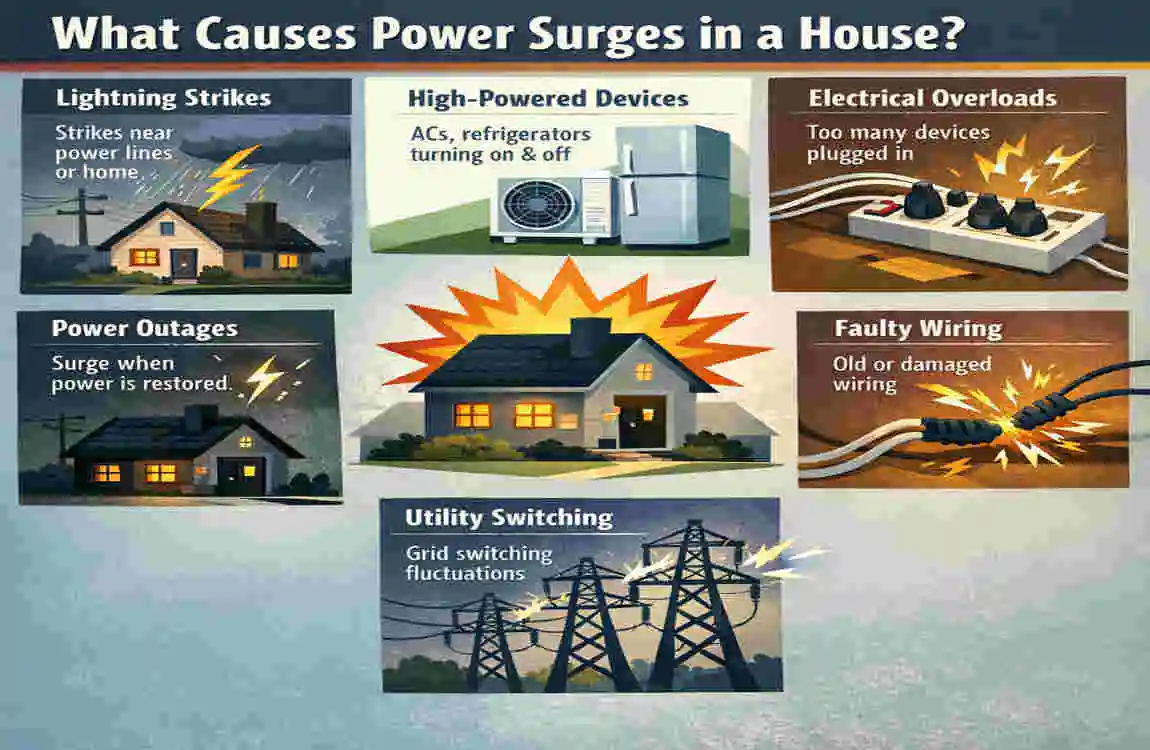
When homeowners ask why their house is power-surge-prone, the cause often falls into one of three categories: internal issues, external issues, or aging home wiring. Knowing the difference helps you make better decisions and avoid expensive damage later.
Internal Causes of Power Surges
A large share of surges begin inside the home. In fact, many power surge causes are tied directly to everyday appliances and the way electricity moves through your house.
Large devices like air conditioners, refrigerators, washing machines, and vacuum cleaners all draw a lot of power when they start up. That sudden demand can create a small voltage spike. On its own, that spike may not seem dangerous. But if it happens often, it adds stress to your wiring and electronics.
This is especially true in older, where circuits may already be close to capacity. If too many appliances run on the same line, the electrical load becomes uneven. That is when you may notice lights dimming, breakers tripping, or devices acting strangely.
High-Power Appliances Turning On and Off
One of the most common causes of power surges is the normal startup cycle of major appliances.
When an AC unit compressor kicks in, it needs a burst of energy. The same thing happens with refrigerators, water pumps, and washing machines. That startup surge can spread through the circuit and affect nearby devices.
This does not always cause serious damage right away. But it does mean your home is dealing with repeated electrical fluctuations. Over time, that can weaken electronics, shorten appliance life, and make you wonder again, why is my house power surging so often.
Overloaded Circuits and Outlets
Another major reason is overload. Each circuit in your home has a limit. When you plug too many devices into a single outlet or run too many heavy appliances on the same circuit, the system struggles to keep up.
Older homes are more vulnerable because their electrical systems were not designed for today’s demand levels. A house built decades ago may have fewer outlets, older wiring, and lower circuit capacity. Add in AC units, heaters, microwaves, and charging devices, and you have a perfect setup for home electrical surges.
Appliance Surge Impact Table
ApplianceSurge TriggerRisk Level
AC Unit Compressor start High
Hairdryer Motor kick-in Moderate
Fridge Defrost cycle Low but frequent
This table makes one thing clear: even normal household appliances can trigger voltage spikes. Some are stronger than others, but all of them matter if they happen repeatedly.
Everyday Example
Think about a hot evening in. Your AC turns on, the fridge cycles, the water pump starts, and a few rooms are using lights and fans at the same time. If your system is already under pressure, you may notice flickering, buzzing, or brief shutdowns.
That is one reason many homeowners ask, “Why is my house power surging after a power-heavy evening?” The issue may not be a major fault. It may simply be your home’s electrical system trying to manage too much at once.
External Causes of Power Surges
Not all surges start inside your home. Some come from the utility side, and these can be much more powerful.
External surges are often linked to grid switching, power restoration after outages, line damage, or weather events. In and across Punjab, these events become more common during the monsoon season and during periods of unstable power supply.
Lightning Strikes and Storm Activity
A lightning strike is one of the strongest natural causes of a power surge. It does not need to hit your house directly to cause damage. A nearby strike can still send a massive voltage spike through the power lines.
These surges can be extremely strong and may damage multiple devices at once. While lightning-related electrical fluctuations are less frequent than internal surges, they are far more dangerous when they do happen.
If you live in an area with frequent storms, this is another reason to understand why your house power surges and how to protect your home before bad weather arrives.
Power Returning After an Outage
Another common cause is what happens after the electricity comes back on. When the grid is restored, the sudden return of power can produce a brief spike. This is especially common after scheduled load shedding or unexpected outages.
That moment of restoration can be rough on electronics, especially if several devices are already plugged in and running.
Grid Switching and Line Damage
Utility companies often switch power between lines or repair damaged areas on the network. When that happens, it can cause temporary home electrical surges in nearby houses.
Tree damage, broken lines, and overloaded transformers can also create unstable power conditions. In local terms, this can feel like random flickers and sudden resets, but it is often tied to larger supply-side issues.
Why External Surges Matter So Much
External power surge causes are usually less frequent, but they tend to be stronger. That is why they can damage several devices at once. A small internal spike may slowly wear out an appliance. A strong external surge can burn out electronics in an instant.
This is why many homeowners ask, “Why is my house power surging after storms or outages?” The answer is often connected to the grid, not just the house itself.
Faulty Wiring and Old Electrical Systems
If your home is older, wiring may be part of the problem. Aging systems can loosen, crack, or lose their ability to safely handle electricity.
Old Wires and Loose Connections
Over time, wires can loosen at switches, outlets, breaker panels, and junction boxes. When connections are weak, electricity does not flow smoothly. That can create heat, arcing, and voltage spikes.
Loose connections are especially common in homes that have had repeated repairs over the years. A small issue in one part of the circuit can affect the entire circuit.
Insulation Breakdown
Wiring insulation can wear down from heat, age, moisture, and dust. In hot and humid conditions, this becomes even more important. Once insulation weakens, wires may contact objects they should not, causing unstable current flow and electrical fluctuations.
This is one reason homeowners in older parts of often xperience recurring electrical surges. The system may still work, but it may no longer work safely or consistently.
Poor Grounding
Grounding helps direct excess electricity safely away from your home. When grounding is poor, surges have nowhere safe to go. That means more of the extra energy stays in the system and reaches your appliances.
If your grounding is weak, even small power surge causes can become a bigger issue.
Why This Is Common
has many homes with mixed-age electrical systems. Some have been upgraded over time, while others still rely on older wiring or patchwork repairs. Add heat, humidity, and heavy demand from modern appliances, and the risk goes up.
So if you keep asking, “Why is my house power surging?” do not overlook the age and condition of your wiring. It may be the hidden cause.
For more detail, this is also a good time to review your electrical wiring safety checklist and make sure your system is still fit for daily use.
Signs Your House Has Power Surges

Sometimes a surge is obvious. Other times, it is subtle and easy to miss. The key is to look for patterns.
If you are still asking, “Why is my house power surging?” check for these warning signs around your home.
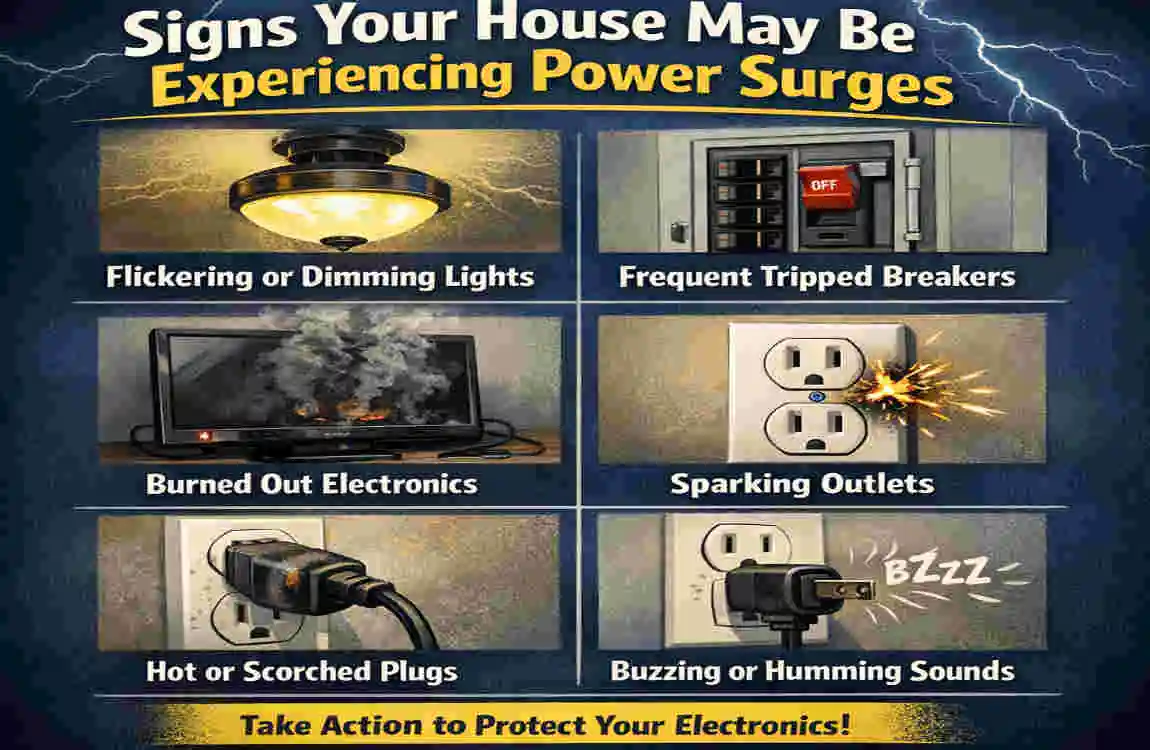
Common Warning Signs
- Lights dimming or brightening when large appliances start
- Electronics restarting on their own
- Clocks resetting often after small outages
- Buzzing or humming from outlets or devices
- Burning smell near sockets or breaker panels
- Circuit breakers tripping more than once
- Scorch marks around outlets or plugs
- Appliances failing early, especially fans, TVs, fridges, or AC units
What These Signs Mean
A one-time flicker may not be a major problem. But repeated electrical fluctuations are a red flag. They suggest your system is under stress.
For example, if your lights dim every time the AC starts, that points to a load issue or weak wiring. If your computer shuts down unexpectedly, that may point to unstable power or a surge passing through the line.
Checklist to Watch For
- Lights dim or brighten during AC use
- Electronics reset clocks often
- Devices make unusual buzzing sounds
- Breakers trip more than once a month
- Outlets feel warm to the touch
- Appliances stop working sooner than expected
If several of these sound familiar, you probably no longer need to wonder why is my house power surging. You likely have a real electrical problem that needs attention.
Using a Multimeter
If you are comfortable doing basic checks, a multimeter can help you log voltage changes. A normal home supply should stay within a steady range. If you see sudden jumps or drops, that is a sign of unstable power.
A few measurements over time can tell you whether the issue is random or regular. This helps you decide whether the problem is inside the house or coming from the grid.
Damage from Power Surges
A surge is not just annoying. It can cause real damage that gets worse over time.
Immediate Damage
Strong voltage spikes can damage circuit boards, burn out power supplies, and stop appliances from working altogether. You might lose a TV, a router, a desktop computer, or an AC control board in a single event.
That can mean costly repairs, replacement parts, and disruption to your daily routine.
Long-Term Wear
Smaller surges are more sneaky. They may not kill an appliance right away, but they slowly wear down the internal parts. This is sometimes called electronic wear or “electronic rust.”
Motors, compressors, and sensitive boards all take a beating from repeated home electrical surges. Over time, that can reduce performance and shorten the life of your devices.
Safety and Fire Risk
Damaged wiring and overheated outlets can become fire hazards. In some cases, a surge can spark a problem that starts behind the wall, where you may not see it right away.
That is why power surge causes should never be ignored. Even if your electronics seem fine, the wiring may still be stressed.
Homeowners and Cost Impact
For homeowners, the cost can build quickly. AC repairs, fridge compressor damage, and burned control panels can add up fast. In some cases, a single surge can lead to repairs worth tens of thousands of rupees.
If you are still asking, “Why is my house power surging?” remember this: the damage is often bigger than the flicker you first notice.
How to Diagnose Power Surges
You do not have to guess forever. A few simple checks can help you narrow down the problem.
Watch When It Happens
Start by paying attention to timing. Do the surges happen when the AC starts? When the fridge cycles? After a power outage? During a storm?
Patterns matter. They help you separate internal power surge causes from external ones.
Unplug and Test
Unplug non-essential devices and see whether the issue improves. Then test one circuit at a time.
If the problem goes away when a particular appliance is off, that appliance may be part of the issue. If the problem persists across multiple circuits, the wiring or the grid may be the cause.
Check the Breaker Panel
Look for breakers that trip often, loose wires, or signs of heat. If anything looks burned, discolored, or damaged, stop there and call a professional.
Contact the Utility if Needed
If your voltage is unstable throughout the house, the issue may be outside your home. In that case, a utility check may be needed.
When to Call a Professional
If surges occur frequently, affect multiple rooms, or cause burning smells or tripped breakers, you should call an electrician right away. Persistent electrical fluctuations usually mean a deeper issue.
If you are still asking, “Why is my house power surging?” after basic checks, that is usually the moment to bring in expert help.
How to Stop Power Surges
Now let’s get to the part most homeowners really want: what can you do about it?
If you have been wondering how to stop power surges, the answer depends on the cause. Some fixes are simple and immediate. Others require professional repair.
Quick DIY Fixes
These are the practical steps you can start using right away.
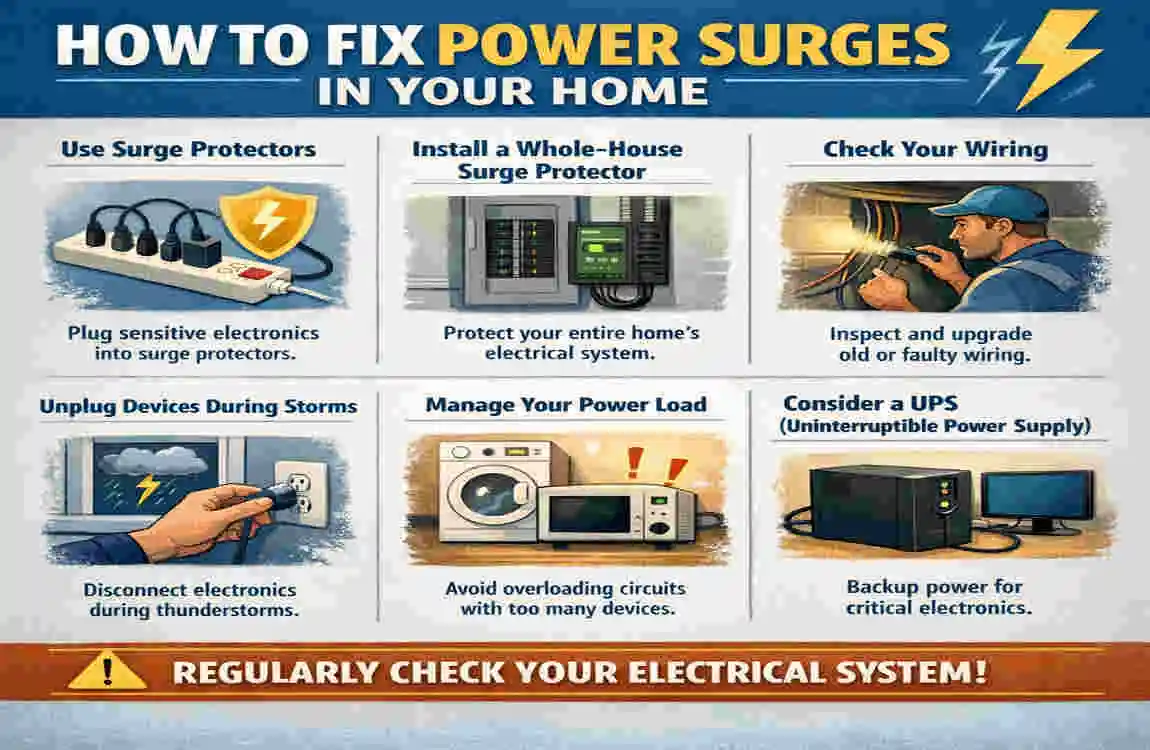
Unplug During Storms
If a storm is approaching, unplug sensitive electronics such as TVs, computers, and sound systems. That gives them a layer of protection against strong external voltage spikes.
Spread Out Heavy Loads
Do not run too many high-power appliances on the same outlet or circuit. Spread devices across different rooms where possible. This helps reduce pressure on the system and lowers the risk of electrical surges in the home.
Replace Weak Power Strips
Old, cheap, or damaged power strips are not enough. Use surge-rated strips instead. A good surge protector can absorb smaller spikes before they reach your devices.
Avoid Daisy-Chaining
Do not plug one power strip into another. This is unsafe and can cause a power surge, worsening the problem by overloading the line.
Simple Protection Checklist
- Unplug electronics during storms
- Spread appliances across circuits
- Replace worn cords and strips
- Avoid daisy-chaining extension boards
- Keep outlets dry and clean
These steps will not solve every issue, but they are a smart first line of defense.
Surge Protector Comparison Table
TypeJoulesPrice Range (PKR)Best For
Power Strip 2000 2000 Electronics
Outlet Adapter 1000 1000 Single outlets
Whole-House Protector 50K+ 20K+ Full home protection
A surge protector is not magic, but it helps. The higher the joule rating, the more energy it can absorb before failing.
If you are serious about solving the problem of why is my house power surging, basic plug replacements alone may not be enough. You may need stronger protection.
Professional Solutions
Some problems need a trained electrician. That is especially true when surges happen often or when wiring is old.
Install a Whole-House Surge Protector
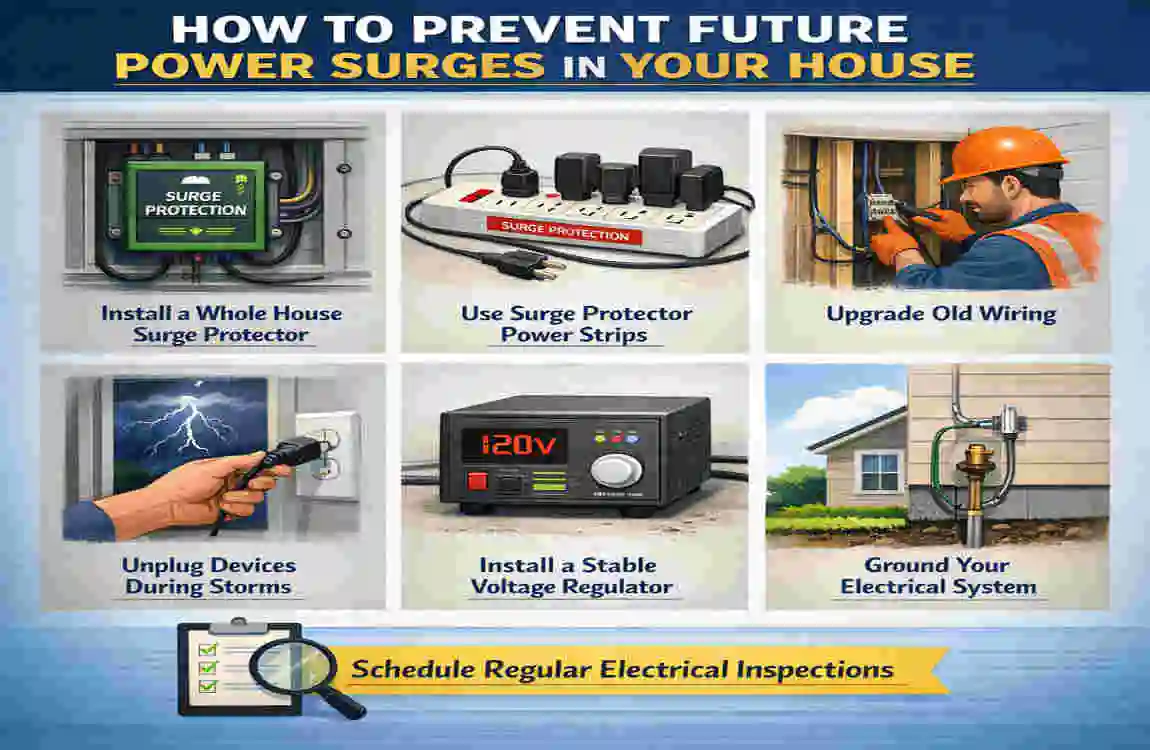
One of the best long-term fixes is a whole-house surge protector installed at the breaker panel. This device helps block large spikes before they spread through the house.
It is especially useful in areas with unstable grids or storm-related electrical fluctuations.
Rewire Problem Circuits
If your wiring is old, damaged, or poorly installed, no surge protector will fully solve the issue. The system itself needs attention. Rewiring problem areas can improve safety and reduce the frequency of power surges.
Improve Grounding
A proper ground helps carry excess electricity safely away from your home. If your grounding is weak, an electrician can inspect and improve it.
Add UPS Backup for Sensitive Devices
For computers, routers, and office equipment, an uninterruptible power supply, or UPS, is a smart home choice. It gives temporary backup power and helps protect against brief spikes and outages.
When the Panel Needs an Upgrade
If your breaker panel is old or overloaded, an upgrade may be necessary. Modern homes use more electricity than older systems were designed to handle. Upgrading the panel can reduce stress and improve safety.
What Professional Help Usually Includes
- Panel inspection
- Load balancing
- Grounding check
- Surge protector installation
- Wiring repair or replacement
If you are still asking, “Why is my house power surging?” and the issue keeps returning, this is the point where professional help becomes the smart choice.
Why Hiring an Electrician Matters
An experienced electrician can determine whether wiring, appliances, grounding, or an outside supply problem cause the issue. That saves time, lowers risk, and helps you avoid guessing.
Long-Term Prevention Tips

The best way to deal with surges is to prevent them before they happen.
Schedule Regular Inspections
A yearly inspection can catch loose wires, weak outlets, and panel issues before they turn into bigger problems. This is one of the easiest ways to reduce home electrical surges.
Upgrade Old Wiring
If your home still has aging or damaged wiring, replacing it with modern copper wiring can improve safety and performance. Old systems often create more voltage spikes than you realize.
Protect the Roof and Exterior
In storm-prone areas, lightning protection and roof maintenance matter. A properly installed lightning rod and arrestor system can help reduce damage during strong weather.
If you are already thinking about storm safety, it may also help to review our roofing storm damage guide so your home is protected from top to bottom.
Use Smart Monitoring Tools
Smart energy monitors can show you how much electricity your home is using and when there are unusual changes. That makes it easier to spot warning signs early.
Keep Your Setup Clean and Simple
Avoid messy extension-board setups and overcrowded outlets. Keep panels clean and dry. Make sure cords are in good condition.
A little care goes a long way when you are trying to avoid power surge causes over time.
Why Is My House Power Surging at Night?
This is a common question, and the answer is often simple.
At night, appliances such as AC units, fridges, and water pumps may cycle on more often. At the same time, your area may have lower or less stable grid demand. That can make electrical fluctuations easier to notice.
If the issue occurs only at night, it may be linked to appliance cycling, grid load, or weak wiring that shows problems when demand changes. So if you are asking, “Why is my house power surging after dark?” watch which devices are active at that time.
FAQ
Why is my house power surging at night?
It is often caused by AC and fridge cycles, shifting grid demand, or weak wiring, which become more noticeable when power use changes.
Can power surges damage plumbing?
Not directly, but they can affect pump motors and water system controls, which may create indirect plumbing issues.
How much does it cost to fix house surges in Pakistan?
Costs vary widely. Simple fixes may cost around PKR 5,000, while larger wiring or protection upgrades can reach PKR 50,000 or more.
Do surge protectors work 100%?
No. They reduce risk, but they do not stop every surge. It is also smart to replace them every few years, especially after major spikes.