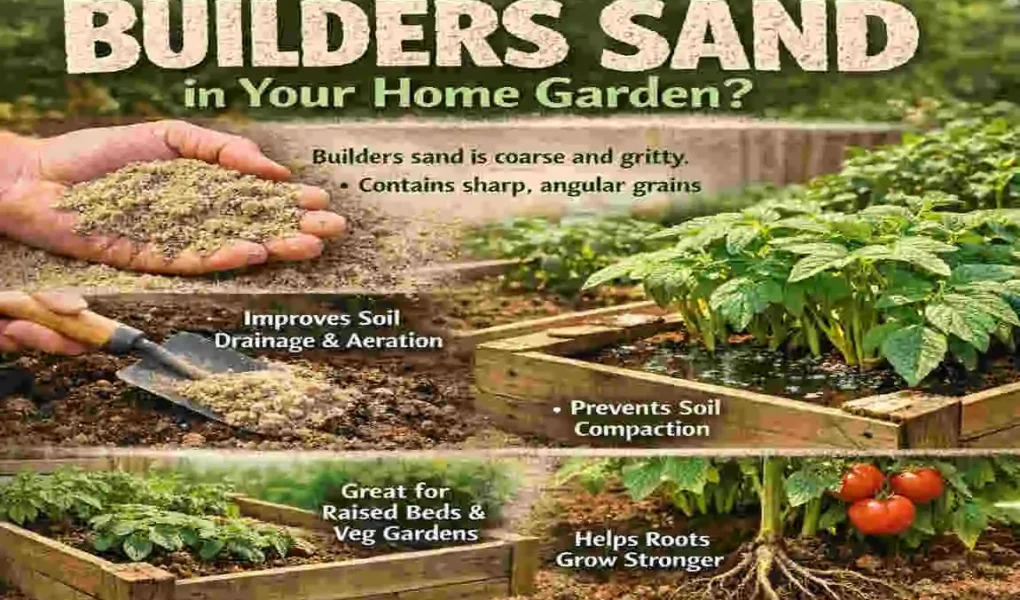
Soil drainage problems are a common challenge many gardeners face. Whether it’s a backyard vegetable patch or a flower bed, poor drainage can lead to waterlogged soil, stunted plant growth, and a lot of frustration. Naturally, homeowners often turn to sand as a potential fix, given its reputation for improving soil structure.
| Topic | Details |
|---|---|
| Can builders sand be used in gardens? | Yes, but only in certain gardening situations. |
| Best Use | Improving drainage in heavy clay soil and lawn leveling. |
| Main Benefit | Helps loosen compacted soil and improves water flow. |
| Main Risk | Fine particles may cause soil compaction if overused. |
| Safe to Use with Plants? | Generally safe when mixed with compost or organic matter. |
| Not Recommended For | Seed starting, indoor plants, and sensitive vegetables. |
Among the various types of sand available, builders sand is one of the most accessible and affordable options. However, questions arise: can you use builders sand in the home garden, and is it safe for your plants? Many gardeners also confuse builders sand with horticultural sand or sharp sand, making the decision even trickier.
What Is Builders Sand?
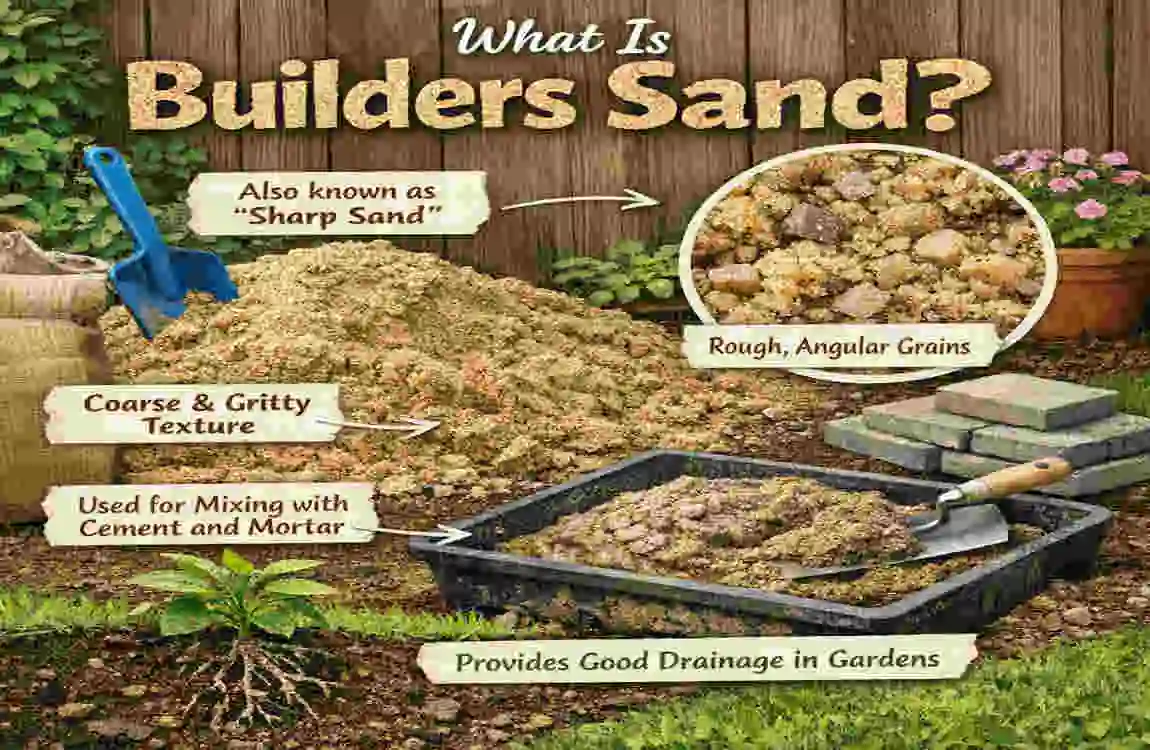
Builders sand is a versatile material primarily used in the construction industry. Still, its availability and affordability often make it appealing to gardeners. Let’s dive deeper into its characteristics and how it differs from other types of sand.
Definition of Builders Sand
Builders sand, also known as coarse sand or plastering sand, is a gritty sand commonly used in construction projects such as bricklaying, plastering, and paving. It has medium to fine grains and a rough texture, making it ideal for binding materials. Its color can vary from light beige to orange, depending on its source.
How Builders Sand Is Manufactured
Builders’ sand is typically extracted from quarries and rivers, then washed to remove impurities such as silt and clay. However, this washing process may not eliminate all contaminants, such as salts or lime, which can affect soil and plants.
The manufacturing process also produces fine particles that, if not used correctly, can compact soil rather than improve its texture.
Builders Sand vs. Other Types of Sand
Here’s a quick comparison of builders sand with other common types of sand:
Sand Type Texture Uses Suitability for Gardens
Builders Sand Medium to fine Construction, plastering Limited use in gardens
Sharp Sand Coarse and gritty Pathways, soil drainage Better for garden drainage
Horticultural Sand Very coarse Specialized gardening Ideal for soil improvement
Play Sand Very fine Children’s sandboxes Not suitable for plants
Understanding these differences is crucial to making the right choice for your garden.
Can You Use Builders Sand in the Home Garden?
The big question: can you use builders sand in the home garden? The answer is nuanced. While builders sand can work in certain situations, it’s not always the best option. Let’s break it down.
The Short Answer
Yes, you can use builders sand in gardens, but only with specific soil types and proper techniques. It’s not a one-size-fits-all solution and requires careful consideration.
When Builders Sand Can Work
Builders sand can be beneficial in the following scenarios:
- Improving heavy clay soil: Mixing builders sand into dense clay soil can improve its drainage and structure.
- Mixing with compost: When combined with organic matter, builders sand can help aerate the soil.
- Lawn leveling applications: It’s commonly used to fill in low spots and level uneven lawns.
When It Can Cause Problems
Despite its potential benefits, builders sand also comes with risks:
- Poor drainage: If used excessively, the fine particles in builders sand can create a concrete-like layer in the soil.
- Salt or lime contamination: These impurities can harm plants, especially sensitive ones.
- Soil compaction: Without proper mixing, builders sand can worsen soil compaction, defeating its purpose.
Expert Recommendation
While builders sand can be a temporary fix, most gardening experts recommend horticultural sand for long-term soil improvement. It’s specifically designed for gardening and contains coarser particles that promote better drainage and aeration.
Benefits of Using Builders Sand in Gardens
In certain situations, builders sand can offer several advantages for soil and plants. Here’s a closer look at its potential benefits:
Improves Soil Drainage
Builders sand can help water move through dense soil, reducing waterlogging and creating better conditions for plant roots.
Breaks Up Clay Soil
When mixed with clay soil, builders sand can make the soil less compact and more manageable, allowing roots to grow freely.
Affordable and Widely Available
Compared to specialized gardening sands, builders sand is much more budget-friendly and easy to find at local hardware stores.
Useful for Lawn Maintenance
Builders sand is commonly used for lawn topdressing, as it can level uneven areas and improve drainage in grassy patches.
Can Help Raised Beds
In small amounts, builders sand can be added to raised bed soil mixes to improve texture and prevent water retention issues.
Risks of Using Builders Sand in the Home Garden
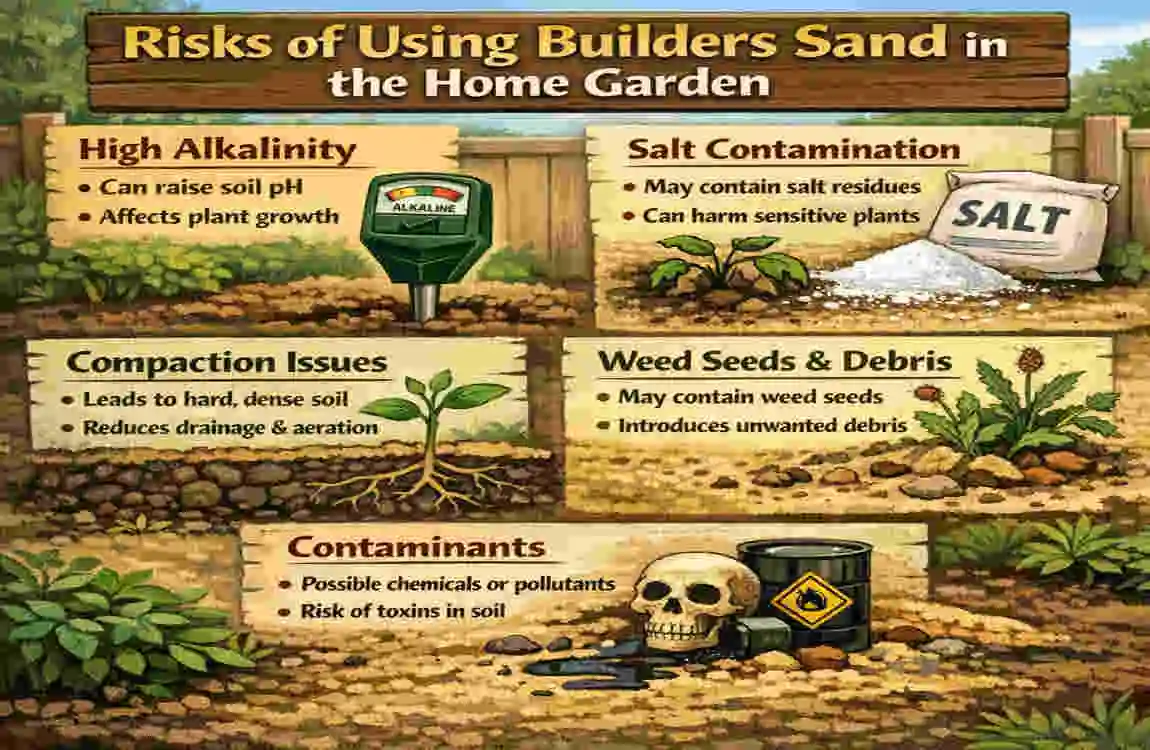
While builders sand has its advantages, it’s not without risks. Understanding these potential downsides is essential for making informed decisions.
Contains Fine Particles
Unlike horticultural sand, builders sand often contains fine particles that can compact the soil, leading to poor drainage.
Possible Chemical Contaminants
Builders sand may contain salts, lime, or other construction-grade impurities that can harm plants or alter soil pH.
Salt Content Concerns
High salt levels can damage plant roots and affect overall growth. This is especially problematic for vegetable gardens.
Poor Performance in Certain Soil Types
In sandy soil, adding builders sand can worsen drainage problems and disrupt water retention.
Can Harm Sensitive Plants
Vegetables, flowers, and acid-loving plants may struggle to thrive in soil mixed with builders sand due to its impurities.
Builders Sand vs Horticultural Sand
When it comes to gardening, horticultural sand is often the preferred choice. Here’s how it compares to builders sand:
Texture Differences
Horticultural sand is coarser than builders sand, making it better for improving soil drainage and aeration.
Drainage Performance
Horticultural sand provides superior drainage, while builders sand may compact and reduce water flow.
Safety for Plants
Builders sand can contain contaminants, whereas horticultural sand is specifically processed for gardening and plant safety.
Price Comparison
Builders sand is cheaper, but horticultural sand offers better long-term value for gardening purposes.
Best Ways to Use Builders Sand in a Garden
If you decide to use builders sand, here are some practical ways to do it:
- Mixing with compost: Combine builders sand with organic matter in a 1:2 ratio for better soil texture.
- Improving clay soil: Add sand gradually and till it into the soil to avoid compaction.
- Topdressing lawns: Apply a thin layer of builders’ sand over low spots, then rake evenly.
- Raised bed mixes: Use small amounts of builder’s sand with compost and garden soil.
- Pathways and landscaping: Builders sand is excellent for non-planting applications, such as pathways or under pavers.
Better Alternatives to Builders Sand
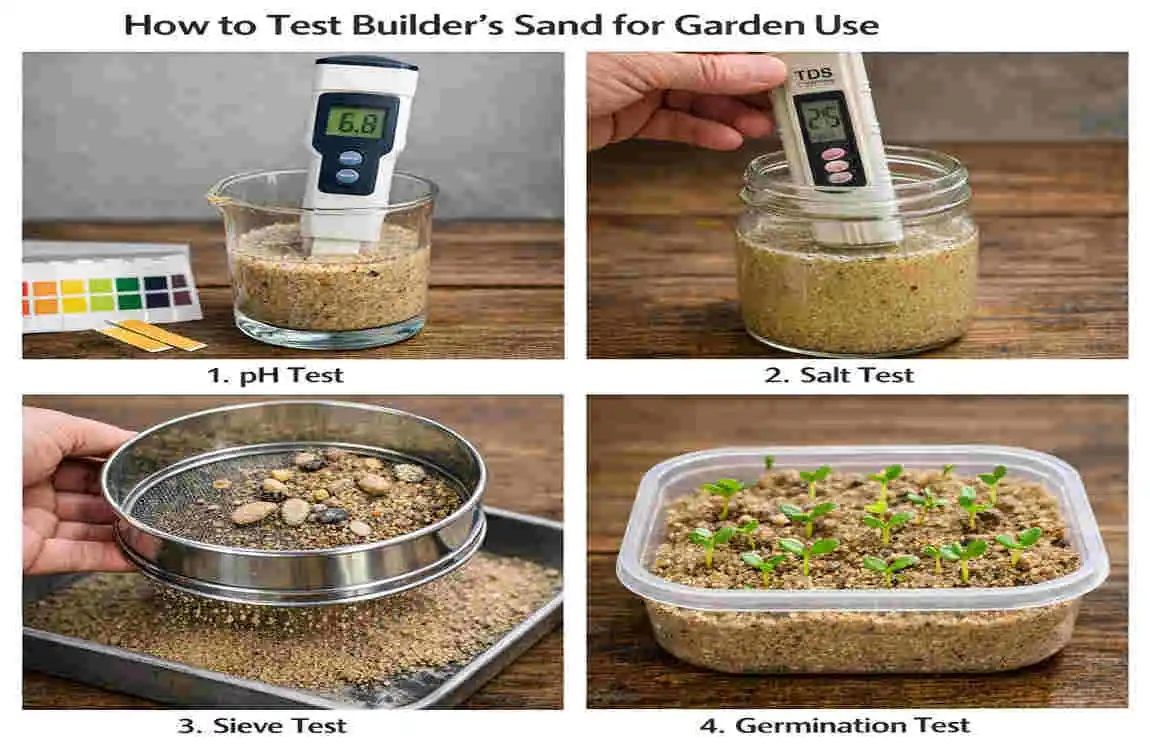
If builders sand doesn’t seem like the right choice for your garden, consider these alternatives:
Alternative Benefits Best Use Cases
Horticultural Sand Improves drainage and aeration General gardening
Sharp Sand Coarse and effective for drainage Clay soil improvement
Compost Adds nutrients and structure Vegetable gardens, flower beds
Perlite Lightweight and improves aeration Container plants
Vermiculite Retains moisture effectively Seed starting, potting soil
FAQ: Can You Use Builders Sand in the Home Garden?
Can you use builders sand in the home garden?
Yes, builders sand can be used in the home garden for improving drainage and loosening heavy clay soil, but it should be mixed with compost or organic matter.
Is builders sand safe for plants?
Builders sand is generally safe in small amounts, but some types may contain salts or fine particles that can harm sensitive plants.
What is the difference between builders sand and horticultural sand?
Builders sand is finer and made for construction, while horticultural sand is coarser, cleaner, and designed specifically for gardening use.
Can builders sand improve soil drainage?
Yes, builders sand may improve drainage in clay soil when mixed properly with organic material.
Should I use builders sand in vegetable gardens?
It is usually better to use horticultural sand in vegetable gardens because builders sand may affect soil quality and plant growth.
How much builders sand should I add to soil?
A small amount mixed evenly with compost works best. Avoid adding too much, as it can make soil compact and hard.
Can builders sand be used for lawns?
Yes, builders sand is often used for lawn leveling and topdressing, especially on uneven ground.
What is the best alternative to builders sand for gardening?
Horticultural sand or sharp sand are better choices because they provide better drainage and are safer for plants.