If you are searching for how a single person can afford a house, you are not alone, and you are not imagining how hard it feels. One paycheck, one set of savings, and a market where the typical home costs more than $400,000 is a tough combination.
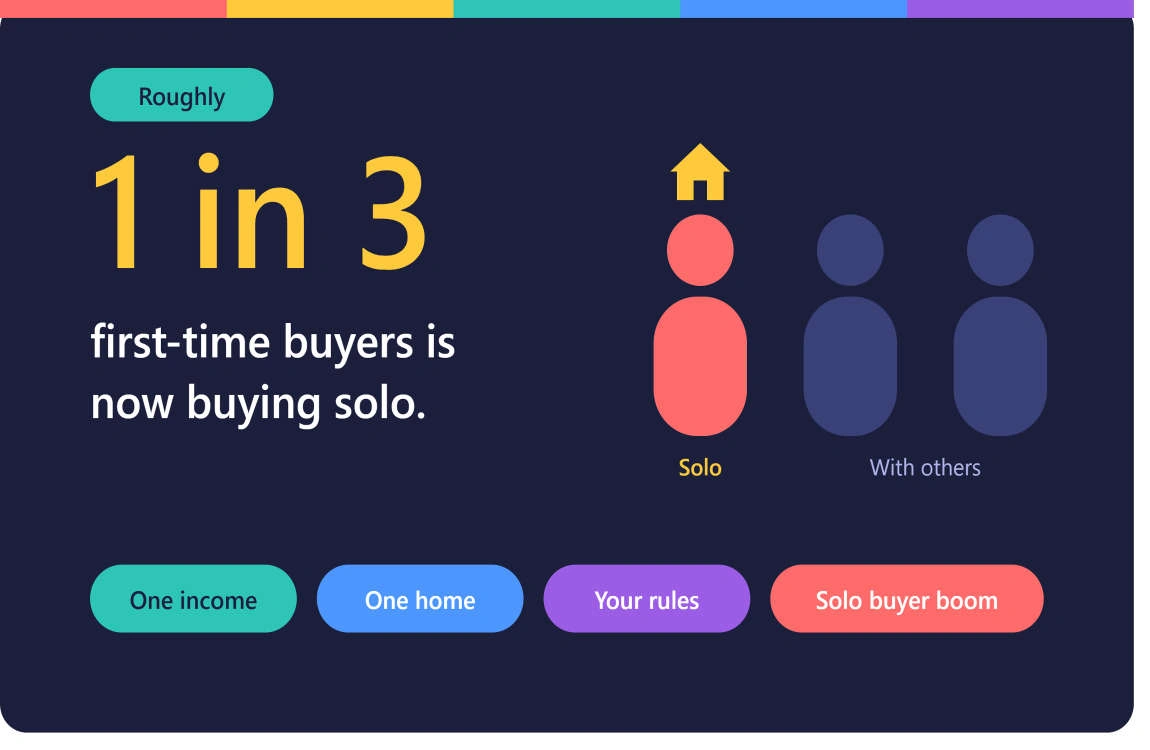
The good news: single buyers are buying homes in big numbers anyway. According to the National Association of Realtors (NAR), single women made up 25% of first-time buyers and single men 10% in its 2025 survey. That means roughly one in three first-time buyers is buying solo.
The Reality Check: What the Numbers Say in 2026
Before you house plan, it helps to know what you are up against. Here is the current picture:
- Home prices: NAR reported a median existing-home price of $417,500 in September 2026, up 1.3% from a year earlier. Condos and co-ops were cheaper, at a median of $363,700.
- Mortgage rates: Freddie Mac’s weekly survey put the 30-year fixed rate at 7.32% on October 22, 2026, down slightly from the week before but well above the 6.19% of a year earlier.
- Who is buying: NAR’s 2025 data shows first-time buyers hit a record-low 21% of the market, with a median age of 40 and a typical down payment of 10%.
Higher rates and prices are the reason many buyers wait longer. But “harder” is not “impossible,” and the rest of this article shows where single buyers still find room to move.
Work Out Your Real Budget First (Not the Bank’s Maximum)
A lender may approve you for more than you should spend. A common guideline is to keep your total housing cost (mortgage, property tax, insurance and any mortgage insurance) at or below roughly 28% of your gross monthly income, and total debts near 36%. Lenders can go higher, but you are the one who has to live on one salary.
Here is a quick illustration using today’s numbers. These are my own estimates for principal and interest only, on a $417,500 home at 7.32% over 30 years:
| Down payment | Loan amount | Approx. monthly principal & interest |
|---|---|---|
| 3.5% (about $14,600) | about $402,900 | about $2,770 |
| 10% (about $41,750) | about $375,750 | about $2,580 |
| 20% (about $83,500) | about $334,000 | about $2,290 |
Add property taxes, homeowners insurance and, with a small down payment, mortgage insurance, and the real monthly cost climbs further. Run your own numbers with a mortgage calculator before you fall in love with a listing.
Use a Low Down Payment Loan (You Do Not Need 20%)
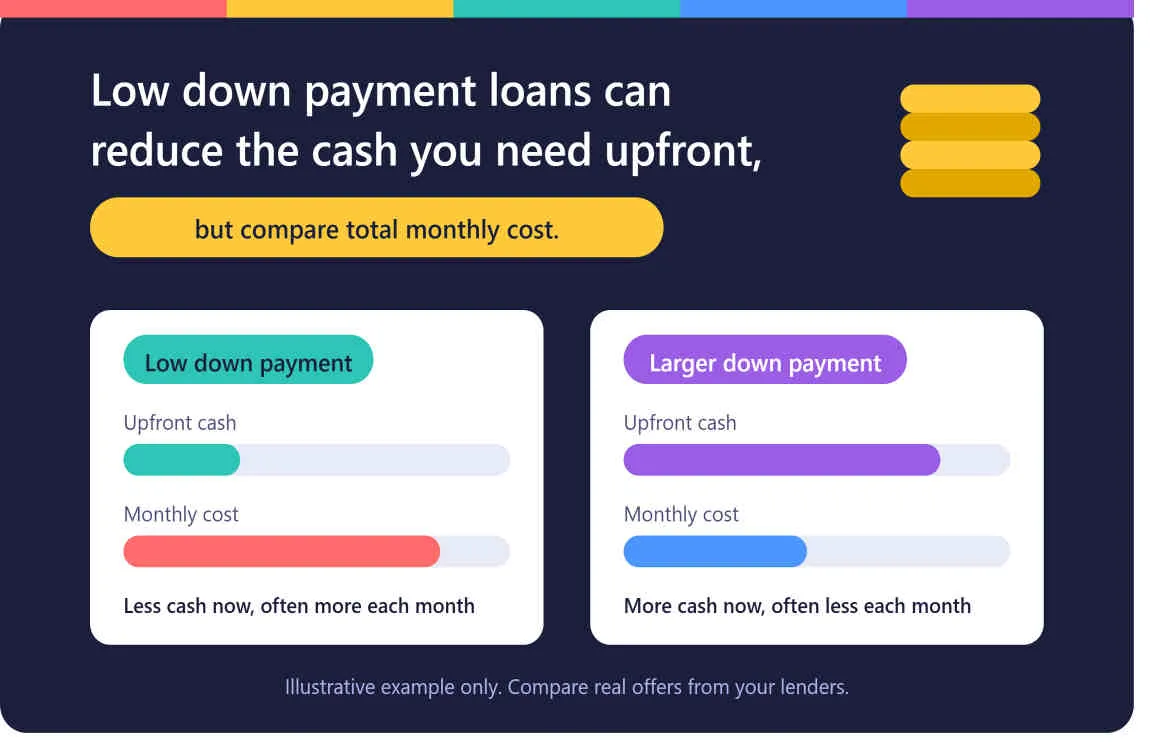
The “you need 20% down” rule is one of the biggest myths in home buying. NAR found that the median first-time buyer put down 10%, not 20%.
FHA loans, insured by the Federal Housing Administration, are built for this. With a credit score of 580 or higher, the minimum down payment is 3.5%. Scores between 500 and 579 generally require 10% down. FHA loans also carry mortgage insurance premiums, so compare the full monthly cost, not just the down payment. You can read the program basics on the U.S. Department of Housing and Urban Development (HUD) loans page.
Conventional loans with low down payments also exist, and private mortgage insurance on them can often be removed later once you build enough equity. Ask lenders to show both options side by side.
Look for Down Payment Assistance Near You
Many states, counties and cities offer grants, forgivable loans or low-interest second loans to help with the down payment and closing costs. Eligibility often depends on income limits, first-time buyer status or the area you buy in, and some programs require a homebuyer education course.
HUD keeps a directory of local homebuying programs by state. Check it before you decide you need to save for years.
Improve Your Credit Score and Debt-to-Income Ratio
Your credit score affects both your approval and your interest rate. On a loan this size, even a small rate difference changes your payment by tens of dollars every month for 30 years.
- Pay every bill on time and pay down credit card balances before applying.
- Avoid opening new credit lines or financing a car in the months before you apply.
- Check your credit reports for errors and dispute any you find.
- Pay off small debts that inflate your debt-to-income ratio.
The Consumer Financial Protection Bureau (CFPB) offers a free step-by-step Owning a Home toolkit covering credit, loan estimates and closing.
Shop Smaller or Shop Different Markets
You do not have to buy a three-bedroom single-family house. Consider:
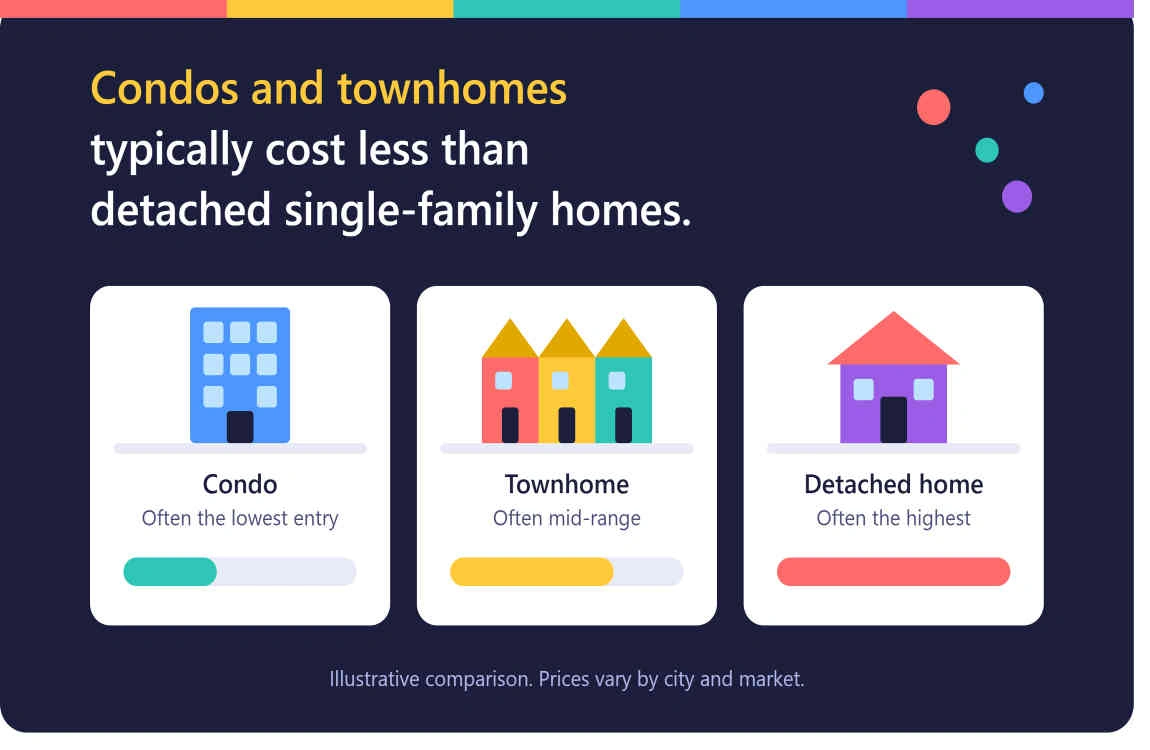
- Condos and townhomes: NAR’s September 2026 data shows the median condo price at $363,700 versus $422,700 for single-family homes. Check HOA fees, since they count toward your monthly costs.
- Different regions: The same NAR report shows regional median prices ranging from roughly $330,000 to more than $610,000. Remote or hybrid workers can sometimes cut their housing cost sharply by looking at more affordable metro areas.
- Older or slightly dated homes: A home that needs cosmetic updates often sells for less, but get a thorough inspection and a repair budget first.
Try House Hacking
House hacking means living in part of your property and renting out the rest. Buy a duplex, a home with a basement apartment, or a house with spare rooms, and let a tenant’s rent offset your mortgage. Some FHA and conventional loans allow owner-occupied multi-unit purchases with small down payments, so ask a lender which products fit. Check local zoning and landlord rules first, and remember that rental income is not guaranteed.
Consider Buying With a Trusted Co-Borrower
Some single buyers team up with a sibling, parent or close friend. Combined incomes can raise your buying power. But this is a legal and financial commitment: everyone on the loan is responsible for the debt. Put a written agreement in place covering who pays what, what happens if someone wants out, and how a sale would be handled. A real estate attorney is worth the fee here.
Shop Lenders and Negotiate Smartly
Do not accept the first mortgage offer. Freddie Mac’s chief economist noted in August 2026 that borrowers can potentially save thousands by shopping around for the best rate. Get at least three Loan Estimates and compare interest rate, fees and points on the same day.
Also use the market to your advantage. NAR reports the median home spent 33 days on the market in September 2026, and NAR’s chief economist has said sellers may need price cuts or incentives to attract buyers. Ask about seller concessions toward closing costs or a temporary rate buydown, which can make the first years of payments easier.
Keep a Cash Cushion After You Close
This one matters more for single buyers than anyone. If the water heater fails or you lose your job, there is no second income to lean on. Do not drain your entire savings for the down payment. Aim to keep an emergency fund, plus budget about 1% of the home’s value per year for home maintenance. Be cautious about borrowing from retirement accounts, which can carry taxes, penalties and lost growth.
Common Mistakes Single Buyers Should Avoid
- Buying the maximum you are approved for. Approval is not affordability.
- Forgetting closing costs. Budget for them on top of the down payment.
- Ignoring ongoing costs. Taxes, insurance, HOA dues, utilities and repairs add up.
- Skipping the inspection. A hidden problem is far more painful on one income.
- Making big financial moves before closing. A new car loan or job change can derail approval.
- Not getting pre-approved. It shows sellers you are serious and tells you your real range.
Should You Buy Now or Keep Renting?
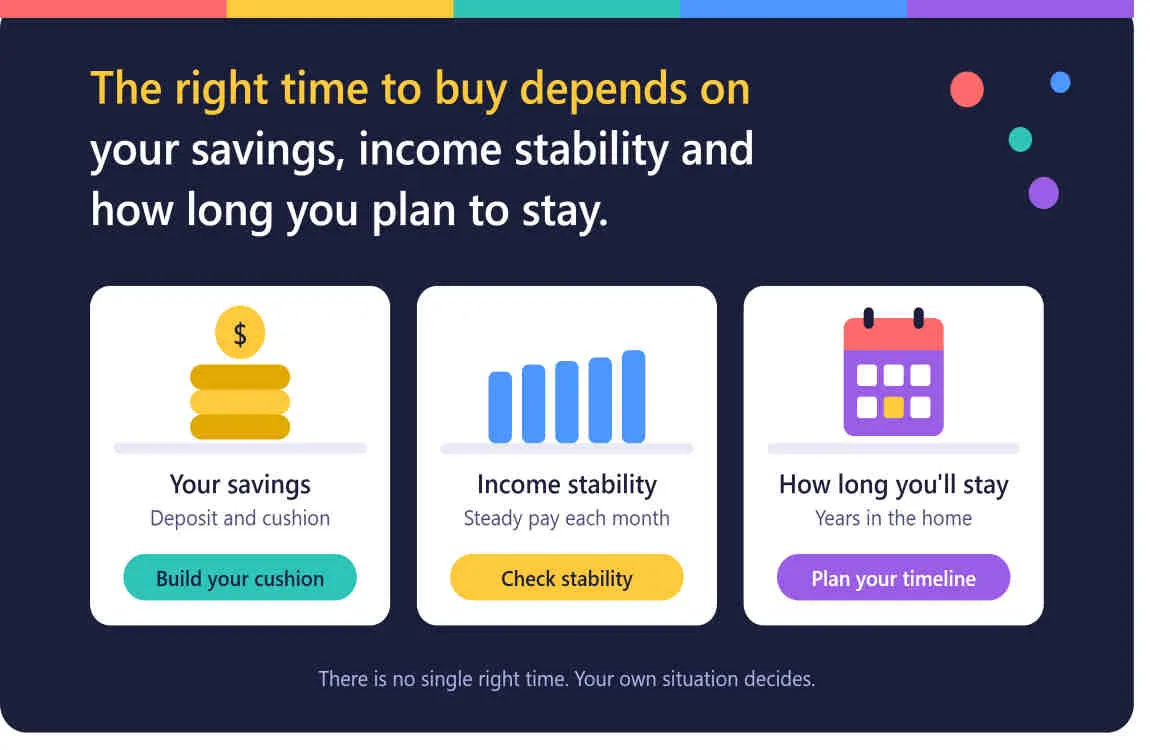
There is no universal answer. With rates above 7%, some buyers choose to wait and build savings. Others buy now, accept the rate, and plan to refinance if rates fall. A common approach is to buy only if you plan to stay several years, can comfortably afford the payment today (not at a hoped-for lower rate), and still have savings left. Talk to a HUD-approved housing cost counselor or a licensed mortgage professional about your specific situation.
Frequently Asked Questions
How much income do you need to buy a house as a single person?
It depends heavily on the local price, your debts and your down payment. A typical guideline is to keep housing costs near 28% of gross income. In expensive markets that can require a six-figure income, while in lower-cost areas it can be much less. Use a lender’s pre-approval and your own budget to find your number.
Can I buy a house on one income with a low credit score?
Possibly. FHA loans allow credit scores as low as 500 with 10% down, or 580 with 3.5% down. A higher score still gets you a better rate, so improving your credit first can save a lot over the loan’s life.
Is it smart for a single person to buy a house?
It can be, if you have stable income, an emergency fund and plan to stay a few years. It is a poor idea if the payment would strain your budget or leave you with no savings.
What is the cheapest way for a single person to buy a home?
Combining a low down payment loan, local down payment assistance, a smaller property such as a condo or townhome, and a lower-cost area is usually the most affordable route.
Should single buyers consider house hacking?
Many do. Renting out a room, basement unit or second unit can reduce your net housing cost, as long as you understand landlord duties and local rules.
Final Thoughts
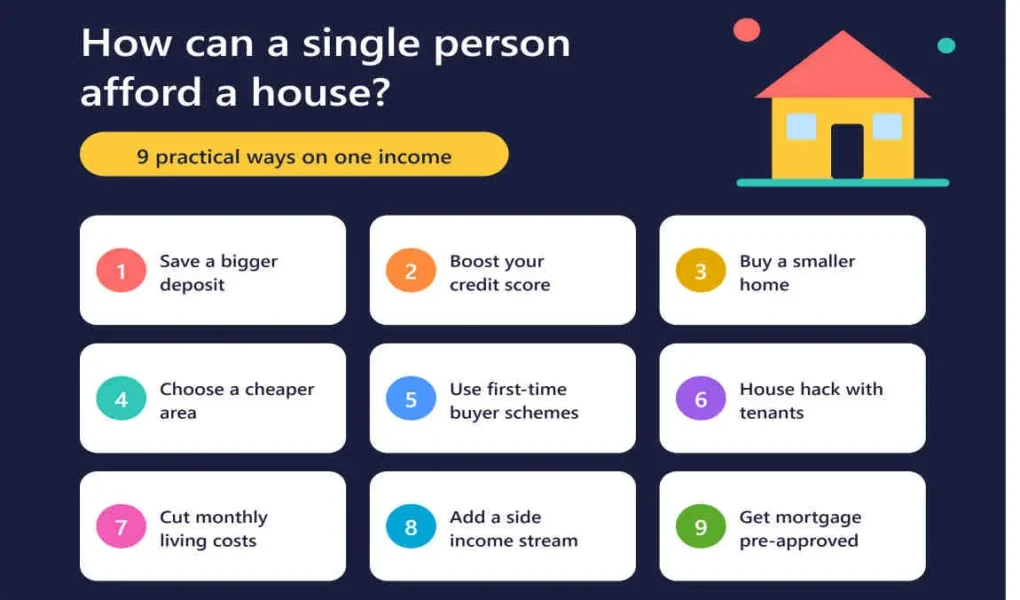
So, how can a single person afford a house? Not with one magic trick, but with a stack of smart decisions: a realistic budget, a low down payment loan, local assistance, strong credit, a smaller or cheaper property, careful lender shopping and a healthy cash cushion. Start with a pre-approval, check your local assistance programs, and run the numbers on two or three realistic scenarios. One income can absolutely buy a home. It just needs a plan.