If you are planning a new home, one of the first questions that comes up is how many square feet a two-car garage has. It sounds like a simple question, but the answer is not always the same.
| Garage Size Category | Dimensions (ft) | Square Feet | Best For |
|---|---|---|---|
| Small (Minimum) | 20 × 20 | 400 sq ft | Two sedans, minimal storage |
| Standard (Average) | 22 × 22 | 484 sq ft | Two mid-sized cars/SUVs, just enough clearance |
| Spacious (Ideal) | 24 × 24 | 576 sq ft | Larger vehicles, storage, workbench, door clearance |
| Extra Large | 24 × 30 or 28 × 30 | 720–840 sq ft | SUVs/trucks + workshop/storage space |
A garage is not just a place to park. It can also hold bikes, tools, lawn gear, boxes, and even a small work area. That is why the right size matters so much. A garage that feels fine on paper can feel too tight once you start using it every day.
How Many Square Feet Are in a Two-Car Garage?
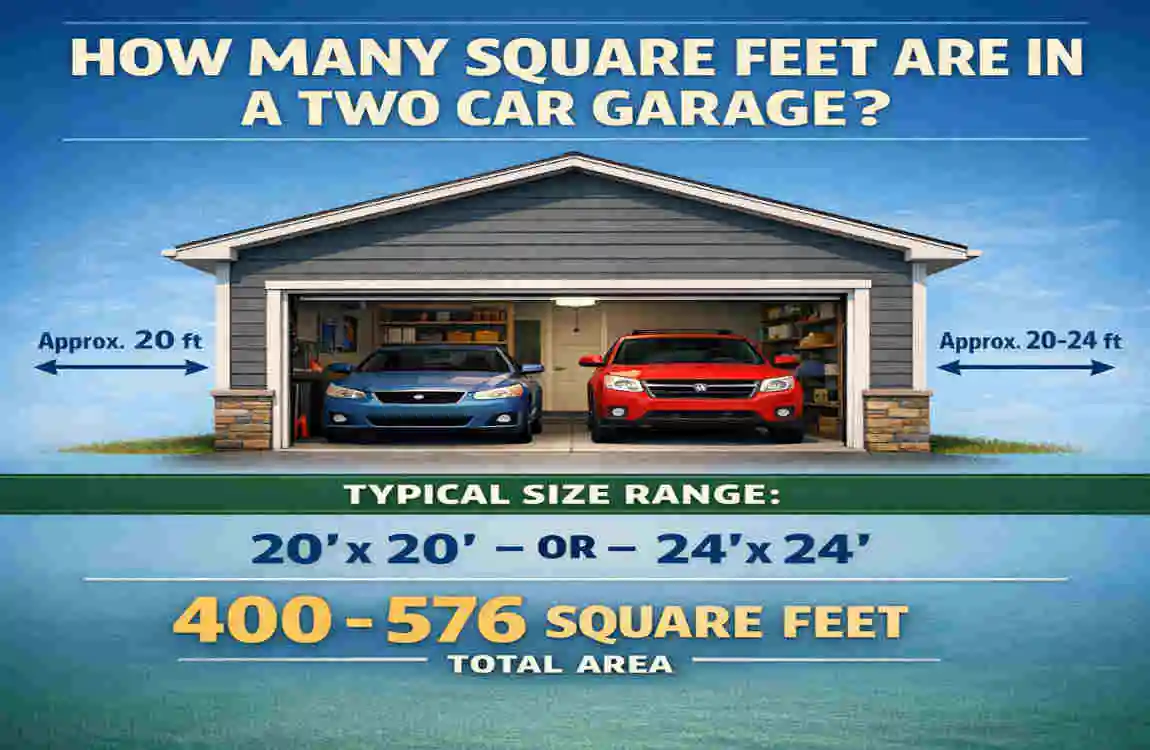
Standard Square Footage of a Two-Car Garage
A standard two-car garage is usually around 400 to 440 square feet.
That said, many homes go bigger for better comfort. Some common sizes include:
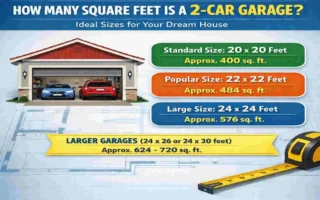
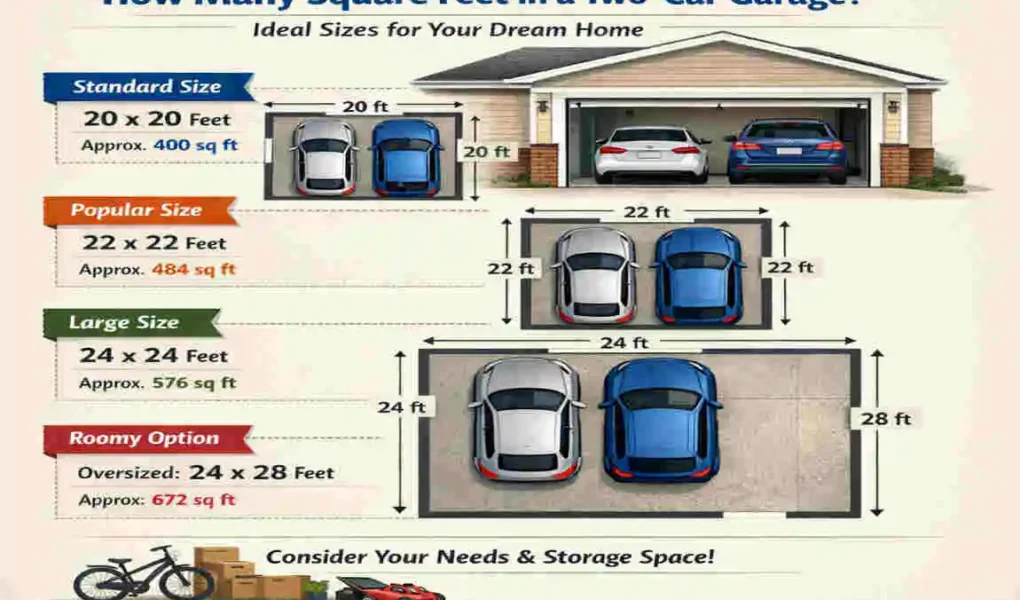
- 20 x 20 feet = 400 sq ft
- 22 x 20 feet = 440 sq ft
- 24 x 24 feet = 576 sq ft
So when people ask how many square feet are in a two car garage, the honest answer is: it depends on whether you mean a basic fit or a more comfortable layout.
A smaller two-car garage may hold two vehicles, but it may not leave much room to walk around, open doors, or store extra items. A larger one gives you more breathing room and can make daily use much easier.
Why Garage Sizes Can Differ
Garage size is not one-size-fits-all. Builders often adjust it based on:
- Local building rules
- The size of the home
- The type of vehicles you own
- Storage needs
- Whether the garage is attached or detached
If you drive larger vehicles, you will likely want a bigger space. If you also want storage shelves or a workbench, the garage should be sized accordingly from the start.
Standard Dimensions of a Two-Car Garage
Width of a Standard 2-Car Garage
The width of a two-car garage is usually 18 to 24 feet.
A width of about 20 feet is common in many homes, but it can feel tight for two full-size vehicles. If you want easier door opening and better side clearance, a wider garage is a smarter choice.
Typical Depth
The depth is usually 20 to 24 feet.
A depth of 20 feet may work for smaller cars, but many modern vehicles, especially SUVs and trucks, need a little more room. A deeper garage also gives you space to store bins or shelves without making the parking area cramped.
Ceiling Height Considerations
Most garages have an 8-foot ceiling, which works well for standard use. But if you want more storage, a taller ceiling can help.
A ceiling height of 10 to 12 feet is better if you want overhead racks, taller shelving, or extra flexibility for larger vehicles.
Door Width and Clearance
You can choose either:
- One double-wide garage door
- Two single garage doors
A double-wide door can look clean and simple, while two single doors can give each car its own space. Either way, the real key is clearance. If the opening is too narrow, parking becomes frustrating fast.
Garage Size Square Feet Best For
20 x 20 400 Basic two-car fit
22 x 20 440 Slightly more room
24 x 24 576 Comfortable parking and storage
24 x 28 672 Oversized garage or workshop use
What Is the Ideal Garage Size for Different Vehicle Types?
Compact Cars
If you drive compact cars, a smaller garage can work well. These vehicles require less width and depth, making parking easier.
Still, even with smaller cars, extra space is helpful. It gives you room to open doors, walk around the car, and store a few items without crowding the area.
Sedans
For sedans, a standard two-car garage is often enough.
If you have two sedans, a garage around 22 x 20 feet may work, but a little extra size usually makes life easier. Small changes in width can make a big difference in daily comfort.
SUVs and Trucks
SUVs and trucks usually need more width and more depth.
This is where a standard garage can start to feel tight. If you own two larger vehicles, you may want a garage closer to 24 x 24 feet or even larger.
Electric Vehicles
Electric vehicles do not always need more parking space, but they do need charging space.
That means you should plan for wall chargers, cable storage, and easy access to outlets. A little extra room near the wall can make charging much simpler and safer.
Luxury or Large Vehicles
If you own larger or high-end vehicles, you will probably want more space for comfort and care.
A larger garage helps reduce scratches, improves walking space, and makes parking less stressful. If your cars are valuable, a wider garage is often worth it.
Attached vs Detached Two-Car Garage: Does Size Change?
Attached Garage Dimensions
An attached garage is usually built to fit the home’s overall layout.
Because it connects directly to the house, it may follow the main design’s shape and size. This can make it more limited than a detached garage.
Detached Garage Dimensions
A detached garage gives you more freedom.
Since it does not have to fit into the home’s floor plan, you can often make it larger, taller, or more flexible. This is a good choice if you want extra storage or a workshop area.
Pros and Cons of Each
Attached garage advantages:
- Easier access to the home
- Often less expensive to use daily
- Convenient in bad weather
Detached garage advantages:
- More design freedom
- Better for workshops or storage
- Can be built larger more easily
How Much Extra Storage Space Should You Add?
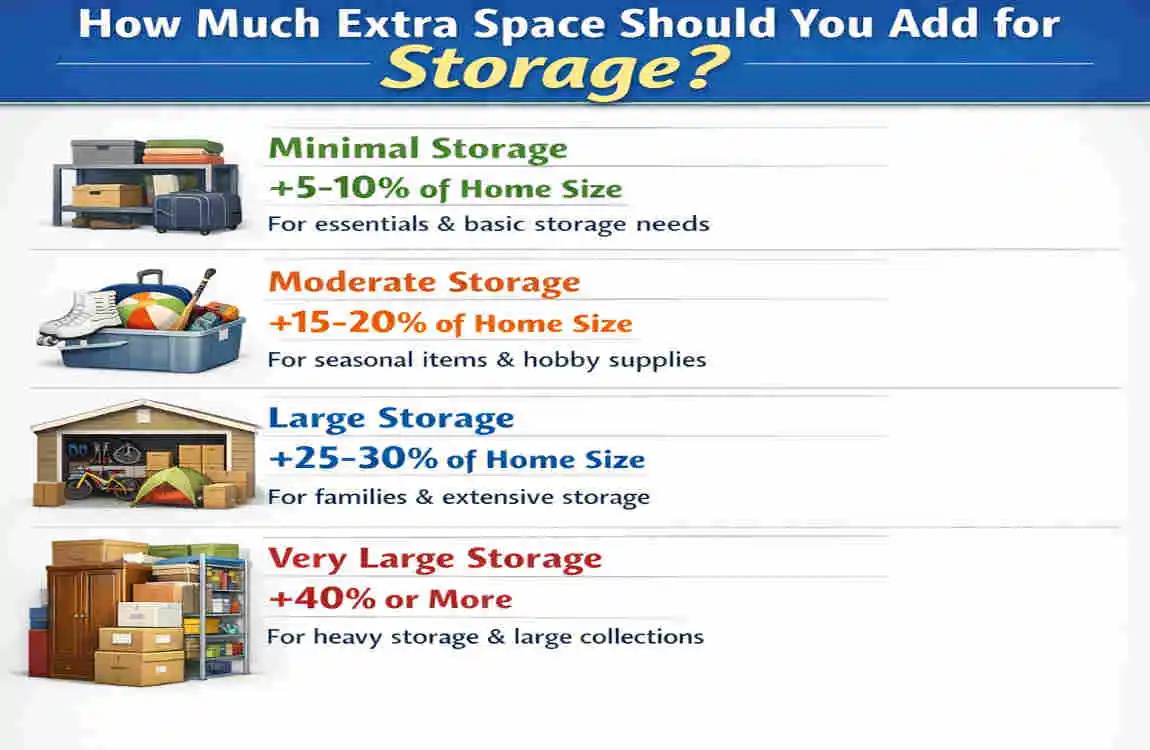
If you want your garage to do more than hold cars, you need extra space.
A garage that looks large enough for two vehicles may feel very small once you add shelves, bikes, tools, or seasonal items. That is why storage should be part of the plan from the beginning.
Smart Storage Ideas
Here are a few simple ways to make your garage work harder:
- Wall-mounted shelves for boxes and supplies
- A narrow workbench for tools and projects
- Overhead ceiling racks for long-term storage
- Hooks and wall rails for bikes and garden tools
If you want room for storage, the garage should be oversized rather than standard.
Can a Standard Two-Car Garage Fit Two SUVs?
Tight Fits vs Comfortable Space
Yes, two SUVs can fit in a two-car garage, but the fit may be tight if the garage is only basic size.
A standard garage may hold them, but you may not love using it every day. Opening doors, carrying groceries, and walking between vehicles can become difficult.
Door Opening Clearance
This is where clearance matters most.
Even if both SUVs fit lengthwise, they may still feel too close on the sides. That is why many homeowners choose a wider garage than the minimum.
Parking Convenience
If you want easy parking, aim for a garage with a little extra room on both sides. A garage that feels slightly oversized is often much more practical than one that is just barely large enough.
Building Codes and Garage Planning Factors
When planning a garage, do not focus only on size. You also need to consider rules and functionality.
Local Zoning Requirements
Your local area may have rules about:
- Lot coverage
- Setbacks
- Garage placement
- Maximum building size
These rules can affect how large your garage can be.
Driveway Access
A garage also needs easy access to the driveway.
If the driveway is too narrow or the turning space is too tight, parking becomes harder no matter how large the garage is.
Ventilation and Safety
Good airflow matters, especially if you store fuel, tools, or a car that exposes exhaust.
Proper ventilation, safe electrical planning, and fire safety should all be part of the design.
Future-Proofing
Think ahead. Your needs may change.
Maybe you will buy a larger car later. Maybe you will want an EV charger. Maybe your garage will need to double as a storage room. Planning for the future now can save money later.
Custom Garage Sizes for Dream Homes
Oversized 2-Car Garage
If you want a more comfortable setup, oversized options like 24 x 24 or 24 x 28 are great choices.
These sizes provide extra parking space and better vehicle movement.
Garage + Workshop
Many homeowners want a garage that does more than park cars.
A workshop area can fit a bench, cabinets, tools, and project space without taking up too much parking space.
Extra Height for Bigger Needs
If you need room for tall storage or special vehicles, extra height can help.
This is especially useful for:
- Tall SUVs
- Lifts or shelving
- RV or boat storage needs
Cost Differences Based on Garage Size
Garage size has a direct effect on cost.
A larger garage costs more because it uses more materials, more labor, and sometimes more utility work. In general:
- Attached garages are usually less expensive
- Detached garages often cost more
- Oversized garages increase the total budget
The good news is that a slightly bigger garage can add real value to your home, especially if storage and convenience matter to future buyers.
Common Mistakes Homeowners Make When Choosing Garage Size
Many people regret choosing a garage that is too small. Common mistakes include:
- Not planning for storage
- Forgetting future vehicle size
- Ignoring door clearance
- Skipping workshop space
- Choosing looks over function
A garage should make your life easier, not more crowded.
Tips for Designing the Perfect Two-Car Garage
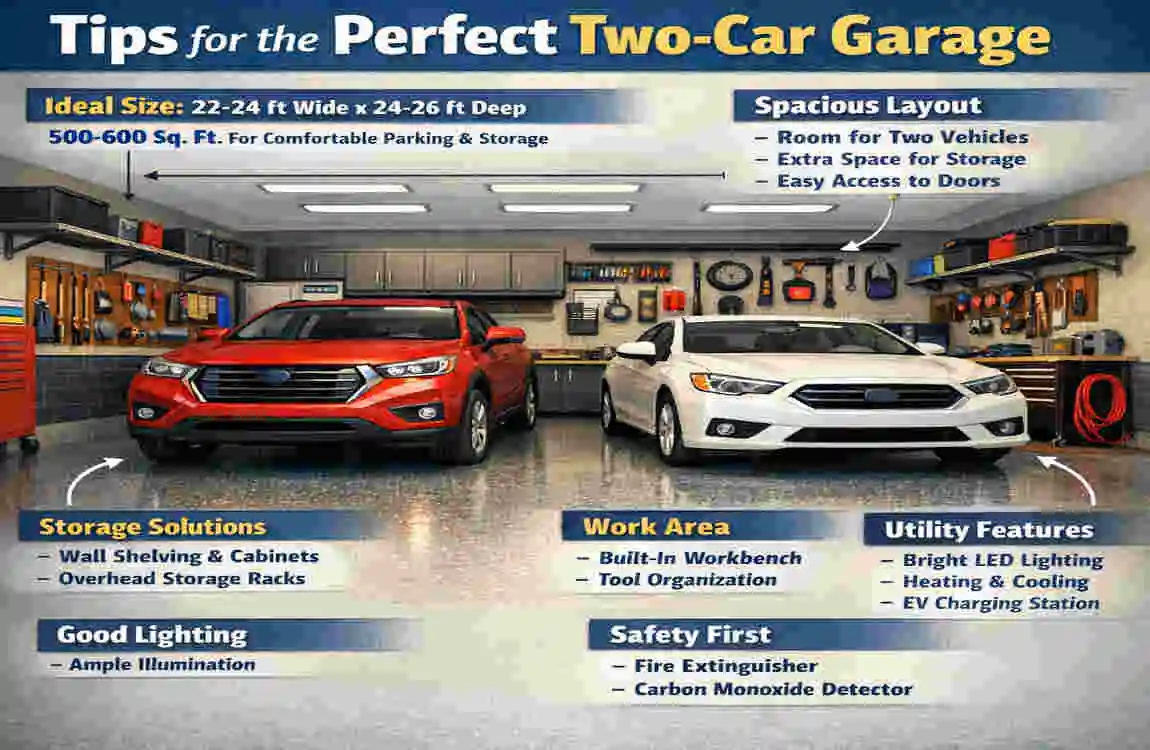
To make the best choice, keep these simple tips in mind:
- Measure your current vehicles
- Leave room to open doors comfortably
- Use vertical storage to save floor space
- Plan for lighting and outlets
- Think about resale value later
A little planning now can make your garage much more useful every day.
Frequently Asked Questions
Is a 20×20 garage enough for two cars?
It can be enough for two smaller cars, but it may feel tight for daily use.
What is the average square footage of a two-car garage?
The average is usually around 400 to 440 square feet.
Can I fit two SUVs in a 2-car garage?
Yes, but a larger garage is often more comfortable for two SUVs.
Is 24×24 oversized?
Yes, in many homes, a 24 x 24 garage is considered oversized and comfortable for two cars.
How much storage space should I add?
Add as much as your lifestyle needs, but even a small amount of extra wall or overhead storage can make a big difference.