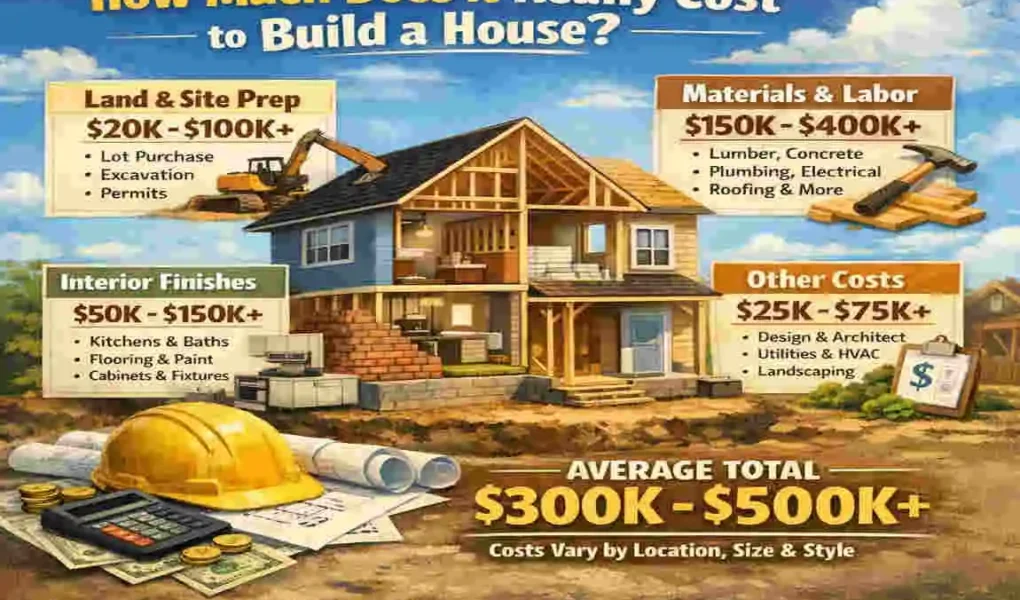
If you are asking how much it costs to build a house, you are not alone. In 2026, construction costs are still fluctuating due to land rates, material costs, labor costs, and local regulations. That is why building a home can feel exciting, but also stressful if you do not plan well.
| Category | Low Budget Cost | Mid-Range Cost | High-End Cost |
|---|---|---|---|
| Land Cost | 20%–40% of total budget | 30%–50% | 40%–60% |
| Construction (per sq ft) | $80 – $120 | $120 – $200 | $200+ |
| Foundation & Structure | Basic materials | Standard reinforced | Premium engineering |
| Interior Finishing | Simple/basic | Modern finishes | Luxury interiors |
| Plumbing & Electrical | Standard setup | Upgraded systems | Smart home systems |
| Labor Cost | Low-cost labor | Skilled workforce | Expert contractors |
| Total Estimated Home Cost | $50,000 – $120,000 | $120,000 – $300,000 | $300,000 – $1M+ |
Many people make the same mistake: they look only at the building cost and forget about land, permits, utilities, finishing, and surprise expenses. That can quickly push the budget higher than expected.
Average Cost to Build a House in 2026
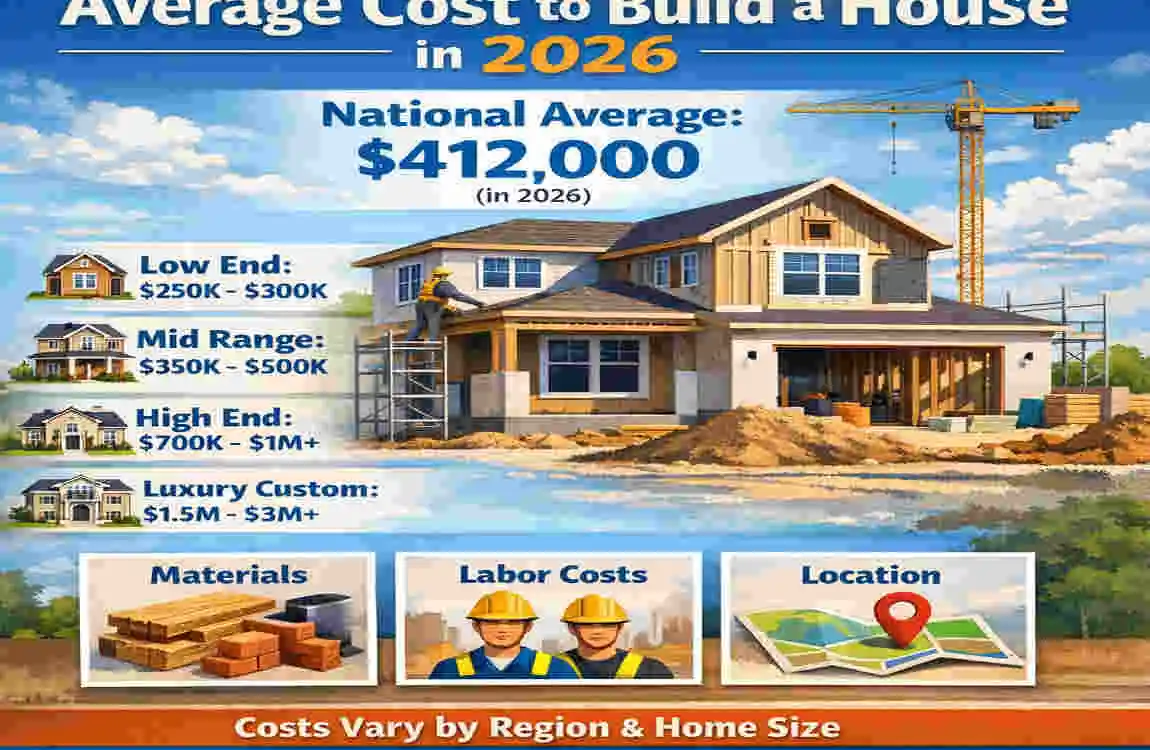
The average cost of building a house depends on your location, home size, and material quality. A small budget home can cost far less than a custom luxury house, even if both are the same size.
Here is a simple idea of typical pricing:
House Type Estimated Cost per Sq. Ft. Example Total for 1,500 Sq. Ft.
Budget Home $80–$120 $120,000–$180,000
Standard Home $120–$200 $180,000–$300,000
Luxury Home $200+ $300,000+
A 1,000 sq. ft. home will usually cost less than a 2,000 sq. ft. home, but the final bill also depends on finish quality and local labor rates. So, the same house plan can cost very differently in two places.
Main Factors That Affect How Much to Build a House Costs
Location and Land Prices
Land is often one of the biggest expenses. Urban land usually costs more because demand is high and services are already available. Rural land may be cheaper, but you may need to pay extra for roads, water, or electricity.
House Size and Design Complexity
A simple house is usually cheaper to build than a custom home with many corners, tall ceilings, or multiple floors. The more complex the design, the more time, material, and labor it needs.
Material Quality
Basic materials lower the budget, while Premium finishes raise it. Local materials often cost less than imported ones, and eco-friendly options can save money in the long run, even if the upfront cost is slightly higher.
Labor Costs
Labor prices change by region and skill level. Experienced workers, contractors, and specialized trades usually charge more, but they can also reduce mistakes and delays.
Cost Breakdown of Building a House (Detailed Section)
Land Purchase Cost
Land can take a large share of the total budget, especially in busy cities. In some cases, land alone can cost more than the actual construction.
Foundation and Structural Work
This includes excavation, cement, steel, bricks, and reinforcement. A strong foundation is not the place to cut corners because it supports the entire house.
Roofing and Framing
Roofing material matters a lot. Wood is often more affordable, steel is durable, and concrete can last a long time. The best choice depends on your budget and climate.
Plumbing and Electrical Work
Pipes, wires, switches, and safety checks all add to the cost. Good installation is important because repairs later can be expensive.
Interior Finishing
This is where costs can rise fast. Flooring, paint, cabinets, doors, and fixtures all affect the final look and feel of the house.
Exterior Work
Driveways, landscaping, boundary walls, and outdoor lighting are easy to forget, but they are part of the real budget too.
Hidden Costs You Must Consider
Many builders overlook extra expenses, and that is where trouble starts. Keep space in your budget for:
- Permits and legal approvals
- Architectural and engineering fees
- Utility connections like water, gas, and electricity
- Construction delays
- Rising material prices
- A contingency fund of 10–20%
These costs may not seem big at first, but together they can significantly affect your total budget.
Regional Differences in House Construction Costs
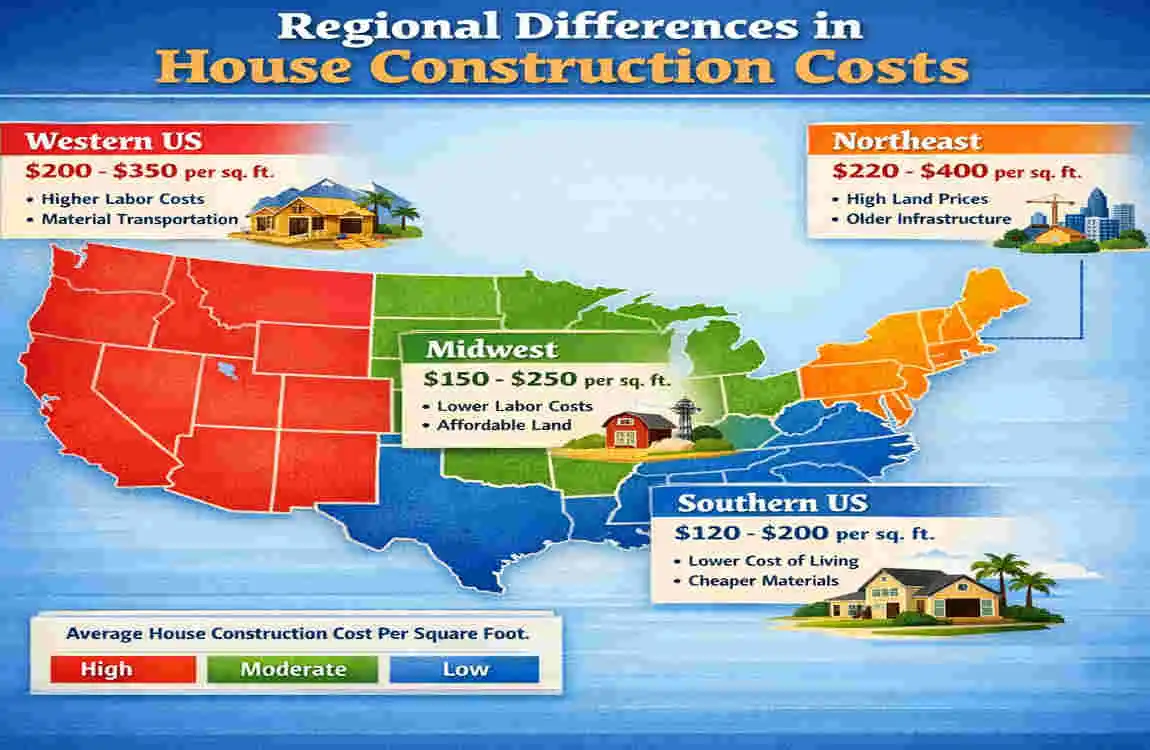
The cost of building a house changes from one region to another. In the USA and Canada, labor and materials often cost more. In the UK and across Europe, building regulations and labor rates can also increase the budget. In the Middle East, imported materials may add extra cost, while in South Asia, labor may be cheaper, but material prices can still vary widely.
Currency value, import dependence, and local supply all affect the final price. So, when you ask how much it costs to build a house, the answer always depends on where you build.
Cost per Square Foot/Meter Explained
Cost per square foot is a simple way to estimate a house’s price. Contractors use it to give a rough budget based on size and finish quality.
A basic guide looks like this:
- Low-cost: $80–$120 per sq. ft.
- Mid-range: $120–$200 per sq. ft.
- High-end: $200+ per sq. ft.
To estimate your own project, multiply the house size by the expected rate. This gives you a useful starting point before you ask for contractor quotes.
How to Reduce the Cost of Building a House
Smart Planning and Budgeting
Set your budget early and stay close to it. Try not to change the design once construction has started, because even small changes can increase costs.
Choose Cost-Effective Materials
Local materials are often cheaper and easier to replace. Look for durable options that offer good value rather than simply choosing the cheapest product.
Hire the Right Contractor
Get more than one quote and compare experience, not just price. A reliable contractor can save money by avoiding mistakes and delays.
Optimize House Design
Simple layouts usually cost less. If you remove unnecessary luxury features, you can keep the build practical and more affordable.
Build in Phases
If your budget is tight, you can finish the house in stages. This helps manage cash flow and lets you spread the cost over time.
Common Mistakes That Increase House Building Costs
Many budget problems stem from poor planning. The most common mistakes are:
- Underestimating the total budget
- Choosing the wrong contractor
- Ignoring hidden costs
- Changing the plan during construction
- Buying cheap, low-quality materials
Avoiding these mistakes can save you time, money, and stress.
Real-Life Example: Full House Cost Estimate
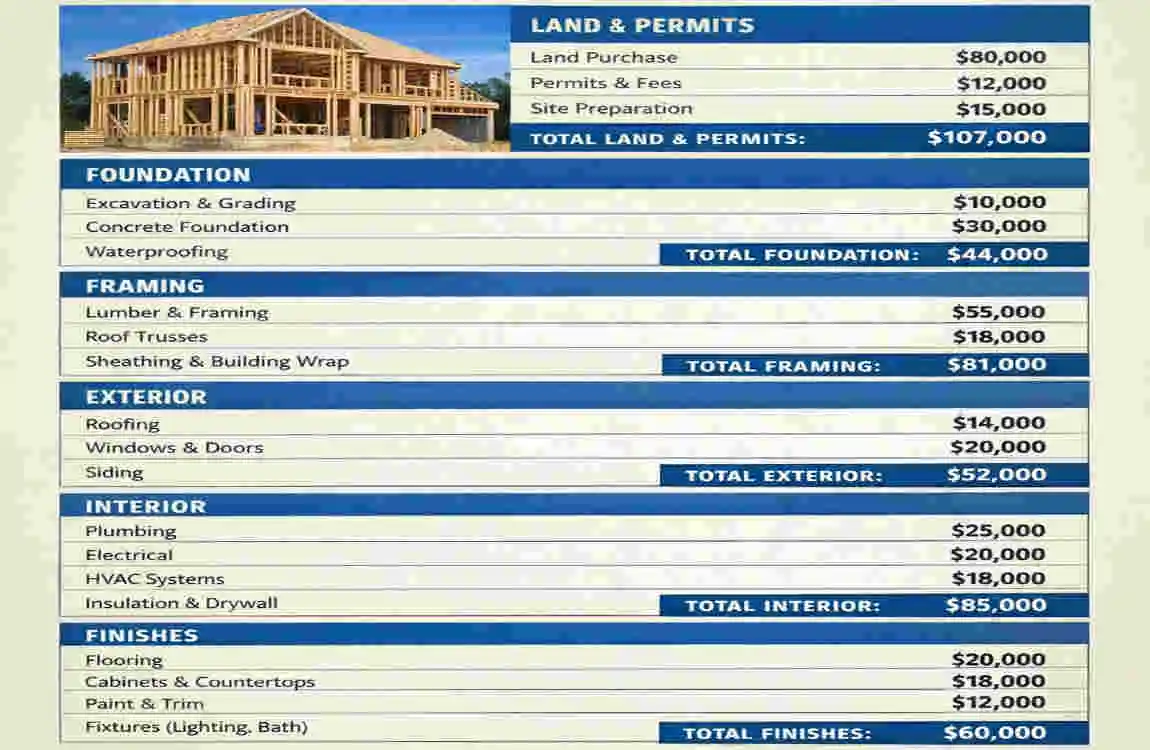
Let’s say you want to build a 1,500-sq.-ft. house. A rough estimate could look like this:
- Land: depends on location
- Construction: around $120,000–$300,000
- Finishing: included in many builds, but can increase the budget
- Utilities and approvals: extra cost depending on the area
The final total can vary widely depending on material quality, labor rates, and design style. A simple house may stay near the lower range, while a custom home can go much higher.
FAQs About How Much to Build a House Costs
How much does it cost to build a 3-bedroom house?
It depends on size, location, and finish level. A basic 3-bedroom house often falls in the mid-range, but the final price can rise quickly with better materials or a larger layout.
Is it cheaper to build or buy a house?
It depends on the local market. Sometimes building is cheaper, but in some places buying an existing home can save time and money.
What is the cheapest way to build a house?
A simple design, local materials, and careful planning usually give the lowest cost. Avoiding design changes also helps a lot.
How long does it take to build a house?
Most homes take several months, but the timeline changes based on size, weather, labor availability, and permit approvals.
Can I build a house on a low budget?
Yes, you can, if you plan carefully and keep the design simple. A realistic budget and a good contractor make a big difference.