Choosing what is the best material for a garage roof matters more than many homeowners think. In the UK, garages are exposed to constant rain, cold winds, frost, and damp conditions. A roof that looks fine today can start leaking, cracking, or sagging sooner than expected if it is not suited to the weather.
| Roof Material | Best For | Lifespan | Key Pros | Key Cons |
|---|---|---|---|---|
| EPDM Rubber | Flat garage roofs | 50+ years | Waterproof, UV-proof, maintenance-free, handles extreme temps | Higher upfront cost than felt |
| Felt/Asphalt | Budget flat roofs | 10–15 years | Cheap, widely available | Prone to leaking, shorter lifespan |
| Clay Tiles | Pitched roofs | 50+ years | Durable, withstands heavy rain/wind/extreme temps | Heavier, needs strong structure |
| Slate | Pitched roofs (premium) | Up to 100 years | Elegant, non-absorbent, moss-resistant, recyclable | Most expensive option |
| Galvanised Steel Sheets | Pitched/corrugated roofs | 30+ years | Long-lasting, water-resistant, surprisingly cheap | Can be noisy in rain |
| Cedar Shingles | Aesthetic pitched roofs | 30+ years | 100% natural, timeless look | Requires maintenance, higher cost |
A garage roof does more than cover a space. It protects your car, tools, boxes, and other stored items from water damage. It also helps reduce heat loss and keeps the structure in better shape for longer. If you pick the wrong roofing material, you may end up paying more for repairs and replacement later.
Why Garage Roof Material Matters for UK Homes
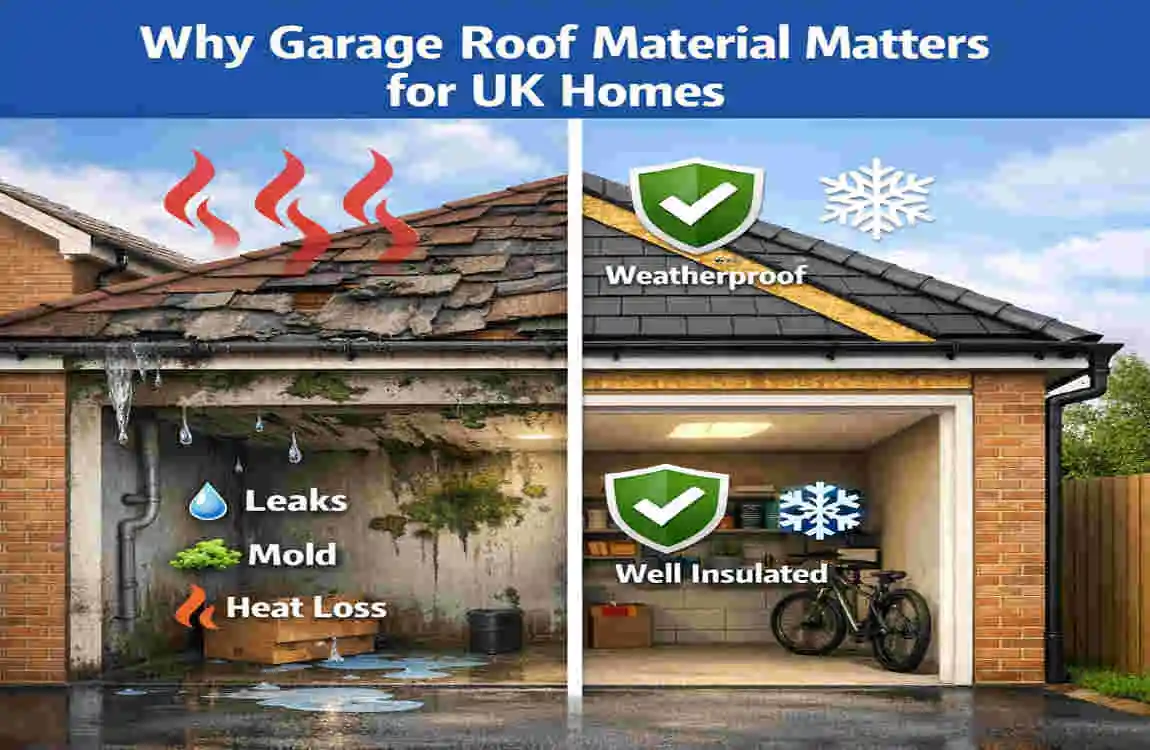
Weather Conditions in the UK
The UK climate is tough on roofs. Heavy rain can find even small weak spots. Frost and snow can make materials crack or expand. Wind exposure can lift loose edges. And the constant dampness can lead to mould, moss, and rot.
That is why waterproofing matters so much. A roof that handles dry weather well may still struggle in a wet UK winter.
Structural Importance of a Garage Roof
Your garage roof protects more than the building itself. It also protects whatever is inside it. Leaks can damage paintwork, tools, boxes, and electrical items. Over time, water can weaken timber, cause rust, and lead to costly repairs.
A strong roof also improves insulation. That means a more stable temperature inside the garage, which is useful if you use it as a workshop or storage space.
Cost vs Longevity
Cheap roofing may save money at first, but it often needs to be replaced sooner. More durable materials cost more up front, but they usually bring better long-term value. So the real choice is not just about price. It is about how long the roof will last and how much upkeep it will need.
What Is the Best Material for a Garage Roof? Key Factors to Consider
Before you choose, think about the garage itself.
Roof Type
A flat garage roof usually needs a different solution from a pitched one. Flat roofs often work well with EPDM garage roof systems, felt, or GRP. Pitched roofs can be clad in tiles, shingles, or metal sheets.
Budget
If you want a low-cost fix, felt or polycarbonate may be a good option. If you want long-term value, EPDM, GRP, metal, or tiles may be a better investment.
Lifespan
Some materials last around 10 to 20 years. Others can last 30, 50, or even longer. If you want fewer replacements, choose a material with a longer lifespan for your garage roof.
Installation Complexity
Some materials are more DIY-friendly than others. Felt and polycarbonate are easier for confident DIYers. EPDM, GRP, metal roofing, and tiles are usually best handled by professionals.
Appearance
If the garage is attached to your house, matching the style can matter. Tiles and shingles often blend in more naturally than flat roof coverings.
Best Garage Roof Materials for UK Homes
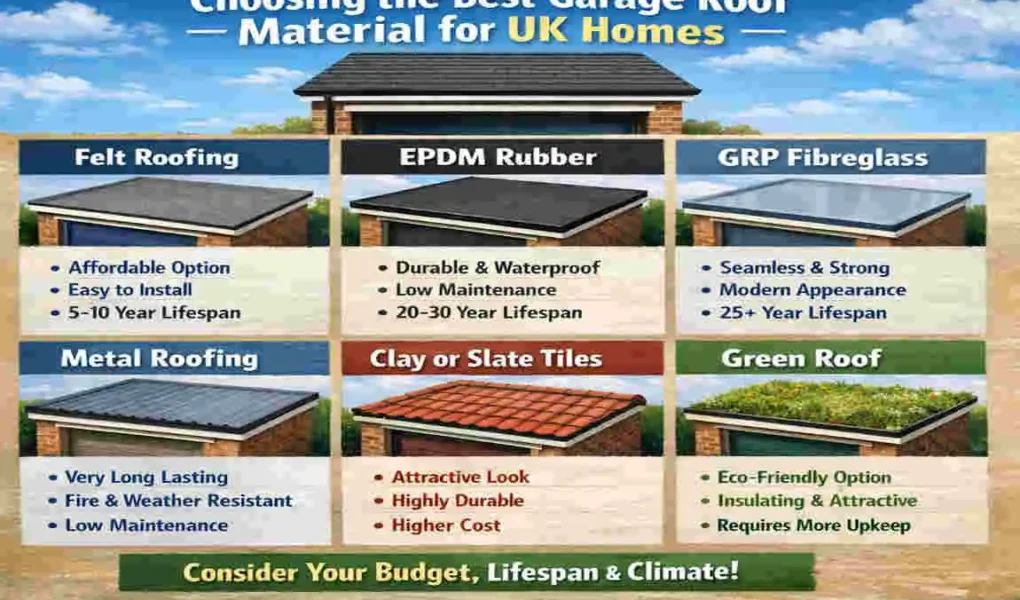
Felt Roofing
Felt is one of the most common cheap garage roofing materials in the UK. It is affordable, widely available, and suitable for flat roofs.
Pros
- Low cost
- Easy to install
- Works well for simple flat roofs
Cons
- Shorter lifespan
- Can crack or blister over time
Best for: Budget projects and garages that do not need a premium finish
Average lifespan: 10–20 years
EPDM Rubber Roofing
EPDM is a popular choice for waterproof garage roofing. It is flexible, strong, and handles wet weather very well.
Pros
- Excellent waterproofing
- UV resistant
- Low maintenance
- Stays flexible in changing temperatures
Cons
- Higher initial cost
- Best fitted by a professional
Best for: Flat garage roofs and damp UK conditions
Average lifespan: 25–50 years
GRP Fibreglass Roofing
GRP gives a smooth, seamless finish and is known for strength. It is a strong option if you want a modern and tidy look.
Pros
- Very durable
- Strong against leaks
- Neat appearance
Cons
- Higher labour cost
- Needs dry weather during installation
Best for: Homeowners wanting a long-term premium finish
Average lifespan: 25–40 years
Metal Roofing
Metal roofing, including steel and aluminium, is a durable and practical option. It drains rain well and can last a long time.
Pros
- Fire resistant
- Lightweight
- Strong and durable
Cons
- Can be noisy in heavy rain
- Condensation can be an issue
- Usually more expensive
Best for: Detached garages and modern designs
Average lifespan: 30–60 years
Asphalt Shingles
Asphalt shingles are common on pitched roofs and can give a neat, traditional look.
Pros
- Good appearance
- Affordable
- Easy to replace damaged sections
Cons
- Not as durable in harsh storms
- Shorter life than metal or tiles
Best for: Pitched garages and matching house roofs
Average lifespan: 15–30 years
Concrete or Clay Tiles
Tiles are a classic roofing choice and are often seen on traditional UK homes.
Pros
- Very durable
- Great insulation
- Can add property value
Cons
- Heavy
- More expensive
- Needs strong roof support
Best for: Attached garages and brick builds
Average lifespan: 50–100 years
Polycarbonate Roofing Sheets
Polycarbonate is a lightweight option that lets natural light through.
Pros
- Brightens the space
- Low cost
- Easy to fit
Cons
- Less insulation
- Can discolour over time
Best for: Workshops, carports, and light garden garages
Average lifespan: 10–20 years
Garage Roof Material Comparison Table
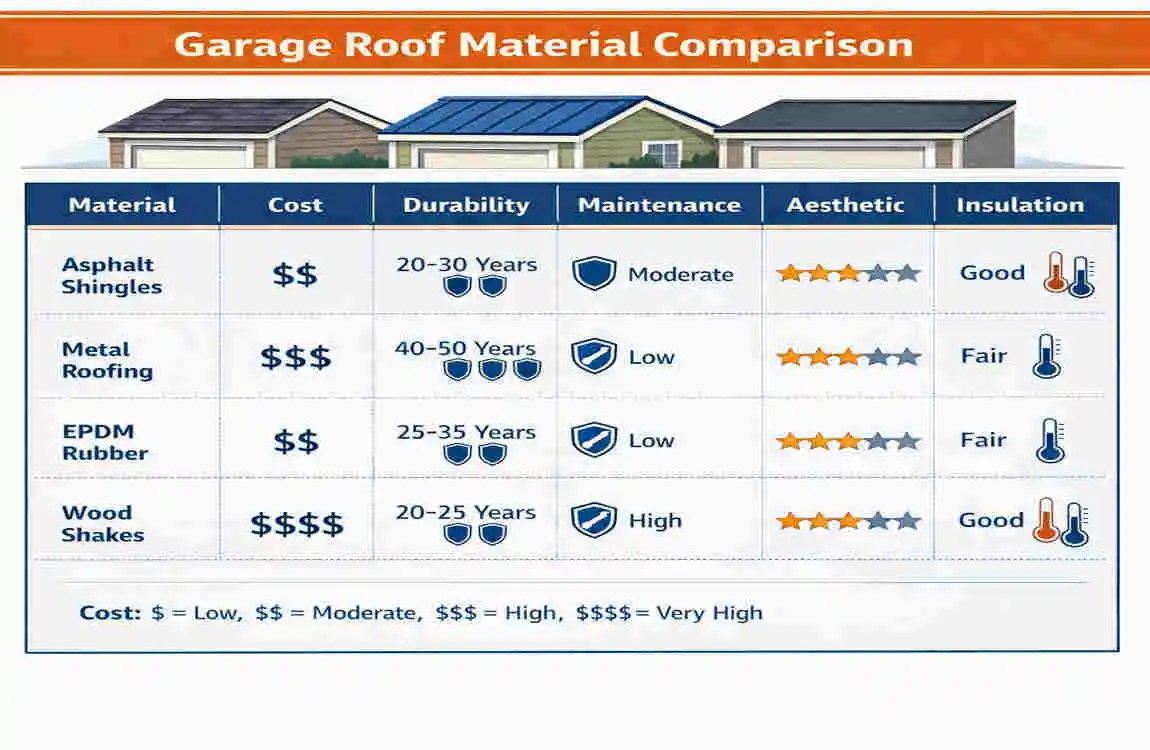
Material Best For Lifespan Cost Level Maintenance Waterproof
Felt Budget flat roofs 10–20 yrs Low Medium Good
EPDM Flat roofs 25–50 yrs Medium Low Excellent
GRP Premium garages 25–40 yrs High Low Excellent
Metal Long-term durability 30–60 yrs High Low Very Good
Asphalt Shingles Pitched roofs 15–30 yrs Medium Medium Good
Clay/Concrete Tiles Traditional homes 50–100 yrs High Low Excellent
Polycarbonate Light roofing 10–20 yrs Low Medium Fair
Best Roofing Materials by Garage Type
Best Material for Flat Garage Roofs
For flat roofs, EPDM, GRP, and felt are the main choices. EPDM is usually the best all-round option because it is long-lasting and performs well in rain.
Best Material for Pitched Garage Roofs
For pitched roofs, asphalt shingles, clay tiles, and metal sheets are strong choices. If you want the garage to match your house, tiles or shingles are often the most natural fit.
Best Material for Detached Garages
Detached garages can work well with metal roofing or EPDM, depending on the roof shape. If you want low upkeep and strong protection, these are solid options.
Best Material for Attached Garages
For attached garages, appearance matters more. Matching roof tiles or asphalt shingles often give the neatest result.
Best Material for Workshops and Storage Garages
If your garage is used as a workshop, natural light and durability matter. Metal roofing or polycarbonate combinations can work well here.
Which Garage Roof Material Handles UK Rain Best?
If rain is your biggest concern, focus on materials that seal well and shed water quickly. The strongest choices are EPDM, GRP, and metal roofing.
These materials resist standing water better than many cheaper options. They also cope well with moss, damp, and repeated wet-dry weather cycles.
Cheapest vs Most Durable Garage Roofing Material
Cheapest Options
If your main goal is to save money, the lowest-cost options are usually:
- Felt
- Polycarbonate
- Basic shingles
Most Durable Options
If you want long-term value, look at:
- Clay tiles
- Metal roofing
- EPDM
- GRP
Value-for-Money Choice
For many UK homeowners, EPDM offers the best balance of cost, weather resistance, and lifespan. It may not be the cheapest, but it often gives the strongest long-term return.
Signs You Need to Replace Your Garage Roof
You may need a new roof if you notice:
- Water leaks
- Sagging areas
- Cracks or blisters
- Rust spots
- Mould or moss damage
- More heat loss inside the garage
If these problems keep coming back, patch repairs may no longer be enough.
Garage Roof Installation: DIY or Hire a Professional?
Some materials are easier to install yourself. Others really need expert fitting.
DIY-Friendly Materials
- Felt
- Polycarbonate sheets
- Basic shingles
Professional Installation Recommended
- EPDM
- GRP
- Metal roofing
- Tile roofing
Hiring a professional can help with safety, proper sealing, and warranty protection. It also reduces the risk of mistakes that could lead to leaks later.
Maintenance Tips to Extend Garage Roof Lifespan
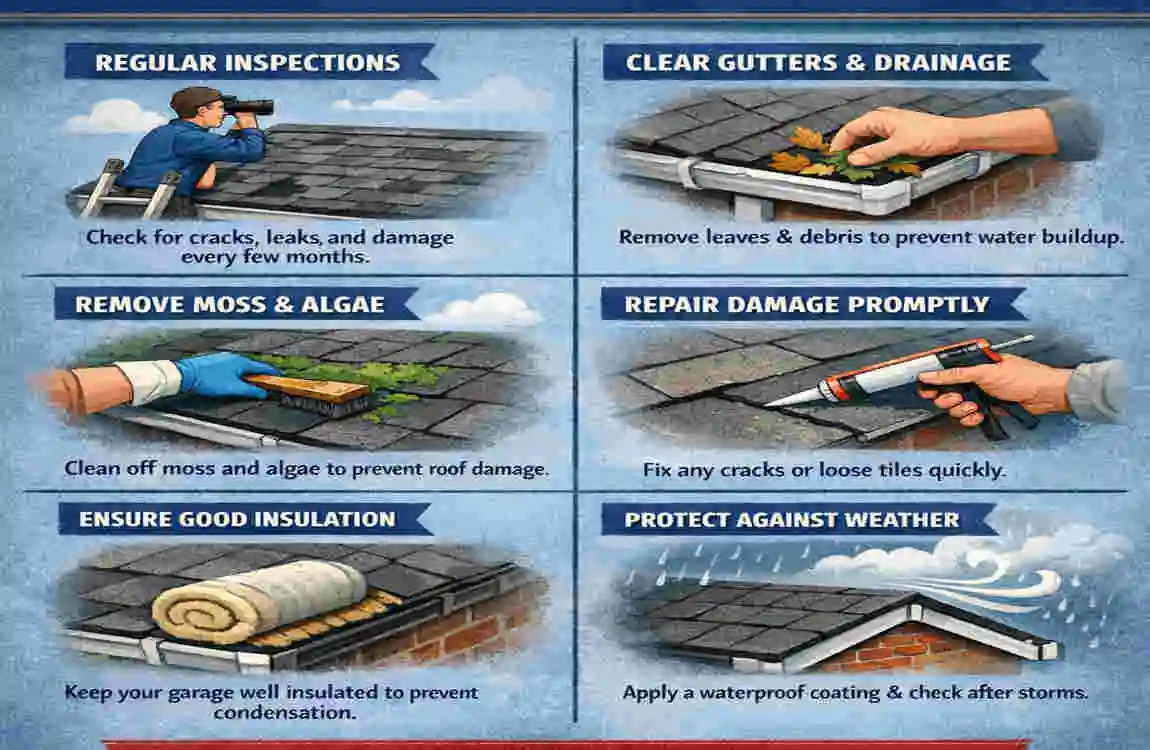
A little care can make a big difference. Try these simple steps:
- Clean gutters regularly
- Remove moss and debris
- Check for leaks after storms
- Inspect flashing and joints
- Avoid standing water on flat roofs
- Book an annual roof inspection
These small habits can help your garage roof last much longer.
Final Verdict: What Is the Best Material for a Garage Roof in the UK?
So, what is the best material for a garage roof? The answer depends on your needs.
- Best overall: EPDM rubber roofing
- Best budget option: Felt roofing
- Best premium option: GRP fibreglass roofing
- Best for traditional homes: Clay or concrete tiles
- Best for long-term durability: Metal roofing
- Best for light-filled spaces: Polycarbonate roofing
If you want the most balanced choice for the UK climate, EPDM is often the smartest pick. It handles rain well, lasts a long time, and needs very little maintenance.
Frequently Asked Questions
What is the best material for a garage roof in the UK?
For most UK homes, EPDM is one of the best choices because it is waterproof, durable, and well suited to wet weather.
Is EPDM better than felt roofing?
Yes, in most cases. EPDM lasts longer, needs less maintenance, and handles weather better than felt.
What is the cheapest garage roof covering?
Felt is usually the cheapest garage roofing material. Polycarbonate can also be low cost.
How long does a garage roof last?
It depends on the material. Felt may last 10–20 years, while tiles can last 50 years or more.
Can I replace a garage roof myself?
Some simple materials can be DIY-friendly, but EPDM, GRP, tile, and metal roofs are usually better left to professionals.
Is metal roofing good for garages?
Yes. Metal garage roof sheets are strong, long-lasting, and good for rain drainage, though they can be noisy.
What is best for a flat garage roof?
For flat roofs, EPDM is often the best overall choice, with GRP and felt also being common options.