Choosing the right nail size may sound like a small detail, but it can make a big difference in how well your roof holds up over time. If you use nails that are too short, they may not hold the shingles firmly in place. If you use nails that are too long or the wrong type, you can create other problems during installation.
| Section | Key Details |
|---|---|
| Project Topic | Mastering Roofing Nails for 5/8 Sheathing Projects |
| Purpose | Understand the correct roofing nail size, type, and installation methods for durable roof sheathing. |
| Recommended Nail Size | Typically 1¼ inch to 1½ inch roofing nails, depending on roofing material and local building codes. |
| Best Nail Types | Ring shank nails, smooth shank nails, and screw shank nails. |
| Common Nail Materials | Galvanized steel, stainless steel, aluminum, and copper. |
| Why Correct Size Matters | Ensures proper penetration, strong hold, wind resistance, and prevents roof failure. |
| Common Mistakes to Avoid | Using short nails, overdriving, underdriving, poor spacing, and wrong nail type. |
When people ask what size roofing nails for 5/8 sheathing, they usually want one clear answer. The truth is that the best choice depends on the roof material, the nail type, and the fastening rules in your area. Still, there are general sizes that work well for most home roofing projects.
What Is 5/8 Sheathing?
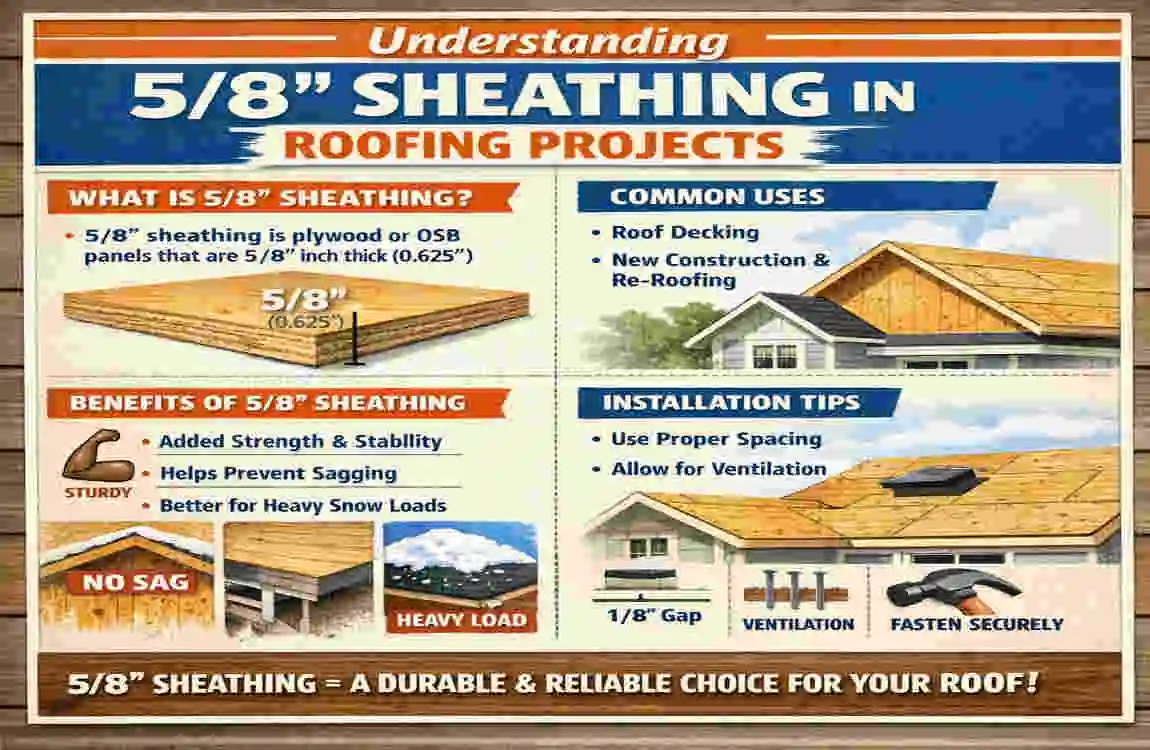
Roof sheathing is the flat wood layer attached to the roof framing. It gives the roofing material a solid surface to sit on. Most often, it is made from plywood or OSB.
5/8-inch sheathing is thicker than 1/2-inch sheathing and provides better support. It is often used in homes where extra strength is needed, especially in areas with stronger winds or heavier roofing materials.
Benefits of 5/8 Sheathing
- Better load support for shingles and other roof materials
- Improved roof stability during storms and heavy weather
- Less flexing compared with thinner panels
- Good moisture resistance when installed properly
A thicker roof deck also gives nails a stronger base to grip. That is one reason many people look for the best roofing nails for plywood sheathing when working with 5/8-inch boards.
What Size Roofing Nails for 5/8 sheathing?
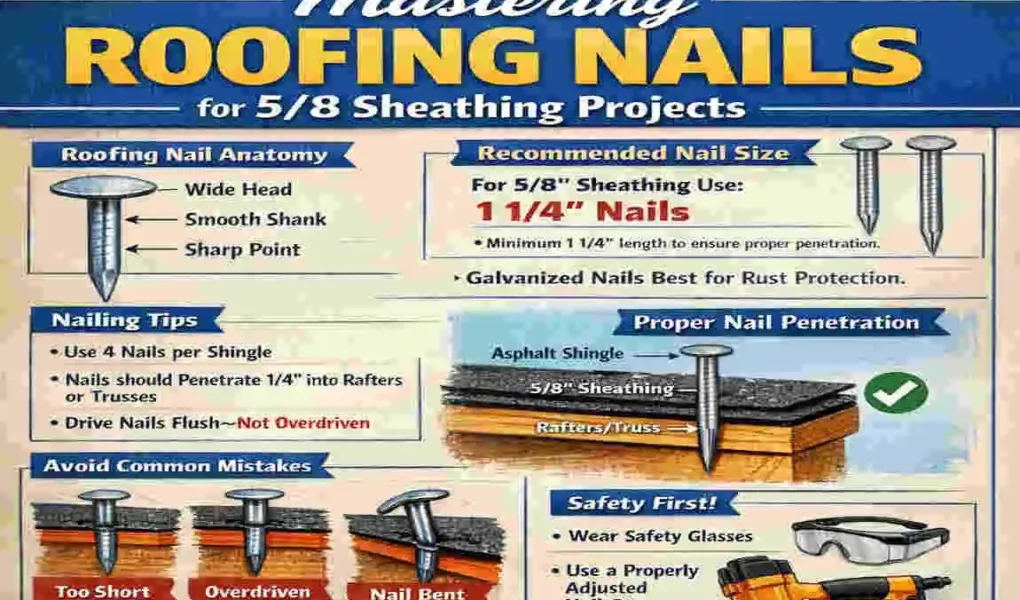
For most roofing jobs over 5/8-inch sheathing, the common nail lengths are 1 inch, 1¼ inch, 1½ inch, and sometimes 2 inches. The right size depends on how much material the nail must pass through and how deeply it needs to hold.
Best Nail Length for 5/8 Sheathing
In many asphalt shingle projects, 1¼-inch roofing nails are a strong, common choice. They usually give enough penetration without being excessive. Some projects may call for 1½-inch nails, especially if the roofing material is thicker or if local code requires deeper penetration.
A good rule is this: the nail should pass through the roofing material and into the sheathing far enough to hold securely. If the nail barely reaches the wood, it may loosen over time. That creates weak fastening and can lead to shingle movement or roof leaks.
Nail Diameter and Gauge Considerations
Nail length is important, but so is thickness. A thicker nail often gives better holding power. Roofing nails commonly come in sizes that offer a strong grip without splitting the sheathing.
Here is a simple roofing nail size chart to help you compare common options:
Nail Size: Best Use Notes
1 inch Light materials or thin layers may be too short for many roofing jobs
1¼ inch Common choice for asphalt shingles Good balance of grip and penetration
1½ inch Better for thicker roofing layers . Often used when extra hold is needed
2-inch special cases or thicker systems . Usually not needed for standard shingles
For most homeowners, 1¼-inch galvanized roofing nails are a dependable starting point. They are often part of the answer to what size roofing nails for 5/8 sheathing.
Common Roofing Nail Types
Not all roofing nails are the same. The shank style affects how well the nail stays in place.
Smooth Shank Nails
These are basic and easy to drive. They are often less expensive, but they do not hold as tightly as other options.
Ring Shank Nails
These nails have small ridges that help them grip the wood better. They resist pull-out much more effectively, which is useful in windy areas.
Screw Shank Nails
These have a twisted design that helps them hold strongly. They offer good grip, but they can cost more and may be harder to install by hand.
Which Nail Type Is Best for 5/8 Sheathing?
If you want the best mix of strength and long-term hold, ring shank roofing nails are often the top choice. They offer better wind resistance and a a stronger grip than smooth-shank nails. That said, smooth shank nails may still be acceptable for some standard jobs if local rules allow them.
If you are looking for the best nails for roof sheathing, ring shank is often the safest and most durable option.
Nail Material Matters
The material of the nail matters almost as much as the size. Roofs are exposed to rain, heat, and moisture, so the nails must resist rust.
Common Roofing Nail Materials
- Galvanized steel nails: Very common and affordable
- Stainless steel nails: Excellent corrosion resistance, often used in harsh climates
- Aluminum nails: Lightweight, but not ideal for every roofing job
- Copper roofing nails: Durable and Premium, but more expensive
Rust Resistance and Weather Protection
If your home is in a humid or coastal area, corrosion resistance becomes even more important. Rusted nails can weaken over time, reducing roof performance. That is why galvanized roofing nails are so widely used. They offer a strong balance of price and protection.
Roofing Code Guidelines for 5/8 Sheathing
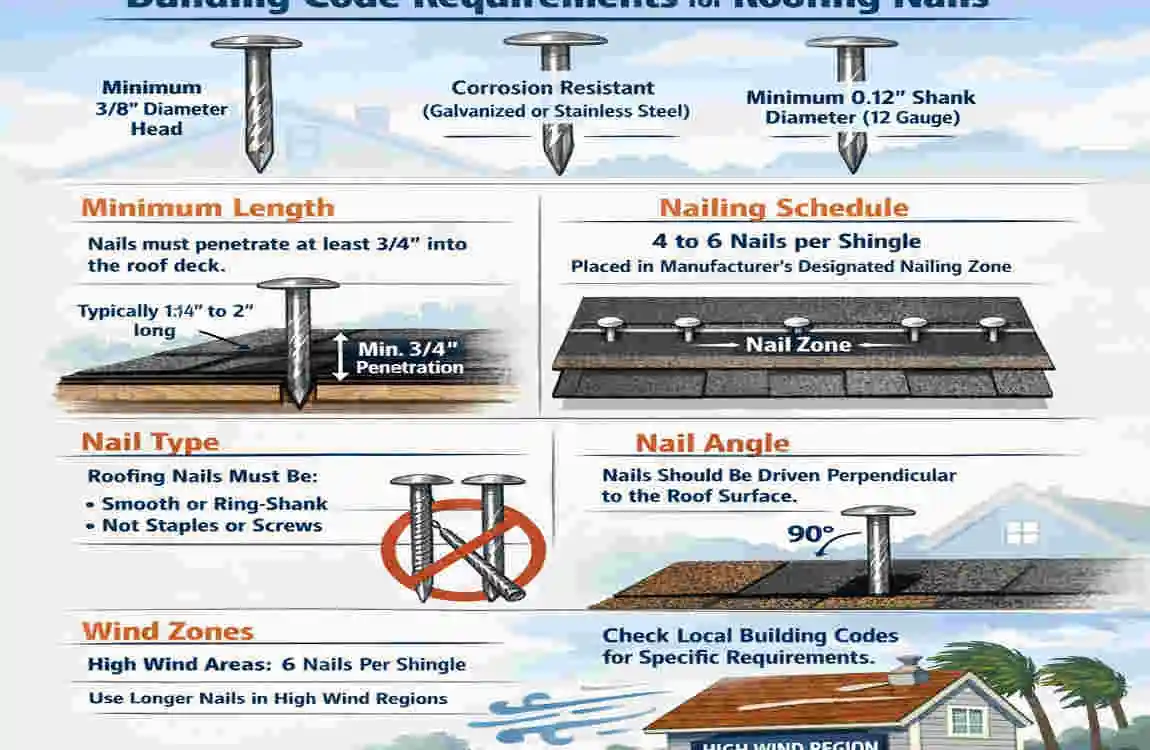
Building codes help ensure roofs remain safe and secure. They often cover nail length, spacing, and fastening strength.
Common Code Points to Watch
- Proper penetration depth
- Correct spacing
- Fastening near edges
- Wind uplift resistance
Exact rules can vary by region, but the goal is always the same: keep the roof materials tightly locked down. If your nails are too short or spaced too far apart, the roof may fail earlier than expected.
Why Code Compliance Protects Your Roof
The following code is not just about passing inspection. It helps protect your home, your insurance coverage, and your safety. A roof that is fastened properly is less likely to lose shingles during storms or develop leaks later.
Matching Nail Size With Roofing Material
Different roof materials need different fastening choices.
Asphalt Shingles
This is the most common roofing material for homes. For asphalt shingles on 5/8 sheathing, 1¼-inch roofing nails are often a very good choice.
Metal Roofing
Metal roofing usually needs special fasteners designed for that system. Standard roofing nails may not be the best fit.
Cedar Shakes
Cedar shakes are thicker than asphalt shingles, so they often need longer nails for proper hold.
Tile Roofing
Tile is heavy and often uses a more specialized fastening system. Regular roofing nails may not be enough.
If you are unsure, always match the nail to the roofing material first, then check the sheathing thickness.
Which Installation Method Is Better?
Both hand nailing and nail guns can work well for 5/8 sheathing.
Hand Nailing Pros and Cons
Pros:
- More control
- Better for small repairs
- Easier to feel nail depth
Cons:
- Slower
- More tiring on large jobs
Nail Gun Pros and Cons
Pros:
- Much faster
- Great for larger roof sections
- More efficient for repetitive work
Cons:
- Risk of overdriving nails
- Requires care to avoid mistakes
Best Method for DIY Roofing Projects
For many DIY homeowners, a nail gun is faster, but hand nailing can feel safer and more controlled. If you are doing a small project, hand-nailing may be the better choice. If you are working on a full roof and have experience, a nail gun can save time.
Roofing Errors That Can Damage Sheathing
Small mistakes can lead to big problems later.
Common Mistakes to Avoid
- Using nails that are too short
- Overdriving nails into the wood
- Under driving nails so they sit too high
- Using the wrong nail type
- Ignoring local code requirements
- Placing nails with poor spacing
Signs of Poor Nail Installation
- Loose shingles
- Leaks after rain
- Roof uplift in wind
- Cracked or damaged sheathing
If you see these warning signs, the fastening may need to be checked right away.
Estimating Roofing Nail Requirements
It helps to know how many nails you need before starting.
Simple Estimation
A standard asphalt shingle roof typically uses 4 to 6 nails per shingle, depending on the shingle type and wind requirements. Larger roofs also need extra nails for starter strips, ridge caps, and waste.
Example Calculation
If one roofing square covers 100 square feet, and your shingle package gives a certain number of shingles per bundle, you can estimate total nails by multiplying the number of shingles by the nails per shingle. Then add extra nails for mistakes and high-wind areas.
A good idea is to buy a little more than you think you need. It is better to have extra fasteners than to stop in the middle of the job.
What to Look for When Buying Roofing Nails
When choosing nails, focus on the basics first.
Key Buying Points
- Correct length
- Corrosion resistance
- Strong shank type
- Proper head size
- Compatibility with your nail gun
Budget vs Quality
Cheap nails may save money up front, but they may not hold as well or resist rust as long. Higher-quality nails often give better long-term value. For a roof, that extra reliability usually matters.
Expert Tips for Long-Lasting Roof Sheathing Installation
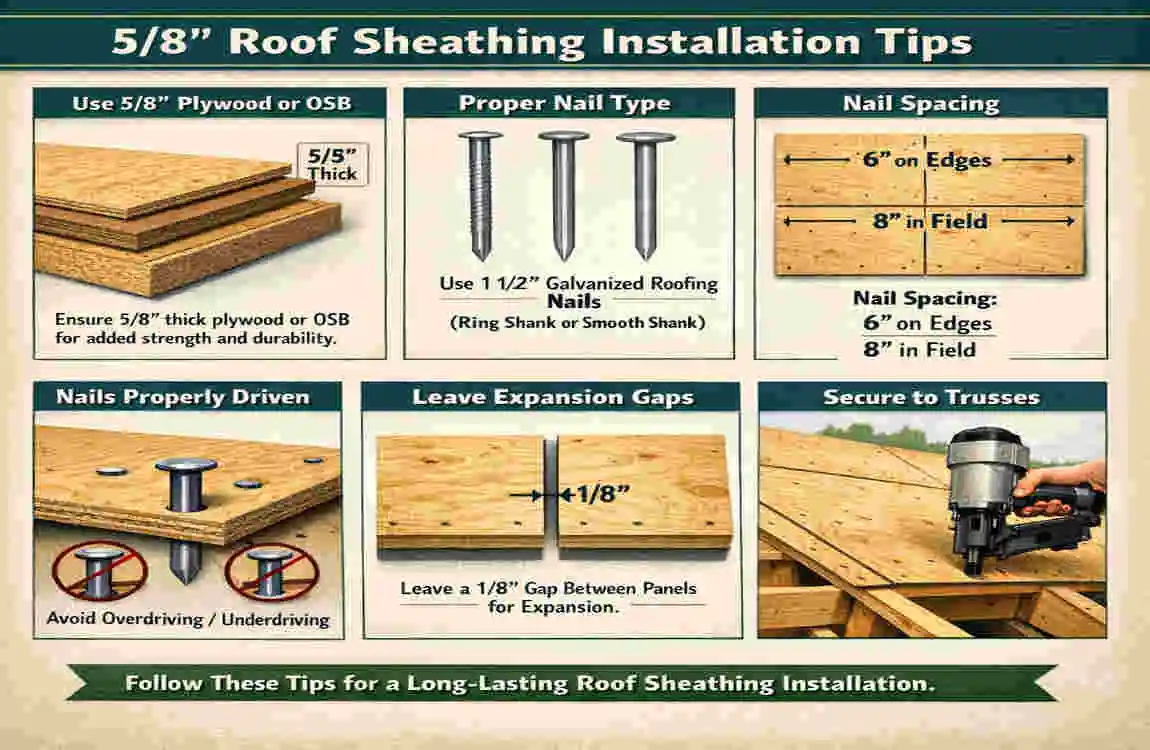
Here are a few practical tips to help your project go smoothly:
- Check the sheathing thickness before buying nails.
- Make sure the wood is dry and in good condition.
- Follow the shingle maker’s instructions.
- Do not mix fastener types unless the system allows it.
- Double-check nail depth during installation.
These small steps can help your roof last longer and perform better.
FAQs About Roofing Nails for 5/8 Sheathing
What size roofing nails for 5/8 sheathing?
For most asphalt shingle jobs, 1¼-inch roofing nails are a common and reliable choice for 5/8 sheathing. Some projects may need 1½-inch nails depending on the roofing material and local code.
Can I use 1-inch nails for 5/8 plywood?
Sometimes, but not always. 1-inch nails may be too short for many roofing jobs because they may not penetrate deeply enough for secure fastening.
Are ring shank nails better for roofing?
Yes, in many cases. Ring shank nails hold better and resist pull-out more effectively than smooth shank nails.
How deep should roofing nails penetrate?
They should penetrate far enough to hold the roofing material firmly in place on the sheathing. If they do not reach deep enough, the roof may become loose over time.
Can roofing nails rust?
Yes. That is why galvanized or stainless steel nails are preferred for many roofing projects.
Do local building codes affect nail size?
Absolutely. Local codes can change the required nail length, spacing, and fastening method. Always check the rules for your area before starting.