If you have ever wondered how much does a house weigh, you are definitely not alone. It is one of those questions most people never think about until a practical need suddenly makes it important. Maybe you are curious. Maybe you are dealing with foundation issues. Maybe you are planning a move or a major renovation. Or maybe you just want to know the answer to a question that sounds simple but turns out to be surprisingly complex.
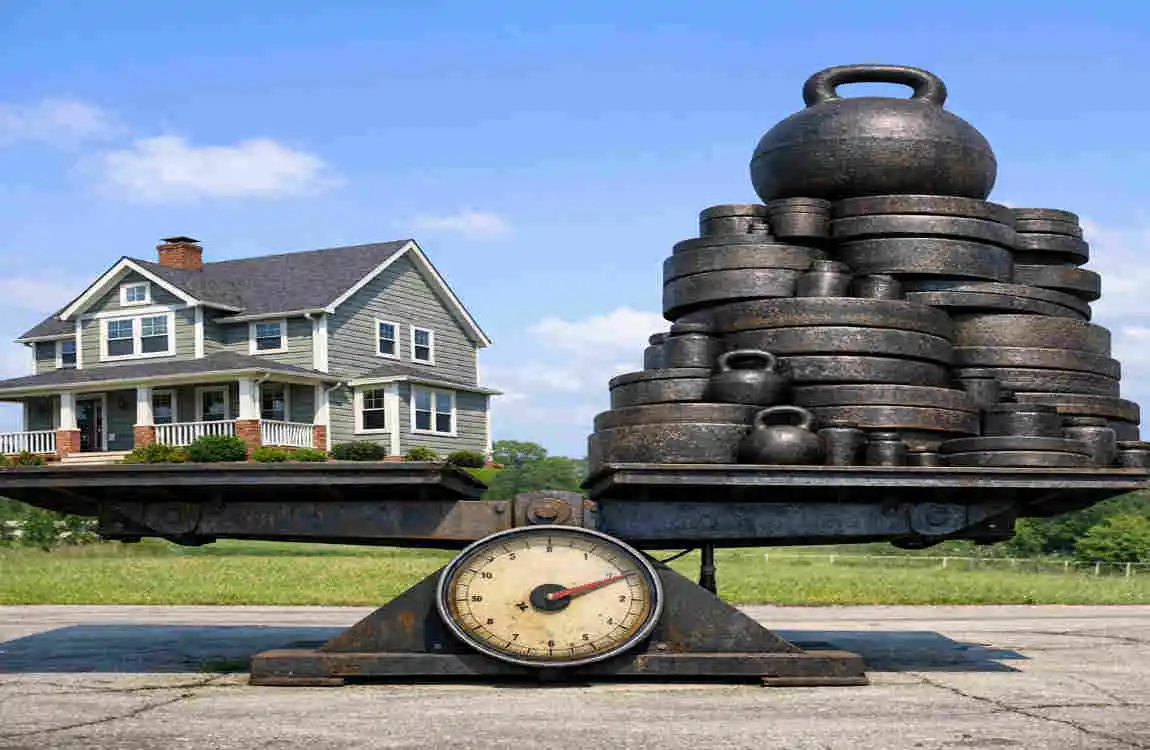
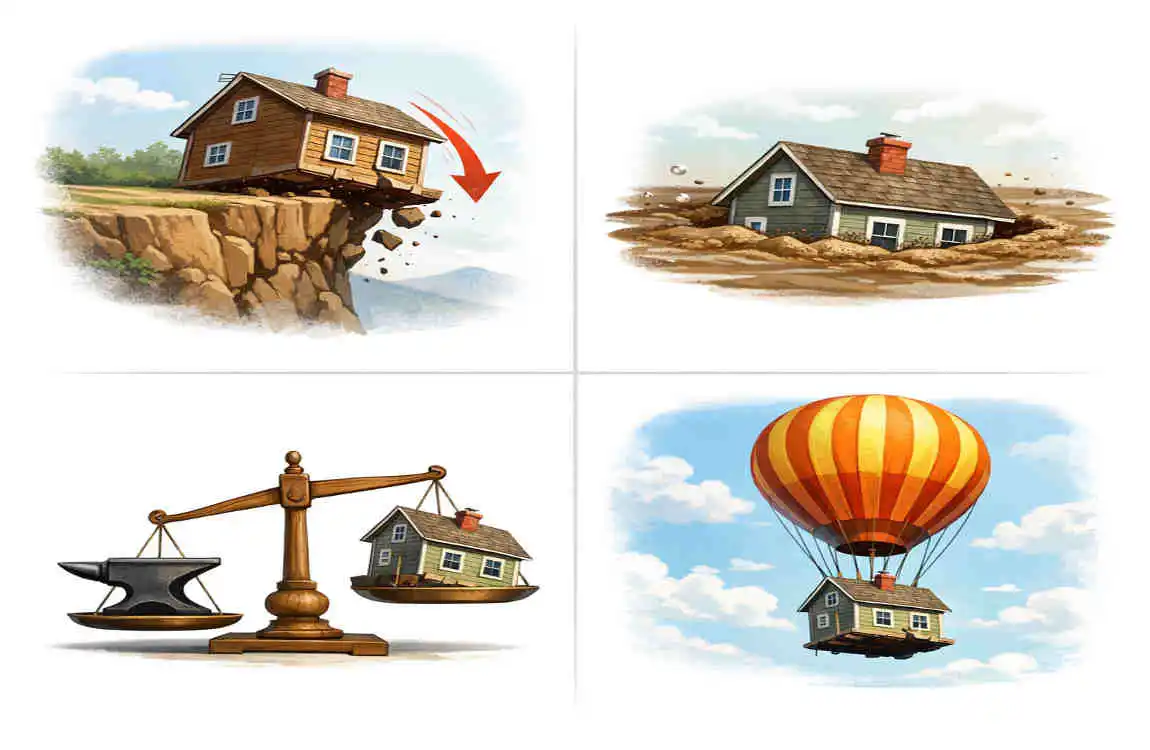
The truth is, a house does not have a fixed weight. House weight varies widely depending on the home’s size, number of stories, building materials, roof, foundation, and even what is inside. A small wood-framed home and a large brick home can be wildly different in weight, even if they look similar from the outside.
That is why the best way to think about this question is not as a single exact number, but as a range. A house can weigh tens of thousands of pounds, and larger homes can weigh hundreds of thousands of pounds or more. Once you add the foundation, furniture, appliances, and other contents, the total can climb even higher.
| Home Type | Estimated Weight (per sq. ft. of footprint) |
|---|---|
| One-story home | ~200 lbs/sq. ft. |
| Two-story home | ~275 lbs/sq. ft. |
| Three-story home | ~350 lbs/sq. ft. |
What Determines How Much a House Weighs?

Before you try to calculate house weight, it helps to understand what actually goes into it. A house is not just walls and a roof. It is a collection of materials layered together, and each part adds weight.
Square footage plays a major role
The biggest starting point is size. In simple terms, the more square footage a modern house has, the more material it uses, and the more it weighs.
A 1,000-square-foot home will usually weigh far less than a 5,000-square-foot home. That sounds obvious, but it matters because many people try to estimate a house’s weight without first checking the floor area. Size gives you the basic frame for the estimate.
Number of stories changes the total
Two houses can have the same total square footage and still weigh differently. A two-story house often requires more framing, more stairs, and more structural support for the upper level. A one-story home spreads the same space across a wider footprint, which can change the amount of materials used.
That means a taller house is not always heavier just because it has more levels, but more stories often increase structural complexity and total weight.
Building materials make a huge difference
This is one of the biggest factors of all. A wood-framed house is generally lighter than a brick house or concrete house. Why? Because wood is less dense than brick, stone, or concrete.
The difference can be dramatic. If you compare two homes of similar size, the one built with heavier materials may weigh much more than the other. The walls, floors, and exterior finish all matter here.
The roof adds more than people expect
A roof may not seem like a major weight factor, but it definitely counts. The roof includes the framing, underlayment, shingles or tiles, insulation, and sometimes heavy materials like clay or concrete tiles.
A simple asphalt-shingle roof weighs much less than a tile roof or slate roof. So even at the same house size, the roof can push the total up or down in a noticeable way.
The foundation may or may not be included
Some simple estimates leave out the foundation, while others include it. That matters because the foundation can be a major part of the total weight.
A house on a slab, crawl space, or basement foundation will have different weight characteristics. If you want a rough estimate, you may see house weight calculated without the foundation. If you want a more complete total, the foundation should be included.
Contents inside the house matter too
Furniture, appliances, books, clothes, storage boxes, and decor all add weight. A fully furnished home weighs more than an empty shell.
For casual estimates, contents are often ignored. But if you want a realistic number for moving, planning, or load-related questions, the contents can matter more than people realize.
Average Weight of a House
People often want a single “average house weight” number. That is useful as a starting point, but it should never be treated as the final answer.
A simple average range
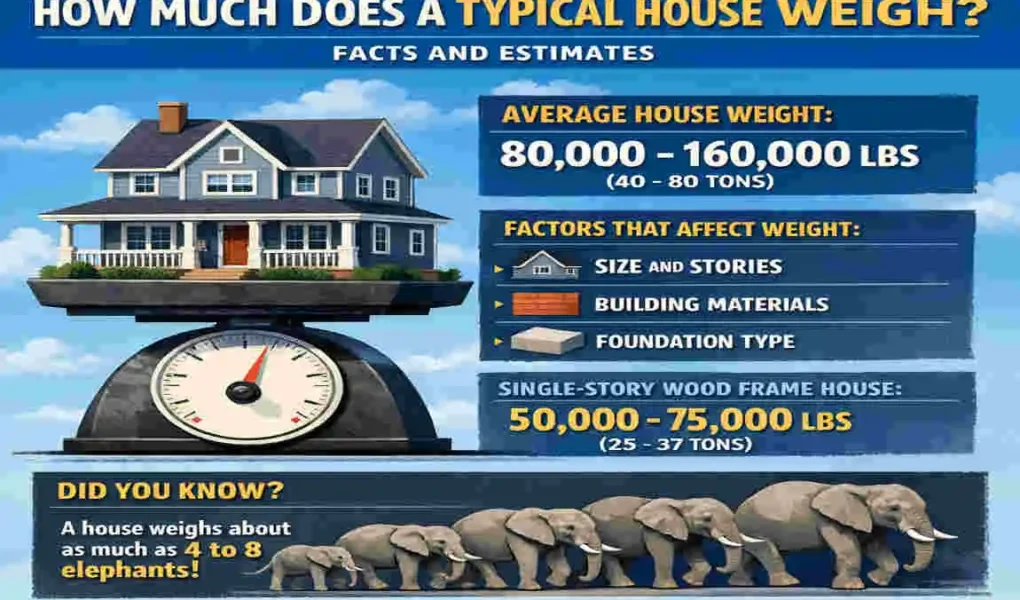
A typical on-site-built house is often estimated at around 80,000 to 160,000 pounds before adding the foundation or contents. That is about 40 to 80 tons.
This is only a broad range, though. Smaller homes can weigh less, and larger homes can weigh much more. The range depends heavily on materials, size, and design.
Why “average” can be misleading
The word average sounds reassuring, but it hides a lot of detail. A small wood-frame ranch home and a large custom home are both houses, but they may not belong in the same weight category.
So if you are asking how much does a house weigh, think of the average as a reference point, not a final answer. It gives you a ballpark idea, but not a precise result.
A better way to think about it
Instead of asking only for the average, ask:
- How big is the house?
- What materials are used?
- How many stories does it have?
- Does the estimate include the foundation?
- Are the contents part of the calculation?
Once you answer those questions, your estimate becomes much more useful.
House Weight by Size
When people search for house weight per square foot, they usually want a quick way to compare different homes. That makes sense. Size is one of the easiest ways to estimate weight.
A useful way to estimate by square footage
The table below gives a general sense of how much different homes may weigh. These numbers are estimates, not engineering measurements, but they help get a realistic range.
House Size Approximate Weight Range Approximate Weight in Tons Notes
1,000 sq ft 60,000–120,000 lbs 30–60 tons Often a small single-story home
2,500 sq ft 150,000–300,000 lbs 75–150 tons Common family home size
5,000 sq ft 300,000–600,000 lbs 150–300 tons Larger custom home
10,000 sq ft 600,000–1,200,000 lbs 300–600 tons Very large estate-style home
These numbers can move up or down depending on materials, foundation type, and contents. A brick or concrete version of the same home may weigh much more than a wood-framed one.
1,000 sq ft house weight
A 1,000-square-foot house is often lighter than a larger home. If it is built with wood framing and standard materials, it may fall in the 60,000 to 120,000-pound range.
That is still a lot of weight, of course. It is just smaller than the weight of a larger family home.
2,500 sq ft house weight
A 2,500-square-foot house is a very common size for many households. A home in this range may weigh between 150,000 and 300,000 pounds, depending on its construction.
If the home uses heavier finishes, thicker walls, or a dense roof system, the number can go up quickly.
5,000 sq ft house weight
A 5,000-square-foot house is much larger and typically has more materials. It may weigh between 300,000 and 600,000 pounds, or more.
At this size, the design matters a lot. A simple layout will not weigh the same as a multi-level luxury home with heavy finishes, large stone features, or a basement.
Large house weight examples
For very large houses, the numbers become even more striking. A 10,000-square-foot house can weigh hundreds of tons. Once you include strong foundations, thick walls, and luxury materials, the total can climb faster than most people expect.
At that point, you are no longer talking about a lightweight structure. You are talking about a building with massive structural mass.
One-story, two-story, and three-story homes
The same square footage can look very different depending on the number of stories.
One-story homes
A one-story home often has a wider footprint. It may use less stair structure but more roof area and foundation coverage.
Two-story homes
A two-story home usually stacks living space more efficiently. It may use less roof and foundation area per square foot of living space, but it often needs more framing to support the second floor.
Three-story homes
A three-story home usually has even more structural complexity. Supporting multiple levels often increases the amount of wood, steel, concrete, and other materials used.
So while total square footage matters most, the number of stories can change the final weight more than many people realize.
How to Calculate the Weight of a House

If you want to go beyond a rough guess, here is a simple way to estimate the weight of a house. This method is not meant to replace an engineer’s report. Still, it is a practical approach for homeowners and curious readers.
Measure the square footage
Start with the total floor area. Do not confuse the house’s footprint with its livable area.
If the home has two or more stories, include all floors in the calculation. A 1,000-square-foot footprint with two floors is not a 1,000-square-foot house. It is a 2,000-square-foot house.
Identify the number of stories
Next, note whether the home is one story, two stories, or more.
This matters because more levels usually mean different structural needs. A second floor needs support from walls, beams, and framing below it. That adds weight.
Estimate the structural load per square foot
This is the heart of the estimate. You can use a rough pounds-per-square-foot approach.
For many simple estimates, people apply a general range based on the structure type:
- Light wood-frame homes: lower end of the range
- Mixed-material homes: middle range
- Brick or concrete homes: higher end of the range
The exact number depends on the home, but the goal is to get a realistic estimate rather than a perfect measurement.
Add the major components
If you want a more complete estimate, break the house into parts:
- walls
- floors
- roof
- foundation
- stairs
- built-in features
Each part adds weight. This method is useful when you want a better sense of the full structure rather than just a rough total.
Add contents if needed
If the home is furnished, include items such as:
- sofas
- beds
- tables
- appliances
- books
- storage bins
- decor
This is especially useful if you want to know the weight of a fully occupied home instead of an empty structure.
Convert pounds to tons
A lot of people find tons easier to understand than pounds.
To convert pounds to tons, divide by 2,000.
For example:
- 100,000 pounds = 50 tons
- 250,000 pounds = 125 tons
- 600,000 pounds = 300 tons
That simple conversion helps put the number into perspective.
A simple formula to remember
You can think of the process like this:
House weight = structure + foundation + roof + contents
It is not a perfect formula, but it is a very useful way to organize the estimate.
House Weight Calculator Example
Let’s walk through a simple example to make the process feel more real.
Example: 2,500-square-foot wood-frame house
Imagine a 2,500-square-foot, two-story wood-frame house. It has standard materials, a normal asphalt roof, and average furnishings.
A rough estimate might look like this:
- Structure: 180,000 pounds
- Foundation: 40,000 pounds
- Roof: 15,000 pounds
- Contents: 20,000 pounds
Estimated total = 255,000 pounds
Now convert that to tons:
255,000 ÷ 2,000 = 127.5 tons
So this home may weigh about 128 tons.
Why the result is only an estimate
That number is not exact. If the house has brick exterior walls, tile roofing, stone countertops, or a basement, the weight could be much higher. If the house is lightly furnished or built with simpler materials, it could be lower.
That is why a house weight calculator is best seen as a planning tool, not a final engineering number.
Another quick example: 1,000-square-foot home
Now imagine a 1,000-square-foot single-story home with wood framing and light furnishings.
A rough estimate may be:
- Structure: 70,000 pounds
- Foundation: 15,000 pounds
- Contents: 10,000 pounds
Estimated total = 95,000 pounds
That comes out to 47.5 tons.
This is why house size alone can give you a useful starting point.
Weight Differences by Construction Material
One of the biggest reasons house weight varies so much is the choice of materials. Two homes can have the same size, same layout, and same number of stories, yet still weigh very differently.
Wood-frame house weight
A wood-frame house is usually the lightest common type of home structure. Wood is strong but less dense than brick, stone, or concrete.
That does not mean wood homes are weak. It simply means they often weigh less. Many standard suburban homes fall into this category.
Brick house weight
A brick house generally weighs more than a wood-frame house. Brick adds significant mass to the outer walls, and that extra density quickly changes the total weight.
Even if a house has only brick veneer rather than full brick walls, it can still be noticeably heavier than a similar wood-sided home.
Concrete house weight
A concrete house can be even heavier. Concrete is dense, durable, and often used in foundations, walls, or structural systems.
Homes built with concrete or concrete-like materials can weigh much more than the average wood-framed house. This matters when you are comparing house weight across different construction styles.
Mixed-material homes
Most homes are not made from just one material. They combine wood, drywall, concrete, brick, tile, metal, glass, and other finishes.
This makes the final estimate more complicated, but it also means you should never assume a home is lightweight just because the outside looks simple. A house can hide a lot of mass inside the walls and under the floors.
Extra finishes add more weight than people expect
Some features that often add meaningful weight include:
- stone countertops
- tile flooring
- heavy cabinetry
- plaster walls
- clay roof tiles
- marble or granite accents
- large fireplaces
These things may seem decorative, but they still add to the total load.
Does the Foundation Count?
This is one of the most common questions in any discussion about how much a house weighs.
Structure weight vs. total house load
Sometimes people want only the weight of the house structure. Other times they want the total load, which includes the foundation.
These are not the same thing.
The structure may include the walls, roof, floors, and framing. The total load may include everything from the foundation up. If you do not know which one you need, the estimate can become confusing.
Slab foundations
A slab foundation is a solid concrete base. It is common in many homes and adds significant weight to the total.
If the house sits on a slab, the foundation can meaningfully raise the final number.
Crawl spaces
A home with a crawl space may have less foundation mass than a full slab or basement, but the foundation still matters. It still contributes weight and still affects the overall structure.
Basements
A basement foundation can add significant mass. Basements use more concrete and structural materials than many people realise, which can make a house much heavier.
If you are trying to estimate house weight for structural planning, basement homes deserve special attention.
Why the foundation matters most in real-world work
The foundation is especially important for:
- structural planning
- foundation repair
- house moving
- load-bearing calculations
If you are just curious, you might leave it out. If you are planning a project, you probably should not.
How Much Do House Contents Add?
It is easy to focus on the building and forget what is inside it. But contents can add a surprising amount of weight.
Furniture and appliances
Large furniture items and appliances are heavier than most people expect. A sofa, bed frame, refrigerator, washer, dryer, dining table, and bookcase all add up.
One item may not matter much by itself. But a fully furnished home, with furniture and appliances, can increase the total weight by a noticeable amount.
Everyday items add up too
You also need to think about smaller objects:
- books
- dishes
- clothes
- toys
- storage boxes
- tools
- decor
- pantry supplies
These items may seem small, but together they create a meaningful extra load.
Empty house vs. furnished house
An empty house is always lighter than a furnished one. If you are trying to estimate a home for moving or load planning, do not assume contents are insignificant.
Even a modest household can add thousands of pounds to the total.
Practical tip
If you do not need a precise number, it is fine to estimate contents as a separate add-on. That way, your house weight estimate stays simple and usable.
Why Knowing House Weight Is Useful
This question is not just trivia. There are real-world reasons people care about house weight.
Moving a house
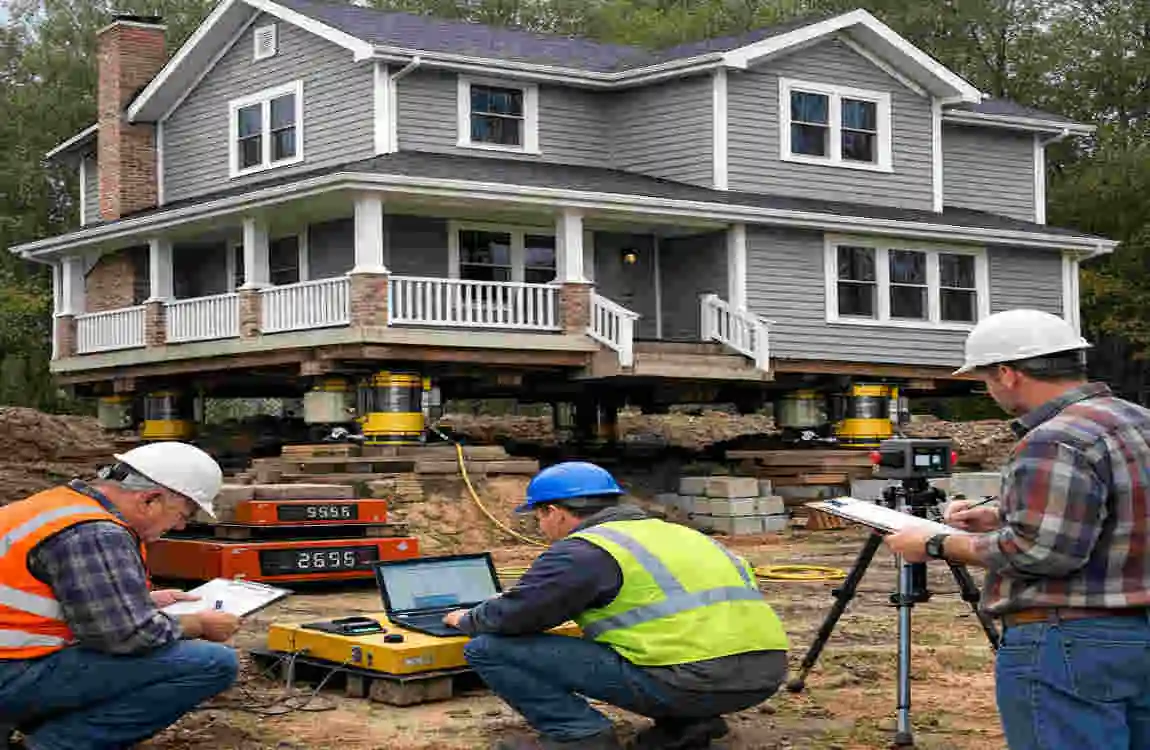
One of the most obvious reasons is house moving. If a house needs to be relocated, the weight becomes a major planning factor.
You need to know the load so you can correctly prepare equipment, plan routes, and support systems.
Foundation repair
If a house has foundation issues, knowing the approximate weight helps explain how much pressure the structure is placing on the base below it.
That can matter a lot when planning repairs or reinforcements.
Structural planning
Builders, inspectors, and engineers need to understand load paths and building mass. The weight of the house affects design choices and safety decisions.
Demolition and renovation
Heavy materials and large structures influence demolition methods, equipment choices, and project timelines. Even for major renovations, knowing the load helps with planning.
Simple curiosity
Of course, sometimes people just want the answer because it is interesting. And that is fair too. It is one of those rare questions that sounds simple. Still, it gives you a deeper appreciation for how much material goes into an everyday home.
Common Mistakes When Estimating House Weight

Many people make the same mistakes when they first try to estimate house weight. If you avoid these, your guess will be much better.
Using square footage without considering stories
Two homes with the same footprint can have very different total floor areas. Always count all levels.
Ignoring heavy materials
Brick, stone, tile, and concrete can raise the total fast. Do not assume all houses weigh about the same.
Forgetting the foundation
If you need a full-load estimate, the foundation should be included in the calculation.
Leaving out contents
A furnished home is not the same as an empty shell.
Treating an estimate as exact
House weight is usually a range, not a single perfect number. Any quick estimate should be treated that way.
Confusing footprint with total area
A home’s footprint is only part of the story. Always check the full floor space, especially for multi-story houses.
Quick House Weight Examples by Type
Here is a simple comparison to make the differences easier to see.
Wood-frame home
A standard wood-frame home is often lighter. It is usually the best starting point for a rough average estimate.
Brick home
A brick home is generally heavier due to the added density of its exterior materials.
Concrete home
A concrete home can be among the heaviest common residential types because concrete is so dense.
Mixed-material home
A mixed-material home can fall anywhere in the range depending on how much brick, stone, tile, and concrete it uses.
FAQs
How much does a house weigh in tons?
A typical house may weigh roughly 40 to 80 tons before contents, but larger homes can be much heavier. Once you include the foundation and furnishings, the total can rise significantly.
How much does a 2,000 sq ft house weigh?
A 2,000-square-foot house may weigh between 100,000 and 250,000 pounds, depending on the materials and number of stories. That is about 50 to 125 tons.
Does a brick house weigh more than a wood house?
Yes, in most cases a brick house weighs more than a wood-frame house of the same size. Brick adds density and mass, which increases the total weight.
Do contents count in house weight?
They can. If you want the weight of the full occupied home, then furniture, appliances, and belongings should be included. If you only want the structure weight, contents are usually left out.
Can you calculate house weight without an engineer?
Yes, you can make a rough estimate using square footage, stories, materials, and contents. But if you need a precise or project-critical number, an engineer should handle the calculation.
What is the easiest way to estimate how much a house weighs?
The easiest method is to start with square footage, adjust for the number of stories, consider the building materials, and then add the foundation and contents if needed. That gives you a useful estimate without making the process too complicated.