If you are wondering how much does it cost to wire a whole house, you are asking the right question before starting a big project. Electrical work is one of those home upgrades that can affect safety, comfort, and long-term value. The cost of whole-house wiring can vary significantly depending on the size of the home, the age of the wiring, and how easy it is for an electrician to access the walls and ceilings.
| Item / Category | Typical cost range (whole‑house) | Notes |
|---|---|---|
| New‑build wiring (basic) | ≈ $3–$8 per sq. ft. | Higher in premium or smart‑ready builds. |
| 1,000–1,500 sq. ft. home | ≈ $3,000–$12,000 | Simple layouts, standard outlets/lighting. |
| 1,500–2,500 sq. ft. home | ≈ $6,000–$20,000 | More rooms, more circuits, kitchen/bath upgrades. |
| Over 2,500 sq. ft. or complex | $20,000+ | Multi‑story, basement, pool, EV, etc. |
| Rewiring an existing home (UK‑style example) | ≈ £2,000–£5,000+, depending on size | 1‑bed vs 3‑bed vs 5+ bed; older homes cost more. |
| Pakistan‑style basic wiring (1,500–2,000 sq. ft.) | ≈ Rs. 100,000–200,000 | Labour ≈ Rs. 50–80/sq. ft. basic. |
| Rewiring (materials + labour, Pakistan‑style) | ≈ Rs. 200,000–300,000 (1,500 sq. ft.) | Full changeover, older wiring, wall chasing. |
Homeowners usually need new wiring or rewiring in a few common situations. This includes new construction, rewiring old homes, renovations and additions, and safety upgrades for outdated systems. In older homes, the cost of electrical wiring for house updates can be higher because the electrician may need to open walls, replace panels, and bring everything up to code.
How Much Does It Cost to Wire a Whole House?

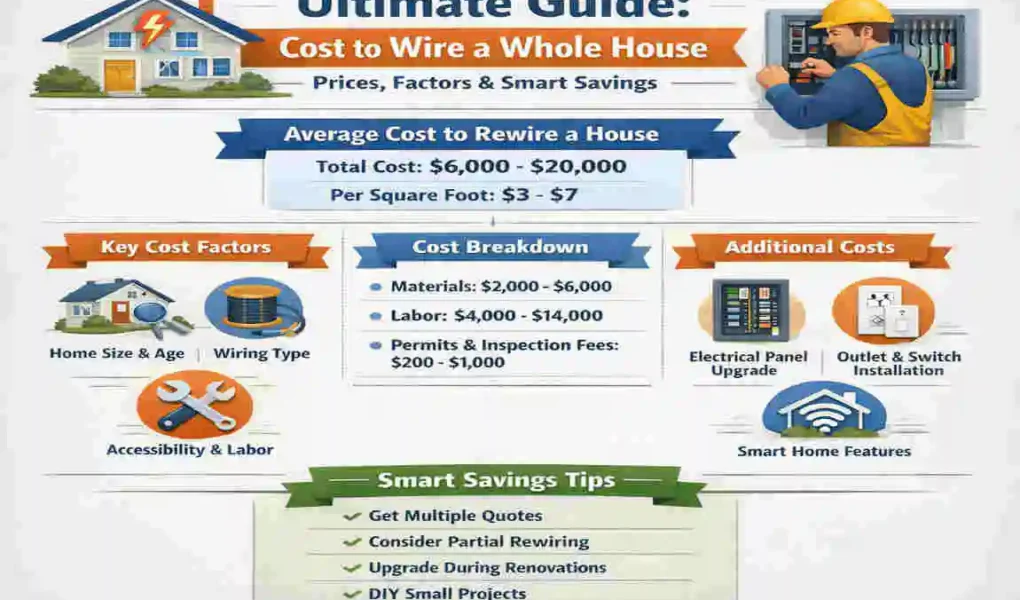
The average cost to wire a whole house usually falls between $8,000 and $20,000+, depending on the home’s size and the project’s difficulty. A small, simple modern home may cost less, while a larger or older property can cost much more. In many cases, the cost of house wiring per square foot ranges from $2 to $5, but it can rise when the job is complex.
Typical Price Ranges by Home Size
- 1,000 sq ft house: about $4,000 to $8,000
- 1,500 sq ft house: about $6,000 to $12,000
- 2,000 sq ft house: about $8,000 to $16,000
- 3,000+ sq ft home: about $12,000 to $25,000+
New Wiring vs Rewiring Costs
New wiring is usually cheaper because the electrician works in an open structure, especially in new construction. Rewiring is often more expensive because the crew must remove old wiring, work around finished walls, and handle possible upgrades to the electrical panel. So, when comparing the cost to wire a whole house versus the cost to rewire, rewiring usually wins as the more expensive option.
Key Factors That Affect Whole House Wiring Costs
Several things shape the final electrical installation cost. Some are easy to predict, while others only show up after an inspection.
House Size
Bigger homes need more outlets, switches, circuits, and wire. That means more labor and more materials. A larger home almost always has a higher cost for whole-house electrical wiring.
Type of Wiring Material
Most homes use copper wiring because it is reliable and long-lasting. Aluminum wiring may cost less in some situations, but it is not always the best choice for every home. Specialty wiring for smart systems, EV chargers, or upgraded appliances can also raise the price.
Accessibility
A home with a basement or crawl space is often easier to wire than a home with finished walls and tight spaces. Multi-story homes can also take more time. The harder it is to reach the wiring paths, the higher the labor bill.
Electrical Panel Upgrade
If your current panel cannot handle the new load, an upgrade may be necessary. That adds to the total cost, but it is often worth it for safety and performance.
Permit and Inspection Fees
Local rules vary. Some cities charge higher permit and inspection fees, and some projects require additional paperwork. These fees are part of the total cost of rewiring the house.
Labor Rates by Region
Electrician rates vary from place to place. Urban areas usually cost more than rural areas. Local demand, experience level, and job complexity can all affect the price.
Cost Breakdown: Materials vs Labor
The total cost usually comes down to materials and labor.
Common material costs include:
- Electrical wires
- Breaker panels
- Conduits
- Outlets and switches
- Junction boxes
Labor costs include:
- Electrician hourly or project rates
- Planning and layout work
- Installation and testing
- Inspection support
In many projects, labor makes up the larger share of the total bill because wiring a house takes time, skill, and attention to safety. Materials matter, but the work itself often costs more than the parts.
Cost Per Square Foot to Wire a House
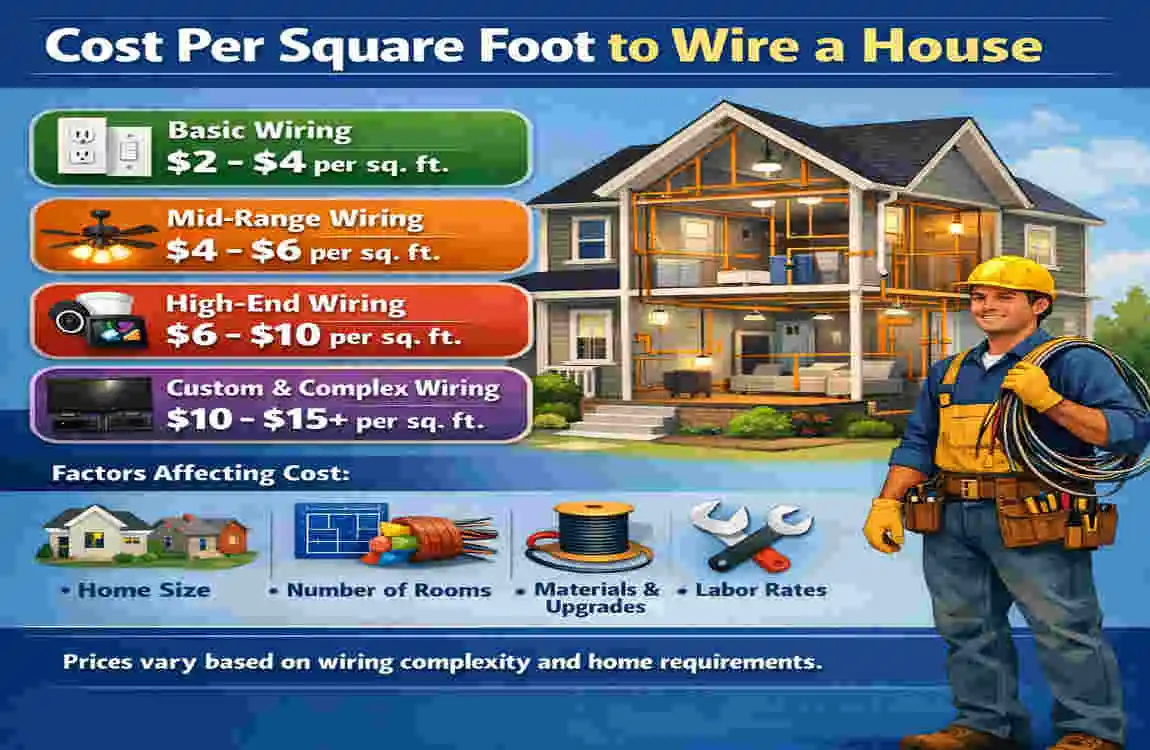
When people ask about home wiring costs per square foot, the answer depends on the home’s size and complexity.
Wiring Cost by Home Size
- Small homes: lower total cost, simple layout
- Medium homes: moderate cost, standard layout
- Large homes: higher cost, more circuits and outlets
- Luxury homes: highest cost, custom features and extra systems
Cost Formula Explained
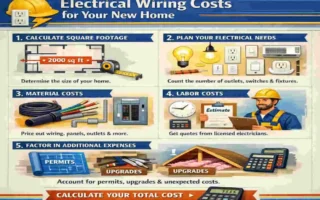
A simple estimate is:
Home size × cost per square foot = rough wiring cost
For example, a 2,000 sq ft home at $3 per sq ft would be around $6,000. But this is only a rough guide. Hidden issues, panel upgrades, and difficult access can push the final number higher.
Rewiring an Old House: Is It More Expensive?
Yes, cost to rewire a whole house is often higher than wiring a new one. Older homes may have outdated systems, such as knob-and-tube wiring, outdated panels, or wiring that no longer meets modern safety standards. In many cases, the electrician must do more work to make the home code-compliant.
Signs Your Home Needs Rewiring
- Flickering lights
- Burning smell near outlets
- Breakers tripping often
- Two-prong outlets
- Old or cracked wire insulation
If you notice these issues, it is smart to schedule an inspection soon. Waiting can lead to bigger repair bills and safety risks.
Hidden Expenses Homeowners Often Overlook
The cost to wire a whole house isn’t just the wiring itself. Some extra costs surprise homeowners later.
Common Hidden Costs
- Drywall repair: walls may need patching after access openings
- Permits: local fees can add up
- Smart home upgrades: EV chargers, security wiring, and automation systems
- Temporary relocation: major rewiring may make it hard to stay in the home
These items can change the total budget, so it is better to plan for them early.
Smart Ways to Save Money on Whole House Wiring
If you want to reduce house wiring costs, the best approach is to plan carefully and avoid rushed decisions.
Practical Cost-Saving Tips
- Compare multiple electrician quotes
- This helps you see fair pricing and avoid overpaying.
- Bundle wiring with renovation work
- If walls are already open, wiring becomes easier and cheaper.
- Use standard fixtures
- Fancy switches and custom parts can quickly increase the bill.
- Plan outlet placement carefully
- Good planning avoids extra labor later.
- Upgrade only what is necessary
- Do not replace good parts just because you are already doing some work.
- Avoid emergency electrical work
- Emergency jobs often cost more than planned projects.
DIY vs Hiring a Professional
You may be able to handle simple tasks, such as planning outlet locations or choosing fixtures. Still, a licensed professional should always do full-house wiring. Electrical work can be dangerous, and mistakes can lead to fire, injury, or failed inspections. In most cases, the safest choice is to hire an expert.
Cost Comparison: Wiring a New House vs Rewiring an Existing House
Here is a simple comparison:
Factor New House Wiring Rewiring Existing House
Labor Complexity Lower Higher
Wall Access Easy Difficult
Permits Standard Often complex
Total Cost Usually lower Usually higher
New wiring is usually more affordable because the structure is open and easy to work in. Rewiring older homes takes more time and often requires additional repairs, which can raise the final price.
Is Whole House Wiring Worth the Investment?
Yes, in most cases it is. The benefits of rewiring a home go beyond just new wires. Proper electrical work improves safety, supports modern appliances, and can raise home value. It may also help with insurance approval and reduce future repair problems.
Good wiring also gives you peace of mind. You are less likely to encounter power issues, overloaded circuits, or outdated systems that cannot meet today’s electrical needs.
How to Choose the Right Electrician

Choosing the right professional matters just as much as the wiring itself. Look for someone who is:
- Licensed and insured
- Experienced with full-house wiring
- Clear about pricing
- Good at explaining the work
- Familiar with local code rules
- Willing to provide references or reviews
A fair estimate should explain labor, materials, permits, and any possible extras.
Frequently Asked Questions
How much does it cost to wire a whole house?
Most homeowners pay around $8,000 to $20,000+, depending on size, location, and project complexity. The final electrical wiring cost changes based on labor, materials, and whether the job is new wiring or rewiring.
Is rewiring cheaper during renovation?
Yes, usually. If walls are already open during a renovation, the electrician can work more quickly and cause less damage. That often lowers the total cost to rewire a house.
How long does it take to wire a house?
A small home may take a few days, while a larger or older home may take one to two weeks or longer. The timeline depends on access, permits, and the extent of work needed in the home.
Can I live in my house during rewiring?
Sometimes yes, but not always. If only part of the home is being updated, you may stay there. For major rewiring, it may be noisy, dusty, and inconvenient, so temporary relocation can be helpful.
What wiring is best for residential homes?
Copper wiring is usually the preferred choice for most homes because it is durable and dependable. It is widely used in modern residential electrical systems.
Does insurance cover house rewiring?
It depends on the policy and the reason for the work. Insurance may help if a covered event damaged the wiring, but not always for aging systems or routine upgrades.