Have you ever thought about transforming a grain silo into a unique, affordable, and eco-friendly home? It sounds like a creative dream, but it’s a reality for many people seeking alternative housing. Silo homes, with their charming cylindrical structures, are becoming a popular choice for homeowners who value sustainability, cost-effectiveness, and minimalist living.
What Is a Silo House and Why Are They Popular?
Definition of a Silo House
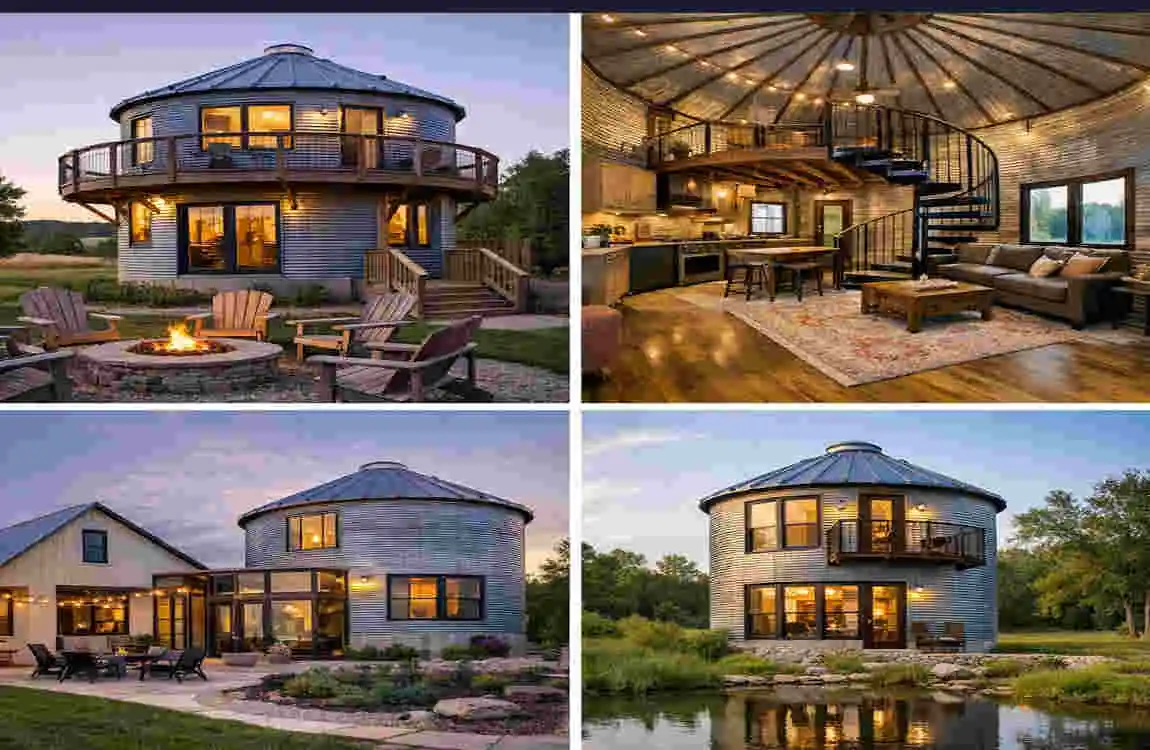
A silo house is exactly what it sounds like—a residential structure built using a repurposed grain silo. Grain silos are typically tall, cylindrical structures made of steel or concrete, originally designed to store bulk agricultural products like grain or silage. By converting these silos into homes, people are embracing a unique architectural style that sets them apart from traditional rectangular houses.
What makes silo houses unique is their circular floor plan, which offers a cosy and futuristic aesthetic. These homes can be as simple or as elaborate as the homeowner desires, with options for multiple floors, custom interiors, and even attached outdoor spaces.
Rising Popularity
Silo homes are gaining popularity for several reasons. First, they are eco-friendly, as they often involve repurposing old materials rather than constructing from scratch. Second, they are cost-effective, especially when compared to traditional housing. Minimalist living is another factor driving interest, as silo houses encourage downsizing and prioritising essential spaces.
Recent trends indicate a rise in demand for alternative housing options, such as silo homes. This shift highlights how people are becoming more conscious of their environmental impact and looking for creative, sustainable living solutions.
Benefits of Silo Houses
There are numerous reasons why silo homes appeal to modern homeowners. Here are some key advantages:
- Affordability: Silo homes can be significantly cheaper to build than traditional houses.
- Sustainability: Repurposing a grain silo reduces waste and promotes recycling.
- Unique Design: Their distinctive shape and structure make them a conversation starter.
- Durability: Steel and concrete silos are built to withstand harsh weather conditions.
- Energy Efficiency: The compact shape of a silo can make heating and cooling more efficient.
Factors That Impact the Cost of Building a Silo House
Building a silo house isn’t a one-size-fits-all process. Several factors can influence the overall cost. Let’s break them down:
Size of the Silo
The dimensions of the silo play a significant role in determining costs. Larger silos with greater diameter and height will naturally cost more, both in terms of materials and labour. For example, a small silo might be suitable for a single-story studio. At the same time, a larger one can accommodate multiple floors.
Type of Silo
The type of silo you choose—steel or concrete, new or repurposed—can also affect pricing. A new steel silo can cost between $10,000 and $20,000, while a used silo may be as low as $5,000. Concrete silos, on the other hand, are often pricier due to their heavier construction.
Location
Geographic location is another significant factor. Transportation costs for delivering the silo to your site can vary widely depending on how far you are from the supplier. Additionally, labourr and buildingpermit costs varys by region.
Interior Customization
The way you design the interior of your silo house will greatly influence your budget. Custom features like plumbing, HVAC systems, insulation, and built-in furniture can add up quickly.
Foundation and Site Preparation
Before the silo can be installed, you’ll need to prepare the land and lay a foundation. This process may involve levelling the ground, pouring concrete, and reinforcing the foundation to support the weight of the silo.
Average Cost Breakdown of Building a Silo House
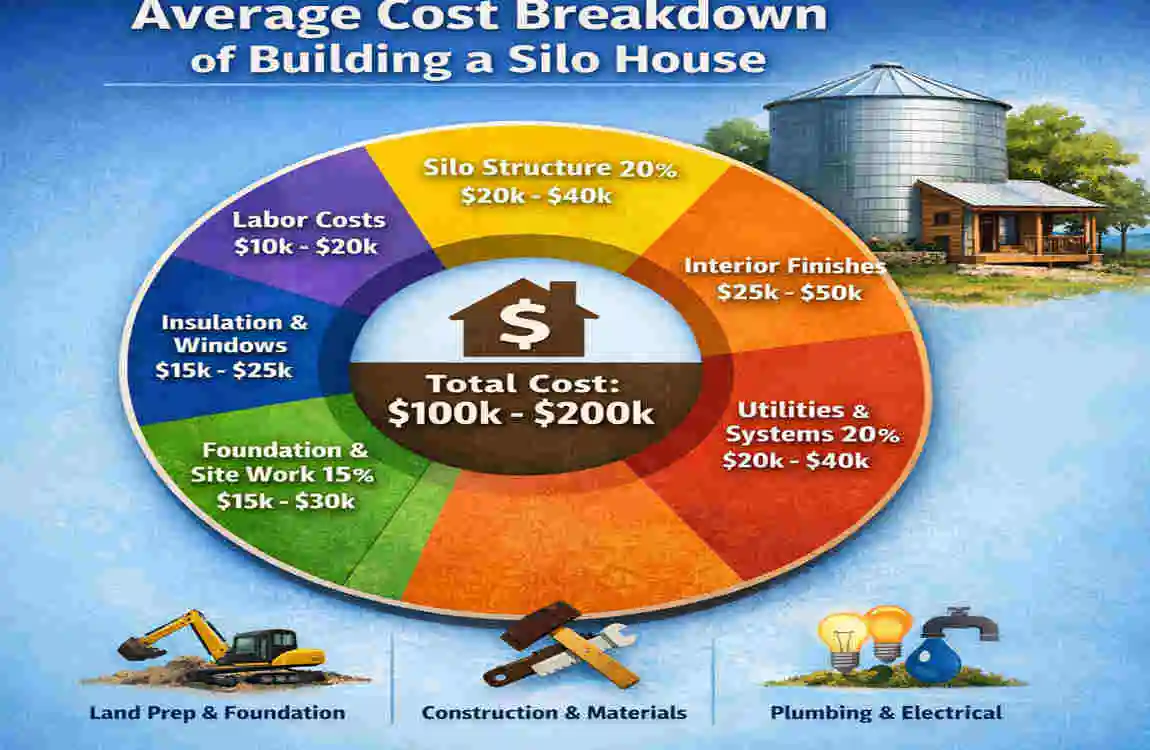
To give you a clearer idea of the financial commitment, let’s break down the average costs associated with building a silo home:
Cost Component Estimated Price Range
Basic Silo Cost $5,000–$20,000
Foundation & Site Prep $5,000–$15,000
Structural Modifications $3,000–$10,000
Interior Construction $20,000–$50,000
Labour $10,000–$30,000
Permits & Legal Fees $1,000–$3,000
Additional Costs (Landscaping, Décor, etc.) $2,000–$10,000
Basic Silo Cost
As mentioned earlier, the cost of the silo itself can vary widely. New steel silos are on the higher end of the spectrum, while used silos provide a more affordable option.
Foundation and Structural Modifications
Preparing the site and modifying the silo for residential use are critical steps. This includes cutting out spaces for windows and doors, as well as reinforcing the structure for safety.
Interior Construction Costs
Interior construction represents the bulk of the expenses. This includes adding insulation, plumbing, flooring, electrical systems, and kitchen or bathroom installations.
Labor Costs
Hiring professionals for tasks such as structural modifications and interior design can significantly increase costs. However, this ensures quality and compliance with building codes.
Real-Life Examples: Case Studies of Silo Homes
Small and Affordable Silo House
- Size: 12-foot diameter, single-story
- Cost: $35,000
- Features: Basic insulation, open-concept living space, and a compact kitchen.
Mid-Range Silo Home
- Size: 18-foot diameter, two-story
- Cost: $75,000
- Features: Custom interior, two bedrooms, and energy-efficient systems.
Luxury Silo Home
- Size: 24-foot diameter, multi-story
- Cost: $120,000
- Features: High-end finishes, modern appliances, and a rooftop deck.
How Much Does It Cost to Build a Silo House?
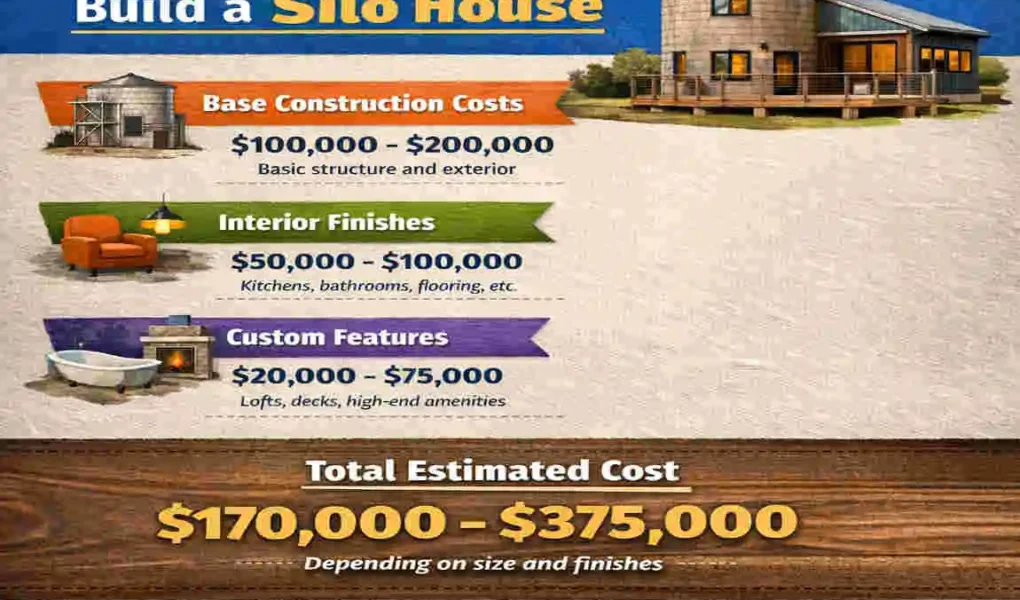
On average, building a silo house can cost between $30,000 and $100,000, depending on the size, level of customisation, and location. While this may seem like a wide range, it’s often more affordable than constructing a traditional home, which can easily exceed $200,000.
Comparison to Traditional Homes
Silo homes are a great alternative to conventional housing because they offer lower upfront costs and long-term savings due to their energy efficiency.
Value for Money
The durable materials and sustainable design of silo houses mean you’ll likely save on maintenance and utility bills in the long run.
Tips to Save Money When Building a Silo House
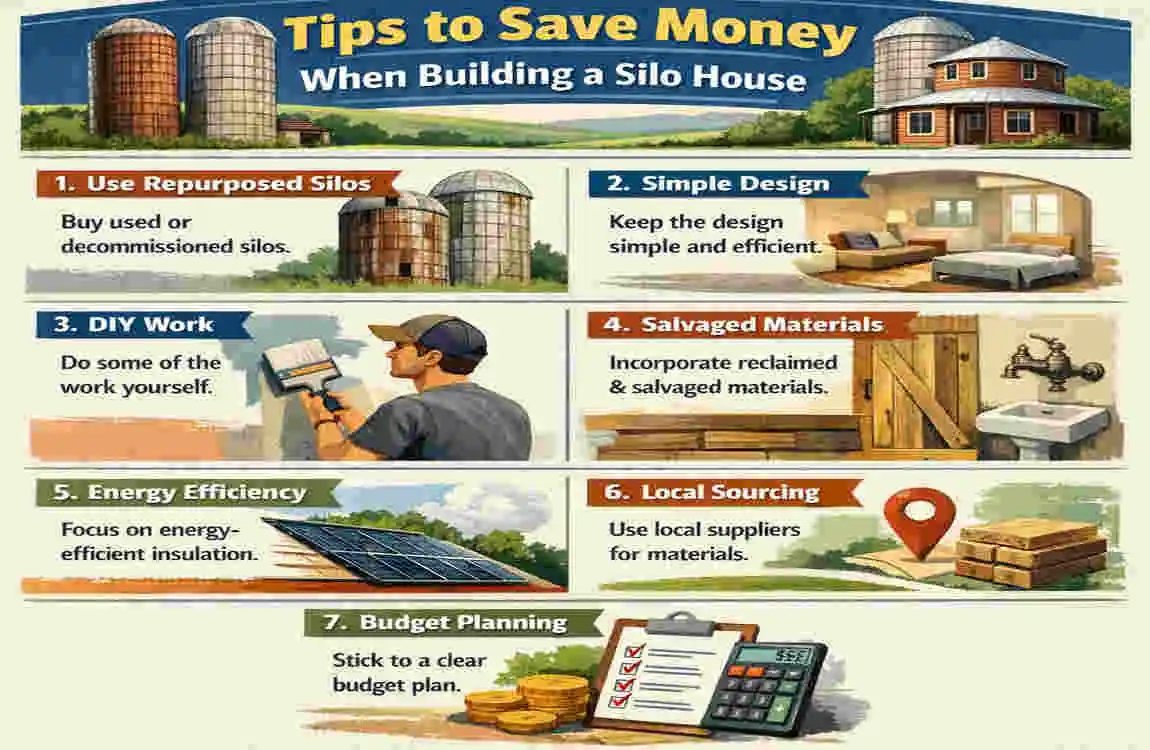
- Use a Repurposed Silo: Opt for a second-hand silo to save on material costs.
- DIY vs Hiring Professionals: Consider doing smaller tasks yourself while hiring experts for complex jobs.
- Prioritise Essential Features: Focus on what you truly need, not luxury upgrades.
- Research Local Regulations: Avoid unexpected fines by understanding zoning laws and permits.
Frequently Asked Questions About Silo House Costs
How much does it cost to insulate a silo house?
Insulation costs can range from $2,000 to $10,000, depending on the materials used.
Are silo homes energy-efficient?
Yes, their compact shape makes them easier to heat and cool compared to traditional homes.
Do silo homes require special maintenance?
Maintenance is minimal, but proper sealing and occasional inspections are necessary to prevent rust or cracks.
| Cost Component | Estimated Price Range (USD) | Notes |
|---|---|---|
| Silo Purchase (New) | $10,000 – $20,000 | Steel silos are most common |
| Silo Purchase (Used) | $5,000 – $12,000 | Lower cost but may require repairs |
| Foundation & Site Preparation | $5,000 – $15,000 | Depends on soil and site conditions |
| Structural Modifications | $3,000 – $10,000 | Cutting windows, doors, reinforcing |
| Interior Construction | $10,000 – $40,000 | Insulation, plumbing, electrical, finishes |
| Labor Costs | $8,000 – $20,000 | Varies by location and complexity |
| Permits & Legal Fees | $500 – $3,000 | Local building permits and inspections |
| Total Estimated Cost | $30,000 – $100,000+ | Depends heavily on customization and location |