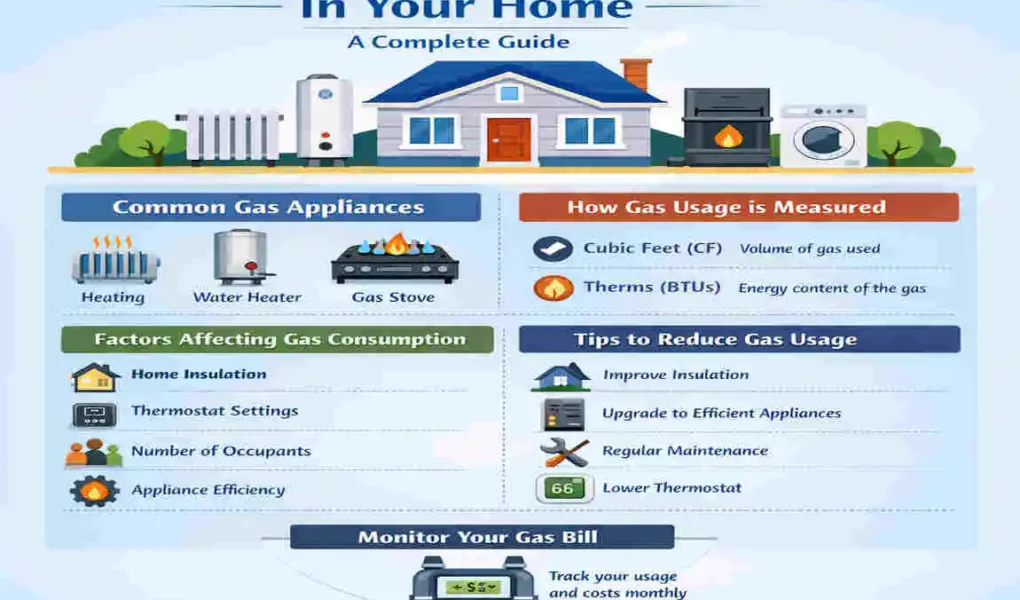
Gas is a quiet partner in many of the chores that keep our homes running smoothly. From the flame that sears a steak on the stove to the steady heat that warms a shower to the cosy warmth that fills a living room on a chilly night, gas powers it all.
|
Topic |
Short Explanation |
|---|---|
|
Household Gas Types |
Natural gas and liquefied petroleum gas (LPG) are commonly used in homes. |
|
Main Ingredient |
Natural gas mainly contains methane, while LPG mainly contains propane and butane. |
|
Common Uses |
Cooking, water heating, space heating, and some household appliances. |
|
Gas Supply |
Natural gas is usually delivered through pipelines, while LPG is often stored in cylinders or tanks. |
|
Gas Safety |
Proper installation, ventilation, and regular appliance maintenance help prevent hazards. |
|
Gas Leak Warning |
A sulfur-like smell may indicate a leak. Leave the area and contact the local gas emergency service from a safe location. |
|
Energy Efficiency |
Maintain appliances and avoid wasting gas to reduce consumption. |
|
Focus Keyword |
What is the gas we use in our homes? |
What Gas Do We Use in Our Homes?
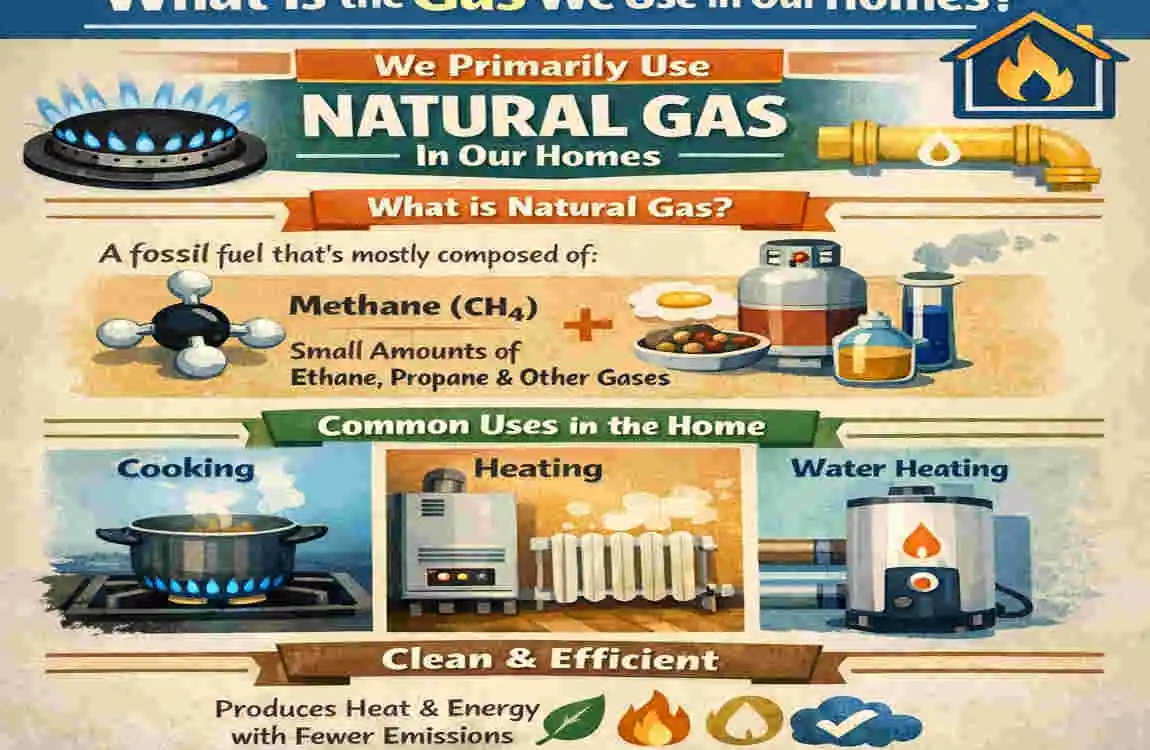
Natural Gas
- Delivered straight to your house through a network of pipelines.
- Primarily methane, a clean‑burning fuel that lights burners instantly.
LPG (Liquefied Petroleum Gas)
- Stored in cylinders or tanks and brought to the home on a regular schedule.
- Consists mainly of propane, butane, or a mix of both, and is kept under pressure. Hence, it stays liquid until it reaches the regulator.
How Household Gas Is Supplied
- Pipelines: Carry natural gas from the utility’s main line to your meter.
- Meters: Measure how much gas you use, similar to an electricity meter.
- Cylinders & Regulators: For LPG, the regulator reduces the high pressure inside the cylinder to a safe level for appliances.
Why Gas Is Used
- Convenient: Instant flame, no pre-heating needed.
- Effective: Provides strong, controllable heat for cooking and heating.
- Versatile: Works with a wide range of appliances, from stoves to space heaters.
Common Uses of Gas in a Household
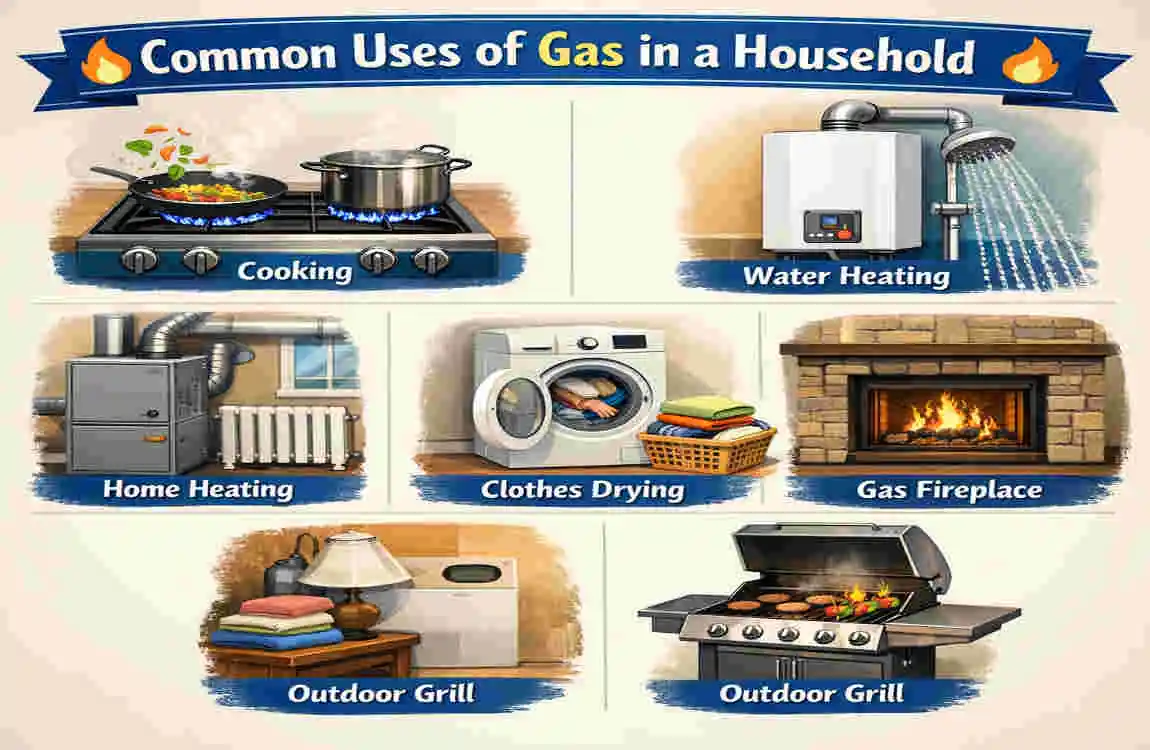
Cooking
- Gas stoves and ovens give precise temperature control, perfect for everything from simmering sauces to baking pies.
Water Heating
- Gas‑powered water heaters deliver hot water on demand, keeping showers warm and dishes clean.
Space Heating
- Furnaces, boiler systems, and wall‑mounted heaters use gas to heat rooms quickly and efficiently.
Other Appliances
- Gas‑driven clothes dryers and outdoor grills add flexibility for laundry and backyard cooking.
How Household Gas Works and Reaches Your Appliances
Gas Distribution
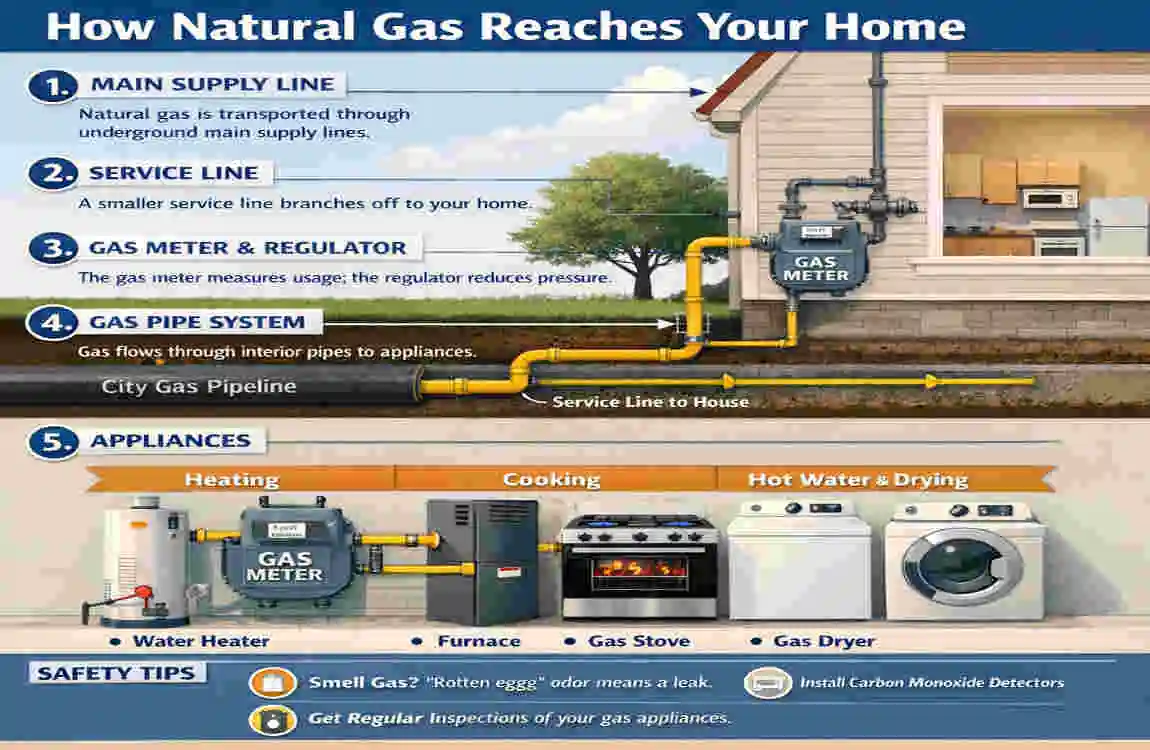
- Natural gas travels through an extensive pipeline network, moving from processing plants to local distribution lines that connect to your home.
Gas Cylinders
- LPG cylinders keep the fuel compressed so it stays liquid. When released, the pressure drops, and the liquid turns into gas for use.
Meters and Regulators
- Meters track consumption for billing.
- Regulators ensure the pressure reaching appliances is safe and consistent.
Gas Pipes and Connections
- Pipes must be made of approved materials (often copper or flexible stainless steel) and installed by trained professionals.
- Regular inspections catch corrosion, leaks, or loose fittings before they become hazards.
Household Gas Safety, Common Problems, and Prevention
Recognising a Gas Leak
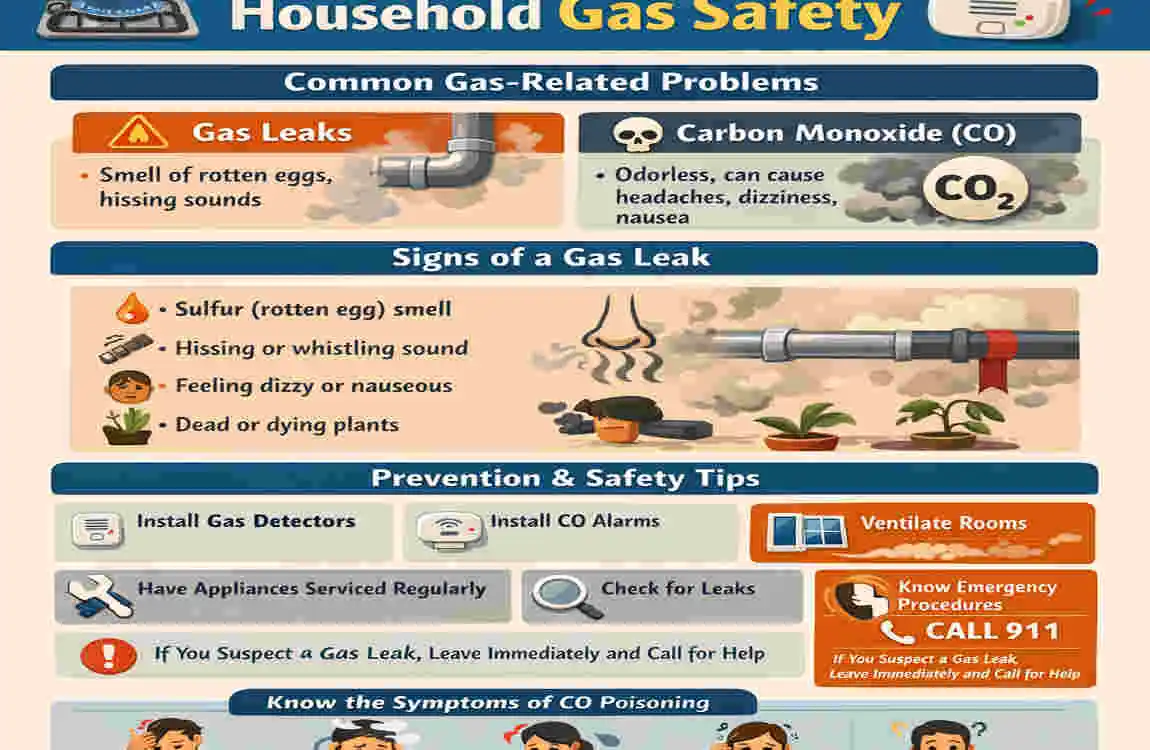
- A sulfur‑like “rotten egg” scent is added to both natural gas and LPG to warn you of a leak.
Carbon Monoxide Risks
- Incomplete combustion can produce carbon monoxide (CO), an invisible, odourless gas that is dangerous if inhaled.
Safe Appliance Use
- Keep appliances clean, ventilation openings clear, and schedule annual maintenance.
What to Do During a Suspected Leak
- Leave the area immediately.
- Do not turn lights on, use phones, or create any flame.
- From a safe distance, call your local gas emergency service.
Professional Inspections
- Only qualified technicians should install, move, or repair gas lines and appliances. Their expertise helps prevent accidents and ensures code compliance.
Frequently Asked Questions About Household Gas
What gas do we use in our homes?
Most homes rely on natural gas (methane) or LPG (propane/butane), depending on supply and infrastructure.
Is natural gas the same as LPG?
No. Natural gas is mainly methane and travels through pipelines. LPG, by contrast, is a pressurised mixture of propane and butane stored in cylinders.
Why does household gas smell unusual?
An odorant is deliberately added to make leaks detectable by scent.
Is household gas safe to use?
Yes, when appliances are properly installed, maintained, and ventilated. Leaks and poor combustion are the main concerns.
How can I reduce gas consumption at home?
Use appropriately sized cookware, keep pot lids on, maintain appliances, and avoid heating unused rooms.
What should I do if I smell gas in my house?
Leave the building, avoid any sparks or switches, and call the gas emergency service from a safe location.