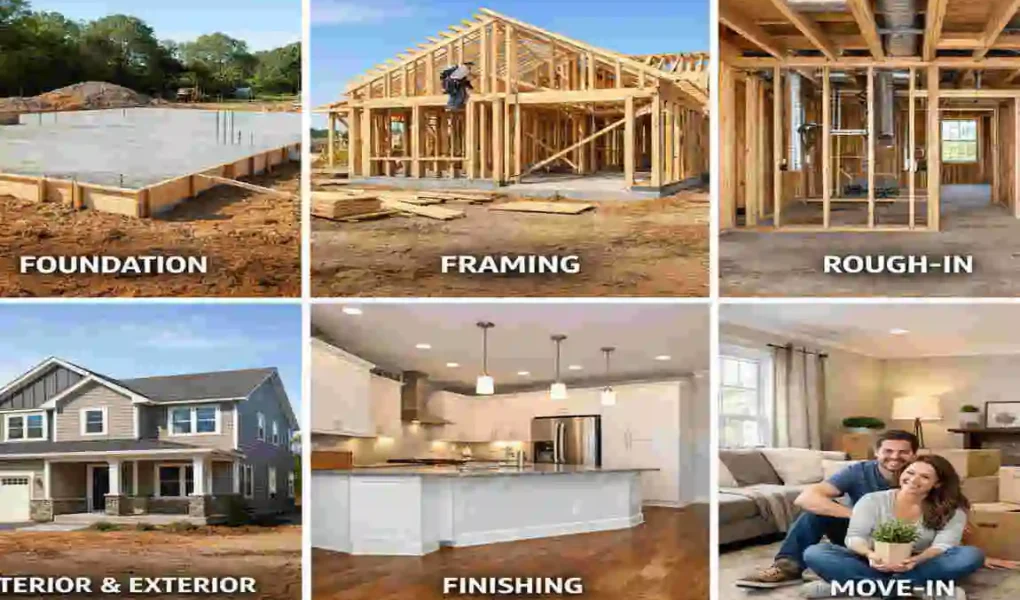
Picture this: You are standing on a vacant plot of land. The wind is blowing gently through the grass, and in your mind’s eye, you can already see the porch where you’ll drink your morning coffee and the living room where your family will gather for movie nights. But right now, it’s just dirt. The gap between that dirt and your dream home is filled with excitement, anxiety, and one burning question that keeps every future homeowner up at night: “When will it be ready?”
If you are a first-time builder, the timeline can feel like a black box. You might have heard horror stories from friends about projects that dragged on for years, or maybe you’ve seen reality TV shows where they seem to throw up a mansion in a week. The reality, of course, lies somewhere in the middle.
Generally speaking, the time to build a house is usually 6 to 12 months for a custom build. However, this is just a ballpark figure. Depending on whether you are building a simple starter home or a complex luxury estate, that timeline can range from 4 months to well over a year.
Average Timeline Overview
Before we dive into the nitty-gritty details, let’s look at the big picture. When people ask, “How long does it take to build a house?“, the answer depends heavily on what kind of house you are building.
For a standard production home (the kind built by developers in a large community), the process is a well-oiled machine, often taking 3 to 6 months. These builders have the crews, the materials, and the plans ready to go. On the other hand, a custom house—one that is designed specifically for you on your own lot—is a bespoke project. Because every decision is unique, these typically take 9 to 12 months, and sometimes longer if the design is particularly intricate.
To give you a realistic expectation, here is a breakdown of the major stages and how long they typically take for a standard-to-custom home build.
Construction Stages at a Glance
StageDurationKey Milestones
Pre-Construction 1-3 Months: Finalizing designs, securing permits, and clearing the land.
Foundation 1-4 Weeks: Excavating the site, pouring concrete, and letting it cure.
Framing & Exterior 1-3 Months: Building the skeleton (walls, roof) and installing windows.
Interior & Finishing 2-4 Months: Plumbing, electrical, insulation, drywall, and painting.
Final Inspections 2-4 Weeks: Last detailed checks, touch-ups, and getting the occupancy certificate.
It is important to remember that these phases often overlap. For example, while the foundation is curing, your builder might be finalizing window orders. However, variables like bad weather, labor shortages, or delays in getting the specific marble tile you fell in love with can shift these numbers.
Understanding this house construction timeline helps you manage your expectations. It is not just about stacking bricks; it is a complex symphony of logistics, legalities, and labor.
Factors Influencing House Construction Time
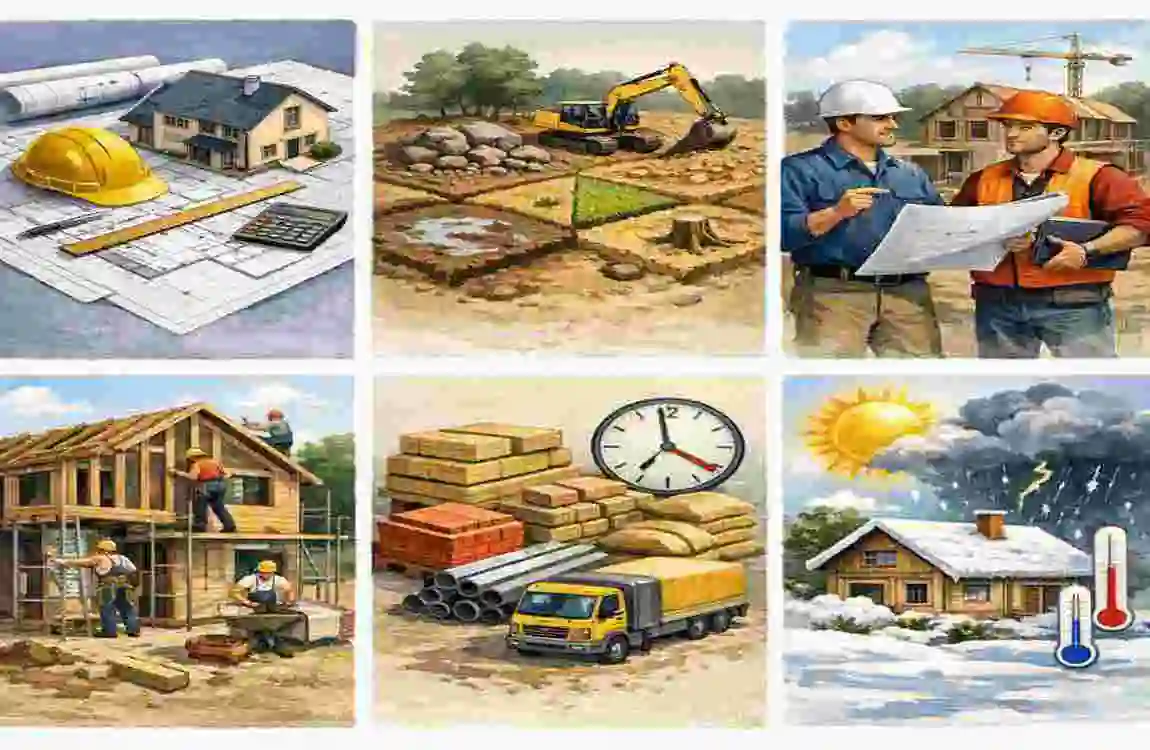
You might be looking at the table above and thinking, “Okay, but why does my friend’s house take 18 months while another took only 6?” The variation in time to build a house comes down to several critical factors. Let’s break down what speeds up or slows down the process.
House Size and Complexity
This is the most obvious factor. A 1,500-square-foot single-story home with a simple rectangular layout is straightforward to frame and finish. A crew can likely knock this out in 4 to 6 months.
Contrast that with a 4,000-square-foot luxury custom home. If your design includes multiple stories, complex rooflines, custom spiral staircases, or a basement, the complexity skyrockets. More corners mean more cuts for the framers. More bathrooms mean more plumbing. These complex builds often require 9 to 18 months—the more “custom” the features, the longer the timeline.
Location and Weather
Where you build matters just as much as what you build.
- Urban vs. Rural: Building in a dense city center might mean navigating tight spaces for delivery trucks and dealing with strict noise ordinances, which slows work down. Rural builds might face delays in getting utilities (water, electricity) connected to the grid.
- The Weather Factor: You cannot pour concrete in a torrential downpour, and you cannot frame a roof safely in high winds. If you are building in a region with a distinct rainy season—like Pakistan’s monsoon season—you need to account for 1 to 2 months of potential delays. If the ground gets too muddy, heavy machinery can’t operate, bringing the site to a standstill.
Materials and Labor availability
Are you using standard materials available at the local hardware store, or are you importing Italian marble and German windows?
- Supply Chain: We live in a global economy. If your custom house relies on imported fixtures, a shipping delay on the other side of the world can halt your local plumber.
- Labor: Skilled labor is in high demand. If there is a shortage of electricians in your area, your house might sit empty for weeks while you wait for the wiring crew to become available. This can extend the framing and rough-in stage by 4 to 6 weeks.
The “Builder Factor”
Who you hire makes a massive difference. An experienced builder with a solid network of subcontractors acts like a conductor, ensuring the plumber arrives exactly when the framer leaves. Reputable firms with established relationships can often cut 20-30% off timelines simply because their subcontractors prioritize them. A less experienced builder might struggle to keep the schedule tight.
Owner Decisions (Yes, You!)
Believe it or not, the homeowner is often the biggest source of delays. This is known as “decision fatigue.” If you wait until the last minute to choose your faucets, flooring, or paint colors, the builder has to wait for those items to arrive. Even worse, changing your mind after something is installed (change orders) can add 1 to 2 months to the project and significantly increase costs.
Real-World Case Study: The Lahore Comparison
Let’s look at a practical example to illustrate this. Imagine two neighbors building in Lahore.
- Project A: A standard 10-marla home using locally sourced bricks and standard finishes. The owners made all decisions before breaking ground—total Time: 5 Months.
- Project B: A 1-kanal custom Spanish-style villa. The owners imported tiles from Spain (which got stuck in customs) and changed the kitchen layout during framing—total Time: 14 Months.
The difference wasn’t just size; it was complexity and decision-making.
Detailed Stage-by-Stage Breakdown
Now, let’s get into the weeds. This is the core of your journey. We are going to walk through the house construction timeline, stage by stage, so you know exactly what to look for and what questions to ask.
Pre-Construction Phase 4-12 Weeks
Before a single shovel hits the dirt, there is a mountain of paperwork to climb. This is the “invisible” work that frustrates many eager homeowners.
- Design and Engineering: You will work with an architect to finalize floor plans. This involves back-and-forth revisions until it’s perfect.
- Permitting: This is often the biggest bottleneck. Your plans must be submitted to the local municipality (like the LDA or CDA in Pakistan) for approval. They check for structural integrity, compliance with zoning laws, and adherence to safety codes.
- Site Prep: Once the paper is stamped, the land needs to be cleared. Trees are removed, and the land is leveled.
- Pro Tip: Hire your architect and builder early. Getting them on the same page during the design phase can prevent costly redesigns later, saving you weeks of delay.
Foundation and Site Work 2-6 Weeks
This is when your project officially becomes a construction site.
- Excavation: Heavy machinery digs out the footprint of the house.
- Footings and Pouring: Concrete is poured into trenches to support the walls. This needs to pass an inspection before the slab is poured.
- Curing: Concrete isn’t like glue; it takes time to harden and reach full strength. This “curing” process is chemical, and it cannot be rushed.
- Common Delay: Soil Testing. In regions like Punjab, soil composition varies. If the excavators hit unexpected rock or unstable soil, engineers may need to redesign the footings, adding weeks to the timeline.
Framing and Structural Phase 4-10 Weeks
This is the most exciting phase for homeowners because your house finally starts to look like a house!
- Going Vertical: The wood or brick skeleton goes up. You will see room divisions, window openings, and the roof structure.
- Sheathing: The exterior walls are covered with plywood or oriented strand board (OSB), and a protective house wrap is applied to keep moisture out.
- Roofing: Shingles or tiles are installed to make the house “dry in.”
- Pro Tip: Weatherproofing is key. Once the roof is on, the interior work can proceed regardless of rain. If framing drags on during the rainy season, moisture can seep into the wood, leading to warping and mold later.
Mechanical, Electrical, and Plumbing (MEP) Rough-In 3-6 Weeks
Once the shell is up, the house needs its internal organs.
- Rough-In: This means running the pipes and wires through the walls, floors, and ceilings before they are covered up.
- HVAC: Ductwork for heating and cooling is installed.
- Inspections: This is a critical stop-point. An inspector must verify that all wiring and plumbing meet safety codes before the walls can be closed.
- Example: If you decide to integrate a solar power system, the electrical rough-in becomes more complex. It might add 1 week now for specialized wiring, but it saves you a headache and money in the long run.
Drywall, Insulation, and Interior Framing 4-8 Weeks
Now, the house feels cozy.
- Insulation: Fiberglass, foam, or cellulose is packed into walls to regulate temperature.
- Drywall/Plaster: Large sheets of gypsum board (drywall) are hung, taped, and mudded. In many South Asian buildings, wet plaster is applied directly to brick.
- Texture and Primer: The walls are smoothed out and primed for paint.
- Timeline Note: Drywall mud and plaster need time to dry between coats. High humidity can significantly slow this down.
Finishing Touches and Interiors 6-12 Weeks
This is usually the longest phase because it requires precision and involves many different trades working around each other.
- Hard Surfaces: Flooring (tile, wood, laminate) is laid down.
- Cabinetry and Trim: Kitchen cabinets, bathroom vanities, baseboards, and door casings are installed.
- Painting: The final coats of color bring the rooms to life.
- Fixtures: Lights, faucets, switches, and doorknobs are fitted.
- Customization Alert: This is where tile selection delays happen frequently. If you ordered a specific mosaic that is out of stock, the tiler cannot finish the bathroom, which means the plumber cannot install the toilet. It is a domino effect.
Custom vs. Production Homes: Timeline Comparison
When asking “how long does it take to build a house,” the type of build is the biggest variable. It is important to decide what matters more to you: speed or personalization.
The Custom Route
Building a custom home is like having a suit tailored just for you. It fits perfectly, but it takes time.
- Timeline: 8 to 15 months.
- Why so long? You are starting from scratch. Every permit, every material choice, and every design element is unique. There is no template.
- The Benefit: You get exactly what you want. A kitchen designed for your cooking style, a library for your books, and a layout that fits your family perfectly.
The Production or Modular Route
These are homes built from a set of existing plans.
- Timeline: 3 to 6 months.
- Why so fast? The builder has built this exact house 50 times before. They know exactly how much lumber is needed, the permits are often pre-approved or streamlined, and the crews can work on autopilot.
- Modular: Prefabricated homes (built in a factory and assembled on-site) can be even faster, sometimes finishing in 2 to 4 months.
- The Trade-off: You have limited choices. You might get to pick from three tile colors and two cabinet styles, but you cannot move walls or add rooms.
Hybrid Options
For markets like Lahore or other growing cities, semi-custom builds are popular. You pick a standard floor plan but have freedom with the finishes (tiles, paint, fixtures). This offers a middle ground: a unique look with a faster 6- to 9-month timeline.
Home Type: Total Time Estimate, Main Benefit, Main Drawback
Custom Home 9-15 Months Fully personalized; Premium features. Highest cost; longest wait.
Semi-Custom 6-9 Months Good balance of choice and speed. moderate flexibility.
Production/Modular 3-6 Months 20-30% faster; lower cost. Limited design choices.
Common Delays and How to Avoid Them
Even the best-laid plans can go awry. In the construction industry, delays are almost a guarantee, but knowing what causes them can help you mitigate the damage.
Permitting Nightmares (20% of Delays) Bureaucracy is slow. In many areas, permit offices are understaffed.
- The Fix: Submit your paperwork as early as possible. Do not wait for the final design tweaks. Hire a local “expediter” or a builder with a good relationship with the local permit office (e.g., the LDA).
Supply Chain Disruptions (15% of Delays) We saw this globally in recent years. If your windows are stuck on a ship, your house cannot be sealed.
- The Fix: Order early. As soon as the design is finalized, have your builder order long-lead items like windows, doors, and appliances. Be willing to swap to in-stock alternatives if time is critical.
The Weather (10% of Delays) You cannot fight Mother Nature.
- The Fix: plan your start date wisely. If you know the rainy season starts in July, try to break ground in January so the roof is on before the rains come.
Prevention Checklist:
- Buffer your timeline: Mentally add 10-20% extra time to whatever your builder tells you. If they say 10 months, plan for 12.
- Weekly Check-ins: Schedule a weekly standing meeting with your builder. Regular communication keeps small problems from becoming big delays.
- Contingency Fund: Keep cash aside for “rush orders” to speed up the delivery of a critical item.
Cost Implications of Timeline Variations

Here is the hard truth: Time is money.
Every month your project is delayed, it costs you. It is not just about the construction costs; it is about the “carrying costs.”
- Labor Costs: If a job drags on, labor rates might increase, or contractors might charge for extra days on site.
- Interest Payments: If you have a construction loan, you are paying interest on the money you have drawn. An extra three months of interest can add thousands to your final bill.
- Living Expenses: Where are you living while you build? You are likely paying rent or a mortgage elsewhere. Three months of delay equals three months of extra rent.
Expert Tips to Accelerate Your Build
If you are in a rush and need to shave weeks off your house construction timeline, here are three strategies from the pros:
- Choose Prefab Elements: Instead of framing the roof stick-by-stick on site, order pre-manufactured roof trusses. They arrive on a truck and are craned into place in a single day. You can also use pre-cast concrete walls for faster installation.
- Run Tasks in Parallel: Ask your builder to stack trades where safe. For example, landscaping and driveway work can be done simultaneously with the interior painting. The electrician can be finishing up inside while the masons are finishing the exterior brickwork.
- Hire Vetted Local Contractors: A builder who uses the same crew for every house gets faster results. The crew knows the builder’s style, expectations, and schedule. Avoid bringing in your own “cousin who is a plumber” unless they are a certified pro who can stick to a tight schedule.
FAQs
How long does it take to build a house in Pakistan, specifically? In Pakistan, a standard 10 marla or 1 kanal house typically takes 9 to 12 months to complete. However, if you are building during the monsoon season or face delays with utility connections (gas/electricity), it can extend to 14-16 months.
What is the fastest way to build a house? The fastest method is using modular or prefabricated construction. Since major components are built in a factory while the site is being prepped, you can reduce construction time by up to 50%, potentially finishing in 3 to 4 months.
Can I live on-site during construction? Generally, no. It is dangerous due to heavy machinery, exposed wiring, and dust. Most municipalities will not grant an occupancy permit until the house passes final inspections for water, sewage, and safety.
Does a 2-story house take longer to build than a 1-story house? Yes, usually. A second story adds complexity to the framing, HVAC routing, and plumbing. It also requires more scaffolding and safety measures for the crew. Expect a 2-story home to take 1 to 2 months longer than a single-story home of similar square footage.
How long does it take to build a custom house compared to a tract home? A custom house usually takes twice as long as a tract (production) home. You should budget 9-12 months for a custom home, compared to 4-6 months for a tract home, due to the unique design and decision-making process involved.