Have you ever watched a movie where the hero pulls a specific book from a dusty library shelf, and suddenly, the bookcase swings open to reveal a hidden passageway? I bet you have. And I bet, just like me, you felt a spark of excitement. There is something universally appealing about the idea of a secret space. It brings out the inner child in all of us, reminding us of forts made of blankets and secret clubs. But here is the exciting part: you are an adult now, and you have the power to make that childhood dream a reality.
Did you know that nearly 1 in 10 homeowners admit to dreaming about having a secret room? It’s true! But most people stop at the dreaming phase because they think it is too expensive, too complicated, or requires a degree in engineering. I am here to tell you that it isn’t the case. If you have some basic DIY skills and a little bit of patience, you can learn how to build a secret room in your luxury house without breaking the bank.
Top Reasons to Learn How to Build a Secret Room in Your House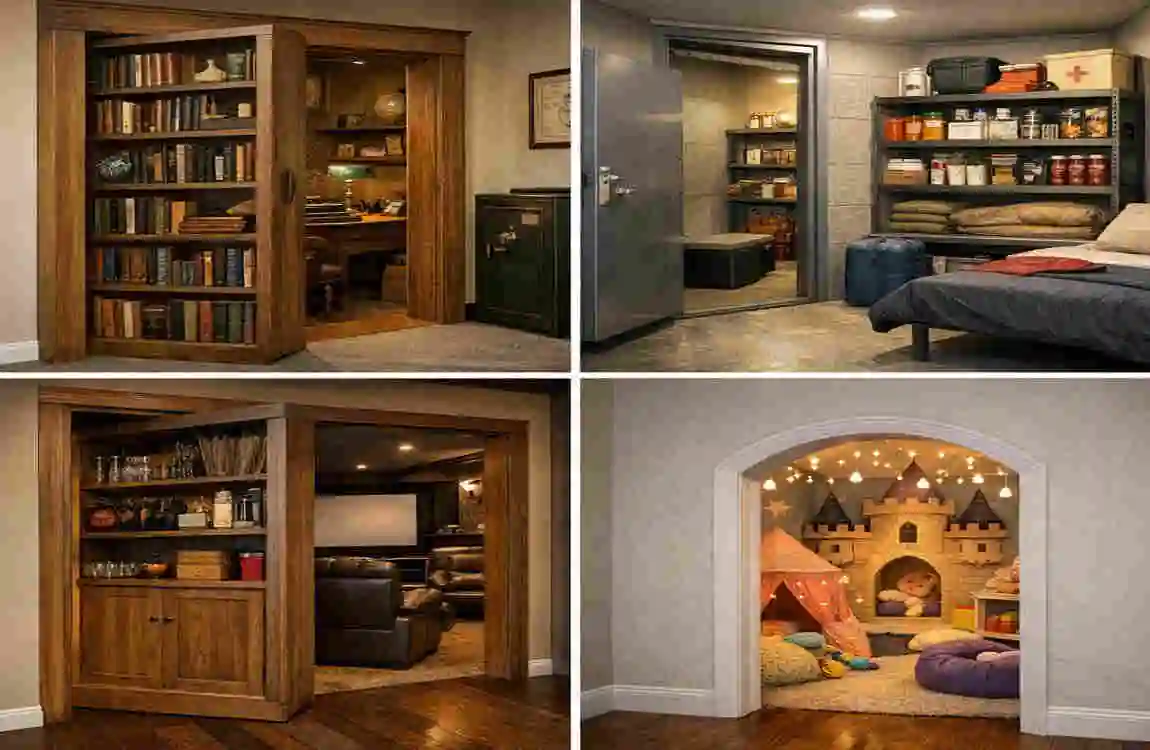
Before we pick up a hammer, let’s talk about why you are doing this. Understanding the purpose of your room will dictate how you build it. A panic room has very different requirements than a cozy reading nook.
A Private Retreat for Mental Health
In our busy, hyper-connected world, true privacy is a luxury. Imagine having a space where no one can hear you, and you can’t hear them. A secret room can serve as the ultimate meditation zone, a library, or a yoga studio. It is a place where you can disconnect from household chaos and recharge your batteries.
The Ultimate Home Theater or Game Room
If you are a gamer or a movie buff, you know that immersion is everything. Building a hidden room lets you control lighting and sound completely. Plus, there is a huge “cool factor” in inviting friends over for a movie night and leading them through a hidden door to get to the cinema. It instantly makes your house the talk of the town.
A Safe Room for Valuables and Emergencies
On a more serious note, security is a major driver for many homeowners. You should consider a secure location to store jewelry, heirlooms, or emergency food supplies. Learning how to build a secret room in your house can provide a “panic room” scenario where your family can retreat in the event of a break-in or natural disaster.
The Ultimate Kids’ Play Area or Man Cave
Let’s be honest, sometimes you want a space that is yours. For kids, a secret playroom is magical; it sparks creativity and independence. For adults, a “man cave” or “she shed” hidden behind a false wall offers a place to display collections, work on hobbies, or watch sports without interruption.
DIY Secret Room Ideas for Every Home
You might be thinking, “My house is too small for a secret room.” You might be surprised! You don’t need a sprawling mansion to create a hidden space. Here are some adaptable ideas.
The Classic Hidden Bookshelf
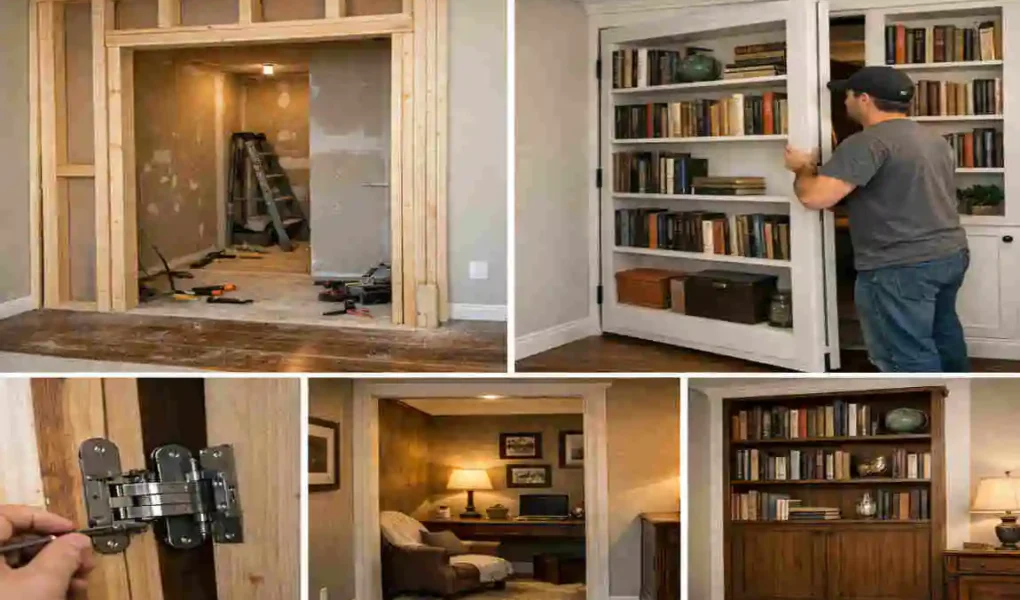
This is the gold standard of secret rooms. You use an existing doorway and replace the standard door with a bookcase mounted on heavy-duty pivot hinges. When closed, it looks like a wall of books. When opened, it reveals the room behind. This works perfectly for bedrooms, offices, or libraries.
Under the Stairs Conversion
Take a look at the space under your staircase. In many homes, this is just dead space or a cluttered closet. By finishing the interior and creating a hidden panel on the outside, you can create a cozy “Harry Potter” style cupboard. It is small, but perfect for a reading nook or a kid’s hideout.
False Wall in a Closet or Basement
If you have a large walk-in closet or an unfinished basement, you can frame a new wall a few feet in front of the existing back wall. This creates a long, narrow secret space behind the new wall. You can access it through a hidden panel in the back of the closet shelving or a mirror that swings open.
The Murphy Bed Hideaway
This is a modern twist on the concept. A Murphy bed folds up into the wall to save space. However, you can design the cavity behind the bed to be deeper than necessary. When the bed is folded down, it blocks the entrance. When the bed is up, you can access a small hatch or door behind the mattress mechanism.
Planning Your DIY Secret Room Project
You cannot just start cutting holes in walls without a plan. That is a recipe for disaster (and expensive repairs). The successful execution of how to build a secret room in your house relies heavily on the preparation phase.
Assess Your Space for How to Build a Secret Room in a House
Grab a tape measure and walk around your house. You need to find a spot that makes sense.
- Measure everything: You generally need a minimum space of about 6 feet by 8 feet for a room to feel comfortable for an adult. Anything smaller is strictly for storage or small children.
- Check the structure: Look at the ceiling and floor. You need to know which way the joists run. If you are building a new wall, you need to anchor it to these structural elements.
- Budgeting: Be realistic. A simple closet conversion might cost you $1,000 for materials if you do it yourself. A full secure room with steel reinforcement could run over $10,000.
Legal and Permit Considerations
This is the boring part, but it is vital. You do not want the city forcing you to tear down your hard work.
- Building Codes: If you are turning a space into a “habitable room” (like a bedroom), it legally needs an egress window (a way to escape in a fire). If your secret room has no windows, it cannot legally be a bedroom.
- Permits: Generally, if you are not altering load-bearing walls or adding plumbing/electrical, you might not need a permit for a small storage space. However, always verify this with your local building department.
- Insurance: If you are storing high-value items, check with your home insurance provider to ensure they are covered, even if they are in a “hidden” space.
Design Your Hidden Entrance
The entrance is the most critical part of the illusion.
- The Bookcase Door: Requires heavy-duty hinges and precise carpentry.
- The Mirror Panel: Great for bedrooms or bathrooms. The mirror sits on a frame that swings out.
- The Pivot Wall: A section of the wall (perhaps with wainscoting) that pushes inward.
To help you visualize the potential, here is a quick look at common setups:
Room Size, Best Location, Estimated Cost, Difficulty Level
6×6 ft Closet conversion $1,500 Beginner
8×10 ft Unfinished Basement $4,000 Intermediate
10×12 ft Attic or Spare Room $7,500 Advanced
Prioritize Safety When Learning How to Build a Secret Room in Your House
I cannot stress this enough: Safety comes first. A secret room can quickly become a dangerous trap if you do not plan for emergencies. When you are figuring out how to build a secret room in your house, you must consider ventilation, fire safety, and structural integrity.
Ventilation is Non-Negotiable
If you seal a room off behind a hidden door, you are cutting off airflow. Carbon dioxide can build up quickly, making the room stuffy and hot.
- Install Fans: You need an intake fan and an exhaust fan to cycle air.
- Ductwork: If possible, tap into your home’s existing HVAC system. If not, use quiet bathroom exhaust fans vented to the outside or an adjacent room.
- Mold Prevention: Stagnant air leads to mold. Keep the air moving!
Fire Safety and Exits
What happens if a fire starts outside the secret room while you are inside?
- Smoke Detectors: install a smoke detector inside the secret room. Ideally, link it to the main house system so if an alarm goes off elsewhere, you hear it in the bunker.
- Fire-Rated Materials: Use 5/8-inch drywall (Type X), which is fire-resistant.
- Emergency Exit: If possible, have a secondary way out, like a small hatch or a window, even if it is hidden.
Lighting and Power
You do not want to be stuck in the dark.
- Battery Backups: If the power goes out, your electronic hidden door lock might fail (more on that later). Always have a manual override release from the inside.
- Emergency Lighting: Keep a battery-operated lantern or install emergency lights that turn on when the power is out.
Structural Integrity
If you are cutting into walls, you must know if they are load-bearing (holding up the roof or floor above). Never cut a stud in a load-bearing wall without consulting a structural engineer. It is not worth the risk of your house collapsing.
Common DIY Mistakes to Avoid
- The “Stuck Door” Scenario: Building a door that fits too tightly. Wood expands and contracts with humidity. If you make the gap too small, the door might jam shut in the summer.
- Ignoring Moisture: Basements are damp. If you build a secret room there without a vapor barrier, you will smell mildew within months.
- Overlooking Electrical: Don’t run extension cords through walls. It is a fire hazard. Install proper outlets.
What You’ll Need to Build a Secret Room
You are going to need the right gear. Don’t try to do this with just a Swiss Army knife. Here is a breakdown of the essentials to get you started.
Tools Checklist
Category Essentials: Why You Need It
Power Tools Cordless Drill, Circular Saw, Jigsawfor framing, cutting drywall, and intricate cuts.
Measuring Tape, Laser Level, Speed Square, and Precision are key to hidden doors fitting perfectly.
Detection Stud Finder (High Quality) To find framing and avoid pipes/wires behind walls.
Finishing: Sander, Paint Rollers, and Putty Knife to hide seams so the “secret” stays secret.
Materials List Estimates for an 8×10 ft Room
ItemQuantity (Approx)Cost Estimate
Drywall Sheets 20 Sheets $400
2×4 Lumber 50-60 ft $200
Hidden Door Kit 1 Kit (Hinges/Hardware) $300 – $500
Insulation 400 sq ft $250
Flooring : Laminate or Carpet $200
Electrical Wire, Outlets, Boxes $150
Paint/Trim 2 Gallons + Baseboards $100
Total Estimate ~$1,600 – $2,000+
Pro Tip: You can save money by sourcing lumber from local salvage yards, but never skimp on the hidden door hardware. You need hinges that can support a lot of weight without sagging.
Step-by-Step DIY Instructions to Build a Secret Room in a House
Alright, we have planned, bought our materials, and are safe. Now, let’s get our hands dirty. This is the core guide on how to build a secret room in your house. We will break this down into manageable chunks.
Frame the Walls
Think of this as building the skeleton of your room.
- Mark the Layout: Use your laser level and chalk line to mark exactly where the new walls will go on the floor and ceiling. This ensures your walls are perfectly straight.
- Plate Installation: Secure the “bottom plate” (a 2×4 on the floor) and the “top plate” (a 2×4 on the ceiling). If you are drilling into concrete, use a masonry drill bit and concrete screws.
- Install Studs: Place your vertical 2×4 studs every 16 inches “on center” (meaning the center of one stud is 16 inches from the center of the next). This is the standard spacing for drywall.
- Frame the Door: This is crucial. You need to frame the opening for your hidden door exactly to the specifications of your hinge kit. If the instructions say the opening needs to be 32 inches wide, make it exactly 32 inches. Reinforce this area with double studs because the hidden door (especially a bookshelf) will be very heavy.
Insulate and Wire Electricity
Before we close up the walls, we need to make the room livable.
- Run the Wires: Drill holes through the center of your studs and run your electrical wire (Romex) to where you want your outlets and lights. Safety First: If you are not 100% comfortable with electricity, hire a professional for this part. It is not worth the risk of fire.
- Install Boxes: Nail in your outlet and switch boxes to the studs.
- Insulation: Place fiberglass or rock wool insulation batts between the studs. This serves two purposes: it keeps the room warm and soundproofs it. If you want a truly secret room, you don’t want sound leaking out!
- HVAC: Run your ductwork or install your ventilation fans now. Make sure the exhaust goes somewhere safe (like the attic or outside).
install Drywall and Hidden Door
Now we start to see the room take shape.
- Hang Drywall: Lift your drywall sheets and screw them into the studs. Start from the top and work your way down. Use plenty of screws to ensure it is secure.
- The Hidden Door Mechanism: This is the moment of truth. Follow the instructions on your hidden door kit meticulously.
- If building a bookshelf door, build the bookshelf box first.
- Install the pivot hinges on the floor and the header of the door frame.
- Mount the bookshelf onto the hinges.
- Test the swing immediately. It should glide smoothly. If it scrapes the floor, adjust the height now before you add more weight.
- Mud and Tape: Apply joint compound (mud) and paper tape to the seams between your drywall sheets. You will likely need three coats, with sanding between each coat, to achieve a perfectly smooth wall.
Finishing Touches and Furnishing
Now we make it look like a part of your home.
- Paint: Prime the new drywall to seal it, then paint it to match the surrounding room. If the secret room is behind a wall, the exterior of that wall needs to blend seamlessly with the rest of the hallway or room. Use the same color and sheen.
- Trim and Baseboards: install baseboards. Trick of the Trade: For the hidden door, cut the baseboard at a 45-degree angle on the hinge side so the door can swing open without the trim hitting the wall.
- Flooring: Lay down your carpet or laminate inside the secret room.
- Furnish: Bring in your bean bags, shelves, safe, or whatever you planned for the space. Install LED strip lights for a cool, modern glow without generating too much heat.
Test and Conceal
The final step is the art of camouflage.
- Pressure Test: Close the door. Push on it. Does it rattle? If so, you need to add weatherstripping or a magnetic catch to keep it tight.
- The disguise: If it is a bookshelf door, fill it with books! Glue some of the books down if necessary so they don’t fall off when you open the door.
- Conceal the Seams: Look at the door from the “public” side. Can you see the gap? You might need to add a piece of molding or trim that acts as a stop for the door, effectively covering the vertical gap when the door is closed.
- The Lock: install your hidden latch. This could be a “book latch” (where you tilt a specific book to open it) or a magnetic lock that requires a special magnet key.
Realistic Costs to Build a Secret Room in a House
Let’s have a real talk about money. Costs can spiral out of control if you aren’t careful, so here is what to expect based on the complexity of your build.
The Low-End DIY ($1,500-$2,500). This covers a closet conversion or small-space partitioning. You are doing all the labor yourself, using standard lumber, and buying a basic pivot hinge kit. You may use existing furniture inside.
The Mid-Range Build ($5,000 – $8,000). This is a full-room build-out (about 10×12 feet) in a basement or attic. This budget includes new framing, electrical work (possibly by a pro), a high-quality pre-built hidden door unit, better insulation/soundproofing, and nice flooring.
The High-End Pro Job ($15,000+). If you hire a contractor to do this, expect to pay a Premium. This level includes custom cabinetry, biometric locks (fingerprint scanners), security cameras, and high-end finishes.
Cost by Feature Table
FeatureEstimated Add-On Cost
Hidden Door Kit $300 – $800
Ventilation System $200 – $500
Electrical Wiring $500 – $1,000
Soundproofing $400 – $800
Biometric Lock $200 – $600
Savings Tip: Look for “seconds” at lumber yards—wood that has minor cosmetic blemishes. Since you are covering it with drywall anyway, it doesn’t matter what the studs look like!
Expert Hacks for the Perfect Hidden Space
You know the basics, but let’s take it to the next level. Here are some pro tips I have learned from various projects.
Make it Multi-Functional
Space is Premium. Why not make the room serve two purposes? I have seen people build a secret room that is a home office by day, but has a fold-out wall that reveals a gym equipment rack. Or a pantry that hides a wine cellar behind the back shelves.
Voice-Activated Doors
We live in the future! You can use smart home technology to control your door. By using a magnetic lock connected to a smart plug, you can set it so that saying “Alexa, open the Batcave” triggers the Lock to release. It is easier than you think and impresses everyone.
Eco-Friendly choices
Use recycled denim insulation instead of fiberglass. It is great for soundproofing and is itch-free. Use reclaimed wood for your bookshelf door to give it an antique, “old library” look that naturally hides imperfections.
Troubleshooting the “Sag”
The biggest enemy of a hidden door is gravity. Over time, a heavy bookshelf door will sag, causing it to scrape the floor.
- The Fix: Use a caster wheel. Install a small, heavy-duty wheel on the bottom of the bookshelf (on the side opposite the hinge). It will roll along the floor, supporting the weight and relieving stress on the hinges.
Avoid These Pitfalls When You Build a Secret Room
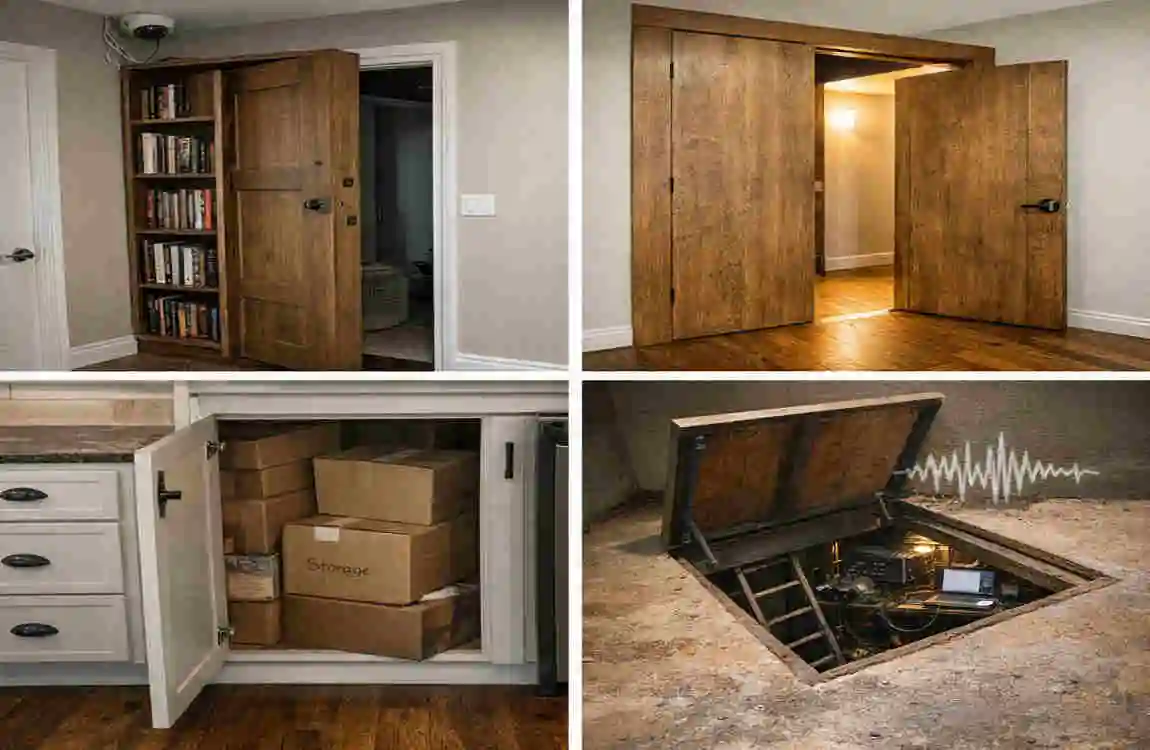
Even the best plans can go wrong. Here is a quick list of mistakes that will give you a headache later.
- Ignoring the “Swing” Space: You build a bookshelf door that swings in, but you forget that it takes up space inside the secret room. Now you can’t fit your desk in there. Always account for the door’s arc.
- Forgetting a Handle on the Inside: Imagine closing your secret door to test it, only to realize there is no doorknob on the inside to pull it open again. Always install a release mechanism on the inside first.
- Making the Door Too Heavy: If you load a bookshelf door with hundreds of hardcovers, it might rip the hinges out of the wall. Mix real books with hollow “fake” books to keep the weight down.
- Poor Soundproofing: If you are hiding in your secret room and you sneeze, and everyone in the living room hears you, it is not very secret. Don’t skip the insulation.
Frequently Asked Questions FAQs
Q: How much does it cost to build a secret room in a house? A: It varies wildly, but a safe DIY range is between $1,500 and $5,000, depending on size and materials.
Q: Is it legal to build a hidden room? A: Yes, generally. However, if you use it as a bedroom, it must meet fire code requirements (e.g., egress windows). If it is just for storage or a hobby room, it is usually fine. Always check local codes.
Q: How long does it take to build? A: For a dedicated DIYer working weekends, expect it to take about 3 to 4 weekends. One weekend for framing/electric, one for drywall, one for the door installation, and one for finishing/painting.
Q: Can I build a secret room in an apartment? A: This is tricky. You generally cannot build new walls in a rental. However, you can use a freestanding “room divider” bookcase that hides a corner of the room, creating a temporary secret space without structural damage.