Meta Description: Learn how to keep water bugs out of the house with expert prevention tips. Fix leaks, use natural repellents, and seal entry points to stop cockroaches, silverfish, and more for good.
Imagine this: You walk into your kitchen late at night for a glass of water. You flick on the light, and suddenly, something large and dark scuttles across the floor and dives under the refrigerator. Your heart skips a beat. If this scenario sounds familiar, you are not alone.
Water bugs—a common nickname for large cockroaches like the American or Oriental cockroach—thrive in about 70% of homes that have moisture issues. They are unsightly, fast, and frankly, a little terrifying. But beyond the “creep factor,” these pests can carry bacteria and trigger allergies.
So, the big question is: how to keep water bugs out of the house for good?
The answer isn’t just about spraying chemicals; it is about changing the environment of your luxury home. To win this battle, you need to seal entry points, dry out damp areas, and repel them with smart tactics.
Identifying Water Bugs in Your Home
Before you can fight the enemy, you have to know exactly what you are up against. The term “water bug” is often used as a catchall, but in a home environment, we usually refer to specific types of moisture-loving insects.
Common Types and Signs
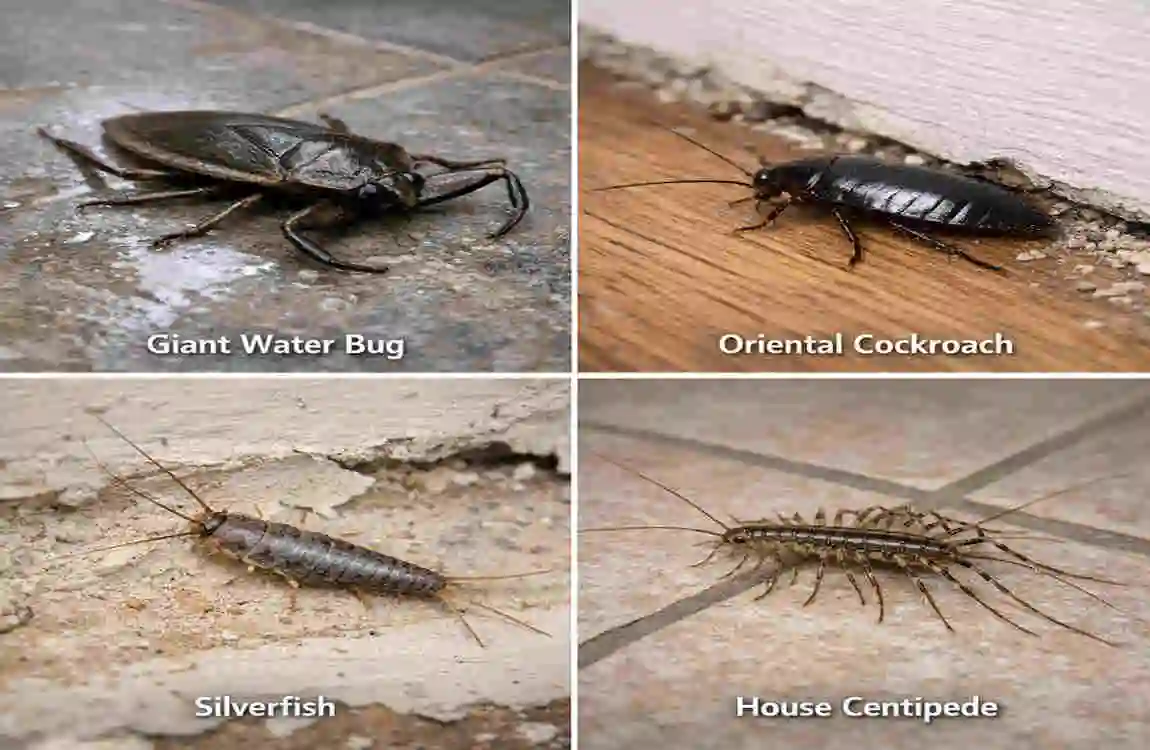
When homeowners complain about water bugs, they are usually spotting one of two main culprits: the American Cockroach or the Oriental Cockroach.
The American Cockroach is the big one. They are reddish-brown, can grow up to two inches long, and yes, they can fly short distances if they are warm enough. You will typically find them in bathrooms, basements, or scurrying around drains. They are bold and often appear when the weather changes.
The Oriental Cockroach is a bit different. They are often called “black beetles” because they are dark and shiny, and they stay low to the ground. They cannot fly, but they are incredibly resilient. They prefer cool, dark, damp places, such as crawl spaces or under washing machines.
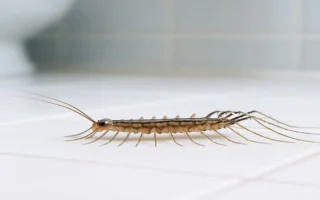
Then there is the Silverfish. While not a roach, this is another classic “water bug.” They are small, wingless, and silver-grey. They move in a fluid, fish-like motion. If you see these guys, it is a glaring red flag that your home has high humidity.
Why They Love Moisture
Why are these bugs so obsessed with water? It comes down to biology. These insects are highly susceptible to desiccation, meaning they dry out and die quickly if they aren’t in a humid environment.
To them, a leaky pipe under your sink isn’t just a nuisance; it is a life-saving oasis. Condensation on an air conditioning vent? That is a luxury spa. They breed in these damp areas because their eggs need moisture to hatch. If you cut off the water, you cut off their ability to survive and reproduce.
Root Causes: Moisture and Entry Points
If you want to master how to keep water bugs out of the house, you have to think like a detective. You need to find the source of the problem. Usually, this comes down to two things: water access and an open door.
Leaky Pipes and High Humidity
Moisture is the magnet. Even a small drip that you can barely hear can create enough moisture to sustain a colony of water bugs.
Start by checking the “danger zones.” Look under your kitchen and bathroom sinks. Feel around the pipes for dampness. Check your basement walls for condensation. High humidity is also a major factor. If the Relative Humidity (RH) in your home is consistently above 60%, you are practically rolling out the red carpet for pests.
Don’t forget the air conditioner. HVAC units often have drip pans that can overflow or clog, creating stagnant water that is hidden from view but easily accessible to bugs.
Hidden Entryways
You might think your house is sealed tight, but water bugs can flatten their bodies to an impossible thinness.
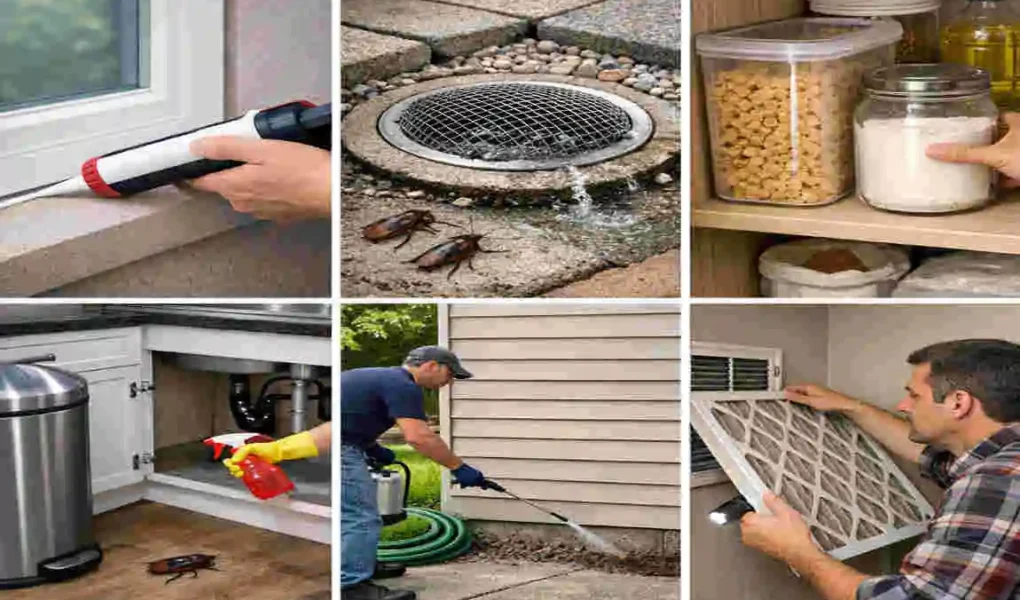
Cracks and Crevices: Inspect the foundation of your home. Small cracks in the concrete or gaps where pipes enter the siding are superhighways for insects.
Weep Holes: Brick homes have small gaps at the bottom of the wall to let moisture escape. While necessary, they are open doors for bugs if not covered with mesh.
Door Sweeps: Look at the bottom of your exterior doors. Can you see daylight coming through? If light can get in, a water bug can, too. Worn-out weatherstripping is one of the most common failure points in home defense.
Step-by-Step Prevention: How to Keep Water Bugs Out of the House
Now that we know the “who” and the “why,” let’s talk about the “how.” This is your actionable guide to fortifying your home.
Eliminate Moisture Sources
This is the most critical step. You can spray all the bug killer you want, but if the house is damp, they will come back.
- Fix the Leaks: Repair any dripping faucets or sweating pipes immediately.
- Use Dehumidifiers: Place a dehumidifier in your basement or crawl space. Aim to keep the humidity level below 50%. This makes the environment hostile to water bugs.
- Ventilate: After a hot shower, run the exhaust fan for at least 20 minutes. Open windows when the weather is dry to circulate fresh air.
Seal and Fortify Your Home
Deny them entry. This requires a little bit of handyman work, but it is worth it.
Grab a caulking gun and some silicone caulk. Go around your windows, baseboards, and any cracks in the walls. Seal them up tight. Silicone is great because it is water-resistant and works well in bathrooms.
Next, check your doors. Install or replace door sweeps on all exterior entrances. Make sure the sweep creates a tight seal against the threshold. If you have a garage attached to the house, don’t forget the door leading from the garage into the house—that is a common breach point.
Natural Repellents and Barriers
If you have pets or small children, you might be hesitant to use harsh chemicals. The good news is that nature provides some powerful weapons.
Diatomaceous Earth (DE): This is a white powder made from fossilized algae. It is safe for humans but deadly to bugs. Sprinkle a thin line of food-grade DE behind appliances and along baseboards. When bugs walk over it, the powder damages their exoskeleton, causing them to dehydrate and perish.
Essential Oils: Water bugs hate strong scents. Peppermint oil and tea tree oil are excellent deterrents. Mix 10-15 drops of oil with water in a spray bottle and mist it around entry points. It makes your house smell great to you, but terrible to them.
Sanitation and Decluttering
Water bugs are scavengers. They will eat paper, glue, crumbs, and even hair.
- Ditch the Cardboard: Cockroaches love cardboard boxes. They eat the glue and hide in the corrugation. Swap your cardboard storage for plastic bins with tight-locking lids.
- Dry Traps: Keep your sink drains plugged when not in use, or pour a little vinegar down them to clean out the sludge that bugs feed on.
- Food Storage: Keep all dry goods (cereal, flour, sugar) in airtight containers. Never leave dirty dishes in the sink overnight—that is essentially a buffet for pests.
Safe Chemical and Professional Solutions
Sometimes, despite your best efforts, the infestation is too advanced for DIY prevention alone. If you are seeing bugs during the day, that is a bad sign.
DIY Pesticides
If you need something stronger than peppermint oil, look for Boric Acid. Like Diatomaceous Earth, it is a powder. When roaches walk through it and then groom themselves, they ingest it, which eliminates them. It is highly effective but must be used carefully away from pets.
Gel Baits are another excellent option. You place small dots of gel in corners or under cabinets. The bugs eat the bait, return to their nest, and spread the poison throughout the colony. This creates a domino effect that can wipe out a nest in a few days.
Hiring Pros: When and What to Expect
If you have sealed every crack and dried every puddle but still see water bugs, it is time to call the experts.
Professional exterminators use Integrated Pest Management (IPM). This isn’t just mindless spraying. They will identify the specific species, locate the nest (often deep in a wall or sewer line), and use commercial-grade baits and growth regulators that stop the bugs from reproducing.
Expect to pay for an initial visit and, if needed, a follow-up. While it costs money, the peace of mind is often priceless.
Seasonal and Room-Specific Tips
Different times of the year and different rooms require specific strategies.
Bathroom and Kitchen Defense
These are the “wet rooms,” and they are ground zero for water bugs. In the bathroom, ensure your toilet wax ring isn’t leaking. That is a common source of hidden moisture. Keep your bathtub drain free of hair, as damp clumps are a breeding ground for bacteria that bugs eat.
In the kitchen, pull out your stove and refrigerator once a season to sweep behind them. Crumbs accumulate there, and the warmth from the refrigerator motor, combined with a crumb supply, makes it a luxury home condo for roaches.
Basement and Laundry Protection
Basements are naturally cool and damp. If you have a sump pump, ensure it has a tight-fitting cover. An open sump pit is an open door to the underworld for bugs.
In the laundry room, check the vent hose behind your dryer. If it is loose, it pumps warm, moist air into the room, raising the humidity. Also, keep laundry piles off the floor; shake out clothes that have been sitting in a hamper for a long time.
Long-Term Maintenance Plan
Winning the war against water bugs isn’t a one-time event; it is a lifestyle. You need a maintenance plan to keep your fortress secure.
Here is a simple schedule to help you stay on track:
Frequency Maintenance Task: Why It Matters
Weekly Pour boiling water/vinegar down drains. Kills eggs and clears organic buildup.
Monthly Check under sinks for new leaks. Catches moisture issues before they spread.
Monthly, reapply essential oil sprays. Keeps the repellent barrier active.
Quarterly inspect door sweeps and weatherstripping. Ensures physical barriers remain intact.
Yearly Clean gutters and downspouts. Moves water away from your home’s foundation.
Common Mistakes and Myths Busted
Let’s clear up some bad advice floating around the internet.
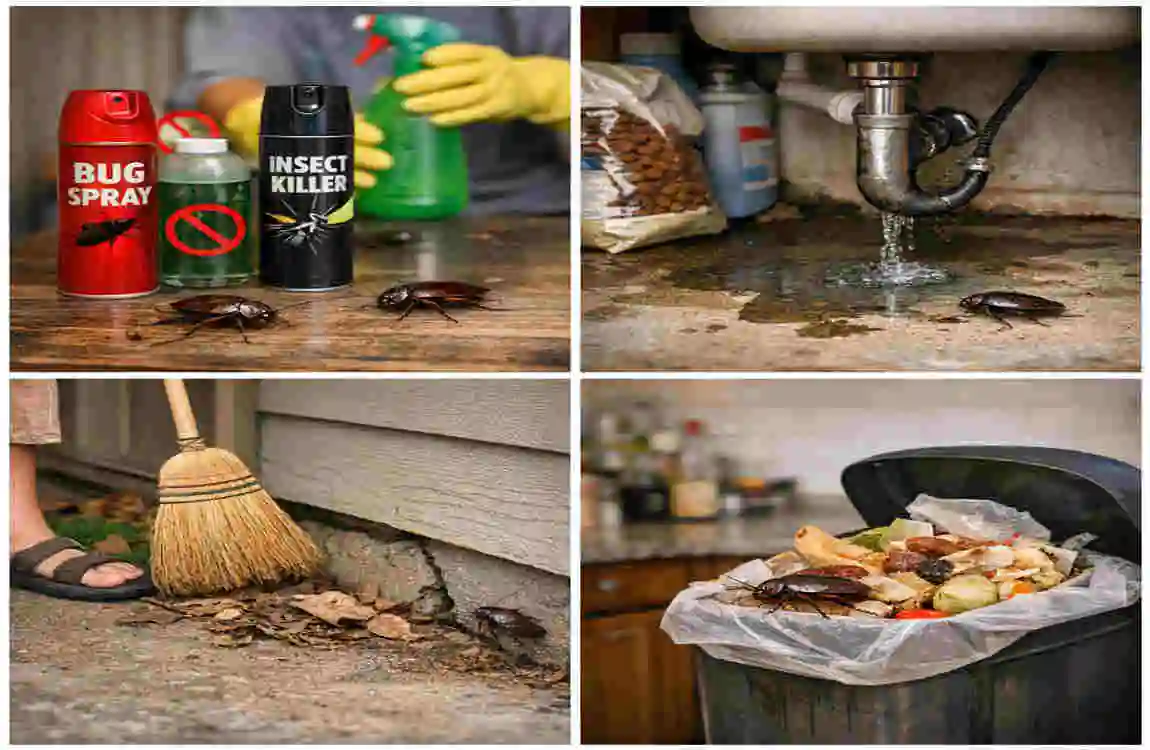
Myth: “Bleach kills roach eggs.” Fact: While bleach is a cleaner, it does not penetrate the protective casing of roach eggs. It might kill the adult if you drown them in it, but it won’t stop the next generation. Boiling water or specialized insect growth regulators are better.
Myth: “Squashing a roach spreads its eggs.” Fact: This is mostly false. While it is gross, stepping on a roach usually crushes its eggs. However, it does release pheromones that can attract other roaches to the scent, so you should clean house the area thoroughly afterward.
Mistake: Ignoring the “One Bug.” If you see one water bug, do not assume it is a loner. Where there is one, there are usually many more hiding in the walls. Treat every sighting as a potential sign of an infestation.
FAQs: How to Keep Water Bugs Out of the House
What attracts water bugs to houses? They are primarily attracted to moisture and food sources. Leaky pipes, damp basements, open trash cans, and pet food are the biggest magnets.
Are water bugs dangerous? They generally do not bite, but they are dangerous to your health. They carry bacteria like Salmonella and E. coli on their legs, which they spread across your countertops. Their droppings can also trigger asthma and allergies.
How long does it take to get rid of them? If you follow the prevention tips—sealing gaps and removing moisture—you should see a significant reduction within 1 to 2 weeks. However, fully eradicating a large nest may take a month of consistent effort or professional treatment.