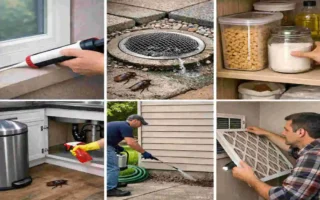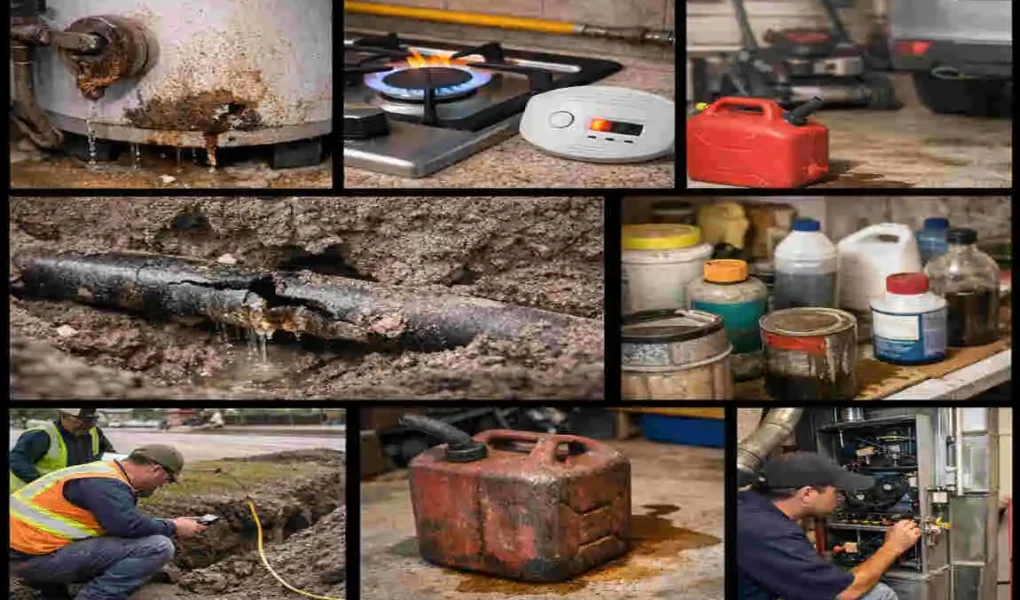
This is not one of those household smells you should “wait out” and hope goes away on its own. Gasoline vapors can be flammable, and breathing them in for too long can also affect your health. In some cases, the source is something simple, like a loose gas can in the garage. In other cases, it may point to a bigger issue, such as HVAC duct problems, a leaking fuel tank, or even a drain issue that only smells like gasoline.
Safety First: What to Do Immediately If Your House Smells Like Gasoline
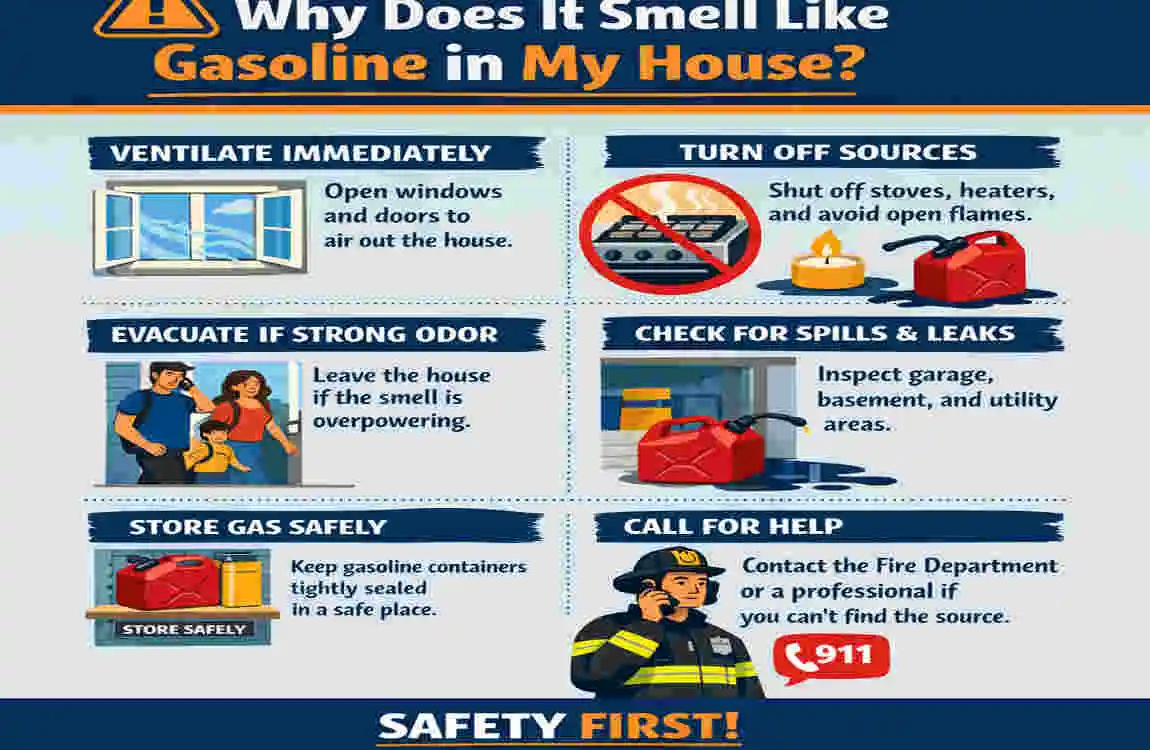
Before you start searching your garage or basement, focus on safety.
A gasoline smell in the home can come from vapor buildup. Vapors can travel quickly, accumulate in enclosed spaces, and become dangerous if they come into contact with a spark, flame, or heat source. That means the first few minutes matter.
Take these steps right away
- Leave the area if the smell is very strong. If the odor is intense or overwhelming, or makes anyone dizzy or nauseated, get everyone outside immediately.
- Open windows and doors if it is safe to do so. Fresh air can help reduce vapor buildup.
- Do not turn lights on or off. Avoid light switches, appliances, garage door openers, and anything else that could create a spark.
- Do not use matches, candles, or lighters.
- Do not use your phone inside the house—step outside first.
- Shut down obvious fuel sources only if you can do it safely. For example, if you know a lawnmower is leaking in the garage and you can move away safely, do so without creating sparks.
- Keep children and pets away from the area.
- Call emergency services or your local fire department if the smell persists or becomes dangerous.
What not to do
Many homeowners make the same mistake. They keep sniffing around, turning on lights, opening the garage, and checking every room one by one.
That approach can make things worse.
Do not try to “test” the smell by staying indoors too long. Do not start a vacuum, fan, or power tool. Do not assume it is harmless because you do not have gas appliances.
A quick note on leak detection
If you suspect a specific container or connection is leaking and it is safe to inspect later, some people use a soapy water test on fittings to look for bubbling. But if you are dealing with a strong odor, an unknown source, or anything near a fuel system, it is better to let a trained pro handle it.
Now that safety comes first, let’s look at the most likely causes.
Garage Fumes Seeping Into the House
For many homes, the garage is the first place to check.
Even if the gasoline smell seems strongest in your kitchen, hallway, or living room, the source may actually be the garage. Attached garages often hold cars, motorcycles, gas cans, lawn equipment, pressure washers, snow blowers, and other fuel-powered tools. All of these can release fumes.
Why garage fumes move indoors
Garages and houses may look separate, but they are often more connected than people realize.
Small cracks in the wall, gaps under the door, worn weatherstripping, unsealed joints, and shared attic or duct pathways can all let fumes drift inside. If your HVAC system creates negative pressure, it can actually pull garage air into your home.
That is why the smell may be stronger indoors than in the garage itself at times.
Common garage trouble spots
A single spill can cause a lingering problem.
Gasoline that splashes onto concrete, cardboard boxes, storage mats, or old rags can continue to release vapors long after the spill. A car with a minor fuel leak or a lawnmower with a loose cap may also leak just enough to create a smell without leaving a huge visible mess.
What you can do
Start with a careful visual check.
Look for wet spots, stained concrete, uncapped containers, fuel-powered equipment, and anything that has been recently used. Think about what changed recently. Did you fill a mower? Store a generator? Park a car after getting gas? Those details matter.
Then focus on the barriers between the garage and the house. If the door seal is worn, or if the bottom sweep no longer touches the floor, fumes can slip right through. The same goes for any wall penetrations where pipes, wires, or vents pass through.
Quick inspection table
Inspection AreaCheck ForQuick Fix
Garage door seal Cracks, gaps, brittle rubber, light showing under the door Add or replace rubber weathe stripping
Door to the house Poor bottom seal, loose frame, air gaps around edges Install a new sweep and weatherseal
HVAC vents or returns Ducts near garage air, open returns, air pulling from garage side Seal leaks and have duct routing checked
Floor cracks Open cracks or joints where vapors may travel Seal with appropriate caulk or concrete sealant
Stored equipment Leaky mower, generator, trimmer, or car Move outdoors temporarily and inspect
Spill areas Damp spots, stained concrete, oily smell on surfaces Clean with absorbent material and proper degreaser
Best fixes for garage-related gasoline smells
If you suspect the garage, try these steps:
- Temporarily move fuel-powered equipment outside if it is safe to do so.
- Park vehicles outside for a few days to see if the smell drops.
- Replace worn seals on the garage-to-house door.
- Improve garage ventilation with safe passive airflow or a properly installed exhaust solution.
- Clean spills fully, not just the visible stain.
- Schedule an HVAC inspection if your air system may be pulling garage air indoors.
If the smell quickly fades after removing garage items, you have likely found your main source.
Stored Fuel Containers, Solvents, or Old Chemicals
Another very common reason a house smells like gasoline is improper storage.
Many homeowners keep gasoline, paint thinner, degreasers, stain removers, and other solvents in the garage, basement, utility room, or shed. Over time, even a small gap in a cap can release a strong odor.
Why stored fuel smells get worse over time
Gasoline evaporates easily.
That means a container does not have to be visibly leaking to create a problem. If the lid is loose, the can is old, or the container is not meant for fuel storage, vapors can slowly escape into the room. In warm weather, this problem gets worse because heat speeds up evaporation.
That is why many people notice the smell more in the afternoon or after a hot day.
Signs your stored fuel is the issue
You may be dealing with stored fuel odors if:
- The smell is strongest in the garage, basement, or storage room
- It gets worse when the area heats up
- You recently bought gas for yard equipment
- You are using plastic containers with worn caps
- The smell seems to hang around shelves or storage bins
How to fix the problem
Start by checking each container individually.
Look for cracked plastic, missing caps, sticky residue, warped sides, and containers that are not clearly labeled for gasoline. If you find questionable storage, transfer fuel only into an approved fuel container with a tight-sealing lid. If you are not sure a container is safe, do not keep using it.
It is also smart to move fuel out of the house and out of the attached garage whenever possible. A detached shed with good ventilation is often a better place to store things.
Safe cleanup tips
If you find a small spill, use an absorbent material designed for oil or fuel cleanup. Do not wash gasoline into a floor drain. Do not just cover the smell with air freshener either. You need to remove the source.
Place contaminated rags, paper towels, or absorbent pads in a safe container and follow local disposal rules.
What about old fuel?
Old gas can smell stronger and break down over time.
If you have a can of gasoline sitting for months or years, especially in a warm garage, it may be adding fumes even if the cap looks closed. If the fuel is stale, discolored, or you no longer need it, contact your local waste or hazardous disposal service for proper disposal options.
A simple rule to remember
If you would not feel comfortable storing it next to your living room wall, do not keep it in an attached space without tight sealing and ventilation.
A Leaking Fuel Tank on the Property
This cause is less common than garage fumes, but it is more serious.
Some older homes have or once had underground fuel tanks, heating oil tanks, or other fuel storage systems on the property. Portable fuel tanks can also leak if they are stored near the foundation. When that happens, vapors can travel through soil, crawl spaces, foundation cracks, or lower-level openings and enter the home.
Why this issue can be hard to spot
Fuel tank leaks are often hidden.
You may not see liquid fuel anywhere inside the house. Instead, you may notice a persistent gasoline-like smell near one side of the home, especially around the basement, crawl space, or lower exterior walls. The smell may come and go depending on the weather, wind, or soil moisture.
That makes it easy to miss at first.
Warning signs of a leaking tank
Pay attention if you notice:
- A smell that lingers near the same exterior wall
- Odors in the basement or crawl space
- Dead patches of grass or unusual soil staining outdoors
- Old tank fill pipes, vent pipes, or abandoned fuel lines
- A history of heating oil or stored fuel at the property
- The smell returns even after cleaning the garage and removing containers
Why this problem matters
A leaking fuel tank is not only a smell issue.
It can affect the structure, create indoor air concerns, and lead to soil contamination. In some cases, cleanup becomes a larger environmental project. That is one reason it is important not to ignore a recurring odor with no obvious indoor source.
What you should do
This is not a typical DIY repair.
If you suspect a hidden or underground tank leak, contact a qualified professional who handles tank locating, leak testing, or environmental inspection. They can determine whether a tank is present, whether it is active or abandoned, and whether fumes are entering the house.
In the meantime, you can improve ventilation in the affected area, but ventilation is only a temporary measure. It does not solve the source problem.
A note about insurance and documentation
If you suspect a fuel tank issue, start documenting what you notice.
Write down when the smell appears, where it is strongest, and any visible outdoor clues. Take photos of old fill pipes, stained ground, or suspicious tank equipment. Depending on your policy and the exact situation, documentation may help when discussing the issue with insurance or contractors.
When not to wait
If the odor keeps returning for days, especially in lower levels or along one side of the home, do not keep guessing. Hidden fuel leaks can become expensive and risky the longer they go unchecked.
HVAC Problems Spreading Fumes Through the House
Sometimes the smell doesn’t start in the house.
Sometimes the HVAC system is carrying it.
If your return ducts, air handler, or nearby vents are pulling in contaminated air from the garage, crawl space, or utility area, your furnace or air conditioner can spread that smell throughout the house.
How this happens
Your HVAC system constantly moves air.
If there is a duct leak near the garage, attic, basement, or another area with fuel vapors, the system can pull in that odor and recirculate it. That is why you may notice the smell more strongly when the heat or AC kicks on.
In some homes, the problem worsens because the duct system is old, poorly sealed, or routed too close to stored fuel.
Filters can make things worse
A dirty filter does not cause gasoline fumes, but it can worsen indoor air quality.
When airflow is poor, odors may linger longer. Dust buildup can also mask the real issue because homeowners focus on a “musty” air problem rather than tracing the source of the chemical smell.
Signs the HVAC system is involved
Look for these clues:
- The smell gets stronger when the heat or AC turns on
- The odor shows up in multiple rooms at once
- The garage sits near your furnace room or ductwork
- You have old or damaged duct connections
- The odor improves when the HVAC system is off
What to do first
Start simple.
Replace or clean the air filter if it is dirty. Then inspect visible duct sections for loose joints, gaps, disconnected segments, or damaged insulation. Pay special attention to any ductwork near the garage or basement.
Do not seal or modify major HVAC components unless you know what you are doing. Poor repairs can create airflow issues or hide the real problem.
Best long-term fixes
A professional HVAC inspection is the safest next step when you suspect the system is involved. A technician can check for:
- Return ducts drawing air from the wrong place
- Leaky connections
- Improper vent placement
- Poor pressure balance between the garage and home
- Contaminated filters or coils
It is also a smart idea to install carbon monoxide detectors in appropriate places, especially near sleeping areas and near the garage if you have fuel-burning equipment or attached parking. While carbon monoxide itself has no smell, detectors provide an additional layer of protection in homes where combustion-related issues may be present.
Bottom line
If your home smells like gasoline in every room, the HVAC system may not be the source, but it may be the reason the smell has spread so widely.
Sewer Gas or Drain Problems That Smell Similar to Gasoline
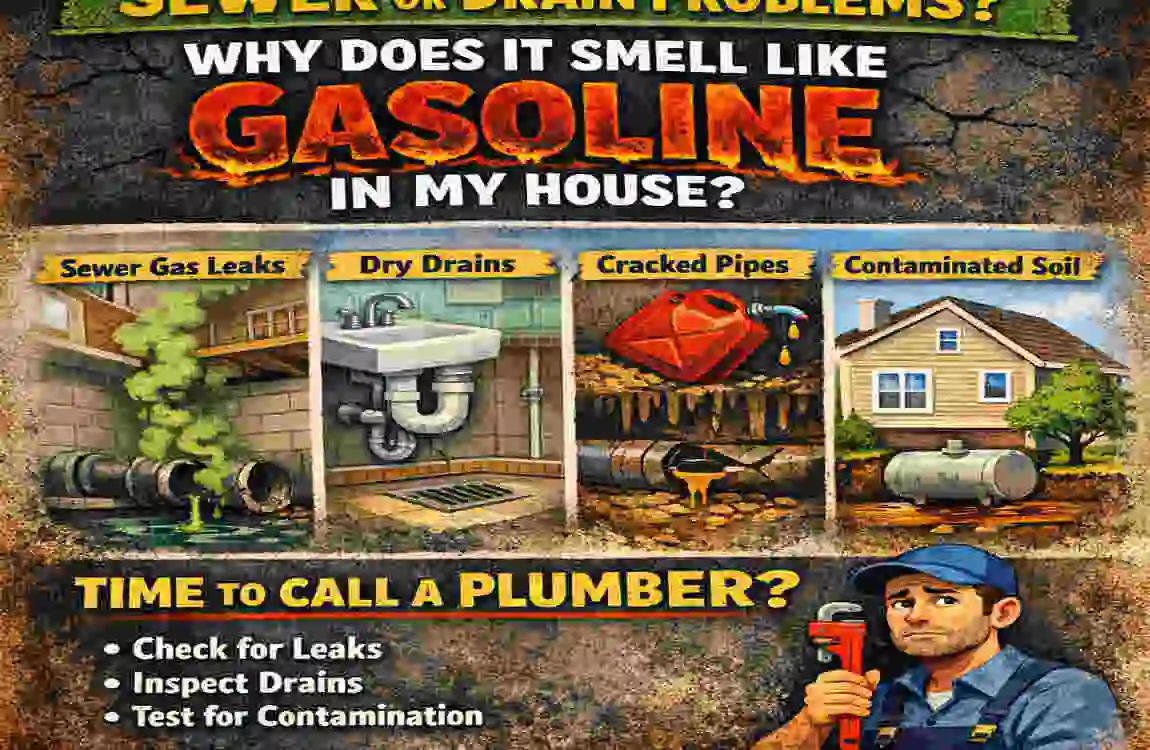
Not every “gasoline smell” is actually gasoline.
This surprises a lot of homeowners. Certain drain, sewer, and plumbing problems can create odors described as fuel-like, oily, or chemical. This is especially common in basements, laundry rooms, and guest bathrooms that do not get used often.
Why drain odors get confused with gasoline
Our sense of smell is not always precise.
A dry drain, clogged line, or cracked pipe can release sewer gas or chemical-like odors that do not smell exactly like rotten eggs. Sometimes they smell sharp, stale, or oddly like fuel. If the smell comes from a sink, floor drain, shower, or laundry standpipe, a plumbing issue may be the real cause.
Common drain-related causes
The usual suspects include:
- Dry P-traps in unused sinks, tubs, or floor drains
- Clogged drains with buildup and bacteria
- Cracked vent or drain lines
- Sump pits or basement drains with odor problems
- Backups involving cleaners, solvents, or contaminated water
Easy things to try
First, pour water into any drain you rarely use. A dry P-trap loses its water seal, allowing odors to rise into the room. One simple refill may solve the problem.
If the drain still smells, try an enzyme-based cleaner designed to break down organic buildup. Avoid mixing chemical drain cleaners, especially if the source is unclear.
Then check around the drain area for cracks, loose pipe joints, or damp spots.
How to tell it may not be gasoline
A real gasoline smell often feels sharper and more familiar, like a gas station, fuel can, or lawnmower. Drain odors tend to feel more damp, stale, or concentrated right at the pipe or floor opening.
Still, if you are unsure, do not dismiss it. A smell that seems “sort of like gasoline” but comes from the basement may be a plumbing problem that still needs attention.
Nearby Equipment Leaks or Fuel Residue
Your house may smell like gasoline because equipment that is not technically stored inside the home is still close enough to affect it.
Think about generators, portable heaters, pressure washers, chain saws, leaf blowers, trimmers, motorcycles, and power tools. Many of these are used outside, then brought inside to a mudroom, a covered porch, an attached shed, or the garage while still warm.
Why this causes odor
Fuel residue doesn’t take long to fill a space with smell.
A small amount of gasoline on the exterior of a machine, a loose cap, a stained fuel line, or a drip left on the floor can send vapors into nearby air. Wind, open windows, wall gaps, and vent intake points can then carry those vapors indoors.
This is especially common after storm season, yard work, or power outages when generators and other fuel-powered tools get heavy use.
What to check
If you recently used equipment, inspect:
- Fuel caps
- Fuel lines
- Tank seams
- Carburetor area
- Underside of the machine
- Rags or mats used during refueling
- The floor where the equipment was parked
Maintenance checklist for equipment
Use this quick checklist to cut down fuel odors:
- Wipe off spills immediately
- Check caps after each refill
- Store equipment only after it cools down
- Keep fuel-powered tools outside the living area
- Do not run generators near doors, windows, or vents
- Use drip trays or absorbent mats under suspect machines
- Schedule maintenance if a machine smells stronger than usual
A very important reminder
Never run a generator inside the garage, even with the door open.
That creates a serious safety risk. If you use one during outages, place it well away from the house and direct exhaust away from windows and air intakes.
Why this cause gets overlooked
People often focus on the house itself and forget the tool they used yesterday.
But one recently used machine with a small leak can absolutely explain why your entryway, garage, or nearby room smells like gasoline today.
Hidden Sources Like Paints, Adhesives, VOCs, or Neighboring Exhaust
If you have checked your garage, drains, HVAC system, and stored fuel, there is still one more category to consider: look-alike odors.
Some household products and outside air sources can smell surprisingly similar to gasoline.
What are VOCs?
Many building products give off volatile organic compounds, often called VOCs. That sounds technical, but the idea is simple: certain materials release chemical vapors into the air.
Fresh paint, adhesives, new flooring, sealants, insulation products, and some cleaning chemicals can all produce a strong smell described as gas- or gasoline-like.
Other hidden sources
You may notice a gasoline smell if:
- A neighbor is running equipment nearby
- Car exhaust drifts in from a nearby driveway
- A fresh paving or sealing job happened outside
- A window or vent sits close to parked vehicles
- A new renovation product is off-gassing indoors
How to handle these smells
Start with ventilation.
Open windows when outdoor air is clean and safe. Use bathroom or kitchen exhaust fans if they vent properly outside. If a certain room smells strongest, remove or isolate the product causing the odor if possible.
Air purifiers with the right filtration can also help reduce lingering chemical smells. However, they do not replace removing the source.
If outside exhaust is drifting in, inspect window seals, door sweeps, and vent locations. Sometimes a small air leak is enough to pull those fumes indoors.
Why this matters
Even in an all-electric home with no gas appliances and no fuel stored inside, a house can still smell like gasoline. That is why it helps to think beyond the obvious.
FAQ: Common Questions Homeowners Ask
Why does it smell like gasoline in my house but I have no gas appliances?
Because gasoline smells in homes often come from sources other than appliances.
The problem may be coming from an attached garage, stored fuel cans, a vehicle, lawn equipment, HVAC duct leaks, drain odors, or even outside exhaust drifting indoors. If you have no gas appliances, start by checking the fuel storage, the garage, and nearby equipment.
Can gasoline fumes in the house make you sick?
They can.
Gasoline vapors can cause symptoms like headaches, dizziness, nausea, throat irritation, or lightheadedness, especially in enclosed spaces. If anyone in the home feels unwell, leave the area and seek help right away.
How long does gasoline smell last in a house?
That depends on the source.
A tiny spill cleaned properly may fade within hours or a day. But if a container is still leaking, a machine has residue on it, or vapors are being pulled through your HVAC system, the smell can persist much longer and keep coming back.
Is the smell always coming from the garage?
No.
The garage is a common cause, but it is not the only one. Basement drains, hidden tanks, HVAC problems, stored solvents, and outdoor equipment can all create similar smells.