A sudden, biting cold snap hits your town. The wind is howling against your windows, and all you want to do is crank up the thermostat until your living room feels like a tropical island. But then, reality sets in. You remember the sheer panic of opening last month’s skyrocketing energy bill. You are caught in the classic winter struggle, desperately craving warmth while simultaneously fearing the cost of achieving it.
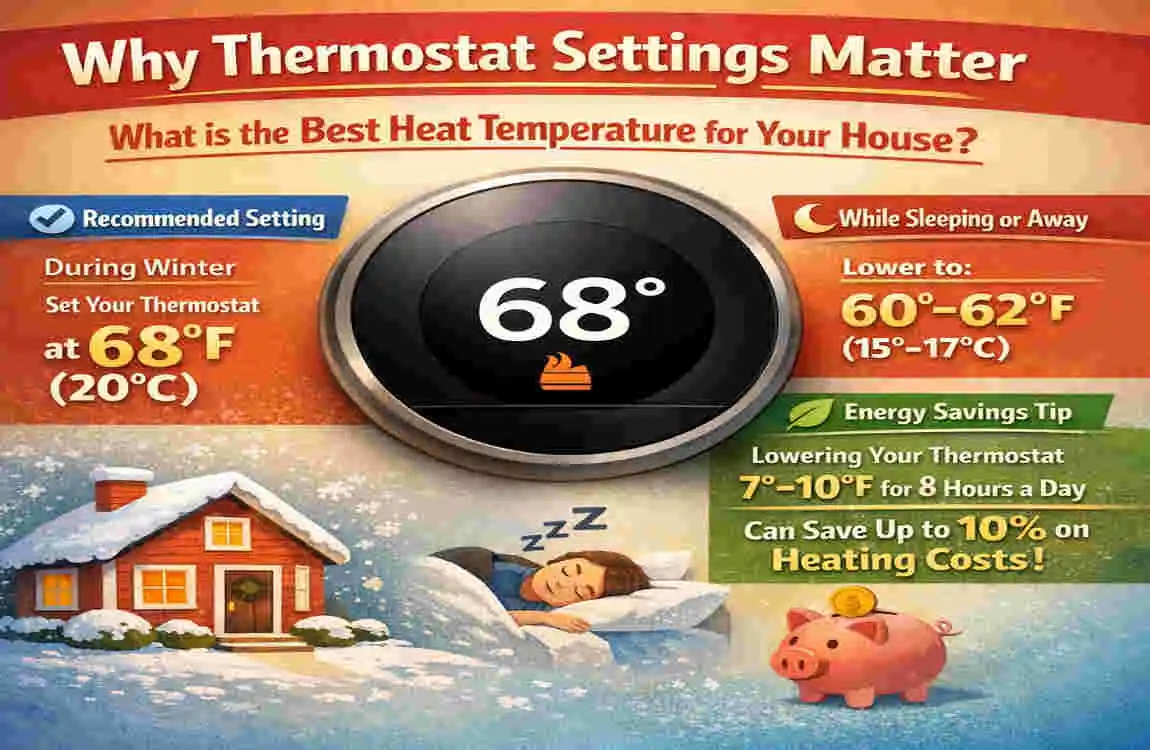
You might be surprised to learn that the absolute sweet spot for most homes is 68°F (20°C). Finding this perfect balance is not just about keeping your toes warm; it is about maintaining a healthy living environment, optimizing your daily comfort, and achieving massive energy savings.
You can save up to 10% a year on heating and cooling simply by turning your thermostat back a few degrees. It is true. Right now, homes across the United States are wasting over $150 billion yearly simply due to inefficient heating practices and poorly managed thermostat settings.
Why Thermostat Settings Matter More Than You Think
Have you ever wondered why your home loses heat so quickly on a freezing night? Or why running the heater constantly leaves your throat feeling scratchy and dry? Your thermostat is the brain of your home’s climate control system. Where you set that dial has a massive ripple effect on your home, your health, and your bank account. Let us break down exactly why finding the ideal winter thermostat settings is so crucial.
The Basic Science of Heat Loss
To understand how to heat your home, you need to understand how it loses heat. Think of your house like a giant bucket holding warm water, and the cold weather outside is a series of holes in that bucket. The basic rule of heat loss is simple: the greater the difference between indoor and outdoor temperatures, the faster your home will lose heat.
If it is 30°F outside and you set your thermostat to 75°F, your heating system has to work incredibly hard to maintain that massive 45-degree difference. Heat naturally wants to escape to the colder environment. It will aggressively push through your walls, windows, and roof. However, if you lower your indoor temperature to 68°F, you reduce that temperature difference. Your house loses heat much more slowly, so your furnace doesn’t have to cycle on and off to replace the lost warmth constantly.
Health Impacts: Finding the Middle Ground
Temperature drastically affects your physical well-being. If you set your thermostat too low, you are not just shivering; you are risking structural disasters. If the temperature inside drops too far, the pipes hidden inside your walls can freeze, burst, and cause thousands of dollars in water damage.
On the flip side, keeping your home too hot causes a different set of problems. Blasting the heat constantly strips moisture from the air. This ultra-dry air can dry out your nasal passages, irritate your skin, cause itchy eyes, and make you much more susceptible to winter colds and respiratory illnesses. Finding the middle ground protects both your plumbing and your immune system.
The Heavy Toll on Your Energy Bill
Let us talk about your budget. Heating is not just a small line item on your utility bill; it is the main event for the average household, heating and cooling account for nearly 50% of total energy costs. When you crank the heat, you are literally burning through dollars. By mastering your thermostat settings, you are directly taking control of the largest portion of your home’s monthly expenses.
Key Factors Influencing Your Needs
When trying to determine the best temperature for a house, there is no one-size-fits-all answer. Several physical factors of your home will change how a specific temperature actually feels:
- Home Size: A massive house with high vaulted ceilings will require more energy to keep warm than a compact, single-story home. Heat rises, so if you have two stories, the upstairs will naturally be warmer.
- Insulation: This is your home’s winter coat. If you have thick, modern insulation and double-pane windows, a setting of 68°F will feel incredibly warm. If your house is older and drafty, 68°F might feel a bit chilly because the heat is rapidly escaping.
- Indoor Humidity: A secret weapon for winter warmth. The ideal indoor humidity level is between 30% and 60%. Moist air actually holds heat better than dry air. If your home has proper humidity, 68°F will feel perfectly cozy.
Busting the “Sweater Rule” Myth
You have probably heard someone say, “Just put on a sweater and turn the heat off!” While layering is great, the “Sweater Rule” does not mean you should let your house turn into an icebox. The goal of the sweater rule is to set your thermostat at 68°F—a temperature that keeps the house structurally safe and reasonably warm—and then use a light sweater or long sleeves to make up the difference in your personal comfort. It allows you to stay perfectly comfortable without demanding excess, expensive heat from your furnace.
What is the Best Heat Temperature for a house? The Ultimate Guide
Now we arrive at the most important section. You are looking for actionable numbers to plug into your thermostat. According to expert recommendations, including guidelines from the U.S. Department of Energy (DOE) and leading HVAC manufacturers, here is your definitive temperature roadmap.
Daytime Settings: When You Are Awake and Home
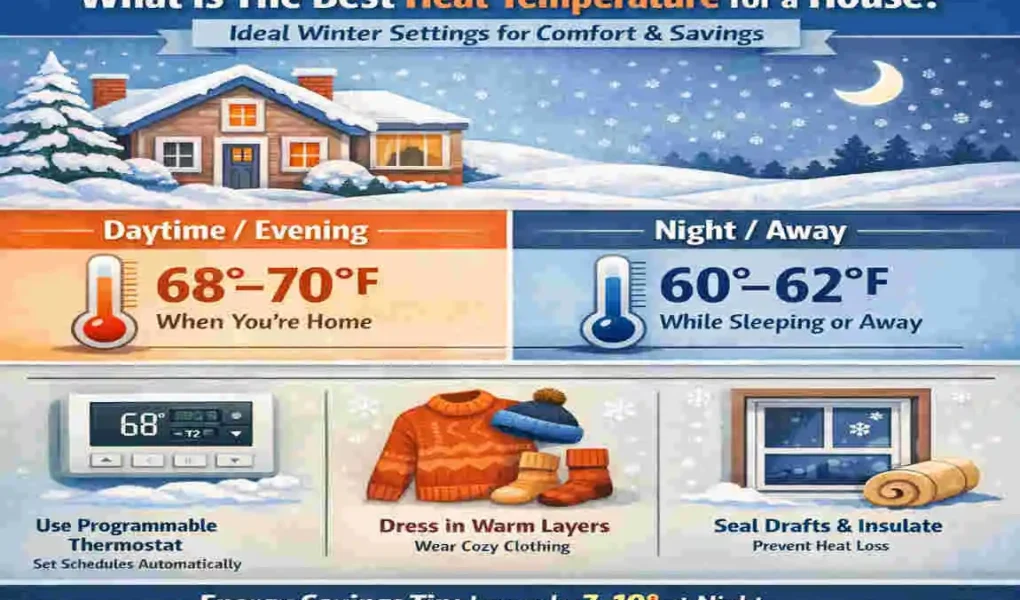
During the day, when you are awake, moving around, cooking, and living your normal life, the absolute best house temperature is 68°F (20°C).
At first, this might sound slightly cool to some people, especially if you are used to a toasty 72°F. However, because you are active and generating body heat, 68°F provides a perfectly comfortable environment. It is the optimal baseline that balances your personal comfort with maximum energy efficiency.
Nighttime Settings: For Better Sleep
Did you know that your body temperature naturally drops when you sleep? Because of this biological quirk, trying to sleep in a hot room can actually cause restlessness and insomnia.
The best heat temperature for a house in winter while sleeping is somewhere between 60°F and 65°F. Lowering the temperature at night signals to your body that it is time to rest. Plus, you are wrapped in heavy blankets and comforters, trapping your own body heat where you need it most. Dropping the thermostat while you sleep is one of the easiest ways to slash your energy bill, as you won’t even notice the cooler air in the house.
Away Settings: When You Leave for the Day
There is absolutely no reason to heat an empty house. If everyone in the family is leaving for work or school for more than eight hours, you should lower your thermostat by 7°F to 10°F from your normal daytime setting.
This means your “Away” temperature should hover around 55°F to 62°F. Your furnace will get to take a long, well-deserved break. When you return home, your system will easily warm the house back up to 68°F.
Vacation Settings: Preventing Winter Disasters
If you are leaving town for a few days or taking an extended winter vacation, you want to drop the temperature as low as safely possible.
Set your thermostat to 55°F (13°C). This is the magic number. It is low enough to ensure your furnace rarely turns on, saving you maximum money while you are gone. But most importantly, it is warm enough to keep the ambient temperature inside your walls from dropping below freezing, thereby protecting your plumbing from bursting.
Quick Reference: Ideal Winter Thermostat Settings
To make things incredibly easy, here is a helpful table you can reference or even print out to keep near your thermostat:
Situation: Best Heat Temperature for House, Comfort & Savings Tip
Daytime (Awake & Home) 68°F (20°C) Wear comfortable layers and socks.
Night (Sleeping) 60°F – 65°F (15°C – 18°C) Use flannel sheets or a heavy duvet.
Away (Work/School) 55°F – 62°F (13°C – 17°C) Use a smart schedule to pre-heat before returning.
Vacation (Extended Time) 55°F (13°C) Keep indoor doors open to circulate air and protect pipes.
Room-by-Room Variations
If you have a zoned heating system or use space heaters, you can customize temperatures for each room based on how it’s used.
- The Living Room: Aim for 68°F (20°C). This is where you sit still to watch TV, so you want a baseline of comfortable warmth.
- The Bedroom: Keep this cooler, around 64°F (18°C). It promotes deeper, healthier sleep.
- The Bathroom: This is the one room where you might want a bump in heat. Stepping out of a warm shower into a freezing room is miserable. Aim for 71°F (22°C) in the bathroom right before bathing.
Factors Affecting Your Ideal Temperature
While 68°F is the golden rule, your specific life circumstances might require a slight adjustment. When answering the question of what the best house temperature is, we have to look at the unique personality of your home and your family. Let us explore the variables that might prompt you to tweak that dial.
Your Home’s Specific Quirks
Every house behaves differently in the winter.
If you live in a larger home, the heat is incredibly uneven. The thermostat in the hallway might read 68°F, but the guest bedroom at the end of the house feels like an icebox. Larger homes greatly benefit from zoned heating, allowing you to direct heat only to the rooms you are actively using.
Furthermore, your insulation quality dictates everything. If your home has poor insulation, single-pane windows, and drafty doorways, setting the thermostat to 68°F might leave you genuinely shivering. In drafty homes, you might need to bump the heat up to 70°F to combat the constant infiltration of cold outdoor air. Alternatively, you can save money by finally caulking those drafty window frames!
Who Lives Under Your Roof?
The people (and animals) in your house dictate your heating needs more than anything else.
- The Elderly: As we age, our bodies become less efficient at regulating internal heat. Older adults often require a slightly warmer environment to stay safe and comfortable. If you have elderly family members in the home, you may need to maintain a temperature between 70°F and 72°F.
- Babies and Toddlers: Infants cannot easily regulate their body temperature, nor can they pull up a heavy blanket if they get cold. A nursery should generally be kept between 68°F and 72°F for safety.
- Your Pets: Adjust for your furry friends! If you have a Husky or a thick-coated dog, they will absolutely love a cooler 60°F house. However, if you have a short-haired cat or a small breed dog, you might need to leave a warm bed out for them or keep the daytime temperature slightly warmer when you are away.
Your Local Climate and Location
Where you live on the map changes the context of your heat settings.
Contrast that with the harsh, freezing zones of the Northern United States or Canada, where outdoor temperatures plunge well below zero. In these extreme environments, trying to push your house up to 72°F puts a massive, expensive strain on your furnace. Relying on the 68°F rule becomes even more critical for Survival and budget management in harsh climates.
The Magic of Indoor Humidity
We mentioned it briefly, but it deserves its own spotlight. Dry air feels colder than humid air.
If your home’s humidity drops below 30% in the winter, the dry air will pull moisture directly off your skin. This evaporation process actually cools your body down, making a 68°F room feel like 64°F.
By adding moisture to the air—using a whole-home humidifier, placing bowls of water near radiators, or simply leaving the bathroom door open after a hot shower—you change how the air feels. Moist air retains heat beautifully. When you boost your humidity to around 40% or 50%, you will find that 68°F suddenly feels luxuriously warm.
Top Energy Savings Strategies You Can Start Today
Now that you know what the best house heating temperature is, let us talk about how to maximize your savings. Turning down the thermostat is just the first step. To truly optimize your home’s winter efficiency, you need to employ a few smart strategies.
The Math Behind the Savings
The U.S. Department of Energy offers a fantastic rule of thumb: For every 1°F you lower your thermostat for 8 hours, you save about 1% to 3% on your heating bill.
Let us calculate a sample bill reduction to see the real-world impact. Imagine you currently keep your house at a constant 72°F all winter long. If you adjust your habits and lower the daytime temperature to 68°F, and drop it further to 60°F at night while you sleep, you are making a massive change. By establishing these ideal winter thermostat settings, you could easily see a 10% to 20% reduction in your yearly heating costs. Over a harsh winter, that can translate to hundreds of dollars saved!
Embrace Smart and Programmable Thermostats
If you are still adjusting your thermostat manually every time you leave the house or go to bed, you are working too hard. Upgrading to a programmable or smart thermostat is the best investment you can make for winter savings.
- Programmable Thermostats: These allow you to set a fixed schedule. You can tell it to drop to 60°F at 10:00 PM, and automatically warm up to 68°F at 6:00 AM so the house is warm before you even get out of bed.
- Smart Thermostats: Devices utilize Wi-Fi and smartphone apps to take things a step further. Many offer geofencing technology. This means the thermostat tracks your phone’s location. When you drive away from your house for work, the heat automatically lowers. When you are a few miles away on your evening commute, it turns the heat back up, ensuring you always walk into a perfectly cozy home without wasting energy all day.
Routine Maintenance Pays Off
Your heating system is like a car engine; it needs regular tune-ups to run efficiently.
- Clean Your Filters: A dirty, clogged air filter acts like a brick wall blocking airflow. Your furnace has to work twice as hard to push warm air through it. Changing your air filter every 30 to 90 days is the cheapest, easiest way to improve efficiency.
- Seal the Drafts: Walk around your house and feel for cold air leaking in around window frames, under exterior doors, and near electrical outlets. Use weather stripping, caulk, or draft snakes to seal these gaps. Keeping the cold air out is just as important as generating warm air.
The Art of Layering (Home and Body)
You can make a 68°F room feel significantly warmer just by changing the environment around you.
- Layer Your Clothes: Invest in cozy thermal socks, soft slippers, and comfortable fleece sweaters. Keeping your extremities warm signals your entire body to feel cozy.
- Layer Your Home: Hardwood and tile floors get cold in the winter. Lay down thick, plush area rugs to insulate the floors.
- Use Heavy Curtains: Swap out your sheer summer curtains for thick, thermal-lined drapes. Open them during the day to let the natural sunlight heat your rooms for free, but close them tightly as soon as the sun goes down to trap the heat inside.
Striking the Perfect Balance Between Health and Comfort
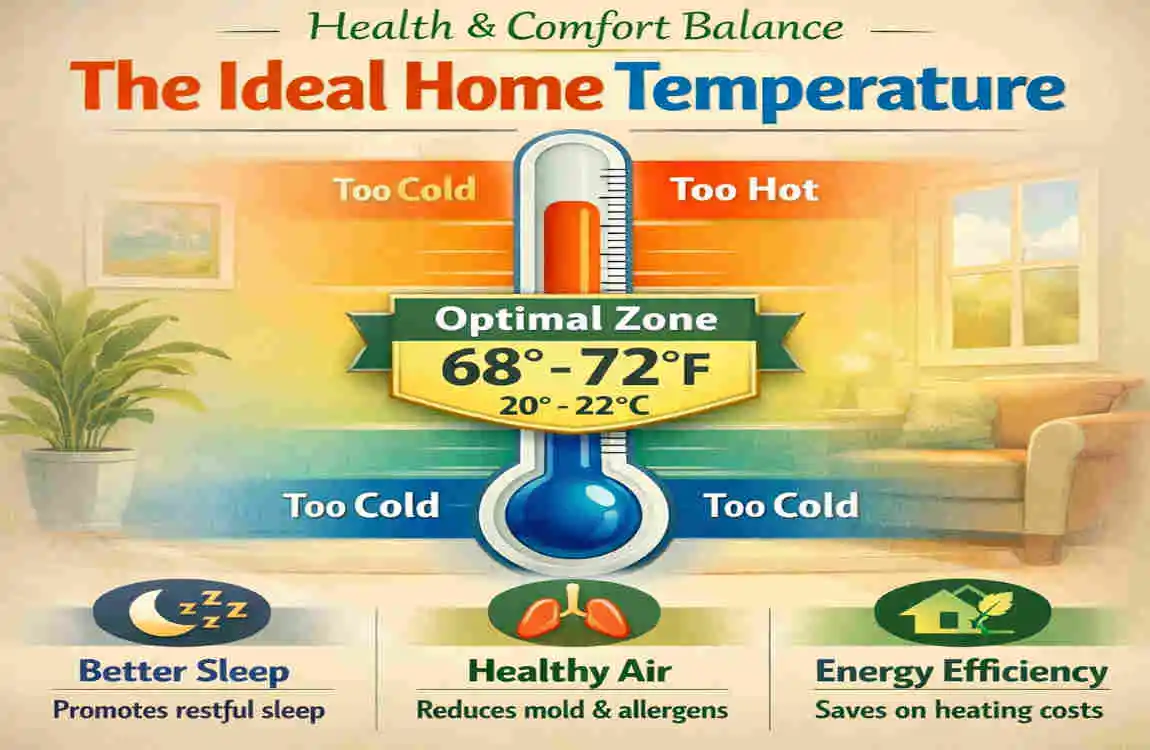
At the end of the day, your home is your sanctuary. While saving money is fantastic, you should never do it at the cost of your health or basic comfort. The 68°F guideline is recommended precisely because it strikes the perfect balance.
Protecting Your Skin and Respiratory System
Running a furnace at high temperatures (72°F and above) constantly cycles bone-dry air through your vents. This environment leads to chapped lips, dry and flaky skin, nosebleeds, and irritated throat linings. By keeping the heat moderate, you preserve the air’s natural moisture, creating a healthier environment for your lungs and skin.
Enhancing Your Sleep Quality
We touched on this earlier, but it is worth repeating. Sleep experts agree that a cool room is essential for deep REM sleep. When you drop the temperature to between 60°F and 65°F at night, you stop tossing and turning in a pool of sweat. You will wake up feeling more refreshed, energized, and ready to tackle the day.
Finding Your Personal Comfort Zone
While 68°F is the standard, everyone is wired differently. The universally accepted comfort range for most humans in winter is 68°F to 72°F.
Start your thermostat at 68°F. Give your body a few days to adjust. Put on some warm socks. If you are still genuinely uncomfortable after a few days, bump it up to 69°F. Find the lowest temperature at which you feel content, and make that your permanent winter setting.
Common Heating Mistakes You Need to Avoid
Even with the best intentions, many homeowners end up accidentally sabotaging their heating bills. If you want to master your home’s climate, make sure you avoid these frequent pitfalls:
- The Constant 72°F+ Mistake: Leaving your thermostat set to a blazing 72°F or 74°F around the clock is the fastest way to spike your bills. It forces your system to fight a losing battle against the outdoor cold 24 hours a day.
- Forgetting the Nighttime Drop: Going to sleep without lowering the heat means you are paying Premium prices to heat a house while you are unconscious under a pile of blankets. It is a massive waste of resources.
- Cranking the Dial for “Faster” Heat: If you come home to a cold house, do not crank the thermostat to 80°F thinking it will warm the room up faster. Furnaces pump out heat at a constant rate. Setting it to 80°F will not speed up the process; it will just cause the system to overshoot your ideal temperature and waste energy.
- Ignoring System Maintenance: Skipping your annual HVAC inspection or forgetting to change your air filters forces your system to run inefficiently, driving up costs and shortening the lifespan of your expensive equipment.
Frequently Asked Questions (FAQ)
To wrap up our comprehensive guide, let us address some of the most common questions people ask when trying to figure out the best ways to heat their homes.
What is the best heat temperature for a house in winter?
The optimal daytime temperature for a house in the winter is 68°F (20°C) when you are awake and at home. This specific temperature provides an ideal balance of personal comfort, safe structural temperatures to prevent freezing, and maximum energy efficiency.
What is the ideal sleeping temperature in the winter?
For the best sleep quality, set your thermostat between 60°F and 65°F (15°C to 18°C). A cooler room aligns with your body’s natural nighttime temperature drop, promoting deeper, more restful sleep while saving you money on overnight heating costs.
How much money can I really save by lowering my thermostat 5°F?
By lowering your thermostat by 5°F for at least eight hours a day (such as when you are sleeping or at work), you can expect to save between 5% and 15% on your annual heating bill. Over the course of a long, cold winter, this simple adjustment can easily save you hundreds of dollars.
Should I turn my heat off completely when I leave the house?
No, you should never turn your heat completely off during the winter. If the temperature inside your walls drops below freezing, your water pipes can freeze and burst, causing catastrophic damage. Instead of turning the system off, lower the thermostat to a safe 55°F (13°C) when you leave for an extended period.