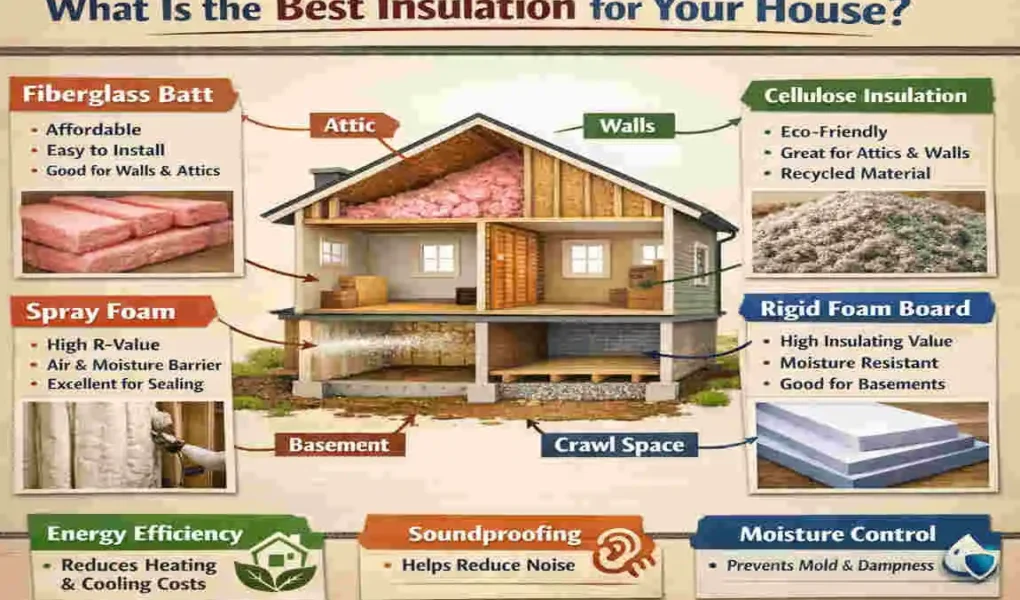
If you have ever asked what’s the best insulation for a house, you are not alone. This is one of the most common questions homeowners ask when they want a warmer home in winter, a cooler home in summer, and lower energy bills year-round.
| Area / Need | Best options | Pros | Cons |
|---|---|---|---|
| Walls (new build) | Closed-cell spray foam, rigid foam board | High R-value per inch, air/moisture control | Higher cost, requires professional install |
| Walls (existing) | Blown-in cellulose or fiberglass, injection foam | Good retrofit option, fills cavities, lower cost (cellulose) | Settling (cellulose), lower performance than spray foam |
| Attic / loft | Loose-fill cellulose or fiberglass; spray foam at roof underside | Cheap per R-value (fiberglass/cellulose), good coverage; spray foam seals air leaks | Fiberglass needs proper installation, cellulose can settle |
| Basement / foundation | Rigid foam (XPS/PIR), closed-cell spray foam | Moisture resistant, continuous insulation reduces thermal bridging | Rigid boards need sealing; spray foam cost |
| Floors over unheated spaces | Rigid foam + fiberglass or mineral wool | High compressive strength (rigid), sound control (mineral wool) | Installation complexity in retrofit situations |
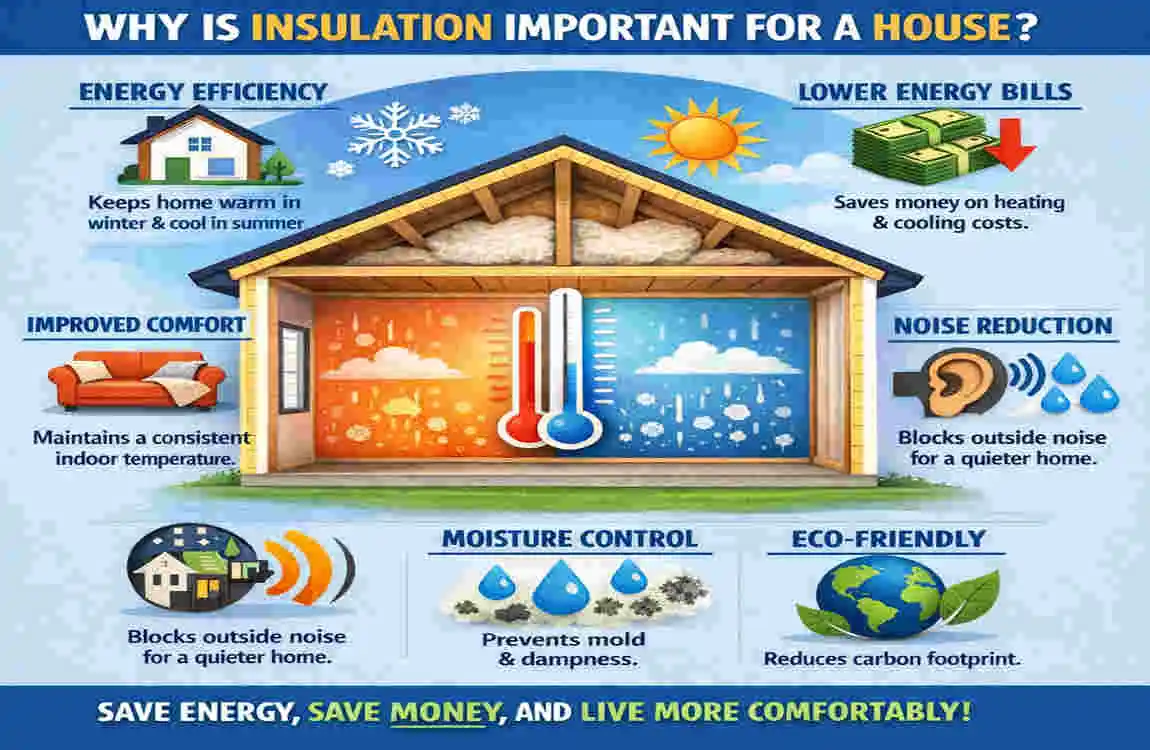
Insulation does more than just keep temperature under control. It helps your home feel more comfortable, lowers strain on your heating and cooling system, reduces noise, and can even help prevent moisture problems. That means the right insulation can improve both your comfort and your budget.
But here is the important part: there is no single best insulation for every house. The right choice depends on your climate, your budget, the part of the house you are insulating, and whether you want to do the job yourself or hire a professional.
Why Is Insulation Important for a House?
Improves Energy Efficiency
Insulation slows down heat transfer. In winter, it helps keep warm air inside. In summer, it helps keep hot air outside. This means your home stays more stable and your HVAC system does not have to work as hard.
Lowers Electricity and Heating Costs
When your house holds temperature better, you use less energy. That can lead to real savings on utility bills over time. In many homes, insulation is one of the easiest ways to improve energy efficiency.
Enhances Indoor Comfort
Good insulation helps stop cold spots, hot spots, and drafts. That creates a more even indoor temperature, making your home feel much more comfortable to live in.
Prevents Moisture Problems
Some insulation types also help control moisture. That matters because excess moisture can lead to condensation, mould, and mildew. A dry home is usually a healthier home.
Improves Soundproofing
Dense insulation can help block noise from outside and between rooms. If you want a quieter home, this is a nice extra benefit.
What’s the Best Insulation for a House? Key Factors to Consider
The answer to what’s the best insulation for a house depends on a few key things.
Climate and Weather Conditions
If you live in a cold climate, you usually need insulation with a higher R-value. That means better resistance to heat loss. In hot climates, reflective or heat-blocking materials may work better.
Area of Installation
Different parts of the home need different solutions. For example:
- Attics often need thick insulation
- Exterior walls need materials that fit inside cavities
- Basements and crawl spaces need moisture-resistant options
- Floors may need insulation that fits between joists
Budget
Some materials are cheaper upfront, while others cost more but may save more money over time. The cheapest option is not always the best long-term choice.
R-Value
R-value is a measure of how well insulation resists heat flow. In simple terms, higher R-value usually means better insulation performance.
DIY or Professional Installation
Some insulation types are easy to install yourself, while others need special tools and training. If you want a fast DIY project, fiberglass batts may be easier. If you want top-level sealing, spray foam usually needs a pro.
Types of Insulation for Houses
Fiberglass Insulation
Fibreglass is one of the most common types of house insulation. It comes in batts, rolls, and sometimes loose-fill form.
It is popular because it is affordable, easy to find, and fairly simple to install. It works well in attics, walls, and floors.
Pros:
- Budget-friendly
- Fire resistant
- Widely available
Cons:
- Loses performance if it gets wet
- Needs careful handling during installation
Spray Foam Insulation
Spray foam expands after application and fills gaps very well. It is one of the best choices if your goal is strong air sealing.
There are two main types:
- Open-cell spray foam: lighter and more flexible
- Closed-cell spray foam: denser, stronger, and more moisture resistant
Pros:
- Excellent air sealing
- High R-value
- Good moisture resistance
Cons:
- Expensive
- Usually needs professional installation
Cellulose Insulation
Cellulose is made from recycled paper products. It is often blown into walls and attics.
This is a good choice if you want an eco-friendly option and decent sound absorption.
Pros:
- Eco-friendly
- Good for existing wall cavities
- Helps reduce noise
Cons:
- Can settle over time
- Sensitive to moisture
Rigid Foam Board Insulation
Foam boards are solid panels used in walls, roofs, foundations, and basements.
They offer strong thermal protection and work well where moisture is a concern.
Pros:
- High thermal resistance
- Moisture protection
- Lightweight
Cons:
- More expensive than basic options
- Harder to install in some areas
Mineral Wool Insulation
Mineral wool, also called rock wool, is dense and strong. It is a great choice for fire safety and sound control.
Pros:
- Fire resistant
- Good soundproofing
- Water resistant
Cons:
- Usually costs more than fiberglass
Reflective or Radiant Barrier Insulation
This type is most useful in hot climates, especially in attics. It reflects heat away from the home instead of absorbing it.
Pros:
- Helps reduce heat gain
- Great for hot sunny areas
Cons:
- Less useful in cold climates
Comparison Table: Which Insulation Is Best?
Insulation Type Best For R-Value Cost Range Lifespan Main Benefit
Fiberglass Walls and attics Medium Low Long Affordable
Spray Foam Whole-house sealing High High Very long Energy efficiency
Cellulose Existing homes Medium Moderate Long Eco-friendly
Foam Board Foundations High Moderate-High Long Moisture resistance
Mineral Wool Soundproofing and fire safety High Moderate Long Fire resistance
Radiant Barrier Hot climates Heat reflection Moderate Long Solar heat reduction
For many homeowners, the best insulation for homes depends on balancing cost, climate, and performance.
Best Insulation for Different Parts of a House
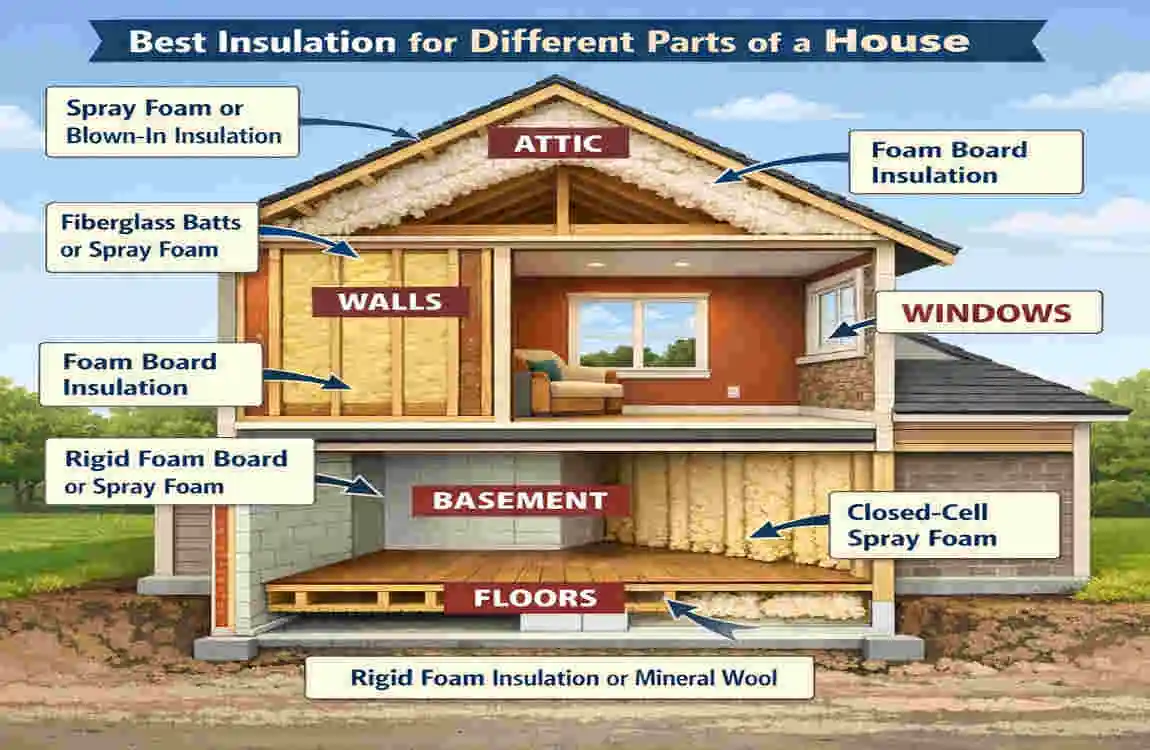
Best Insulation for Attics
Attics often need strong insulation because heat rises. Good choices include:
- Fiberglass
- Spray foam
- Cellulose
If your attic has air leaks, spray foam can be especially effective.
Best Insulation for Exterior Walls
For walls, you want insulation that fits well and reduces air movement.
Strong options include:
- Spray foam
- Mineral wool
- Blown-in cellulose
Best Insulation for Basements
Basements are more prone to moisture than other areas. That is why moisture-resistant materials are smart.
Best choices:
- Foam board
- Closed-cell spray foam
Best Insulation for Floors
If you want warmer floors, insulation between joists can help.
Useful choices:
- Fiberglass batts
- Rigid foam
Best Insulation for Crawl Spaces
Crawl spaces often have damp conditions, so moisture control is crucial.
A moisture-resistant foam solution is usually a strong option here.
Fiberglass vs Spray Foam – Which One Is Better?
When people compare fiberglass vs spray foam insulation, the answer usually comes down to budget and performance.
Fiberglass is the better budget option. It is cheaper, easy to find, and works well in many homes.
Spray foam is the better premium option. It seals gaps better, resists moisture better, and usually delivers stronger long-term energy savings.
Quick comparison:
- Price: Fiberglass wins
- Air sealing: Spray foam wins
- Moisture resistance: Spray foam wins
- DIY installation: Fiberglass wins
- Long-term performance: Spray foam often wins
How Much Does House Insulation Cost?
The cost of insulation depends on the size of your home, the type of material, labor, and where the insulation is going.
Common cost groups:
- Low-cost: Fiberglass
- Mid-range: Cellulose and mineral wool
- Premium: Spray foam
If you are looking for the cheapest home insulation materials, fibreglass is usually a good place to start. It gives good value for money and works well in many standard projects.
How to Choose the Right Insulation for Your Home
Here is a simple way to decide.
Check Local Climate
If you live in a cold area, choose insulation with a higher R-value. If you live in a hot area, think about heat reflection and attic performance.
Measure R-Value Requirements
Different parts of the home need different insulation levels. Check what your area typically needs before buying.
Consider Moisture Exposure
If the space is damp, choose a material that resists moisture, such as closed-cell spray foam or foam board.
Compare Long-Term Energy Savings
A cheaper product may cost less now, but a better product may save more money over time.
Hire a Professional if Needed
If the project is large or the material is hard to install, getting expert help can save time and avoid mistakes.
Common Insulation Mistakes to Avoid
Many homeowners run into the same problems. Try to avoid these:
- Choosing based only on price
- Ignoring moisture control
- Using the wrong R-value
- Blocking attic ventilation
- Leaving air gaps
- Making DIY mistakes
Even the best insulation for a house will underperform if it is installed poorly.
Eco-Friendly Insulation Options
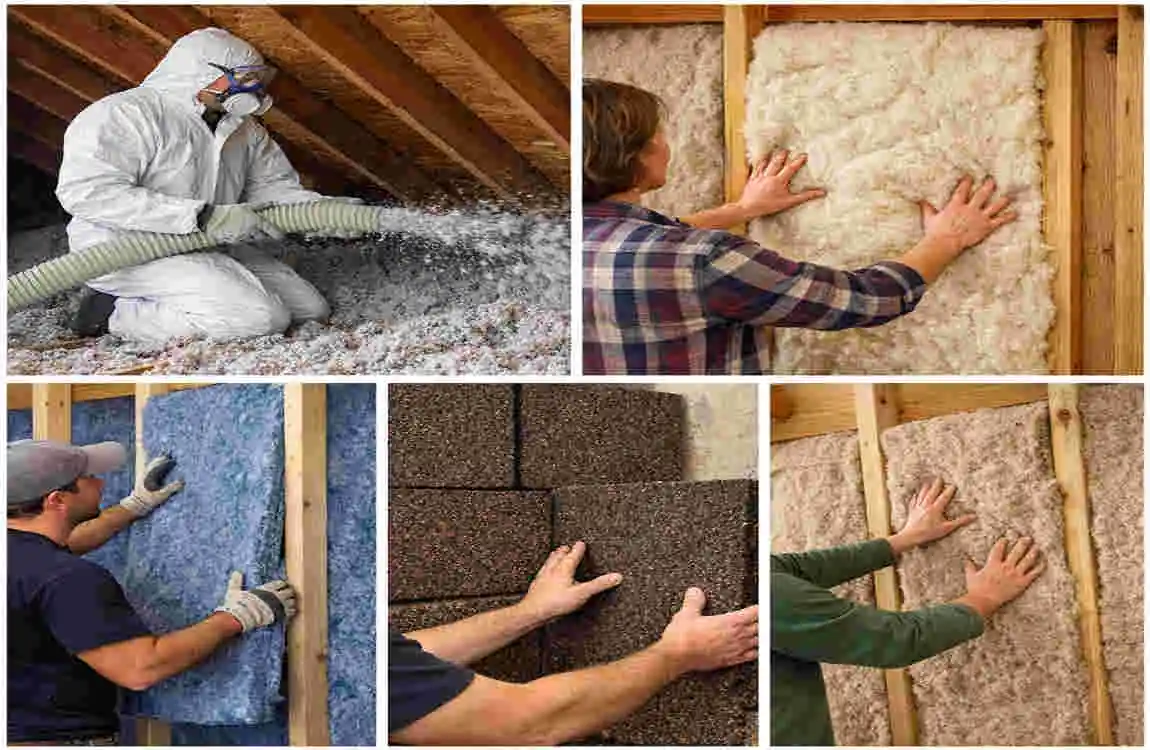
If you want the best thermal insulation for house projects that are also greener, consider these options:
- Cellulose
- Cotton insulation
- Recycled denim
- Cork insulation
- Sheep wool
These materials can help reduce waste while still improving comfort and energy performance.
FAQs About House Insulation
What’s the best insulation for a house in cold climates?
In cold climates, spray foam and mineral wool are often excellent choices due to their strong thermal protection.
Is spray foam better than fiberglass?
In terms of sealing and moisture resistance, yes. But fibreglass is much cheaper, so it remains a smart option for many homes.
Which insulation lasts the longest?
Spray foam and foam board usually last a very long time when installed correctly.
What insulation is cheapest?
Fiberglass is usually the cheapest and most widely available option.
Can I install house insulation myself?
Yes, some types like fiberglass batts can be DIY-friendly. Others, like spray foam, are best left to professionals.
Which insulation is best for soundproofing?
Mineral wool and cellulose are both strong choices for sound control.