Carpenter ants may look harmless at first, but they can become a serious problem if you ignore them. If you are wondering whether carpenter ants can damage your house, the short answer is yes. They do not eat wood like termites, but they hollow it out to build nests, and that can weaken important parts of your home over time.
Can Carpenter Ants Damage Your House?
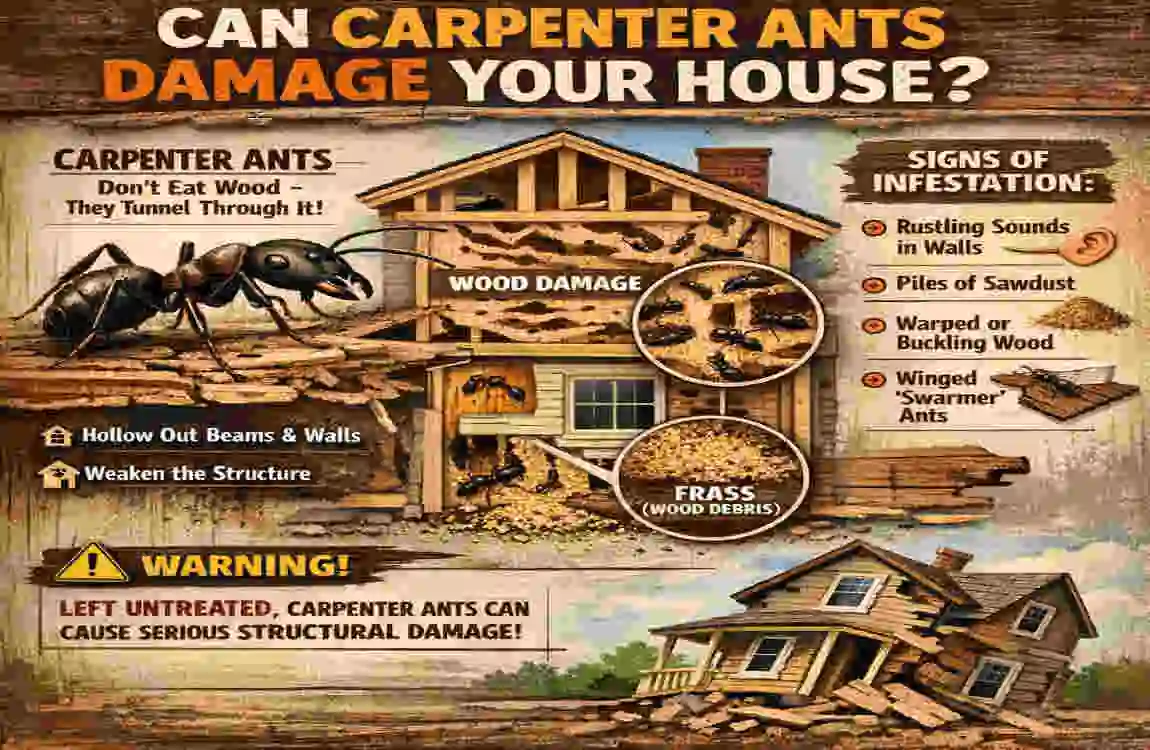
They tunnel through wood to make nesting spaces. Over time, this can weaken beams, frames, and other wooden parts of the clean home.
They do not usually destroy wood as fast as termites, but that does not mean they are harmless. A large colony can cause real structural problems if left untreated.
How Carpenter Ants Differ from Termites
Many homeowners mix up carpenter ants and termites, but they are very different pests.
Carpenter Ants Termites
Hollow out wood Eat wood
Prefer damp wood Eat both dry and damp wood
Leave sawdust-like frass Leave mud tubes
Larger insects Smaller workers
This difference matters because carpenter ants are often a sign of moisture damage somewhere in your home. If you see them, it is smart to check for leaks or rotting wood too.
How Carpenter Ants Damage Your Home
Why They Tunnel Through Wood
Carpenter ants do not use wood as food. They use it as a place to live. They chew through soft or damaged wood and push the bits out of the nest, leaving smooth tunnels behind.
This is why their damage can stay hidden for a long time. From the outside, the wood may look fine. Inside, it may already be weakened.
Areas Most Commonly Damaged
Carpenter ants often target areas that stay damp or are easy to access. Common problem spots include:
- Wall studs
- Roof framing
- Window frames
- Door frames
- Decks
- Wooden beams
- Attics
- Basements
If you notice ants near any of these areas, take it seriously. These spots can become weak faster than you expect.
How Damage Gets Worse Over Time
At first, the damage may be small. But as the colony grows, so does the problem. More ants mean more tunneling, and more tunneling means more wood loss.
If moisture remains in the same place, the ants may keep coming back. That is why fixing the source of the moisture is just as important as removing the ants.
Signs Carpenter Ants Are Damaging Your House
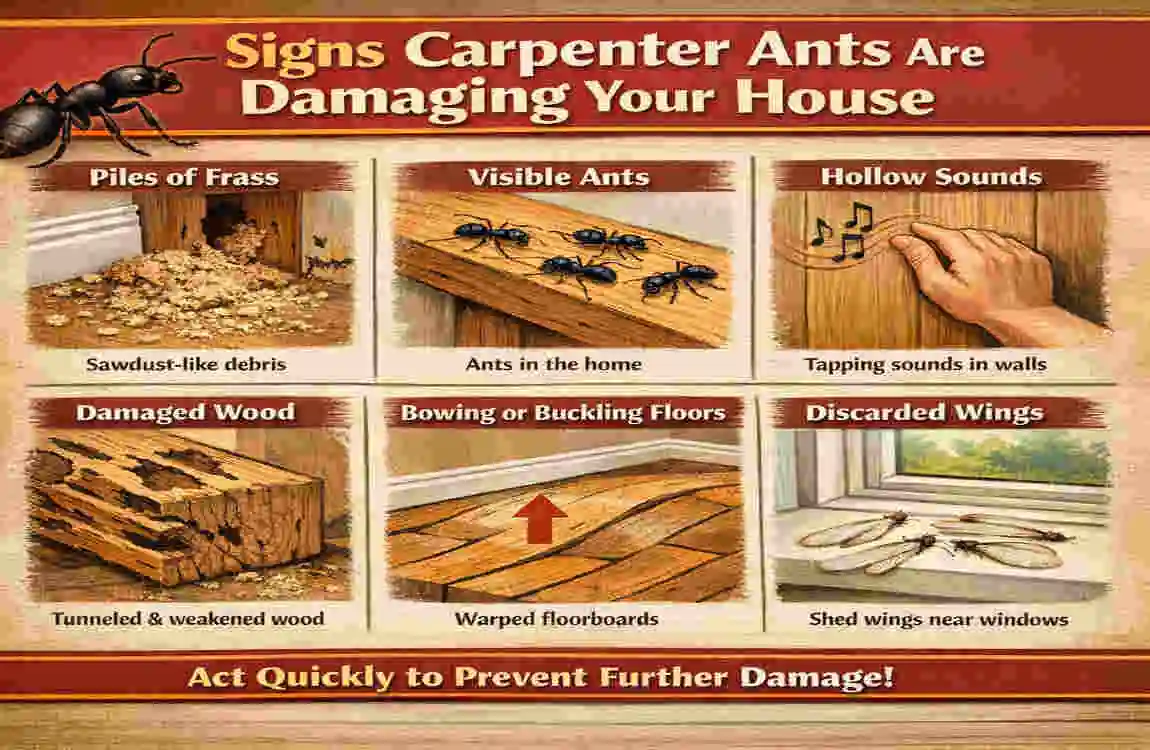
Small Piles of Sawdust
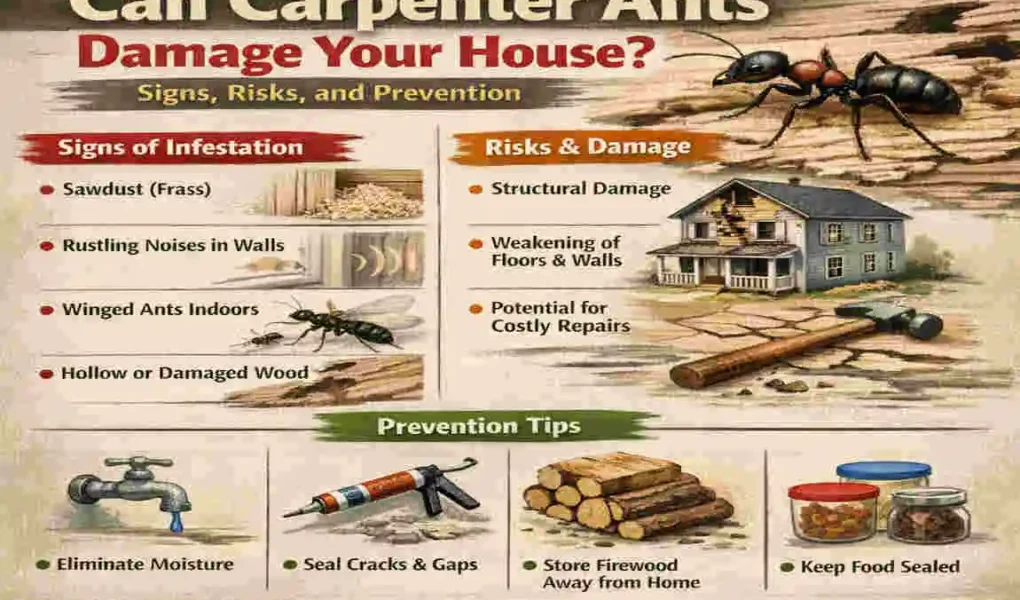
One of the most common signs is frass, which looks like fine sawdust. You may find it near baseboards, windows, or wooden beams.
This material is often pushed out of the nest by the ants. If you see small piles of it, check nearby wood for tunnels or soft spots.
Rustling Noises Inside Walls
Sometimes you may hear faint rustling sounds inside walls, especially at night. That can happen when ants are moving through the nest.
The sound is usually subtle, so you may need to listen closely. Still, if you hear unusual noises in the walls, it is worth checking.
Winged Carpenter Ants Indoors
If you see winged ants inside your clean home, that can be a warning sign. These are often reproductive ants that are trying to start a new colony.
Swarming usually means the nest is already well established. That makes quick action even more important.
Large Black Ants Around Moist Areas
Carpenter ants are often larger than common house ants. You may see them around sinks, tubs, basements, or leaky windows.
If they keep appearing in the same damp area, there is a good chance they are nesting nearby.
Hollow-Sounding Wood
Tap on wood in suspicious areas. If it sounds hollow, it may have been tunneled inside.
This does not always mean that carpenter ants are damaging the wood, but it is a strong clue. Always check further if you notice this sign.
Damaged Wooden Structures
Look for sagging trim, loose boards, cracked window frames, or soft wood. These can point to a larger problem.
If the wood breaks easily or crumbles when touched, you should inspect it right away.
What Attracts Carpenter Ants?
Moist or Rotting Wood
Carpenter ants love wood that is soft, damp, or already starting to decay. That is the kind of wood they can tunnel into more easily.
Even a small patch of rot can attract them.
Water Leaks
Leaks in bathrooms, kitchens, roofs, or pipes create the damp conditions they prefer. A small leak can become a big invitation.
That is why home maintenance matters so much.
Firewood Stored Near the House
If firewood sits too close to your home, carpenter ants can use it as a bridge into the house. They may also nest in the stacked wood itself.
Keep it away from walls and off the ground.
Tree Branches Touching the Roof
Branches that touch your roof or siding give ants an easy path into your clean home. They can travel from trees to your house without much trouble.
Trimming trees back is a simple but effective step.
Food Sources Around the Home
Although carpenter ants do not eat wood, they still look for food. Sweet spills, crumbs, pet food, and garbage can all attract them.
A clean kitchen and sealed trash bins help reduce the risk.
Parts of the House Most at Risk
Bathrooms
Bathrooms often stay damp because of showers, sinks, and hidden leaks. That makes them a common target.
Check under sinks, around tubs, and near baseboards.
Kitchens
Kitchens offer both moisture and food. That combination can bring ants in quickly.
Look behind appliances, under the sink, and along window edges.
Crawl Spaces
Crawl spaces can stay dark and humid, which carpenter ants like. These areas are often overlooked, allowing problems to go quietly.
Basements
Basements often have leaks, poor airflow, or damp walls. That makes them another high-risk area.
Attics
Roof leaks can make attics a good nesting spot. If the roof is damaged, ants may move in without being noticed right away.
Decks and Porches
Outdoor wooden structures are often exposed to rain and moisture. If they are not sealed well, ants may settle there first.
How Serious Is Carpenter Ant Damage?
Structural Risks
Carpenter ants can weaken wood over time. That means the problem is not just annoying — it can affect the strength of parts of your house.
They may damage support beams, framing, or trim. In serious cases, repairs can be costly.
Repair Costs
Repair costs depend on the extent of the damage and its location. Small repairs may be manageable, but hidden structural damage can be expensive.
The longer you wait, the more you may have to spend.
When Damage Becomes Dangerous
Damage becomes dangerous when it affects the house’s load-bearing parts. If beams, joists, or framing are weakened, the home may lose strength.
That is why a professional inspection is important if you suspect a large infestation.
Can Carpenter Ants Make a House Unsafe?
Yes, they can. A house with major hidden damage may become unsafe if the problem is ignored for too long.
That does not mean every infestation is an emergency, but it does mean you should not wait.
How to Inspect Your Home for Carpenter Ants
Indoor Inspection Tips
Check damp areas first. Look under sinks, around windows, behind appliances, and near wooden trim.
Watch for frass, winged ants, or damaged wood. Small signs often lead to bigger ones.
Outdoor Inspection Tips
Inspect decks, porch posts, siding, roof edges, and wood near the ground. Carpenter ants often start outside before moving indoors.
Also check for cracks, wet areas, and rotting boards.
Signs Around Trees and Stumps
Carpenter ants often nest in dead wood, tree stumps, and damaged trees. If these are close to your house, they can become a source of infestation.
Look for ant activity near wood piles, old stumps, and tree trunks.
When to Call a Professional
If the infestation is large, keeps returning, or seems hidden in the walls, call a pest control expert. A professional can find the nest and treat it properly.
How to Get Rid of Carpenter Ants
Find the Nest
You need to locate the nest if possible. Killing a few visible ants is not enough if the colony is still active.
Use Ant Baits
Baits can help workers carry poison back to the colony. This often works better than spraying only the ants you see.
Remove Moisture Sources
Fix leaks, dry damp areas, and improve airflow. Without moisture, carpenter ants lose one of their main reasons for staying.
Replace Damaged Wood
If wood is badly damaged, it may need to be removed and replaced. This helps prevent the ants from returning.
Professional Pest Control
For larger infestations, professional treatment is usually the safest choice. Experts can reach hidden nests and help protect the clean home in the long term.
How to Prevent Carpenter Ants from Damaging Your House
Fix Water Leaks Quickly
Leaks are one of the biggest reasons carpenter ants move in. Repair them as soon as you spot them.
Keep Wood Dry
Dry wood is much less attractive to carpenter ants. Make sure gutters, roofs, and plumbing stay in good shape.
Seal Entry Points
Fill cracks and gaps around windows, doors, and siding. This makes it harder for ants to get inside.
Trim Trees and Shrubs
Keep plants from touching your house. This reduces easy access for ants.
Store Firewood Properly
Keep firewood away from your home and off the ground. This helps stop ants from using it as a nesting place.
Schedule Regular Home Inspections
A quick check once in a while can save you a lot of money later. Catching problems early is always easier than fixing major damage.
Carpenter Ants vs Other Wood-Damaging Pests
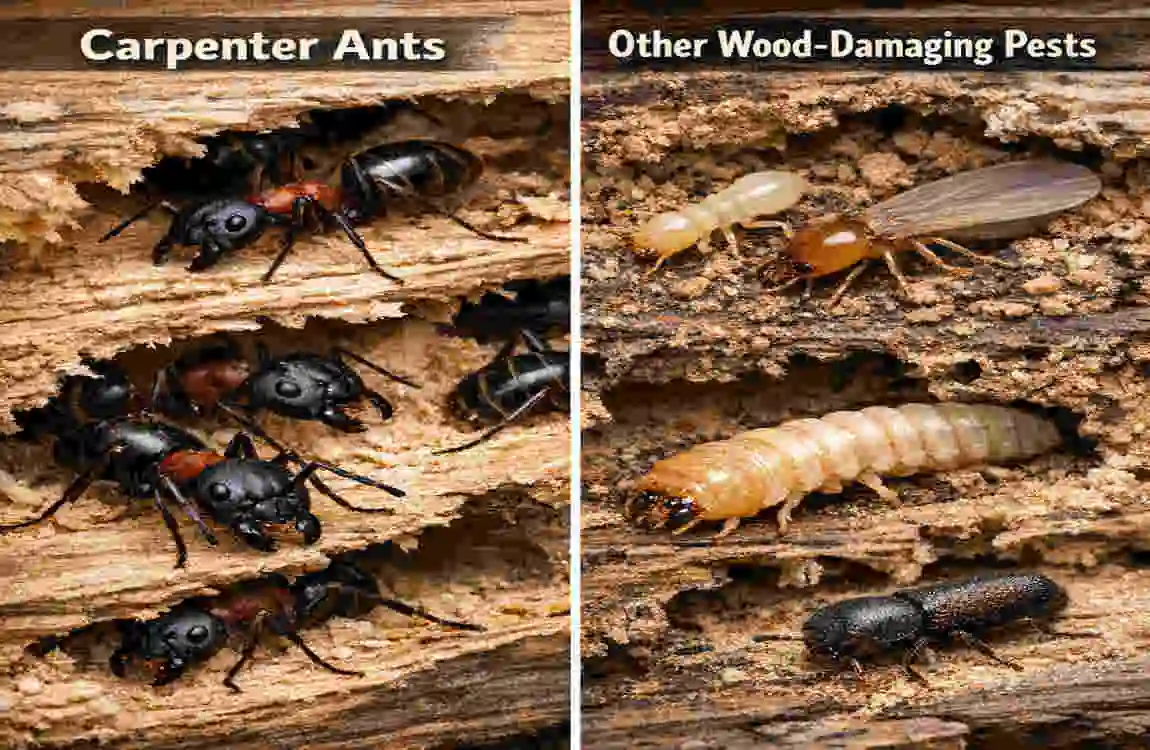
PestEats WoodTunnels in WoodStructural Risk
Carpenter Ants No Yes Moderate to High
Termites Yes Yes Very High
Powderpost Beetles Yes Yes Moderate
Carpenter Bees No Yes Low to Moderate
Common Mistakes Homeowners Make
- Ignoring early warning signs
- Confusing carpenter ants with termites
- Only killing visible ants
- Not fixing moisture problems
- Delaying professional treatment
Avoiding these mistakes can protect your clean home and your budget.
Frequently Asked Questions
Can carpenter ants damage your house?
Yes. They excavate wood to create nests, which can weaken wooden structures over time.
Are carpenter ants worse than termites?
Termites usually cause faster and more severe damage because they eat wood, while carpenter ants tunnel through it.
How long does it take carpenter ants to damage a house?
It can take months or years, depending on the size of the colony and the amount of moisture present.
What are the first signs of carpenter ants?
Frass, large black ants indoors, rustling sounds in walls, and winged ants are common early signs.
Can I remove carpenter ants myself?
Small infestations may be managed with bait and moisture control, but larger ones often need professional treatment.
What attracts carpenter ants to a home?
Moist wood, leaks, rotting timber, food crumbs, and tree branches touching the house are common attractants.
| Topic | Information |
|---|---|
| Can Carpenter Ants Damage Your House? | Yes. Carpenter ants can damage wooden structures by tunneling through wood to build nests, which may weaken parts of your home over time. |
| What Attracts Carpenter Ants? | Damp, decaying, or water-damaged wood, food crumbs, moisture, and easy access through cracks or gaps. |
| Common Signs of Infestation | Small piles of sawdust-like frass, rustling noises inside walls, large black ants indoors, winged ants, and smooth tunnels in wood. |
| Areas Most at Risk | Window frames, door frames, wall voids, attics, basements, decks, porches, and moisture-damaged wood. |
| Potential Risks | Structural weakening, expensive repairs, spread of multiple colonies, and ongoing wood damage if left untreated. |
| How to Prevent Carpenter Ants | Fix water leaks, replace rotting wood, seal cracks, trim tree branches away from the house, store firewood away from walls, and keep the home clean and dry. |