Planning electrical work for a new home can feel confusing at first. There are wires, outlets, lights, panels, permits, and labour costs to consider. If you do not estimate these costs early, your budget can get out of hand fast. That is why a clear electrical plan matters so much in new construction.
For homeowners, the goal is simple: avoid surprise costs and make sure the home is safe and ready to use. For contractors and developers, accurate pricing helps keep projects on schedule and protects profit margins. A strong estimate also makes it easier to compare bids and choose the right team.
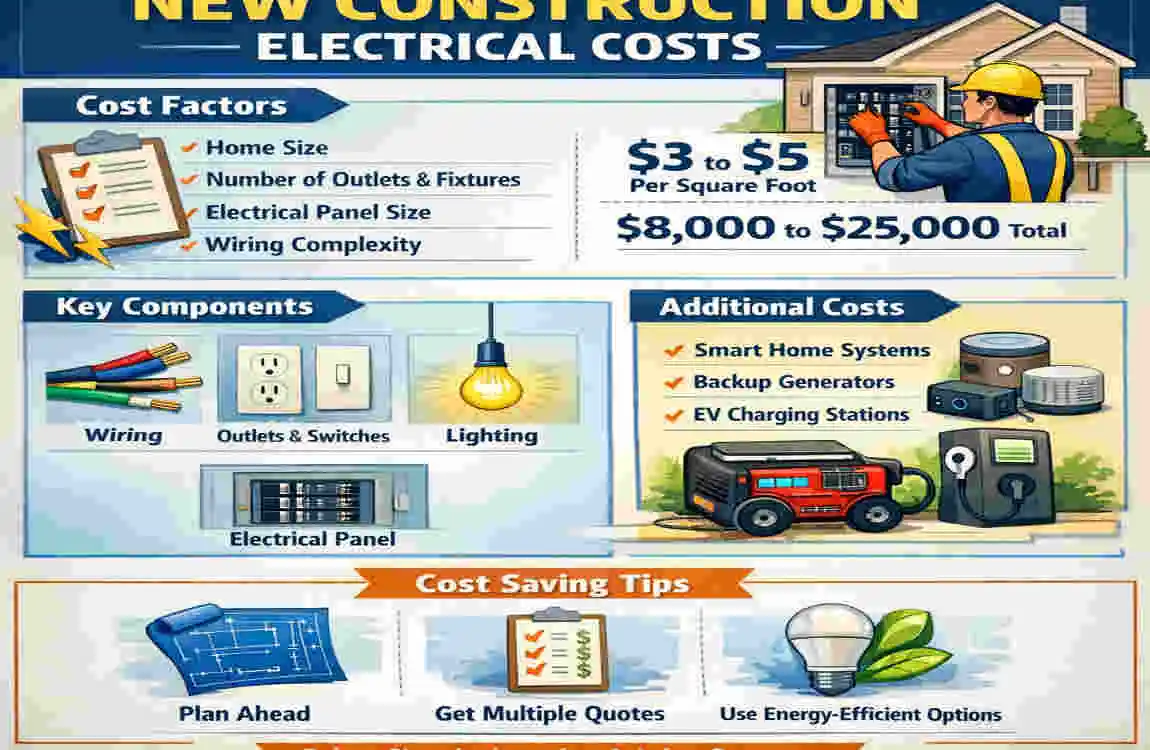
| Category | Cost Range (USD) | Notes |
|---|---|---|
| Basic Wiring | $3–$5 per sq. ft. | Outlets, switches, main panel, basic lighting |
| Mid-Range Wiring | $5–$7 per sq. ft. | More outlets, additional lighting circuits |
| High-End Wiring | $8–$12+ per sq. ft. | Smart home systems, luxury lighting, EV chargers |
| Service Panel | $1,500–$3,500 | 100–400 amp breaker box; sub-panels extra |
| Standard Outlet | $75–$150 each | Includes labor and materials |
| GFCI Outlet | $100–$200 each | Required in kitchens, bathrooms, outdoors |
| Recessed Lighting | $150–$250 each | Installed cost per fixture |
| Standard Ceiling Light | $100–$300 each | Installed cost per fixture |
| Labor | $50–$120/hour | 40–60% of total electrical cost |
| Permits & Inspections | $500–$1,000 | Varies by locality; ~$800 typical |
| Contingency | 10–20% of total | For unexpected costs or changes |
Bathrooms deserve special attention because they are smaller spaces with more code requirements and more detailed work. They often require GFCI outlets, exhaust fans, dedicated circuits, and moisture-resistant fixtures, which can raise the cost above that of a basic bedroom or hallway. That is why many people search for the cost per square foot of new construction electrical bathrooms when planning a build.
Understanding New Construction Electrical Costs
What Are Electrical Construction Costs?
Electrical construction costs include everything needed to bring power safely into a new home and distribute it to lights, outlets, appliances, and fixtures. This usually includes wiring, boxes, outlets, switches, panels, labor, permits, and inspections.
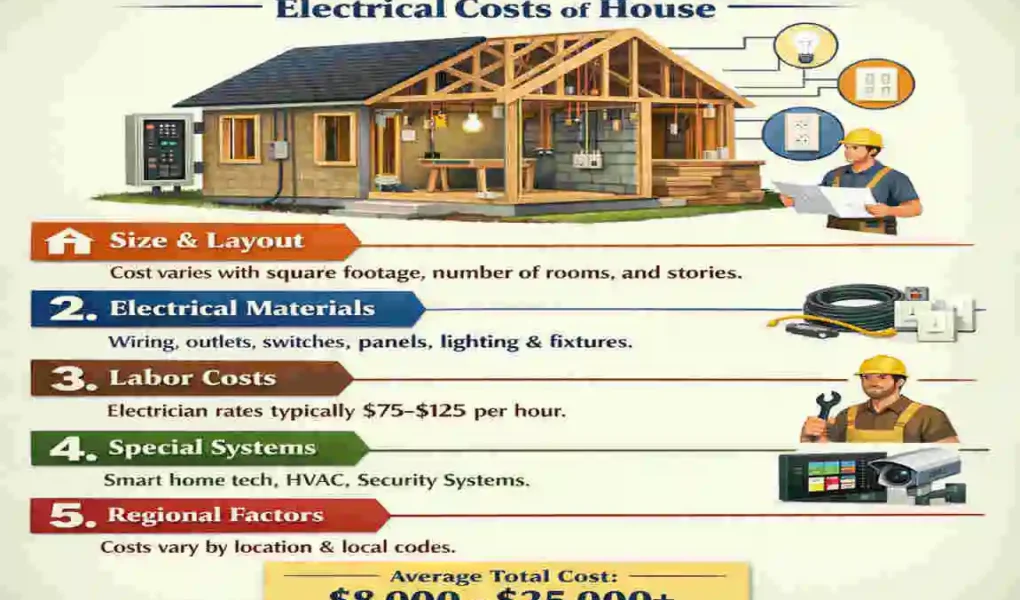
A big part of the price comes from two areas: materials and labor. Materials include cables, breakers, outlets, and light fixtures. Labor covers the electrician’s time to install, connect, test, and finish everything correctly. In many cases, labour accounts for a large share of the total budget.
You also need to factor in permit and inspection fees. These may seem small compared to the rest of the job, but they matter. They help ensure the work complies with local safety rules and building codes.
Why Electrical Costs Vary by Project
No two new homes cost the same to wire. A small, simple house will usually cost less than a large home with smart systems and custom lighting. The final price depends on several factors.
One major factor is house size. More square footage means more wire, more outlets, and more fixtures. Another big factor is location. Electricians in high-cost areas often charge more, and local code rules can add extra steps.
The type of finishes also matters. A basic home with standard lighting costs less than one with decorative fixtures, dimmers, LED strips, and smart controls. If the wiring design is complex, the price will rise again.
Average Electrical Cost Per Square Foot
For a new home, electrical work often falls into a broad range. A basic system may cost less per square foot because it uses simple lighting and standard outlets. A mid-range setup usually includes better lighting, more convenience, and a few upgrades. A luxury system can be much more expensive because it often includes smart home features, custom lighting, and extra circuits.
In general, the electrical wiring cost per square foot for a full new home often lands somewhere in these ranges:
- Basic setup: lower range
- Mid-range setup: moderate range
- Luxury setup: higher range
Bathrooms usually cost more per square foot than other rooms because they require more safety measures and special fixtures in a small space.
New Construction Electrical Bathroom Cost Per Square Foot Explained
Average Bathroom Electrical Cost Per Square Foot
The new construction electrical bathroom cost per square foot is usually higher than the average cost for many other rooms. That is because bathrooms need more protection from moisture and usually have more electrical features packed into a small space.
A small bathroom may cost more per square foot because the electrician still has to install the same safety items, even in a compact area. A larger master bathroom may cost less per square foot in some cases. However, the total price is still higher because there are more fixtures, more outlets, and sometimes more lighting zones.
A common estimate for bathroom electrical work in new construction may fall within a broad range of $12 to $30 per square foot, depending on features and the local market. In expensive regions or with luxury upgrades, the number can go higher.
What Is Included in Bathroom Electrical Installation?
Bathroom electrical installation is more than just adding a light switch. It usually includes a mix of safety work, comfort upgrades, and code-required items.
Common items include:
- Wiring for lights, outlets, and fans
- GFCI outlets for safety near sinks and water
- Exhaust fans to control moisture
- Vanity lighting for mirrors and grooming
- Heated flooring systems in premium bathrooms
- Smart mirrors and modern upgrades like built-in lighting or sensors
Each one adds to the total cost of bathroom wiring. Even a simple bathroom must be done carefully because water and electricity are a risky mix.
Bathroom Electrical Cost Breakdown Table
Item Average Cost
GFCI Outlet Installation $125–$250
Vanity Lighting $150–$400
Exhaust Fan Wiring $200–$500
Heated Floor Wiring $300–$800
Dedicated Circuits $200–$600
These are rough estimates, but they help you see where the money goes. If the bathroom has multiple sinks, large mirrors, or a luxury shower area, the cost may be higher.
Factors Affecting Bathroom Electrical Costs
Several small choices can change the final price of bathroom electrical installation. The first is the number of outlets. More outlets mean more wiring and more labor. The next is fixture quality. A basic light fixture is much cheaper than a designer vanity light or a smart mirror with built-in LEDs.
Smart technology also increases cost. Motion sensors, Bluetooth fans, and app-controlled lights all take extra setup. Finally, electrical code compliance can add cost because bathrooms must meet strict safety rules, especially around water and ventilation.
Electrical Cost Estimation by House Size
Small Homes (Under 1,500 Sq Ft)
Small homes usually have simpler electrical systems. There are fewer rooms, fewer circuits, and fewer lighting zones. This can make the total estimate more manageable.
For a smaller home, the budget may focus on standard outlets, basic lighting, and a simple panel setup. Even if the home is compact, the bathrooms still need the same safety steps, so those areas may not feel as “cheap” as the rest of the house.
Medium Homes (1,500–3,000 Sq Ft)
Medium homes often need a more balanced plan. They usually include more bedrooms, more bathrooms, and more appliance circuits. At this size, electrical planning becomes more detailed, as you need to consider kitchen loads, laundry rooms, and bathroom upgrades.
This is where many homeowners start adding convenience features, such as dimmer lights, extra vanity lighting, and upgraded bathroom fans. The cost rises, but the home becomes much more functional.
Large and Luxury Homes (3,000+ Sq Ft)
Large homes often have the highest electrical budgets. They may include smart home systems, multiple bathrooms, custom lighting, and added comfort features. These homes also need additional wiring runs and, in some cases, larger service panels.
Even with multiple bathrooms, the bathroom electrical cost per square foot may still be high. Still, the total project cost increases significantly because more rooms need to be finished. Luxury homes often include heated floors, premium mirrors, and lighting scenes that require careful planning.
Cost Comparison Table by Home Size
Home SizeEstimated Electrical Cost
Small Home $6,000–$12,000
Medium Home $12,000–$25,000
Large Home $25,000–$50,000+
These numbers are broad estimates. The final number depends on the home’s design, the number of bathrooms, and how many upgrades you choose.
Key Components That Influence Electrical Costs
Electrical Panels and Service Upgrades
The electrical panel is the heart of the home’s power system. If the panel is too small, the home may not support modern appliances and smart features very well. That is why many new builds use 200-amp service instead of a smaller setup.
A 100-amp panel may work for a very small or simple home, but larger homes usually need more capacity. If you plan extra bathroom features, electric heating, or future upgrades, it makes sense to think ahead. Choosing the right panel early can prevent costly changes later.
Wiring Materials
Wiring materials also affect the budget. Copper wiring is common and reliable, but it costs more than some alternatives. Aluminum wiring may be cheaper in some situations. Still, it is less common in many new residential areas and may require special handling.
Material quality matters because it affects safety, durability, and long-term performance. Cheap materials may save money now, but they can cause problems later if they wear out faster or need more maintenance.
Lighting Fixtures and Installation
Lighting can be simple or highly customized. A basic ceiling light is affordable, but recessed lights, LED strips, and decorative bathroom fixtures all add more work. Bathroom lighting often needs to be placed carefully around mirrors, vanities, and showers.
LED lighting is popular because it lasts longer and uses less energy. Decorative lights can enhance the room’s look, but they also increase the total installation cost. If you want a polished bathroom, lighting design should be part of the plan from the start.
Smart Home and Energy-Efficient Features
Smart features are becoming more common in new homes. In bathrooms, this may include motion sensors, smart switches, automatic lights, or Bluetooth fan controls. These upgrades add convenience but also increase wiring time and device costs.
Energy-efficient features can help lower power use over time. While the upfront price may be higher, many homeowners like the comfort and long-term savings. If you want a modern bathroom, these features may be worth the added expense.
Labor Costs for New Construction Electrical Work
Average Electrician Hourly Rates
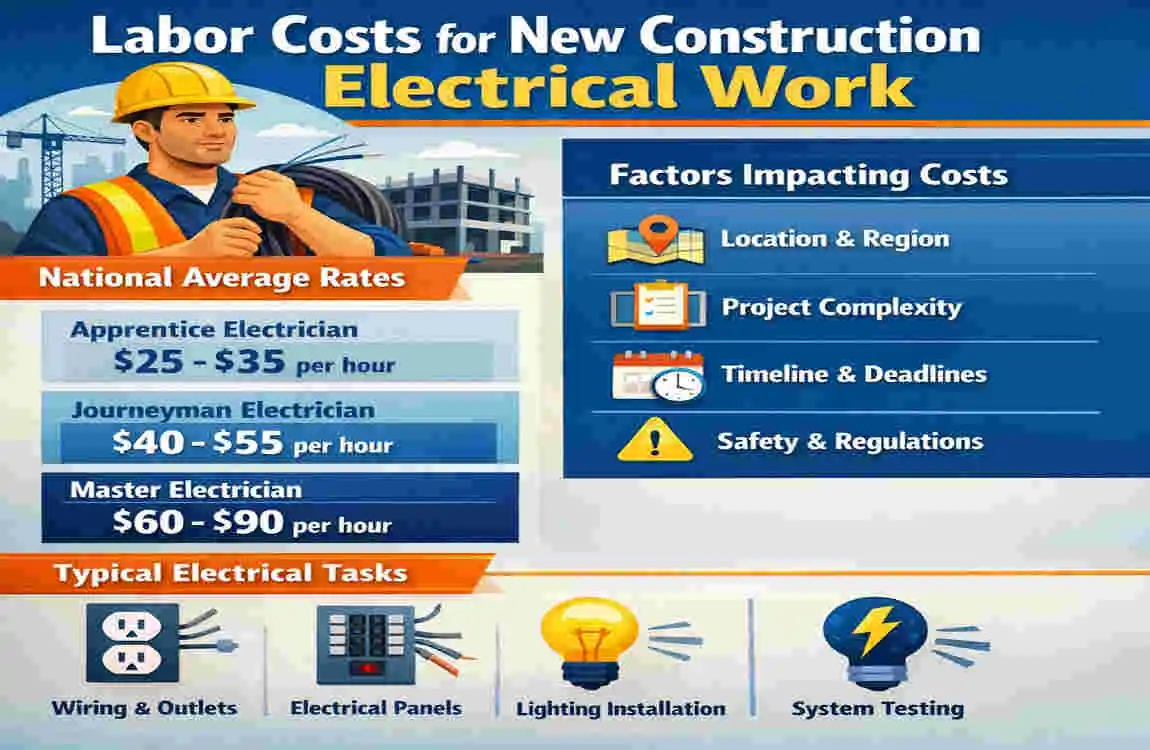
Labour prices can vary widely depending on where you live and who you hire. A licensed electrician may charge less than a master electrician. Still, the master electrician may have more experience with complex jobs. In many areas, hourly rates can range widely depending on demand and local wages.
When comparing bids, do not focus only on the lowest number. A very cheap bid can sometimes mean rushed work, poor materials, or missing items. Good labor is one of the best investments in a new build.
Labor Cost Per Square Foot
Labor is often priced as part of the full project, but it can also be estimated per square foot. For standard new construction, the labor cost per square foot may stay in a moderate range. Bathrooms require more precise work in a smaller area.
That means bathroom-specific labor can look expensive on paper. Still, this often reflects the extra time needed for safety, code rules, and fixture placement. A small room with several electrical features can take more effort than a larger room with fewer details.
How Long Bathroom Electrical Installation Takes
Bathroom electrical work usually happens in stages. First comes the rough-in stage, where wires, boxes, and circuits are installed before the walls are closed. Then comes the final fixture installation, where lights, outlets, switches, and fans are connected. After that, the project may need an inspection.
Timing depends on the bathroom’s size and the design’s complexity. A simple bathroom may be done quickly, while a master bathroom with heated flooring or smart controls can take longer. Good scheduling helps avoid delays with other trades, such as plumbing and drywall.
Permits, Inspections, and Building Codes
Why Electrical Permits Matter
Permits are not just paperwork. They are part of making sure the work is legal and safe. Electrical systems must protect the home from overloads, shock risks, and fire hazards. A permit also helps protect your insurance position if something goes wrong later.
If electrical work is done without the proper permit, it can create future problems during resale or inspection. That is why permit costs should always be included in your new home electrical estimate.
Bathroom Electrical Code Requirements
Bathrooms have special electrical rules because of moisture. One of the most important rules is GFCI protection, which helps reduce the risk of shock near sinks and water sources. Bathrooms also need proper ventilation to prevent moisture buildup and damage to the home.
Many codes also require moisture-safe installation practices, proper outlet spacing, and correct placement of fixtures. These rules may increase the cost a little, but they make the bathroom much safer.
Inspection Costs and Timeline
Inspection fees are usually not the biggest part of the budget, but they still matter. Permit fees can be small to moderate depending on the city or county. The inspection timeline also matters, as any failed inspection can lead to delays and rework.
A simple checklist of inspection checkpoints often includes:
- Rough-in wiring
- Outlet and GFCI placement
- Lighting and fan connections
- Final safety check
If the work passes inspection the first time, the project moves much faster.
Cost-Saving Tips for New Construction Electrical Projects
Plan Electrical Layout Early
The best way to control cost is to plan early. If you wait until the walls are closed or the plumbing is already set, changes become more expensive. Early planning helps you avoid redesigns and wasted labor.
It also helps to coordinate electrical work with plumbing and HVAC. When those systems are planned together, the trades can work more smoothly and avoid conflicts inside the walls.
Choose Energy-Efficient Fixtures
Energy-efficient fixtures can reduce long-term bills. LED lighting is one of the easiest upgrades because it uses less energy and lasts longer. Smart thermostats and sensors can also help the whole home run more efficiently.
These choices may raise the upfront cost a little, but they often pay off over time. They also give the home a more modern feel.
Bundle Bathroom Electrical Features
If you are adding several bathroom upgrades, try bundling them. For example, it is often cheaper to install the fan, lights, and outlets in one planned stage than to call the electrician back later for separate visits.
Bundling can reduce labour duplication and speed up the work. That is especially useful when you are building more than one bathroom.
Compare Contractor Quotes
Always compare more than one quote if possible. Ask each electrician what is included in the price, what materials they plan to use, and whether permits are covered. Some bids look low at first but leave out important items.
A good quote should be clear and easy to understand. If something feels vague, ask questions before you agree to the work.
Common Mistakes When Estimating Bathroom Electrical Costs
Underestimating Fixture Costs
Many homeowners focus on wiring and forget about the fixtures. That can lead to budget problems later. Designer lights, smart mirrors, and premium fans can add up quickly.
A bathroom may look simple from the outside, but the finish choices inside can significantly affect the cost. Always include fixture prices in your estimate.
Ignoring Future Electrical Needs
People often plan for today and forget about tomorrow. But future needs matter. You may later want EV chargers, smart upgrades, extra outlets, or new bathroom features.
It is often cheaper to add a little extra capacity now than to open walls again later. Planning can save both money and stress.
Skipping Permit Costs
Skipping permit costs is a common budgeting mistake. Even if the fee is not huge, it should still be included. Ignoring it can make your estimate look lower than it really is.
If a permit is required but not obtained, it can lead to delays, fines, or failed inspections.
Choosing Cheap Materials
Cheap materials may seem like a smart way to save money, but they can lead to costly repairs later. Low-quality outlets, switches, or fixtures may wear out more quickly or fail more often.
In bathrooms, quality matters even more because moisture adds extra stress. Spending a little more on better parts often makes the system safer and more durable.
Bathroom Electrical Upgrades Worth the Investment
Heated Flooring Systems
Heated flooring is one of the most popular comfort upgrades in modern bathrooms. It adds warmth underfoot and makes cold mornings much more comfortable. Installation costs can be higher because the system needs careful wiring and planning.
Even though it adds to the budget, many homeowners feel the comfort is worth it. It can also make the bathroom feel more luxurious.
Smart Bathroom Technology
Smart technology can make a bathroom feel modern and easy to use. Smart mirrors, motion-sensor lighting, and Bluetooth exhaust fans are all common examples. These features can improve comfort and convenience.
They raise electrical costs, but they also create a more polished, high-end space. If the home is being built for long-term living or resale, these upgrades can be a strong selling point.
Luxury Lighting Features
Lighting is one of the easiest ways to improve a bathroom. Dimmer systems let you control brightness. Accent lighting adds style. Good vanity lighting makes daily routines easier.
A well-lit bathroom feels cleaner, safer, and more comfortable. If you want your bathroom to stand out, lighting is one of the smartest places to invest.
DIY vs Hiring a Licensed Electrician
What Homeowners Can Safely Do
Homeowners can help with planning and budgeting. You can choose fixtures, compare prices, and decide where you want outlets or lights. These early steps are useful and can make the electrician’s job easier.
However, planning is very different from electrical installation. The actual wiring should be done carefully and legally.
Risks of DIY Electrical Work
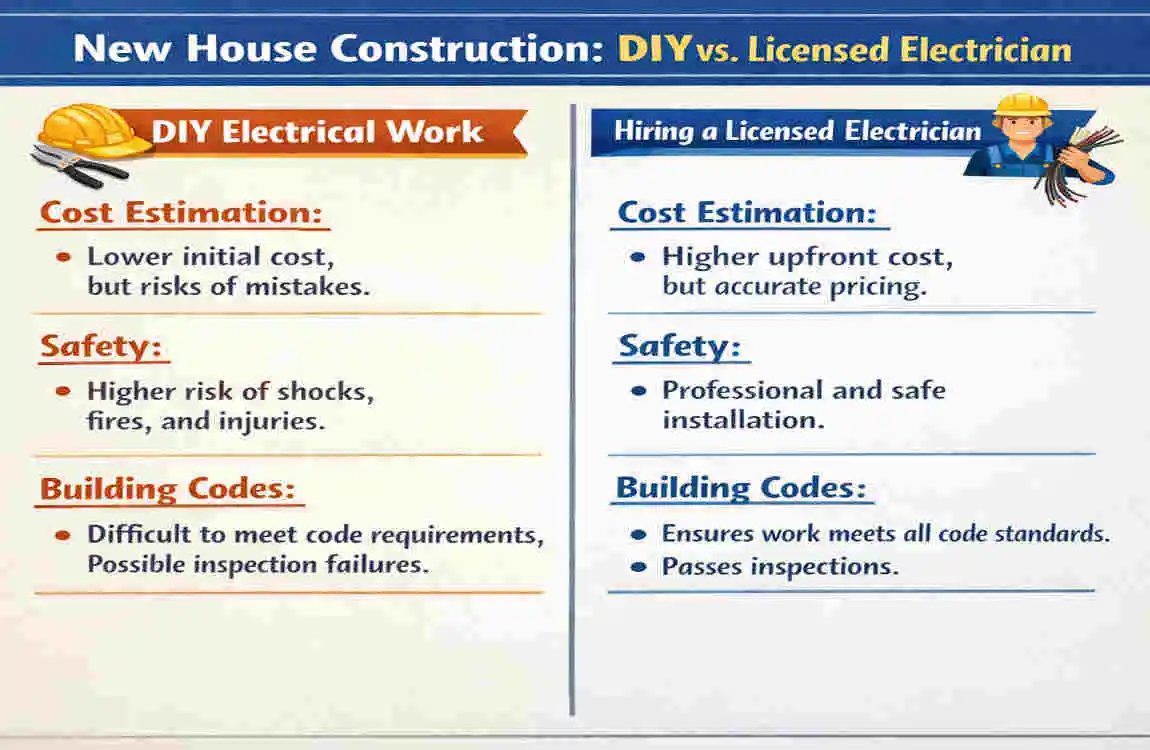
DIY electrical work can be dangerous if done wrong. It can cause shock, fire, or code violations. Bathrooms are especially risky because water and electricity are close together.
If you do not follow the rules, you may also fail inspection. That can cost more later than hiring a professional from the start.
Benefits of Hiring Professionals
Licensed electricians bring experience, speed, and code knowledge. They know how to handle permits, inspections, and the correct placement of fixtures. They can also help you avoid expensive mistakes.
Professional work often comes with better peace of mind. For most new construction projects, that is worth the extra cost.
Frequently Asked Questions
What is the average cost of new construction electrical bathrooms per square foot?
A common estimate is $12 to $30 per square foot, depending on the bathroom size, local labor rates, and the fixtures you choose. Luxury bathrooms with heated floors or smart features can cost more.
How much does it cost to wire a bathroom in a new house?
A basic bathroom may cost a few hundred dollars more than a simple room, while a larger or upgraded bathroom may cost much more. The final price depends on outlets, lighting, fan wiring, and any special features.
Do bathrooms require dedicated electrical circuits?
Some bathroom features do require dedicated circuits, especially when you add items like heated flooring, powerful fans, or specialised lighting. The exact setup depends on the electrical design and local code.
How many outlets should a new bathroom have?
That depends on the bathroom size and layout. Most bathrooms need at least one GFCI-protected outlet near the sink, and larger bathrooms often need more than one for convenience.
Is heated bathroom flooring expensive to install?
Yes, it usually costs more than standard wiring. The system requires additional materials and careful installation, but many homeowners appreciate the comfort and luxury it adds.
Can smart bathroom systems increase electrical costs?
Yes, smart mirrors, motion sensors, and automated lighting can raise the total cost. They also make the bathroom more modern and easier to use.
How long does bathroom electrical installation take?
A simple bathroom may take less time, while a larger or more complex one can take several stages. Rough-in, fixture installation, and inspection all affect the total timeline.
What permits are required for bathroom electrical work?
Most new-construction bathroom electrical work requires a permit and inspection. The exact requirements depend on your local building department and code rules.