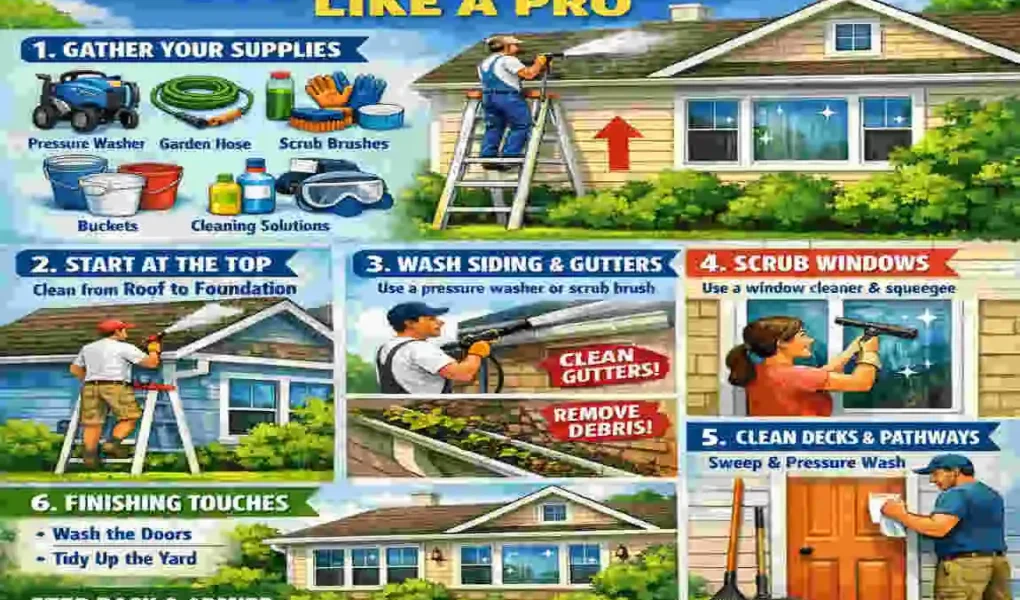
Keeping your home’s exterior clean is one of the easiest ways to make it look fresh, cared for, and valuable. Over time, dust, dirt, mould, mildew, pollen, and pollution accumulate on siding, brick, windows, gutters, and walkways. This can make a house look older than it really is.
| What to Do | |
|---|---|
| 1 | Remove loose dirt, leaves, and debris from walls, porch, driveway, and gutters. |
| 2 | Rinse surfaces with a garden hose or low-pressure washer. |
| 3 | Apply the right cleaner for each surface, such as mild soap for siding. |
| 4 | Scrub gently with a soft brush or sponge to lift grime. |
| 5 | Rinse thoroughly and let everything dry. |
The good news is that knowing how to clean the outside of your house does not have to be complicated. With the right tools, a little planning, and the correct cleaning method for each surface, you can handle most of the work yourself.
Why Cleaning the Outside of Your House Is Important

Improves Curb Appeal
A clean home simply looks better. Fresh siding, clear windows, and stain-free walkways make your house look newer and well maintained. If you are planning to sell, exterior cleaning can create a strong first impression right away.
Prevents Long-Term Damage
Dirt, algae, mold, and mildew do more than sit on the surface. They can slowly damage paint, siding, wood, and even mortar. If you ignore them for too long, small cleaning jobs can turn into bigger repair costs later.
Protects Property Value
Regular exterior care helps your home hold its value. Buyers notice when a house has been maintained properly. Clean surfaces suggest that the rest of the property has also been looked after.
Promotes a Healthier Environment
Mould spores, pollen, and dust can collect outside and enter your home. Cleaning the exterior helps reduce these unwanted particles and creates a cleaner environment around your house.
Essential Tools and Supplies You’ll Need
Before you begin, gather your supplies. Having everything ready saves time and makes the job easier.
Basic Cleaning Tools
You will need a garden hose, a bucket, a soft-bristle brush, a sponge, microfiber cloths, and, if needed, an extension pole for hard-to-reach spots. These tools work well for light dirt and general washing.
Power Washing Equipment
For tougher grime, a pressure washer may help. You may also need different spray nozzles and a surface-cleaning attachment for driveways or large, flat areas.
Cleaning Solutions
Some of the most common cleaners include dish soap, vinegar solution, oxygen bleach, and commercial exterior cleaners. The best cleaner depends on the surface you are washing.
Safety Equipment
Do not skip safety gear. Use gloves, safety goggles, non-slip shoes, and a ladder stabiliser if you need to work at a higher level. Safety matters just as much as cleaning.
Safety Tips Before You Start Cleaning
Check Weather Conditions
Pick a calm, dry day. Wind can blow cleaning solution where it shouldn’t, and rain can wash it away before it has time to work.
Protect Plants and Landscaping
Cover flowers, shrubs, and garden beds before you start. Some cleaners can harm plants if they come into contact with leaves or soil.
Turn Off Electrical Sources
Make sure outdoor outlets, lights, and nearby electrical items are safe from water. This simple step can help prevent accidents.
Test Cleaning Products First
Try any new cleaner on a small hidden area first. This helps you avoid surface discolouration or damage.
How to Clean the Outside of Your House Step by Step
Inspect the Exterior
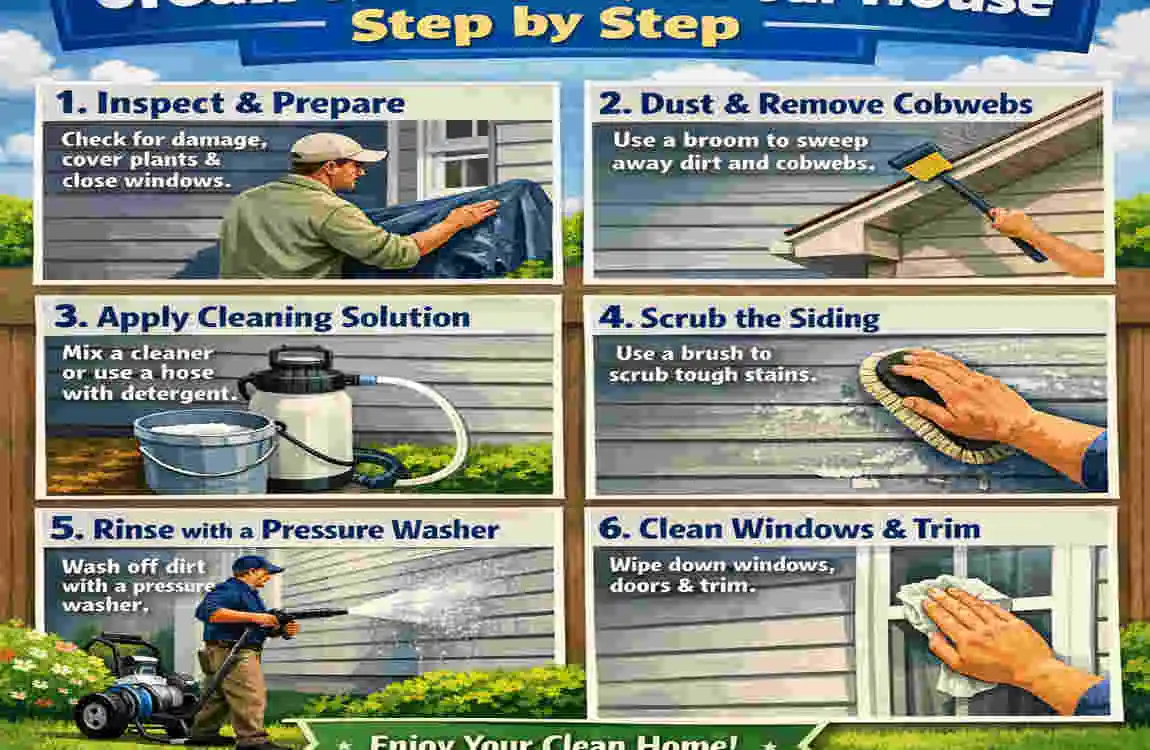
Walk around your house and look closely. Check for cracks, loose siding, peeling paint, mold, mildew, and damaged caulking. It is better to spot problems before washing begins.
Remove Loose Dirt and Debris
Start by sweeping away cobwebs, leaves, dirt, and loose dust. A garden hose can help rinse off the first layer of grime. This makes the deeper cleaning much easier.
Apply Cleaning Solution
Apply the cleaner from bottom to top if the product instructions suggest it. This helps prevent streaking. Let it sit for a few minutes so it can break down the dirt.
Scrub Stubborn Areas
Use a soft brush to scrub away mould, mildew, or stuck-on dirt. Be gentle. You want to clean the surface, not damage it.
Rinse Thoroughly
Rinse from top to bottom with low pressure. This removes all soap and loosened dirt. Be careful around windows, vents, and seams.
Let the Exterior Dry
Let the surface dry fully before checking for missed spots. If needed, go back and clean any remaining dirty areas.
Best Methods for Different Exterior Surfaces
Different materials need different care. Using the wrong method can cause damage, so it’s best to match the cleaning method to the surface.
Exterior Surface Best Cleaning Method What to Avoid
Vinyl siding Mild soap or soft wash High pressure
Brick Gentle detergent and low-pressure rinse Harsh scrubbing
Stucco Soft washing only Strong pressure
Wood siding Wood-safe cleaner and soft brush Excess water
Painted surfaces Mild cleaner and soft cloth or sponge Aggressive washing
Vinyl Siding
Vinyl siding is common and easy to clean, but it can crack or warp if pressure is too strong. Use a gentle cleaner and a soft brush. If you use a pressure washer, keep the pressure low.
Brick Exterior
Brick is durable, but the mortar between bricks can be damaged by harsh cleaning. Use mild detergent and a soft wash method. Focus on removing dirt without forcing water into the joints.
Stucco Walls
Stucco needs a delicate touch. Too much scrubbing can cause surface wear. Use a light cleaner and rinse gently. Let the cleaner do most of the work.
Wood Siding
Wood siding needs special care because excessive moisture can cause swelling or rot. Use a wood-safe cleaner and a soft brush. Avoid soaking the wood for too long.
Painted Surfaces
Painted exteriors can peel if you use strong chemicals or high pressure. Stick to mild soap, soft sponges, and gentle rinsing. If paint is already loose, be extra careful.
How to Pressure Wash Your House Properly
When Pressure Washing Is Recommended
Pressure washing is useful when the house has heavy dirt, mildew, or years of buildup. It works best on hard surfaces and on homes that can handle stronger cleaning.
Correct PSI Levels for Different Materials
For vinyl, use lower pressure. For brick, use moderate pressure. For wood, use the lowest safe setting and keep a safe distance to avoid damage. The goal is to clean, not strip the surface.
Common Pressure Washing Mistakes
One common mistake is standing too close. Another is using too much pressure. Both can damage siding, paint, and window seals.
Soft Washing vs Pressure Washing
Soft washing uses low pressure and cleaning solution to break down dirt and organic growth. Pressure washing uses stronger water force. Soft washing is usually safer for roofs, siding, and painted areas, while pressure washing is better for driveways and concrete.
Cleaning Other Exterior Areas Around Your House
Cleaning Gutters
Clear out leaves, twigs, and trapped debris. Then flush the gutters with water to make sure they drain well. Clean gutters help prevent overflow and water damage.
Washing Windows
Use a streak-free window cleaner or mild soap and water. Dry with a microfiber cloth for the best finish. Clean windows can make the whole house look brighter.
Cleaning the Roof
Roofs should be cleaned carefully. If you see algae or dark streaks, use a roof-safe cleaner and avoid stepping on the surface too hard. Roof damage is expensive, so take your time.
Driveways and Walkways
Concrete driveways and walkways often collect oil, dirt, and tire marks. A degreaser can help with stains, while pressure washing works well on tough buildup.
Decks and Patios
Sweep away debris first, then clean the surface with a deck-safe cleaner. Regular washing helps prevent mold and keeps outdoor spaces ready to use.
Common Mistakes to Avoid When Cleaning Your House Exterior
Using Harsh Chemicals
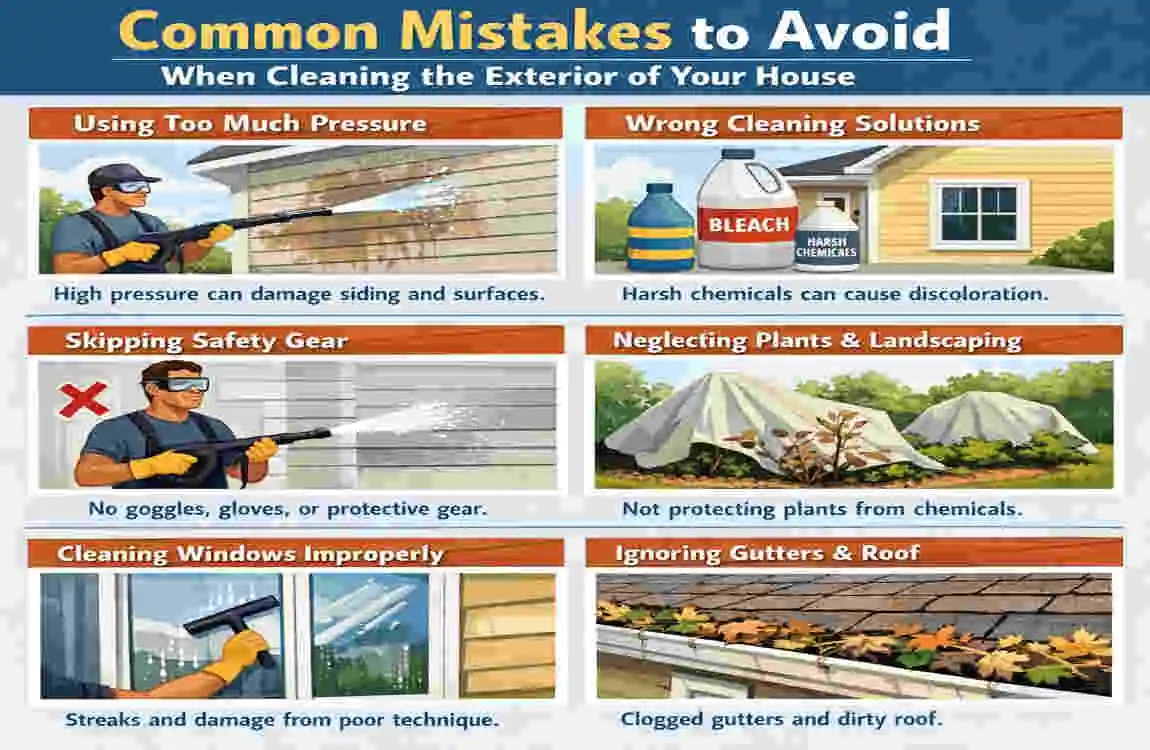
Strong cleaners can damage siding, paint, plants, and even your skin. Always choose the mildest product that will do the job.
Ignoring Safety Precautions
Do not rush onto ladders or work near electrical areas without checking first. A few extra minutes of care can prevent serious accidents.
Overusing Pressure Washers
Too much pressure can strip paint, crack siding, or force water behind walls. This is one of the biggest mistakes homeowners make.
Skipping Regular Maintenance
If you wait too long, dirt and stains become harder to remove. Regular light cleaning is easier than a single big cleanup later.
Eco-Friendly Ways to Clean the Outside of Your House
Natural Cleaning Solutions
A mix of vinegar and water can work for light dirt. Baking soda can help with mild scrubbing. These options are simple and often safer for everyday use.
Water Conservation Tips
Use a spray nozzle that controls water flow. This helps you use less water while still cleaning well.
Biodegradable Cleaning Products
Choose biodegradable cleaners when possible. They are often better for pets, plants, and the surrounding soil.
How Often Should You Clean the Outside of Your House?
A good rule is to clean the exterior of your house once or twice a year, often in spring and fall. Humid areas may require more frequent cleaning because mould and mildew grow more quickly there. Dry climates may require less frequent washing, but dust can still accumulate.
If you see green stains, black streaks, or visible dirt buildup, it is probably time to clean.
FAQ
What is the best thing to clean the outside of a house with?
For most homes, a mild soap-and-water mix works well. For tougher stains, use a surface-safe exterior cleaner based on your siding type.
Can I clean the outside of my house without a pressure washer?
Yes. Many homes can be cleaned with a hose, a soft brush, a bucket, and a gentle cleaner. Pressure washing is helpful, but not always necessary.
How often should I wash the exterior of my house?
Most homes do well with cleaning once or twice a year. Homes in humid, dusty, or tree-heavy areas may need it more often.
Is bleach safe for cleaning house siding?
Bleach can be effective in some cases, but it must be used carefully. It can damage plants, discolor surfaces, and irritate skin. Always test first and use it only when appropriate.
What is the difference between power washing and soft washing?
Power washing uses stronger water pressure. Soft washing uses low pressure and cleaning solution. Soft washing is safer for many home exterior surfaces.
How do professionals clean house exteriors?
Professionals usually inspect the home first, choose the right cleaner, and then use either soft washing or pressure washing, depending on the surface. They also take safety measures and protect the surrounding areas.