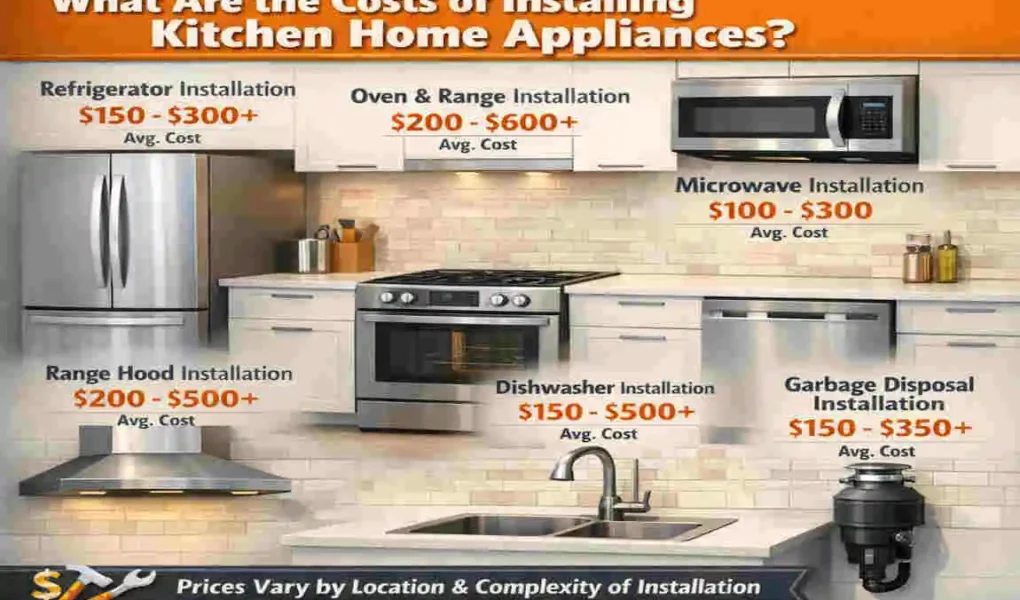
When you upgrade a kitchen, the price of appliances is only part of the story. The installation cost can add a big extra expense, especially if your home needs new plumbing, electrical work, or gas line hookups. That is why it is smart to ask how much it costs to install kitchen appliances before you buy anything.
| Appliance Type | Average Installation Cost (USD) | Notes |
|---|---|---|
| Refrigerator | $100–$500 | Higher cost if water line installation is needed. |
| Dishwasher | $150–$600 | Includes plumbing and electrical connections. |
| Electric Range | $100–$300 | Usually straightforward if wiring already exists. |
| Gas Range | $250–$800 | Requires gas line hookup and safety testing. |
| Wall Oven | $250–$1,000 | Costs vary based on size and cabinet modifications. |
| Cooktop | $200–$900 | Gas and induction models often cost more to install. |
| Built-In Microwave | $150–$500 | Includes mounting and electrical setup. |
| Range Hood | $250–$1,500 | Ducted systems are generally more expensive. |
| Garbage Disposal | $100–$450 | Depends on plumbing and electrical accessibility. |
| Complete Kitchen Appliance Package | $1,500–$6,000+ | Cost varies by appliance count and installation complexity. |
In many homes, appliance installation is simple. In others, it can become a full project with labour costs, permit fees, and utility upgrades. A refrigerator may only need delivery and setup, while a gas range or wall oven may need a licensed professional.
Understanding Kitchen Appliance Installation Costs
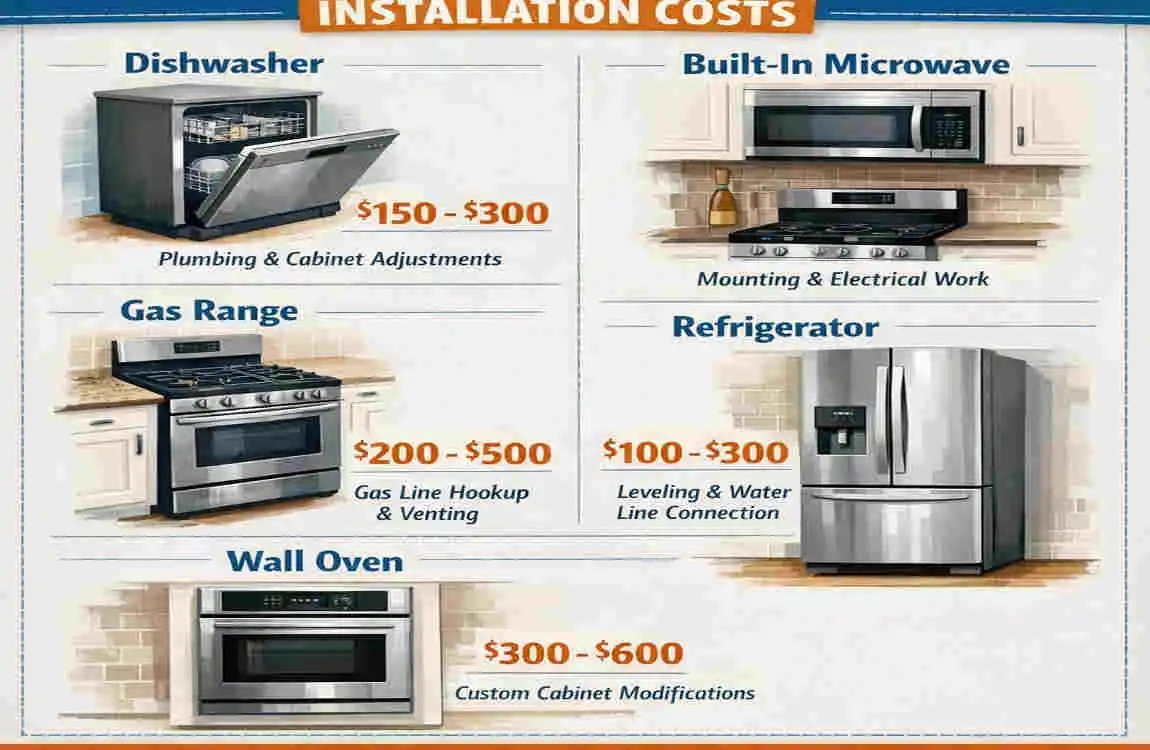
What Is Included in Appliance Installation?
Appliance installation usually includes more than just placing the item in your kitchen. In most cases, the service may cover:
- Delivery and setup
- Electrical connections
- Water line installation
- Gas line hookups
- Testing and calibration
- Basic cleanup after installation
For some appliances, the installer may only connect the unit. For others, the job may include moving the old appliance, checking the utility lines, and making sure everything works safely.
Why Installation Costs Vary
The cost of appliance installation labour varies from home to home. A simple replacement in a newer home often costs less. A difficult install in an older home may cost more.
Main pricing factors include:
- Appliance type
- Home location
- Existing utility connections
- Permit requirements
- Complexity of the job
For example, a dishwasher in a kitchen with ready plumbing is easier to install than a gas stove that needs a new gas line.
Average Cost to Install Kitchen Home Appliances
Average Appliance Installation Costs
Appliance Type Average Installation Cost
Refrigerator $100–$500
Dishwasher $150–$600
Built-In Microwave $150–$500
Electric Range $100–$300
Gas Range $250–$800
Wall Oven $250–$1,000
Cooktop $200–$900
Range Hood $250–$1,500
Garbage Disposal $100–$450
These are common kitchen appliance installation costs, but your final price may be higher if the kitchen needs extra work.
Complete Kitchen Appliance Package Installation Cost
If you are installing several appliances at once, the total can rise quickly.
A budget kitchen setup may cost $500 to $1,500 for a basic installation.
A mid-range kitchen setup may fall between $1,500 and $3,500.
A luxury kitchen installation package can reach $4,000 or more, especially if the project includes custom fitting, gas work, and electrical upgrades.
Refrigerator Installation Costs
Standard Refrigerator Installation
A standard refrigerator is often the easiest appliance to install. In many homes, the work is just plug-and-play.
Typical costs may include:
- Delivery fee
- Placement in the kitchen
- Leveling the appliance
- Basic setup checks
If the refrigerator does not require a water line, the cost is usually on the lower side.
Refrigerator Water Line Installation
If your fridge has an ice maker or water dispenser, a water line is often needed. This adds to the cost of installing the refrigerator.
Extra plumbing costs may include:
- New water line connection
- Valve installation
- Leak testing
- Minor cabinet or wall access work
If the kitchen is not already ready for this, the price can rise quickly.
Built-In Refrigerator Installation Costs
Built-in refrigerators are more complex. They often need cabinet changes and exact fitting.
This type of install may involve:
- Cabinet modifications
- Custom panel fitting
- Extra labor for moving and positioning
- Higher-end installation service
Because of that, the cost to install built-in appliances like these is usually much higher than for standard models.
Dishwasher Installation Costs
New Dishwasher Installation
A new dishwasher needs plumbing and electrical connections. If the kitchen is not already set up for one, the cost goes up.
A fresh installation may include:
- Water supply connection
- Drain line hookup
- Electrical connection
- Leveling and testing
This is a common dishwasher installation cost for remodels and new kitchens.
Replacement Dishwasher Installation
Replacing an old dishwasher with a new one is often cheaper. The connection points are already there, so the job is easier.
This type of install is usually less expensive because:
- Plumbing is already in place
- Electrical access already exists
- No major cabinet changes are needed
Hidden Costs
Some homeowners are surprised by extra charges. These may include:
- Water line replacement
- Drain line upgrades
- Cabinet adjustments
- Floor damage repair from old leaks
These small issues can make a simple replacement much more expensive.
Oven, Range, and Cooktop Installation Costs
Electric Oven Installation Costs
An electric oven is often easier to install if the home already has the right outlet and circuit.
Costs may depend on:
- Existing electrical outlet
- Dedicated circuit requirements
- Panel capacity
- Labor for moving the old unit
If the kitchen needs new wiring, the price rises.
Gas Oven and Range Installation Costs
A gas appliance needs more care. The cost of installing a gas stove is often higher due to safety requirements.
This may include:
- Gas line installation
- Leak testing
- Safety inspections
- Permit fees in some areas
Professional work is important here because gas problems can be dangerous.
Cooktop Installation Expenses
Cooktops come in different types, and each one has different needs.
- Electric cooktops are usually simpler
- Gas cooktops need gas connections
- Induction cooktops may need special electrical setups
The cost to install a cooktop depends on whether the kitchen already has a suitable countertop.
Wall Oven Installation Costs
Wall ovens are usually more expensive to install because they often need a custom fit.
Cost factors include:
- Single or double oven size
- Cabinet customization
- Electrical work
- Labor for careful fitting
A wall oven installation cost can be among the highest for common kitchen appliances.
Microwave and Range Hood Installation Costs
Built-In Microwave Installation
Built-in microwaves need more than just a shelf or counter space. They often require secure mounting and a proper power source.
This can include:
- Wall or cabinet mounting
- Electrical setup
- Trim kit installation
A built-in model usually costs more to install than a basic countertop unit.
Over-the-Range Microwave Costs
Over-the-range microwaves often double as ventilation units. That makes the install more detailed.
The installer may need to:
- Mount the unit safely
- Connect the vent system
- Check clearance above the stove
Range Hood Installation Costs
Range hoods can vary a lot in price. The range hood installation price depends on the venting style.
- Ducted systems cost more because they move air outside
- Ductless systems are usually simpler
- Vent relocation adds extra labor
Some kitchens also need ceiling or wall changes to support the hood.
Factors That Affect Kitchen Appliance Installation Pricing
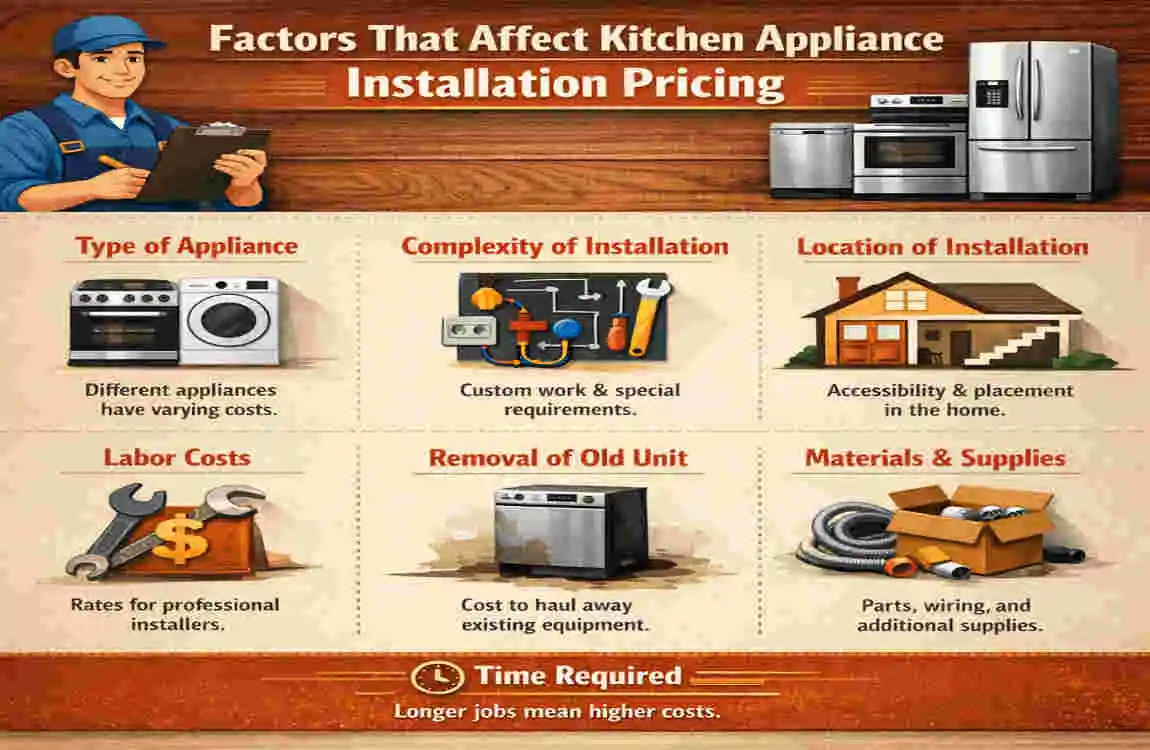
Appliance Size and Weight
Large, heavy appliances require more labour to move and install. That can increase the final bill.
Existing Kitchen Infrastructure
Older kitchens often need updates before new appliances can go in. This is common in older homes with outdated lines or weak wiring.
Electrical System Upgrades
Some appliances need:
- New circuits
- Panel upgrades
- Safer outlets
Electrical work can significantly increase kitchen renovation costs.
Plumbing Modifications
Dishwashers, refrigerators with water dispensers, and some disposals need proper water and drain lines.
Gas Line Installation
Gas appliances must be installed with care. In many areas, permits and inspections are required.
Local Labor Rates
Your location matters too. Labor in big cities often costs more than in smaller towns.
DIY vs Professional Appliance Installation
Appliances Suitable for DIY Installation
Some appliances are easier to handle on your own, such as:
- Freestanding refrigerators
- Countertop microwaves
These usually have lower risk and simpler setup.
Appliances Requiring Professional Installation
Some jobs should be left to a pro:
- Gas ranges
- Built-in ovens
- Dishwashers
- Range hoods
These appliances often need plumbing, electrical, or gas work.
Risks of DIY Installation
Doing it yourself can save money, but it can also create problems.
Main risks include:
- Safety concerns
- Warranty issues
- Code violations
- Water leaks or gas leaks
In many cases, professional appliance installation services are worth the cost.
Additional Costs Homeowners Should Expect
Permit Fees
Some appliance jobs need permits, especially if gas or electrical work is involved.
Appliance Removal and Disposal
Old appliance removal may come with haul-away fees.
Cabinet Modifications
New appliances do not always fit old spaces. Custom cabinet changes can add to the bill.
Utility Upgrades
You may need:
- New electrical circuits
- Water lines
- Gas connections
Delivery Charges
Delivery pricing may be standard or premium, depending on the service level.
How to Save Money on Kitchen Appliance Installation
Bundle Multiple Appliance Installations
If you install several items at once, you may get a package discount.
Buy During Seasonal Sales
Holiday promotions and kitchen remodel seasons often bring better prices.
Use Retailer Installation Services
Retailers sometimes offer convenient installation packages. These can be simple, though not always the cheapest.
Prepare Utility Connections in Advance
If the space is ready in advance, labour hours may be lower.
Get Multiple Contractor Quotes
Always compare estimates. It helps you understand the real appliance hookup cost in your area.
Signs You Should Replace Rather Than Repair Old Appliances
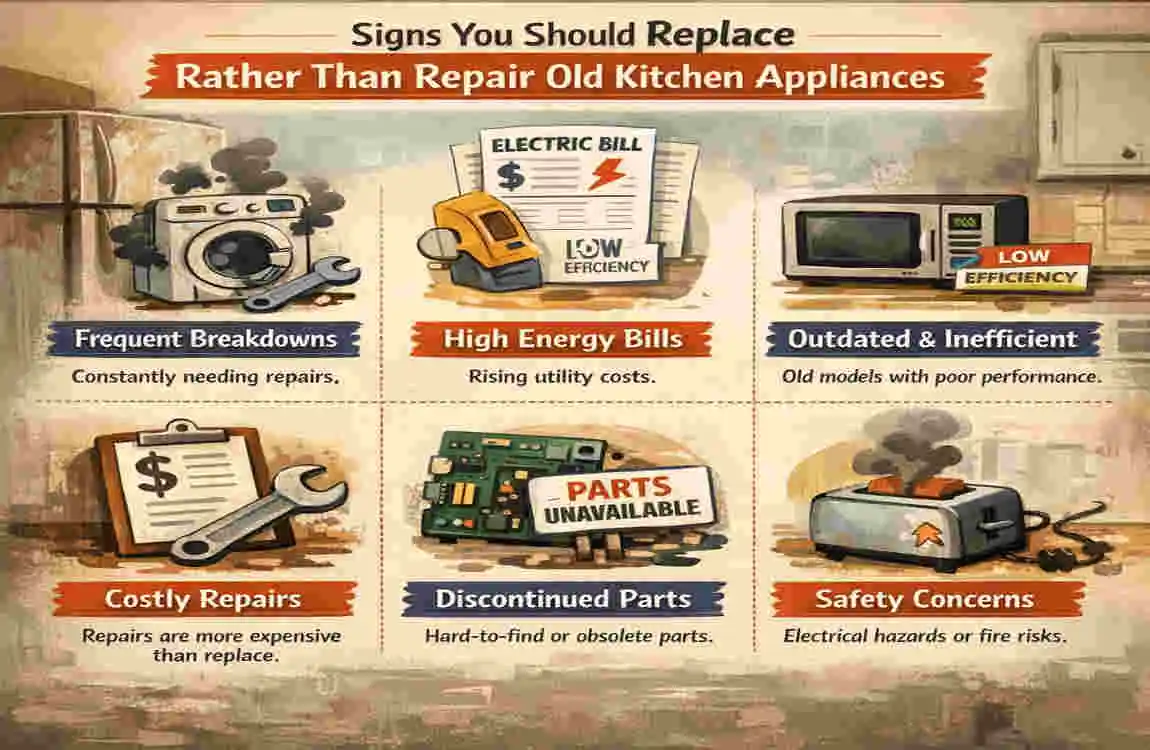
Frequent Repairs
If repairs keep piling up, replacement may make more sense.
Rising Energy Bills
Older appliances often use more power and water.
Poor Performance
If the appliance no longer works well, a new one may save time and stress.
Outdated Safety Features
Older models may not meet current safety standards.
Remodeling Compatibility Issues
If your remodel needs a different size or style, replacement may be the better choice.
Frequently Asked Questions About Kitchen Appliance Installation Costs
How much does it cost to install kitchen home appliances?
It depends on the appliance and the amount of work needed. Simple installs may cost $100 to $300, while complex jobs can cost much more.
Can I install kitchen appliances myself?
Yes, some appliances are DIY-friendly. But gas appliances, dishwashers, and built-in units are usually better handled by a professional.
Does appliance installation include delivery?
Not always. Some companies charge separately for delivery and installation, so check before you buy.
How much does a plumber charge to install a dishwasher?
A plumber may charge anywhere from $150 to $600, depending on the job and whether new lines are needed.
How much does it cost to install a gas stove?
A gas stove installation cost often ranges from $250 to $800, especially if a gas line or inspection is needed.
Are permits required for appliance installation?
Sometimes yes. Permits are often needed for gas, electrical, or major plumbing work.
What is the most expensive kitchen appliance to install?
Usually a wall oven, range hood, or built-in refrigerator costs the most because of custom fitting and utility work.