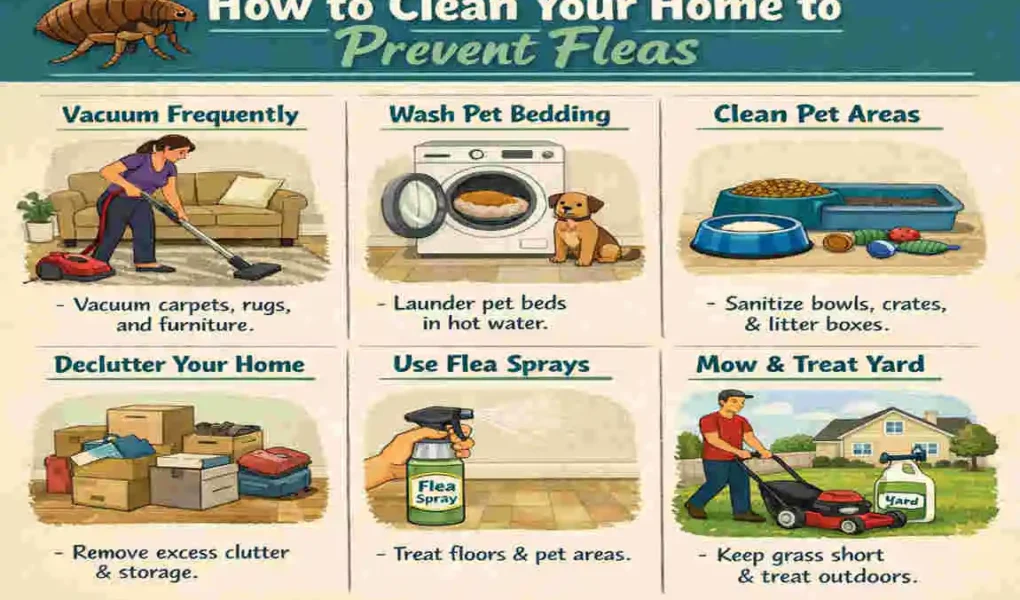
Fleas are one of the most persistent household pests, and their ability to spread quickly can make them a significant nuisance. These tiny, blood-sucking parasites can cause discomfort for both humans and pets. If left unchecked, a flea infestation can spiral out of control, making life miserable for everyone in the home.
Fleas are not just a problem for pet owners—they can affect any household. These parasites can hitch a ride on your clothes, pets, or even through open windows, quickly turning your home into their breeding ground.
Fleas not only irritate pets and humans with their itchy bites, but they can also carry diseases and cause allergic reactions. A flea infestation can escalate rapidly, especially if left untreated.
One of the most effective ways to combat fleas is through consistent and thorough cleaning. By understanding how quickly fleas spread in clean environments, you can take proactive steps to stop them in their tracks. This article will walk you through the process of identifying fleas, combating them, and maintaining a flea-free home.
Understanding Fleas and Their Behaviour
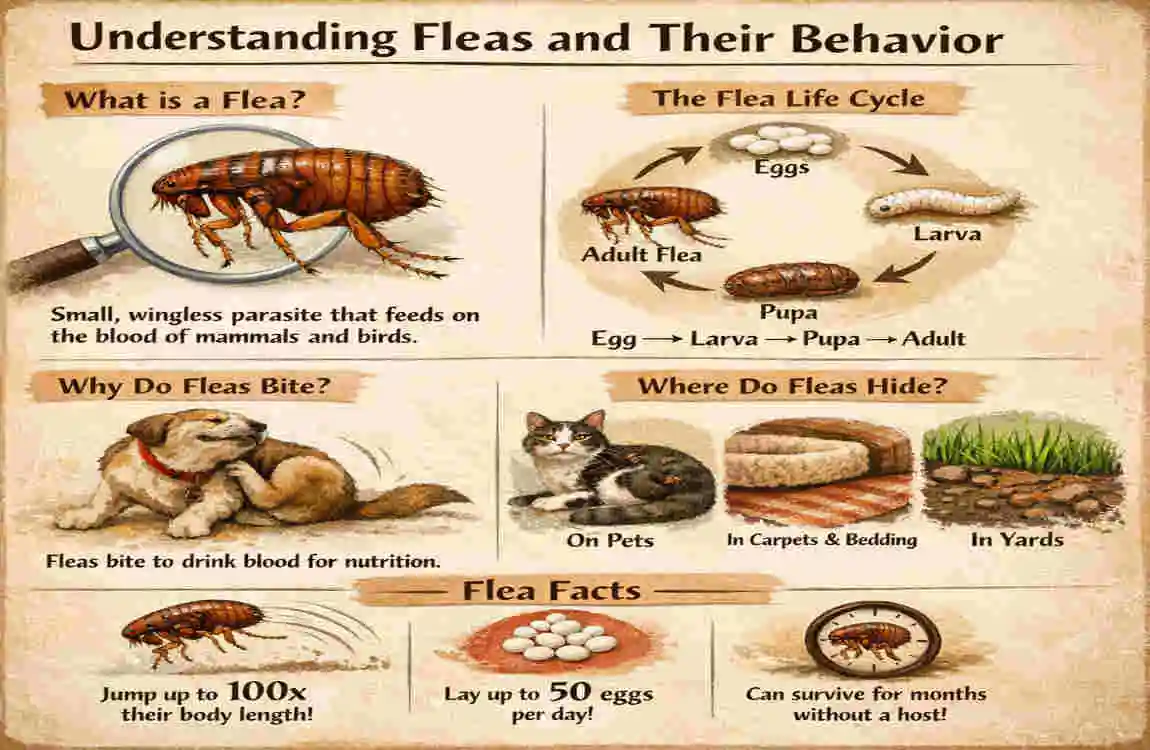
To effectively fight fleas, it’s important to first understand their biology and behaviour.
What Are Fleas?
Fleas are small, wingless parasites that feed on the blood of mammals and birds. They are notorious for their ability to jump great distances, which helps them spread rapidly.
Flea Life Cycle
- Eggs: Adult fleas lay eggs on their host, which can fall off onto carpets, bedding, or cracks in the floor.
- Larvae: These hatch from the eggs and thrive in dark, humid environments.
- Pupae: Fleas cocoon themselves in this stage, making them tough to eliminate.
- Adults: Once they emerge, adult fleas feed on blood and reproduce, starting the cycle all over again.
How Fast Do Fleas Spread in the House?
Fleas spread shockingly fast. A single female flea can lay up to 50 eggs per day, leading to hundreds of offspring in just a few weeks. Factors such as warmth, humidity, and access to hosts (like pets) accelerate their reproduction.
Even in clean homes, fleas can still thrive. This is why understanding how quickly fleas spread in clean environments is crucial.
Signs of a Flea Infestation in Your Home
Some common signs of fleas include:
- Pets scratching excessively: Fleas often hide in pet fur, causing itching and discomfort.
- Flea dirt: Tiny black specks (flea faeces) found on pet bedding or skin.
- Bites on humans: Small, itchy red bumps, often around the ankles.
- If you notice any of these signs, act quickly before the infestation worsens.
Why Cleaning Is Key to Flea Prevention
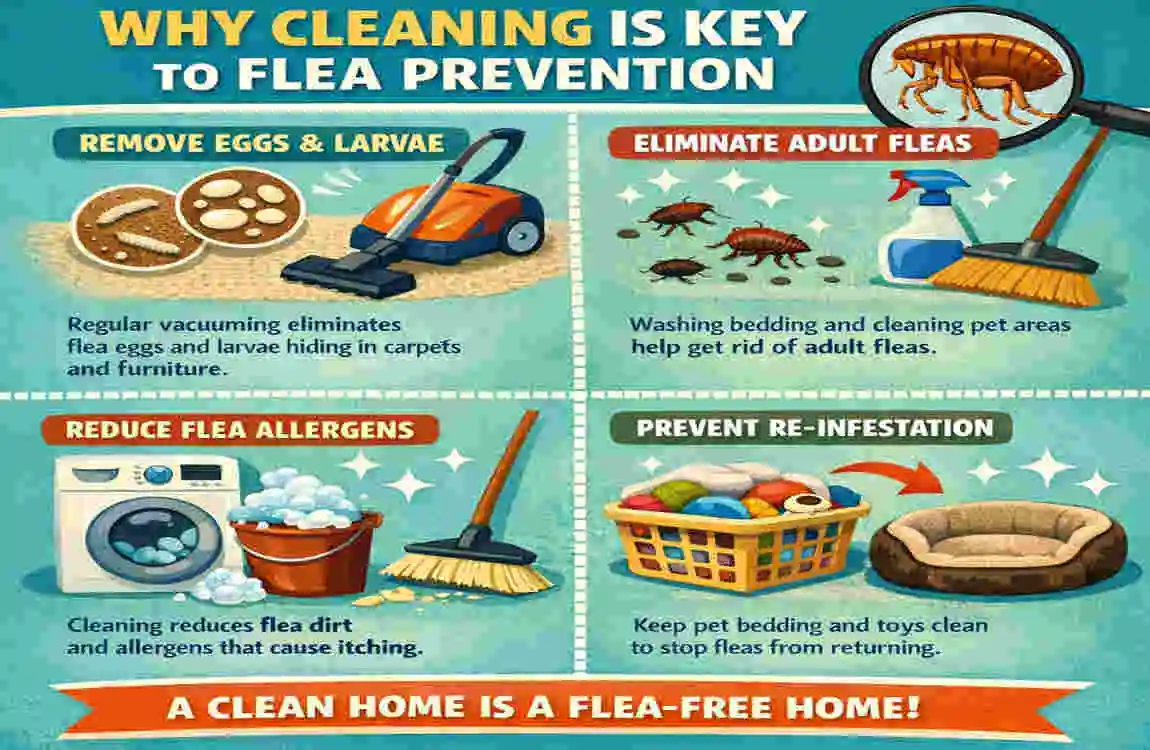
Good hygiene and consistent cleaning are pivotal in keeping fleas at bay.
The Role of Cleaning in Flea Control
Cleaning disrupts the flea life cycle by:
- Removing eggs and larvae from surfaces like floors, furniture, and pet bedding.
- Reducing humidity levels, which fleas need to survive.
- Eliminating hiding spots where fleas can reproduce undetected.
Target high-risk areas such as carpets, pet bedding, and upholstered furniture to maximise your efforts.
Misconceptions About Fleas and Clean Homes
A common myth is that “clean homes can’t have fleas.” In reality, fleas can infest even the tidiest spaces if they find a host. Fleas are resilient and can hide in cracks, corners, and upholstery.
How Cleanliness Slows Flea Spread
Maintaining cleanliness minimises the conditions fleas need to thrive. By adopting regular cleaning routines and focusing on hotspots, you’ll dramatically slow the spread of fleas. When you understand how quickly fleas spread in clean environments, you’ll see why consistent cleaning is non-negotiable.
Step-by-Step Cleaning Guide to Prevent Fleas
Follow this detailed guide to eliminate fleas and prevent future infestations in your home.
Pre-Cleaning Preparation
Before you start cleaning:
- Identify problem areas like pet bedding, carpets, and cracks in floors.
- Gather supplies such as:
- Vacuum cleaner
- Mop and bucket
- Flea sprays
- Detergent and hot water
Cleaning Your Floors
Hard Floors
- Sweep thoroughly to remove debris.
- Mop using a flea-specific cleaning solution to kill eggs and larvae.
Carpets and Rugs
- Vacuum carpets thoroughly, focusing on edges and corners.
- Use a steam cleaner to kill fleas at all life stages.
Cleaning Furniture and Upholstery
- Vacuum sofas, chairs, and cushions to remove fleas and eggs.
- Wash removable covers in hot water.
- Treat non-washable furniture with a flea spray or powder.
Washing Pet Bedding and Linens
- Wash pet bedding weekly in hot water and dry at high heat.
- Replace old or heavily infested bedding.
- Wash human linens, especially if pets sleep on your bed.
Decluttering Your Home
- Remove clutter to eliminate hiding spots for fleas.
- Organise storage spaces and vacuum thoroughly.
Outdoor Cleaning Tips
- Mow the lawn regularly to reduce flea habitats.
- Remove debris, such as leaves and grass clippings.
- Treat outdoor areas with flea control products if necessary.
Long-Term Strategies to Keep Your Home Flea-Free
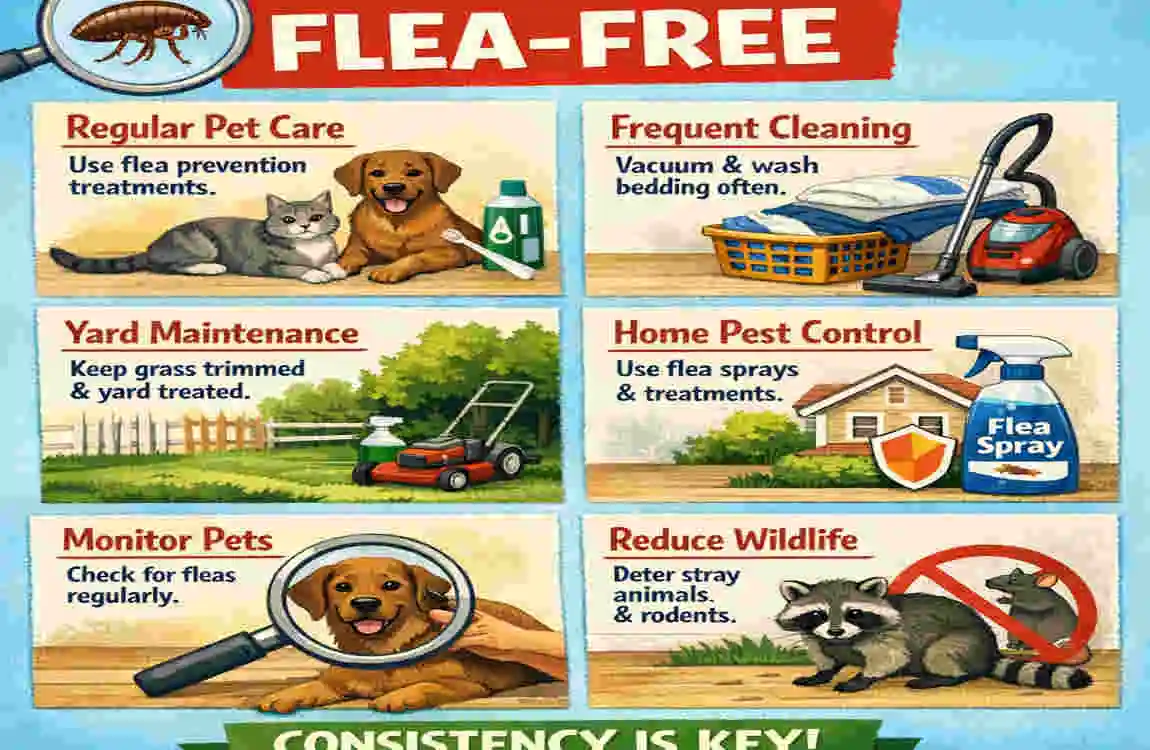
Once you’ve eliminated fleas, follow these strategies to prevent them from returning.
Regular Cleaning Routine
- Vacuum floors and furniture weekly.
- Wash pet bedding and linens frequently.
- Maintain a consistent cleaning schedule year-round.
Flea Prevention for Pets
- Use flea prevention treatments like collars, topical solutions, or oral medications.
- Groom pets regularly and check for fleas, especially during flea season.
Professional Pest Control
- If the infestation persists, call a pest control expert.
- Professional treatments can effectively eliminate fleas in severe cases.
Frequently Asked Questions (FAQs)
How fast do fleas spread in a clean house, and can cleaning stop them?
Fleas can spread rapidly, laying hundreds of eggs in just a few weeks. While cleaning won’t stop fleas entirely, it significantly slows their reproduction by removing eggs and larvae.
Can fleas survive in a clean house?
Yes, but regular cleaning disrupts their life cycle, making it harder for them to thrive.
What’s the best way to kill fleas on carpets?
Vacuuming, steam cleaning, and applying flea sprays are effective methods.
How often should I clean to prevent fleas?
Weekly cleaning is recommended, with extra care during flea season or when pets are active outdoors.
| Stage | Timeframe | Spread/Impact in a Clean House |
|---|---|---|
| Eggs laid by adult fleas | Within 1-2 days of infestation | Fleas can lay 20-50 eggs per day; eggs fall off pets onto floors & bedding. |
| Egg hatching | 2-14 days | Eggs hatch faster in warm, humid conditions; cleaning slows this process. |
| Larvae stage | 5-11 days | Larvae feed on organic debris; thorough cleaning reduces food sources. |
| Pupae stage | 1-2 weeks (can be dormant longer) | Pupae protected in environment; vacuuming and steam cleaning can disrupt. |
| Adult fleas emerge | Within 2-3 weeks | Adults seek hosts quickly; regular cleaning reduces population growth. |
| Overall spread | Rapid (can infest entire home in 2-3 weeks if untreated) | In a clean house, spread is slower, but fleas can still multiply if cleaning is inconsistent. |