
At first, a warm cinnamon scent can feel inviting. It calls to mind freshly baked treats, holiday gatherings, and a home that feels well-kept. But when you catch yourself asking why your house smells like cinnamon, that pleasant feeling can shift to genuine concern. You may not have baked anything. You may not have lit a candle or turned on a diffuser. And yet, the scent lingers, sometimes stronger than before.
Taking a moment to investigate is always worthwhile. A cinnamon smell in the house can stem from something perfectly harmless, such as residual cooking aromas, a forgotten air freshener, or a scented cleaning product tucked under a cabinet. But in other cases, a sweet or spicy odor can signal something that demands attention, like mold growth, overheating electrical wiring, a pest infestation, or an off-gassing chemical reaction. There are even instances where the scent does not originate in the home at all. It may be a phantom smell, a neurological event generated by the brain or olfactory system rather than by something in the environment.
| Cause | Explanation | Action Steps |
|---|---|---|
| Lingering Cooking Odors | Cinnamaldehyde, the volatile compound in cinnamon, vaporizes during cooking and clings to porous surfaces like fabrics, wood, and drywall for days. | Ventilate kitchen; deep-clean surfaces and wash soft furnishings. |
| Scented Products | Candles, wax melts, reed diffusers, plug-in fresheners, and scented cleaning agents gradually release cinnamon-adjacent fragrances that can saturate a room. | Identify and remove or switch off fragrance sources; switch to unscented products temporarily. |
| Mold or Mildew | Certain mold species growing on damp wood, drywall, or insulation produce microbial volatile organic compounds (MVOCs) that can smell sweet, earthy, or spice-like rather than classically musty. | Fix moisture sources; improve ventilation; test for mold professionally if smell persists. |
| HVAC Dust Burn-Off | Accumulated dust on furnace heat exchangers or inside ductwork burns off when the system first activates for the season, producing a warm, spicy odor. | Replace HVAC filters regularly; run the fan briefly to flush ducts at season start. |
| Overheating Electrical | Wire insulation, outlet housings, or appliance components that overheat can release fumes described as sweet or subtly spicy before progressing to an overt burning smell. | Feel outlets for warmth; unplug suspect devices; call a licensed electrician immediately if the smell persists. |
| Pests (Ants/Rodents) | Odorous house ants emit a coconut- or cinnamon-like alarm pheromone when crushed. Rodent nesting materials and waste in walls or attics can also produce musky, spice-adjacent odors. | Inspect baseboards, cabinets, and wall cavities; engage professional pest control. |
| Chemical Reactions / Off-Gassing | New furniture, cabinetry, flooring adhesives, paint, or mixed cleaning products can off-gas volatile organic compounds (VOCs) that smell warm, sweet, or cinnamon-like. | Ventilate newly renovated spaces; avoid mixing chemical cleaners; allow off-gassing items to air out. |
Understanding the sources of strange smells in your home matters for three fundamental reasons: comfort, hygiene, and safety. An unexplained odor can be merely annoying, but it can also be an early warning. Your home may be signaling a problem that is easier and cheaper to fix now than later.
Is a Cinnamon Smell in Your House Normal?

A cinnamon smell is not automatically a bad sign. In many modern homes, a sweet or spicy scent can appear for a perfectly mundane reason and disappear within hours. Perhaps you brewed chai tea that morning, a diffuser is running in another room, or a bottle of wood polish is giving off a warm fragrance. In such cases, the smell is temporary, traceable, and nothing to worry about.
A smell that shows up briefly and then fades is usually harmless. A smell that keeps returning, spreads across multiple rooms, or grows noticeably stronger in one particular area deserves closer investigation. That is especially true if the scent is accompanied by other signs, such as damp walls, a burning undertone, flickering lights, or a persistent musty feeling.
It is also important to recognize that smell perception is not always straightforward. Sometimes people detect odors that have no physical source in the home. The brain can occasionally misinterpret signals from the olfactory nerve, sinuses, or central nervous system. This can lead a person to smell cinnamon when nothing around them is producing the scent. That does not mean the experience is imagined. It simply means the cause may be physiological rather than environmental.
If you are trying to track down strange smells in home spaces, staying calm and systematic helps. Ask yourself:
- When did the smell first appear?
- Which room is it strongest in?
- Does it intensify when the heating or air conditioning cycles on?
- Did you recently cook, clean, decorate, or make any repairs?
Those straightforward questions often guide you toward the right answer faster than anything else.
Leftover Food or Spices
One of the most common reasons a house smells like cinnamon is deceptively simple: food.
Cinnamon is a potent spice. Its primary aromatic compound, cinnamaldehyde, is highly volatile, meaning it evaporates easily and clings to surfaces. Pans, countertops, trash bins, kitchen towels, even the microfiber of upholstered chairs can absorb the scent. If you recently baked cinnamon rolls, simmered oatmeal with spices, or prepared a dessert with warm flavors, the aroma can persist far longer than most people expect. Even a small quantity of ground cinnamon can fill a closed kitchen and drift into adjacent rooms through doorways and ventilation.
How Food Smells Spread
When you cook with cinnamon or related spices like nutmeg, clove, allspice, or cardamom, microscopic scent particles become airborne. These particles settle on hard and soft surfaces and then slowly release the odor over hours or even days. If your HVAC system is running, the blower can pull that scent from the kitchen and push it into the living room, hallway, or bedrooms through the ductwork.
Trash is another frequently overlooked source. A discarded dessert container, an empty spice packet, a used bakery box, or even cinnamon-dusted crumbs at the bottom of the bin can quietly generate a warm, sweet odor that fills the room every time the lid opens.
How Long Does It Usually Last
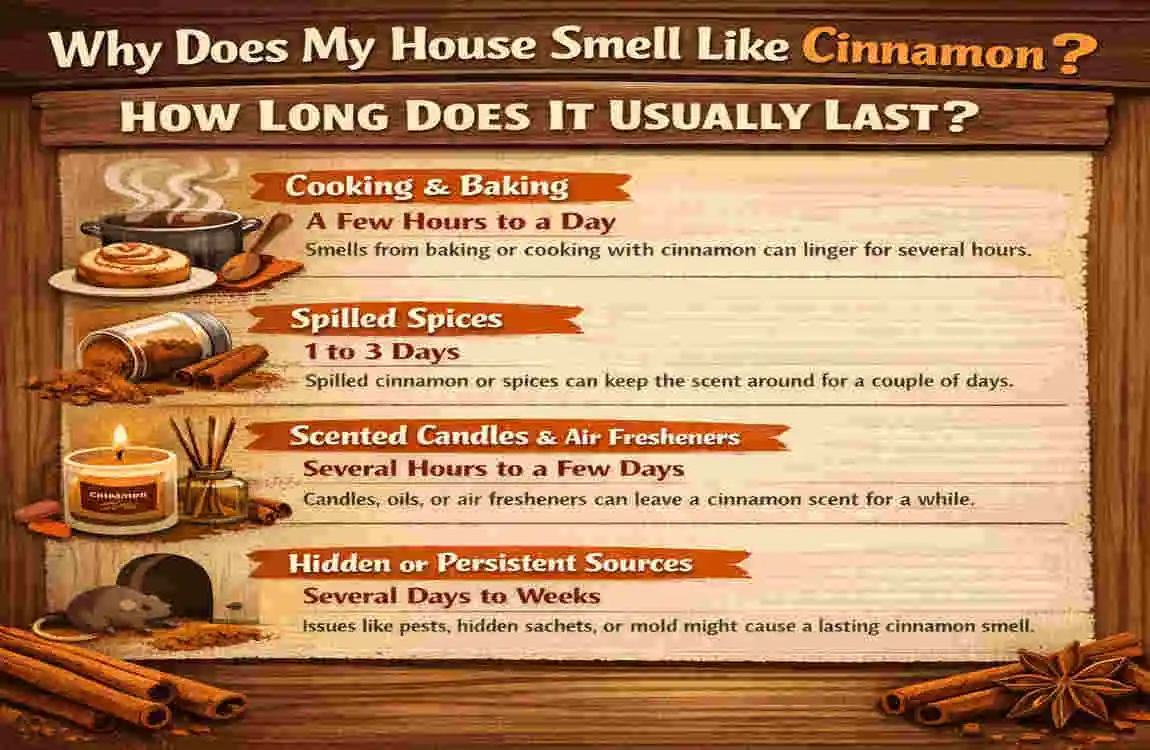
Food-related cinnamon smells can linger anywhere from a few hours to two or three days, depending on:
- How concentrated the spice was during cooking
- Whether windows were open to allow fresh air exchange
- How promptly the kitchen was cleaned afterward
- Whether the scent was absorbed into fabrics, wood, or the HVAC system
If the smell is gradually fading and you recently cooked with warm spices, food is almost certainly the explanation.
How to Fix It
Begin with a thorough kitchen clean. Wipe down counters, stovetop, appliance fronts, cabinet handles, and table surfaces with an all-purpose cleaner. Empty and wash the trash bin. Launder dish towels, sponges, and oven mitts. Check beneath small appliances like toasters, air fryers, and coffee makers, where crumbs and spice residue often accumulate unnoticed.
Improving airflow also helps significantly. Open windows for fifteen to twenty minutes, turn on a ceiling fan, or run your kitchen exhaust hood while cooking and for a short while afterward. A bowl of baking soda left on the counter overnight can absorb lingering odor molecules as well. If the smell migrated into soft furnishings, a light fabric-refresher spray or a wash cycle for removable covers should resolve it.
Scented Products or Air Fresheners
Sometimes the answer to why does my house smell like cinnamon is right under your nose. Or, more precisely, it may be plugged into the wall, warming on a shelf, or stowed in a cleaning cabinet.
Many households use scented products on a daily basis without giving them a second thought. These can include:
- Candles
- Wax warmers and wax melts
- Reed and ultrasonic diffusers
- Incense sticks and cones
- Room sprays
- Plug-in air fresheners
- Scented cleaning products
- Laundry detergents, dryer sheets, and fabric softeners
Many of these products carry labels like “warm spice,” “autumn harvest,” “holiday blend,” or “baked cinnamon.” The actual fragrance may not be pure cinnamon, but it can contain synthetic cinnamaldehyde or eugenol blends that your nose reads as a warm, cinnamon-adjacent scent.
Why It Can Be Hard to Spot
The challenge is that multiple fragrance sources often overlap. A cinnamon candle in the living room, a vanilla-scented floor cleaner in the kitchen, and a spice-infused laundry detergent on your bedding can combine. When those fragrances layer on top of one another, the entire house may carry one dominant warm, cinnamon-like odor that seems to come from everywhere and nowhere at once.
People also tend to overlook less obvious sources. A plug-in freshener tucked behind a hallway table, a scented liner in the trash can, or a dried potpourri bowl in the guest bathroom can quietly distribute fragrance throughout the home for weeks.
How to Identify the Source
Walk through each room methodically and look for anything that produces scent. Do not rely solely on sight. Lean close to:
- Electrical outlets (for plug-ins)
- Bathroom counters
- Closets and wardrobes
- Kitchen shelves and under-sink cabinets
- Laundry rooms
- Supply vents and exhaust fans
If the smell peaks near one particular item or corner, you have likely found your culprit.
How to Solve It
If the overall scent is overpowering or too many products are layering, switch to neutral or unscented alternatives for a week or two. Reduce the number of active fragrance sources in the home. Use a single mild product at a time rather than stacking multiple scents in overlapping zones.
A home does not need to smell heavily perfumed to feel clean. In fact, a lighter, more neutral environment often feels fresher and is gentler on the respiratory system, especially for children, pets, and anyone sensitive to synthetic fragrances.
Mold or Mildew
This is one of the most important causes to pay attention to.
Not all mold smells musty. Certain mold and mildew colonies can produce a sweet, earthy, or distinctly spicy odor. In some homes, that scent closely resembles cinnamon or warm baking spices. This happens because actively growing mold releases microbial volatile organic compounds (MVOCs), the specific mix of which depends on the mold species, the substrate it is consuming, and the moisture level in the area.
Why Mold Can Smell Like Cinnamon
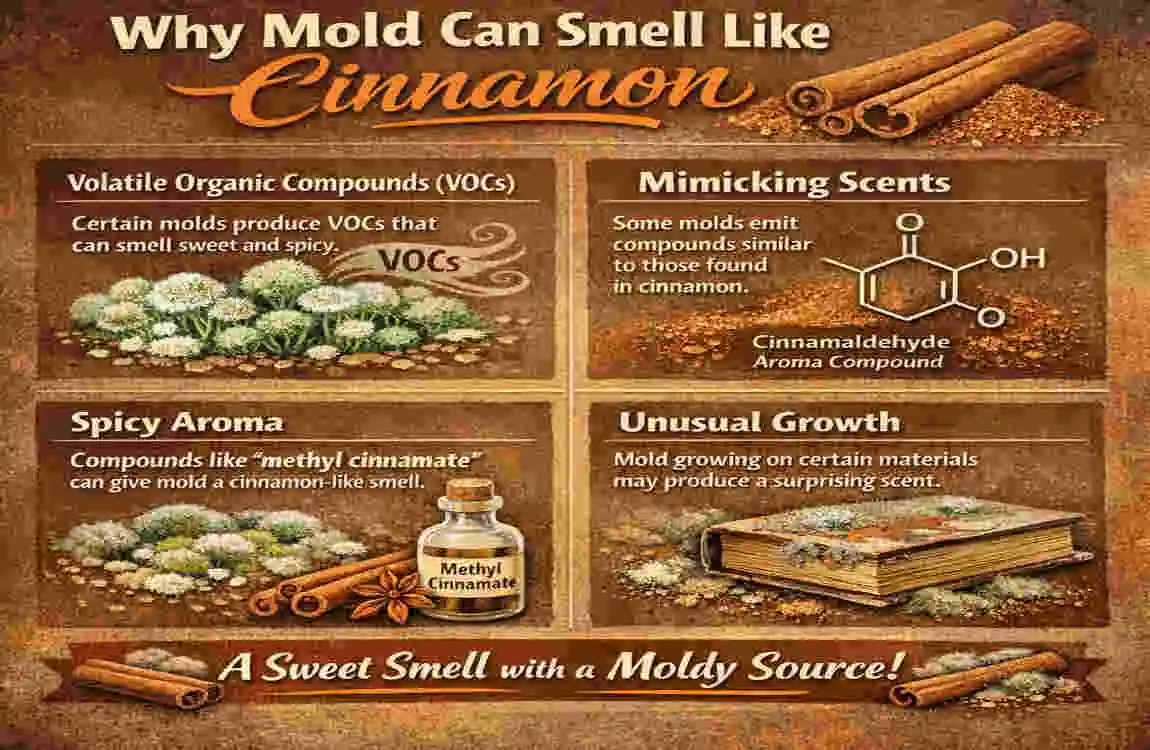
Mold generates a wide range of MVOCs as metabolic byproducts. When mold colonizes wood, paper-faced drywall, carpet backing, or fiberglass insulation, the resulting off-gases can smell soft, sweet, and surprisingly hard to categorize. That is why homeowners sometimes describe the odor as “spicy,” “warm,” or “cinnamon-like” rather than the stereotypical damp-basement mustiness. The confusion is compounded when the mold is hidden behind a wall or under flooring where you cannot see it, leaving only the smell as a clue.
Common Mold-Prone Areas
Focus your attention on locations where moisture tends to collect or become trapped:
- Bathrooms (especially around tubs, showers, and exhaust fans)
- Basements and crawl spaces
- Laundry rooms
- Under kitchen and bathroom sinks
- Around windows with condensation
- Behind large furniture pushed against exterior walls
- Inside closets on exterior walls
- Behind drywall and under flooring near plumbing runs
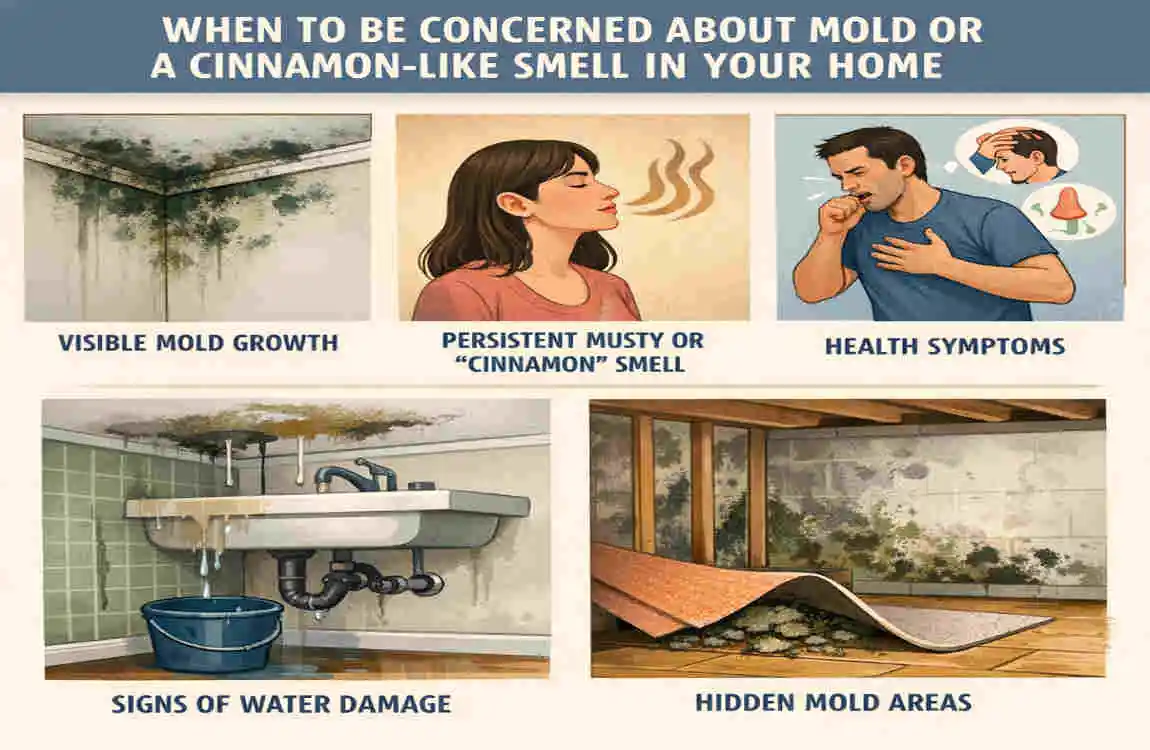
If a room smells cinnamon-like and also feels humid or clammy, the probability of a mold issue rises significantly.
Warning Signs to Look For
Mold is not always visible in its early stages. Watch for:
- Dark spots, streaks, or discoloration on walls or ceilings
- Bubbling or peeling paint
- Soft, spongy, or warped drywall
- A persistently humid or damp feeling in the room
- Water stains or tide marks
- Condensation collecting on windows or pipes
- A smell that intensifies after rain, showers, or humid weather
Why It Matters for Health
Mold exposure affects individuals differently. Some people develop allergy-like symptoms, including persistent coughing, sneezing, headaches, watery eyes, or shortness of breath. Others, particularly those with asthma or compromised immune systems, may experience more severe respiratory responses. Even in people who feel no immediate symptoms, prolonged mold exposure can degrade indoor air quality and cause progressive structural damage that worsens over time.
What to Do
Inspect hidden areas thoroughly. Use a flashlight and check under sinks, behind toilets, around tub surrounds, and in basement corners. If the smell concentrates near a particular wall, floor, or ceiling section, trapped moisture is a strong possibility.
A dehumidifier can help manage ambient humidity in damp areas, but it will not eliminate mold that has already established itself. For small, surface-level patches, a diluted bleach solution or a commercially available mold remover may suffice. However, if the affected area exceeds roughly ten square feet, keeps recurring, or appears to be inside wall cavities or ductwork, hire a certified mold remediation professional. Mold problems expand quickly once established, and delayed action typically makes the remediation significantly more expensive and disruptive.
Electrical Issues or Overheating Wires
This section is especially important because electrical problems can be serious.
A cinnamon-like smell is not the classic hallmark of an electrical fault, but warm, sweet, or subtly burnt odors can confuse the senses. Some people describe the early stages of electrical overheating as plasticky, faintly sugary, or spice-like rather than an overt burning smell. That means if you are asking why my house smells like cinnamon, you should not dismiss wiring or appliance issues too hastily.
Why Electrical Smells Can Seem Sweet
When wires, outlet housings, plug casings, or internal appliance components overheat, the materials begin to break down thermally. Depending on the type of plastic, rubber, or insulating compound involved, the initial fumes can register as sweet, sharp, or unexpectedly pleasant before progressing to a recognizable burning smell. This early-stage subtlety is what makes the hazard easy to overlook or misattribute to something benign like cinnamon.
Things to Check
Examine the following carefully:
- Outlets and wall receptacles
- Light switches and dimmer controls
- Power strips and surge protectors
- Extension cords, especially older or heavily loaded ones
- Large appliances (dryers, ovens, space heaters)
- Phone and laptop chargers
- Any heat-producing device left running for long periods
- Ceiling light fixtures and fan motors
Pay attention to whether the smell intensifies near a specific wall, outlet, or appliance.
Danger Signs You Should Never Ignore

If you observe any of the following, treat the situation as urgent:
- Flickering or dimming lights
- Buzzing, crackling, or sizzling sounds
- Outlets or switch plates that feel warm or hot to the touch
- Discolored, scorched, or melted plugs and faceplates
- Repeatedly tripped circuit breakers or blown fuses
- A smell that appears or strengthens when a specific device is turned on
Any of these indicators can point to overheating wiring, loose connections, arc faults, or damaged insulation.
Immediate Action
If you suspect an electrical source, turn off the power to the affected circuit at the breaker panel if you can do so safely. Do not continue using the suspect outlet, switch, or appliance. Unplug devices if it is safe to reach the cord, and contact a licensed electrician as soon as possible.
Do not adopt a wait-and-see approach with electrical smells. Overheating wiring can escalate from a faint odor to an actual fire in a matter of hours. When a smell seems warm, sweet, or smoky and you cannot trace it to food or a fragrance product, electrical damage should remain at the top of your investigation list.
HVAC System or Air Duct Contamination
Your heating and cooling system has the ability to carry odors throughout the entire house. If a cinnamon-like scent appears in multiple rooms simultaneously, the HVAC system may be acting as the distribution mechanism.
How the System Carries Odors
Air ducts draw return air from various parts of the clean home and redistribute conditioned air through supply vents. If dust, organic residue, moisture, or leftover fragrance from a scented product is present inside the ductwork or near the air handler, the blower will circulate that smell throughout the house with each cycle. This means the actual source may be confined to one location, but the odor presents itself everywhere the system delivers air.
Air filters can also act as odor reservoirs. A filter that has not been replaced in several months can trap scent molecules, dust, and microbial growth, then re-release those compounds every time the system runs.
What Might Be Inside the System
Several contaminants can generate odd or spicy odors within ductwork and HVAC components:
- Heavy dust accumulation on coils and heat exchangers
- Moisture or condensation in drain pans and duct joints
- Mold or mildew colonies on evaporator coils or duct lining
- Rodent droppings, nesting material, or carcasses
- Old smoke or cooking residue baked onto heat exchangers
- Residue from scented sprays applied near return vents
The smell is often most noticeable when the furnace or air conditioner first starts up after sitting idle. That timing is a strong clue that air movement is amplifying or creating the odor.
Fixes That Help
Start with the simplest step: replace the air filter if it is dirty or past its recommended service life. A fresh filter immediately reduces the recirculation of trapped odors and improves overall air quality.
Next, walk through the house and note whether certain supply vents emit a stronger odor than others. If the smell appears to originate from the ductwork itself, scheduling an HVAC inspection is the logical next move. Professional duct cleaning may be necessary if there is significant dust buildup, mold colonization, or biological contamination inside the system.
Ongoing maintenance is key. Changing filters every one to three months, keeping vents unobstructed, and scheduling an annual professional tune-up does more than extend equipment life. It also helps your house smell neutral and clean rather than mysteriously spicy.
Rodents or Pests
A cinnamon-like smell is not the first thing most people associate with pests, but infestations can produce surprisingly unusual odors.
Rodents, insects, and other pests leave behind nesting materials, droppings, urine, and sometimes decomposing remains in walls, crawl spaces, attics, and cabinet voids. The resulting smells are frequently described as musky, sweet, or oddly hard to classify. In certain cases, homeowners say the odor has a distinctly “spicy” or warm quality. One well-documented example is the odorous house ant, which releases a chemical often compared to coconut or cinnamon when it is crushed.
Why Pests Cause Unusual Smells
When pests establish themselves in concealed areas, they construct nests using shredded paper, insulation fibers, fabric scraps, or food debris. As their waste accumulates or an animal dies within a wall cavity or attic space, the decomposition process generates compounds that mingle with the surrounding air. Depending on the materials involved and the stage of decomposition, the resulting odor can take on a sweet, warm, or cinnamon-like character that differs markedly from what you might expect.
Signs of an Infestation
If you suspect pests may be responsible, look for these telltale clues:
- Scratching, scurrying, or rustling sounds, especially at night
- Small dark droppings along baseboards, in cabinets, or near food storage
- Gnaw marks on wires, food packaging, or wood
- Small holes or gaps that serve as entry points
- Shredded nesting materials in hidden corners
- A smell that intensifies inside cabinets, attics, crawl spaces, or along specific walls
What to Do
If the smell appears to emanate from a concealed space and other pest indicators are present, contact a licensed pest control professional. They can identify the species involved, locate nesting sites, and carry out safe, targeted removal.
Once the infestation is resolved, sealing entry points is critical to preventing a recurrence. Inspect and close gaps around pipes, utility conduits, dryer vents, doors, and window frames. Even a well-maintained home can develop mysterious odors if pests are living behind walls or under floors undetected.
Chemical Reactions or Household Materials
Sometimes the smell is not attributable to food, mold, wiring, or pests. Instead, it originates from chemicals or materials in the home reacting with each other or off-gassing on their own.
This can occur when cleaning products are inadvertently mixed, when new furniture releases volatile organic compounds (VOCs) during its initial break-in period, or when paint, varnish, adhesive, or wood stain emits fumes as it cures. These off-gassing odors can register as sweet, warm, or spicy, and some people describe them as unmistakably cinnamon-like.
Where the Smell May Come From
Common sources of chemical or material-based odors include:
- Multipurpose cleaners and disinfectants
- Furniture polishes and wood conditioners
- Fresh latex or oil-based paint
- Polyurethane varnish and wood sealant
- New cabinetry, laminate flooring, or composite shelving
- Construction adhesive, caulk, or tile grout
- Recently delivered furniture, mattresses, or foam products
If you have recently cleaned intensively, completed a renovation, or brought home a new piece of furniture, that timing is a strong diagnostic clue.
How Mixing Can Create Strange Smells
When chemical compounds interact, the resulting odor does not always resemble either of the original products. The reaction can produce entirely new volatile compounds with a smell that is sharp, sweet, or unexpectedly familiar. Some scented cleaners also contain complex fragrance blends with ingredients like eugenol or cinnamate esters that your olfactory system may interpret as cinnamon, even though cinnamon is not listed as a primary ingredient.
How to Prevent It
Never mix cleaning chemicals unless the product label specifically states it is safe to combine them. Keep windows open and ventilation active when using strong chemical products. Allow freshly painted, sealed, or assembled items to off-gas in a well-ventilated space before closing the room up and resuming normal use.
If the smell emerged after a renovation or deep-clean session, give the space adequate time to air out. In most cases, the odor diminishes as curing completes and volatile compounds dissipate. If it does not fade within several days, try to isolate the specific product or material responsible and consider removing it from the space or increasing ventilation until the off-gassing is complete.
Could It Be a Phantom Smell? (Phantosmia)
Sometimes the smell feels entirely real to you, but it is not coming from the house at all.
A phantom smell, clinically known as phantosmia, is the perception of an odor with no external source. This phenomenon can be triggered by a variety of factors, including sinus infections, nasal polyps, chronic allergies, a recent upper respiratory illness, migraine episodes, head trauma, hormonal changes, certain medications, or other neurological conditions affecting the olfactory pathways.
What It Can Feel Like
People who experience phantosmia report detecting odors such as smoke, chemicals, rotten food, flowers, metal, or spices when no one else around them can smell anything unusual. In some cases, the phantom scent is quite specific, like unmistakable cinnamon, even though every room in the home has been thoroughly checked and cleared of plausible sources.
When to Think About a Medical Cause
If you have methodically investigated the clean home and cannot locate any source, or if the smell is apparent only to you and no other household member notices it, a medical evaluation is worth considering. That is especially true if you also experience:
- Sinus pressure or chronic congestion
- Frequent or unusual headaches
- Dizziness or balance issues
- Persistent nasal blockage
- A recent cold, flu, COVID-19 infection, or sinus surgery
- Noticeable changes in taste perception or smell sensitivity
The key takeaway is not to panic. Phantosmia does not always indicate a serious underlying condition, and in many cases it resolves on its own or with treatment of the root cause. However, it does warrant professional attention if it persists, worsens, or is accompanied by other neurological symptoms.
How to Locate the Source of a Cinnamon Smell
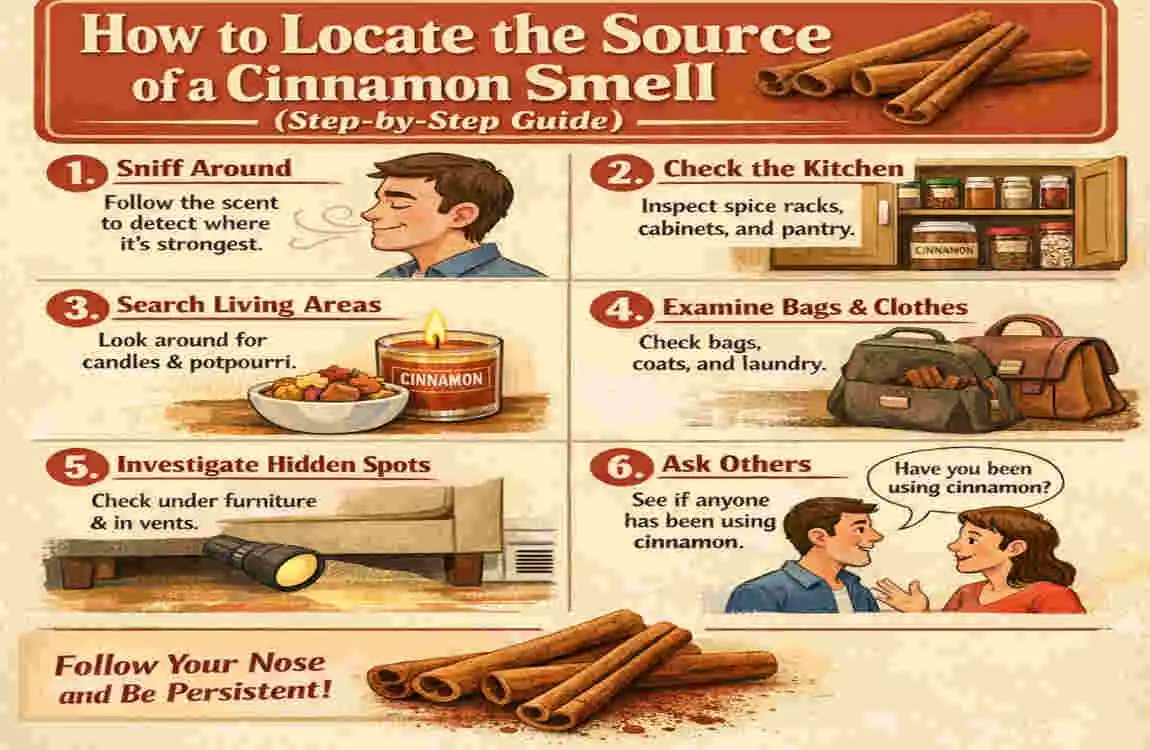
If you are still puzzling over why my house smells like cinnamon, a calm, systematic investigation is your best tool. A clear method saves time and dramatically reduces the chance of overlooking a hidden source.
Step-by-Step Room Check
Begin in the room where the smell is most noticeable. Then move methodically through the rest of the house.
Prioritize these areas:
- Kitchen
- Bathrooms
- Laundry room
- Basement
- Bedrooms
- Hallways
- Garage or attic
In each space, consider recent changes. Did you clean, cook, paint, apply heat, or plug in a new device? Has it rained recently? Did any room become warmer or more humid than usual?
Track the Smell Intensity
Try rating the smell in each room on a scale of 1 to 5. This simple scoring reveals patterns quickly.
Room / Area Smell Level Notes
Kitchen 4 Stronger near trash and stove
Bathroom 2 Slight smell near sink cabinet
Living Room 3 Stronger when HVAC turns on
Basement 5 Damp smell near the wall corner
Bedroom 1 Barely noticeable
This simple table helps you determine whether the smell is localized, widespread, or tied to a specific system like HVAC.
Check Hidden Areas
Do not stop at the obvious open spaces. Odors frequently originate in:
- Cabinet corners and shelf backs
- Under sinks
- Behind and beneath appliances
- Around supply and return vents
- Near outlets and switch plates
- Inside closets and storage areas
- Along baseboards and at floor-wall junctions
- Around window frames and sills
Use your nose carefully, but trust your eyes as well. A mysterious smell very often leaves behind a visible clue, whether it is a stain, discoloration, residue, or condensation.
Useful Tools
A few inexpensive tools can make the search significantly easier:
- Flashlight (for dark cavities and behind furniture)
- Moisture meter (to detect hidden dampness in walls or floors)
- Indoor air quality monitor (to flag elevated VOCs, humidity, or particulates)
- Notebook or phone notes app (to log locations and intensity ratings)
- Screwdriver for removing vent covers if needed
When moisture or electrical damage is a possibility, a simple tool reading can confirm what your senses already suspect and give you solid grounds to call a professional.
When Should You Be Concerned?
Not every cinnamon smell warrants alarm. But some scenarios call for immediate action.
Safe, Suspicious, or Dangerous?
Use this straightforward framework:
- Safe: The smell clearly corresponds to recent cooking, a lit candle, or a cleaner you just used, and it fades within a day or two.
- Suspicious: The smell keeps returning or persists without an identifiable source.
- Dangerous: The smell is accompanied by signs of heat, burning, flickering lights, damp or discolored walls, visible mold, or evidence of pest activity.
Red Flags That Need Fast Action
Contact a professional or take immediate corrective steps if you observe:
- A burning, smoky, or hot undertone to the smell
- Outlets, cords, or switches that are warm to the touch
- Active water damage or recent leaks
- Visible mold on surfaces or behind fixtures
- A strong, localized smell inside a wall, ceiling, or floor
- Evidence of pest activity such as droppings or gnaw marks
- Respiratory symptoms, headaches, or dizziness linked to the odor
It is always better to investigate early and rule out a serious cause than to wait and hope the smell resolves on its own.
Prevention Tips to Avoid Strange Smells in Your Home
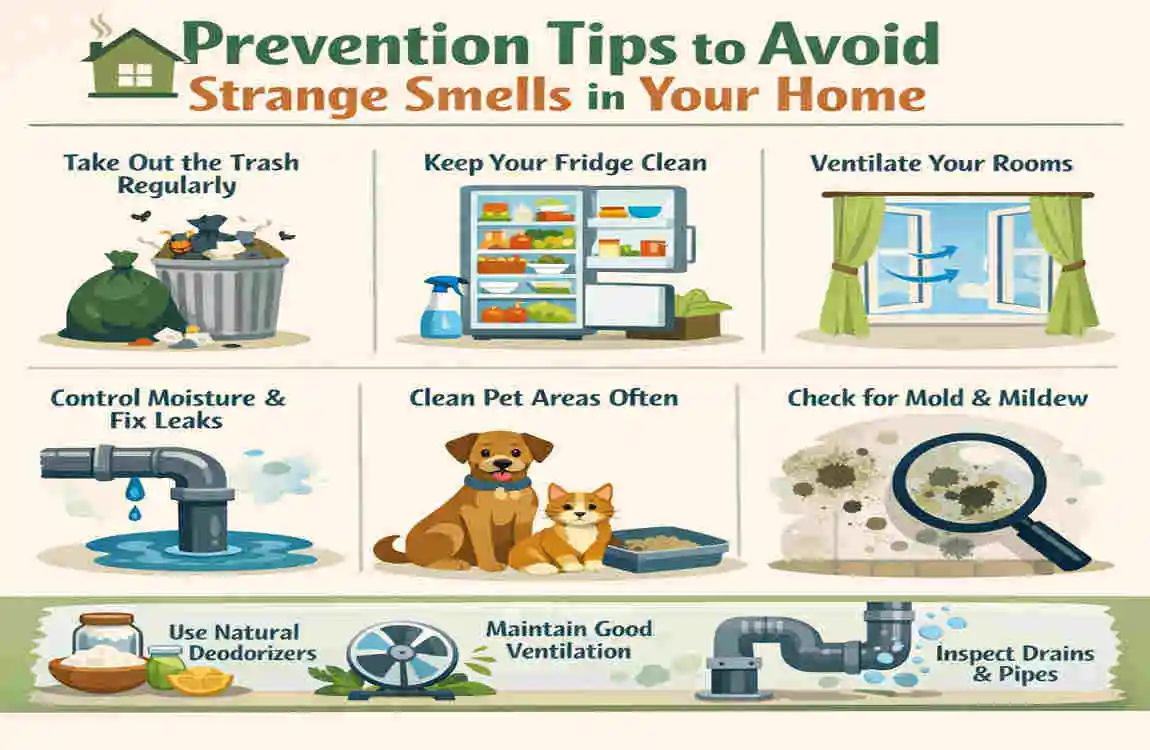
Once you identify and address the root cause, a few consistent habits can keep the problem from returning.
Keep Up with Cleaning
Clean kitchens, bathrooms, and trash areas on a regular schedule. Wipe spills as soon as they happen. Launder fabrics that tend to absorb and hold odors, including towels, area rugs, curtains, and throw pillow covers.
Ventilate the Home
Open windows when weather permits, even for fifteen to twenty minutes a day. Use exhaust fans in the kitchen during and after cooking and in the bathroom during and after showers. Allow fresh air to circulate through rooms that tend to trap stale or lingering odors.
Maintain HVAC Systems
Replace air filters every one to three months depending on your household size, pets, and local air quality. Schedule an annual professional inspection and tune-up. Keep supply and return vents clean, unobstructed, and free from dust accumulation.
Control Moisture
Repair leaks promptly, no matter how small. Use dehumidifiers in naturally damp spaces like basements and crawl areas. Ensure bathrooms, kitchens, and laundry rooms dry out thoroughly after use or after storms. Aim to keep indoor relative humidity between 30 and 50 percent.
Use Scented Products Carefully
Avoid overloading your house with fragrance. One mild product per area is usually sufficient. Layering too many scented items creates confusing mixed odors that can mask genuine warning smells you would otherwise catch early.
FAQs
Why does my house randomly smell like cinnamon?
A random cinnamon smell can result from residual cooking aromas, scented household products, HVAC-circulated dust or residue, hidden mold growth, chemical off-gassing, a pest infestation, or even phantosmia (a phantom smell). The critical factor is whether the odor is a one-time event that fades quickly or a recurring pattern that demands investigation.
Can mold smell like cinnamon?
Yes, in certain conditions it can. Mold does not always produce the classic musty or earthy odor. Some mold species release microbial volatile organic compounds that smell sweet, warm, or distinctly spicy, particularly when growing in damp, hidden areas on organic materials like wood or drywall.
Is a cinnamon smell dangerous?
That depends entirely on the source. A cinnamon smell traced to recent baking or a scented candle is harmless. A cinnamon-like odor linked to overheating electrical wiring, concealed mold, or a pest infestation can be a genuine warning sign that requires prompt professional attention.
Why does my house smell sweet, but I didn’t cook anything?
An unexplained sweet smell can originate from plug-in air fresheners, scented cleaning products, HVAC residue, mold growth, off-gassing chemicals from new furniture or renovation materials, or even a neurological phantom smell. If cooking is ruled out, systematically check for hidden fragrance sources, moisture issues, and signs of overheating.
How do I get rid of the cinnamon smell in my house?
Start by identifying the source. Clean the affected area thoroughly, remove or deactivate any scent-producing products, improve airflow by opening windows and running fans, replace HVAC filters, and inspect for mold, electrical problems, or pest activity. If the smell persists after these steps, a deeper professional investigation is warranted.