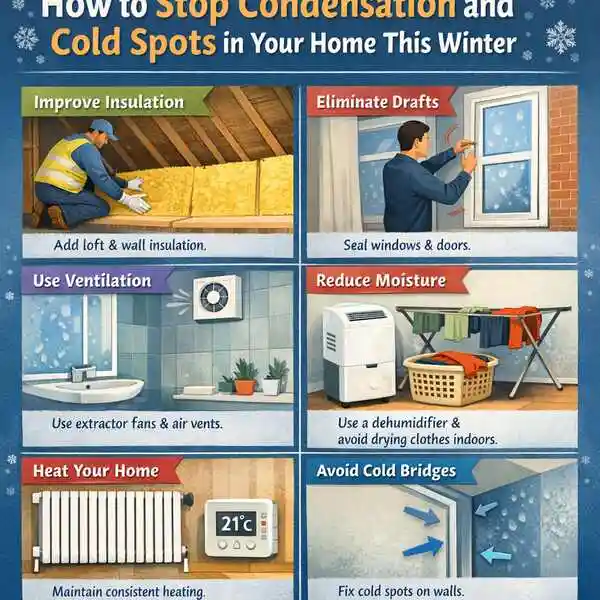
When the temperature drops, most homes develop the same few problems. A room that never quite warms up. A patch of black speckling in the corner of a window. Streaming glass first thing in the morning. These are all signs of one underlying issue. Heat is escaping, and moisture has nowhere to go. The good news is you can tackle both, and you don’t have to do it all at once.
Here’s how to work through it, starting with the cheap, quick fixes and building up to the bigger jobs.
Find the cold spots first
Before you spend anything, work out where your home is actually losing heat. On a cold day, turn the heating off for an hour and walk around using the back of your hand. You’ll feel draughts around window frames, letterboxes, loft hatches and skirting boards. Cold walls and cold glass are where condensation tends to form, because warm, moist air hits a cold surface and turns straight back into water.
Damp and mould aren’t just unpleasant to look at. The government’s own guidance sets out the health risks of damp and mould in the home, particularly for children, older people and anyone with a respiratory condition. It’s worth taking seriously rather than wiping away and forgetting.
Windows and doors are usually the worst offender
Glass is often the coldest surface in any room, which is why windows are where condensation shows up first. If you still have single glazing, or older units where the seal has failed and the panes look misty, you’re losing a lot of heat and inviting dampness at the same time. Draught-proofing strips around the frames help in the short term.
For a longer-term fix, upgrading to modern energy-efficient casement windows makes a real difference. Today’s units use warm-edge spacers and low-emissivity glass that keep the inner pane much closer to room temperature. That warmer surface is far less likely to attract condensation. The same logic applies to external doors, where a good seal and a decent threshold stop the draught that makes a hallway feel colder than it really is.
Walls, floors and the loft
Heat rises, so an uninsulated loft is one of the quickest wins in most homes. Topping up loft insulation to the recommended depth is cheap and pays for itself. Cold external walls are a bigger job, but even small steps help, such as moving furniture a few centimetres off north-facing walls so air can circulate and the surface stays warmer. Bare floorboards over a ventilated void can be surprisingly draughty, so a rug and a little gap-filling take the edge off.
Condensation is really a moisture problem
Every home produces moisture. Cooking, showering, drying clothes indoors and even breathing all add water to the air. When that moist air meets a cold surface, it condenses. The fix balances three things. Produce less moisture, move it out, and keep surfaces warmer.
Put lids on pans, run the extractor fan while you cook and for a while afterwards, and open the bathroom window after a shower. Try not to dry washing on radiators, and if you must, crack a window in that room. A cheap hygrometer will tell you your humidity, and it’s worth keeping it under about 60 per cent. Trickle vents on windows, left open, let stale moist air escape without throwing away much heat.
Spread the heat, don’t blast it
A warmer home isn’t only about a bigger boiler. It’s about even, steady heat. Bleed your radiators so the tops aren’t cold, and check nothing large is sitting in front of them. Thermostatic radiator valves let you set different rooms to different levels, so you’re not heating a spare bedroom to the same temperature as the living room. A low, steady background heat keeps surfaces above the point where condensation forms, which is usually cheaper and more comfortable than letting the house go cold and then blasting it warm again.
Quick wins and bigger jobs
If your budget is tight this winter, start with the free and cheap fixes. Draught strips, radiator bleeding, better ventilation habits and a hygrometer all cost very little and make a noticeable difference within days.
When you’re ready for bigger improvements, prioritise the fabric of the building. Loft insulation first, then windows and doors, then walls. Each step makes the next one work harder, because there’s less heat leaking out for your heating to replace.
The payoff
Tackling cold spots and condensation together does three things at once. Your home feels warmer, your energy bills ease off, and you cut the damp that damages plaster, décor and health. You don’t need to do everything in one go. Fix the draughts you can feel, get into good ventilation habits, and plan the larger upgrades for when the time is right. A dry, evenly heated home is a far more comfortable place to spend a British winter.