Crepe myrtles are among the plants that can instantly transform a yard. When they bloom, they bring bright summer color, soft texture, and a cheerful feeling that stays memorable all season long. Even after the flowers fade, you still get graceful branches, attractive bark, and a clean shape that adds interest to the landscape year-round.
That is exactly why so many homeowners love them. They look elegant, they are relatively easy to care for, and they can fit into many kinds of outdoor spaces. But if you want the best results, you need to plant them in the right place. That means thinking carefully about how far to plant crepe myrtle from house before you dig the first hole.
Spacing matters more than many people realize. Plant too close, and the tree may crowd siding, block windows, or create pruning headaches later. Branches can rub against walls, hang over the roofline, or drop leaves and flowers into gutters. Roots are usually not aggressive, but every tree still needs enough room to grow naturally. If you choose the right distance from the start, you avoid stress later and give the tree a much better chance to thrive.
| Item | What to Do / Recommended Range |
|---|---|
| Best planting time | Late fall to early spring (cool, moist soil helps roots establish). |
| Sunlight needed | Full sun (6–8+ hours daily) for best blooms and fewer fungal issues. |
| Distance from house | At least 6–10 ft away to avoid root conflicts, allow air circulation, and fit mature spread. |
| Soil type | Well‑drained; improve heavy clay with compost or organic matter. |
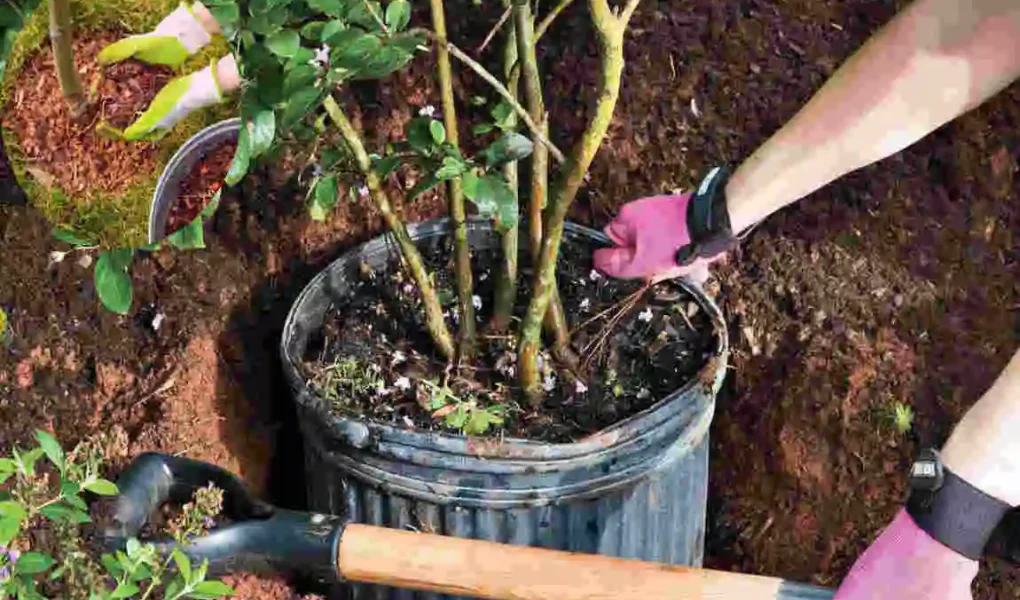
| Hole size | Same depth as root‑ball, 12–24 in wider to loosen soil around it. |
| Planting depth | Keep root flare at or slightly above soil level; don’t bury the trunk. |
Why Crepe Myrtles Work So Well Near Homes

Crepe myrtles are popular for a reason. They offer a lot of beauty house without demanding constant attention. If you want a tree that can improve curb appeal and still stay manageable, this is a smart choice.
They bring color and charm
The biggest reason people plant crepe myrtles is the flowers. Their blooms can appear in shades of pink, red, white, purple, and coral. In the middle of summer, when many other plants start to slow down, crepe myrtles often shine the brightest.
They also have a graceful form that looks polished even when the tree is not flowering. That means you get more than just seasonal beauty. You get structure, softness, and movement in the landscape.
They offer light shade without being overwhelming
Crepe myrtles can soften a house’s look without covering it up. This makes them useful near patios, walkways, and front yards where you want a little relief from sun but do not want a dense, heavy tree.
That lighter canopy is one reason they work well in home landscapes. You get a welcoming feel, but the plant usually stays neat when it is spaced correctly.
They attract pollinators
Crepe myrtle flowers can attract bees and other helpful pollinators. That makes them a nice choice if you want your yard to feel lively and support local wildlife.
For many homeowners, this is a bonus. The garden looks more active, and the blooms become part of a healthy outdoor space.
They handle heat and drought well
Once established, crepe myrtles are fairly drought-tolerant. That makes them especially useful in warm climates and in yards where water use is a concern.
This is one more reason spacing matters. When the tree has enough room to grow strong roots and good airflow, it becomes even easier to maintain.
Quick benefits at a glance
- Bright summer flowers
- Attractive bark and trunk shape
- Good curb appeal
- Light shade near patios and paths
- Pollinator-friendly blooms
- Strong drought tolerance once established
When planted with the right distance from the house, crepe myrtles can deliver all of these benefits without becoming a problem. That is why learning how far to plant crepe myrtle from house is such an important first step.
Understanding Crepe Myrtle Sizes Before You Plant
One of the most common mistakes homeowners make is treating all crepe myrtles the same. They are not all the same size. Some stay small and compact. Others grow into medium-sized landscape trees. A few can become large specimens that need quite a bit of space.
To determine the right planting distance from the house, you must first know the mature size of the variety you are choosing.
Dwarf crepe myrtles
Dwarf types usually grow 5 to 10 feet tall and 3 to 6 feet wide. These are a great option for small yards, foundation beds, or spaces near patios where you want color without heavy growth.
Because they stay compact, they can be planted closer to the house than larger types. Still, they should not be jammed right against the wall. Even small trees need airflow and room for maintenance.
Medium crepe myrtles
Medium varieties often reach 10 to 20 feet tall and 6 to 12 feet wide. These are some of the most versatile choices for home landscapes.
They work well as accent trees, near driveways, at the edge of a patio, or in front yards where you want a balanced look. Their size makes them attractive, but they still need sensible spacing from walls, fences, and rooflines.
Large crepe myrtles
Large varieties can grow 20 to 40 feet tall and 15 to 25 feet wide. These are statement trees. They deserve open space and should be treated like real landscape trees, not foundation shrubs.
If you place a large crepe myrtle too close to your house, you may end up dealing with pruning issues, overhang problems, and a crowded planting area. They look best when given room to show off their full shape.
Why mature size matters more than current size
This is where many people go wrong. A young crepe myrtle may look tiny the day you plant it. That can make it tempting to place it very close to the home. But the tree will not stay that small.
You should always plan for the tree it will become, not the tree it is today. That simple habit helps you answer how far to plant crepe myrtle from house in a smarter way.
Crepe myrtle size comparison table
Variety TypeMature HeightMature WidthBest Use Near House
Dwarf 5-10 ft 3-6 ft Close foundations
Medium 10-20 ft 6-12 ft Patio edges
Large 20-40 ft 15-25 ft Open lawns
If you remember one thing from this section, let it be this: measure the mature size first, then choose the planting spot.
How Far to Plant Crepe Myrtle from House by Variety

Now let’s get to the part most readers want right away: the actual distance.
The answer depends on the size of the crepe myrtle and the layout of your yard. The general rule is simple: give the plant enough room to grow without pressing against your home. That means thinking about both the roots below ground and the branches above ground.
Dwarf crepe myrtles: 3 to 5 feet from the house
Dwarf crepe myrtles can usually be planted 3 to 5 feet from the house if you are working with a compact foundation bed and want a small accent plant.
This distance gives the tree room to spread a little while still staying close enough to highlight the home’s front line. It also makes maintenance easier because you can reach the plant for pruning, watering, and cleanup.
Still, even with dwarf types, be careful not to crowd the wall. Leave enough room for airflow and future growth. If the area is very narrow, a width of about 5 feet is often the better choice.
Medium crepe myrtles: 6 to 10 feet from the house
Medium varieties usually do best 6 to 10 feet from the house. This range gives the canopy enough space to open naturally without pushing into siding, windows, or gutters.
For most homeowners, this is the sweet spot. It creates visual balance while lowering the chance of branch rubbing or awkward pruning later. It also allows you to walk around the tree and inspect it more easily.
If you want a medium crepe myrtle near a patio or along a wall, choose the farther end of the range whenever possible.
Large crepe myrtles: 10 to 15+ feet from the house
Large crepe myrtles should usually be planted 10 to 15 feet or more from the house. In many cases, even more room is better.
These trees can spread widely and should not be forced into tight spaces. If planted too close, they may overhang the roof, block light, or make the landscape feel cramped. A large crepe myrtle looks far better when it has open space around it.
If your yard is small and you love the look of a wide variety, consider a medium or dwarf variety instead. That is often the smarter solution.
A simple way to visualize spacing
Picture the tree as a circle centered on the trunk. The trunk should not sit right beside the house wall. Instead, the tree should be placed far enough away that its branches can expand outward without touching the home as it matures.
A good rule is to measure from the center of the trunk to the house wall, not just from the edge of the root ball. That gives you a more accurate sense of final spacing.
Table: Recommended planting distance from house
VarietyMin Distance from HouseWhy This Spacing?
Dwarf 3-5 ft Compact growth
Medium 6-10 ft Root and canopy room
Large 10-15 ft Avoids foundation and overhang issues
Why these distances work
Crepe myrtles do not usually have aggressive roots like some larger shade trees. Their roots are typically shallow and fibrous, which means they spread out more than they dive deep. That is useful because it helps the plant absorb water efficiently.
At the same time, even a non-invasive root system still needs room. A tree planted too close to a wall may not damage the foundation in the dramatic way people often fear, but it can still cause practical problems. It can crowd the planting bed, make watering difficult, and force branches into awkward positions.
The best approach is simple: choose a distance that matches the tree’s mature size.
What Affects the Right Planting Distance?
The best distance is not only about size. A few other factors should also shape your decision.
Root spread
Crepe myrtle roots are generally shallow and fibrous. They tend to spread outward rather than drill straight down. In many cases, the root system may extend several times as wide as the canopy over time.
That does not mean they are destructive by default. It means they need room to spread naturally. If you crowd them, the roots and the surrounding soil will both struggle.
Canopy size
The top of the tree matters just as much as the roots. Branches that are too close to the house can rub against siding, windows, gutters, and roof edges. That rubbing can lead to wear over time and require extra maintenance.
The canopy should have enough space to develop freely. That is one of the biggest reasons to avoid planting too close.
Local rules and utility lines
Always check local planting rules before you dig. Some neighborhoods or municipalities have setback guidelines for trees near structures, sidewalks, or utility easements.
Also, think about what is above and below the planting site. Avoid areas near power lines, buried cables, irrigation lines, or drainage paths. A beautiful tree is not worth the trouble of interfering with important infrastructure.
Soil and drainage
The planting distance should also be adjusted to the soil conditions. Crepe myrtles prefer well-drained soil. If a certain spot stays soggy, the roots may suffer. If you are planting near a foundation, avoid planting in a low spot where water collects.
The best site is one that supports healthy growth and keeps moisture from pooling around the house.
Site Selection Tips for Better Crepe Myrtle Growth
Before you plant, look at the whole site, not just the distance from the house. A tree that is properly spaced but planted in the wrong spot may still struggle.
Choose full sun
Crepe myrtles love sun. They do best with at least 6 hours of direct sunlight each day. More sun usually means more flowers, stronger stems, and better overall shape.
If the area near your house is too shady, the tree may grow thin and bloom less. A sunny side yard or open front bed is often better than a dark corner.
Look for well-drained soil
Good drainage is very important. Crepe myrtles do not like to sit in wet soil for long periods. If your yard holds water after rain, you may need to improve the drainage before planting.
A simple test is to dig a small hole and fill it with water. If the water disappears slowly and the soil stays saturated, the site may need adjustment.
Keep away from utilities
Do not plant too close to buried utility lines, irrigation systems, or drain pipes. Even a well-behaved root system can become a nuisance if it grows into a narrow service area.
When in doubt, mark the area carefully and plan before digging.
Give the tree room to breathe
Airflow matters more than many people think. Crowded, damp planting spaces can encourage pests and disease. A little open space around the tree helps the leaves dry faster after rain and lowers stress on the plant.
Beyond how far to plant a crepe myrtle from the house, consider airflow, light, and access. These small details create a much healthier landscape.
pH matters too
Crepe myrtles usually like slightly acidic to neutral soil, often in the range of 5.5 to 7.5. If your soil is extremely acidic or alkaline, the plant may not perform as well.
A simple soil test can help you understand what you are working with before planting.
Step-by-Step Planting Guide for Crepe Myrtle
Once you have chosen the right location, it is time to plant correctly. A healthy start makes a big difference later.
Measure the distance first
Before you dig, measure from the house wall to the center of the planting spot. Make sure the distance matches the size of your chosen variety.
Do not guess. A few inches may not seem like much now, but they can matter later when the tree matures.
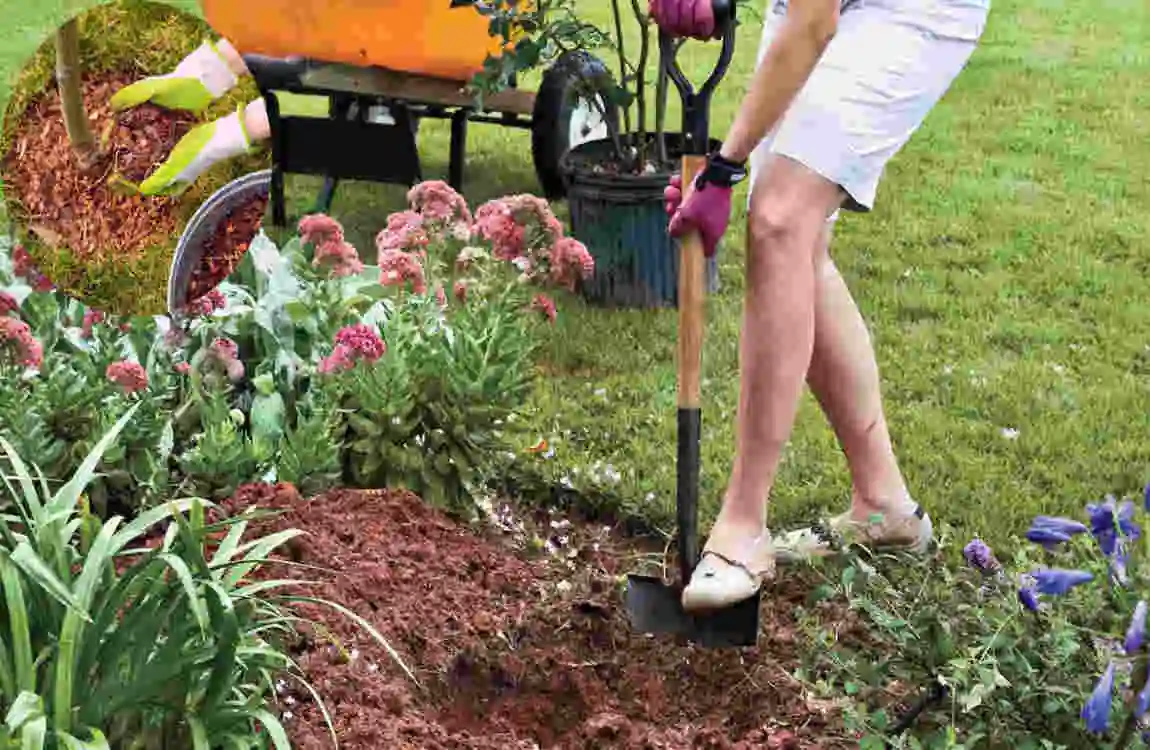
Dig the hole correctly
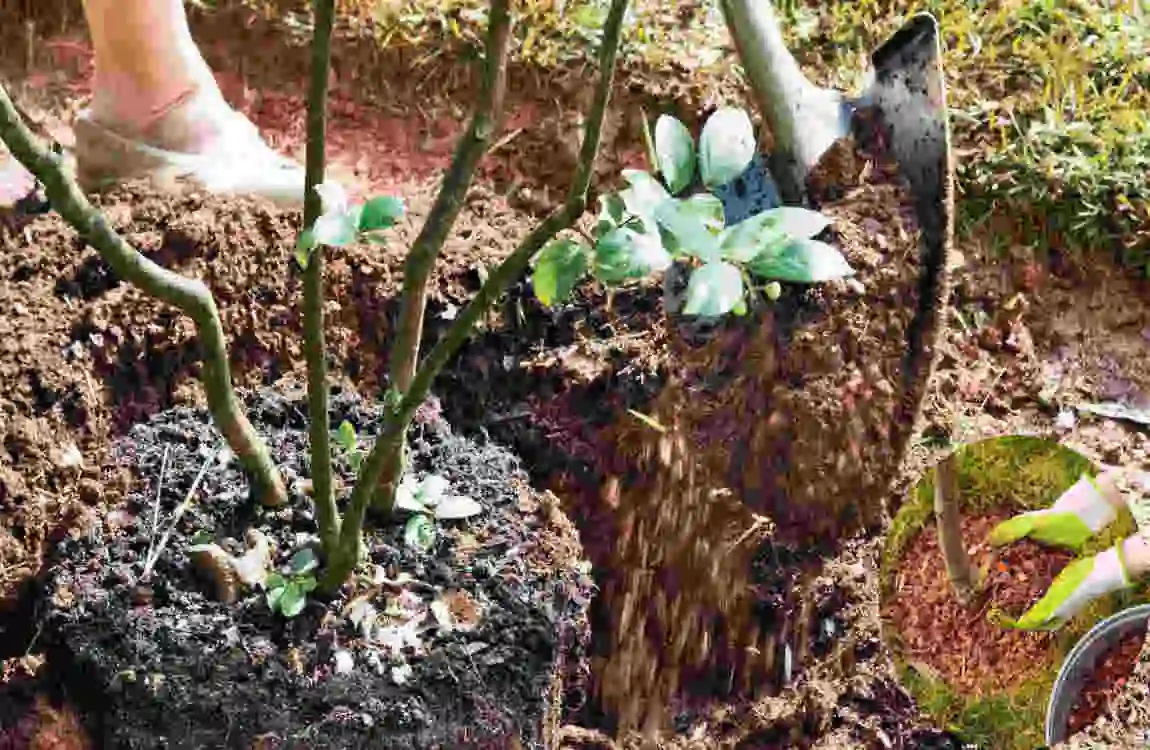
Dig a hole that is about twice as wide as the root ball but no deeper than the root ball itself. The goal is to give the roots room to spread sideways while keeping the tree at the right height.
If you dig too deep, the tree can settle too low, leading to root health issues.
Check the root flare
The root flare is the point where the trunk begins to widen at the base. This should sit at or slightly above the soil level once planted.
If the root flare is buried, the tree may suffer over time. This is a common mistake worth avoiding.
Place the tree in the hole
Set the tree in the center of the hole and make sure it is straight. Step back and look at it from a few angles before you start backfilling.
This is a good time to double-check your spacing from the house, too. Once the soil goes in, it is harder to move the tree.
Backfill with native soil
Use the soil you removed from the hole, mixing in a little compost if needed. Do not overload the planting hole with rich amendments. In many cases, too much improved soil in the hole can create a “pot effect” and discourage roots from spreading outward.
The goal is to help the roots establish naturally in the surrounding soil.
Water deeply
After planting, water the tree slowly and deeply. This helps settle the soil around the roots and removes air pockets.
Deep watering is better than shallow watering. You want the moisture to reach the root zone, not just the surface.
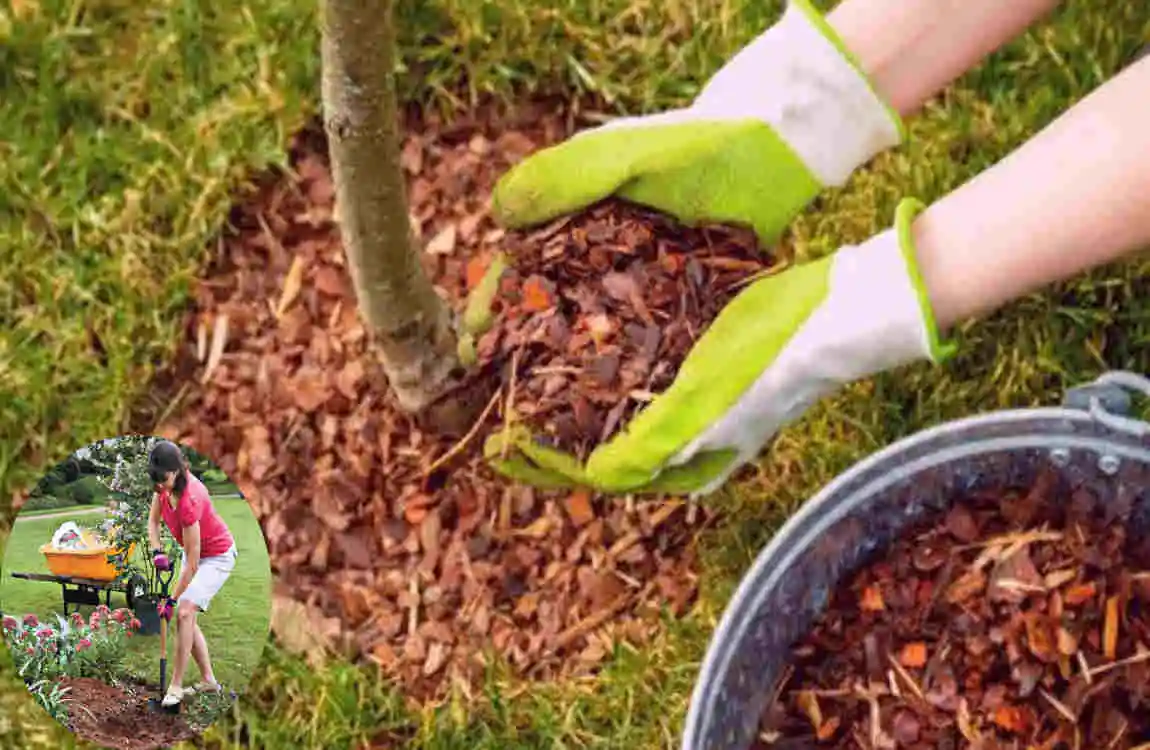
Add mulch
Spread 2 to 3 inches of mulch around the base of the tree, but keep it away from the trunk itself. Do not pile mulch against the bark.
Mulch helps hold moisture, regulate temperature, and reduce weeds. It also makes the planting bed look neat.
Stake only if needed
Most crepe myrtles do not need heavy staking. If the tree is in a windy spot or has a weak root ball, use a stake only as long as necessary.
Too much staking can weaken the trunk if left in place too long.
A simple planting visual
Imagine a side view of your house wall on one side and the crepe myrtle trunk several feet away. The branches should eventually form a soft canopy that fills the space without touching the wall. The base should sit in open, breathable soil with a clean mulch ring around it.
That image is the goal. It is simple, neat, and easy to maintain.
Care After Planting: Help the Tree Settle In
The planting distance is important, but the care that follows matters just as much. A well-placed tree still needs proper attention during its first year.
Watering
During the first year, water the tree about once a week, or more often during very hot or dry weather. The goal is steady moisture, not soggy soil.
Once established, crepe myrtles become much more drought-tolerant. That makes them especially convenient for busy homeowners who want beauty without constant watering.
Pruning
Prune crepe myrtles in late winter or very early spring before new growth starts. Focus on removing dead branches, weak stems, and suckers from the base.
Avoid over-pruning. Many people cut crepe myrtles too harshly, leading to awkward growth and a weak branch structure. This is often called “crepe murder”, and it is best avoided.
A light, thoughtful prune is usually all the tree needs.
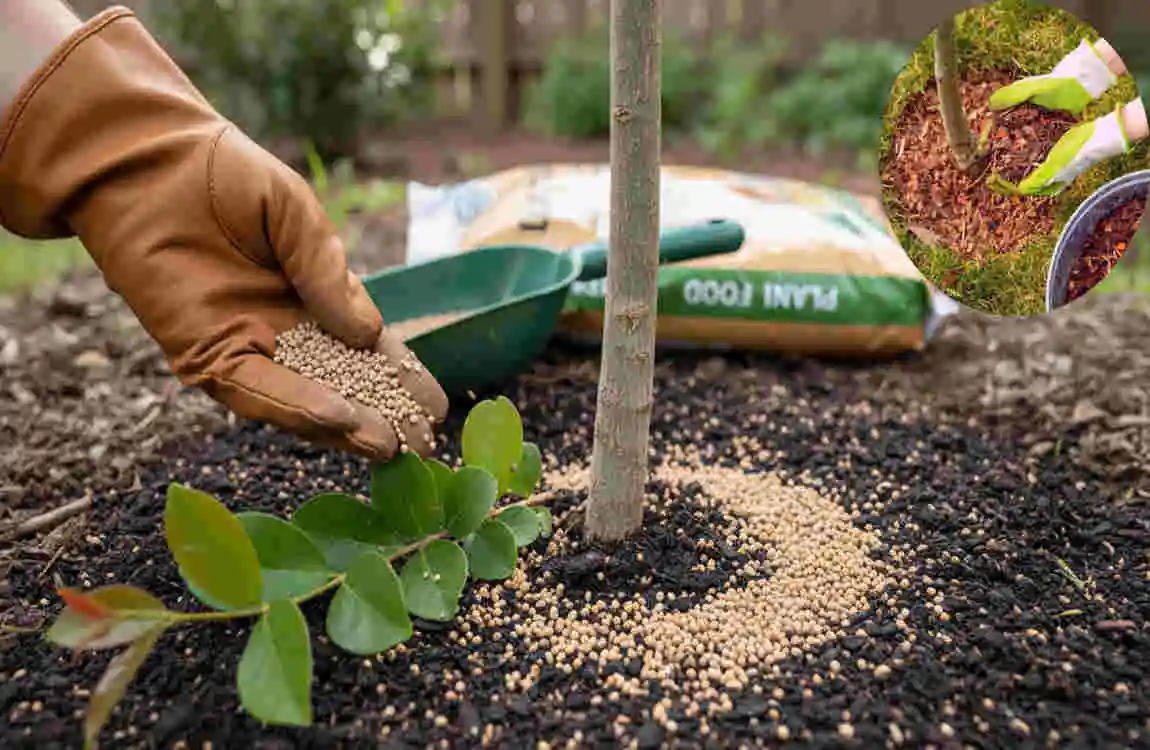
Fertilizing
Use a balanced fertilizer in spring if your soil needs it. Do not overfeed the tree. Too much nitrogen can cause leafy growth at the expense of flowers.
A healthy tree in the right spot often needs less fertilizer than people expect.
Pest control
Crepe myrtles can sometimes attract aphids or scale. These pests are usually manageable if you catch them early.
Watch for sticky leaves, black sooty residue, or unusual bumps on stems. Healthy spacing and good airflow can help reduce pest pressure in the first place.
Why spacing lowers maintenance
When you plant the tree at the right distance from the house, you make all of this easier. You can reach it for watering, pruning, and inspection. Branches are less likely to scrape the home. And the tree has a better chance of growing in a natural, attractive shape.
That is why how far to plant crepe myrtle from house is not just a design question. It is a maintenance decision too.
Common Mistakes to Avoid

Even experienced gardeners sometimes make simple mistakes with crepe myrtles. If you avoid these, you will save yourself time and frustration later.
Planting too close to the house
This is the biggest mistake. Large varieties should not be squeezed under eaves or next to walls. If you plant a large tree within 6 feet of the house, you may create a long-term problem.
If the tree is too big for the space, choose a smaller variety instead.
Ignoring drainage
A beautiful planting spot is not worth much if the soil stays soggy. Wet soil can weaken roots and create stress. Always check drainage before planting.
Over-pruning
Heavy pruning may seem like a way to control size, but it often creates an ugly shape and weak growth. Use light, careful pruning instead.
Forgetting mature width
A tree can look fine the day you plant it and still become overcrowded later. Mature width is just as important as height. Give the plant enough side-to-side room.
Planting without a long-term plan
Think ahead. Ask yourself what the tree will look like in five, ten, or fifteen years. If the spot looks tight now, it may become much tighter later.
Quick fixes for common mistakes
- Too close to the wall: transplant if possible, or replace with a smaller cultivar.
- Poor drainage: improve soil, raise the bed, or choose a better site.
- Over-pruned tree: switch to light, seasonal pruning.
- Wrong size for space: re-evaluate the variety before planting.
A little planning now can prevent years of correction later.
FAQ: How Far to Plant Crepe Myrtle from House
Do crepe myrtle roots damage foundations?
Crepe myrtle roots are usually considered less invasive than those of many other trees. They are shallow and fibrous rather than aggressive and deep.
That said, no tree should be planted too close to a foundation. Even if the roots are not likely to crack concrete, a cramped planting area can still cause practical problems over time.
What is the best time to plant crepe myrtle?
The best time to plant is usually spring or fall, when temperatures are milder and the plant can focus on root development without extreme heat stress.
Do I need a special soil mix?
Usually, no. Crepe myrtles do well in ordinary garden soil as long as drainage is decent. A little compost can help, but do not overdo it.
Should I plant one crepe myrtle or several?
That depends on your design goal. One tree works well as a focal point. Several can create a colorful border, but only if each plant has enough room to grow.