Painting is one of the simplest ways to refresh a home. It can make a room feel brighter, cleaner, and more modern without needing a full remodel. Many homeowners also choose painting because it can improve curb appeal and even add value to the property.
Before you start, it helps to know the real cost. Painting prices can vary widely depending on home size, paint quality, labor, surface condition, and location. That means one house may cost a few thousand dollars, while another may cost much more.
How Much Does It Cost to Paint a House?
Average Cost to Paint a House
The average cost to paint a house depends on the home’s size and whether you are painting the interior, exterior, or both. Smaller homes usually cost less, while larger homes require more paint, labor, and time.
Here is a simple estimate:
- Small homes: $1,500–$4,000
- Medium homes: $3,000–$7,000
- Large homes: $7,000–$15,000+
Interior painting is often more predictable, while exterior painting can cost more due to weather prep, ladders, and surface repairs.
Cost Per Square Foot to Paint a House
Many painters price jobs by square foot. This makes it easier to estimate the budget early.
Typical ranges include:
- Interior painting: $2–$6 per square foot
- Exterior painting: $1.50–$5 per square foot
The bigger the home, the more paint and labor you need. That is why square footage plays such a big role in the final price.
Factors That Affect the Cost to Paint a House
Size and Square Footage of Your Home
A larger home always takes more work. That means more paint, more prep time, and more labor hours.
If your home has high ceilings, extra trim, or many rooms, the price can rise quickly. Even a small increase in square footage can affect the total cost.
Interior vs Exterior Painting Costs
Interior and exterior painting are priced differently because the work is different. Interior projects often involve more detail work, while exterior jobs need weather protection and stronger surface prep.
Painting TypeAverage CostMain Cost Factors
Interior Painting $2,000–$8,000 Rooms, ceilings, trim, walls
Exterior Painting $3,000–$15,000 Surface condition, height, weather protection
Exterior work usually costs more when the siding needs cleaning, scraping, or repairs before painting begins.
Type and Quality of Paint
Paint quality matters more than many people think. Cheap paint may look fine at first, but it may fade, peel, or need another coat sooner.
Premium paint usually costs more upfront, but it often lasts longer and gives a better finish. In many cases, spending a little more now can save money later.
Condition of Walls and Surfaces
If your walls are damaged, the painter will need extra time to fix them. This can add to the total bill.
Common repair issues include:
- Cracks
- Holes
- Water damage
- Peeling paint
- Mold removal
The worse the surface condition, the more prep work is needed before painting can begin.
Labor Costs and Professional Painters
Labor is one of the biggest parts of any painting project. Some painters charge by the hour, while others offer a fixed price for the entire project.
More experienced painters usually charge more, but they often work faster and deliver better results. That can be worth it if you want a clean, smooth finish.
Interior House Painting Cost Breakdown
Cost to Paint Individual Rooms
Different rooms have different price ranges because some are larger or more detailed than others.
Room Average Painting Cost
Bedroom $300–$800
Living Room $600–$2,000
Kitchen $400–$1,500
Bathroom $200–$800
A bedroom is usually the easiest and cheapest room to paint. A living room or kitchen may cost more because of larger wall space, cabinets, trim, or extra prep work.
Cost to Paint Ceilings, Doors, and Trim
These details often raise the cost because they take more care and time. Ceilings need smooth coverage, and trim must be painted carefully to avoid messy edges.
Doors, window frames, and baseboards may seem small, but they add extra work. If you want a full, polished look, these areas should not be ignored.
Additional Interior Painting Expenses
Sometimes the painting job includes extra tasks that increase the price.
These may include:
- Moving furniture
- Patching holes
- Applying primer
- Using specialty finishes
If your home needs extensive prep, expect the final cost to be higher than for a basic repaint.
Exterior House Painting Cost Breakdown
Average Cost to Paint a House Exterior
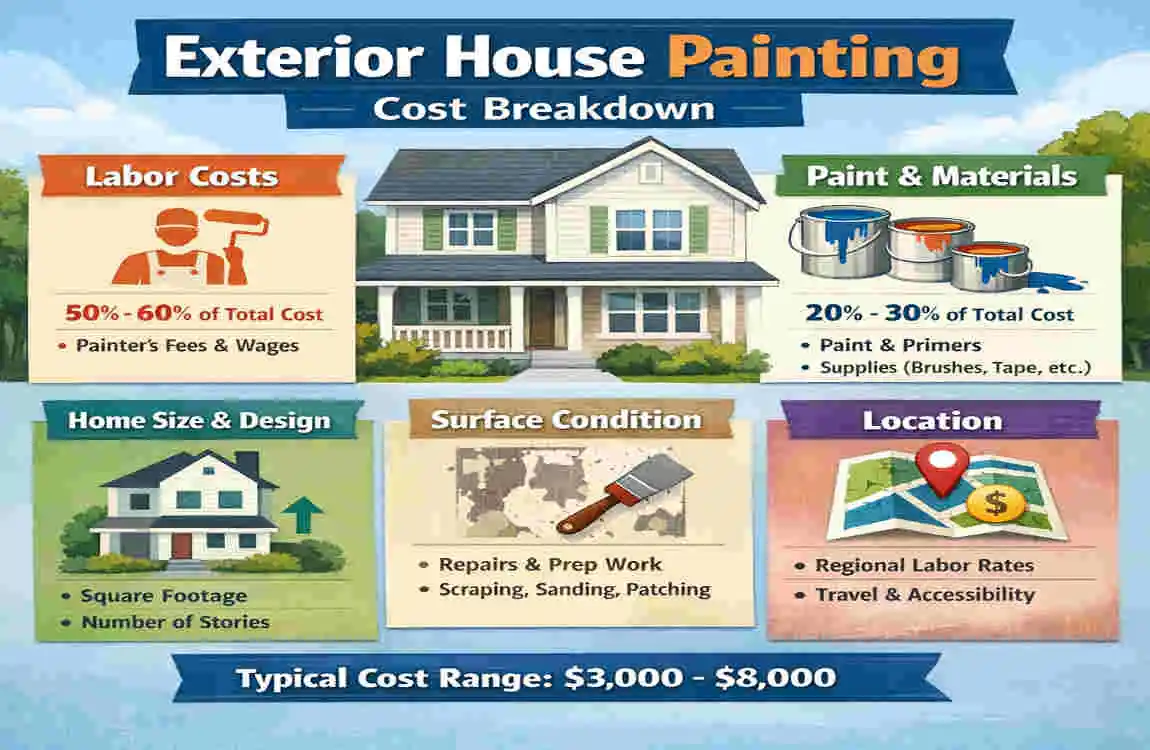
Exterior painting often costs more because it requires additional protection, tools, and planning. Painters must also deal with weather, which can slow the project down.
The outside of the house must be cleaned and prepared before painting starts. If old paint is loose or damaged, that adds even more labor.
Exterior Materials and Their Impact on Cost
Different surfaces take paint differently. That changes the cost.
- Wood siding: Often needs more prep and sealing
- Brick: May need special paint and longer drying time
- Stucco: Can require extra care because of texture
- Vinyl siding: Usually easier, but color choice matters
- Concrete surfaces: May need cleaning and patching first
Some materials absorb paint better than others so the painter may need more product or a special process.
Extra Exterior Painting Costs
Exterior jobs often include extra services such as:
- Pressure washing
- Scraping old paint
- Repairing siding
- Renting ladders or equipment
These steps improve the final result, but they also increase the total cost.
DIY vs Hiring Professional House Painters
Cost of DIY House Painting
Doing the job yourself can lower labor costs, but it still takes money and time. You will need paint, brushes, rollers, tape, drop cloths, and other supplies.
Estimated DIY costs:
- Paint: $300–$1,000+
- Supplies: $100–$500
DIY painting can work for small spaces, but it often takes much longer than expected.
Benefits of Hiring Professional Painters
Professional painters usually finish faster and give a more even result. They also know how to prep surfaces, which improves the final look.
Hiring experts can also reduce mistakes. If you want a high-quality finish, professional work is often worth the cost.
When DIY Painting Makes Sense
DIY can make sense for:
- Small rooms
- Accent walls
- Simple touch-ups
If the project is large or the surface is damaged, hiring a pro is usually the better choice.
How to Save Money When Painting a House
Choose Paint Colors Carefully
Try to choose colors you will like for a long time. If you repaint often, your costs go up quickly.
Simple, timeless colors often save money in the long run.
Compare Multiple Painting Estimates
Always get at least 3 quotes before choosing a painter. Compare not just the total price, but also what is included.
Some quotes cover prep, paint, and cleanup, while others do not.
Prepare the Home Yourself
You can lower labor costs by doing some of the simple work yourself.
Try to:
- Remove decorations
- Move small furniture
- Clean the walls
- Clear easy-to-reach spaces
This saves the painter time and may reduce your bill.
Paint During the Off-Season
Painters are often busier during peak seasons. If you schedule during a slower time, you may get a better price or faster service.
How to Estimate Your House Painting Budget
Simple Cost Calculation Formula
A basic way to estimate the cost is:
Home painting cost = Square footage × Painting rate + Additional expenses
This gives you a rough idea before you call contractors.
Example Painting Budget Calculation
If your home is 2,000 square feet and the average painting rate is $3 per square foot, the estimate would be about $6,000.
That number can still change based on paint quality, labor, repairs, and whether you are painting inside, outside, or both.
Choosing the Right House Painting Contractor

Check Experience and Reviews
Look at the painter’s past work and customer feedback. A good reputation usually means better service and fewer problems.
Ask to see examples of similar projects if possible.
Ask Important Questions Before Hiring
Before you agree to anything, ask:
- Are materials included?
- Is surface prep included?
- How long will the project take?
- Do you offer a warranty?
These questions help you avoid hidden costs and surprises.
Common Mistakes Homeowners Make When Painting a House
Many homeowners make the same errors when planning a painting project.
Common mistakes include:
- Choosing very cheap paint
- Skipping surface prep
- Not buying enough materials
- Hiring without checking credentials
- Picking colors without testing samples
A little planning can prevent a lot of frustration later.
FAQs About House Painting Costs
How much does it cost to paint a house?
The cost depends on the size of the home, paint quality, labor, and whether you are painting the interior, exterior, or both. Most homeowners spend between $1,500 and $15,000.
How much does it cost to paint a 2,000 square foot house?
A 2,000-square-foot house may cost around $4,000–$10,000, depending on the job size and surface condition.
Is it cheaper to paint a house yourself?
Yes, DIY can save labor costs. But you still need to buy paint and supplies, and the work usually takes longer.
How long does house paint last?
Interior paint often lasts 5–10 years. Exterior paint may last 5–15 years, depending on weather and maintenance.
What is the cheapest way to paint a house?
The cheapest way is to prep the home yourself, compare estimates, and choose affordable but decent-quality paint.
| Cost Factor | Estimated Cost Range | Details |
|---|---|---|
| Average Home Painting Cost | $2,000 – $8,000 | Total cost depends on home size, paint quality, labor, and preparation work. |
| Interior Painting Cost | $1,500 – $5,000 | Includes walls, ceilings, trim, and doors for an average-sized home. |
| Exterior Painting Cost | $2,500 – $10,000 | Higher costs come from surface preparation, height, and weather-resistant paints. |
| Cost Per Square Foot | $2 – $6 per sq. ft. | Pricing varies based on paint type, labor rates, and project complexity. |
| Professional Painter Labor | $25 – $75 per hour | Skilled painters charge more for detailed work and high-quality finishes. |
| Paint Materials | $200 – $1,000+ | Includes primer, paint, brushes, rollers, tape, and other supplies. |
| Factors Increasing Cost | — | Repairs, multiple coats, textured walls, high ceilings, and premium paint can raise expenses. |
| Ways to Save Money | — | Compare quotes, prepare surfaces yourself, choose mid-range paint, and schedule during off-season periods. |
| Average Project Timeline | 2–7 days | Depends on home size, weather conditions, and the amount of preparation required. |