Crepe myrtles are one of those trees that can make a home feel warm, bright, and welcoming almost instantly. Their flowers bring color through the summer, their bark adds texture in winter, and their shape can fit beautifully into many types of yards. If you want a tree that looks elegant without asking for too much work, crepe myrtle is often a smart choice.
But beauty is only part of the story. Where you plant it matters just as much as what you plant. A crepe myrtle planted too close to your house can become a headache later. Branches may crowd windows, roots may compete with nearby plants, and poor airflow can invite disease. That is why many homeowners ask the same practical question: how far should you plant crepe myrtle from the house?
Understanding Crepe Myrtles

What Are Crepe Myrtles?
Crepe myrtles are flowering trees or large shrubs known for their long bloom season and graceful shape. Their flowers have a soft, paper-like look, which is where the name “crepe” comes from. Depending on the variety, the flowers may be pink, white, red, purple, or lavender.
These trees are popular in warmer climates because they love heat and sunshine. In the right conditions, they bloom for weeks or even months, bringing color to a yard when many other trees have already finished flowering. They are also valued for their smooth bark, which peels in thin layers, revealing color beneath. This gives the tree visual interest year-round.
Crepe myrtles originally come from parts of Asia, especially China, Korea, and India. Over time, they became widely grown in gardens and landscapes across the southern United States and many other warm regions. Today, homeowners choose them for both small and large yards because they come in a wide range of sizes.
Some popular varieties include Natchez, Muskogee, Dynamite, Tonto, and Acoma. Each one grows a little differently. Some stay small and compact, while others become full-sized trees with broad crowns. That is one reason planting distance matters so much. A tree that looks small at the nursery may reach a much larger size than you expect a few years later.
Why They’re a Popular Choice
People love crepe myrtles for many reasons, and most of them are practical.
First, they offer bright, long-lasting blooms. A single tree can change the look of a yard for an entire season. That makes them a favorite for homeowners who want color without planting something high-maintenance.
Second, crepe myrtles are usually easy to care for. Once they are established, they can tolerate heat and short dry periods better than many other flowering trees. That makes them appealing for busy homeowners who want beauty without constant upkeep.
Third, they are adaptable. Crepe myrtles can work in front yards, along driveways, near patios, or as accent trees in open spaces. Their shape can be trained and maintained to fit the layout of your property.
They also improve curb appeal. A healthy crepe myrtle can make a home look more polished and inviting. The clean trunk, seasonal flowers, and balanced shape all contribute to the yard’s overall appearance.
In some cases, good landscaping can even support property value. A well-placed, attractive, healthy tree can make your home more appealing to buyers or visitors. That said, the tree must be placed properly. A poorly planted crepe myrtle may grow awkwardly, crowd your home, or require more work than it should.
Key Growth Characteristics
Before you decide on the best distance for Crepe Myrtle planting, it helps to understand how these trees grow.
Most crepe myrtles are fast to moderate growers. In the right climate, they can add noticeable height and width each year. Some dwarf types stay around 3 to 5 feet tall, while medium types may reach 10 to 15 feet. Larger tree-form varieties can grow 20 to 30 feet tall, and sometimes more under ideal conditions.
Their spread matters too. A tree may not only grow upward; it will also expand sideways over time. That side growth can bring branches close to walls, windows, eaves, and fences if the tree is planted too near the house.
Crepe myrtle roots are usually not known for being aggressive like those of some other trees. They tend to grow outward in search of water and nutrients. Still, they are generally considered less likely to damage foundations than large, heavy-rooted trees. Even so, any tree planted too close to a structure can still create problems through soil competition, water needs, and general crowding.
Another important habit is their love of sunlight and airflow. Crepe myrtles bloom best in full sun, and they do better when air can move around the branches. That means spacing is not just about safety. It also helps the tree stay healthy and flower well.
Why Distance Matters: How Far to Plant Crepe Myrtle from House
Importance of Proper Planting Distance
If you are wondering how far to plant crepe myrtle from house, the answer starts with simple good sense: give the tree room to grow.
A tree planted too close to your home may seem fine at first, especially when it is small. But in a few years, the branches may stretch over the roof, crowd the siding, or block windows. That can make routine maintenance harder and may even create moisture or pest issues if the tree limits airflow around the house.
Distance also matters for foundation safety. While crepe myrtle roots are not usually destructive, planting any tree too close to the house can still create long-term concerns. Roots naturally seek water, and dense root growth near a foundation can put pressure on nearby soil. In some cases, this can lead to uneven settling or make maintenance more difficult.
You also want to avoid problems with underground utilities. Water, drainage, and sewer lines all deserve space. Trees planted too close to these systems may complicate repairs later.
Finally, proper spacing gives the tree a better environment. Good airflow helps reduce the chances of mildew and fungal problems. Enough room also means the tree can develop its natural shape instead of being forced into a cramped space.
General Guidelines for Planting Distance
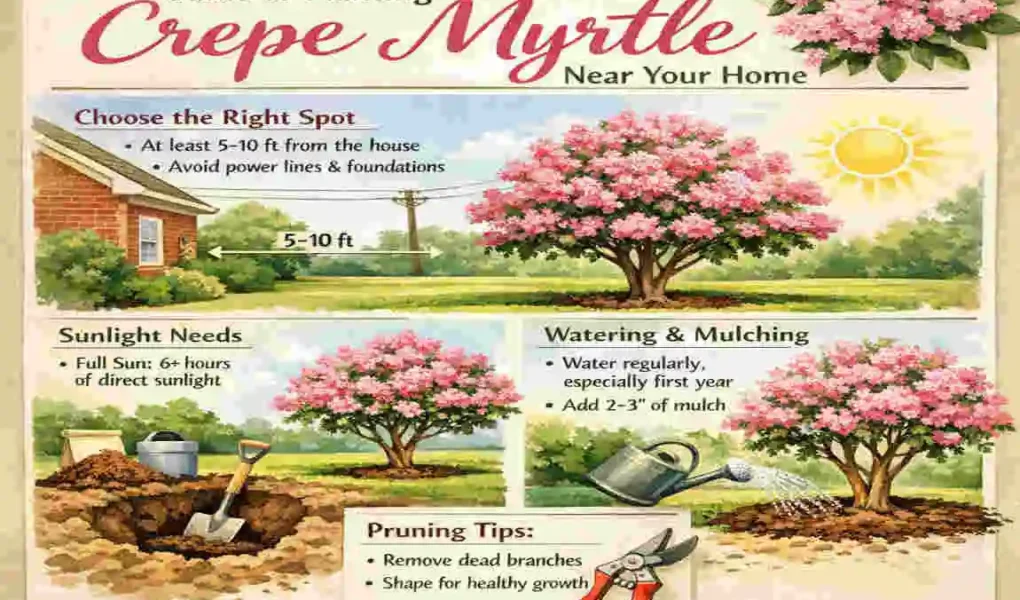
For many crepe myrtle varieties, a distance of 10 to 15 feet from the house is a solid starting point. This gives the tree room to mature while keeping it close enough to enjoy from windows, patios, or the front yard.
That said, the right distance depends on the size of the variety:
- Dwarf varieties can sometimes be planted 6 to 8 feet from the house if they are kept small and well maintained.
- Medium varieties usually do better at 10 to 15 feet away.
- Large tree-form varieties may need 15 to 20 feet or more.
If you are not sure which type you have, always assume it may grow larger than expected. A little extra space is usually safer than planting too close.
Here is a simple reference table to help you compare common situations:
Crepe Myrtle TypeMature SizeSuggested Distance from HouseBest Use
Dwarf varieties 3–5 ft tall 6–8 ft Small beds, near walkways, compact spaces
Small to medium varieties 8–15 ft tall 10–12 ft Front yards, foundation beds with room
Large shrub/tree types 15–25 ft tall 12–15 ft Accent planting, open landscape areas
Large mature trees 20–30+ ft tall 15–20 ft+ Spacious yards, away from structures
This table is only a guide. Soil conditions, pruning habits, and local climate can all affect growth. If your yard is tight, choose a smaller variety rather than forcing a large one into a narrow spot.
Potential Issues of Planting Too Close
Planting a crepe myrtle too close to the house can lead to problems that develop slowly over time.
One common issue is overhanging branches. Branches that extend too close to the roof may rub against shingles or make gutter cleaning more difficult. During storms, those branches may also become a concern if they break or shed debris.
Another issue is falling leaves and flowers. Crepe myrtles are beautiful, but they do shed. If the tree sits too close to a patio, entryway, or driveway, you may find yourself cleaning up petals and leaves more often than you want.
Poor spacing can also increase the chance of mildew and fungal disease. When air cannot move freely around the tree, moisture can linger on leaves and stems. That creates a better environment for disease and can affect the plant’s overall health.
You may also deal with pest problems more easily if the tree is crowded. Stressed trees are more likely to attract insects and develop weak growth. A cramped planting site is not ideal for establishing a healthy tree.
Most of these problems are avoidable if you plan. A few extra feet now can save you a lot of pruning and frustration later.
Step-by-Step Guide to Planting Crepe Myrtles
Choosing the Right Location
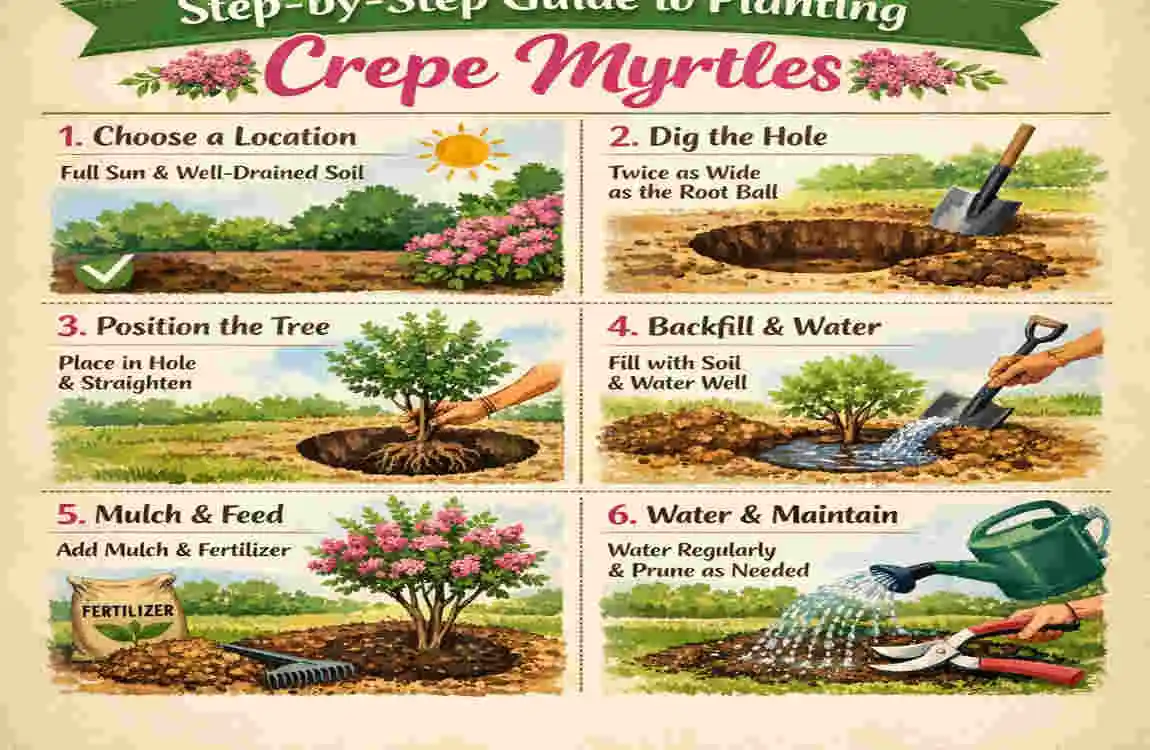
The first step is choosing a spot that gives your tree the best chance to thrive. Crepe myrtles love full sun, so pick a location that gets at least six hours of direct sunlight each day. More sun usually means better blooms and stronger growth.
Next, look at the soil. Crepe myrtles prefer well-drained soil. They do not like sitting in soggy ground. If water pools in the area after rain, you may need to choose a different spot or improve the soil before planting.
You should also think about the space around the tree. Ask yourself:
- How large will the tree be when mature?
- Will branches reach the roof, fence, or windows?
- Is there room for the crown to spread naturally?
- Are there underground pipes, cables, or drainage lines nearby?
This is also the time to decide how far to plant the crepe myrtle from the house, based on your exact yard. If the variety is small, you may be able to keep it a little closer. If it grows tall and wide, give it more space from the start.
A tree planted in the right place is much easier to care for. It will also look more balanced and natural as it grows.
Preparing the Soil
Good soil preparation helps the tree settle in faster. Start by checking whether the soil is loose and drains well. If the ground is too compacted, roots may struggle to spread.
If needed, mix in organic matter such as compost to improve soil texture. This helps the soil hold enough moisture while still draining properly. You do not need to overdo it. A healthy planting hole and decent native soil are usually enough for a crepe myrtle in most home landscapes.
Try to avoid creating a hole that fills with water after watering or rainfall. If drainage is poor, the tree may suffer from root stress or slow growth. In some yards, raising the planting area slightly can help.
Soil aeration matters too. Roots need air as much as they need water. Loose, workable soil supports better root development and helps the tree anchor itself well.
If your soil is very poor, very sandy, or heavy with clay, improving it before planting can make a big difference. The goal is to give the tree a stable but comfortable home.
Planting the Tree
When it is time to plant, dig a hole that is wider than the root ball but not much deeper. A hole that is about two to three times as wide as the root ball is usually a good choice. The depth should allow the top of the root ball to sit level with or slightly above the surrounding soil.
This is important because planting too deep can lead to weak growth and root problems. The tree should sit naturally, not sink into the hole.
Before planting the tree, gently loosen any circling roots if the tree is container-grown. This helps roots spread outward rather than continue to grow in a tight circle.
Once the tree is in place, backfill the hole with the soil you removed. Press the soil down lightly to remove air pockets, but do not pack it too hard. The roots need space to move.
After planting, water the tree well. This helps settle the soil around the roots and gives the tree the moisture it needs to recover from transplant stress.
Keep the trunk straight while planting. A tilted tree may grow unevenly and look awkward later. Take a moment to step back and check the shape before finishing.
Watering and Mulching Tips
Watering is one of the most important parts of early care. A newly planted crepe myrtle needs regular moisture while its roots establish.
For the first few weeks, water deeply once or twice a week, depending on your weather and soil. The goal is to keep the root zone moist, not soaked. After the tree settles in, you can reduce watering because crepe myrtles are fairly drought-tolerant once established.
A mulch layer helps hold moisture in the soil and keeps weeds down. Spread mulch around the base of the tree in a wide ring, but keep it a few inches away from the trunk. This prevents moisture from collecting right against the bark.
Good mulch choices include:
- shredded bark
- pine straw
- wood chips
- composted leaf mulch
Avoid piling mulch up against the trunk in a tall mound. That can trap moisture and encourage rot. A thin, even layer works much better.
Mulch also helps the soil stay cooler in hot weather. That can reduce stress on the roots and help the tree grow more steadily.
Pruning and Maintenance Tips
Crepe myrtles do best when pruned carefully. The right pruning helps shape the tree, improves flowering, and keeps the tree healthy. Incorrect pruning can lead to weak growth and an unnatural shape.
The best time to prune is usually late winter or very early spring, before new growth starts. This is when the tree is dormant, making its branches easier to see.
Use pruning to remove:
- dead branches
- crossing branches
- weak or damaged stems
- growth that crowds the center of the tree
Try not to cut the top of the tree just because it is tall. Heavy topping, often called “Crepe Murder,” weakens the tree and causes ugly, dense growth. It also reduces the elegant branch structure that makes crepe myrtles so attractive.
A better approach is to shape the tree gradually and let it keep its natural form. If you need the tree to stay smaller, choose a smaller variety rather than forcing a large one into a limited space.
Simple maintenance checklist for healthy crepe myrtles
- Water deeply during establishment.
- Mulch the root zone, but keep mulch off the trunk.
- Prune only when necessary and at the right time.
- Watch for signs of mildew or insect damage.
- Give the tree room to grow naturally.
A little regular care goes a long way. Crepe myrtles are not difficult plants, but they do reward thoughtful maintenance.
Common Mistakes to Avoid When Planting Crepe Myrtles
Planting Too Close to Structures or Other Plants
This is the most common mistake and often the most frustrating one later. A tree planted too close to your house may seem fine when young, but it can quickly outgrow the space. Branches can block light, crowd windows, or rub against the home.
The same problem happens when crepe myrtles are placed too close to other plants. They need room to spread, and nearby shrubs or trees can compete for water and sunlight. Crowding leads to weaker growth and a messier landscape overall.
Overwatering or Underwatering
Crepe myrtles need water to establish, but they do not like soggy roots. Too much water can suffocate the roots and slow growth. Too little water, especially after planting, can stress the tree and make it struggle.
The best approach is to water steadily and deeply at the start, then less frequently once the tree is established. Check the soil with your finger. If it feels dry several inches down, it is probably time to water.
Failing to Test or Amend Soil Conditions
Many homeowners assume any tree can grow anywhere, but soil quality matters. Heavy clay, poor drainage, or hard-packed soil can hold back the tree’s growth. If the soil is not right, the tree may stay weak no matter how much you water it.
A little soil improvement before planting can save a lot of trouble later. Compost, proper grading, and loose soil can all help the tree establish more easily.
Neglecting Proper Pruning Techniques
Bad pruning can ruin the natural beauty of a crepe myrtle. Cutting the top off the tree or removing too much growth at once can create weak shoots and an awkward shape. It may also lead to faster regrowth that needs even more pruning.
Instead of harsh cuts, use light, thoughtful pruning. Focus on structure, not control for the sake of control. The goal is a healthy tree with a natural shape.
Ignoring Pest Control or Disease Prevention
Even though crepe myrtles are usually hardy, they are not completely trouble-free. Aphids, powdery mildew, and sooty mold can appear when conditions are poor. Trees planted too close together or too close to a house may suffer more because airflow is limited.
The good news is that healthy, well-spaced trees are less likely to have these issues. Choosing the right planting spot and maintaining good airflow does much of the preventive work for you.
Benefits of Planting Crepe Myrtles Near Your Home

Aesthetic Appeal
Crepe myrtles are natural beauty boosters. They add color, shape, and texture to the home exterior. In summer, the blooms create a lively, cheerful look. In winter, the bark and branch form still provide visual interest.
Placed well, they can frame a front yard, soften a house’s lines, or make an entryway feel more inviting. Their elegance works in both formal and casual landscapes.
Environmental Benefits
Crepe myrtles offer more than looks. They provide some shade, making outdoor spaces more comfortable. They also support pollinators, such as bees and butterflies, when they are in bloom.
Like many trees, they can help improve the feel of the space around your home. They bring life to the yard and can make the landscape feel more balanced and welcoming.
Increased Property Value
Good landscaping often helps a home feel more polished and cared for. A healthy crepe myrtle planted at the right distance can add to that effect. It shows planning, care, and attention to detail.
Of course, the key word is healthy. A tree that is too close, poorly pruned, or struggling with disease can have the opposite effect. That is why proper placement and maintenance matter so much. When done well, the tree becomes an asset, not a problem.
Frequently Asked Questions About Crepe Myrtles
How far should I plant a crepe myrtle from the house?
A good general rule is 10 to 15 feet from the house for many crepe myrtle varieties. Smaller types may be planted a little closer, around 6 to 8 feet. At the same time, larger varieties should be kept farther away, often at least 15 feet.
The best distance depends on the variety’s mature size and the layout of your yard. If you are unsure, give the tree extra room. It is easier to enjoy a tree with space than to deal with one that has outgrown its spot.
Can crepe myrtle roots damage foundations or underground plumbing?
Crepe myrtle roots are generally not considered highly aggressive. They are less likely to damage foundations than some larger tree species. That said, any tree planted too close to a structure can still cause problems over time due to soil competition and root pressure.
Underground plumbing is another reason to plant thoughtfully. Even if the roots do not actively “seek out” pipes, they can still complicate repairs if the tree is too close to the pipes. Keeping a safe distance is the best protection.
What is the best time of year to plant crepe myrtles?
The best time to plant is usually spring or early fall, when temperatures are milder and the tree has a better chance to establish roots without extreme heat or cold. Spring planting gives the tree a full growing season to settle in. Fall planting can also work well in warmer regions.
Avoid planting during extreme heat or in frozen ground. A young tree does better when conditions are steady and manageable.
How fast do crepe myrtles grow?
Crepe myrtles are often fast to moderate growers. In the right setting, they can put on noticeable height and width each year. Growth speed depends on the variety, sunlight, water, soil quality, and climate.
Smaller varieties may stay compact by nature, while larger ones can become substantial trees over time. That is why it is so important to think ahead when choosing the planting spot.
What are the best companion plants for crepe myrtles?
The best companion plants are usually those that enjoy similar conditions: sun, well-drained soil, and moderate care. Good choices often include low shrubs, ornamental grasses, flowering perennials, and ground covers that do not compete too heavily for space.
Some gardeners like to pair crepe myrtles with plants that bloom at different times so the landscape looks interesting through more of the year. The main rule is simple: do not crowd the tree. Companion plants should support the overall look, not squeeze the crepe myrtle’s root space or shade its trunk.
| Aspect | Key Points |
|---|---|
| Recommended Planting Distance | 10-15 feet from the house, depending on tree variety |
| Sunlight Needs | Full sun (6+ hours daily) |
| Soil Requirements | Well-drained, slightly acidic to neutral soil |
| Watering | Regular watering after planting; drought-tolerant once established |
| Pruning Time | Late winter to early spring |
| Common Mistakes to Avoid | Planting too close to structures, overwatering, improper pruning |
| Benefits | Enhances curb appeal, provides shade, supports pollinators |