A residential noise complaint is simply a neighbour’s way of saying that a sound from your home feels too loud or disruptive. Common culprits include yelling, loud music, parties, TV, pets, construction, and everyday household chores. What counts as “too loud” can differ from city to city, from one apartment building to another, and even from one time of day to the next.
| Topic | Key Information |
|---|---|
| Noise Complaint | A complaint may occur when household noise repeatedly or excessively disturbs neighbors. |
| Yelling at Home | Yelling inside your home is not automatically illegal, but excessive or disruptive noise may be restricted by local rules. |
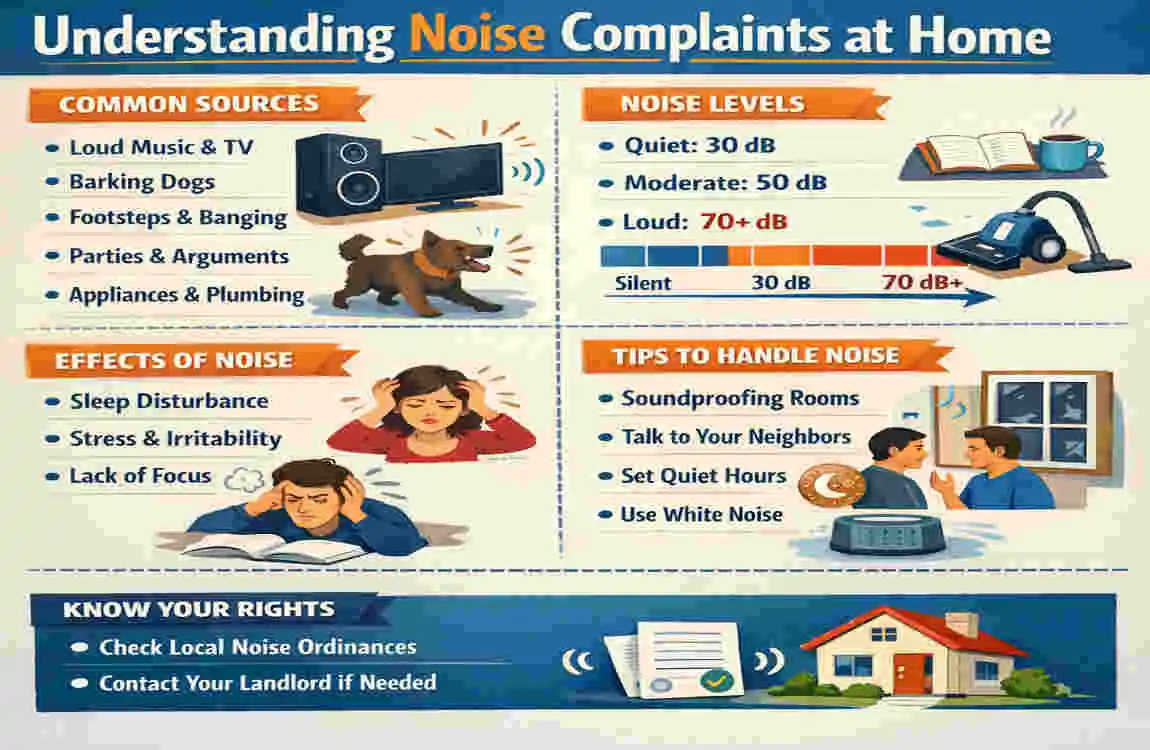
| Common Noise Sources | Loud music, yelling, parties, televisions, pets, children, appliances, and home renovations can cause complaints. |
| Quiet Hours | Many residential communities have specific quiet hours, especially during nighttime. Check your local requirements. |
| First Response | Stay calm, listen to the complaint, and try to understand when and why the disturbance is occurring. |
Is It Illegal to Yell in Your House?
Yelling inside your home isn’t automatically illegal. Still, it can cross a line when it becomes excessively loud, repeated, or threatening. Local noise ordinances, nuisance laws, lease agreements, and homeowners‑association (HOA) rules all factor into whether a shout becomes a legal issue.
When Yelling May Become a Noise Issue
- Volume: If the shout can be heard through walls or windows, especially during quiet hours.
- Frequency: Repeated yelling night after night.
- Disturbance: Neighbours report being unable to sleep or concentrate.
Yelling, Arguments, and Threatening Behaviour
A normal argument is usually seen as a private matter. Still, if yelling includes threats, harassment, or intimidation, it may breach criminal or civil statutes. In those cases, the police can become involved regardless of the time of day.
Local Noise Rules Matter
Every city, county, and community sets its own limits. Check city ordinances, lease clauses, HOA guidelines, or condo rules to understand the specific decibel limits, quiet‑hour windows, and enforcement procedures that apply to you.
Common Reasons Neighbours File Noise Complaints
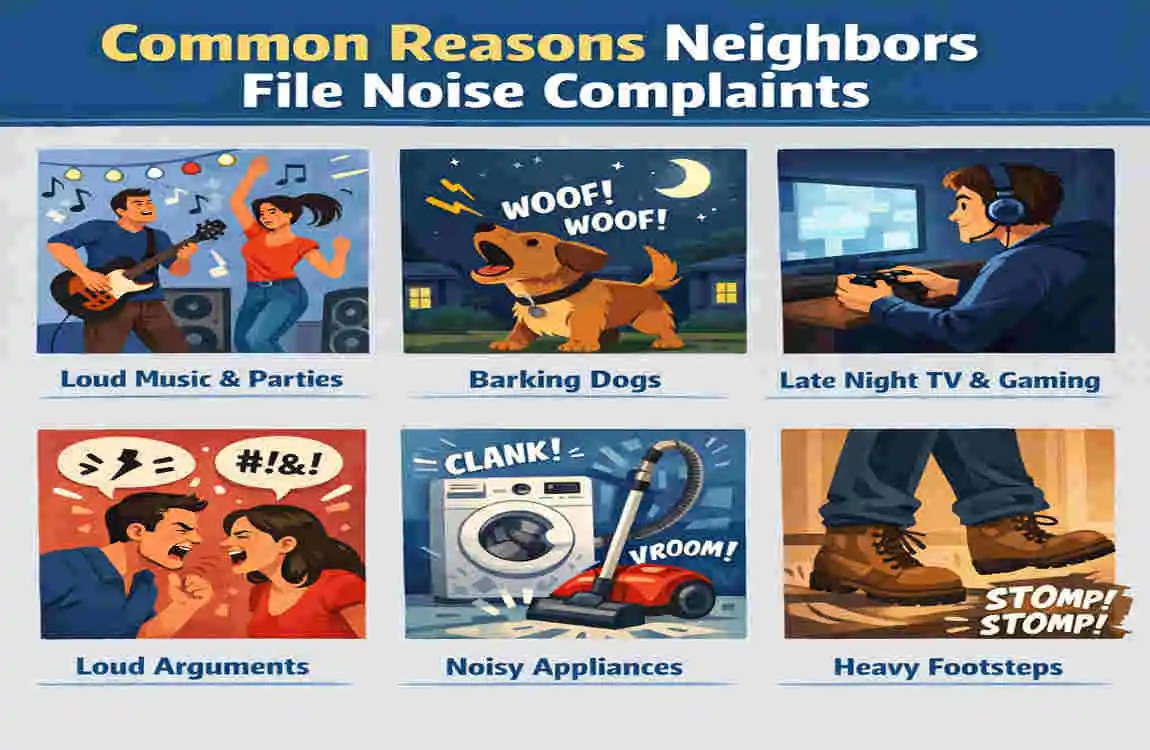
Even everyday activities can trigger a complaint when they happen at the wrong moment or at the wrong level. Typical triggers include:
- Late‑night gatherings or parties
- Loud conversations on patios or balconies
- Barking or whining pets
- Home improvement projects (drilling, hammering)
- Children playing loudly
- Music played at high volume
- Frequent arguments or shouting
Quick Self‑Check Checklist
- Is the activity happening during designated quiet hours?
- Could the sound be travelling through shared walls or windows?
- Have I spoken to the neighbour about the issue?
- Do my lease or HOA rules address this kind of noise?
If you answer “yes” to any of these, it’s worth adjusting the behaviour before a formal complaint lands on your door.
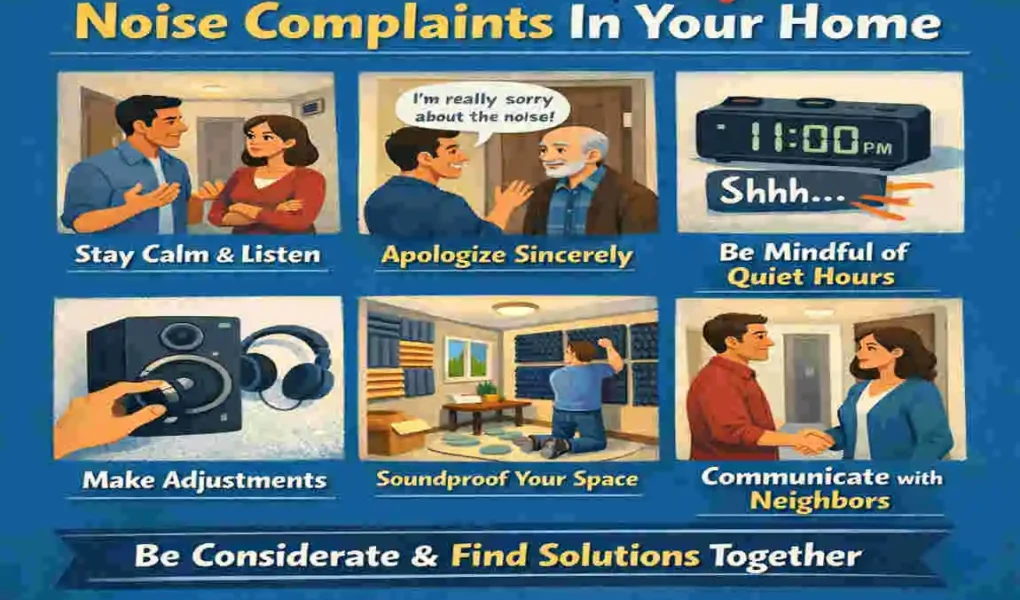
How To Respond to a Noise Complaint
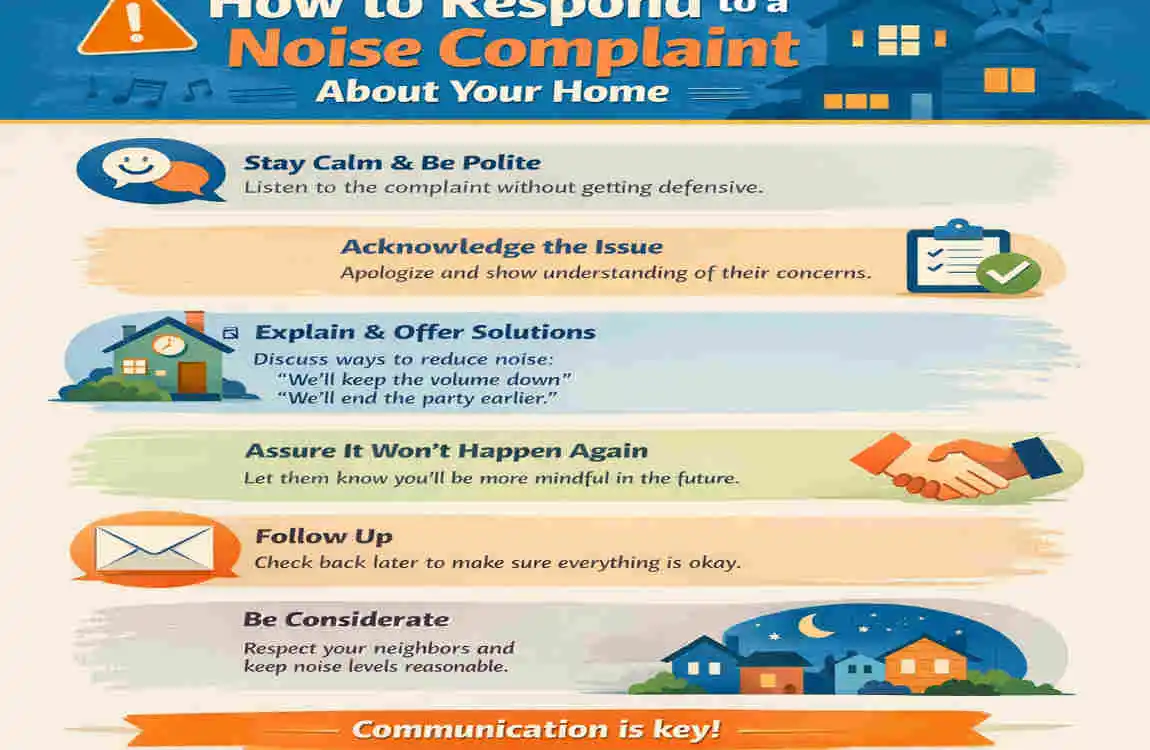
Handling a complaint calmly and clearly often prevents escalation. Follow these steps:
Talk With Your Neighbour Calmly
- Listen first. Let the neighbour explain what bothered them.
- Apologize sincerely if the noise was louder than you realized.
- Explain any extenuating circumstances (e.g., a one‑time celebration).
Check Your Local Rules
Pull out your lease, HOA handbook, or city ordinance and confirm the actual limits. Knowing the rulebook gives you confidence when you discuss solutions.
Reduce the Noise
- Lower music or TV volume.
- Close windows and doors.
- Use area rugs, curtains, or acoustic panels to absorb sound.
- Relocate speakers away from shared walls.
- Schedule noisy projects during daytime hours.
What Happens If Noise Complaints Continue?
Repeated complaints can lead to a chain of actions:
Stage Possible Action Typical Trigger
1️⃣ Verbal warning from landlord/HOA First informal complaint
2️⃣ Written notice or fine Multiple complaints or ignored warnings
3️⃣ Formal citation from city or police Ongoing disturbance after warnings
4️⃣ Legal action or eviction Continued non‑compliance
Keeping a record of all communications (dates, times, what was said) helps protect you if the dispute escalates.
How To Prevent Future Noise Complaints
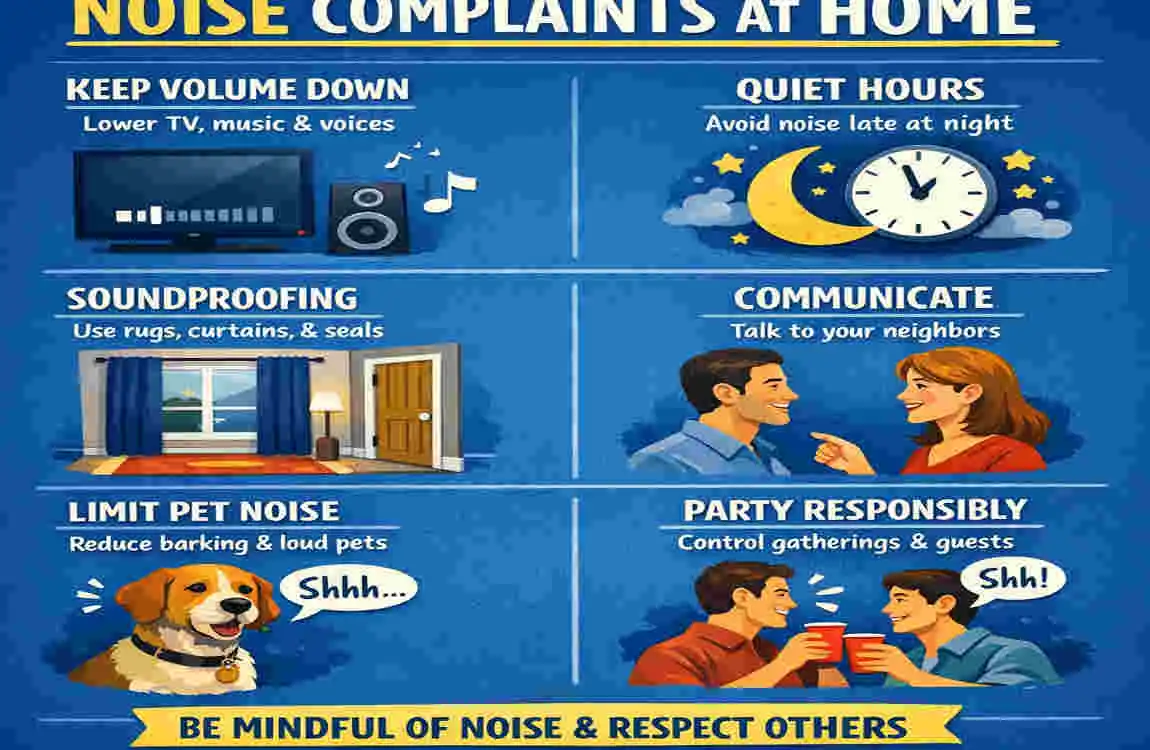
Staying ahead of potential issues is easier than fixing them after the fact. Consider these long‑term habits:
- Set quiet‑hour guidelines for yourself and any guests (e.g., 10 PM–7 AM).
- Notify neighbours in advance of any planned gathering or home‑improvement work.
- Invest in sound‑absorbing items such as rugs, heavy curtains, and bookshelf walls.
- Be mindful of shared spaces like hallways, balconies, and thin apartment walls.
- Maintain open communication—a quick “Sorry for the noise, we’re finishing up now” can go a long way.
By staying aware of the rules that apply to your property and treating neighbours with respect, you’ll keep the peace and avoid unnecessary legal hassles.
Frequently Asked Questions
Is it illegal to yell in your house?
Yelling itself isn’t a crime, but if it’s excessively loud, repeated, or accompanied by threats, it can breach noise ordinances, nuisance laws, or lease terms, potentially leading to fines or police involvement.
Can a neighbour complain about noise during the day?
Yes. Daytime noise can still be regulated if it exceeds local decibel limits, lasts too long, or creates a nuisance.
Can police respond to a noise complaint?
Police may respond when a complaint involves excessive volume, disturbance of the peace, or possible criminal conduct (e.g., threats). Their involvement varies by jurisdiction.
How can I reduce noise coming from my house?
Use rugs, curtains, and furniture to dampen sound; close windows and doors; lower speaker volumes; and schedule noisy tasks during acceptable hours.
Can my landlord take action because of noise complaints?
Most leases include a “quiet enjoyment” clause. If you violate it, the landlord can issue warnings, charge fines, or begin eviction proceedings.