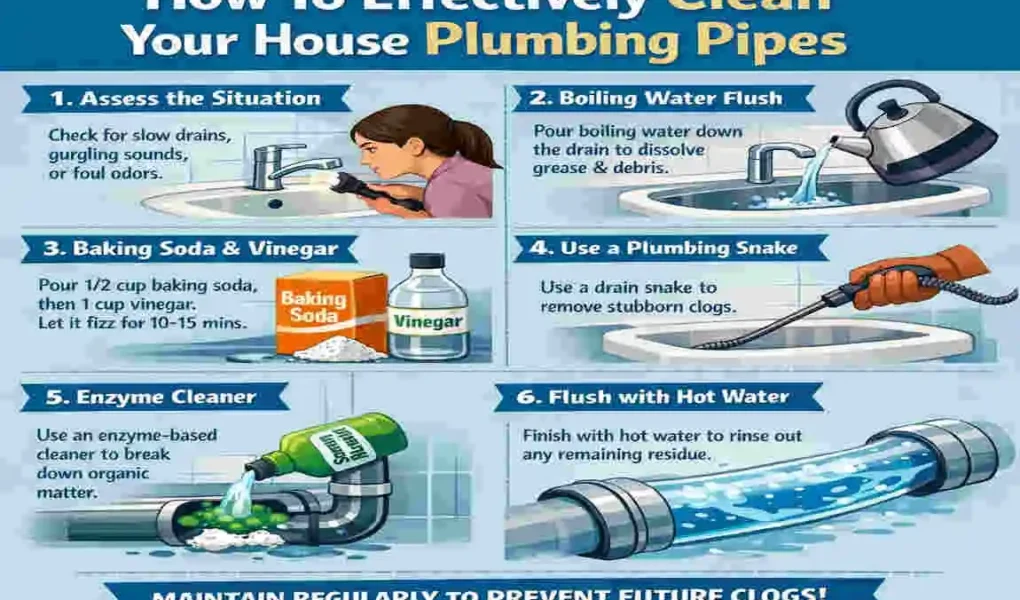
how to clean out house plumbing pipes
Plumbing

How to Clear Out Clogged House Plumbing Pipes Easily

Slow drains, strange gurgling sounds, and foul smells coming from your sinks or tubs are not small annoyances. They are early warning signs that your plumbing system needs attention. If you ignore them, a simple clog can grow into a bigger problem that affects your whole home.

Many homeowners deal with clogged pipes at some point. It is one of the most common plumbing issues because everyday habits slowly build up inside the pipes. Grease, soap, hair, food scraps, and even mineral deposits can narrow the passage over time. Before you know it, water stops moving the way it should.

That is why it helps to know how to clean out house plumbing pipes before the problem becomes a backup or a leak. The good news is that many clogs can be handled with simple tools and basic cleaning methods. You do not always need a plumber right away.

Method What You Need How to Do It (Brief) Best For
Hot water flush Kettle or pot, hot water Boil water, let cool slightly if PVC, then pour slowly down the drain. Minor grease or soap clogs
Dish soap + hot water Dish soap, hot water Squirt dish soap into drain, then pour hot water after a minute. Kitchen sink grease
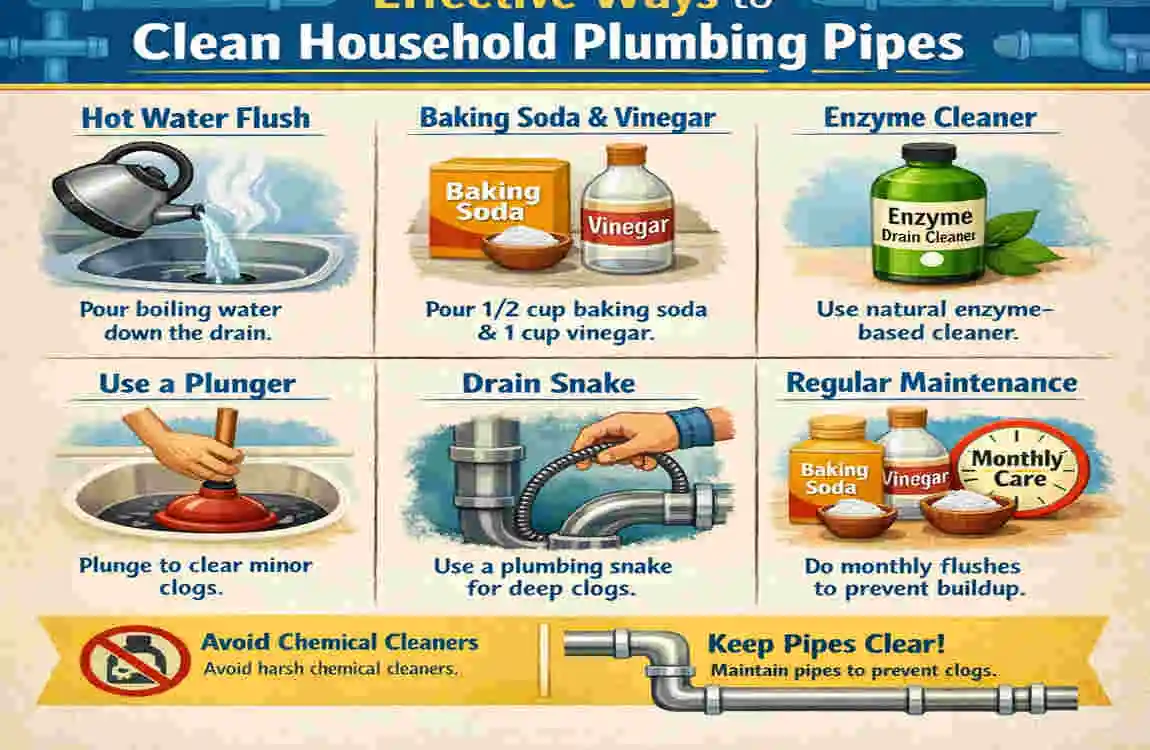
Baking soda + vinegar Baking soda, white vinegar, hot water Pour 1/2 cup baking soda, then 1 cup vinegar; cover, wait 20–30 min, flush with hot water. Sinks, bathtubs, mild sludge
Plunger (sink/toilet) Household plunger, water Cover drain fully, push and pull firmly 10–15 times; repeat if needed. Sinks, toilets, tubs
Baking soda + salt Baking soda, salt, hot water Mix equal parts, pour down drain, wait 20–30 min, flush with hot water. Slow bathroom drains

What Causes Clogged House Plumbing Pipes?

how to clean out house plumbing pipes

Clogged pipes usually do not happen all at once. In most cases, they build up slowly over time. Understanding the cause helps you choose the right cleaning method and prevent the problem from recurring.

Common Household Culprits

The most common clog makers are everyday items that seem harmless at first.

Grease and food waste often create trouble in kitchen pipes. When grease is hot, it flows easily. But once it cools, it hardens and sticks to the inside of the pipe. Food bits can then cling to that greasy layer, forming a thick blockage.

Hair and soap scum are the biggest problems in bathroom drains. Hair tangles inside the pipe, and soap residue sticks to it. Together, they form a sticky net that slows water down.

Dirt and debris can also find their way into drains, especially in laundry rooms, utility sinks, or outdoor lines. Over time, these particles settle, reducing the space inside the pipe.

Long-Term Build-Up Issues

Some clogging problems go deeper than daily use.

Mineral deposits from hard water can coat the inside of pipes. These minerals do not dissolve easily, and they can slowly reduce water flow. If your area has hard water, this may be a regular problem.

Pipe corrosion can also worsen clogs. Older pipes may develop rough surfaces inside. Those rough spots catch debris more easily than smooth pipes do.

Tree root intrusion is a serious issue for outdoor drain and sewer lines. Roots naturally move toward water sources, and tiny cracks in underground pipes can attract them. Once roots get inside, they can trap waste and cause frequent backups.

Signs Your Pipes Need Cleaning

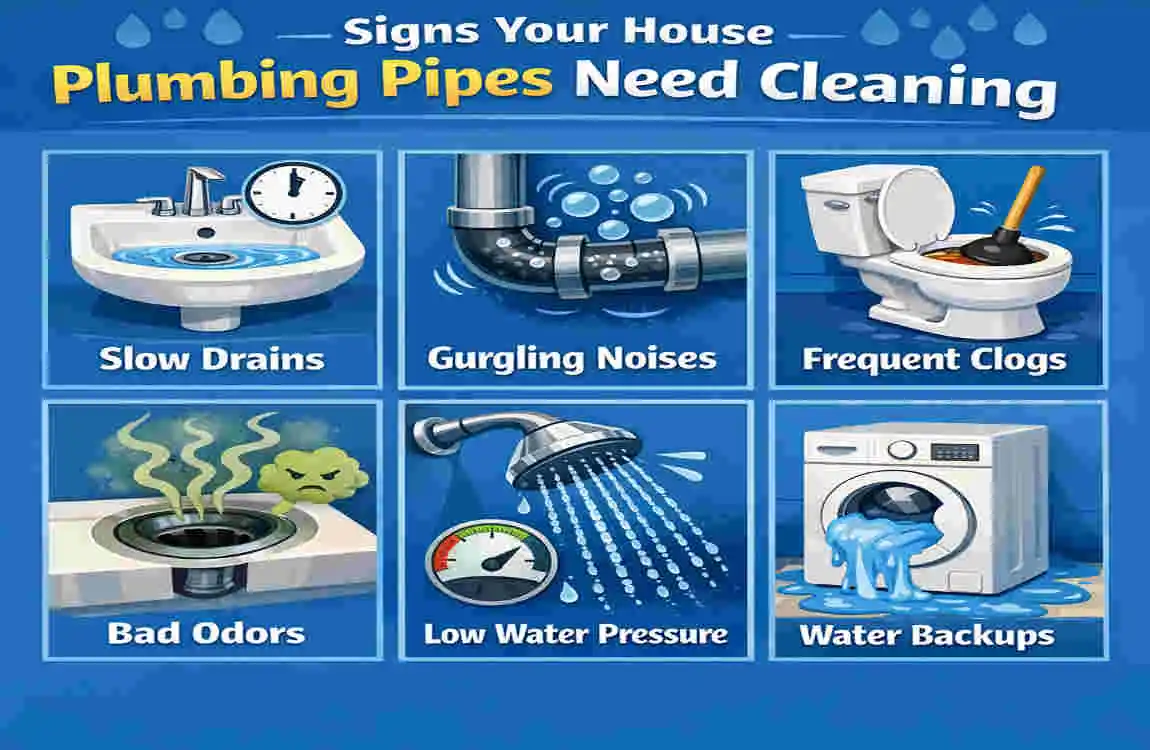
You do not have to wait until water stops flowing completely. Your plumbing often gives you signs before a full clog happens.

Look for these common warnings:

  • Slow-draining sinks or tubs
  • Gurgling sounds in drains or toilets
  • Bad odors coming from the drain
  • Frequent backups in the same fixture

If you notice one or more of these signs, act early. That is usually the easiest time to clear the pipes.

Why Regular Pipe Cleaning Is Important

Cleaning your pipes is not just about solving a current problem. It is also about preventing future headaches.

Prevents Costly Repairs

Small clogs are usually cheap and simple to fix. But if you wait too long, the blockage can grow. Then you may face overflow damage, pipe leaks, or a backed-up sewer line. Those repairs cost far more than basic cleaning.

Improves Water Flow and Efficiency

When pipes are clear, water moves faster and drains better. That means fewer slow sinks, fewer standing water problems, and less stress on your plumbing system. Your home simply works better when the pipes are open.

Extends Pipe Lifespan

A clean pipe has less buildup, less pressure, and less wear. That helps it last longer. If clogs keep forming, the pressure inside the line can rise, leading to cracks or weak spots over time.

Reduces Health Risks

Standing water and trapped waste can create a breeding ground for bacteria, mold, and unpleasant smells. By cleaning pipes regularly, you reduce the chance of unhealthy buildup inside your home.

Regular maintenance is one of the easiest ways to protect your plumbing. A small habit now can save you from a major emergency later.

Tools and Supplies You’ll Need

Before you start, gather your tools. Having everything ready saves time and makes the job much easier.

Basic Household Tools

These are the items most homeowners already have or can get easily.

  • Plunger: Useful for many sink, tub, and toilet clogs
  • Drain snake or auger: Helps remove hair and deeper blockages
  • Bucket: Catches water when you remove parts of a drain
  • Gloves: Protect your hands from dirty water and debris

Natural Cleaning Supplies

These simple supplies are great for light clogs and regular maintenance.

  • Baking soda
  • Vinegar
  • Hot water

These items work well for loosening buildup and freshening drains without harsh chemicals.

Advanced Equipment

For heavier blockages, more powerful tools may be needed.

  • Plumbing auger: Reaches deeper into the pipe
  • Hydro jetting machine: Uses high-pressure water to clear severe buildup

The more advanced tools are usually best handled by a professional, especially if you are not sure where the clog is or how deep it goes.

Quick Tool Comparison

Tool or Method Best For Skill Level Notes

Boiling water Grease and light buildup Easy Good first step

Baking soda and vinegar Light odor and residue Easy Natural and safe

Plunger Minor sink or tub clogs Easy Works best with a good seal

Drain snake Hair and small blockages Moderate Use gently to avoid damage

P-trap cleaning Localized clogs under sinks Moderate Great for sink backups

Chemical cleaner Tough buildup in some cases Easy to use, but risky Use carefully

Hydro jetting Severe or repeated blockages Professional Strongest option

Step-by-Step Methods to Clean Out Plumbing Pipes

how to clean out house plumbing pipes

Now let’s get into the main part of the guide: how to clean out house plumbing pipes using practical methods. Start with the easiest option first. If that does not work, move to the next one.

Boiling Water Flush

This is one of the simplest methods, and it works well for grease and light buildup.

Best For

  • Kitchen sink grease
  • Light soap residue
  • Minor slow drains

How to Do It

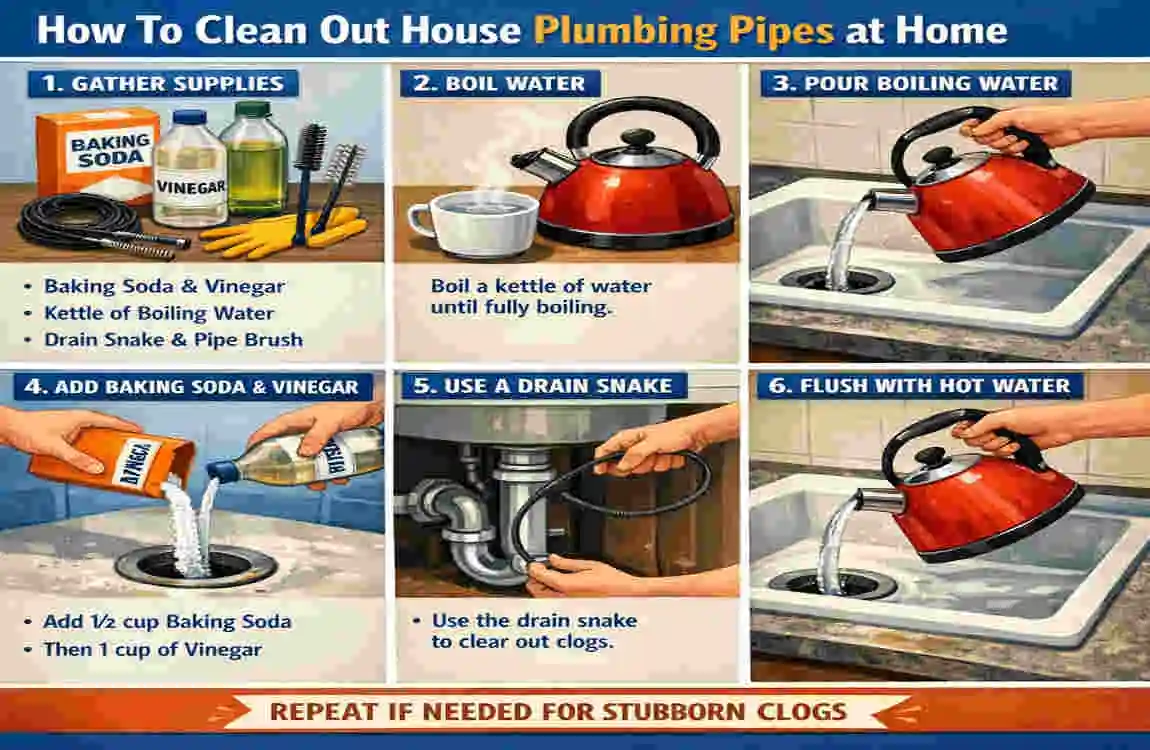
  1. Boil a pot or kettle of water.
  2. Carefully pour the hot water slowly into the drain in two or three stages.
  3. Wait a few seconds between pours so the heat can break down buildup.
  4. Test the drain with regular tap water.

Why It Works

Hot water helps melt greasy residue and loosen soft buildup stuck to the pipe walls. It is not a cure for severe clogs, but it is a good first step.

Important Tip

Be careful if you have PVC pipes or are unsure of the pipe material. Extremely hot water can damage some pipes, so use caution.

Baking Soda and Vinegar Solution

This is one of the most popular natural drain cleaning methods because it is simple and safe for regular use.

Best For

  • Odors
  • Light residue
  • Routine maintenance

How to Do It

  1. Pour about half a cup of baking soda into the drain.
  2. Add about half a cup of vinegar.
  3. Let the mixture fizz and sit for 15 to 30 minutes.
  4. Flush the drain with hot water.

Why It Works

The fizzing reaction helps loosen grime and soft buildup inside the pipe. It also helps reduce bad smells.

When to Use It

Use this method when the drain is moving slowly but not fully blocked. It is especially helpful as a regular part of your cleaning routine.

Using a Plunger

A plunger can do more than people realize. When used correctly, it can shift the clog and restore flow.

Best For

  • Sink clogs
  • Tub clogs
  • Toilet backups

How to Do It

  1. Make sure there is enough water to cover the plunger’s rubber cup.
  2. Place the plunger firmly over the drain opening.
  3. Push and pull with steady motion for several seconds.
  4. Lift the plunger and check if the water drains.
  5. Repeat if needed.

Common Mistakes to Avoid

  • Using weak, short pushes
  • Not sealing the opening well
  • Plunging too hard and splashing dirty water

A good seal is important. Without it, you will not create enough pressure to move the clog.

Drain Snake or Auger

If the clog is deeper or made of hair and debris, a drain snake may be the right tool.

Best For

  • Hair clogs
  • Bathroom drains
  • Small solid blockages

How to Do It

  1. Insert the end of the snake into the drain.
  2. Turn the handle slowly as you push it deeper.
  3. When you feel resistance, keep rotating gently.
  4. Pull the snake back out slowly.
  5. Clean off any debris and flush the drain with water.

Safety Tip

Do not force the snake if it gets stuck. Too much pressure can damage the pipe. Gentle movement usually works better than brute force.

Why It Helps

A drain snake can hook hair, soap chunks, and other debris that a plunger may not move.

Cleaning the P-Trap

The P-trap is the curved pipe section under sinks. It holds a small amount of water to prevent sewer gases from entering the house. It is also a common spot for clogs.

Best For

  • Kitchen sink clogs
  • Bathroom sink clogs
  • Localized blockages under the sink

How to Clean It

  1. Place a bucket under the P-trap.
  2. Loosen the slip nuts by hand or with a wrench.
  3. Remove the curved pipe carefully.
  4. Empty the trapped water and debris into the bucket.
  5. Clean the pipe with warm water and a brush.
  6. Reattach the P-trap tightly.

Why It Works

Sometimes the clog is not deep in the system. It sits right in the curved section under the sink. Cleaning this part can quickly solve the problem.

Chemical Drain Cleaners

Chemical cleaners can seem like a fast fix, but they should be used carefully.

Best For

  • Certain tough clogs
  • Situations where other methods fail

How to Use Them Safely

  1. Read the label closely.
  2. Wear gloves and avoid splashes.
  3. Do not mix different chemicals.
  4. Use the product only as directed.
  5. Rinse the drain well afterward.

Why to Be Careful

These products can damage pipes if used too often. They can also be harmful if they splash on skin or get into your eyes. If you already tried other methods, use this option only when needed.

Best Practice

If you are unsure, choose a safer method first. In many cases, natural options or a drain snake are better for your pipes.

Hydro Jetting

Hydro jetting is the strongest cleaning method on this list. It uses a high-pressure stream of water to blast away heavy buildup inside the pipes.

Best For

  • Severe clogs
  • Grease-heavy lines
  • Tree root damage
  • Repeated blockages

Why It Works

The force of the water scrubs the inside of the pipe, clearing out thick buildup. It can do a deep cleaning that basic methods cannot match.

Important Note

This is usually a job for a professional plumber. If used incorrectly, high-pressure water can damage old or weak pipes.

When to Consider It

If the same drain keeps clogging even after repeated cleaning, hydrojetting may be a better long-term fix.

Choosing the Right Method

Not every clog needs a strong solution. In fact, starting simple is usually the smartest move.

Use this general rule:

  • Light odor or slow drain → baking soda and vinegar
  • Greasy buildup → boiling water
  • Minor blockage → plunger
  • Hair or deeper clog → drain snake
  • Sink clog under the basin → P-trap cleaning
  • Severe or repeated clog → professional help or hydro jetting

The key is to match the method to the problem. That saves time and prevents the issue from getting worse.

Room-by-Room Pipe Cleaning Tips

Different parts of your home create different kinds of clogs. Here is how to handle them room by room.

Kitchen Pipes

Kitchen drains often handle grease, food particles, and soap residue.

What Helps Most

  • Scrape food into the trash before washing dishes
  • Pour hot water down the drain after cooking greasy meals
  • Use baking soda and vinegar for routine cleaning

Extra Tip

Avoid pouring oil or fat into the sink. Even small amounts can harden inside the pipe, causing trouble later.

Bathroom Pipes

Bathroom drains usually clog from hair, toothpaste, soap scum, and personal care products.

What Helps Most

  • Use a drain cover to catch hair
  • Remove visible hair from the drain regularly
  • Flush with hot water after cleaning

Extra Tip

If your tub drains slowly, the clog is often close to the surface. A plunger or drain snake can usually help.

Outdoor Drain Lines

Outdoor lines can be affected by dirt, leaves, root growth, and storm-related debris.

What Helps Most

  • Keep drains clear of leaves and yard waste
  • Watch for repeated slow drainage after heavy rain
  • Call a plumber if you suspect root intrusion

Extra Tip

If multiple outdoor drains are backing up simultaneously, the issue may lie deeper in the main line.

Preventative Maintenance Tips

The best way to handle clogged pipes is to stop them from forming in the first place. Small habits make a big difference.

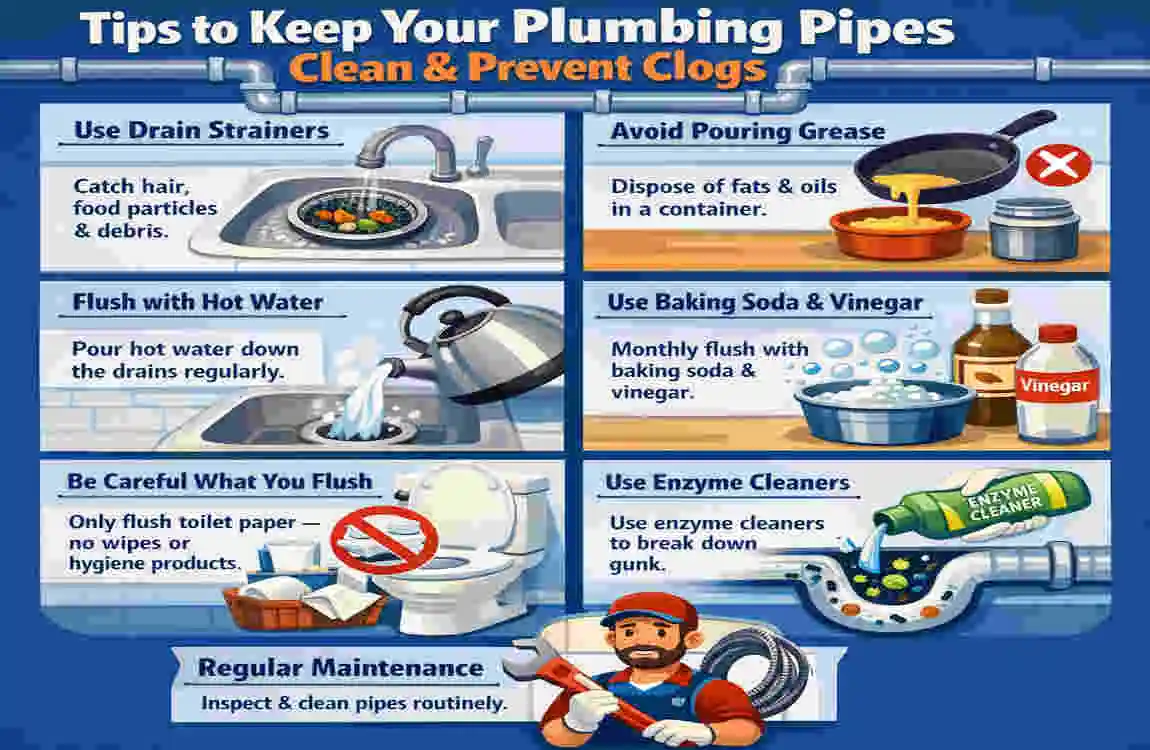
Simple Habits That Help

  • Avoid pouring grease down the drain
  • Use drain covers in sinks and tubs
  • Flush pipes with hot water regularly
  • Dispose of food and waste properly
  • Schedule periodic plumbing inspections

These steps may seem small, but they help protect your system from a gradual buildup over time.

A Simple Maintenance Routine

You do not need a complicated plan. A basic routine can keep pipes healthier.

Try this:

  1. Flush kitchen and bathroom drains with hot water once a week.
  2. Clean drain covers often.
  3. Watch for slow drainage.
  4. Use baking soda and vinegar once in a while for freshening.
  5. Call a professional if you notice repeated issues.

Consistency matters more than doing one big cleaning once a year.

When to Call a Professional Plumber

how to clean out house plumbing pipes

Some clogs are too stubborn or too serious for DIY methods. That is when professional help becomes the smart choice.

Signs You Need a Plumber

  • The clog keeps coming back
  • Multiple drains are backing up at the same time
  • You suspect a sewer line issue
  • Water is backing up into tubs, sinks, or toilets
  • You do not have the right tools or experience

Why Professional Help Matters

A plumber can inspect the system, find the real source of the problem, and choose the right fix. That saves you from guessing and prevents accidental damage. If the problem is deep in the line, a pro may need to use specialized equipment.

If you have already tried basic cleaning and the clog persists, it is time to stop forcing it and let an expert take a look.

Common Mistakes to Avoid

When people try to clear clogged pipes, they sometimes make the problem worse without meaning to. Avoid these common mistakes.

Mistakes That Can Cost You

  1. Overusing chemical cleaners
  2. Using too much chemical cleaner can harm pipes and pose safety risks.
  3. Ignoring early warning signs
  4. A slow drain is easier to fix than a full backup.
  5. Using the wrong tools
  6. Forcing the wrong tool into a pipe can make the damage worse.
  7. Applying too much force with an auger
  8. A gentle touch works better than pushing hard.
  9. Skipping regular maintenance
  10. Waiting until a clog becomes severe often leads to more extensive repairs.

Smart Rule to Follow

If a method does not work after a reasonable number of attempts, do not keep repeating it blindly. Move to the next safer option or call a professional. That approach protects your pipes and saves time.

FAQs

What is the easiest way to clean out house plumbing pipes?

The easiest way is usually to start with boiling water or a baking soda-and-vinegar mix. These methods work best for light buildup, odors, and slow drains. If the clog is stronger, a plunger or drain snake may be needed.

How often should I clean my plumbing pipes?

A simple maintenance routine, once a week or once a month, is usually enough for most homes. You do not need to deep-clean every pipe every time. Just watch for signs of trouble and clean drains regularly to prevent buildup.

Are chemical drain cleaners safe?

They can work, but they should be used with caution. They may damage pipes if used too often, and they can be unsafe if handled carelessly. Safer options like boiling water, a plunger, or a drain snake are often better first choices.

Can I clean pipes without professional tools?

Yes, you can. Many homeowners handle light and moderate clogs with basic tools like a plunger, baking soda, vinegar, hot water, or a simple drain snake. These methods are often enough for common household blockages.

What should I do if my pipes keep clogging?

If your pipes keep clogging, the problem may be deeper than normal buildup. You may have a hidden blockage, tree root intrusion, or damaged pipes. In that case, call a plumber for a proper inspection and long-term fix.

You may also like...

Leave a Reply

Your email address will not be published. Required fields are marked *