In today’s world, skilled workers are needed more than ever. People rely on tradespeople to keep homes, businesses, and public spaces running smoothly. That is why many job seekers are asking a simple but important question: is plumbing a good career?
The short answer is yes; for many people, it can be a very strong career choice. Plumbing offers steady work, solid income potential, and a real path to business ownership. It also gives you a chance to build a practical skill that people will always need.
Is Plumbing a Good Career Choice?

Understanding the Plumbing Profession
Plumbers do much more than fix sinks and unclog drains. They work on water systems, waste lines, pipes, fixtures, and heating equipment. Their work helps people access clean water and safely dispose of wastewater from homes and buildings.
A plumber may handle:
- Residential plumbing
- Commercial plumbing
- Industrial plumbing
- Emergency repair services
Residential plumbers work in houses and apartments. Commercial plumbers work in offices, stores, schools, and other large buildings. Industrial plumbers handle larger, more complex systems in factories and plants. Emergency repair plumbers handle urgent issues such as burst pipes, leaks, or blocked drains.
That variety makes the job more interesting than many people expect. If you like solving real problems and working with your hands, this trade can be a great fit.
Why Plumbing Remains in High Demand
One of the biggest reasons people ask whether plumbing is a good career is to know whether the work will still be needed in the future. Plumbing is one of the most important skilled trades, and demand stays strong for several reasons.
First, many homes and buildings have older plumbing systems that need repairs or upgrades. Pipes wear out. Fixtures fail. Water heaters break. These problems do not disappear on their own.
Second, new homes and commercial buildings need skilled plumbers during construction. Every new property needs pipes, drains, taps, and water systems installed correctly.
Third, modern plumbing technology is growing. Water-saving fixtures, energy-efficient systems, and eco-friendly plumbing solutions are creating new work opportunities. So the trade is not standing still. It is growing and changing.
Is Plumbing a Stable Career?
Yes, plumbing is widely seen as a stable career. People always need water, sanitation, and repair services. These are not optional services. They are essential.
Even when the economy slows down, plumbing work continues. A broken pipe, leaking toilet, or failing water heater still needs repair. That kind of steady demand makes plumbing different from many office jobs or trend-based industries.
If you want a career that is useful in almost any location and in almost any season, plumbing is worth serious attention.
Top Benefits of Choosing Plumbing as a Career
Strong Job Security
Plumbing is an essential service, which means it will always matter. Homes, hospitals, restaurants, and schools all need plumbing systems to work properly. That creates a reliable need for trained workers.
Plumbers can find work in cities, suburbs, and rural areas. In fact, smaller towns often need skilled tradespeople just as much as large cities do.
This is one of the clearest answers to whether plumbing is a good career. If job security matters to you, plumbing offers a strong advantage.
Good Income Potential
Plumbing can pay well, especially as you gain experience. Beginners usually start with lower wages, but income often grows steadily with time.
You can increase your earnings by:
- Gaining more experience
- Getting certifications
- Specialising in higher-paying work
- Starting your own plumbing business
Emergency calls, overtime, and difficult repair jobs can also boost income. If you build skill and reputation, the financial side of plumbing can become very rewarding.
Opportunities for Career Growth
Plumbing is not a dead-end job. It has a real career ladder.
You may start as:
- Apprentice plumber
- Licensed Plumber
- Plumbing supervisor
- Project manager
- Business owner
This path gives you options. You can keep learning, move into leadership, or grow into self-employment. That flexibility is one reason many people choose skilled trades over office-based jobs.
Ability to Work Independently
Many plumbers enjoy the freedom that comes with the trade. Once you gain enough experience, you may be able to work for yourself.
Self-employment gives you more control over:
- Your schedule
- The jobs you take
- Your service area
- Your income goals
For people who want independence and do not want to sit at a desk all day, plumbing can be a very attractive career.
5. No Traditional College Degree Required
Another major benefit is that you do not always need a four-year college degree to start. Many plumbers enter the field through apprenticeships and trade training.
This can save time and money compared with a traditional college path. You still need to learn, train, and qualify, but the cost is often lower, and the route into the workforce can be faster.
For many people, that makes plumbing a practical and affordable choice.
How Much Do Plumbers Earn?
Average Plumbing Salary Overview
Plumbing income depends on skill level, location, and type of work. Still, the career offers solid earning potential.
Experience Level Average Annual Income
Apprentice Plumber Entry-level wages
Journeyman Plumber Higher earning potential
Master Plumber Premium income opportunities
Plumbing Business Owner Varies based on business size
At the beginning, wages are modest. As you grow in skill and become licensed, your income can rise steadily.
Factors That Affect Plumbing Income
Several things affect how much a plumber can earn:
- Location: Bigger cities often pay more, but they may also have a higher cost of living.
- Experience: More experience usually means better pay.
- Certifications: Extra training can lead to more advanced jobs.
- Type of work: Commercial and emergency work may pay more than basic residential repairs.
- Working hours: Overtime and night calls can increase earnings.
- Business ownership: Running your own company can raise your income, but it also adds risk and responsibility.
Can Plumbers Make Six Figures?
Yes, some plumbers can earn six figures. This usually happens when they combine several income sources.
For example, an experienced plumber may:
- Work full-time
- Take emergency calls
- Handle specialised projects
- Manage a team
- Run a plumbing company
The more skill, responsibility, and business knowledge you have, the higher your earning potential becomes.
Skills Needed to Become a Successful Plumber
Technical Plumbing Skills
A good plumber needs practical knowledge. This includes:
- Pipe installation
- Drain repair
- Water heater installation
- Leak detection
- Plumbing system maintenance
These skills form the foundation of the trade. You learn them through training, hands-on practice, and real job experience.
Problem-Solving Skills
Plumbing problems are not always simple. A leak may come from a hidden pipe. A drain may clog for a deeper reason. A water pressure issue may be connected to several parts of the system.
That is why plumbers need strong problem-solving skills. They must diagnose the issue, think clearly, and choose the best fix.
If you enjoy finding answers and working through challenges, this part of the job can be satisfying.
Physical Skills
Plumbing is physical work. You may need to:
- Work in tight spaces
- Lift equipment
- Stand for long periods
- Bend, crawl, or climb during repairs
This is not always easy, but some people prefer active work over sitting at a desk all day. If you like movement and hands-on tasks, plumbing may suit your style.
Customer Service Skills
Plumbers often work directly with homeowners, property managers, and business owners. So communication matters.
You need to explain problems clearly, show respect for the customer’s space, and build trust. Good service can lead to repeat work and referrals.
In many cases, people choose a plumber not just because of skill, but because they feel comfortable with them.
How to Start a Career in Plumbing
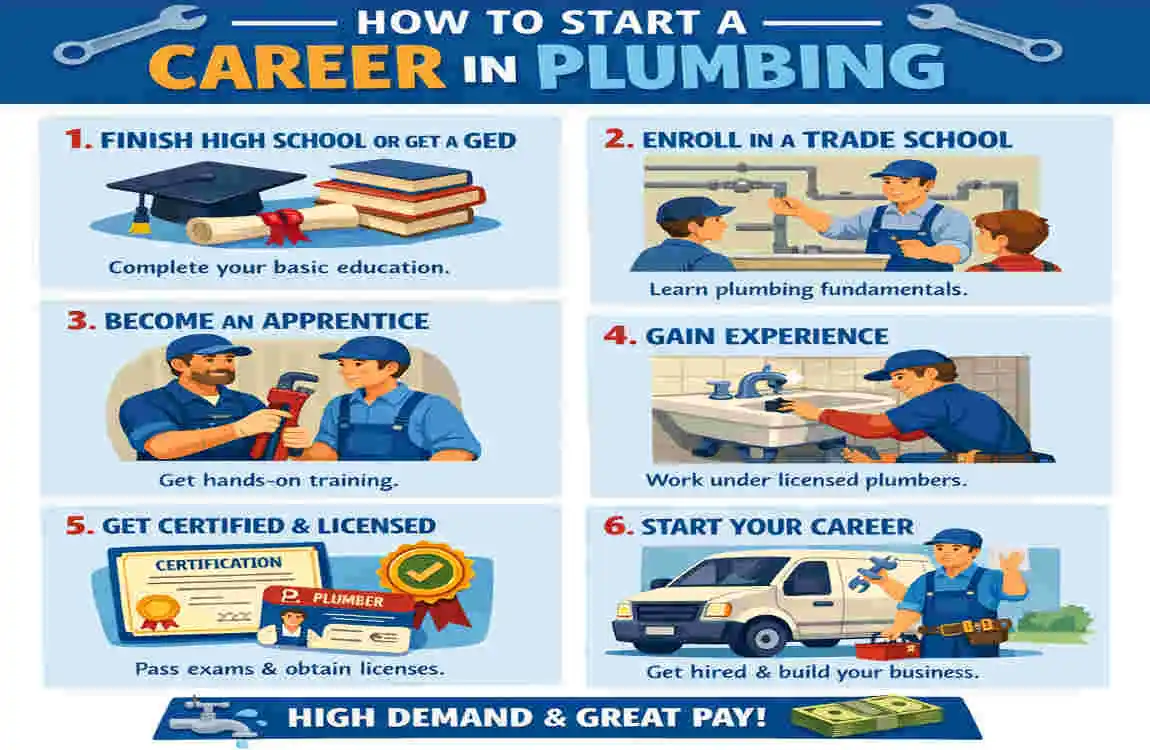
Learn Basic Plumbing Knowledge
Before entering the field, it helps to learn the basics. This includes tools, pipes, fittings, safety practices, and how plumbing systems work.
Even simple knowledge can give you confidence as you start.
Join a Plumbing Apprenticeship
An apprenticeship is one of the best ways to learn plumbing. It combines classroom learning with real work experience.
You learn from experienced professionals while also getting paid. That makes it a practical path for many beginners.
Get Required Licenses and Certifications
Most places require plumbers to meet local licensing rules. These rules may include exams, supervised work hours, and continuing education.
Certifications can help you stand out and qualify for better jobs. They also show customers and employers that you take your work seriously.
Gain Experience and Specialise
Once you have basic skills, you can choose a direction. Popular specialities include:
- Residential plumbing
- Commercial plumbing
- Pipefitting
- Green plumbing systems
Specialising can help you grow faster and earn more over time.
Challenges of Being a Plumber
Physical Demands
Plumbing is hard work. You may deal with heavy equipment, cramped spaces, and long workdays. Some jobs are comfortable, but many are not.
That physical demand is one of the biggest trade-offs of the career.
Emergency Work
Plumbers are often needed at the worst possible times. Pipes burst at night. Toilets overflow on weekends. Water heaters fail early in the morning.
This means emergency calls can interrupt your routine. If you want a strict nine-to-five lifestyle, this part of the job may be difficult.
Learning and Training Requirements
Plumbing is not a job where you learn once and stop. New tools, systems, and rules keep appearing.
You must keep improving your knowledge if you want to stay competitive.
Customer Management Challenges
Not every customer is easy to work with. Some may be stressed, upset, or impatient because of a plumbing emergency.
You need patience and clear communication to handle those situations well.
Plumbing Career vs Other Trade Careers
Plumbing vs Electrician Career
Both plumbing and electrical work are respected trades. Both offer good income and steady demand.
Here is the simple comparison:
- Income potential: Both can pay well with experience.
- Job demand: Both are highly needed.
- Training requirements: Both require apprenticeships and licensing.
- Work environment: Both involve hands-on work, but the tasks are different.
Plumbing often involves more water systems and drainage work. Electricians focus more on wiring, power, and electrical safety.
Plumbing vs HVAC Career
HVAC workers deal with heating, cooling, and air systems. Plumbers focus on water and drainage systems.
Both careers offer strong opportunities, but the skills are different. HVAC may involve more seasonal demand in some areas, while plumbing tends to stay steady year-round.
Why Plumbing Stands Out
Plumbing stands out as an essential service. It also offers a clear path to business ownership and strong demand across many settings.
For many people, that makes plumbing one of the most practical skilled trades available.
Is Plumbing a Good Career for the Future?
Growing Demand for Skilled Plumbers
There is a growing need for skilled labour in many places. As experienced workers retire, new workers are needed to fill the gap.
That creates more opportunities for people entering the trade now.
Impact of New Plumbing Technology
Plumbing is also becoming more modern. Today’s systems may include:
- Smart plumbing systems
- Water-saving fixtures
- Sustainable plumbing solutions
This means the trade is not old-fashioned. It is evolving, and that creates new learning and income opportunities.
Opportunities for Entrepreneurship
Many plumbers eventually start their own companies. They may offer:
- Local plumbing services
- Maintenance plans
- Emergency repairs
- Specialised repair work
If you want to build something of your own, plumbing gives you a real business path.
Pros and Cons of Becoming a Plumber
Pros
- High demand
- Good income potential
- Career independence
- No expensive degree required
- Business ownership opportunities
Cons
- Physical work
- Emergency jobs
- Requires training
- Sometimes uncomfortable environments
Like any career, plumbing has both strong points and hard parts. The key is deciding whether the benefits match your goals and personality.
Who Should Consider a Plumbing Career?

Plumbing may be a good fit if you are:
- Someone who enjoys hands-on work
- A natural problem solver
- Interested in skilled trades
- Wanting career independence
- Looking for stable employment
If you like practical work and do not mind learning through experience, this career could be a great match.
Frequently Asked Questions
Is plumbing a good career choice?
Yes, plumbing can be a rewarding career because it offers job stability, good earning potential, and opportunities for advancement.
How long does it take to become a plumber?
Most people complete an apprenticeship program within 2–5 years before becoming fully qualified.
Do plumbers make good money?
Experienced and licensed plumbers can earn strong incomes, especially those who specialise or own a plumbing business.
Is plumbing a difficult job?
Plumbing requires physical effort, technical knowledge, and problem-solving skills, but training helps develop the needed abilities.
Can plumbers become business owners?
Yes, many experienced plumbers start their own companies and create extra income opportunities.
Is plumbing a better career than going to college?
For some people, plumbing can provide a faster path to earning income without the high costs of a traditional college education.
| Factor | Information |
|---|---|
| Career Demand | Plumbing is a high-demand trade because homes, businesses, and industries always need installation, repair, and maintenance services. |
| Job Stability | Plumbers enjoy strong job security because plumbing problems cannot be delayed for long and skilled workers are always needed. |
| Earning Potential | Experienced plumbers can earn competitive incomes, especially those with licenses, specialized skills, or their own businesses. |
| Low Education Cost | Plumbing usually requires vocational training, apprenticeships, and certifications instead of a traditional four-year college degree. |
| Career Growth | Plumbers can advance from apprentices to journeymen, master plumbers, supervisors, or business owners. |
| Business Opportunities | Skilled plumbers can start their own plumbing companies and earn additional income through contracts and service calls. |
| Hands-On Work | The career is ideal for people who enjoy solving problems, working with tools, and creating practical solutions. |
| Challenges | Plumbing can involve physical labor, tight space |