How Many Square Feet Is a 2-Car Garage? Essential Space Guide for Your Home
Garages

How Many Square Feet Is a 2-Car Garage? Essential Space Guide for Your Home

When you’re planning your dream home or considering a renovation, the garage might not be the first thing that comes to mind. Yet this often-overlooked space plays a crucial role in your daily life and your home’s value. Think about it – your garage protects your vehicles, stores your belongings, and might even serve as your weekend workshop or hobby space.

The size of your garage directly impacts how you use your home every single day. Whether you’re rushing to get the kids to school or unloading groceries in the rain, having the right amount of garage space makes life easier. It’s not just about parking cars anymore. Today’s garages serve multiple purposes, from storage to home gyms to converted living spaces.

What Is a Standard 2-Car Garage Size?

How Many Square Feet Is a 2-Car Garage? Essential Space Guide for Your Home

Let’s start with the basics. A 2-car garage is exactly what it sounds like – a garage designed to fit two vehicles comfortably. But here’s where things get interesting. Not all 2-car garages are created equal.

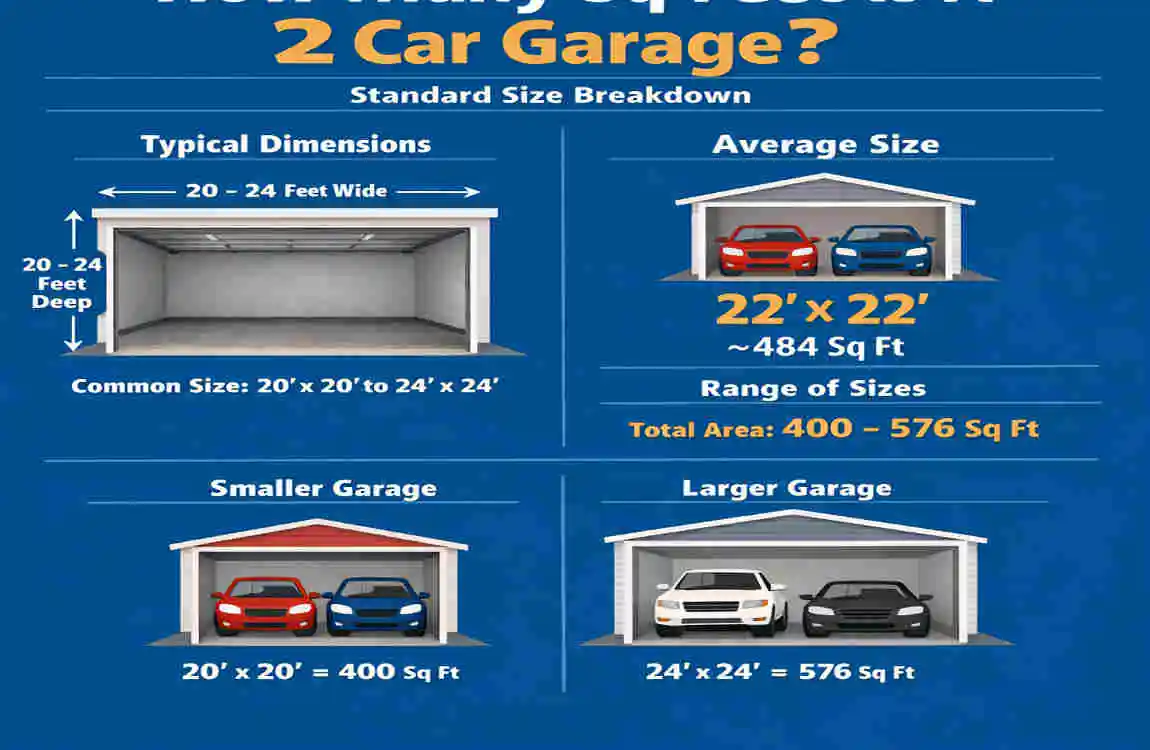
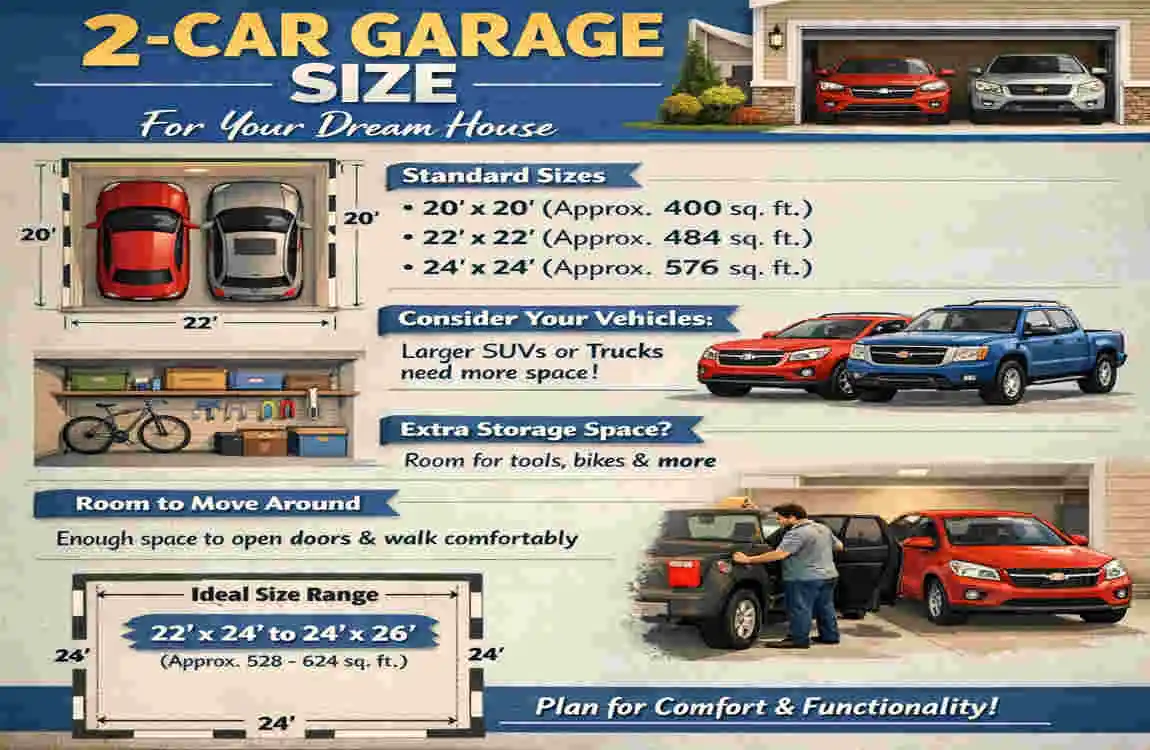
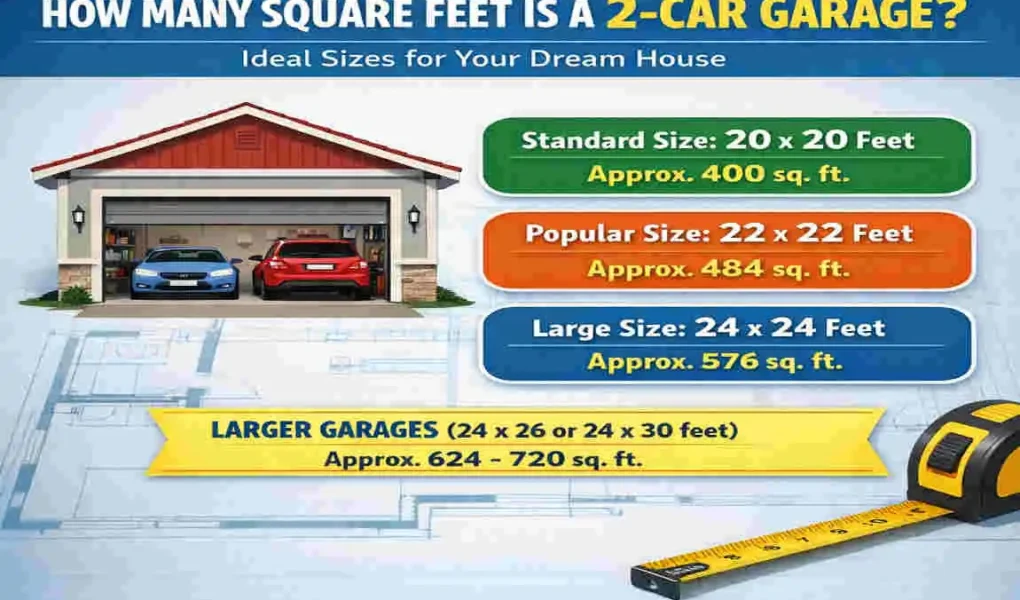
The most common standard dimensions you’ll encounter are 20 feet by 20 feet, which gives you 400 square feet of space. This is often considered the absolute minimum for a functional 2-car garage. However, many homeowners find this size a bit tight, especially with today’s larger vehicles.

Moving up, you’ll find 22-foot-by-22-foot garages, providing 484 square feet. This extra space makes a noticeable difference in daily use. You can open car doors without worrying about hitting the walls or the other vehicle. It’s incredible what those extra two feet can do for your peace of mind.

The sweet spot for many homeowners is the 24 feet by 24 feet garage, offering a comfortable 576 square feet. This size gives you breathing room for storage, movement, and those inevitable accumulated items that find their way into every garage.

Why These Dimensions Became Standard

These measurements didn’t appear out of thin air. They evolved from decades of automotive design and homeowner needs. Back in the 1950s, cars were generally smaller, and a 16-foot-by-20-foot garage was perfectly adequate. As vehicles grew larger and families began owning multiple cars, garage standards expanded accordingly.

Building professionals settled on these dimensions because they work well with standard construction materials. Lumber typically comes in 8-foot, 10-foot, and 12-foot lengths, making 20, 22, and 24-foot dimensions efficient and cost-effective to build.

Why Garage Size Matters: Practical Considerations

Your garage size affects your life in ways you might not realize right away. It’s not just about fitting cars inside – it’s about creating a functional space that serves your family’s needs.

Think about your morning routine. With an appropriately sized garage, you can easily load kids into car seats without performing gymnastics. You have room to walk around your vehicle for basic maintenance checks. During harsh weather, everyone can enter and exit comfortably without getting soaked or frozen.

Key Factors Influencing Your Ideal Garage Size:

Vehicle dimensions play the most significant role. Today’s popular SUVs and trucks need significantly more space than compact cars. A Ford F-150, for example, measures about 19 feet long and 7 feet wide, while a Honda Civic is roughly 15 feet long and 6 feet wide. That’s a huge difference when you’re planning your space.

Storage requirements come next. Most families use their garage for more than just cars. You’ve got lawn equipment, bicycles, holiday decorations, sports gear, and tools. All these items need homes, and a cramped garage quickly becomes a frustrating maze.

Future needs deserve consideration too. Are you planning to upgrade to a larger vehicle? Might you need workshop space for a new hobby? Will aging parents need easier access? Planning saves you from expensive renovations down the road.

The number of drivers in your household matters as well. Teenagers learning to drive might need extra maneuvering room. Multiple daily commuters require easy in-and-out access during busy mornings.

Regional and Building Code Variations

Here’s something many homeowners don’t realize: garage size requirements vary significantly by region. Your local building codes and zoning laws affect the dimensions of your garage.

Urban areas often have stricter limitations due to lot sizes and density requirements. In cities like San Francisco or New York, you face maximum size restrictions to preserve neighborhood character. Some historic districts won’t allow garages larger than the original home footprint.

Suburban communities typically offer more flexibility. Many suburban developments have homeowners’ association (HOA) rules requiring minimum garage sizes to maintain property values. These often specify at least a 2-car garage with minimum dimensions of 20 feet by 20 feet.

Rural properties usually have the fewest restrictions. You can build a garage of any size that suits your needs, as long as you meet basic safety codes. This freedom allows for larger workshops, RV storage, or multi-vehicle garages.

Climate Considerations

Weather patterns in your region also influence decisions about garage size. Northern states with heavy snowfall often require larger garages to accommodate snow removal equipment and provide shelter during harsh winters. You’ll need space for snow blowers, salt supplies, and winter gear storage.

Southern states might prioritize ventilation and heat management over size. Garages in hurricane-prone areas need reinforced construction, which may affect interior dimensions. Desert regions often feature larger garages to protect vehicles from extreme heat and sun damage.

Minimum vs. Ideal Garage Size

Let’s talk real numbers. The absolute minimum for a functional 2-car garage is 20 feet by 20 feet, giving you 400 square feet. At this size, you can park two compact or mid-size cars, but you’ll need to be careful opening doors and maneuvering around the space.

The ideal size for most families is 24 feet by 24 feet, providing 576 square feet. This extra space transforms your garage from merely functional to genuinely comfortable. You can store items along the walls, walk between vehicles easily, and even set up a small workbench.

Understanding the Trade-offs

Smaller garages cost less to build and maintain. They require less heating and cooling, cheaper flooring, and fewer materials overall. Property taxes might be lower too, since square footage affects assessed value. However, you sacrifice convenience and flexibility.

Larger garages offer incredible versatility but cost more. Beyond initial construction, you’ll pay more for concrete, roofing, siding, and doors. Heating and cooling expenses increase, and you might be tempted to fill the space with unnecessary items. Yet, the daily convenience and potential for multiple uses often justify the investment.

Calculating Square Footage: Step-by-Step Guide

Calculating your garage’s square footage is simpler than you think. Here’s how to do it accurately:

Measure the interior width of your garage from wall to wall. Don’t include wall thickness – measure the actual usable space.

 Measure the interior length from the back wall to the garage door opening.

Multiply width by length to get your square footage.

Example Calculation:

Let’s say you measure your garage at 22 feet wide and 24 feet deep.

  • 22 feet × 24 feet = 528 square feet

That’s your total interior square footage.

Measuring an Existing Garage

If you’re measuring an existing garage, use a long tape measure or laser measuring tool for accuracy. Take multiple measurements at different points, as older garages might not be perfectly square. Always measure at the widest points to avoid overestimating your space.

Don’t forget to account for obstructions like water heaters, stairs, or built-in storage that reduce usable space. These elements effectively shrink your garage’s functional square footage.

Garage Size and Home Value

How Many Square Feet Is a 2-Car Garage? Essential Space Guide for Your Home

Here’s something that gets real estate agents excited: garage size significantly impacts property value. Studies show that homes with 2-car garages sell for 13% more on average than those with single-car garages—homes with oversized 2-car garages command even higher premiums.

The National Association of Realtors reports that garage capacity ranks among the top five features buyers seek. In competitive markets, a spacious garage can make the difference between multiple offers and a more extended listing period.

Market-Specific Preferences

Different markets value garage space differently. Cold-climate buyers prioritize enclosed parking more than those in temperate regions. Suburban buyers typically expect larger garages than urban purchasers. Rural properties often need extra space for equipment storage.

Luxury home buyers increasingly demand 3-car or larger garages, even for 2-person households. They want space for their daily drivers plus room for recreational vehicles, classic cars, or workshop areas.

Garage Layouts and Design Options

The way you configure your garage space matters as much as its total square footage. Let’s explore the most popular layouts and their benefits.

Single Bay Design

A single bay garage features one large door spanning the entire front. This design maximizes interior space since you don’t need a center post. You get better flexibility for parking different vehicle sizes and easier maneuvering room.

However, single bay designs have drawbacks. If the door malfunctions, both vehicles are trapped. The larger door costs more to purchase and maintain. In cold climates, you lose more heat each time the door opens.

Double Bay Configuration

Double bay garages have two separate doors, typically 8 or 9 feet wide each. This setup offers better climate control since you only open one door at a time. If one door breaks, you still have access through the other. Individual doors cost less to replace when needed.

The downside? That center post between doors reduces flexibility. Parking larger vehicles becomes trickier, and you lose some maneuvering space.

Tandem Layouts

Tandem garages arrange parking spaces front-to-back rather than side-by-side. This design works well on narrow lots where width is limited. A tandem 2-car garage might measure 12 feet wide by 40 feet deep, providing adequate space in a different configuration.

The obvious challenge with tandem designs is vehicle access. The front car must move for the back car to exit. This setup works best when one vehicle is used infrequently or for couples with coordinated schedules.

Garage Conversion and Multi-Use Spaces

Modern homeowners increasingly view garages as flexible spaces with potential beyond vehicle storage. The garage conversion trend has exploded, with people transforming these spaces into home offices, gyms, workshops, and even rental units.

Square Footage Requirements for Different Conversions

Converting a room into a home office typically requires at least 120 square feet for a functional workspace. This allows room for a desk, chair, storage, and movement. A 20×20 garage provides ample space for a luxurious office with meeting area.

Creating a home gym requires at least 150 square feet for basic equipment. You’ll want higher ceilings (at least 9 feet) for overhead exercises. Many garage gyms successfully operate in half of a 2-car garage, leaving space for one vehicle.

Workshop conversions vary widely by craft. Woodworking shops need at least 200 square feet for tools and material storage. Auto repair spaces require the full garage plus excellent ventilation. Art studios can work in smaller spaces but need good natural light.

Maintaining Flexibility

Smart conversions maintain flexibility for future changes. Installing modular storage systems, removable partitions, and multi-purpose fixtures lets you adapt the space as needs change. Some homeowners create “flex spaces” that serve as garages during winter and workshops in summer.

Garage Size for Different Vehicle Types

Not all vehicles are created equal, and your garage should accommodate what you actually drive. Let’s break down the space requirements for different vehicle categories.

Compact Cars

Vehicles like the Honda Civic, Toyota Corolla, or Mazda3 typically measure:

  • Length: 14-16 feet
  • Width: 5.5-6 feet
  • Minimum garage space needed: 18 x 18 feet (324 sq ft) for two vehicles

SUVs and Trucks

Popular models like the Ford F-150, Chevy Tahoe, or Toyota Highlander require:

  • Length: 18-20 feet
  • Width: 6.5-7 feet
  • Minimum garage space needed: 22 x 22 feet (484 sq ft) for two vehicles

Luxury Vehicles

High-end vehicles often have larger dimensions and need extra door clearance:

  • Length: 16-19 feet
  • Width: 6-7 feet
  • Recommended garage space: 24 x 24 feet (576 sq ft) for proper clearance

Specialty Vehicle Storage

RVs and boats need special consideration. Even small RVs require 12-foot ceilings and 30-40-foot depths. Boat storage depends on trailer length but typically needs 25-30 feet minimum. Many homeowners build separate RV garages or use extended garage designs.

Garage Storage Solutions

Maximizing your garage’s storage potential transforms it from a cluttered catch-all into an organized, functional space. The key is using vertical space and innovative organization systems.

Wall-Mounted Systems

Installing slatwall panels creates flexible storage that adapts to changing needs. These systems accept various hooks, baskets, and shelves that you can rearrange seasonally. A 24-foot garage wall can hold hundreds of pounds of gear while keeping the floor clear.

Pegboard offers an affordable alternative for tool organization. Heavy-duty pegboard handles everything from garden tools to sports equipment. Color-coding or outlining tools helps maintain organization and makes it obvious when something’s missing.

Overhead Storage

Ceiling-mounted storage platforms utilize often-wasted space above vehicle hoods. These systems typically hold 250-600 pounds and work great for seasonal items like holiday decorations or camping gear. In a standard 8-foot ceiling garage, you can install platforms at 7 feet, leaving clearance for vehicle roofs.

Ceiling hoists work wonderfully for bikes, kayaks, and ladders. They keep these bulky items accessible but out of the way. Pulley systems make raising and lowering heavy items manageable for anyone.

Cabinet Systems

Built-in or modular cabinet systems provide enclosed storage that keeps items dust-free and organized. Base cabinets with workbench tops create functional workspace. Tall cabinets maximize vertical storage for chemicals, paint, and automotive supplies.

Garage Door Size and Placement

Your garage door configuration significantly impacts usable interior space and daily convenience. The door size and type you choose affects everything from vehicle clearance to storage options.

Standard Door Dimensions

Single garage doors typically measure:

  • 8 feet wide x 7 feet tall (minimum)
  • 9 feet wide x 7 feet tall (standard)
  • 10 feet wide x 8 feet tall (oversized)

Double garage doors usually span:

  • 16 feet wide x 7 feet tall (standard)
  • 18 feet wide x 8 feet tall (preferred)

Door Placement Considerations

Center placement maximizes side storage space but requires careful vehicle positioning. Off-center doors can create a larger storage area on one side, perfect for workshops or equipment storage. However, this arrangement might complicate parking for wider vehicles.

The header space above your door affects storage potential. Standard doors need 12-15 inches of header space, while low-headroom tracks require only 5 inches, freeing up ceiling storage space.

Garage Insulation and Climate Control

Proper insulation transforms your garage from a harsh, uncomfortable space into a year-round functional area. This upgrade becomes especially important if you spend time working in the garage or have living spaces above or adjacent to it.

Insulation Benefits and Requirements

Wall insulation should match your home’s climate zone requirements. In moderate climates, R-13 insulation suffices. Cold regions benefit from R-19 or higher. Don’t forget the garage door – insulated doors prevent significant heat loss and reduce noise.

Ceiling insulation is crucial if living spaces exist above the garage. Use R-30 to R-38 insulation to prevent heat transfer and reduce sound transmission. This also helps prevent pipes from freezing in cold climates.

Climate Control Options

Installing a mini-split system provides efficient heating and cooling without extending your home’s HVAC. These units work perfectly for garage workshops or conversion spaces. A 12,000 BTU unit typically handles a 2-car garage effectively.

Portable heaters and fans offer flexible, affordable climate control for occasional use. Infrared heaters warm objects and people directly, making them efficient for workshop areas. Ceiling fans improve air circulation during summer months.

Garage Lighting and Electrical Needs

Good lighting transforms your garage from a dim storage space into a bright, functional area. Proper electrical planning ensures you have power where you need it, when you need it.

Lighting Requirements

The Illuminating Engineering Society recommends 50 lumens per square foot for garage workspace areas. For a 500-square-foot garage, you’d need 25,000 total lumens. This typically translates to four 4-foot LED fixtures, each producing 6,000-7,000 lumens.

Task lighting above workbenches should provide 100-150 lumens per square foot. Under-cabinet LED strips work perfectly for detailed work. Motion-sensor lights near entry doors improve safety and convenience.

Electrical Planning

Modern garages need numerous electrical outlets. Code typically requires one outlet every 6 feet along walls, but more is better. Include dedicated circuits for large tools, electric vehicle chargers, or workshop equipment.

Consider installing:

  • 240V outlet for electric vehicle charging
  • Dedicated 20-amp circuits for power tools
  • GFCI protection for all outlets
  • USB charging stations for devices
  • Exterior outlets for yard equipment

Garage Safety and Security

Your garage houses valuable vehicles and equipment, making Security essential. It’s also a space where accidents can happen, so safety features are crucial.

Essential Safety Features

Every garage needs smoke and carbon monoxide detectors. Install interconnected units that alert you even when you’re inside the house. Carbon monoxide detection is especially critical since vehicles produce this deadly gas.

Keep a fire extinguisher mounted near the garage entrance. Choose an ABC-rated extinguisher that handles various fire types. Check and replace it according to manufacturer recommendations.

Proper ventilation prevents dangerous fume buildup. Install exhaust fans if you work with chemicals or run vehicles in the garage. Natural ventilation through windows or vents helps too.

Security Measures

Smart garage door openers with smartphone apps let you monitor and control access remotely. You’ll receive alerts if the door opens unexpectedly. Some systems include cameras for visual verification.

Installing motion-sensor lights around the exterior of the garage deters intruders. Interior motion sensors connected to your home Security system provide another layer of protection. Window locks and reinforced service doors prevent easy entry points.

Garage Maintenance and Upkeep

Regular maintenance extends your garage’s lifespan and keeps it functional. A well-maintained garage also preserves your home’s value and prevents costly repairs.

Seasonal Maintenance Checklist

Season Maintenance Tasks Frequency

Spring • Clean and seal concrete floor

• Check weather stripping

• Lubricate door hardware

• Clear gutters and downspouts Annually

Summer • Inspect and clean garage door sensors

• Touch up paint on walls and trim

• Organize and declutter storage

• Check ventilation systems Annually

Fall • Test heating systems

• Winterize water fixtures

• Check roof for damage

• Seal cracks and gaps Annually

Winter • Monitor for ice dams

• Salt prevention on floors

• Check door balance monthly

• Maintain proper humidity As needed

Preventive Care Tips

Concrete floor maintenance prevents cracks and deterioration. Apply concrete sealer every 2-3 years—clean oil stains immediately with degreaser. Fix small cracks before they expand and become significant problems.

Garage door maintenance ensures smooth, safe operation. Lubricate springs, hinges, and rollers quarterly with silicone spray. Test the auto-reverse safety feature monthly. Replace weather stripping when it shows wear or damage.

Garage Size and Accessibility

Creating an accessible garage benefits everyone, not just those with mobility challenges. Good accessibility makes daily tasks easier and prepares your home for aging in place.

Width and Clearance Requirements

ADA guidelines recommend minimum 5-foot access aisles beside vehicles. This means a truly accessible 2-car garage should measure at least 24 feet wide. More expansive spaces (26-28 feet) provide even better accessibility.

Door clearances need special attention. Provide at least 18 inches of clear space beside door handles. Automatic door openers should be reachable from a seated position. Consider keypad entry systems at appropriate heights.

Universal Design Features

Installing level entries eliminates trip hazards. If steps are necessary, add handrails and ensure proper lighting. Non-slip surfaces prevent falls in wet conditions.

Lower storage solutions keep frequently used items within reach. Pull-down shelving systems make upper storage accessible. Drawer-based storage eliminates bending and reaching into deep shelves.

Garage Size and Future-Proofing

How Many Square Feet Is a 2-Car Garage? Essential Space Guide for Your Home

Planning for tomorrow’s needs today saves money and hassle. Future-proofing your garage ensures it remains functional as your life changes.

Anticipating Future Needs

Electric vehicle adoption is accelerating rapidly. Installing conduit for future EV charger installation costs little during construction but saves thousands later. Plan for 240V/50-amp service even if you don’t need it yet.

Aging-in-place considerations include wider doorways, level entries, and good lighting. These features benefit everyone now as they prepare for potential mobility changes. Installing blocking in walls during construction makes it easier to install grab bars later.

Expansion Possibilities

Design your garage with expansion potential. Position it to allow side or rear additions. Use roof trusses that can support future second-story additions. Install foundations capable of supporting additional weight.

Consider modular design elements that adapt to changing needs. Removable walls between garage bays create flexible spaces. Overhead doors on multiple walls enable drive-through access or easy conversion.

Case Studies: Real-World Garage Size Examples

Let’s look at real homeowners and their garage decisions to understand how different sizes work in practice.

 The Suburban Family

The Johnson family in Minneapolis built a 24×26 garage (624 square feet) for their two SUVs. The extra depth accommodates wall storage while maintaining comfortable parking. They installed heated floors for Minnesota winters and a workbench area for DIY projects.

What worked: The additional depth provides excellent storage without cramping parking spaces. Heated floors make winter mornings comfortable.

Challenges: The larger size increased construction costs by $4,000, but the family considers it worthwhile for daily convenience.

 The Urban Downsizers

The Garcias in Seattle converted half their 22×22 garage into a home office during the pandemic. They maintain one parking space while gaining a 200-square-foot workspace with separate entrance.

What worked: The conversion added significant home value and provides rental income potential. The remaining parking space handles their single vehicle.

Challenges: Street parking for guests can be difficult to find. They miss the extra storage space during the rainy season.

 The Rural Workshop

Tom and Betty in rural Texas built a 30×30 garage (900 square feet) combining vehicle storage with a complete woodworking shop. High ceilings accommodate a vehicle lift for restoration projects.

What worked: The space handles two vehicles plus extensive workshop equipment. The lift maximizes vertical space usage.

Challenges: Higher heating/cooling costs and property taxes. The ample space can sometimes encourage the accumulation of unnecessary items.

Expert Tips for Choosing the Right Garage Size

Industry professionals share their insights on selecting optimal garage dimensions for your specific situation.

Architect Perspectives

Sarah Chen, Residential Architect: “Always measure your largest vehicle and add 4 feet to each dimension minimum. People consistently underestimate how much clearance they need for comfortable daily use. If you’re between standard sizes, go larger – you’ll never regret extra space.”

Michael Torres, Design-Build Contractor: “Consider your lot’s proportions carefully. A massive garage on a small lot looks unbalanced and might violate setback requirements. Work with your home’s architecture for cohesive design.”

Builder Recommendations

Jim Patterson, Custom Home Builder: “The sweet spot for most families is 24×24 feet, but don’t forget ceiling height. Nine-foot ceilings cost marginally more but dramatically improve the space’s feel and storage potential.”

Lisa Wong, General Contractor: “plan electrical capacity for future needs. Running extra circuits during construction costs pennies compared to retrofitting. Include outlets at various heights for different uses.”

Real Estate Professional Insights

Robert Davis, Real Estate Broker: “In my market, the difference between a 20×20 and 24×24 garage can mean $15,000-20,000 in home value. Buyers pay premiums for functional, spacious garages. It’s one of the best renovation investments you can make.”

Common Mistakes to Avoid

  1. Forgetting about door swing space – Car doors need 30-36 inches to open fully
  2. Ignoring local codes – Some areas restrict garage sizes or require specific setbacks
  3. Skimping on electrical outlets – You’ll always need more than you think
  4. Overlooking drainage – Proper slope prevents water damage
  5. Neglecting insulation – Uninsulated garages affect adjacent living spaces

You may also like...

Leave a Reply

Your email address will not be published. Required fields are marked *