how to turn off gas line in house
Home Improvement Plumbing

How to Quickly Turn Off Your Home Gas Line Safely

You may smell something strange in the kitchen. You may hear a soft hissing sound near the stove or water heater. Or you may notice that something feels wrong. In that moment, panic can easily take over. But if you know how to turn off gas line in house, you can act with more confidence and protect your family from danger.

Natural gas and LPG are helpful for cooking, heating water, and running appliances. Still, they can also be dangerous when leaks happen. A small leak can spread quickly. If gas builds up in a closed room, even a tiny spark can cause a fire or explosion. That is why learning the right shut-off steps is not just useful knowledge. It is a real home safety skill.

Step Action Safety Tip
Evacuate if needed Smell gas or hear hissing? Leave immediately, avoid sparks or flames. No phone use or light switches—exit and call emergency services from outside .
Locate meter valve Find outdoor gas meter (often near electric meter); main shut-off is nearby. Know its spot in advance; usually first fitting on pipe from ground .
 Turn appliances off Shut off gas stoves/heaters/pilots before meter valve. Prevents backflow issues upon restart .
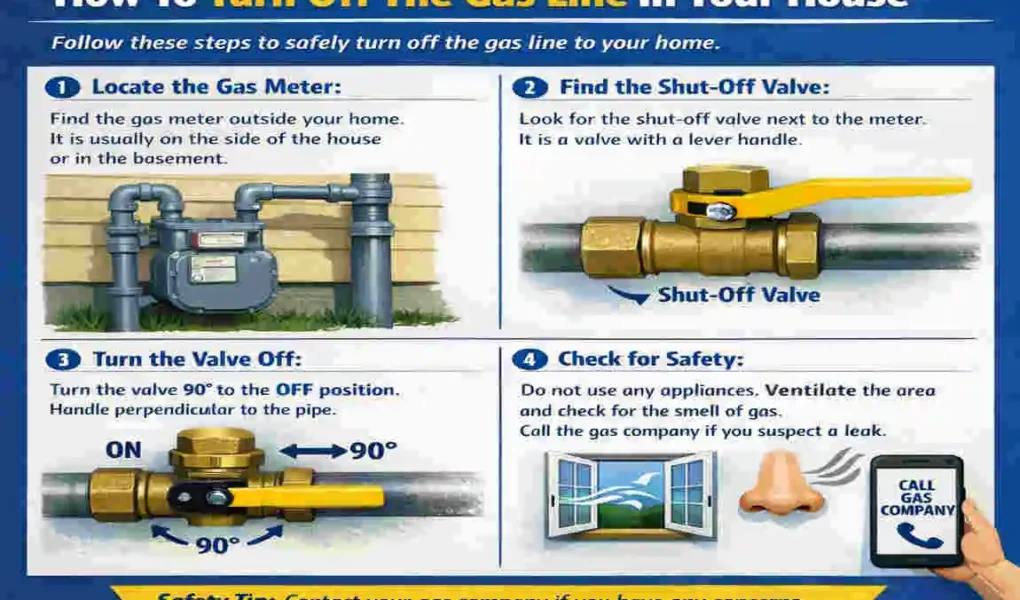
Use tool to shut off Quarter-turn (90°) wrench clockwise until lever perpendicular to pipe. Adjustable 12-inch wrench or gas tool; parallel = on, perpendicular = off .
Verify & wait Confirm no gas smell; do not relight or turn back on. Call professionals/gas company to restore .

Signs of a Gas Leak

how to turn off gas line in house

Before learning how to turn off gas line in house, you first need to know how to spot a possible leak.

A gas leak does not always look dramatic. Sometimes the warning signs are obvious, but sometimes they are easy to miss. Gas companies add a strong smell to natural gas and LPG so people can detect leaks more easily. That smell is often compared to rotten eggs or sulfur.

Still, smell is only one clue. You should pay attention to sounds, sights, and even how your body feels.

The most common warning signs

Rotten egg smell

This is the classic sign of a gas leak. If you smell sulfur, rotten eggs, or something sharp and unpleasant near a stove, geyser, meter, or cylinder, treat it as an emergency.

Do not assume the smell will disappear on its own. Even a faint odor can mean gas is escaping.

Hissing or whistling sound

Gas may escape through a damaged pipe, loose connection, or faulty valve. If that happens, you may hear a hissing sound near an appliance or outside by the meter.

Even a quiet hiss is important. It means the gas may be moving where it shouldn’t.

Dead plants or damaged grass

If an underground line leaks onto the surface, plants above it may turn brown or die more quickly than the rest of the area. You may also notice dirt blowing around or bubbles forming in wet soil.

Soot marks or black stains

Gas burners or appliances that are not working properly may leave soot marks, black stains, or discolored walls and surfaces near the source.

Physical symptoms

Some people feel dizzy, nauseous, tired, headachy, or short of breath around a gas leak. These symptoms can feel like the flu, but if they improve when you leave the area, gas exposure may be a contributing factor.

What you should do right away

If you suspect a leak, do not investigate for too long inside the house.

Get everyone out first. Avoid using switches, lighters, matches, or anything that could create a spark. Once you are in a safe place outside, you can act on the shut-off steps.

Gas leak warning signs at a glance

Sign Description Action

Smell Rotten egg or sulfur-like odor Evacuate immediately and avoid using lights or phones inside

Sound Hissing or whistling near pipes, meter, or appliance Do not touch switches or electrical items

Physical signs Dead plants, soot, dirt blowing, bubbling soil Leave the area and call emergency help from a safe place

Body symptoms Dizziness, nausea, headache, or weakness Go outside immediately and get fresh air

A gas leak is one of those situations where it is always better to be overly careful than too relaxed. If something feels off, trust that instinct.

Locating Your Gas Shut-Off Valve

If you want to know how to turn off the gas line in the house, you need to know where the valve is before an emergency happens.

The shut-off valve is the point where you stop gas from entering your home or appliance. In many homes, there is more than one valve. Some are for the main supply, while others are for a specific appliance, such as a stove or water heater.

The exact location depends on the type of home and the gas system used.

Common places to look

Near the gas meter

This is the most common place for the main shut-off valve. In many houses, the meter is outside the front wall, side wall, or boundary area.

Look for a pipe connected to the meter with a valve near it.

Near major appliances

Some appliances have their own shut-off valves. These can usually be found behind or beside:

  • The stove or cooker
  • The water heater or geyser
  • The furnace or heating unit
  • The dryer, if your home uses gas for drying clothes

These are useful when only one appliance is causing trouble.

Inside utility areas

In some homes, the valve may be inside a utility room, kitchen cabinet, basement, or service area. This is common in homes with more enclosed layouts.

Outside wall or meter box

If the meter is protected by a metal or plastic box, the shut-off may be inside the box. You may need a flashlight to see clearly. Sometimes a small tool is needed to open the cover.

Some homes have a direct natural gas line from the utility. Others use LPG cylinders or a mix of LPG and other fuels. In older homes, pipe layouts may not be clearly labeled. That is why it helps to inspect your home in advance and learn where each valve is.

A simple way to remember it

Think of the gas system like a water system. The main valve stops the full supply. Smaller valves stop flow to one appliance. In an emergency, knowing both matters.

What to look for

  • A lever handle on a pipe
  • A round knob on older systems
  • A valve close to the meter
  • A shut-off behind the stove or water heater

If you are unsure, do not guess during a leak. Learn the layout now, and if possible, label the valves clearly for your family.

How to turn off gas line in house starts with knowing exactly where that valve is.

Tools Needed for a Safe Shut-Off

how to turn off gas line in house

You do not need a full toolbox to shut off gas safely, but having the right few items ready can help.

The main goal is simple: be prepared without wasting time.

Helpful tools and items

Adjustable wrench

This is the most common tool for turning a gas valve. It helps grip the valve if it is stiff or not easy to turn by hand.

 Gas shut-off tool

Some homes keep a special shut-off tool near the meter. It is made to fit certain gas valves and can make the process easier.

Gloves

Work gloves can protect your hands if the valve or pipe is dirty, cold, or rough.

Flashlight

If the gas issue appliance at night or in a dark utility area, a flashlight helps you see clearly.

Mobile phone

Keep it with you, but use it only after you are outside and away from the suspected leak.

Why you should prepare now

In an emergency, searching for tools wastes time. If you keep a wrench and flashlight in one known place, the shut-off process becomes much faster and calmer.

A few practical tips

  • Store tools near the utility area, but safely out of children’s reach
  • Make sure your wrench actually fits the valve before an emergency
  • Check that the flashlight has working batteries
  • Tell family members where the tools are kept

Step-by-Step Guide: How to Turn Off Gas Line in House

This is the core part of the guide.

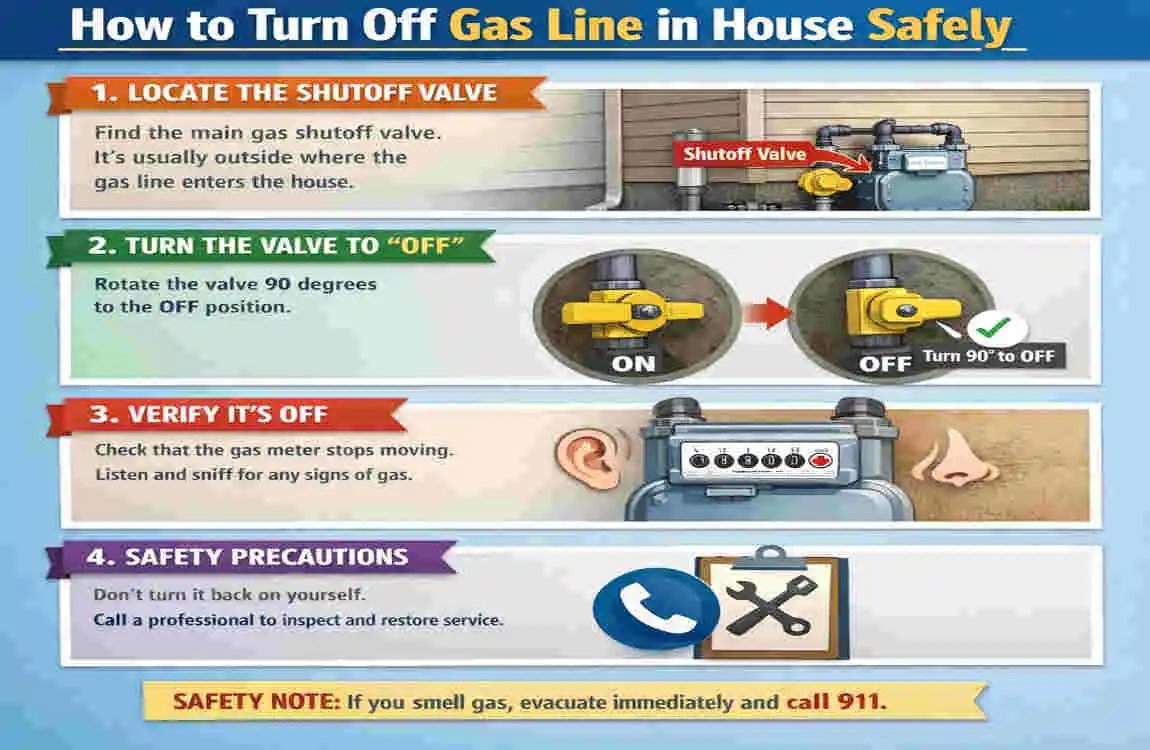
If you smell gas or strongly suspect a leak, follow these steps carefully. Do not rush, but do not delay. Safety comes first.

How to Turn Off Gas Line in House – Main Valve

Leave the house right away

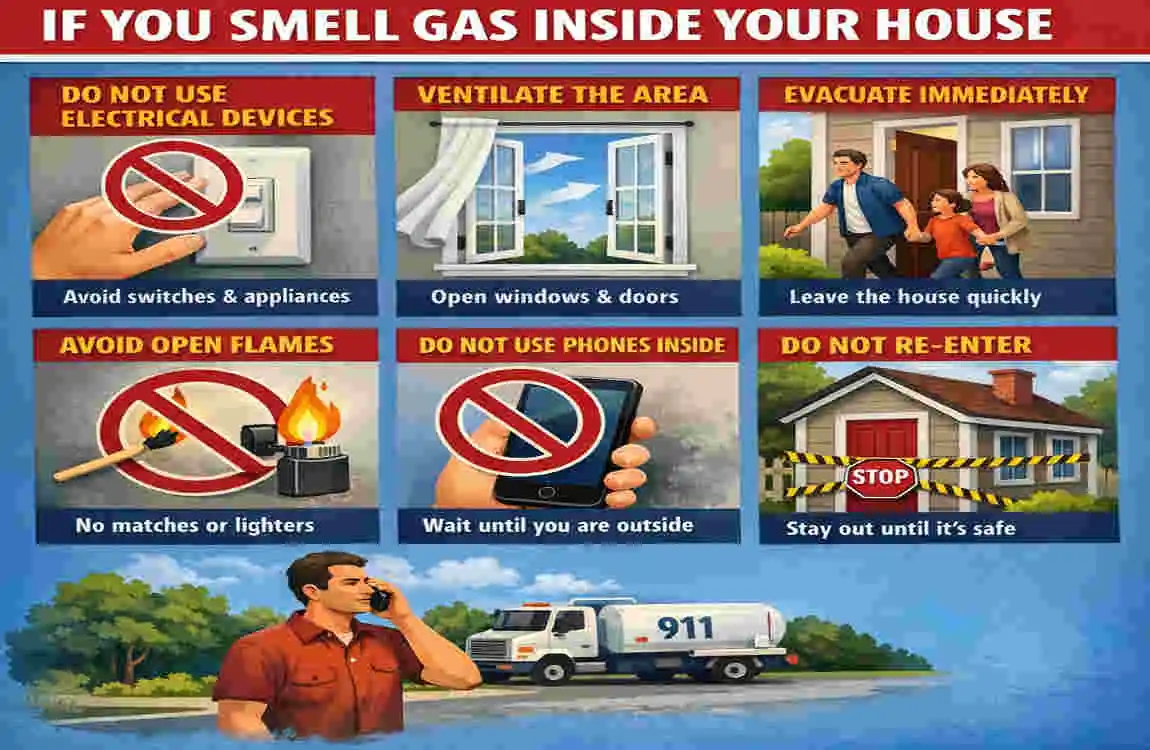
If you smell gas, hear hissing, or suspect a leak, get everyone out of the house first.

Do not stay inside to look around. Do not try to figure it out room by room. Your first job is to make sure people are safe.

If you can do so without going back inside, open doors and windows from the outside as you leave. But never stay inside longer than needed.

Avoid anything that can create a spark

Do not flip light switches. Do not use lighters or matches. Do not plug in or unplug appliances. Avoid anything electrical if you are still in the area of the leak.

Even small sparks can be dangerous when gas is present.

Turn off appliances if it is safe to do so

If you can safely reach appliance shut-offs without entering a dangerous area, turn them off.

This may include:

  • Stove burners
  • Water heater or geyser
  • Furnace
  • Dryer
  • Other gas-powered equipment

If you cannot do this safely, skip it and move on.

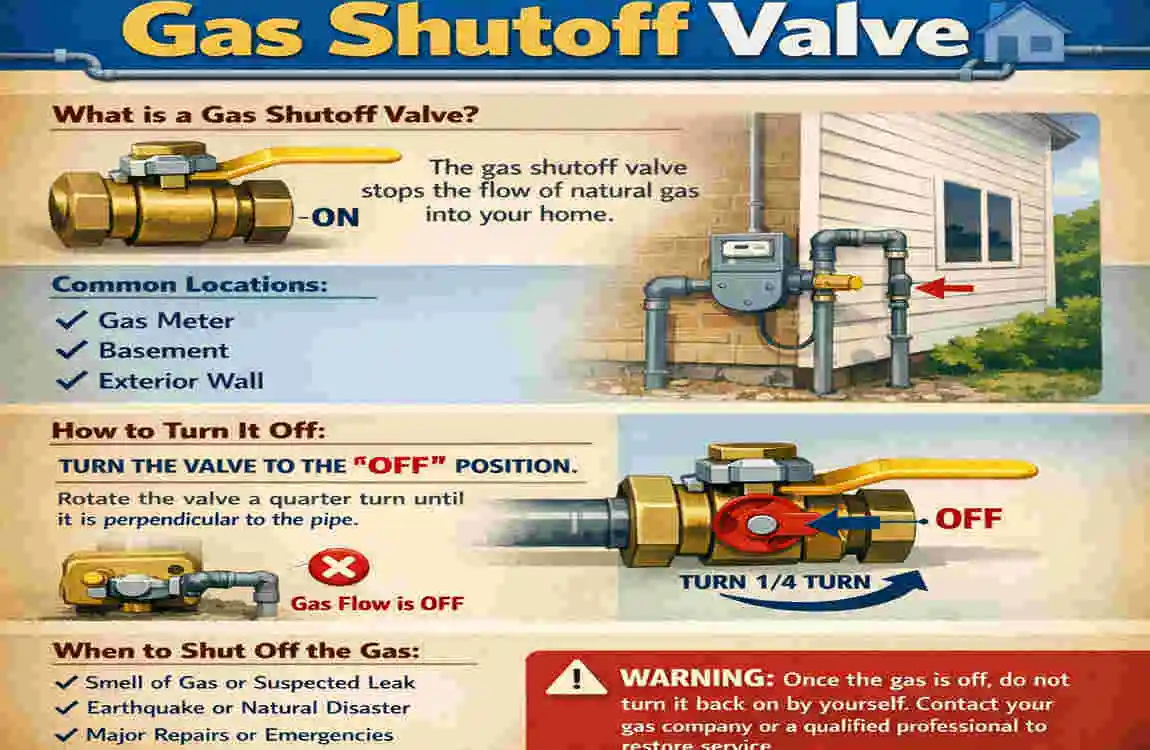
Locate the main shut-off valve

Find the main valve near the gas meter or the main pipe entry point.

If your home has a meter outside, the valve is usually close by. In many cases, the valve is on the pipe coming into the meter or just beside it.

Use the wrench to turn the valve

Most gas valves close with a quarter-turn, which is 90 degrees.

Here is the simple rule:

  • If the handle is parallel to the pipe, the gas is usually on
  • If the handle is perpendicular to the pipe, the gas is usually off

Turn the handle gently but firmly. You should not need to force it hard. If it moves, stop when it reaches the off position.

Check that the valve is fully closed

Once you turn the valve, verify the handle position again. It should sit across the pipe, not along it.

Do not reopen it to “test” it. If you suspect a leak, stay outside and wait for professionals.

Keep everyone away from the area

After shutting off the gas, do not let anyone go back inside until the area is declared safe by the utility company or a qualified technician.

What the valve position usually means

Valve PositionMeaning

Handle parallel to pipe Gas is usually ON

Handle perpendicular to pipe Gas is usually OFF

Appliance-specific shut-offs

Sometimes you do not need to shut down the whole home supply if only one appliance is the issue. In that case, use the local shut-off near that appliance.

Gas stove shut-off

Look behind the stove or in the cabinet below it. The valve may be near the wall connection.

Water heater or geyser shut-off

This is often near the gas pipe entering the unit.

Other appliances

Any gas appliance should have a dedicated shut-off nearby. Learn where these are before an emergency happens.

If the valve is stuck

Sometimes old valves are rusty or stiff. If the valve does not move easily:

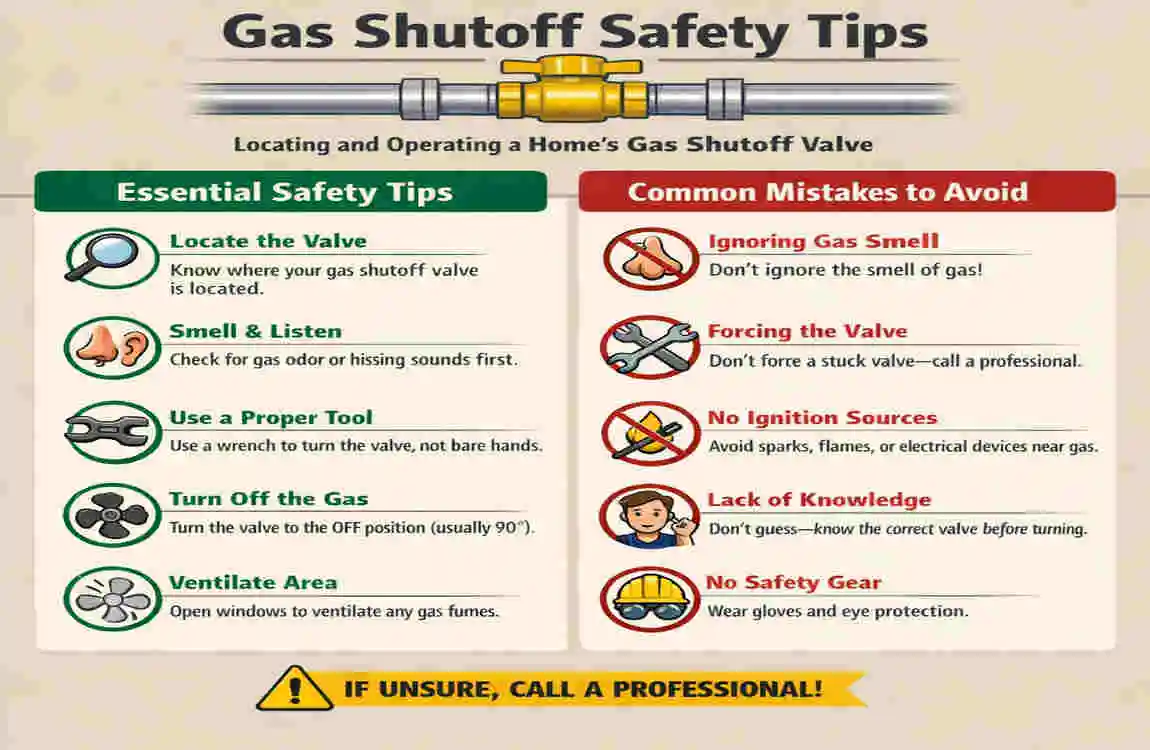
  • Do not force it hard
  • Do not hit it with a hammer
  • Do not try risky tricks
  • Call a professional or emergency gas service

Forcing a stuck valve can make the problem worse. It can damage the pipe, create more leakage, or break the valve entirely.

Important warning about restarting gas

Once the gas is turned off, do not turn it back on yourself unless a qualified professional has checked everything and told you it is safe.

Gas lines need proper inspection after a shut-off. There may still be a leak, damaged fitting, or air trapped in the line. Restarting without checks can be dangerous.

A simple emergency flow

  1. Leave the house
  2. Avoid sparks
  3. Find the main valve
  4. Turn it 90 degrees
  5. Stay outside
  6. Call for professional help

This is the safest way to turn off the gas line in the house during an emergency.

Common Mistakes to Avoid

Learning the right steps is important, but avoiding the wrong steps matters just as much.

In a panic, people often make quick decisions that put them in greater danger. Knowing the common mistakes helps you stay calm and act wisely.

Mistakes people often make

Using matches or lighters to check for leaks

Never do this. A flame can ignite gas immediately.

Turning on lights or electrical appliances

Switches, plugs, fans, and even doorbells can create sparks in some situations. Avoid them if gas is suspected.

 Forcing a rusty or stuck valve

If a valve is hard to move, do not overpower it. You could damage the system or cause a bigger leak.

Ignoring small warning signs

A faint smell or soft hiss still matters. Many major incidents begin with a small clue that someone ignored.

Going back inside too soon

Even after the valve is off, the house may still contain gas. Wait for clearance.

Turning the street or utility valve

Some valves belong to the gas company or utility. Homeowners should not touch them unless instructed by trained workers.

Easy fixes for these mistakes

  • Replace “testing” with evacuating
  • Replace “guessing” with checking the valve location in advance
  • Replace “forcing” with calling a professional
  • Replace “waiting to see” with acting right away

If you remember only one thing, remember this: safety comes before speed, and speed comes before cleanup.

Mistakes when learning how to turn off gas line in house can turn a manageable issue into a serious emergency. Avoid them, and you protect everyone inside.

After Shut-Off: What to Do Next

Turning off the gas is only the first part.

Once the supply is off and everyone is safe, the next steps matter just as much. A gas leak may leave behind a damaged line, a loose fitting, or an appliance fault that needs repair before the gas can be used again.

Your next steps

Call the gas utility or emergency service

If your home uses a utility gas supply, contact the gas company or emergency line as soon as you are safely outside.

Call a qualified plumber or gas technician

A professional should inspect the line, valves, and appliances. They can find the source of the leak and decide what repair is needed.

Do not restart the gas yourself

This is worth repeating because it is so important. Even if everything seems fine, do not turn it back on without a proper safety check.

Ventilate only when safe

If the emergency team says it is safe, air out the house fully before returning to normal use.

Test after repairs

Once a professional fixes the problem, they should test the line and all connections to confirm there is no leak.

Why inspection matters

A shut-off solves the immediate danger, but it does not solve the cause.

The leak may have come from:

  • A loose pipe joint
  • An old hose
  • A damaged valve
  • A cracked fitting
  • A faulty appliance connection
  • Corrosion or wear over time

If the root cause is not fixed, the leak can come back.

What to tell the technician

Try to give a clear description of what happened:

  • What you smelled or heard
  • Where you noticed it
  • Which appliance was running
  • Whether the leak seemed indoors or outdoors
  • Whether the gas was turned off at the appliance or the main valve

Gas Safety Tips for Homes

how to turn off gas line in house

Gas safety is not just for emergencies. It is also about daily habits.

Homes in often face unique conditions. Some use natural gas pipelines. Others rely on LPG cylinders. In many homes, kitchens are busy, ventilation is limited, and appliances are used for long hours. All of these things make regular safety checks important.

Practical safety tips

Check LPG cylinders regularly

If your home uses LPG, inspect the cylinder, hose, and regulator often. Look for cracks, loose connections, or rust.

Keep the kitchen ventilated

Good airflow helps reduce buildup if a small leak occurs—open windows where possible.

Replace old hoses and regulators

Old rubber parts can wear out over time. If they look cracked or brittle, replace them.

Use a gas detector if possible

A gas detector gives you an extra layer of warning. It is especially useful in enclosed kitchens or service rooms.

Schedule annual maintenance

A yearly check by a professional can catch problems early, before they become emergencies.

Protect outdoor lines during heavy rain

In some parts of Punjab, monsoon weather can affect outdoor fittings or make leaks harder to notice. After storms, visually inspect exposed pipes and connections.

A few extra habits that help

  • Teach every adult in the home where the shut-off valve is
  • Keep the gas area free from clutter
  • Label valves clearly
  • Do not ignore unusual smells or sounds
  • Replace damaged appliances quickly

Gas safety works best when it becomes a routine, not just an emergency reaction.

FAQs

How do I know if the gas line is off?

Look at the valve handle. In many systems, if it is perpendicular to the pipe, the gas is off. If it is parallel, the gas is usually on.

Can I turn the gas back on myself?

It is safer to say no. After a shut-off, a qualified professional should inspect the system and restart it properly.

What if I smell gas but cannot find the valve?

Leave the house immediately, avoid sparks, and call emergency help from a safe place. Do not keep searching inside.

Is the main shut-off the same as the stove valve?

No. The stove valve only controls one appliance. The main shut-off controls gas to the whole house.

What should I do if the valve is hard to move?

Do not force it. A professional should handle a stuck valve.

You may also like...

Leave a Reply

Your email address will not be published. Required fields are marked *