When you think about protecting your home, your roof often plays a starring role. It’s not just about keeping the rain out or the heat in—it’s also a key factor in determining your home insurance rates. Understanding different roof construction types can help you make informed decisions, save money, and ensure your home is adequately protected.
Understanding Roof Construction Types
What Are Roof Construction Types, and Why Do They Matter?
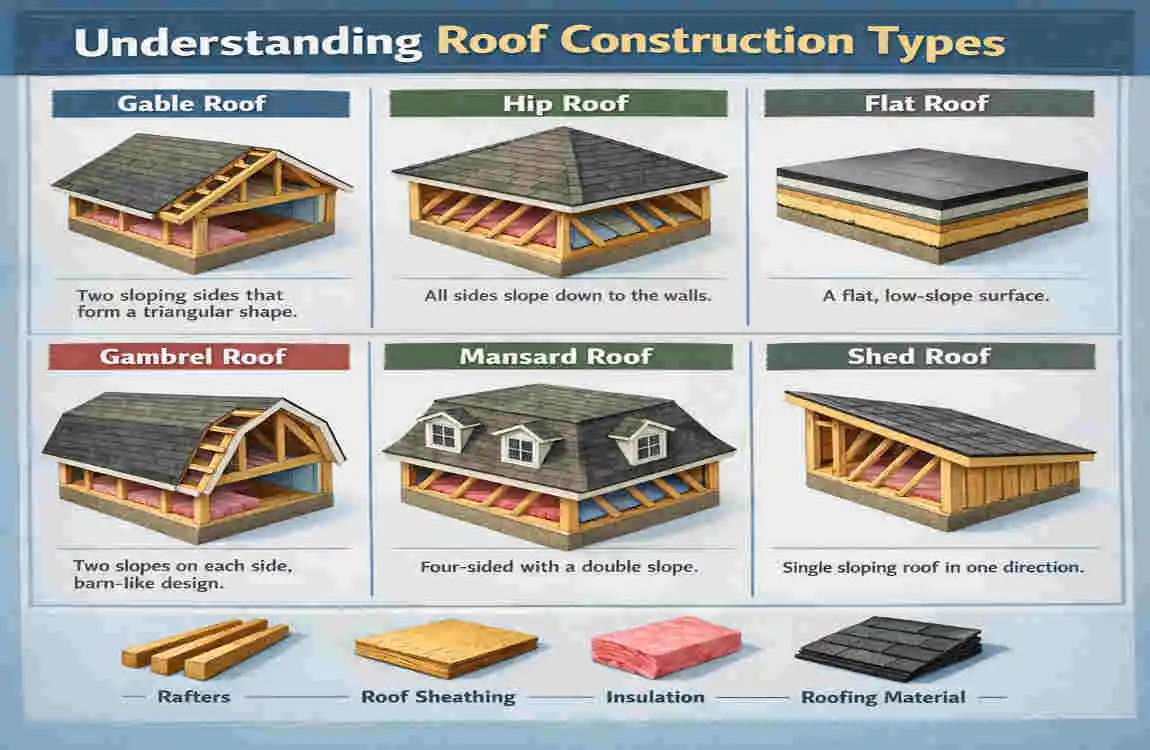
Roof construction types refer to the materials and designs used to build your roof. These materials vary widely in terms of durability, cost, and weather resistance. For home insurance, your roof type plays a significant role in determining your premiums, as it directly affects the risk of damage.
Common Types of Roofs
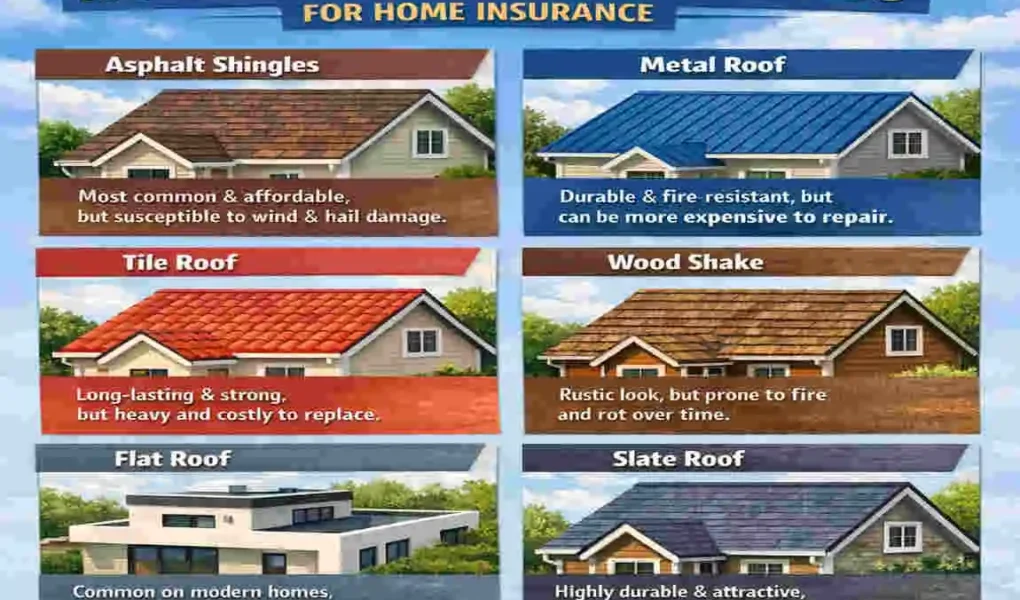
Here are the most common roof types you’ll encounter:
Asphalt Shingles
-
- Widely used due to affordability and ease of installation.
- Moderate durability, with a lifespan of 20–30 years.
Metal Roofing
-
- Highly durable and weather-resistant.
- Often favoured in areas with extreme weather conditions like hurricanes.
Clay or Concrete Tiles
-
- Known for fire resistance and long lifespans (50+ years).
- Heavier and costlier to install.
Wood Shake or Shingles
-
- Offers a rustic, aesthetic appeal.
- Prone to fire hazards unless treated.
Slate Roofing
-
- Premium, long-lasting material (up to 100 years).
- Extremely heavy and expensive to install.
Flat Roofs
-
- Common in commercial buildings home but also used in modern residential designs.
- Prone to drainage issues and water damage.
Synthetic or Composite Roofing
-
- Made from recycled materials, offering durability and versatility.
- Increasingly popular due to lower costs and eco-friendliness.
How Roof Types Affect Home Insurance
Each roof type has unique characteristics that affect insurance policies. For example:
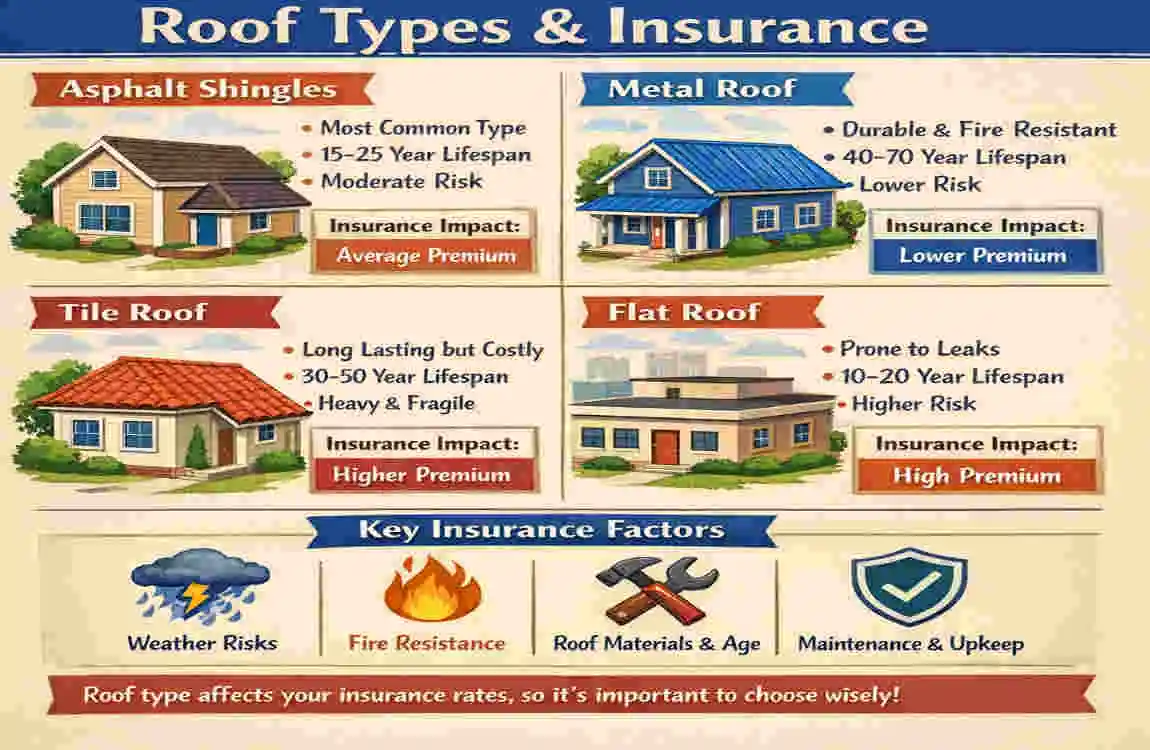
- Asphalt shingles are affordable but may lead to higher premiums due to moderate durability.
- Metal roofs can lower premiums because they’re resistant to extreme weather.
- Wood-shake roofs might increase premiums due to fire risks.
Importance of Roof Construction in Home Insurance
Impact on Premiums
Your roof is a critical factor in calculating insurance premiums. Insurers assess:
- Material: Durable materials like metal or slate typically result in lower premiums.
- Age: Older roofs are riskier and may increase premiums.
- Condition: Neglected or poorly maintained roofs can lead to higher costs.
Durability and Risk Mitigation
A well-constructed roof reduces the likelihood of weather-related claims. For example:
- In hurricane-prone areas, metal roofs are preferred for their wind resistance.
- In regions with heavy snow, steep-sloped roofs help prevent snow buildup.
Regional Considerations
Insurance rates also depend on where you live. For instance:
- Coastal areas favour hurricane-resistant roofs.
- Wildfire-prone regions may require fire-resistant materials, such as clay tiles.
Detailed Analysis of Roof Types and Insurance
Asphalt Shingles
- Pros: Affordable, easy to install, widely available.
- Cons: Moderate lifespan and less durable against severe weather.
- Insurance Impact: May lead to average premiums due to lower durability.
Metal Roofing
- Pros: Durable, weather-resistant, low-maintenance.
- Cons: Higher upfront cost.
- Insurance Impact: Often lowers premiums due to longevity and resilience.
Clay or Concrete Tiles
- Pros: Fire-resistant, extremely durable.
- Cons: High cost and weight require reinforced structures.
- Insurance Impact: Lower premiums in wildfire zones, but may increase in areas prone to hail.
Wood Shakes/Shingles
- Pros: Aesthetic appeal and natural insulation properties.
- Cons: Fire risks and higher maintenance.
- Insurance Impact: Higher premiums unless treated for fire resistance.
Slate Roofing
- Pros: Long lifespan, elegant appearance.
- Cons: Expensive, heavy, and difficult to install.
- Insurance Impact: Seen as a Premium material and may reduce premiums for high-value homes.
Flat Roofs
- Pros: Modern look, easier to inspect.
- Cons: Prone to drainage issues and a shorter lifespan.
- Insurance Impact: A higher likelihood of water damage claims can increase premiums.
Synthetic/Composite Roofing
- Pros: Affordable, versatile, eco-friendly.
- Cons: Newer material with varying performance.
- Insurance Impact: Gaining acceptance may offer moderate premiums.
Factors That Insurers Consider for Roofs
Factor Why It Matters
Age of the Roof: Newer roofs lead to lower premiums due to reduced risk.
Durable materials can lower claims and reduce premiums.
Regular maintenance prevents damage and keeps costs low.
Design Sloped roofs reduce water pooling; flat roofs may increase risks.
Installation Quality: Professionally installed roofs reduce the risk of defects.
Tips for Choosing the Right Roof for Insurance
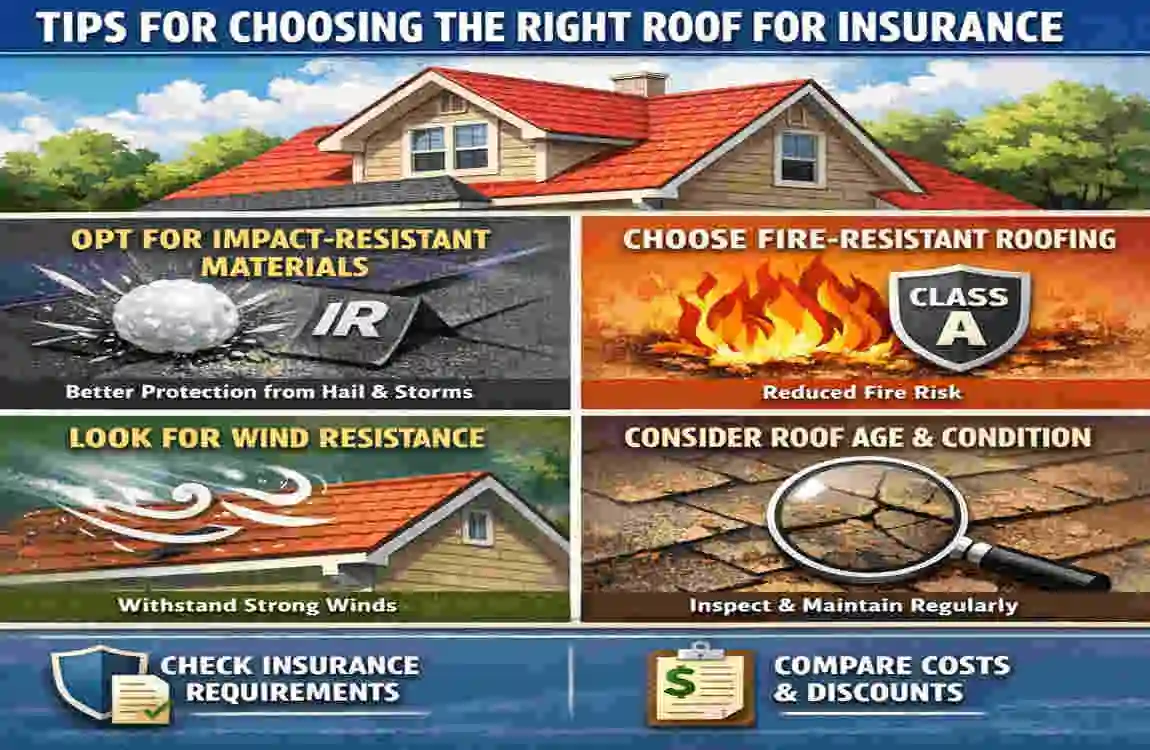
Evaluate Your Location
Consider weather conditions in your area and choose materials accordingly. For example:
- Metal roofs in hurricane zones.
- Clay tiles in wildfire-prone areas.
Ask About Insurance Discounts
Many insurers offer discounts for impact-resistant or energy-efficient roofs. Always ask!
Balance Costs and Savings
While Premium materials may cost more upfront, their durability can save you money on insurance in the long run.
Consider Roof Lifespan
Invest in materials that offer longevity to avoid frequent replacements and keep premiums lower.
FAQs About Roof Construction and Insurance
How does roof material affect my home insurance policy?
Roof material impacts durability and risk, which directly influences premiums.
Can I get discounts for upgrading my roof?
Yes, many insurers offer discounts for impact-resistant or energy-efficient upgrades.
Does the age of my roof affect my ability to get insurance?
Older roofs may lead to higher premiums or even coverage denial.
What are the most durable roof types for extreme weather?
Metal and slate roofs are excellent for extreme conditions.
Are there specific roof certifications that insurers prefer?
Yes, look for certifications such as “impact-resistant” or “fire-rated” for materials.
| Roof Type | Key Characteristics | Impact on Insurance | Typical Lifespan |
|---|---|---|---|
| Asphalt Shingles | Affordable, common, easy repair | Moderate premiums; age affects rates | 15-30 years |
| Metal Roofing | Durable, weather-resistant | Often lowers premiums due to durability | 40-70 years |
| Clay/Concrete Tiles | Fire-resistant, heavy | May increase premiums due to weight | 50-100 years |
| Wood Shakes/Shingles | Natural look, fire risk | Higher premiums; fire mitigation needed | 20-40 years |
| Slate Roofing | Very durable, expensive | Can lower premiums if well maintained | 75-100+ years |
| Flat Roofs | Poor drainage, prone to leaks | Higher premiums due to water damage risk | 10-25 years |
| Synthetic Roofing | Lightweight, versatile | Generally favorable for insurance | 30-50 years |