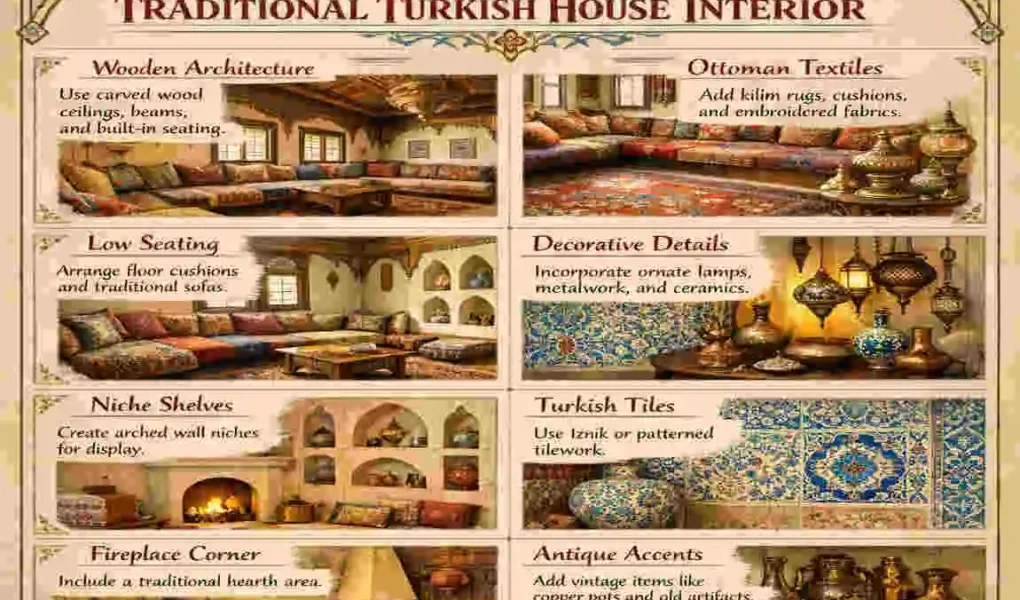
A traditional Turkish house interior is warm, rich, and full of character. It brings together the beauty of Ottoman design, the comfort of Anatolian living, and the charm of handmade details. When you walk into a space like this, you feel both welcome and inspired. The room does not only look beautiful. It also feels lived-in, practical, and deeply personal.
| Design Element | How to Implement in a Traditional Turkish House Interior |
|---|---|
| Flooring | Lay handwoven kilim rugs or oriental carpets over wooden floors; follow the “earth below” concept with layered textiles |
| Walls | Use raw, textured plaster or exposed stone; add Iznik-style tiles or carved wooden panels as focal points |
| Ceiling | Keep wooden beams exposed or add ornate plaster moldings inspired by Ottoman design |
| Furniture | Choose low, ornate wooden pieces (sofas, divans, coffee tables) with velvet or silk upholstery; include carved chest/cabinet storage |
| Textiles | Layer kilims, velvet cushions, silk throws, and heavy cotton curtains; mix eclectic vintage textiles for warmth |
| Color Palette | Use earthy tones (terracotta, ochre), deep blues, rich reds, golds, paired with soft creams and greens |
| Lighting | Install intricate brass or mosaic lanterns, candle niches, and stained-glass windows for warm, patterned light |
| Decor & Accessories | Add handcrafted copperware, ornate mirrors, ceramic bowls, and personal inherited items; avoid mass-produced “souk” clutter |
This style has stayed popular for a simple reason: it balances elegance and comfort. Turkish interiors often use layered textiles, carved wood, patterned rugs, soft lighting, and decorative objects that tell a story. These homes reflect a culture that values hospitality, family, craftsmanship, and beauty in everyday life.
What Is a Traditional Turkish House Interior?
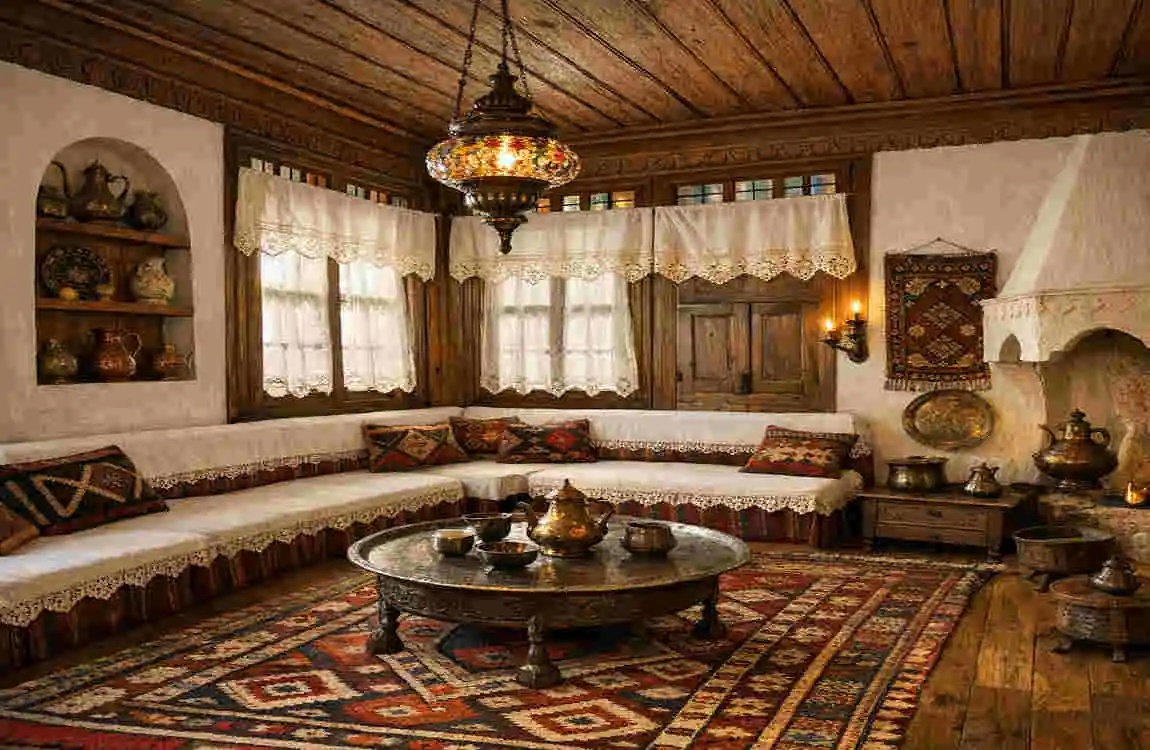
Definition and Historical Background
A traditional Turkish home interior comes from the long design history of the Ottoman Empire and the wider Anatolian region. These homes were built for family life, social gathering, and daily comfort. They often used natural materials, handmade furniture, and decorative pieces that reflected local culture.
Over time, this style grew through different regions and communities. Some homes leaned more toward palace-inspired elegance, while others felt more rustic and grounded. Still, the core idea stayed the same: create a space that feels beautiful, useful, and welcoming.
Key Characteristics
The first thing most people notice is the rich texture. Turkish interiors often layer rugs, cushions, curtains, and carved details in a way that feels full but not chaotic. The room has depth, warmth, and personality.
Another key feature is craftsmanship. You will often see handmade woodwork, metal trays, ceramic accents, woven textiles, and patterned surfaces. These details give the home its authentic charm.
Traditional Turkish interiors also feel inviting and functional. They are made for conversation, tea, family meals, and quiet relaxation. The layout supports daily life instead of just looking decorative.
Why Homeowners Love Turkish Interior Design
Many homeowners love this style because it feels timeless. It does not follow fast-changing trends. Instead, it draws on cultural tradition and long-lasting materials.
It also offers a strong sense of comfort. The use of soft seating, warm colors, and layered fabrics makes the home feel relaxing. At the same time, the style still looks refined and luxurious.
For people who want a home with personality, Turkish design gives them something meaningful. It is not just decoration. It is a way to bring history, culture, and warmth into everyday life.
The History Behind Traditional Turkish Interior Design
Ottoman Empire’s Influence
The Ottoman Empire shaped many of the visual ideas we now connect with Turkish interiors. Palaces used rich fabrics, detailed tile work, elegant wood carving, and balanced layouts. These features later influenced homes across the region.
Even in simpler homes, people admired the same sense of order and beauty. A room could be modest, but it still carried grace. That mix of dignity and comfort remains one of the style’s strongest qualities.
Anatolian Cultural Traditions
Anatolia contributed its own handmade traditions to Turkish interiors. Local artisans worked with wood, wool, clay, metal, and stone. This gave every region its own version of the style.
These traditions made interiors feel deeply human. Rather than relying on mass-produced items, homes often included objects with visible handwork and natural variation. That handmade quality is part of what makes the style so appealing today.
Islamic Design Elements
Islamic art also played an important role. You can see it in geometric motifs, floral patterns, symmetry, and carefully balanced decoration. These elements create visual harmony without needing too much visual noise.
Calligraphy also appears in many traditional Turkish homes. It adds both meaning and beauty. A wall or tile with script can turn a simple surface into a thoughtful design feature.
How Traditional Turkish Homes Have Evolved
Modern Turkish homes often retain the spirit of tradition while adapting the layout to today’s life. Rooms may be more open, furniture may be more comfortable, and lighting may be more practical. Still, the style keeps its roots.
This evolution is useful for homeowners. It means you can create a Turkish-inspired space without copying an old house exactly. You can keep the warmth, pattern, and craftsmanship while adapting the design to your own needs.
Essential Features of a Traditional Turkish House Interior
Spacious Gathering Areas
Turkish homes place great emphasis on hospitality. The main living area is usually arranged to welcome family and guests. The space should feel open enough for conversation, tea, and shared time.
You do not need a huge room to create this feeling. What matters more is the layout. Keep seating facing inward and make the center of the room easy to use.
Low Seating Arrangements
Low seating is one of the most recognizable parts of the style. Floor cushions, divans, and low sofas help create a relaxed atmosphere. They also make the room feel intimate and grounded.
This kind of seating invites people to slow down. It gives the space a softer, more informal feel, which fits the Turkish tradition of shared conversation and comfort.
Decorative Ceilings and Woodwork
Traditional Turkish interiors often feature carved or exposed wood details. Ceilings, beams, cabinets, and trim can all carry simple decorative patterns. These details add structure and richness.
Even a small amount of woodwork can make a big difference. A carved panel, wooden ceiling feature, or decorated frame can give the room a more authentic look.
Rich Textiles and Fabrics
Textiles are central to this style. Rugs, curtains, cushions, and upholstery all work together to create warmth. You should think of fabric as a major design element, not just an extra detail.
Choose fabrics with texture and pattern. Velvet, cotton, silk blends, and woven materials all suit the look. Layering them makes the room feel complete.
Handcrafted Decorative Elements
Turkish interiors often feature copper bowls, ceramics, mosaics, and handcrafted trays. These objects add personality and connect the room to its cultural roots.
You do not need many of them. Even a few well-chosen pieces can bring the style to life. The key is to select items that look authentic and purposeful.
Choosing the Perfect Color Palette
Traditional Turkish Colors
Traditional Turkish interiors often use deep, rich colors. Red, sapphire blue, emerald green, and gold are classic choices. These shades create a sense of luxury and warmth.
They also connect well with the region’s artistic history. You can use them in rugs, cushions, wall accents, or decorative objects.
Earth-Tone Foundations
A strong Turkish-inspired room often begins with a calm base. Beige, terracotta, sand, warm brown, and cream help ground the brighter colors.
These softer shades stop the room from feeling too busy. They also make bold patterns easier to enjoy by giving the eye a place to rest.
Accent Colors Inspired by Turkish Culture
Turquoise, burgundy, and mustard yellow can bring energy into the room. These colours work well in small doses, especially in pillows, lamps, ceramics, or wall art.
They add cultural flavor without overwhelming the design. A few strong accents can create significant visual interest.
Balancing Bold and Neutral Shades
The best Turkish interiors balance rich colors with calm tones. If every surface is bold, the room may feel crowded. If everything is neutral, the room may lose its identity.
Simple Color Guide
Color Choice Best Use Feeling It Creates
Deep red Rugs, cushions, accent chairs Warmth and richness
Sapphire blue Tiles, lamps, décor pieces Cool elegance
Emerald green Fabrics, art, accessories Freshness and depth
Gold Trim, lighting, small décor Luxury and shine
Beige Walls, large furniture Calm and balance
Terracotta Floors, pottery, textiles Earthy warmth
Traditional Turkish Furniture Selection
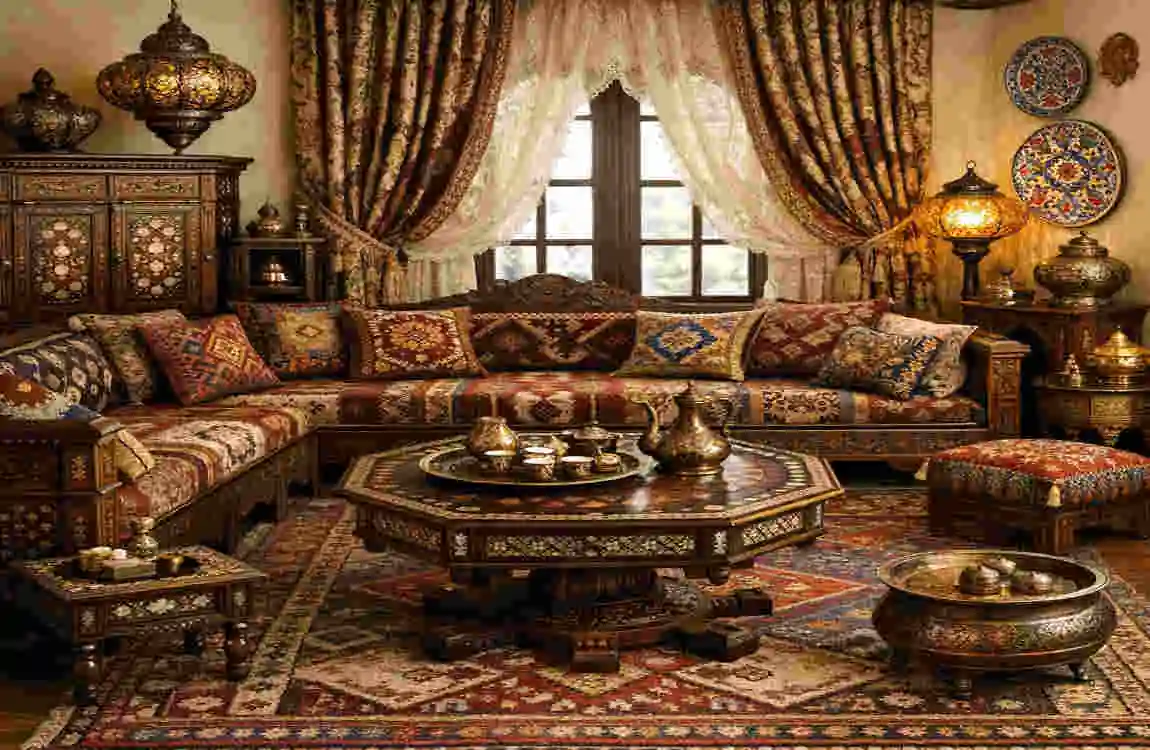
Ottoman-Style Sofas and Divans
Ottoman-style seating is soft, low, and often upholstered. It works well in living rooms where you want a relaxed, social feel. A divan or low sofa can become the heart of the room.
Place it along the walls or around a central table. This arrangement helps create a natural gathering area.
Handcrafted Wooden Furniture
Wooden furniture is an important element of Turkish design. Walnut, cedar, and other warm woods give the room a strong traditional base. Carved edges and simple handcrafted details add character.
Look for pieces that feel solid and natural. You want furniture that looks like it belongs in a home with history.
Low Coffee Tables
Low coffee tables support the Turkish style beautifully. They work especially well with tea service, small decorative trays, or casual meals. They also keep the seating area comfortable and balanced.
Choose tables with wood, brass, or carved details. The table should feel both practical and decorative.
Decorative Storage Cabinets
Storage should not look plain. In a Turkish-inspired interior, cabinets often have carved fronts, metal handles, or antique-inspired finishes. They help keep the room organised while still looking elegant.
This is a smart way to combine beauty and function. Hidden storage keeps the room clean, and decorative surfaces keep the style alive.
Modern Furniture with Turkish Influence
You do not have to use only antique pieces. Many modern sofas, tables, and cabinets can still fit the style if they use warm materials and simple ornament. A modern item with carved wood or patterned fabric can blend in nicely.
This approach works well in everyday homes. It gives you comfort, durability, and the Turkish look at the same time.
Turkish Rugs and Textiles: The Heart of the Interior
Importance of Turkish Carpets
Turkish rugs are more than floor coverings. They are part of the country’s artistic identity. Handwoven rugs often carry regional patterns, symbolic colors, and skilled craftsmanship.
A rug can anchor the whole room. It brings together the furniture, colours, and textures into a cohesive visual base.
Popular Turkish Rug Styles
Kilim rugs are flat-woven and known for bold patterns. Hereke rugs are more detailed and luxurious. Oushak rugs often feature softer colours and large, elegant motifs.
Each style creates a different feeling. Kilims feel more rustic and graphic, Hereke rugs feel refined, and Oushak rugs feel warm and graceful.
Decorative Cushions and Throws
Cushions and throws help you layer the room. They add comfort, pattern, and color without requiring a large investment. This is one of the easiest ways to bring Turkish style into your home.
Mix sizes and textures, but keep the palette coordinated. That way, the room feels rich rather than messy.
Curtains and Fabric Treatments
Curtains should feel soft and elegant. Thick drapes, embroidered details, or layered sheers can all work well. The goal is to frame the window and soften the room.
In a Turkish-inspired home, fabric should always feel intentional. Even a simple curtain can become a design feature if it has the right texture.
How to Layer Textiles Effectively
Start with one strong anchor, like a rug. Then add cushions, throws, and curtains that support the same color story. If you want depth, include one or two patterned pieces and balance them with solid tones.
A layered room feels inviting because it looks comfortable to live in. That is one of the main strengths of the traditional Turkish house interior.
Lighting Ideas for a Traditional Turkish House Interior
Turkish Mosaic Lamps
Mosaic lamps are one of the most beloved Turkish design elements. They cast colourful light, creating a warm, artistic glow. Even when they are turned off, they look beautiful as decorative objects.
Use them in living rooms, bedrooms, or reading corners. They work especially well in spaces where you want a softer mood.
Hanging Lanterns
Hanging lanterns add a sense of drama and charm. They can sit above a table, in an entryway, or in a corner that needs more presence. Their shape and pattern often feel very traditional.
Keep the placement balanced. One strong lantern can be enough if the rest of the room already has many decorative features.
Brass and Copper Fixtures
Brass and copper work beautifully in Turkish interiors because they reflect the warmth of the design. These metals add a handmade, slightly vintage feel to the room.
You can use them in lamps, trays, candle holders, or small accent pieces. A little shine goes a long way.
Natural Light Integration
Natural light is important too. Sheer curtains let sunlight enter while still keeping the room soft. Large windows or bright openings help showcase the textures and colours of the space.
If the room gets strong sunlight, use layers of fabric to soften it. That keeps the space calm and comfortable.
Combining Traditional and Modern Lighting
You can mix old and new lighting if you do it carefully. A modern ceiling light can work well alongside mosaic lamps or brass table lamps. The trick is to keep the materials and colors consistent.
This balance helps the room stay practical for daily use while still looking true to the Turkish style.
Decorating Walls the Turkish Way
Decorative Tiles and Ceramics
Turkish wall design often features tile-inspired patterns, especially those inspired by Iznik art. These tiles use bright colours and floral or geometric shapes to bring a wall to life.
Even one tile panel can become a beautiful focal point. You do not need to cover every wall to make the style clear.
Traditional Turkish Artwork
Artwork inspired by daily life, landscapes, architecture, or cultural scenes can help tell the story of the home. Framed prints or paintings work well if they respect the style’s warm and historic feel.
Choose pieces that support the room rather than compete with it. The wall should feel interesting, not crowded.
Calligraphy and Islamic Art
Calligraphy and Islamic patterns can add depth and meaning. These elements often feel elegant and spiritual. They also connect the home to the wider artistic tradition of the region.
A single framed calligraphy piece can be enough to create a strong focal point. Keep the framing simple so the artwork stands out.
Decorative Mirrors
Mirrors help reflect light and make spaces feel larger. In Turkish interiors, mirrors often come with carved or metal frames. They can add beauty while also being useful.
Place mirrors where they can brighten darker corners or reflect decorative pieces. This adds balance to the room.
Textured Wall Treatments
Stone, plaster, and textured finishes can make a wall feel more authentic. These surfaces give the home a grounded and natural look. They also pair well with wood, fabric, and metal.
You do not need to make every wall overly textured. One feature wall is often enough.
Creating an Authentic Turkish Living Room
Central Seating Layout
The living room is where Turkish style often shines the most. Arrange the furniture to encourage conversation. A central layout works especially well because it makes the room feel social.
Keep the seating close enough for easy interaction. This supports the design’s hospitality-centred nature.
Layering Rugs and Cushions
This is where the room becomes soft and welcoming. A large rug under the seating area and a few cushions on sofas or floor seating can completely change the atmosphere.
Try not to overdo it. Layer with purpose so the space stays comfortable and easy to use.
Traditional Tea and Coffee Corners
A small tea or coffee corner adds real Turkish character. Use a tray, cups, a small table, and perhaps a decorative lamp or container. This corner can become a favorite part of the room.
It also gives the room a lived-in feeling. Guests will sense that the space is made for sharing time.
Statement Decorative Pieces
Choose a few items that stand out, such as a lantern, an antique tray, a ceramic vase, or a copper bowl. These pieces act like visual anchors.
The room feels stronger when each item has a clear place. Too many statement items can create noise instead of beauty.
Achieving Balance and Functionality
A good Turkish living room should feel full but not cluttered. Leave enough open space to move easily. Keep the layout practical for everyday life.
Quick Styling Tips
- Use one main rug and build around it.
- Repeat colors in different parts of the room.
- Mix textures, but keep the overall palette controlled.
- Leave breathing room around decorative objects.
Traditional Turkish Bedroom Design Ideas
Wooden Bed Frames
A wooden bed frame gives the bedroom a grounded and classic feel. Carved or simple Ottoman-inspired designs work especially well. Warm wood tones make the room feel calm and natural.
This kind of bed becomes the anchor of the bedroom. It supports both comfort and style.
Luxurious Bedding Fabrics
Soft cotton, silk blends, and embroidered linens can make the bed feel rich without losing comfort. Bedding should invite rest while still looking elegant.
Use layers, but keep them neat. A few thoughtful fabrics create more impact than too many busy patterns.
Decorative Headboards
A carved headboard can act like a piece of art. It adds focus to the room and gives the bed a stronger presence. Traditional motifs or panel-style designs work well.
If you want a softer look, choose a fabric-covered headboard with subtle patterning instead.
Traditional Storage Solutions
Chests and cabinets fit beautifully into the Turkish bedroom. They add practical storage and also reinforce the old-world charm of the style.
Look for pieces with wood, brass hardware, or detailed carving. These small touches matter.
Cozy Turkish-Inspired Accessories
A bedroom becomes more inviting when you add a rug, a lamp, and a few cushions. These pieces help the space feel warm and restful.
Keep the room simple. A bedroom should feel peaceful first and decorative second.
Designing a Turkish-Inspired Dining Area
Traditional Dining Tables
A sturdy wooden dining table works best. It should feel welcoming and durable, ready for family meals and guests. Turkish style usually favors tables that look handmade or naturally finished.
Round or rectangular tables can both work. Choose the shape that fits your space and your gathering style.
Elegant Table Settings
Turkish ceramics, copper serving ware, and patterned dishes make the table feel special. Even a casual meal can look more inviting with the right serving pieces.
This is where hospitality becomes visible. A beautifully set table tells guests they are welcome.
Decorative Centerpieces
A simple lantern, fresh flowers, or a decorative bowl can serve as a centerpiece. The goal is to add interest without blocking conversation.
Keep the centerpiece low if possible. That helps the table remain practical.
Hospitality-Centered Layouts
The dining area should make people feel comfortable staying for a while. Leave enough room to move around the table and serve food easily. Turkish dining spaces often feel generous rather than rigid.
That generosity is part of the design’s charm. It supports real life, not just visual style.
Turkish Kitchen Design Elements
Natural Materials
Stone countertops, wooden cabinetry, and natural finishes work very well in a Turkish-inspired kitchen. These materials feel honest and long-lasting.
They also connect the kitchen to the rest of the home. The look stays warm instead of cold or overly polished.
Decorative Backsplashes
Mosaic or tile-patterned backsplashes add color and personality. They can bring in the signature Turkish visual language without overwhelming the room.
Use the backsplash as a focal point. It is a great place for pattern because it is both useful and decorative.
Open Shelving Displays
Open shelves can showcase traditional cookware, tea sets, bowls, and jars. This creates a lived-in and welcoming kitchen atmosphere.
Keep the display organized. The shelves should feel charming, not crowded.
Functional Yet Beautiful Design
The best Turkish kitchen balances beauty with daily use. Everything should be easy to reach, easy to clean, and pleasant to look at. That balance is the heart of the design.
A kitchen does not need to be elaborate to feel traditional. It only needs warm materials, thoughtful details, and a sense of care.
Popular Traditional Turkish Decorative Accessories
Mosaic Glass Pieces
Mosaic glass adds color and light. Lamps, candle holders, and small ornaments in this style create a soft decorative effect.
Copper and Brass Décor
These metals bring warmth and a handcrafted feel. Trays, bowls, vases, and lamp details all work beautifully.
Handmade Ceramic Vases
Ceramic vases can add pattern and texture. Use them for flowers or display them on their own.
Decorative Trays
Trays are both useful and stylish. They can hold tea, candles, perfumes, or small keepsakes.
Turkish Tea Sets
A tea set is one of the most recognizable Turkish décor items. It also reflects the culture’s love of hospitality.
Traditional Wall Hangings
Wall hangings with embroidery, metalwork, or cultural motifs help tie the room together. Use them sparingly for the best effect.
How to Blend Traditional Turkish Design with Modern Interiors
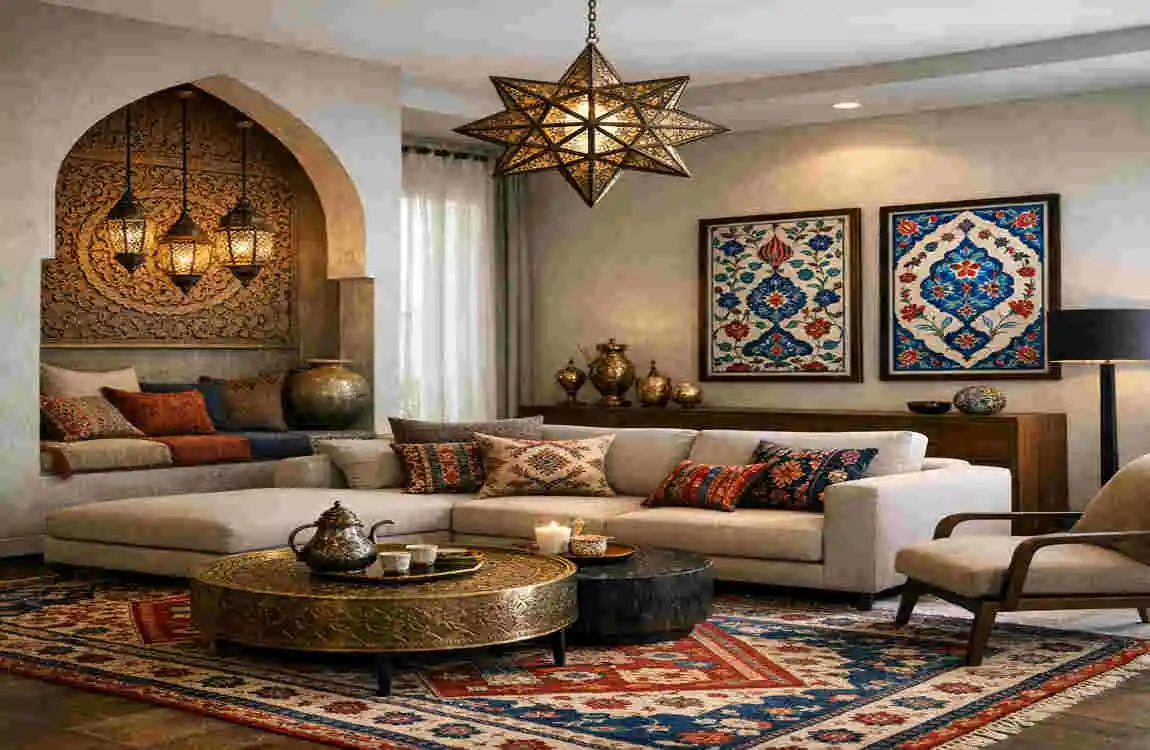
Start with a Neutral Foundation
Begin with simple walls, flooring, and large furniture pieces. This gives you a calm base to build on.
Add Statement Turkish Pieces
Then introduce one or two strong Turkish items, such as a rug, lamp, or carved cabinet. These pieces create identity.
Use Traditional Textiles Strategically
Textiles are the easiest way to add warmth without major changes. Cushions, throws, and rugs can quickly shift a room’s mood.
Mix Contemporary Furniture with Ottoman Details
You can keep a modern sofa or dining table and still use Turkish fabric, wood, or metal accents. This creates a nice blend of comfort and tradition.
Maintain Simplicity and Elegance
Do not try to include every traditional element at once. Choose the details that matter most to you and let them breathe.
Common Mistakes to Avoid When Designing a Traditional Turkish House Interior
Overusing Patterns
Patterns are beautiful, but too many can make the room feel busy. Use them with care and give the eye a few calm areas to rest.
Ignoring Cultural Authenticity
Try not to mix in random elements that do not fit the style. Authentic Turkish design has a clear visual language, and respecting that gives the room more depth.
Excessive Decorative Accessories
Too many ornaments can create clutter. Pick pieces that have meaning or beauty, and avoid filling every surface.
Poor Lighting Choices
Harsh lighting can ruin the warm mood. Use softer layers of light whenever possible.
Mixing Too Many Design Styles
A little mixing is fine, but too many styles can weaken the look. Keep the Turkish elements at the center.
Simple Mistake Checklist
- Do not overload patterns
- Do not crowd the room
- Do not use cold, harsh lighting
- Do not combine too many styles
- Do not forget comfort
Benefits of Choosing a Traditional Turkish House Interior
Timeless Appeal
This style does not go out of fashion quickly. Its strength comes from tradition, craftsmanship, and balance.
Increased Comfort
Soft seating, layered fabrics, and warm materials make the home feel truly livable. That comfort matters every day.
Rich Cultural Character
A Turkish-inspired home has depth. It tells a story through texture, color, and handmade detail.
Warm and Welcoming Atmosphere
The interior design naturally encourages hospitality. Guests feel invited, and family spaces feel more connected.
Long-Lasting Design Value
Because the style uses durable materials and classic forms, it often stays attractive for years. That makes it a smart design choice.
Frequently Asked Questions (FAQs)
What is a traditional Turkish house interior?
It is a home style inspired by Ottoman and Anatolian traditions. It usually includes warm colors, handcrafted details, rich textiles, and a welcoming layout.
What colors are used in traditional Turkish interiors?
Common colors include deep red, sapphire blue, emerald green, turquoise, gold, beige, and terracotta.
What type of furniture is common in Turkish homes?
Low seating, divans, wooden tables, carved cabinets, and handcrafted storage pieces are very common.
How can I decorate my home in Turkish style on a budget?
Start with a rug, a few cushions, a warm lamp, and one or two decorative accessories. Small changes can create a strong effect.
Are Turkish rugs necessary for authentic design?
They are not required, but they do help create an authentic look. A Turkish rug often becomes the foundation of the room.
Can modern homes use traditional Turkish interior design?
Yes, absolutely. You can blend modern furniture and layouts with Turkish colors, textiles, and accessories.
What lighting works best in a Turkish-inspired room?
Soft lighting, mosaic lamps, lanterns, brass fixtures, and layered light sources work very well.
What are the most important Turkish decorative accessories?
Mosaic lamps, copper trays, ceramic vases, tea sets, and traditional wall art are some of the most important pieces.