Metal roofing is a strong and long-lasting choice for many homes. It handles rain, wind, and sun well, but it still needs the right edge details to work properly. One of the most important questions homeowners ask is whether a metal roof overhang should have a drip edge.
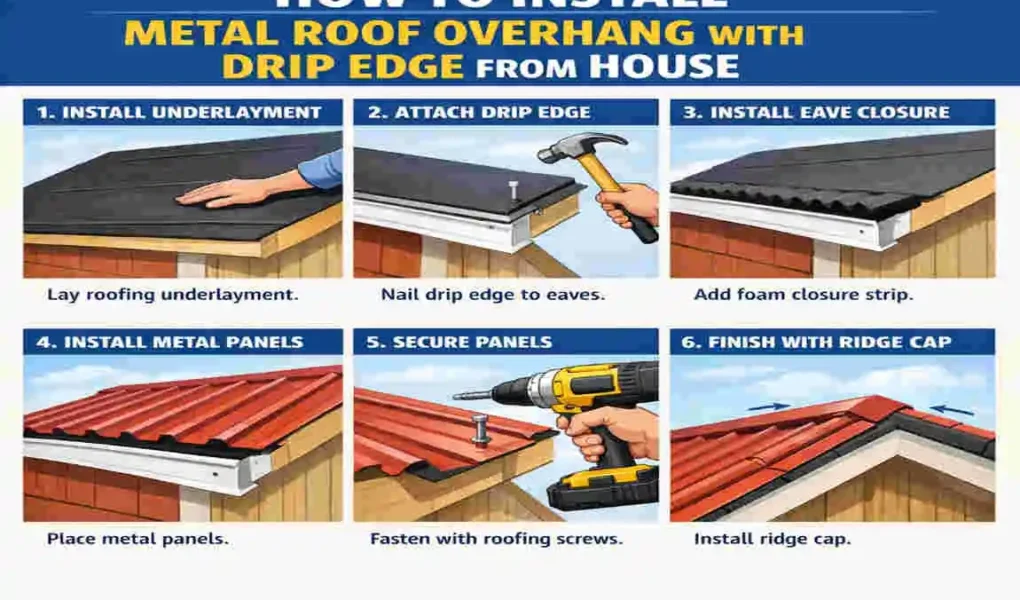
| Step | What to do |
|---|---|
| 1. Measure the overhang | Plan a consistent roof overhang, commonly about 1 inch with gutters or about 2 inches without gutters . |
| 2. Cut and shape the trim | Cut the drip edge/eave trim to length, then fold or notch the ends so pieces lap cleanly . |
| 3. Install at the edge | Place the drip edge along the eave or rake so water sheds away from the fascia and into the gutter area . |
| 4. Overlap joints | Overlap adjoining pieces by about 6 inches, and seal or notch as needed at the joint . |
| 5. Fasten securely | Screw or nail the trim in place, typically about every 12 inches on center, following local code or product instructions . |
| 6. Add underlayment and panels | Install underlayment at the eave, then set the metal panels so the overhang stays aligned and water flows off correctly . |
If the overhang for metal roof is too short, water can run behind the gutter or even back toward the house. If it is too long, the panels may look uneven or become more exposed to wind. That is why the right balance matters.
What Is a Metal Roof Overhang?
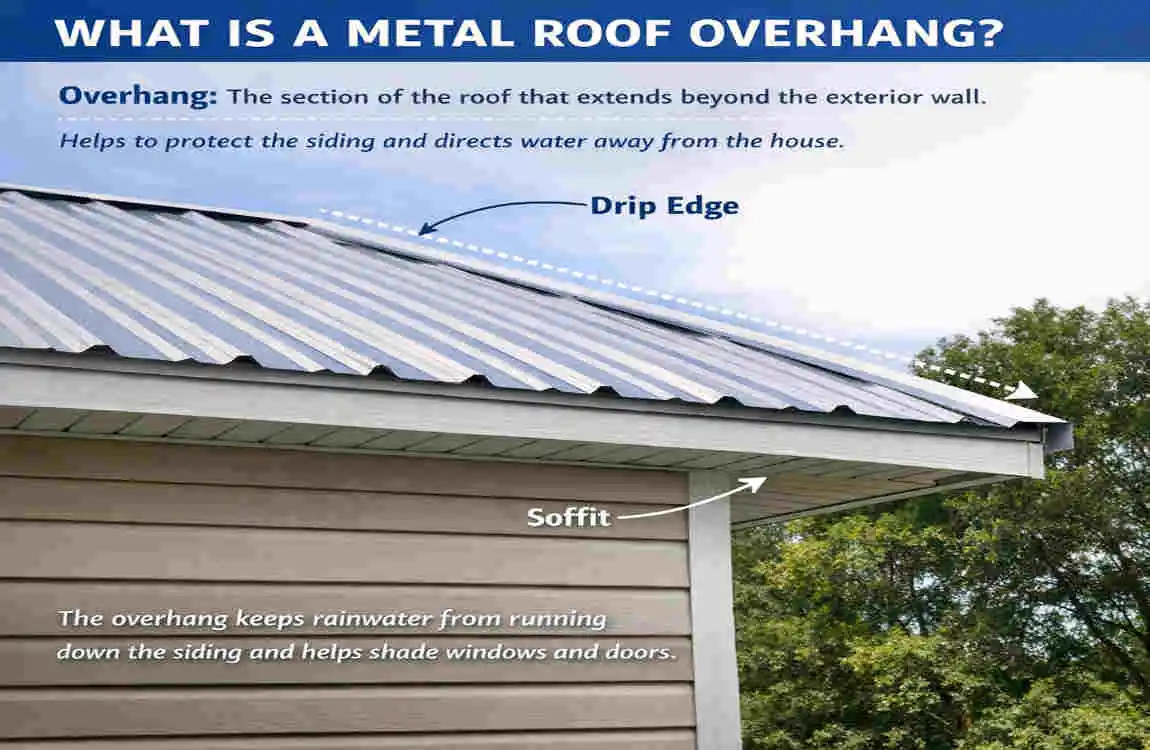
Definition of Roof Overhang
A roof overhang is the part of the roof that extends past the outside wall of the house. On metal roofs, this extension helps guide rainwater away from the building instead of letting it drip straight down the siding.
Purpose of Overhang in Metal Roofing
A proper overhang does a few simple but important jobs:
- It directs rainwater away from the walls
- It helps reduce moisture buildup
- It supports better ventilation
- It can improve the life of the roof system
When installed correctly, the overhang helps the whole roof work better and keeps the home drier.
Common Overhang Sizes
Most metal roofing systems use a small overhang, typically 1 to 2 inches, depending on the panel style and gutter setup. Many installers aim for 1 to 1.5 inches past the drip edge as a common range.
Understanding Drip Edge in Metal Roofing
What Is a Drip Edge?
A drip edge is a piece of metal flashing installed along the roof edge. Its job is simple: it helps water drip away from the fascia and into the gutter rather than running behind the roof edge.
Why Drip Edge Is Essential
Drip edge is important because it:
- Protects fascia boards
- Helps stop water infiltration
- Reduces the risk of rot and mold
- Helps block wind-driven rain
Without a drip edge, water can seep into places it should not. Over time, that can cause expensive damage.
Types of Drip Edge Profiles
Common types include:
- Type C: A simple L-shaped profile
- Type D: A T-style profile
- Type F: An extended flange style
Each type works a little differently, but all are meant to improve drainage and protect the roof edge.
Should Metal Roof Overhang Drip Edge?
Yes, in most roofing systems, metal roof panels should overhang the drip edge slightly. The goal is to guide water cleanly off the roof and into the gutter system without letting it travel back under the panels.
Recommended Overhang Distance
A good rule of thumb is 1 to 1.5 inches past the drip edge. This is often enough to help with water runoff while keeping the edge stable and neat.
Why Proper Overhang Matters
The right overhang helps:
- Control water runoff
- Prevent backflow
- Protect gutters
- Reduce siding damage
This is why the answer to the question “should metal roof overhang drip edge” is not just “yes,” but “yes” with the correct spacing.
What Happens if Overhang Is Too Short?
If the panels do not extend far enough, water may run behind the gutter. That can make the drip edge less effective, leading to leaks or wall stains.
What Happens if Overhang Is Too Long?
If the overhang is too long, the panel edge can bend, sag, or catch strong wind. It may also appear uneven, reducing the roof’s clean appearance.
Tools and Materials Needed for Installation
Before you begin, gather the right tools and materials. This makes the job smoother and safer.
Essential Tools
- Tape measure
- Chalk line
- Roofing screws
- Tin snips
- Screw gun
- Ladder
- Safety gloves
- Roofing harness
Materials
- Metal roofing panels
- Drip edge flashing
- Underlayment
- Closure strips
- Sealant
- Fasteners
Step-by-Step Guide: How to install Metal Roof Overhang with Drip Edge From House
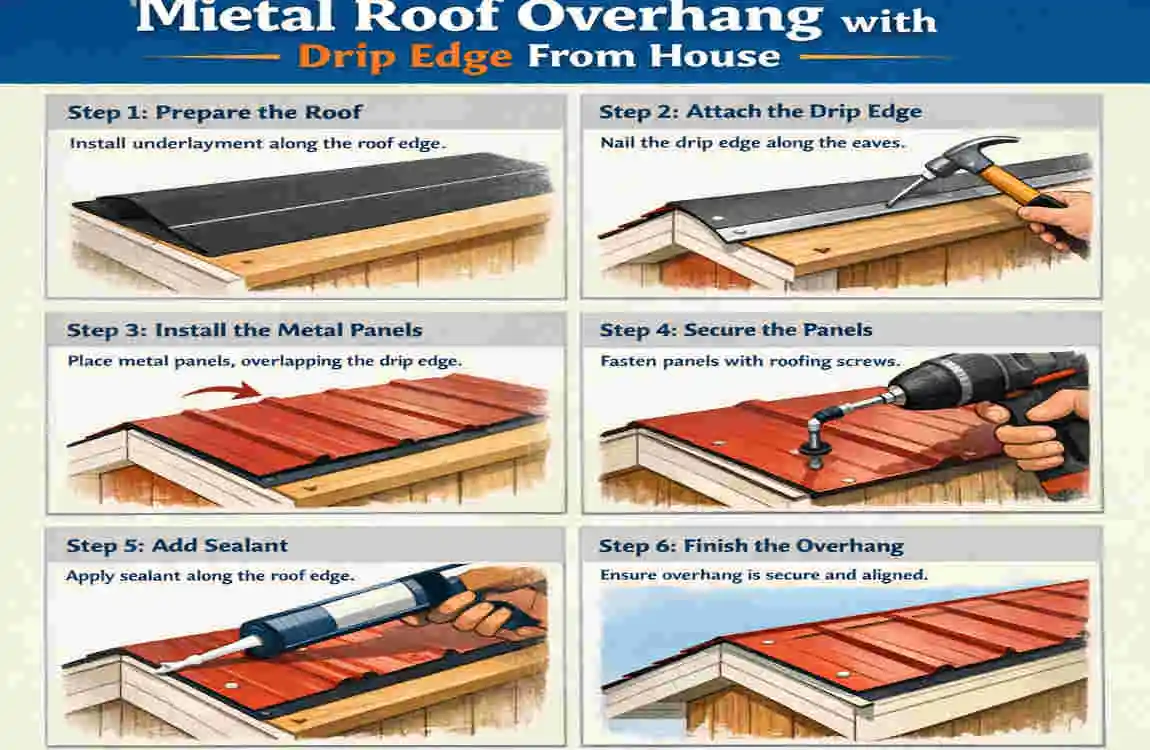
Measure the Roof Edge Correctly
Start by carefully measuring the roof edge. Mark where the panels should end and how far they should extend past the drip edge. Good measuring helps you avoid mistakes later.
install Roof Underlayment
Lay down the underlayment first. This gives the roof a waterproof layer and helps protect the deck below. Overlap the sections properly so water cannot slip through the seams.
install Drip Edge Along Eaves
Next, attach the drip edge at the lower roof edges. Secure it tightly and keep it straight. Nails or fasteners should be spaced evenly so the flashing stays in place.
Align Metal Roof Panels
Place the first metal panel carefully. This first sheet matters a lot because every other panel follows its line. If the first one is off, the rest of the roof may shift as well.
Leave the Correct Overhang Past Drip Edge
Leave about 1 to 1.5 inches past the drip edge unless your panel system says otherwise. This spacing supports proper water runoff from the metal roof and helps water flow into the gutter.
Fasten Roofing Panels
Use the correct screws and spacing for your roof system. Do not overtighten the fasteners, because that can damage the panels or create stress points.
Seal Joints and Ridge Caps
Seal any exposed joints and install ridge caps properly. This step helps keep water out and adds more strength to the roof system.
Final Inspection
Look over the finished roof carefully. Check the edge alignment, water path, and gutter spacing. Make sure the panels direct water into the gutters smoothly.
Quick Installation Checklist
Item What to Check Why It Matters
Panel overhang About 1–1.5 inches Helps proper drainage
Drip edge placement Straight and secure Protects fascia and walls
Fasteners Even spacing, not over-tight Prevents leaks and panel damage
Gutter alignment Water lands inside gutter Reduces overflow and splash-back
Common Installation Mistakes to Avoid
Too Much Overhang
Too much overhang can cause wind damage and weaken the roof edge.
Too Little Overhang
Too little overhang can cause water to back up behind the gutter and onto the fascia.
Skipping Drip Edge
This often leads to fascia rot, mold growth, and poor drainage.
Wrong Fastener Placement
Bad fastener placement can create leaks and loose panels.
Ignoring Expansion and Contraction
Metal moves with temperature changes. If this is ignored, the roof may warp or shift over time.
Metal Roof Overhang and Gutter Relationship
How Water Should Flow Into Gutters
The roof should send water directly into the gutter, not behind it or past it. This is the ideal drip path and a big part of a healthy drainage system.
Proper Alignment Between Roof and Gutters
Good roof drip edge and gutter spacing keeps water from splashing back onto the wall. It also helps the gutter catch runoff more efficiently.
Signs of Incorrect Overhang
Watch for these warning signs:
- Overflowing gutters
- Wall stains
- Water dripping behind the gutter
- Ice dams in cold weather
These signs often mean the roof edge needs adjustment.
Building Code and Manufacturer Recommendations
Why Codes Matter
Local building codes may require certain edge details depending on wind, snow, or rain conditions. These rules help protect your home and keep the roof safe.
Manufacturer Guidelines
Every metal panel system is a little different. Always follow the manufacturer’s instructions for panel overlap, fastening, and edge spacing.
Safety Compliance
Good installation is not just about looks. It also helps prevent structural problems and water damage later.
Maintenance Tips After Installation
After the roof is installed, a little care goes a long way.
- Inspect the roof after storms
- Clean gutters regularly
- Check for loose screws
- Watch for rust spots
- Inspect flashing edges
- Re-seal exposed seams when needed
These simple steps help extend roof life and keep water moving the right way.
When to Call a Roofing Professional
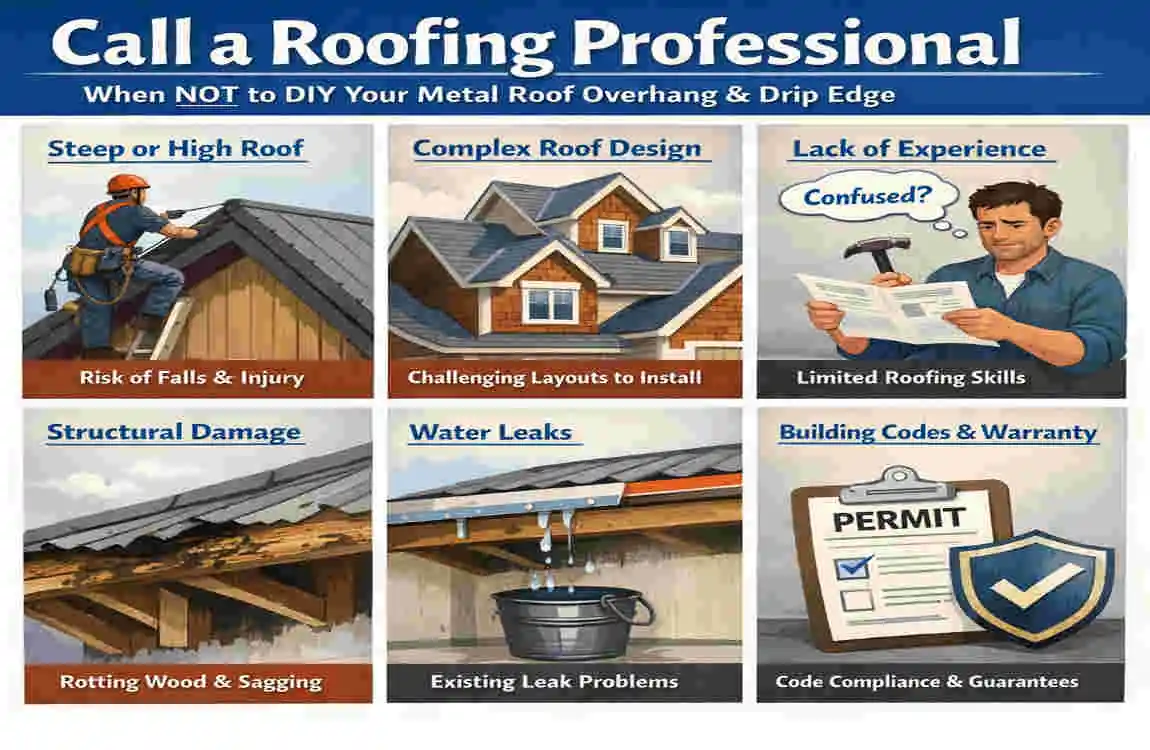
You may want a pro if:
- Your roof has a steep pitch
- You live in a severe weather area
- The roof is large or complex
- There is structural damage
- Drainage problems are already showing
A professional can help make sure the overhang and drip edge are installed correctly.
Frequently Asked Questions
Should metal roof overhang drip edge?
Yes, usually it should. A common overhang is 1 to 1.5 inches past the drip edge for proper drainage.
Can metal roofing extend too far past gutters?
Yes. If it extends too far, the edge can bend, catch wind, or look uneven.
Is drip edge required on metal roofs?
In most cases, yes. It helps protect against moisture and improves roof drainage.
What is the ideal roof overhang size?
It depends on the panel system, but 1 to 2 inches is common for many metal roofs.
Can I install drip edge after metal roofing?
It can be done, but it is usually harder and less effective than installing it during the roof work.