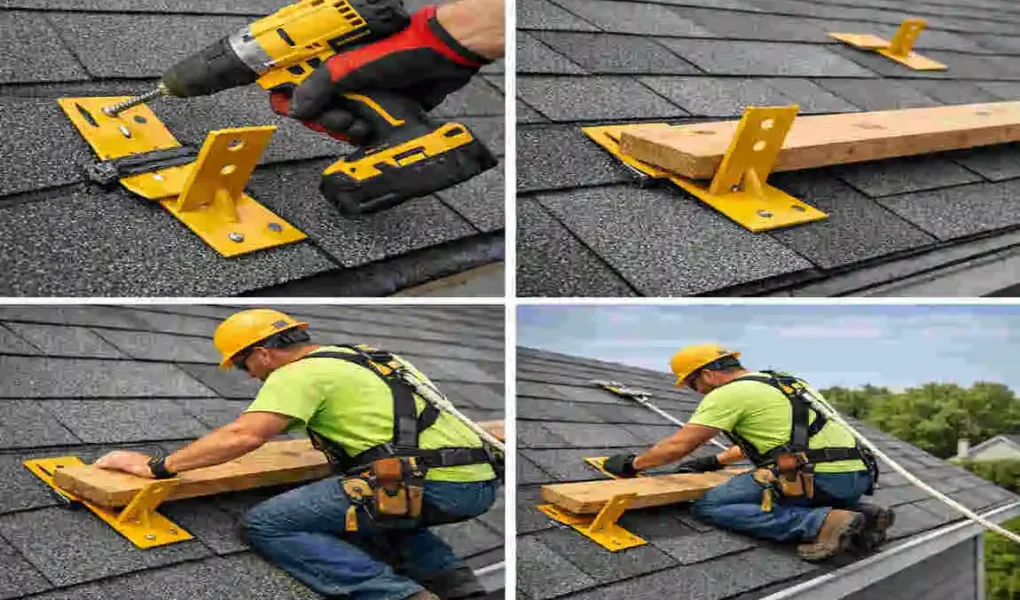
If you are planning roof work, you need more than just a ladder and a few tools. You also need a safe working platform, and that is where a roof bracket comes in.
A roof bracket helps support a wooden plank so you can stand, move, and work more securely on a sloped roof. It gives you better footing while doing repairs, replacing shingles, checking flashing, or handling other roof tasks. For beginners, learning how to use a roof bracket properly can make a big difference in both safety and confidence.
That said, roof work is never something to take lightly. A small mistake can lead to a serious fall or roof damage. That is why you should always follow proper safety steps, use the correct tools, and check the bracket before every use.
What Is a Roof Bracket?
Definition of a Roof Bracket
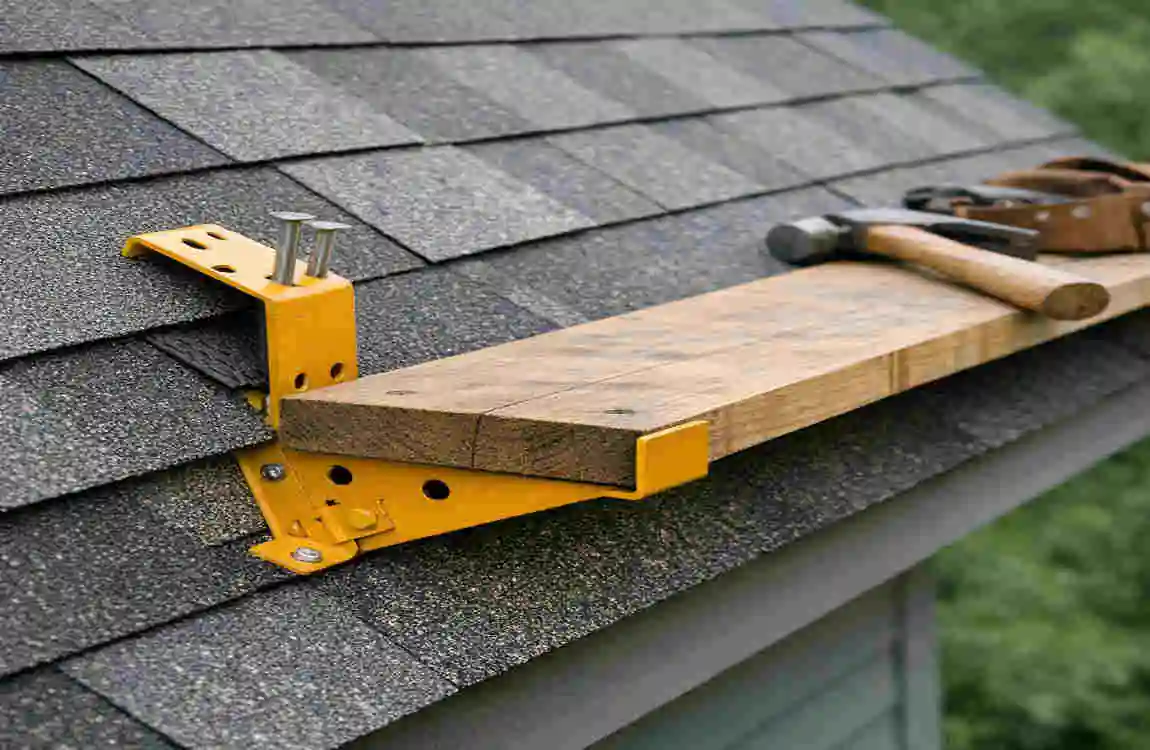
A roof bracket is a metal support piece used to hold a plank in place on a roof. It creates a temporary platform so a worker can stand more safely while doing roof-related tasks.
Instead of balancing directly on a slope, you stand on the plank supported by the brackets. This provides greater stability and helps reduce the risk of slipping.
Common Uses
Roof brackets are useful for many types of roof work, including:
- Roof repair
- Shingle replacement
- Roof inspections
- Painting and maintenance
They are especially helpful when you need to work for more than just a few minutes. The added support makes the job easier and safer.
Types of Roof Brackets
There are several kinds of roof brackets, and the right one depends on the job.
- Adjustable roof brackets: These can fit different roof slopes.
- Fixed roof brackets: These are simple and steady for standard jobs.
- Heavy-duty brackets: These are built for stronger support and more demanding work.
Knowing the right type matters because a bracket that does not match the roof pitch or load needs may not perform safely.
Tools and Equipment You’ll Need
Essential Tools
Before you begin, gather everything you need. That helps the work go more smoothly and reduces the chance of mistakes.
You will need:
- Roof brackets
- Roofing nails
- Hammer
- Measuring tape
- Ladder
- Safety harness
Each item plays a role in creating a stable and secure setup. A proper ladder and safety harness are just as important as the bracket itself.
Recommended Safety Gear
Roof work is safer when you wear the right gear. Do not skip protective equipment just because the job seems small.
Recommended safety gear includes:
- Non-slip boots
- Hard hat
- Gloves
- Safety glasses
Tool Reference Table
ToolPurpose
Roof Bracket Supports roof plank
Hammer Install nails
Ladder Roof access
Harness Fall protection
Roofing Nails Secure bracket
How to Use a Roof Bracket Step-by-Step
Inspect the Roof
Before you install anything, check the roof carefully. Look for soft spots, damaged shingles, loose material, or signs of water damage.
You should also measure the roof slope. This helps you choose the right bracket and plan the layout more accurately.
If the roof feels weak or unsafe, stop and have it inspected before you go any further.
Choose the Correct Roof Bracket
Not every roof bracket works for every roof. The roof pitch, surface condition, and weight load all matter.
Make sure the bracket matches the roof slope and can support the worker and the plank. If the bracket is too small or not designed for the roof angle, it may not hold properly.
Position the Roof Bracket
Once you have the right bracket, place it at the correct spacing. The placement should support the plank evenly and keep it stable.
Alignment matters too. If the bracket sits crooked, the plank may shift or feel unsteady while you work.
Most setups place roof brackets about 6–8 feet apart, but the exact spacing depends on the plank length, the roof pitch, and the manufacturer’s instructions.
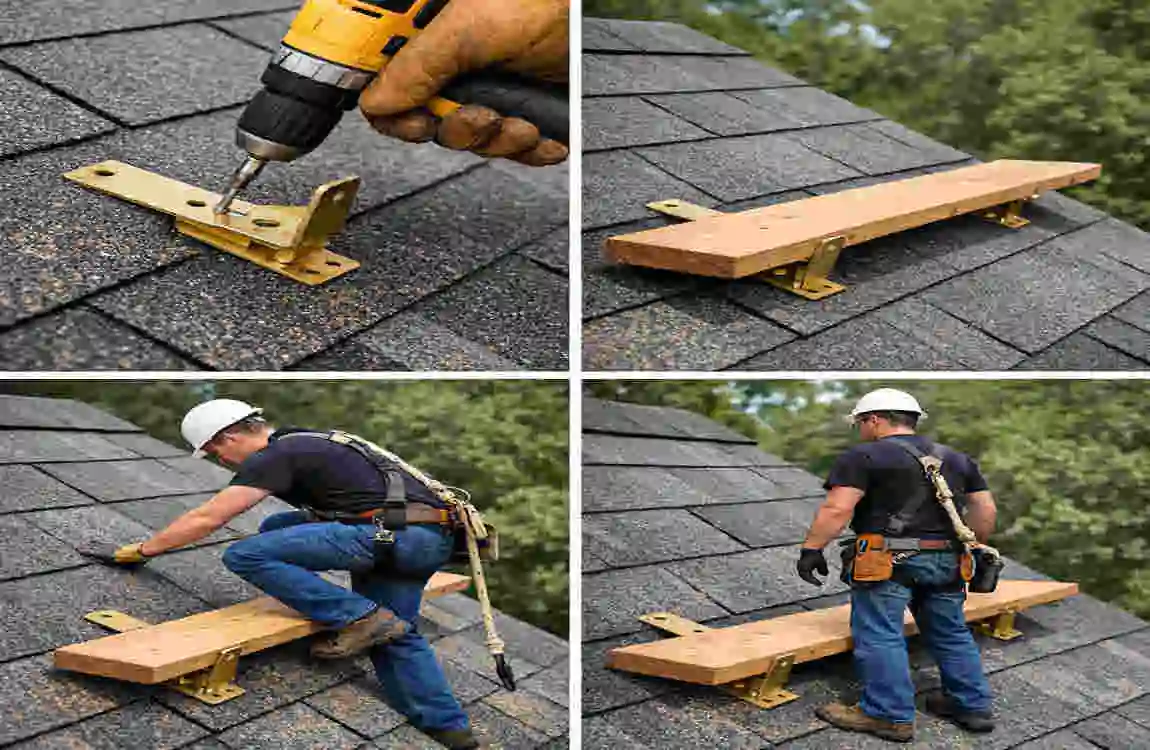
Secure the Bracket
Use the proper roofing nails and attach the bracket into the roof framing. Do not just nail it into weak surface material.
This is one of the most important parts of learning how to use a roof bracket safely. The bracket must be firmly attached before you step on it.
After nailing it in place, test it gently. It should feel solid and should not move.
Install the Wooden Plank
Place a strong wooden plank across the brackets. Make sure it is the correct length and sits properly on both sides.
The plank should be sturdy and level enough to support your movement. Do not use a damaged or weak board.
A secure plank gives you a better working platform and helps you move more confidently across the roof.
Inspect Before Use
Before you step onto the plank, double-check everything. Look at the fasteners, bracket position, plank placement, and roof condition around the setup.
Make sure nothing shifts when you apply a little pressure. If anything feels unstable, fix it before using the platform.
Roof Safety Tips for Beginners
Never Work Alone
Roofing is safer when someone else is around. If something goes wrong, having another person nearby can make a huge difference.
Even if the second person stays on the ground, they can help with tools, support, and emergency response.
Use Fall Protection
A roof bracket is helpful, but it is not a replacement for fall protection. Always use a safety harness when working at height.
A harness adds another layer of protection and is a must for many roof tasks.
Avoid Wet or Windy Conditions
Wet roofs are slippery, and windy weather makes movement more dangerous. If the roof is damp, icy, or exposed to strong wind, delay the work.
Waiting for better conditions is usually the safer choice.
Wear Proper Footwear
Shoes matter more than many people think. Non-slip boots give you better grip and reduce the chance of slipping on roof surfaces.
Check Weather Forecast
Always check the forecast before roof work. A clear morning can turn into a wet afternoon, so plan and give yourself enough time.
Common Mistakes to Avoid
Using the Wrong Nails
The wrong nails may not hold the bracket securely. If the fasteners are too short or too weak, the setup can fail.
Installing on Weak Roof Sections
Never attach brackets to damaged or soft roof sections. The roof must be strong enough to support the load.
Overloading the Bracket
Every bracket has a limit. Do not exceed the weight rating by adding too much load or too many people.
Ignoring Roof Pitch
Roof slope affects how the bracket should be installed. If you ignore the pitch, the plank may not sit properly.
Skipping Safety Equipment
Do not skip the harness, boots, or other protective gear. Roof work is not the place to take shortcuts.
When Should You Use Roof Brackets?
Roof brackets are useful in many situations. You should consider them whenever you need a stable temporary platform for work.
Roof Replacement
If you are replacing shingles or sections of roofing, brackets help you move more safely.
Gutter Installation
They can also help during gutter work, especially when you need access near the roof edge.
Chimney Repairs
When working around a chimney, a bracket-and-plank setup can make the job more controlled.
Roof Cleaning
If you are cleaning debris or moss, the extra support can help you stay balanced.
Solar Panel Installation
Roof brackets may also assist during solar-related work when installers need secure footing.
Roof Bracket Safety Checklist
Use this quick checklist before starting:
- Inspect ladder
- Check roof condition
- Wear harness
- Secure roof bracket
- Install plank correctly
- Test bracket stability
- Keep tools organized
- Follow manufacturer instructions
A simple checklist like this helps prevent small mistakes that can turn into serious problems.
Roof Bracket Maintenance Tips
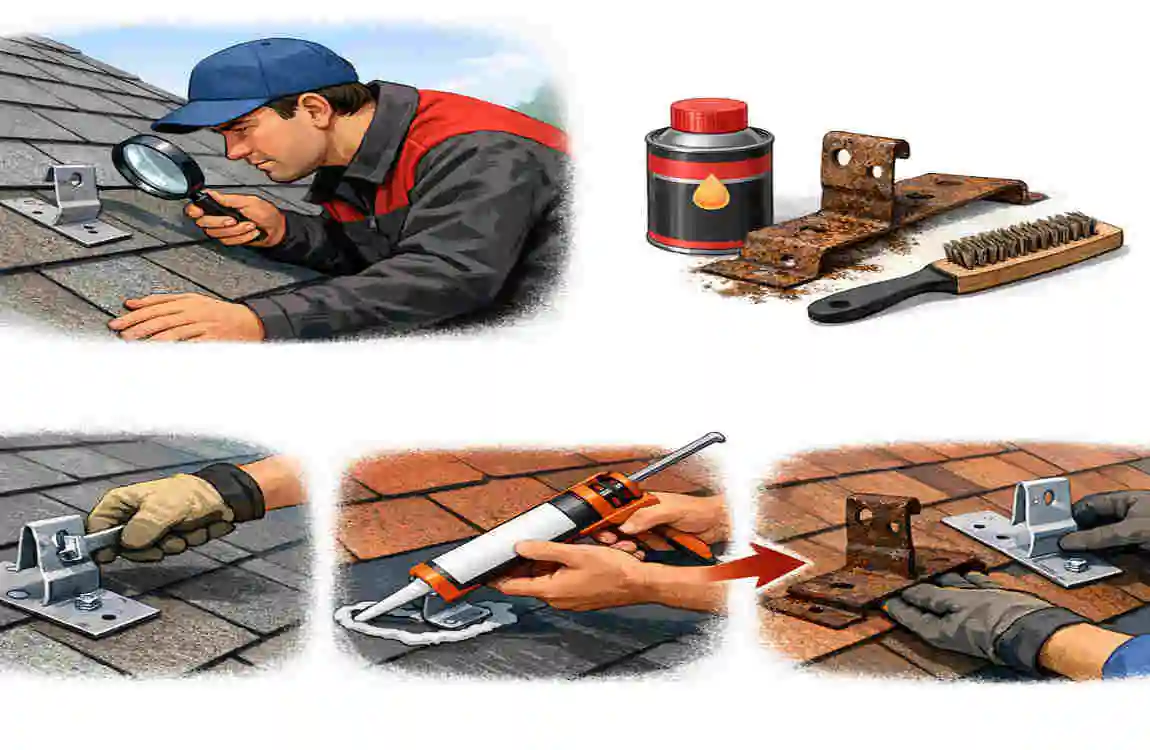
Clean After Every Use
After the job, clean off dirt, dust, and roof debris. This helps keep the bracket in good shape.
Inspect for Rust
Rust can weaken metal over time. Check brackets regularly for corrosion or wear.
Replace Damaged Parts
If a bracket is bent, cracked, or weakened, do not keep using it. Replace damaged parts right away.
Store in a Dry Place
Keep brackets in a dry storage area to reduce rust and extend their life.
Roof Bracket vs Roof Jack
A roof bracket and a roof jack are similar, but they do slightly different jobs.
Feature Roof Bracket Roof Jack
Purpose Supports platform Supports plank
Best For Roofing work Temporary footing
Installation Easy Easy
Reusable Yes Yes
Safety High High
Both tools can be useful, but the right choice depends on the kind of roof work you are doing.
When to Call a Professional
Steep Roofs
If the roof is very steep, the risk is much higher. A professional roofer will have the right experience and equipment.
Damaged Roofing Structures
If the roof looks weak, cracked, or damaged, do not attempt the job alone. Get expert help first.
Multi-Story Homes
The higher the roof, the greater the danger. Multi-story projects are often better handled by professionals.
Complex Roofing Projects
If the job involves large repairs, special materials, or difficult access, a professional is usually the safer choice.
Frequently Asked Questions
What is a roof bracket used for?
A roof bracket provides temporary support for a wooden plank, creating a stable platform for roofing, repairs, and maintenance work.
How do you install a roof bracket safely?
Secure the bracket into the roof framing using the recommended fasteners, install a sturdy plank, and always wear proper fall protection.
Can roof brackets be reused?
Yes. High-quality roof brackets can be reused if they are clean, undamaged, and inspected before each use.
Are roof brackets safe?
Yes, roof brackets are safe when installed correctly, used within their weight limits, and combined with appropriate safety equipment.
How far apart should roof brackets be placed?
Most roof brackets are typically spaced about 6–8 feet apart, depending on the plank length, roof slope, load requirements, and the manufacturer’s instructions.
Do I need a safety harness when using roof brackets?
Yes. A roof bracket provides a working platform but does not replace a personal fall-arrest system. Wearing a safety harness is strongly recommended for safe roof work.
| Topic | Details |
|---|---|
| What Is a Roof Bracket? | A roof bracket is a metal support that attaches to a roof to hold a plank, creating a secure standing platform for roofing work. |
| Primary Purpose | Provides a stable work surface, improves balance, and helps reduce the risk of falls while working on sloped roofs. |
| Best Roof Pitch | Commonly used on roofs with a slope between 4/12 and 12/12, depending on the bracket design. |
| Recommended Materials | Steel roof brackets paired with sturdy scaffold-grade wooden planks. |
| Tools Needed | Hammer or drill, roofing nails or screws (as recommended), measuring tape, ladder, safety harness, and work gloves. |