If you are thinking about building a home, you may be asking, can you build your own house in Virginia? The short answer is yes, but only if you follow the right rules, permits, and local building codes.
Many Virginia residents choose the owner-builder path because it gives them more control over the design, budget, and schedule. You get to make the decisions, from the land you buy to the finishes inside the home. That sounds exciting, and it can be a great option for the right person.
Still, building your own house is not a simple weekend project. It takes planning, patience, money, and a clear understanding of the law. You also need to know when to hire licensed professionals, because some parts of the job are not safe or legal to do on your own.
Can You Build Your Own House in Virginia?
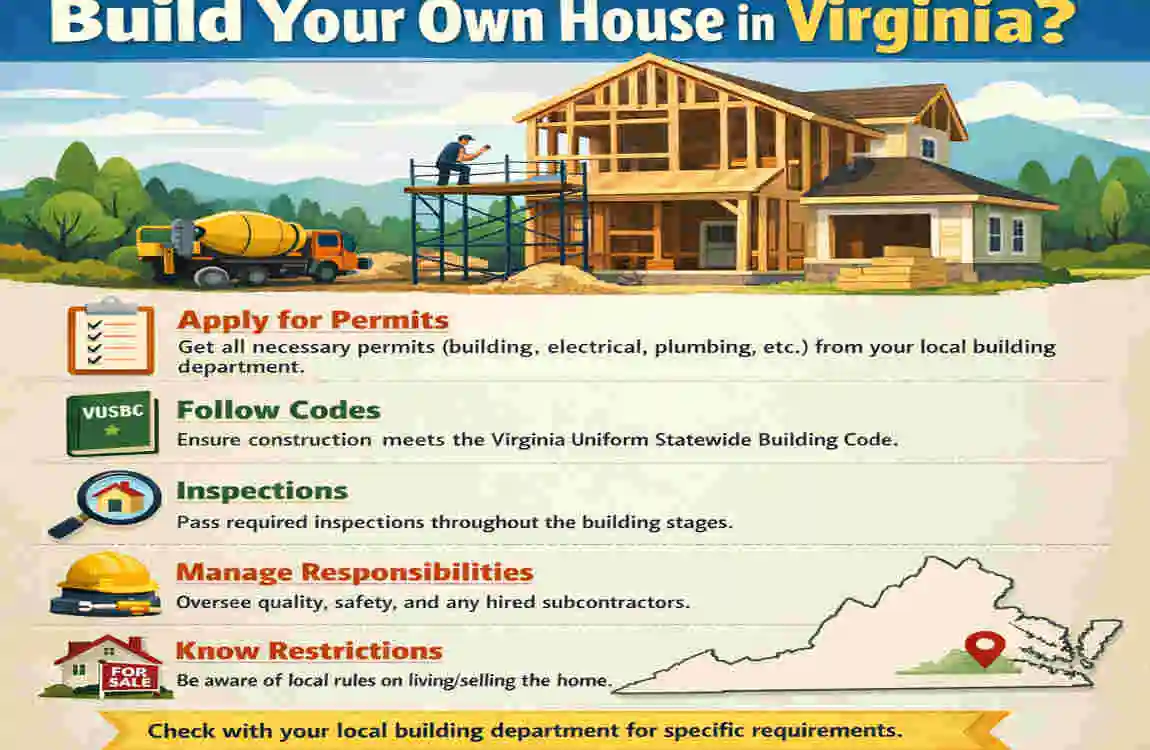
The Short Answer
Yes, you can build your own house in Virginia, but you must meet state and local requirements.
That usually means you can act as the owner-builder Virginia residents often talk about, where you own the property and manage the project yourself. However, that does not mean you can skip permits, ignore inspections, or do every trade job without rules.
What Is an Owner-Builder?
An owner-builder is someone who owns the land and takes responsibility for building the home. You may manage the project, hire workers, buy materials, and coordinate inspections.
But with that freedom comes responsibility. You must follow Virginia building codes, local zoning rules, and all permit requirements. If you make mistakes, you can face delays, added costs, or even fines.
Virginia Owner-Builder Laws Explained
Who Qualifies as an Owner-Builder?
To qualify, you usually need to own the property and be building it for yourself, not as a business project for resale.
Local governments may also look at whether the home will be your primary residence. If you are building for investment or frequent resale, the rules may be different.
Building Code Requirements
Virginia uses the Virginia Uniform Statewide Building Code. This code helps make sure homes are safe, strong, and built correctly.
You also need to follow local county or city rules. These can affect factors such as lot size, setbacks, septic systems, driveway access, and utility connections. So even if the state rule allows a project, your local office may still have extra requirements.
When You Need a Licensed Contractor
Some jobs are best left to licensed professionals. In many cases, you will need qualified help for:
- Electrical work
- Plumbing
- HVAC installation
- Major structural work
Even if you are acting as the owner-builder, these parts of the project may require licensed tradespeople. This protects your safety and helps you stay compliant with local rules.
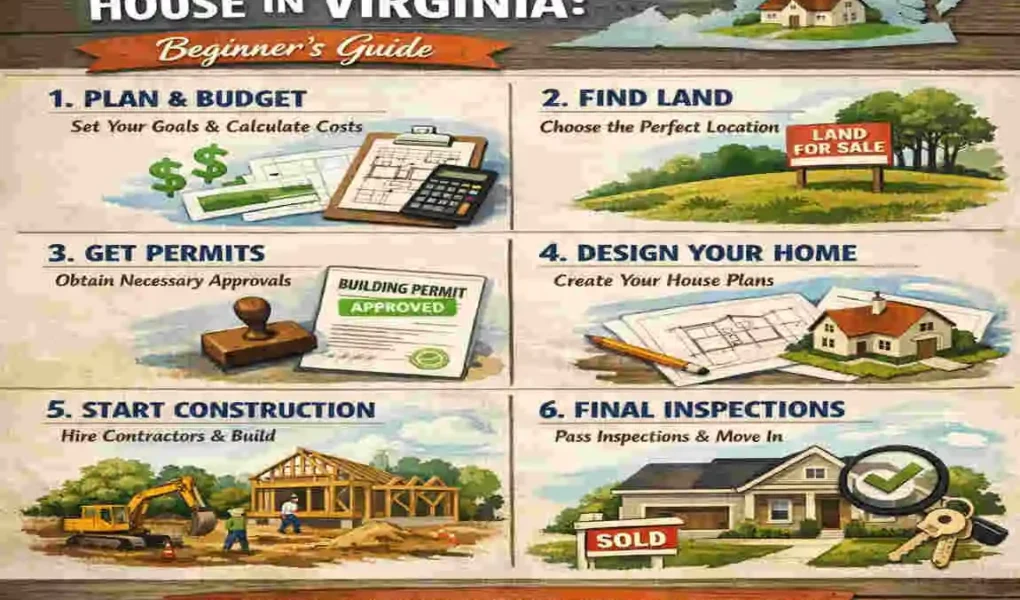
Steps to Build Your Own House in Virginia
Purchase the Right Land
Your lot is the foundation of the whole project. Before you buy, make sure the land is buildable. Check access to roads, water, electricity, sewer or septic options, and the land’s slope.
A cheap lot is not always a good deal if it needs expensive site work.
Check Local Zoning Regulations
Zoning laws tell you what kind of home you can build and where. Some areas have limits on height, square footage, setbacks, and land use.
This step is important because zoning issues can stop your project before it even begins.
Design Your Home
Now you can start planning the house’s layout, size, and style. You may work with an architect, designer, or draftsperson.
Keep the design practical. A smart plan saves money and makes construction easier.
Create a Construction Budget
Your budget should cover more than just the house frame. You also need to consider permits, labor, materials, site work, and unexpected costs.
A good rule is to leave room for extra expenses. Many first-time builders underestimate how much the total project will really cost.
Obtain Building Permits
You will need permits before construction begins. This is one of the most important parts of home-building permits that Virginia homeowners must understand.
Hire Professionals When Necessary
Even as an owner-builder, you may need help from licensed experts for certain tasks. Hiring the right people can save time and prevent costly mistakes.
Schedule Required Inspections
Inspections happen at different stages of the build. Inspectors check the foundation, framing, electrical, plumbing, and final work.
These inspections help confirm that the home meets safety and code standards.
Receive Certificate of Occupancy
Once the work passes final inspection, you can receive a certificate of occupancy. This means the home is approved for living.
Permits Required to Build a House in Virginia
Building Permit
This is the main permit for the house itself. It covers the overall construction project.
Electrical Permit
If electrical work is being done, an electrical permit is usually required.
Plumbing Permit
Plumbing systems also need approval. This helps make sure water lines and drainage are installed safely.
Mechanical Permit
This permit is often needed for heating, cooling, and ventilation systems.
Septic or Well Permit
If the property is not connected to public utilities, you may need permits for a septic system or private well.
Estimated Cost to Build Your Own House in Virginia
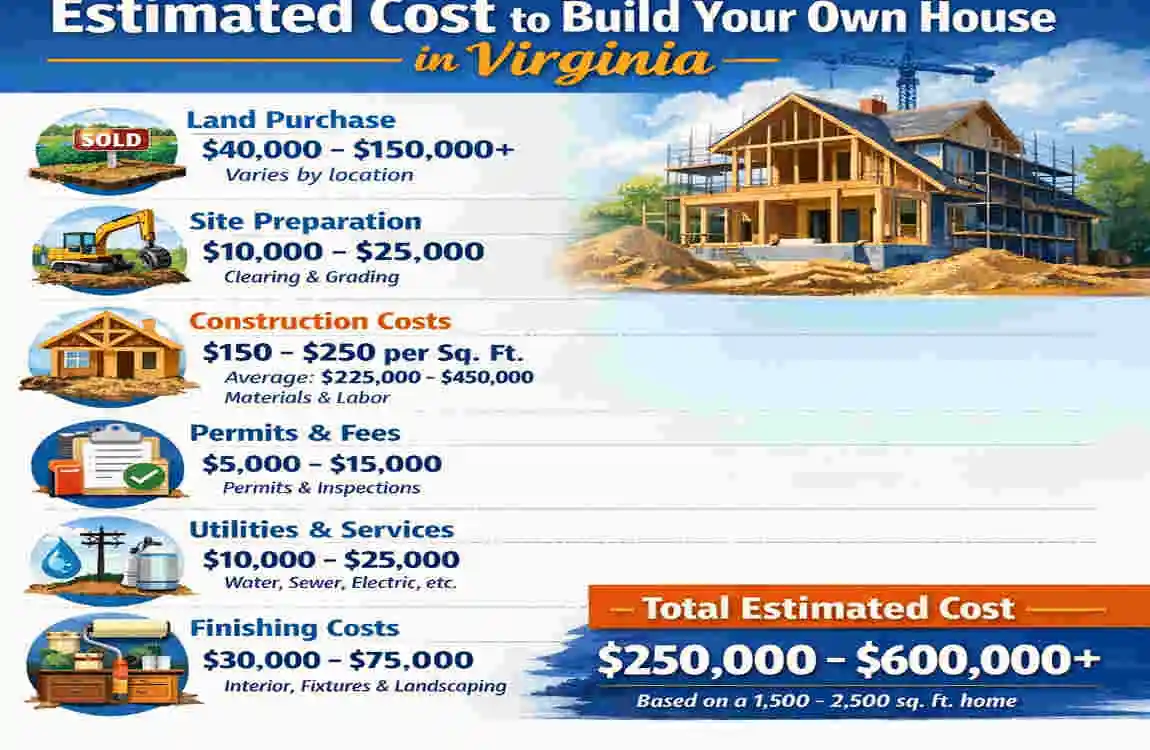
Here is a simple cost overview:
Expense Estimated Cost
Land Purchase Varies by location
Site Preparation $5,000–$25,000
Foundation $8,000–$30,000
Framing $25,000–$70,000
Roofing $8,000–$20,000
Plumbing $7,000–$20,000
Electrical $8,000–$18,000
HVAC $7,000–$18,000
Interior Finishes $30,000–$100,000+
Permits & Fees $1,000–$5,000
These numbers can vary widely depending on location, home size, material choices, and labor costs. In some parts of Virginia, land and labor may cost much more.
Pros and Cons of Building Your Own House
Advantages
Building your own home has some strong benefits:
- Save on labor costs
- Customize the home fully
- Control quality more closely
- Feel proud of the finished result
Challenges
At the same time, the process is not easy:
- It takes a lot of time
- Permits can be confusing
- Inspections may delay progress
- Construction mistakes can be expensive
If you want control and flexibility, owner-building can be rewarding. If you want less stress, a contractor may be a better fit.
Common Mistakes First-Time Owner-Builders Make
Underestimating the Budget
Many people forget about hidden costs like permits, utility hookups, tools, and material price changes.
Ignoring Local Building Codes
This can lead to failed inspections and major delays.
Skipping Professional Inspections
Do not assume everything is fine. Inspections help catch problems early.
Poor Project Scheduling
If trades and deliveries are not timed well, the project can slow down fast.
Choosing the Wrong Building Site
A bad lot can create drainage, access, or utility problems that are costly to fix.
Tips for Successfully Building Your Own Home
- Plan each stage before you begin.
- Keep a detailed budget and track every expense.
- Hire licensed help when a job requires it.
- Stay in touch with local inspectors.
- Leave room in your budget for surprises.
- Do not rush important decisions.
If you stay organized, the whole process becomes much easier to manage.
Is Building Your Own House in Virginia Worth It?
Best Situations for Owner-Builders
Owner-building makes sense if you:
- Want a custom home
- Have enough time to manage the work
- Understand permits and construction basics
- Can handle changes and delays calmly
When Hiring a General Contractor Is the Better Choice
A contractor may be better if you:
- Do not have building experience
- Need the house finished faster
- Want someone else to manage the project
- Feel uncomfortable dealing with inspections and permits
Frequently Asked Questions
Can you build your own house in Virginia without a contractor?
Yes, in some cases, but you still need to follow permits, codes, and local rules.
Do I need a permit to build my own house in Virginia?
Yes. A building permit and other related permits are usually required.
Can an owner-builder perform electrical and plumbing work in Virginia?
Often, licensed professionals are required for those trades.
How much does it cost to build your own house in Virginia?
Costs vary widely, but many projects range from modest to very expensive depending on land, size, and finishes.
How long does it take to build a house in Virginia?
It can take several months to over a year, depending on the design and inspections.
What inspections are required during construction?
Common inspections include foundation, framing, electrical, plumbing, mechanical, and final inspections.
| Topic | Information |
|---|---|
| Guide Title | How to Build Your Own House in Virginia: Beginner’s Guide |
| Best For | First-time home builders, owner-builders, and DIY enthusiasts |
| Average Build Cost | Approximately $150–$300+ per sq. ft., depending on location, materials, and finishes |
| Construction Timeline | Around 8–15 months from planning to completion |
| Land Purchase | Choose land with proper zoning, utility access, and road frontage |
| Permits Required | Building, electrical, plumbing, mechanical, and zoning permits are typically required |
| Planning Step | Set a realistic budget and select a suitable house design |
| Financing Options | Construction loans, mortgage financing, savings, or owner-builder financing (if eligible) |