Weak showers, slow-filling sinks, and tired-looking water flow can make daily life feel more frustrating than it should. If you have ever stood under a shower and wished the water would just come out with more force, you are not alone. Many homes deal with low water pressure, and the good news is that the problem is often fixable.
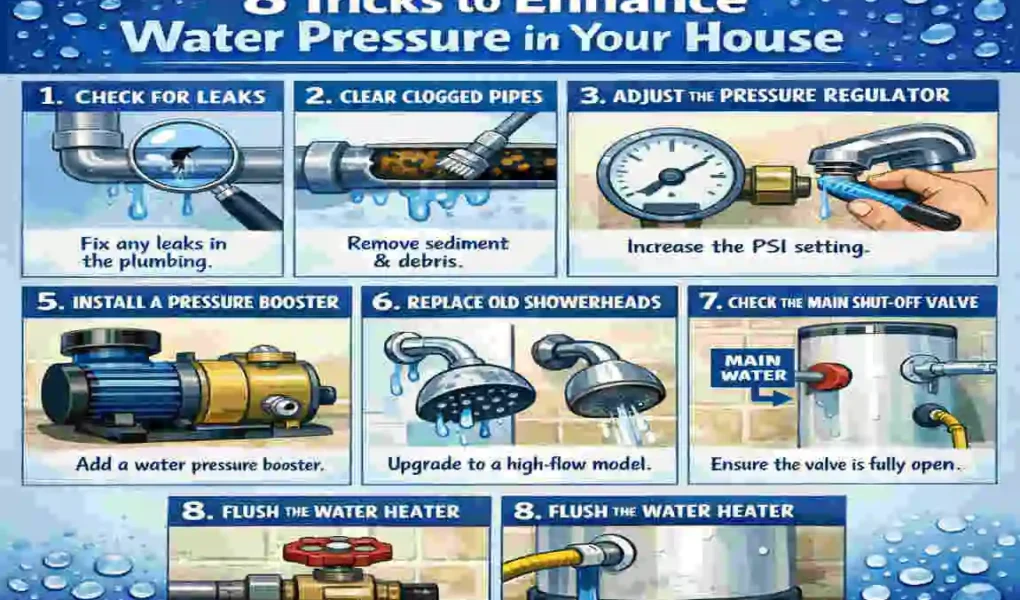
| Trick | What it does |
|---|---|
| Clean faucet aerators | Removes mineral buildup that slows water flow. |
| Clean showerheads | Clears deposits to improve spray pressure. |
| Check the main shutoff valve | Makes sure the valve is fully open. |
| Adjust the pressure regulator | Raises whole-house pressure if it’s set too low. |
| Fix leaks | Stops pressure loss from dripping or hidden pipe leaks. |
| Replace corroded pipes | Restores flow in older plumbing systems. |
| Use wider pipes during upgrades | Reduces friction and improves flow. |
| Add a pressure booster pump | Helps when the home’s incoming pressure is too low |
If you are wondering how to increase water pressure in house, this guide walks you through the most practical solutions in simple language. Some fixes are small and quick, while others may need a plumber or a bigger upgrade. Either way, the key is to find the real cause first and then choose the right solution.
Understanding Water Pressure in Your Home
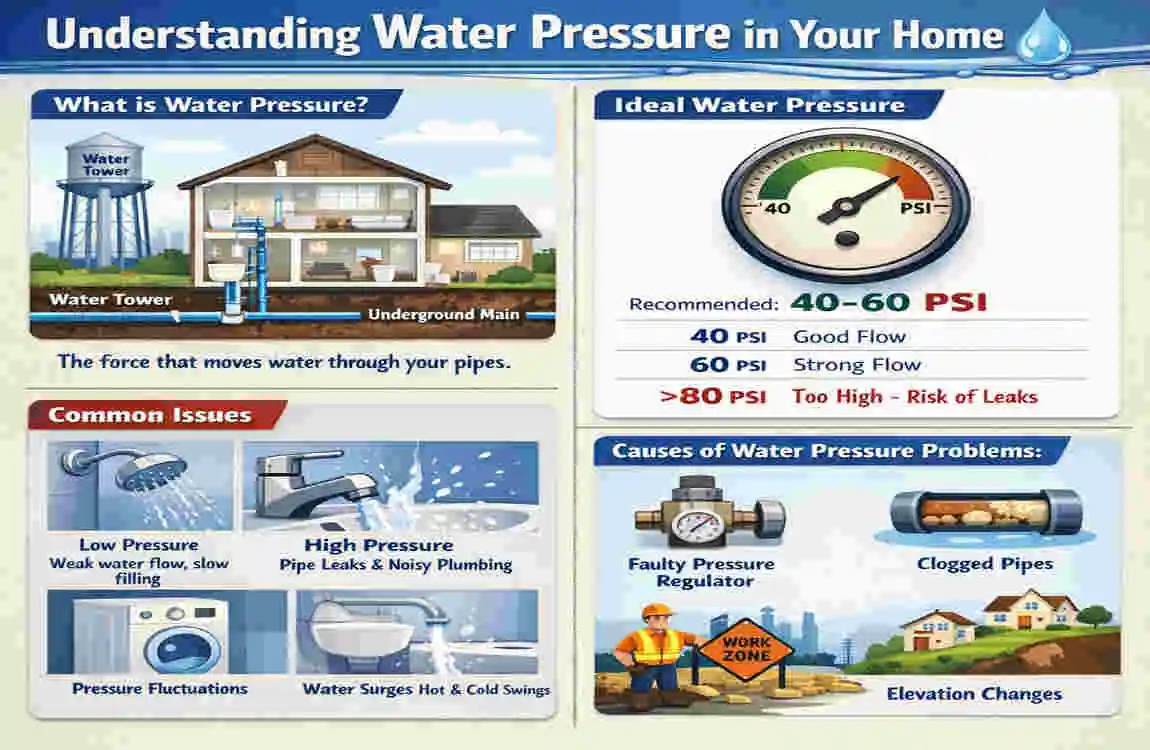
What is water pressure?
Water pressure is the force that pushes water through your pipes and out of your faucets, showerheads, and appliances. Think of it like the strength behind the flow. If the force is weak, the water comes out slowly. If it is strong, the flow feels steady and powerful.
What is the ideal household water pressure?
For most homes, the normal range is about 40 to 60 PSI. PSI stands for pounds per square inch and is the standard unit of pressure. If the pressure drops below that range, you may notice reduced flow. If it goes too high, it can damage pipes and fixtures over time.
Signs of low water pressure
You may have low water pressure if you notice:
- Weak shower flow
- Faucets that run slowly
- A washing machine that fills too slowly
- Water that changes from strong to weak without warning
- Poor performance in multiple rooms at once
Why does diagnosing matter before fixing
It is tempting to guess the problem and buy a quick fix, but that can waste time and money. Some pressure issues stem from a small clog, while others stem from leaks or faulty plumbing components. If you know the cause, you can choose the right plumbing water pressure solution instead of treating only the symptoms.
Common Causes of Low Water Pressure
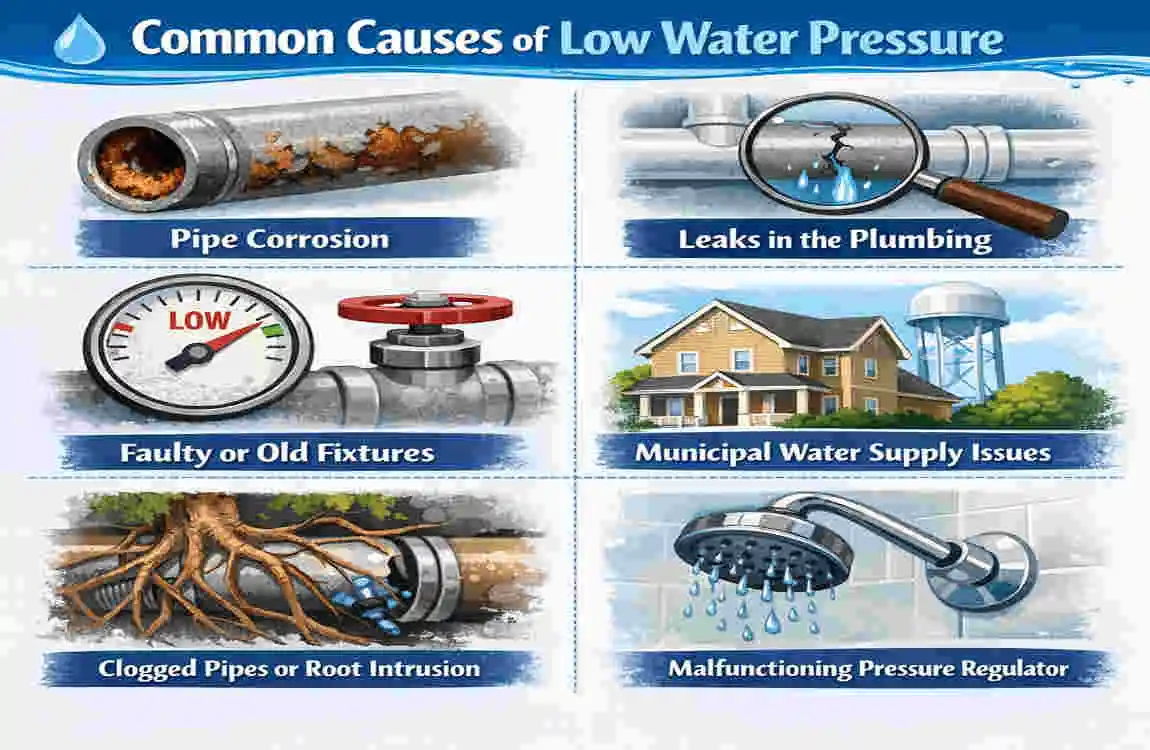
Before you learn how to increase pressure, it helps to understand what might be causing the problem. Many low-water-pressure home fix jobs start with one of these common issues.
Cause What it does Common sign
Clogged pipes, block water flow , Weak flow in several fixtures
A faulty pressure regulatorlowers lowers pressure for the whole house. Pressure feels too weak everywhere
Municipal supply issuesreduce reduce pressure coming into the home. Pressure drops at certain times
Leaks in plumbing send water where it should not go leading to high bills or damp areas
Partially closed valves limit water flow. Sudden weak pressure after repairs
Old plumbing system Narrows flow inside pipes Pressure gets worse over time
Clogged pipes
Over time, pipes can collect mineral buildup, rust, and sediment. This is especially common in homes with hard water or older plumbing. When the inside of the pipe narrows, less water can flow through it.
Faulty pressure regulator
A pressure regulator controls how much pressure enters your home. If it fails or is set too low, the whole house may feel underpowered. This is one of the most common reasons for weak flow in multiple fixtures.
Municipal water supply issues
Sometimes the issue is not inside your home at all. Your neighbourhood may have lower pressure during peak hours, maintenance work, or seasonal demand. In that case, the water supply itself is the problem.
Leaks in the plumbing system
Even a small hidden leak can steal pressure. Water escapes before it reaches your faucet or shower, so the flow feels weaker. Leaks also waste water and can increase your bill.
Partially closed shut-off valves
If the main valve or fixture valve is not fully open, water cannot move freely. This can happen after repairs or maintenance. It is a simple issue, but it often gets overlooked.
Old plumbing system
Older homes often have galvanised steel pipes that narrow over time. They may also corrode from the inside. This can reduce pressure throughout the whole house.
Check and Fully Open the Main Water Valve
One of the easiest things you can do is check the main water valve. If it is partially closed, it can reduce pressure throughout your home.
Where to find it
The main shut-off valve is usually located:
- Near the water meter
- In a basement
- In a utility room
- Outside near the foundation
How to check it
Look at the valve and make sure it is fully open. For many valves, the handle should be turned all the way in the open direction. If it is a lever-style valve, it should usually line up with the pipe.
Why this matters
A valve that is only halfway open can make water flow feel weak in every room. This is one of the fastest ways to improve pressure if the valve is the cause. For some homes, this alone may solve the “how to increase water pressure in a house” problem right away.
Safety tip
Do not force a stuck valve. If it feels rusty or hard to move, it is better to call a plumber than to break it. A simple check is safe, but forcing old parts can create bigger issues.
Clean or Replace Faucet Aerators and Showerheads
If the pressure is low only in certain fixtures, the problem may be right at the tip of the faucet or showerhead.
What are aerators and showerheads?
An aerator is the small screen at the end of many faucets. It mixes air with water and helps control the flow. Showerheads do something similar by spreading water in a controlled pattern.
How buildup affects flow
Minerals from hard water can collect inside these parts. Over time, the holes get smaller, and the water cannot pass through easily. This makes the pressure feel weaker even if your plumbing is fine.
How to clean them
You can often clean them by removing the part and soaking it in vinegar for a few hours. Then scrub away any loose buildup with a small brush or toothbrush. Rinse it well before putting it back.
When replacement is better
If the aerator or showerhead is old, damaged, or heavily clogged, replacement may work better than cleaning. Modern showerheads are often designed to improve flow and reduce buildup. This can help you improve water pressure in the shower without changing the whole plumbing system.
Fix Hidden Leaks in the Plumbing System
Leaks are among the most important things to check because they waste water and reduce pressure.
How leaks reduce pressure
When water escapes through a crack or loose joint, less water reaches the fixtures in your home. That means you may notice weak flow even if the supply is fine. The bigger the leak, the more pressure you lose.
Signs of hidden leaks
Watch for these clues:
- Unexplained high water bills
- Damp walls or ceilings
- Wet spots on floors
- Mould or musty smells
- The sound of running water when nothing is on
Simple leak check
Start by turning off all water in the home and checking the water meter. If the meter still moves, there may be a leak somewhere. You can also inspect under sinks, around toilets, and near exposed pipes.
When to call a plumber
If the leak is behind a wall, under the floor, or near the main line, do not try to guess. A plumber can find the source with the right tools. Fixing leaks early can save money and stop further damage.
Why this matters long-term
A leak repair may feel boring compared to a fancy pump, but it is often the smartest solution. Once the water stays where it should, pressure usually improves. This is one of the most effective plumbing water pressure solutions for lasting results.
Install a Water Pressure Booster Pump
If your home has consistently weak pressure and the usual fixes do not help, a booster pump may be the answer.
What a booster pump does
A booster pump increases the force of water moving through your home. It is especially helpful when the incoming supply is too weak for normal use. This can make showers, faucets, and appliances work better.
When you need one
A booster pump is worth considering when:
- The pressure is low throughout the house
- The municipal supply is weak
- Your home is large or has many floors
- Simple repairs do not solve the issue
Types of booster pumps
There are two common kinds:
- Inline booster pump: Helps a specific line or area
- Whole-house system: Improves pressure across the entire home
Pros and cons
Pros:
- Better flow in showers and faucets
- More comfort and convenience
- Useful for chronic low pressure
Cons:
- Higher cost than simple repairs
- May need professional installation
- Must be sized correctly
A booster pump is one of the most direct ways to boost water pressure when you need a stronger, more reliable flow.
Replace Old or Narrow Pipes
Sometimes the real issue is not outside pressure. It is the condition of the pipes inside your walls.
Why pipe size matters
Wider pipes usually allow more water to move through. Narrow pipes, on the other hand, can slow the flow and make pressure feel weak. This becomes more noticeable when several fixtures run at once.
Problems with galvanised steel pipes
Old galvanised pipes often rust from the inside. As rust and buildup accumulate, the pipe opening narrows. That means water has less room to move, and pressure drops.
Better modern options
Modern plumbing materials like PEX and copper often perform better. They are less likely to clog with rust and can support higher flow rates. They also tend to last longer.
When repiping makes sense
Repiping is a bigger project, but it may be necessary if your home has very old plumbing. If the pipes are worn out, cleaning or patching them may only provide a short-term solution. Sometimes replacement is the best long-term fix for home water pressure problems.
Adjust or Replace the Pressure Regulator
The pressure regulator plays a big role in how your home feels every day.
What it does
A pressure regulator, or PRV, controls the pressure that enters your house from the main supply. It protects pipes from excessive pressure, but if it fails or is set too low, your home may feel weak.
Signs of a faulty regulator
You may have a regulator problem if:
- Pressure is low everywhere
- Pressure changes without warning
- Fixtures feel weak even after cleaning
- The issue started suddenly
Adjustment vs. replacement
Sometimes a plumber can adjust the regulator to improve pressure. In other cases, the valve is worn out and needs replacement. Either way, it should stay within a safe range so the pressure does not become too high.
Why safety matters
Too much pressure can damage pipes, appliances, and fixtures. So the goal is not just strong water. The goal is safe and steady pressure that works well without causing problems later.
Flush Your Plumbing System
Sediment can build up in your plumbing system over time, especially if your water contains minerals.
Why flushing helps
Flushing clears loose debris and buildup from the lines. This can help water move more freely and can also improve the quality of the water coming out of your taps.
Simple flushing process
You can usually flush a system by opening faucets one by one and letting water run for a short time. This helps push out sediment. Some homeowners also flush water heaters separately if buildup is affecting hot water pressure.
Best time to do it
Seasonal maintenance is a smart time to flush the system. Doing it a few times a year can help reduce buildup before it becomes a bigger issue. It is a simple habit that supports better flow over time.
Check Municipal Supply and Timing Usage
Sometimes the pressure problem comes from outside your home.
Peak usage can lower pressure.
In some neighbourhoods, many homes use water at the same time. This can happen in the morning or evening, especially during busy hours. When demand rises, pressure can drop for everyone.
How to test this
Try checking your water pressure at different times of day. If it is worse during busy hours and better later, the local supply may be part of the issue. That can help you avoid fixing things that are not actually broken.
When to contact the water authority
If the whole neighbourhood seems affected, call your local water provider. They may know about maintenance, line issues, or pressure changes in your area. Sometimes the answer is simpler than you think.
Storage options
Some homes use a storage tank to help manage pressure problems. This may not be needed everywhere, but it can help in areas with frequent supply changes. It is another option when the external supply is unstable.
Bonus Tips to Maintain Strong Water Pressure
Once you fix the main issue, a few simple habits can help keep pressure strong.
Helpful habits to follow
- Schedule regular plumbing inspections
- Keep filters and screens clean
- Avoid running too many fixtures at once
- Maintain your water heater
- Consider a water softener if you live in a hard water area
These habits may not create instant results, but they help prevent future problems. They also make it easier to keep your low-water-pressure home fix from coming back.
When to Call a Professional Plumber
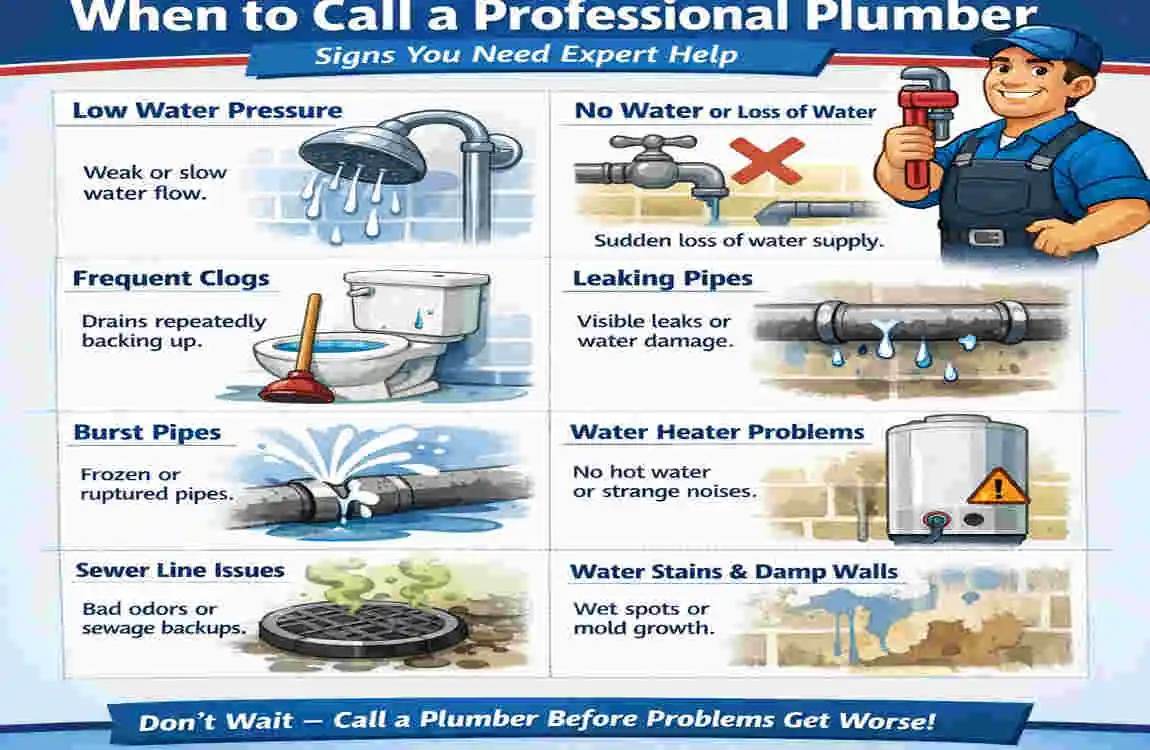
Some pressure problems are simple, but others are best left to a professional.
Warning signs that need expert help
Call a plumber if you notice:
- A sudden drop in water pressure
- Pressure problems in the whole house
- Leaks inside walls or under floors
- Rusty water or severe buildup
- Repeated issues after trying basic fixes
Why DIY has limits
You can check valves, clean aerators, and look for visible leaks. But hidden pipe damage, regulator failure, and repiping work often need the right tools and experience. A professional can identify the cause more quickly and reduce the risk of making things worse.
What plumbers usually check
A plumber may inspect:
- Pressure levels
- Main valves
- Regulators
- Pipe condition
- Leaks and blockages
Sometimes the cost of a proper inspection is lower than the cost of repeated guesswork. That makes professional help a smart investment when the problem is serious.
Frequently Asked Questions
Why is water pressure low only in my shower?
This usually means the problem is local to the showerhead or its valve. Mineral buildup is very common here. Cleaning or replacing the showerhead often helps.
Can a water filter reduce pressure?
Yes, it can. If the filter is clogged or poorly installed, it may slow the water flow. Regular filter maintenance can prevent this.
What is the fastest way to increase water pressure in the house?
The fastest fixes are usually checking the main valve, cleaning showerheads and aerators, and looking for leaks. These are simple steps that can improve flow quickly.
Is high water pressure dangerous?
Yes. Pressure that is too high can damage pipes, appliances, and fixtures. That is why any adjustment should stay within a safe range.
How much does a booster pump cost?
The cost depends on the type of system and installation needs. A simple pump is usually less expensive than a whole-house setup. A plumber can help you choose the right one for your home.