If you have been scratching more than usual or your pet seems restless, you may be wondering how to know if you have fleas in your home. Fleas are tiny, but they can cause a lot of stress fast. They bite pets, bother people, and spread through carpets, bedding, and furniture.
Check for Flea Bites on Humans and Pets
One of the fastest ways to tell if you have fleas in your home is to look for bites.
Flea bites often show up as:
- Small red bumps
- Itchy spots in clusters
- Bites around ankles, feet, and lower legs
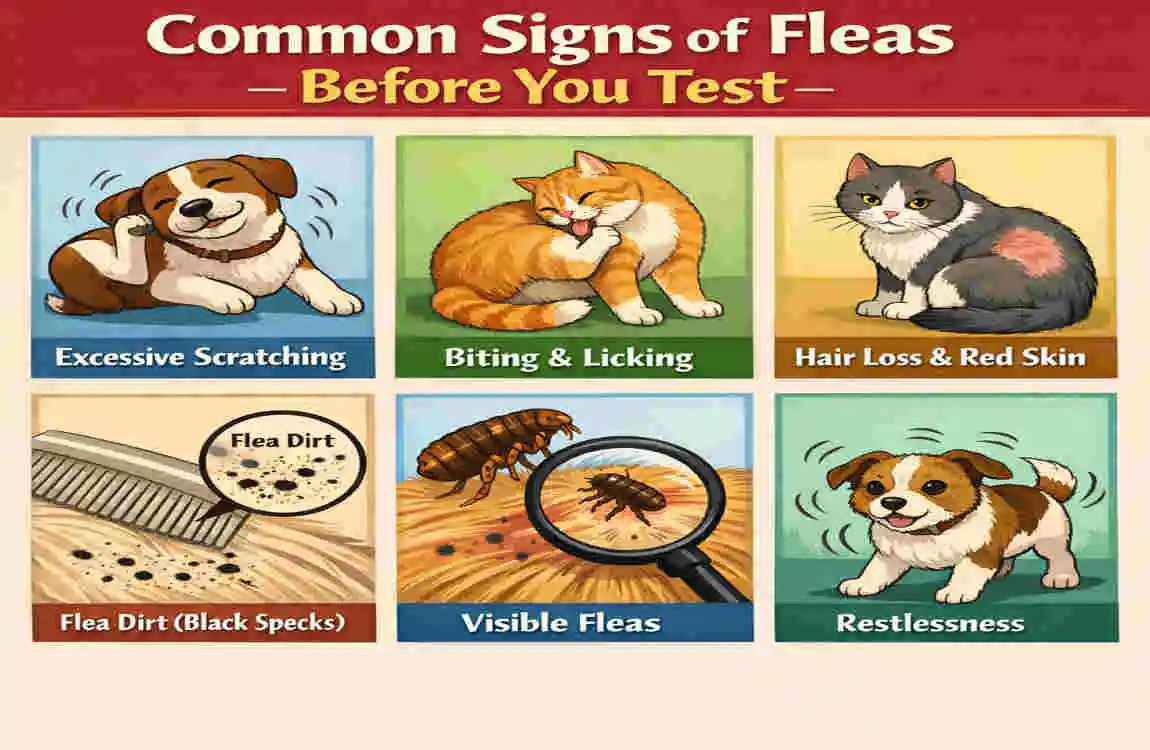
On pets, you may notice red skin, hair loss, or constant scratching. Flea bites usually look different from mosquito bites because they often appear in groups.
If you see this pattern, inspect your pet and your home clean right away.
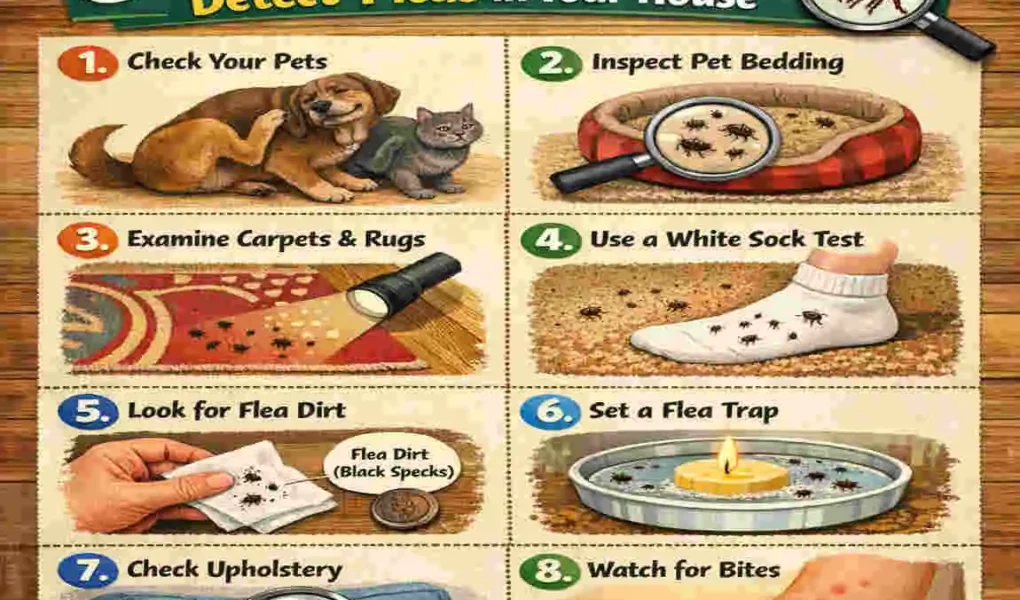
Try the White Sock Test
This is a simple way to detect fleas in carpets and rugs.
Walk slowly across carpeted areas wearing white socks. Fleas may jump onto the socks, and their feces, or flea dirt, may appear as tiny black dots.
To make the test more useful:
- Wear clean white socks.
- Walk through areas where pets rest or sleep.
- Check the socks closely under bright light.
- If you see black specks, wet them with a tissue. If they turn reddish-brown, that is often flea dirt.
This test works well because fleas hide in soft floor areas and wait for movement.
Use a Flea Comb on Your Pet
If you have a dog or cat, a flea comb is one of the best tools to confirm signs of fleas in your home.
Comb slowly through your pet’s fur, especially:
- Around the neck
- At the base of the tail
- Under the belly
- Behind the ears
After combing, look for:
- Live fleas
- Tiny black flea dirt
- Small white eggs
You can tap the comb onto a white paper towel or dip it into soapy water to catch fleas. If your pet resists grooming and keeps biting at the same spots, that is another strong clue.
Set a Dish Soap Trap Overnight
This is a useful clean home test if you want to know whether you have fleas in your home without waiting for a pet to be checked.
Here is how it works:
- Fill a shallow bowl with water.
- Add a few drops of dish soap.
- Place the bowl near a lamp or night light.
- Leave it overnight in rooms where fleas may be active.
Fleas are drawn to light and may jump into the water. The soap breaks the water tension, so they sink.
If you find several fleas in the trap, you likely have an active problem.
Inspect Your Vacuum Cleaner
Your vacuum can tell you a lot.
After cleaning carpets, rugs, or furniture, empty the vacuum bag or canister onto a white paper plate or sheet. Look for:
- Tiny dark specks
- Live fleas
- Flea eggs or debris from pet bedding
This method is helpful because fleas often hide deep in carpet fibers. Vacuuming brings them up, which makes them easier to spot.
If you are checking for signs of a flea infestation, this is a very practical step.
Look in Hidden Spots for Eggs and Pupae
Fleas do not only stay on pets. In fact, many of them live in the environment.
Check these places carefully:
- Baseboards
- Furniture seams
- Under couch cushions
- Pet beds
- Cracks in the flooring
- Corners of rugs
Use a flashlight to look for tiny white eggs or small cocoon-like pupae. These are easy to miss, but they matter because they mean fleas are breeding inside clean home.
This is one of the clearest answers to how to know if you have fleas in your home, especially if bites keep coming back.
Watch Your Pet’s Behavior Closely
Sometimes the behavior gives you the first warning.
Pets with fleas often:
- Scratch constantly
- Bite or chew at their skin
- Shake their body often
- Rub against furniture
- Do a sudden “flea dance” by twitching and turning to bite themselves
If your pet seems uncomfortable for no clear reason, fleas may be the cause. You may not see the insects right away, but the behavior can tell you something is wrong.
Use a Sticky Trap or Light Test
Sticky traps are another easy way to detect fleas in house areas.
Place a glue board or sticky trap near:
- Pet beds
- Sofas
- Carpets
- Baseboards
You can also use a small light at night to attract fleas. When they move toward the warmth and light, they may land on the trap.
This method is simple, cheap, and useful if you want a quiet overnight test.
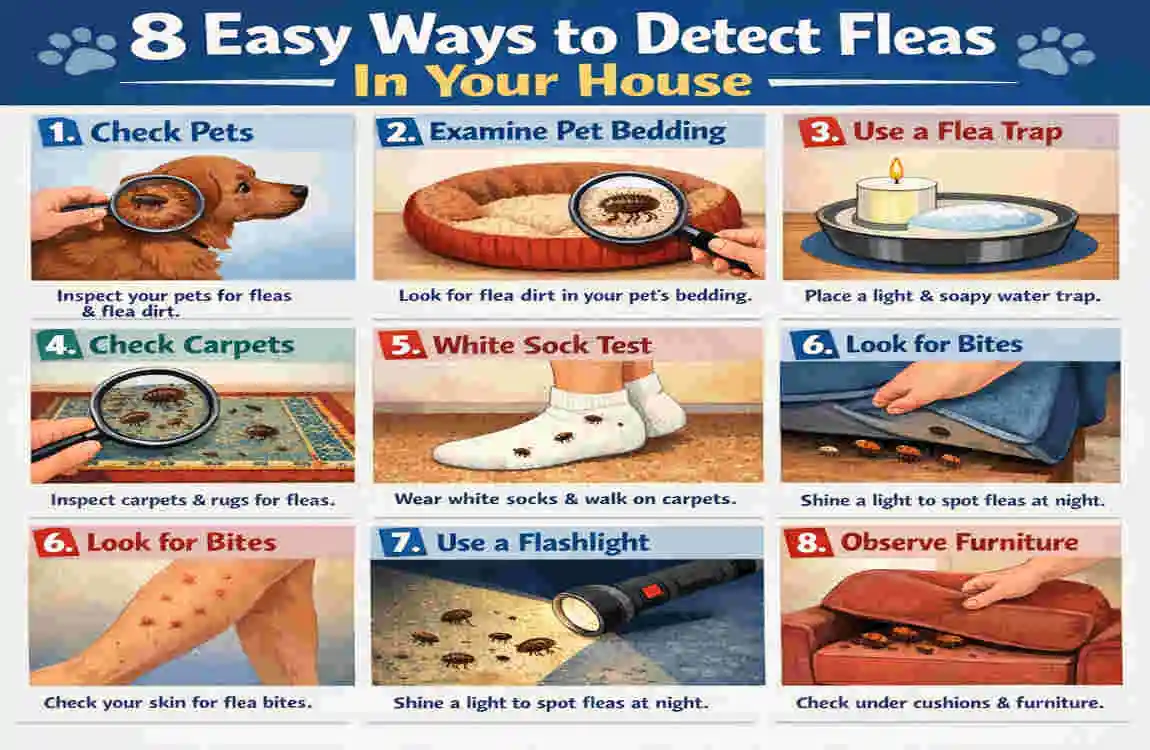
Quick Comparison of the 8 Methods
Method Best For What You Are Looking For
Bite check : Humans and pets , red itchy bumps
White sock test Carpets and rugs Black specks or jumping fleas
Flea comb Pets Fleas, dirt, eggs
Dish soap trap Bedrooms and living rooms Fleas in water
Vacuum check Floors and furniture for live fleas or debris
Hidden spot inspection Eggs and pupae White eggs, cocoons
Pet behavior watch : Dogs and cats , Scratching, biting, twitching
Sticky trap , Quiet detection , Fleas caught on glue
What to Do If You Confirm Fleas
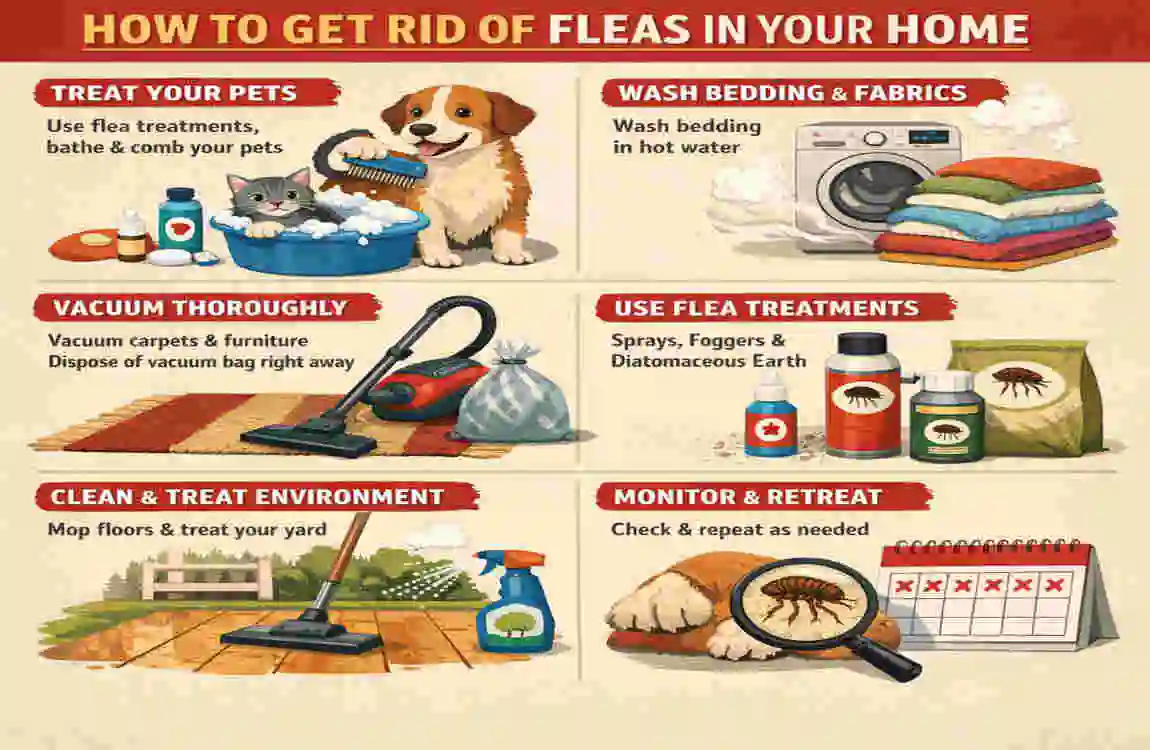
If your checks show fleas, do not wait. Fleas spread quickly.
Start with these steps:
- Wash bedding in hot water.
- Vacuum daily for several days in a row.
- Groom pets with a flea comb.
- Use vet-approved flea treatment on pets.
- Clean pet bedding and soft furniture.
- Repeat your checks to see if the problem is fading.
If the infestation is severe or keeps recurring, you may need professional help.
FAQs
How do I know if I have fleas in my home without pets?
You can still get fleas from wildlife, visitors, or previous infestations. Check for bites, black specks on socks, and fleas in carpets or furniture.
Do fleas live in beds?
Yes. Fleas can hide in bedding, mattress seams, and blankets, especially if a pet sleeps there.
How long can fleas live in a house?
Fleas can survive for weeks or even longer indoors if they have a food source and warm conditions.
What is flea dirt?
Flea dirt is flea waste. It looks like tiny black specks and may turn reddish-brown when wet.
Can fleas bite humans?
Yes. Fleas often bite people around the ankles, feet, and lower legs.