you have guests over, dinner is done, and someone flushes the toilet only to find the water rising instead of going down. It is one of those moments that can make your heart drop to your feet. A clogged toilet is not just annoying. It can throw your whole day off, create stress, and make you feel like you need a plumber right away.
The good news is that you do not always need an emergency service call. In many cases, mastering how to use a house plumbing snake toilet can save you hundreds in emergency fees. A toilet auger, also called a closet auger, is one of the most useful tools you can keep at home for stubborn clogs that a plunger cannot clear.
This tool is especially helpful when the blockage is deeper in the toilet trap or just beyond the bowl. That is where a plunger often stops working. A plumbing snake reaches farther, hooks onto debris, and helps break up or pull out the clog. For many households, that means a faster fix, less mess, and less money spent.
Another reason people like this tool is that it is reusable. Once you own it, you can use it again and again. With a little practice, it becomes a simple and reliable part of your home maintenance toolkit. You do not need advanced skills. You just need the right steps and a little patience.
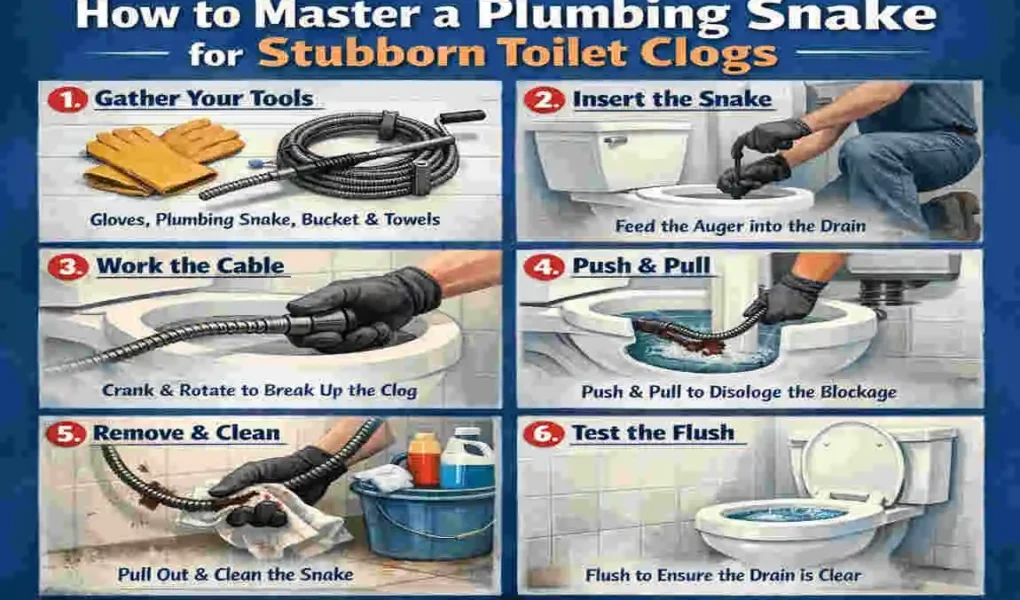
| Step | Action | Tips |
|---|---|---|
| Insert | Feed the snake head slowly into the drain hole without forcing. | Keep the rubber boot snug against porcelain to prevent scratches. |
| Rotate | Crank the handle clockwise while gently pushing forward. | Advance through pipe bends until you hit resistance (the clog). |
| Work Clog | Push/pull gently and continue rotating to break up or hook the blockage. | Avoid excessive force; retract slightly if stuck. |
| Retrieve | Wind handle counterclockwise to pull out the snake with debris. | Dispose of clog in a bag; clean the tool. |
| Test | Flush the toilet to verify drainage; repeat if needed. | Run water to clear remnants. |
What Is a House Plumbing Snake?
The Basic Idea
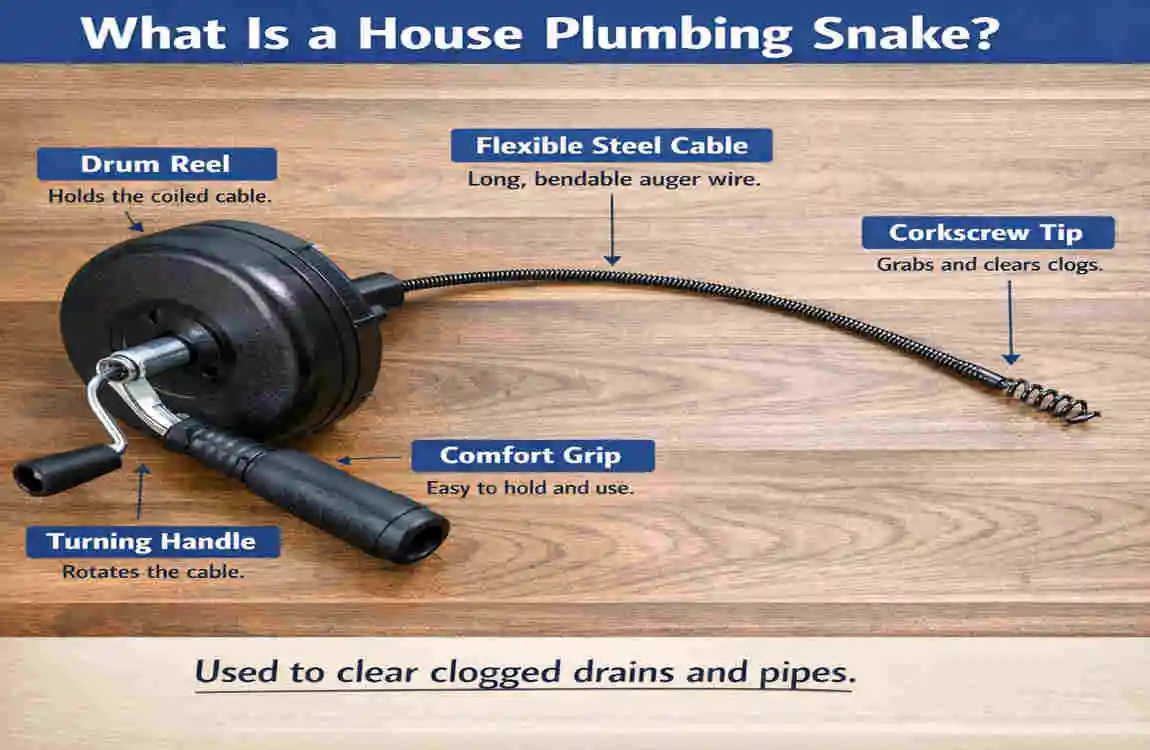
A house plumbing snake is a flexible tool with a long metal cable and a coiled tip called an auger head. The tip helps grab, loosen, or break apart whatever is blocking the pipe. When the cable moves through the drain, it can reach clogs that sit too deep for a plunger to touch.
For toilets, the most useful tool is a toilet auger, also called a closet auger. This type is made specifically for porcelain toilets. It usually has a protective sleeve or rubber coating so it will not scratch the bowl when you insert it.
Main Parts of the Tool
A toilet snake is simple, but each part has a purpose:
- Crank handle: You turn this by hand to move the cable.
- Flexible cable: This goes into the drain and bends through the toilet trap.
- Auger tip: The coiled end helps hook and break the clog.
- Protective boot or sleeve: This keeps the metal from damaging the toilet bowl.
- Handle housing: This gives you a grip and makes the tool easier to control.
Toilet Snake vs. Other Drain Tools
People sometimes confuse a toilet auger with a regular drain snake. They are not the same thing.
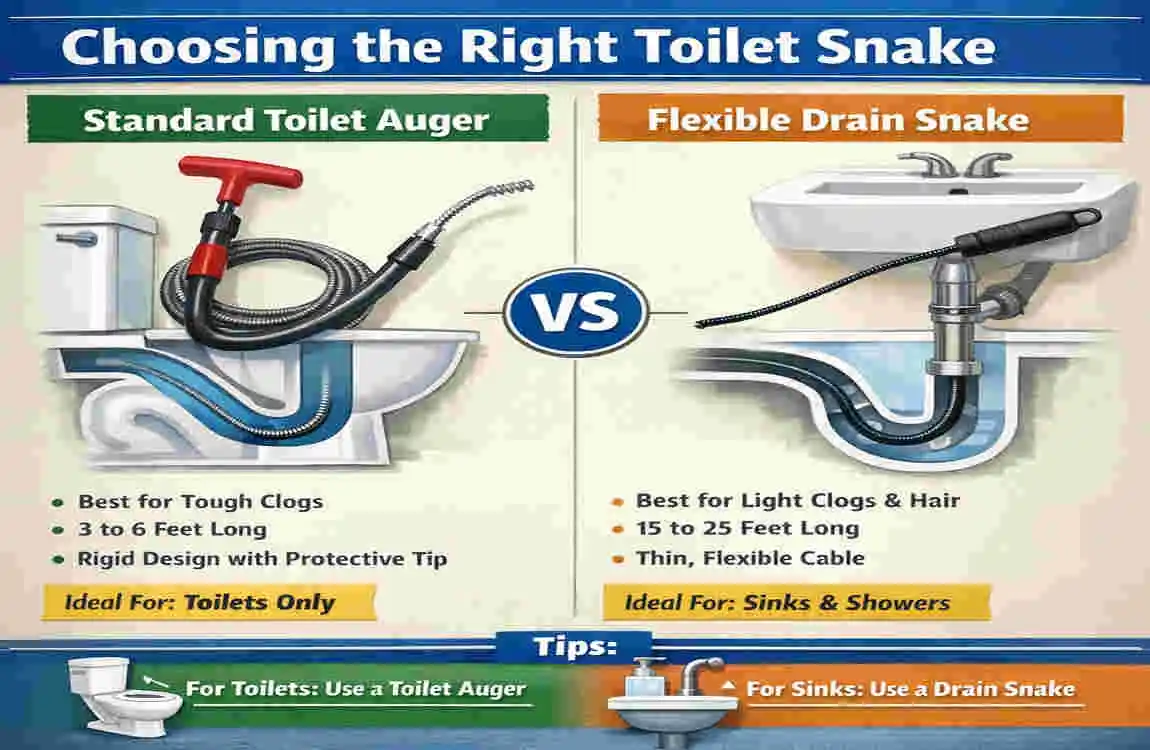
A toilet auger is built for the shape and finish of a toilet. It is short, controlled, and safer for porcelain.
A general drain snake is used for sinks, tubs, or longer pipes. It can be too rough or too bulky for toilet use. That can lead to scratches or even damage.
A plunger, on the other hand, is great for simple surface clogs. If the clog is near the bowl, a plunger may work quickly. But if the blockage is deeper, a snake is usually the better tool.
What It Works Best On
A toilet snake is especially useful for clogs caused by:
- Too much toilet paper
- Waste buildup
- Small organic blockages
- Soft debris stuck in the trap
- Small objects that should not have been flushed
It is less effective for very large objects, deep main line issues, or pipe damage. Still, for everyday toilet problems, it is one of the best DIY tools you can own.
Why Use a Plumbing Snake for Toilet Clogs?
It Reaches Where a Plunger Cannot
A plunger works by applying pressure to the bowl. That can help if the clog is close to the opening. But when the blockage sits farther down in the trap or bend, the plunger often cannot reach it.
A toilet auger goes deeper. It can move through the curved part of the toilet and get close to the clog itself. That makes it a stronger choice for stubborn clogs.
It Can Save Time and Money
Calling a plumber for a simple clog can be expensive, especially if it happens after hours, on a weekend, or during a holiday. A toilet auger is a one-time purchase that you can keep using.
If you can clear the clog yourself, you may avoid a service fee that costs many times more than the tool. That is a big reason homeowners like learning this skill.
It Is Better Than Using Harsh Chemicals
Some people try chemical drain cleaners when the toilet backs up. That is usually not a good idea. Those products can damage pipes, harm the toilet’s internal parts, and create dangerous reactions if mixed with other cleaners.
A snake is a more direct and controlled solution. Instead of adding chemicals, you are physically clearing the blockage.
When It Makes Sense to Snake the Toilet
You should think about using a toilet auger when:
- The water rises but drains very slowly
- A plunger does not work after several tries
- You hear gurgling but the flush is still blocked
- The toilet seems clogged deeper than the bowl
- The same clog keeps coming back
If none of those actions help, there may be a bigger problem in the main line. In that case, a professional inspection may be the smarter choice.
Choosing the Right Toilet Snake
Manual Closet Auger: The Best Choice for Most Homes
For toilet clogs, a manual closet auger is usually the best tool. It is built for toilets, easy to control, and less likely to damage the bowl.
A good model often has:
- A short cable, usually around 3 to 6 feet
- A rubber or plastic sleeve
- A hand crank
- A sturdy handle for control
This kind of tool is ideal for homeowners who want a safe, practical, and easy-to-use option.
Cable Size Matters
For standard toilets, you usually want a cable diameter in the 1/4 to 3/8 inch range. That size gives you enough strength to clear a clog without being too bulky for the toilet’s narrow trapway.
A thinner cable may feel easier to move, but it may not have enough force. A thicker cable may work better for tougher jobs, but it can be harder for beginners to handle.
Budget vs. Pro-Grade Options
You do not need the most expensive model to get good results. Many affordable closet augers work well for normal home use.
Here is a simple way to think about it:
- Budget tools: Good for occasional home use and light to medium clogs
- Mid-range tools: Better build quality, more comfort, and longer life
- Pro-grade tools: Stronger materials, smoother cranking, and more durability
If you only need it for your own bathroom now and then, a mid-range manual model is usually enough.
Useful Accessories
The snake itself is important, but a few extra items make the job cleaner and easier:
- Rubber gloves
- Old towels
- A small bucket
- Protective eyewear
- Disinfectant for cleanup
- A trash bag for debris
These items help you stay clean and make the whole process less stressful.
Quick Comparison Table
Feature Manual Closet Auger Electric Snake Manual Drain Snake
Toilet Suitability Excellent Poor Risky
Cable Length 3–6 ft 25+ ft 10–50 ft
Price Range $20–60 $100+ $15–40
Best For Toilet clogs Main sewer lines Sinks and tubs
Porcelain Safety High Medium to low Low
Preparation Steps Before Snaking
Safety Comes First
Before you start, take a minute to prepare properly. A little setup makes the job easier and safer.
First, make sure you know where the toilet shutoff valve is. If needed, turn off the water supply so the tank does not refill while you are working.
Next, put on gloves. If you have them, wear safety glasses too. You may not see splashes, but toilet water can still be unpleasant.
Clear the Area
Move anything that could get wet or dirty. Lay down towels around the toilet base. If you want, place a bucket nearby to catch drips. This keeps your bathroom floor cleaner and reduces the risk of slipping.
If the room is small, make sure you have enough space to move comfortably. You do not want to feel cramped while handling the tool.
Check the Water Level
If the bowl is very full, remove some of the water with a cup or a small container. You want the water level low enough so that it will not splash when you insert the auger.
A lower water level also helps you see what you are doing. That makes the job easier and less messy.
Give the Plunger One More Try
If the clog is fresh and not too severe, try the plunger first. Use strong, steady pumps for 15 to 20 seconds. Sometimes that is enough to shift the blockage.
If the plunger fails, that is your sign to bring in the toilet auger.
Gather These Tools
Here is a simple checklist before you begin:
- Toilet auger
- Rubber gloves
- Towels
- Bucket
- Cup or small container for removing water
- Disinfectant or cleaning spray
- Trash bag
- Paper towels
When everything is nearby, you can focus on the clog instead of stopping midway to look for supplies.
How to Use a House Plumbing Snake Toilet
Position the Auger Correctly
This is the most important part to get right.
Hold the toilet auger so the protective sleeve points toward the toilet opening. Gently insert the rubber end into the bowl drain at an angle. A slight 45-degree angle often works well because it helps the cable follow the toilet’s curved trapway.
Be patient here. Do not force the cable down. The toilet has a tight bend, and forcing the tool can make it buckle or scratch the porcelain.
The protective boot is there for a reason. It keeps the metal cable from hitting the bowl directly. That is why a sheathed auger is the safest choice for toilets.
Feed the Cable Slowly
Once the tip is in place, start turning the crank clockwise. Do this slowly and steadily. As you turn, gently guide the cable forward.
You may feel resistance as the cable moves through the bend. That is normal. Keep a calm pace and let the auger work through the trap.
If the cable stops moving too soon, do not force it. Stop, adjust the angle a little, and try again. Sometimes a small change in position makes a big difference.
A good rule is to let the auger move naturally. You want controlled pressure, not hard pushing.
Find the Clog
As the cable moves deeper, you may feel a change in resistance. That can tell you you are close to the blockage.
The clog may be about 1 to 3 feet in for many typical toilet blockages, though it can vary depending on the toilet and the type of blockage.
When the cable reaches the clog, the crank may feel tighter, harder to turn, or a little jerky. That is your signal to slow down and work the tip into the blockage.
Do not rush this part. The goal is to get the auger tip into or against the clog so it can break it up or grab it.
Break the Clog
Once you feel the resistance, continue turning the crank clockwise with steady pressure. This is where the auger head begins its work.
You are trying to do one of two things:
- Hook the blockage
- Break the blockage into smaller pieces
Sometimes the clog is soft, like toilet paper or waste buildup. In that case, the auger will usually cut through it fairly easily. Other times, the clog may be more solid or wedged in place. Then you may need to keep twisting gently until it loosens.
This step can take a few minutes. Be patient. It is better to spend a little more time than to force the tool and damage the toilet.
If you feel the cable moving but nothing seems to change, pull back slightly, then feed it forward again. That can help the auger catch the clog more effectively.
Retract the Cable Slowly
After you think the clog has broken apart or loosened, do not yank the cable out fast. That can bring debris with it in a messy way.
Instead, crank the handle in reverse while slowly pulling the auger back out. This helps remove anything caught on the tip from the toilet.
If the clog has attached to the cable, you may see debris on the tip. That is a good sign. It means the snake has done its job.
Take your time during retraction. Slow movement gives you more control and keeps the mess to a minimum.
Flush and Test
Once the auger is out, flush the toilet and watch what happens.
If the water drains normally, you have likely solved the problem. If it still drains slowly, try one more careful pass with the auger.
Sometimes the clog is not fully removed on the first try. A second pass can clear the remaining material.
If needed, you can also use the plunger again after snaking. The auger may have loosened the clog, and the plunger can help move the last bits through.
Repeat if Needed, But Do Not Overdo It
You can usually try up to three careful passes. If the toilet still does not drain properly after that, stop and reassess.
At that point, the issue may be deeper in the plumbing system, not just in the toilet itself. Repeated force will not help much if the blockage is beyond the toilet trap.
A Few Helpful Technique Tips
A few small habits can make the process smoother:
- Turn the crank slowly, not fast
- Keep the cable aligned with the drain opening
- Use steady pressure instead of sudden force
- Pause when you feel strong resistance
- Reposition if the cable binds
If the auger will not move through the trap, try removing more water from the bowl. Sometimes a lower water level gives you better control.
If you still cannot get it started, slightly change the angle so the tip follows the toilet’s curve more naturally.
What Success Usually Looks Like
You will know the clog is clearing when:
- The water level drops normally
- The toilet flush sounds stronger
- The bowl empties without rising
- Gurgling stops
- The tool comes back with debris or no resistance
That is the result you want: a toilet that flushes smoothly again.
Common Mistakes and Troubleshooting
Mistake 1: Forcing the Cable
One of the biggest mistakes is pushing too hard. If the cable gets stuck, forcing it can cause kinks, twists, or even breakage.
The better approach is to pause, adjust the angle, and turn the crank slowly. Let the tool do the work.
Using the Wrong Tool
A regular drain snake is not the best choice for a toilet. It can scratch the porcelain and can be hard to control in the curved toilet trap.
That is why a closet auger is the right tool for toilet clogs. It is designed to protect the bowl while still allowing access to the blockage.
Not Removing Enough Water
If the bowl is too full, the cable can be harder to control. It can also create extra mess when you insert the auger.
If this happens, scoop out some water first and try again. A lower water level often makes the job much easier.
Giving Up Too Early
Some clogs take a little time to break apart. If you stop too fast, you may think the tool failed when it just needed another minute.
Try a calm, controlled approach first. Only call it a failure if the auger truly cannot move through the blockage after several careful attempts.
Troubleshooting Quick Guide
If you run into trouble, here are a few simple fixes:
- Cable will not turn: Try changing the angle and easing off pressure
- No progress at all: Remove more water and reposition the auger
- Cable feels stuck: Rotate backward slightly, then forward again
- Toilet still drains slowly: Make a second pass or use a plunger afterward
- Bad smell after snaking: Flush with clean water and clean the bowl well
When the Problem Is Probably Bigger Than a Toilet Clog
Sometimes the issue is not the toilet itself. If you notice several drains acting slow, sewage smells, or water backing up in more than one place, the clog may be in the main line.
That is when DIY snaking may not be enough. A plumber with proper equipment may need to inspect the line.
Safety Tips and Precautions
Protect the Porcelain
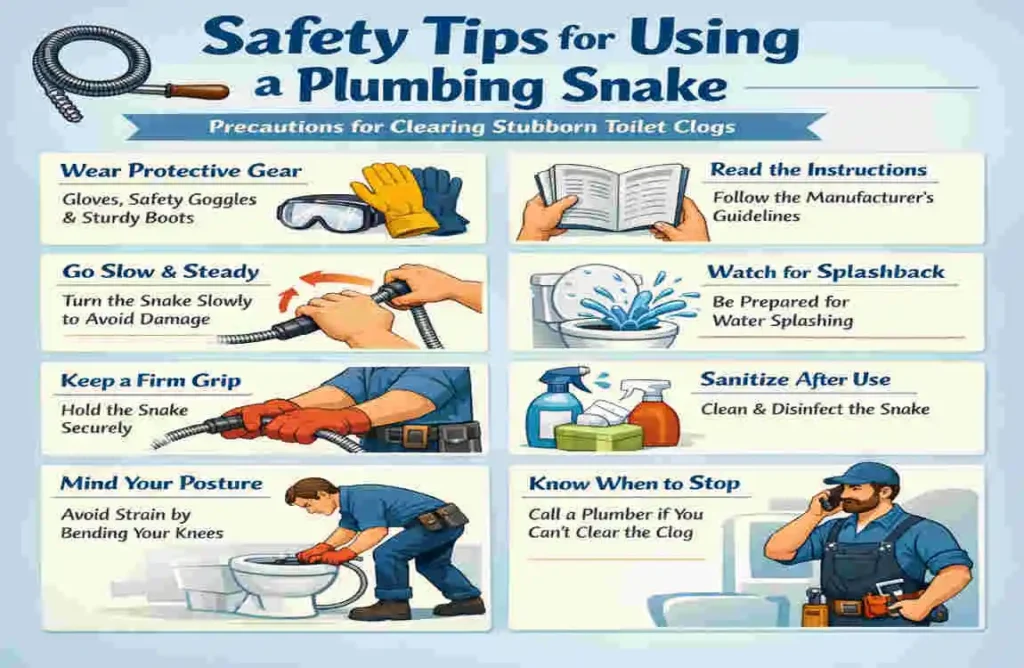
Toilet bowls can scratch easily, especially if you use the wrong tool or force the cable. Always use a sheathed toilet auger made for this job.
Do not use a hard metal snake made for sinks or tubs unless it is specifically designed for toilets. That small choice can make a big difference in keeping the bowl safe.
Avoid Mixing Chemicals
If you have already used chemical cleaners, be careful. Residue in the bowl or pipe can react badly with other products later.
It is usually better to avoid chemical cleaners altogether after snaking. Stick to mechanical clearing and proper cleaning.
Keep Things Clean and Safe
Because you are working around toilet water, use gloves and wash your hands well afterward. If any splash reaches the floor or nearby surfaces, clean it right away.
Also make sure the room has decent airflow. A simple open window or fan can help if the bathroom feels stuffy.
Know When to Stop
Stop and call a professional if you notice:
- The clog keeps returning
- Water backs up from other drains
- You smell sewage
- The toilet overflows repeatedly
- The auger cannot move at all
- You suspect an object is deeply lodged
There is a point where DIY stops being the best choice. Knowing that line can save time and prevent bigger damage.
Maintenance and Storage
Clean the Cable After Every Use
Once you finish, rinse the auger with clean water. Wipe it down and dry it fully so rust does not form.
If the clog involved waste or paper, make sure no residue stays on the cable or tip. A clean tool lasts longer and is much nicer to use next time.
Store It the Right Way
Do not throw the auger into a damp corner or leave it sitting on the floor. Hang it up or store it in a dry place with the cable loosely coiled.
Keeping it dry and untangled helps preserve the cable’s shape and makes the tool easier to grab when you need it.
A Little Care Goes a Long Way
If your model has moving joints or metal parts, a light oiling once in a while can help it stay smooth. That small step can extend the tool’s life.
The better you care for it, the better it will work when a future clog shows up.
Prevention: Avoid Future Toilet Clogs
Watch What You Flush
The easiest way to avoid toilet clogs is to be careful about what goes down the bowl.
Do not flush:
- Wipes, even if the label says “flushable”
- Sanitary products
- Cotton pads or swabs
- Paper towels
- Dental floss
- Excess toilet paper
- Small toys or foreign objects
Toilets are made for human waste and toilet paper. Anything else can lead to trouble.
Build Better Bathroom Habits
Try simple habits that reduce clogs over time:
- Use less toilet paper when possible
- Flush once before using more paper if needed
- Teach children not to drop objects in the toilet
- Keep a small trash can near the toilet for items that do not belong there
These tiny habits can prevent a lot of stress later.
Keep the Toilet Working Smoothly
A little routine care can help too. Check the flapper and tank parts regularly. If the flush seems weak, the toilet may not be moving waste through the pipe as well as it should.
You can also flush a small amount of hot water from time to time to help keep buildup from sticking. Just do not use boiling water, since that can damage the toilet.
Prevention Checklist
Here is a quick list to keep nearby:
- Only flush waste and toilet paper
- Keep wipes out of the bowl
- Use less paper when possible
- Check tank parts yearly
- React early if the flush gets weaker
- Keep a toilet auger in the home for emergencies
FAQs
How deep does a toilet snake go?
A toilet auger usually reaches 3 to 6 feet. That is enough to clear many toilet clogs in the trap or the nearby pipe.
Can I use a regular snake on a toilet?
It is not a good idea. A regular drain snake can scratch porcelain and may be harder to control in the toilet’s curved shape.
Why won’t the snake go into the toilet?
The angle may be wrong, or the bowl may still hold too much water. Try lowering the water level and adjusting the insertion angle.
What if the auger does not clear the clog?
If several careful attempts fail, the clog may be deeper than the toilet. At that point, a plumber may need to inspect the line.
Is snaking better than using chemicals?
Yes, in most cases. A snake works mechanically and avoids the pipe damage that chemicals can sometimes cause.