You are standing in the airport security line, shoes off, holding your boarding pass. You are excited about your winter getaway—maybe a beach vacation to escape the snow or a trip to see family for the holidays. Suddenly, a thought hits you like a bucket of ice water.
Determining what temperature to set the the house at in winter when away is a balancing act between maximising savings and ensuring your property’s safety. It’s not just about comfort; it’s about financial protection. Statistics show that U.S. homes waste nearly $200 billion every year on inefficient heating and cooling. On the flip side, frozen pipe damage is one of the most common home insurance claims, with the average repair costing thousands of dollars.
The Optimal Temperature Range: Finding the Sweet Spot
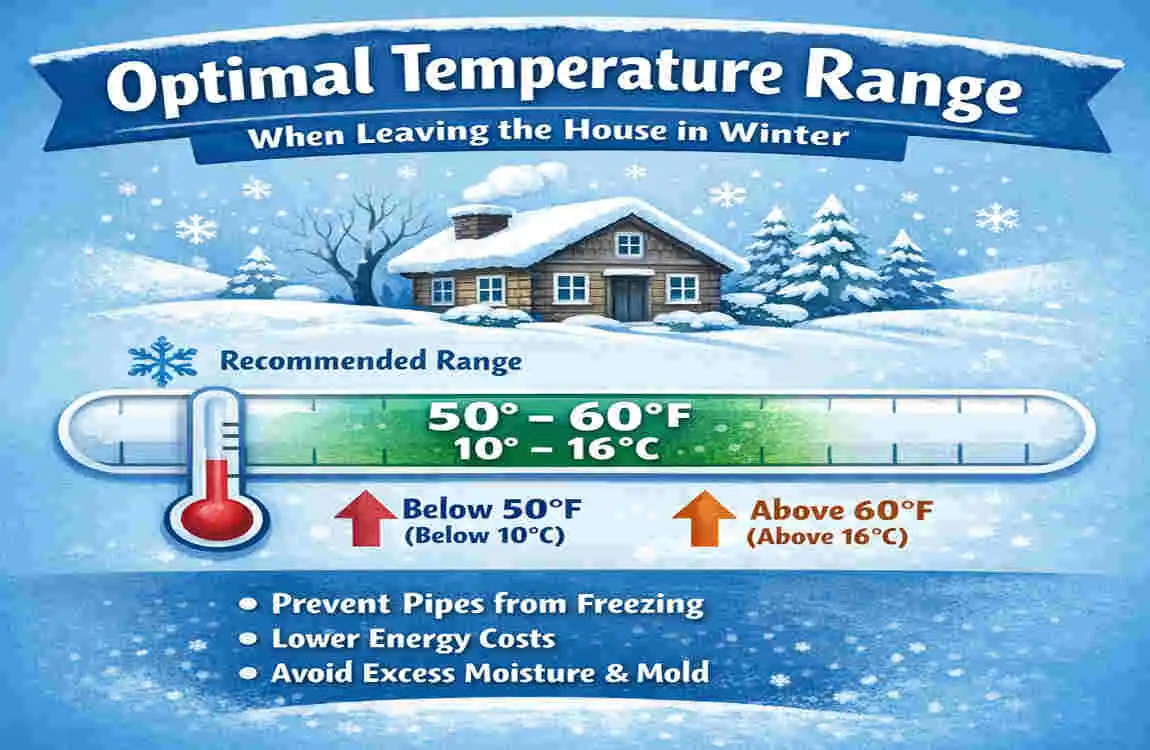
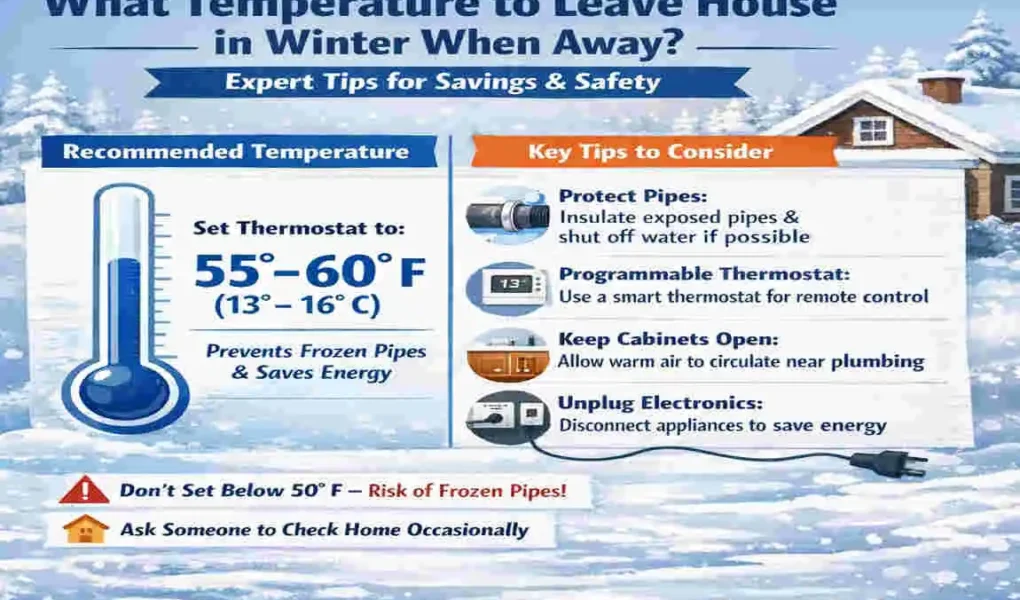
When you ask HVAC experts and insurance adjusters about the magic number, the consensus is surprisingly consistent. You generally want to set your thermostat between 55°F and 60°F when you are away for an extended period.
Why this specific range? It acts as a safety buffer.
You might be thinking, “Water freezes at 32°F, so why can’t I just set the house to 40°F?” This is a dangerous misconception. Your thermostat measures the temperature in the hallway or living room where it is located. It does not know the temperature inside your exterior walls, under your sink, or in the crawlspace.
Why 55°F is the Minimum
Setting your thermostat to at least 55°F ensures that the air circulating through your home is warm enough to reach those hidden, cold areas where pipes live. The pipes inside an uninsulated exterior wall can easily be 10 to 15 degrees colder than the air in your living room.
If you set the house to 45°F and a bitter cold snap hits, the ambient temperature in your wall cavities could drop below freezing, leading to a disaster. 55°F provides that necessary margin of error.
Adjusting for Your Specific Situation
While 55-60°F is the general rule, you should tweak this based on your specific circumstances:
- Vacation Length: If you are leaving for the weekend, you don’t need to go as low. Dropping the temp just 5 degrees from your normal setting (e.g., from 70°F to 65°F) is safer and means your furnace doesn’t have to work overtime to warm the house back up when you return on Sunday night.
- Regional Variations: If you live in a milder climate, like Georgia or parts of California, you might get away with 50°F because the risk of a sub-zero polar vortex is lower. However, if you are in the Midwest, New England, or Canada, stick to 60°F. The wind chill in these areas can suck heat out of a house incredibly fast.
Here is a quick reference guide to help you decide where to set that dial:
Scenario Recommended Temp Estimated Energy Savings Risk Level
Short trip (1-3 days) 62-65°F 5-10% Low – House stays relatively warm; quick recovery time.
Week+ vacation 55-60°F 10-20% Medium – Requires some prep work (like opening cabinets).
Extreme cold (<20°F outside) 60-65°F 5-15% Low – Higher temp needed to fight extreme outdoor cold.
Why This Temperature Prevents Frozen Pipes
To understand why we are so obsessed with that 55-degree mark, we need to talk a little bit of science. Don’t worry, we’ll keep it simple!
When water freezes, it expands by about 9%. That might not sound like much, but in a closed system like a copper or PVC pipe, that expansion creates incredible pressure—thousands of pounds per square inch. This pressure has to go somewhere, and eventually, it will split the pipe open.
The problem isn’t usually the ice itself; it’s the pressure building up between the ice blockage and the closed faucet.
The Danger of “Cold Spots”
Your house doesn’t hold heat evenly. We call this “thermal bridging.” Even if your living room is a cosy 68°F, the space behind your kitchen cabinets (which are often mounted on exterior walls) might be hovering around 45°F.
If you set your thermostat to 50°F while you are away, that space behind the cabinets could easily drop to 30°F or lower during a windy night.
- Exterior Walls: Pipes running through these walls are the first to freeze.
- Basements and Attics: Unheated basements or crawlspaces rely on radiant heat from the floor above. If you drop the main house temperature too low, these areas lose their only heat source.
A Costly Case Study
Consider a homeowner in Chicago who set their thermostat to 48°F to save the most money during a two-week trip to Florida. A cold front moved in, dropping outside temperatures to -10°F. Because the furnace rarely kicked on (since the inside was holding at 48°F), the air wasn’t circulating. The pipes in the garage ceiling froze and burst.
They came home to 3 inches of water in the living room, destroyed hardwood floors, and a mould issue. The total repair bill? Over $15,000. Saving $30 on the gas bill just wasn’t worth it.
Energy Savings Breakdown: What’s in it for You?
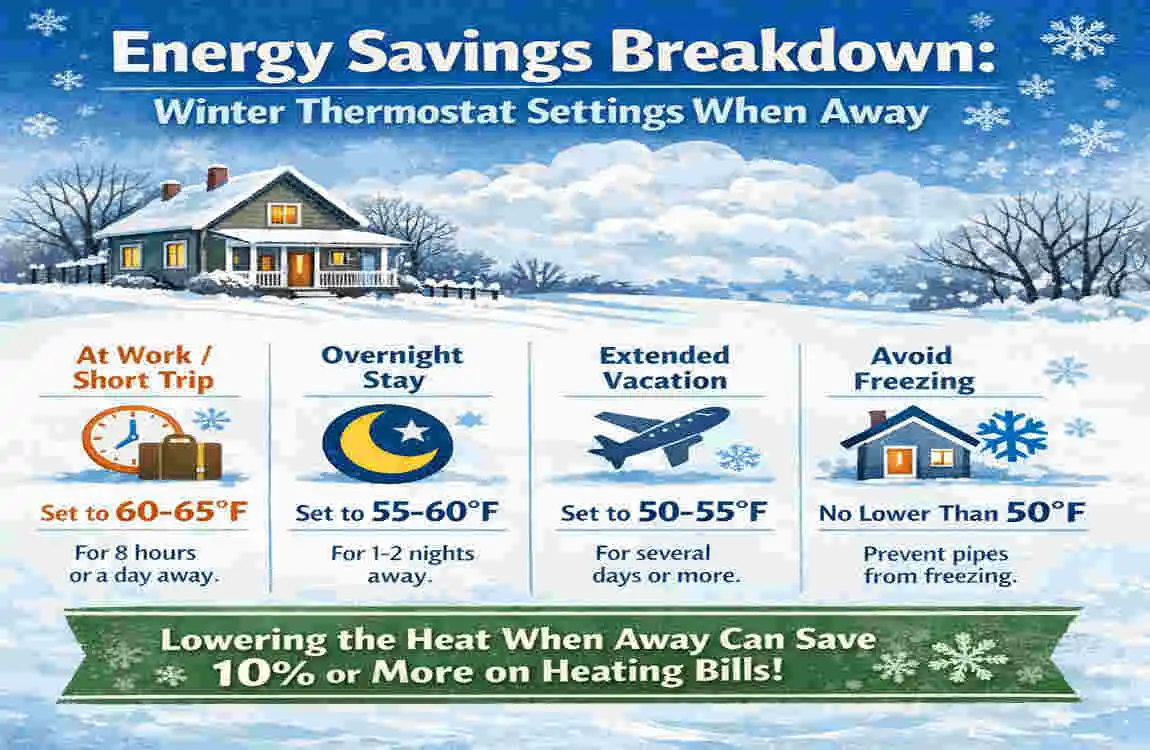
Now that we have covered the scary stuff, let’s talk about the good news: the money you keep in your pocket.
Turning down the thermostat is the single easiest way to lower your utility bills. According to the Department of Energy, you can save as much as 10% a year on heating and cooling by simply turning your thermostat back 7°-10°F for 8 hours a day from its normal setting. When you are away for a week or more, the savings compound significantly.
The Math of Heating
Think of heat like water in a leaky bucket. The higher the water level (temperature) inside the bucket, the faster it leaks out through the holes (windows, walls, roof). By lowering the water level (turning down the heat), you reduce the pressure, and the “leak” slows down.
For every single degree you lower your thermostat, you save between 1% and 3% on your heating bill.
Let’s look at a real-world example. Say you normally keep your house at 70°F, and you decide to drop it to 55°F for a two-week vacation. That is a 15-degree difference.
- 15 degrees x 1.5% average savings = 22.5% reduction in energy usage for that period.
Potential Savings by Home Size
Here is what that might look like in actual dollars for a standard winter month:
Home Size Normal Bill (70°F)Away Bill (55°F)Monthly Savings
1500 sq ft $180 $144 $36
2500 sq ft $300 $240 $60
4000 sq ft $500 $400 $100
If you travel frequently or leave for the entire winter (hello, snowbirds!), these savings can pay for a new smart thermostat in less than 6 months. It is one of the few home improvements that offers an almost immediate Return on Investment (ROI).
Safety Precautions Before Leaving
Setting the thermostat is step one, but if you want to bulletproof your home against winter disasters truly, you need a pre-departure checklist. Think of this as “battening down the hatches.”
Insulate Exposed Pipes
Go into your basement, attic, or garage. Do you see any copper or PVC pipes just hanging out in the open? These are your high-risk areas. Buy some foam pipe insulation (often called “pool noodles” for pipes) from the hardware store. It costs a few dollars and takes only a few minutes to snap on. This simple layer keeps the heat in the water and the cold air out.
The Cabinet Trick
Go to your kitchen and bathroom sinks—specifically the ones on exterior walls. Open the cabinet doors and leave them open.
- Why? This allows the warm air from your house (that 55°F air we talked about) to circulate the plumbing underneath the sink. It removes the insulation barrier of the cabinet door.
Shut Off the Water (The Nuclear Option)
If you are going away for more than a few days, the absolute safest move is to shut off the main water supply to the house.
- Step A: Locate your main shut-off valve (usually in the basement or near the street).
- Step B: Turn it off.
- Step C: “Bleed” the lines. Go to the highest faucet in your house and the lowest (usually a basement sink or an outdoor spigot), and turn them on to drain the remaining water from the pipes.
If a pipe does freeze and crack while the water is off, the damage will be minimal because there is no pressurised water behind it to flood your home.
Weather strip and Seal
Before you leave, check your doors and windows. Can you see daylight underneath the front door? Can you feel a draft? If cold air is streaming in, your furnace has to work harder, and the pipes near that draft are in danger. A $10 draft stopper or some weatherstripping tape can solve this instantly.
The “Buddy System”
Ask a neighbour, friend, or family member to stop by once a week. They don’t need to stay; they need to walk in, check that it feels reasonably warm, and make sure there is no water on the floor. If your furnace fails while you are in Hawaii, you want someone to know about it within 24 hours, not 2 weeks.
Smart Tech for Remote Control
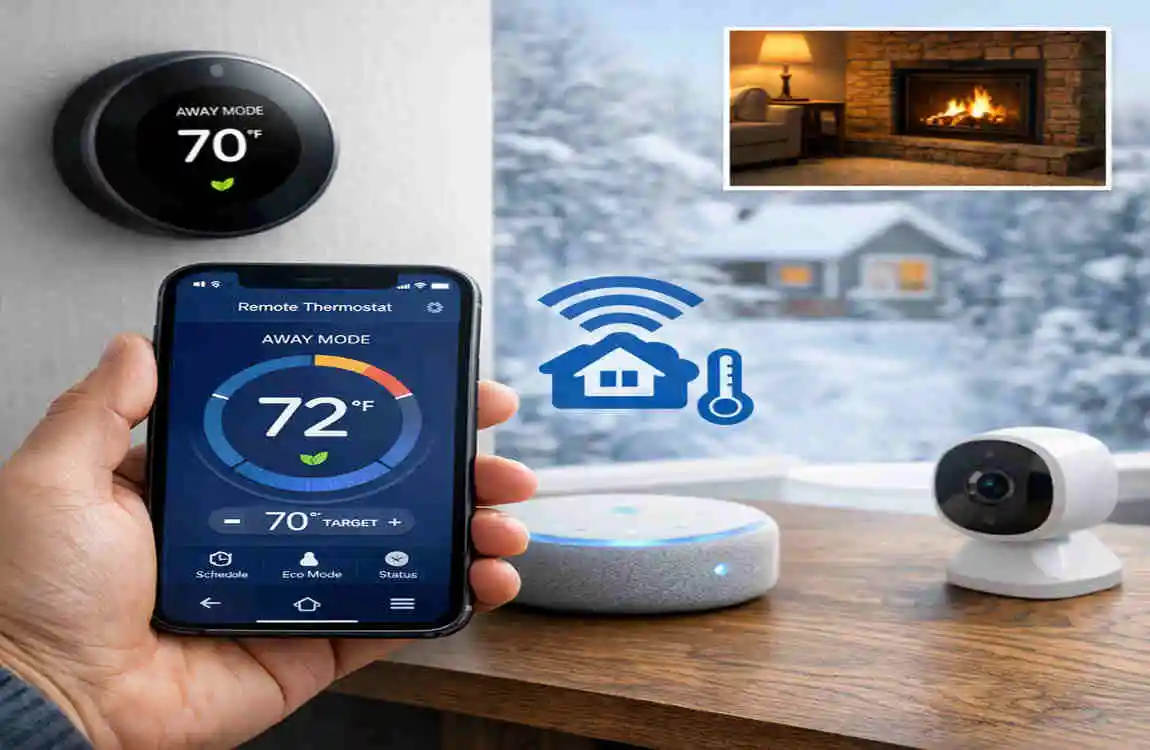
If you are still using an old-school dial thermostat, it might be time for an upgrade. Smart thermostats like the Google Nest or Ecobee are game-changers for travellers.
Why stress about the weather report back home when you can check the temperature from your phone while sitting by the pool?
Real-Time Monitoring
The biggest advantage is visibility. If a polar vortex hits your hometown and drops temperatures to -20°F, you might feel nervous leaving the house at 55°F. With a smart app, you can remotely bump the temperature up to 60°F or 65°F just for those few freezing days, then lower it again when the weather passes.
Alerts and Notifications
Most smart thermostats allow you to set safety alerts. You can tell the app: “Send me an email and a push notification if the house temperature drops below 50°F.” This gives you a heads-up that your furnace might be broken, allowing you to call a repair service or send a neighbour over before the pipes freeze.
Geofencing
This is a fancy term for a simple feature. The thermostat uses your phone’s location services to know when you leave the house. You can set it to automatically switch to “Away Mode” (your 55°F setting) whenever you drive more than 10 miles away. You never have to remember to turn the heat down again—it just happens.
Common Mistakes to Avoid
Even with the best intentions, homeowners often make small mistakes that have big consequences. Here are the pitfalls to avoid when deciding what temperature to leave the house in winter when away.
Turning the Heat Off Completely
Never, ever do this. Unless you have professionally winterised your home (completely drained all plumbing, including toilets, water heaters, and appliances), turning the heat off is a guarantee of frozen pipes. Even if it’s “unseasonably warm” when you leave, the weather is unpredictable.
Forgetting About Plants and Pets
The 55°F rule applies to an empty house.
- Houseplants: Most tropical houseplants will start to die if the temperature drops below 60°F. If you have a jungle in your living room, you need to keep the heat closer to 65°F.
- Pets: If you are leaving a cat or other pet at home with a sitter who will be checking in, 55°F is too cold. Imagine wearing a fur coat but sitting in a 55-degree room all day—it’s chilly! Keep the house at 64-68°F for your furry friends.
Ignoring Humidity
Winter air is dry, but if you lower the heat too much, you can actually create condensation problems in some climates. Conversely, if you have a humidifier running, make sure to turn it down or off. Excessive humidity in a cool house is a recipe for mould growth on walls and windows.
Closing All Interior Doors
Closing bedroom doors saves heat, but it actually cuts off airflow. You want the warm air from the furnace to circulate freely throughout the house, keeping the interior wall pipes warm. Keep all bedroom and bathroom doors propped open.
Cost vs Risk Comparison
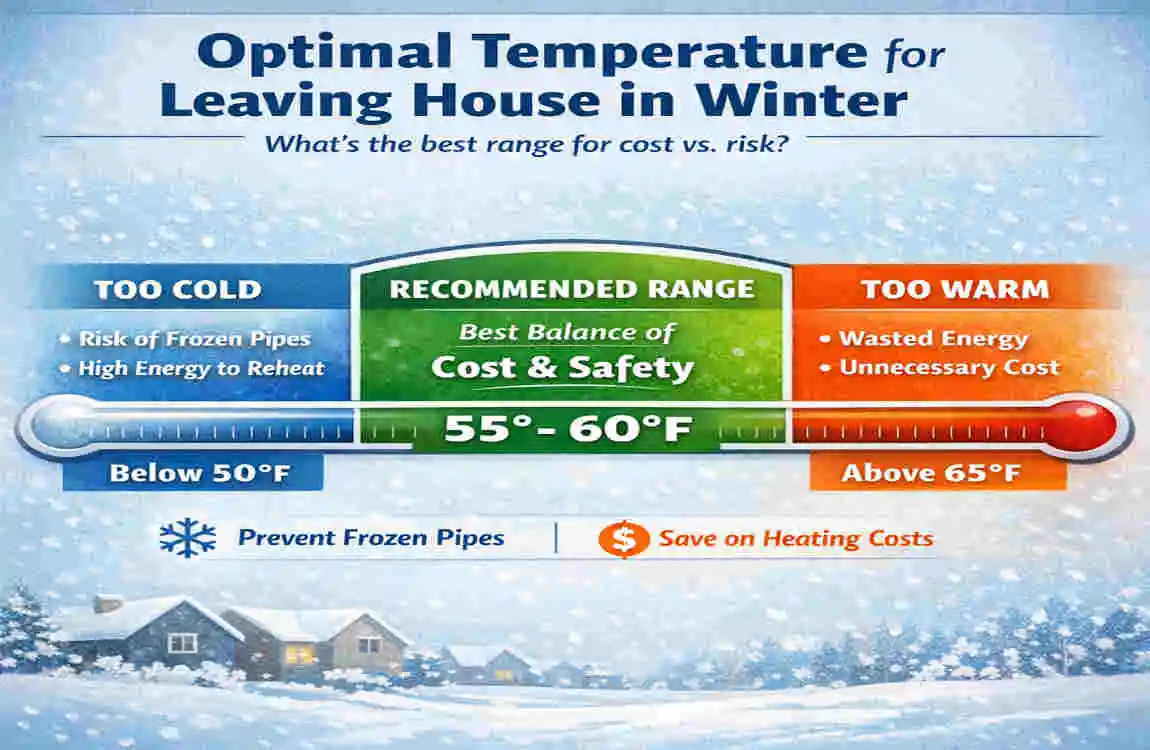
It helps to look at this decision as a risk assessment. You are gambling a small amount of savings against a massive repair bill. Let’s break it down in a simple comparison table.
Setting Savings Potential Pipe Safety Best Suited For
50°F High (20%+) Poor . Only for homes that have been drained of water or located in very mild climates. High risk.
55-60°F Optimal Excellent The standard for most homes. Balances significant bill reduction with pipe safety.
65°F+ Low Overkill is necessary if you have pets, sensitive artwork, or exotic plants staying behind.
As you can see, the “Sweet Spot” of 55-60°F really offers the best of both worlds. You aren’t being wasteful, but you aren’t being reckless.
Expert Tips from HVAC Pros
We reached out to heating and cooling professionals for their top advice for homeowners heading into winter. Here is what they had to say:
“Test it before you leave.” Don’t wait until the morning of your flight to see if your furnace works. Turn the thermostat down to your target temperature (say, 58°F) a few days before you leave. See how the house feels. Does the furnace kick on? Does it maintain that temp? Troubleshooting is much easier when you are still home.
“Change the filter.” This is the number one maintenance tip for a reason. A dirty air filter restricts airflow. When airflow is restricted, your furnace runs hotter and longer to achieve the same result. In extreme cases, a dirty filter can cause the furnace to overheat and shut down completely (a safety feature). You definitely don’t want your furnace shutting down while you are in another country. Put a fresh filter in on the day you leave.
“Don’t forget the garage.” If you have water lines running through your garage (such as a sink or washer hookup), ensure the garage door is fully closed and sealed. If the garage is unheated, shut off the water to those specific fixtures and drain them.
FAQs
Here are some quick answers to the most common questions about what temperature to leave the the house at in winter when away.
What temperature to leave the house in winter when away for a week?
For a one-week trip, set your thermostat to 55-60°F. This is low enough to save money but high enough to keep pipes safe. If you have pets at home, keep the temperature at 64°F or higher.
Can I turn the heat off completely if I drain the pipes?
Technically, yes, but it is risky. Even with drained pipes, extreme cold can damage drywall, cause plaster to crack, and damage flooring as materials contract. It puts stress on your appliances and electronics. It is usually better to leave the heat on a low setting (45-50°F) even if the water is off.
How much do I actually save by setting the thermostat to 55°F?
You can expect to save between 10% and 20% on your heating bill compared to keeping it at a normal 70-72°F. For a standard home in a cold climate, this could mean keeping $50 to $100 in your pocket per month.
What if I have a crawlspace?
Homes with crawlspaces are more susceptible to frozen pipes because cold air can circulate beneath the floor. If you have a crawlspace, aim for 60°F inside the house and ensure the crawlspace vents are closed and insulated for the winter.
Is a smart thermostat worth it for vacation homes?
Absolutely. The ability to receive alerts if the temperature drops dangerously low provides invaluable peace of mind. The cost of the device is a fraction of an insurance deductible for water damage.