If you are searching for house ant cleaning tips, you are probably dealing with one of the most common home pests in very ordinary places: your kitchen, bathroom, pantry, or even around windows and doors. House ants often show up because your home gives them three things they want most: food, water, and shelter.
That does not always mean your home is dirty. Even a very clean house can attract ants if they find a tiny spill, a crumb under an appliance, a leaky pipe, or a gap in a wall. Ants are small, organized, and persistent. Once they find a useful path, they may keep returning until the source is removed.
The good news is that safe ant removal usually starts with cleaning properly, not just spraying the ants you can see. In many cases, the visible ants are only a small part of the problem. The real issue is the scent trail they leave behind and the hidden nest that keeps sending more workers inside.
| Topic | Content |
|---|---|
| Main idea | Safe ant removal starts with cleaning trails, sealing entry points, and using low-risk methods first. |
| Best first step | Wipe up ants with soapy water and remove the scent trail they follow. |
| Safe home methods | Use vinegar, dish soap spray, or bait traps instead of harsh indoor sprays. |
| Prevent re-entry | Seal cracks around doors, windows, and walls, and keep food stored tightly. |
| Outdoor control | Treat ant hills outside with boiling water only when safe and appropriate, or use outdoor baits. |
| What to avoid | Avoid relying on spray-only treatments, since they often give only temporary control. |
| When to call a pro | Call pest control if ants keep returning or the infestation seems large. |
Are House Ants Dangerous?
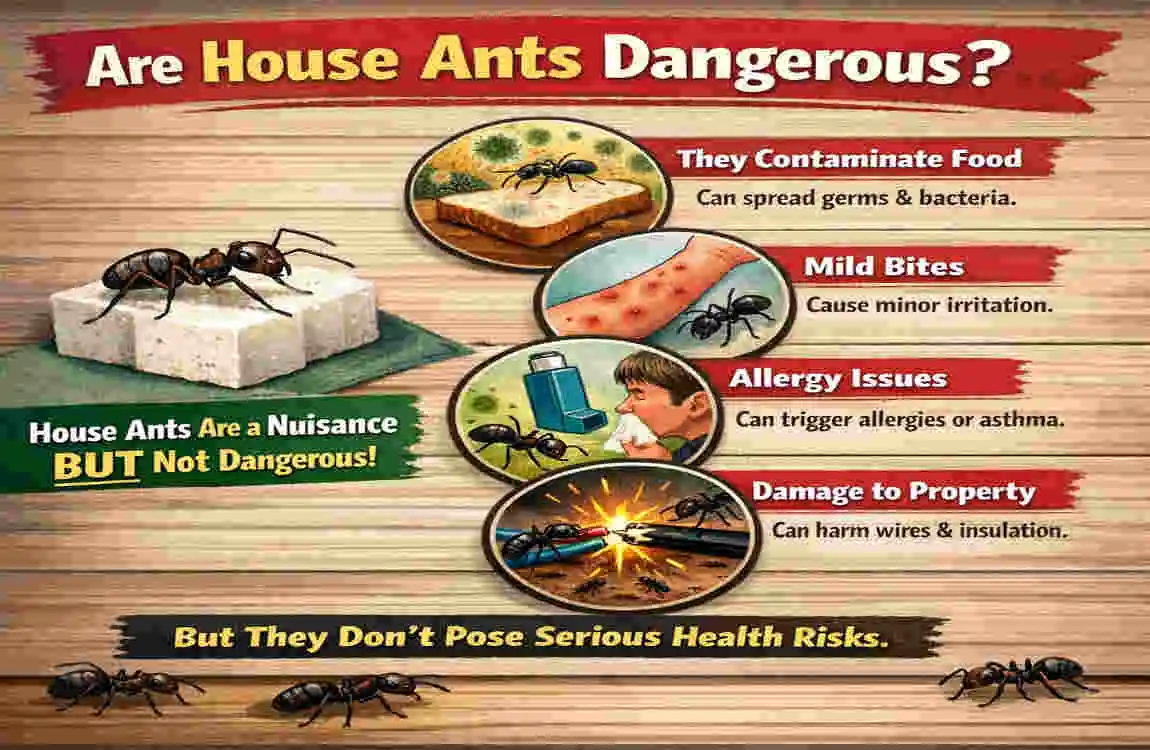
For most clean homes, house ants are more of a nuisance than a danger. They do not usually spread disease in the way some people fear, and most common household ant species do not cause major harm on their own. Still, that does not mean you should ignore them.
What risks do house ants create?
The biggest issue is often food contamination. Ants crawl across many surfaces before reaching your kitchen counter or pantry shelf. If they walk across food, dishes, or prep areas, they can leave behind germs and dirt from outside or from hidden nesting areas.
Some ants can also bite or sting, depending on the species. These bites are usually minor, but they can still be uncomfortable. For people with allergies or sensitive skin, even a small bite may cause more irritation than expected.
There is also a second concern: indoor nesting. If ants keep coming back, there may be a nest inside walls, under floors, or around plumbing. That can turn a simple ant problem into a larger one.
When ants become a bigger problem
Not every ant infestation is equal. Some species are harmless in the short term, while others can cause more trouble.
Carpenter ants, for example, are a bigger concern because they can nest in damp wood and slowly damage parts of a home. They do not eat wood like termites do, but they can still weaken structures by tunneling through it. That is why recurring sightings near wood, windows, or damp areas should be taken seriously.
Large infestations are also harder to control. If you keep cleaning and the ants keep returning, the colony may be well established. In that case, simple surface cleaning may not be enough.
The short answer
So, are house ants dangerous? Usually not in a severe way, but they can still cause hygiene problems, stress, and, in some cases, structural issues. The safest approach is to treat them early, clean thoroughly, and prevent them from finding food and water in the first place.
Signs You Have an Ant Problem
Ants often give you clues before the problem gets out of hand. If you know what to look for, you can act sooner and avoid a bigger indoor ant infestation.
Common signs to watch for
You may have an ant problem if you notice:
- Ant trails along countertops, baseboards, windowsills, or floors
- Small groups of ants near sinks, trash bins, pet bowls, or pantry shelves
- Tiny piles of crumbs, dirt, or nesting material
- Ants showing up again after you have already cleaned
- Ants entering through cracks, gaps, or worn seals
- More ant activity in warm months or after rainy weather
What these signs usually mean
A few ants near food might mean they simply found a snack. But repeated sightings often mean they have found a reliable path. Ants leave a scent trail for other ants to follow, which is why one sighting can quickly turn into a long line.
If you see ants in different rooms, it may suggest they are entering from multiple entry points. If they keep returning to the same area, there is often food, moisture, or nesting material nearby.
A simple way to think about the problem
Here is a quick guide to help you read what the ants are telling you:
What You NoticeWhat It May MeanWhat You Should Do
A few ants near food A fresh food source was found Clean the area and store food properly
A steady ant trail A scent path is active Wash the trail and remove the source
Ants near sinks or pipes Moisture may be attracting them Check for leaks and dry the area
Repeated sightings in one room Nest may be nearby Inspect cracks and nearby hidden spots
Ants in different areas of the home Colony may be established Consider baits or professional help
Knowing these signs helps you move from guessing to solving. That is a big part of safe ant removal. You are not just reacting to the ants you can see. You are learning where they come from and why they are staying.
Safe Cleaning Tips to Remove House Ants
Good cleaning is one of the best tools for kitchen ant control and overall ant prevention. It does more than make your home look tidy. It removes the smells and crumbs that attract ants in the first place.
Clean the places ants love most
Focus on the areas ants are most likely to explore first: kitchens, bathrooms, pantry shelves, pet feeding spots, trash areas, and window ledges.
Wipe down countertops, table surfaces, cabinet doors, and floors every day. Even a tiny sticky spot from juice, syrup, or honey can quickly attract ants. Crumbs under the toaster or around the stove are also common problem spots.
Do not forget hidden areas. Ants often live where cleaning is easy to miss, such as under appliances, behind the trash can, or around the base of cabinets.
Use the right cleaning routine
A good routine is simple, but it needs to be consistent. Here is a practical approach:
- Wipe spills immediately, especially sugary drinks, food grease, and sauces
- Wash dishes promptly instead of leaving them in the sink
- Sweep and mop floors where food may have dropped
- Store food in airtight containers
- Empty trash regularly and keep lids closed
- Rinse recycling items that contain food residue
- Clean pet bowls and feeding areas after meals
- Check pantry shelves for crumbs, flour dust, and leaks from packages
This kind of cleaning removes the easy meals ants depend on. If you keep the food source out of reach, ants have less reason to stay.
Why scent trails matter
Ants do not just wander randomly. They follow chemical trails left by other ants. That means if one ant found food yesterday, many more may arrive today unless the trail is removed.
Soap and water are surprisingly useful for this. A soapy cloth can break up the trail and wipe away the scent marks. Vinegar-based solutions can also help with this task, especially on hard surfaces. The goal is to clean the route the ants are using, not just the ants themselves.
Clean smarter, not harder
You do not need harsh chemicals for every cleaning job. In many homes, the best method is simple and steady. Regular cleaning, fast spill cleanup, and airtight storage make a major difference.
The main idea is this: if ants can smell food, they will keep coming back. Your cleaning routine should remove both the food and the trail. That is how you make the home less appealing and support long-term ant control.
Natural Ways to Get Rid of Ants Without Harsh Chemicals
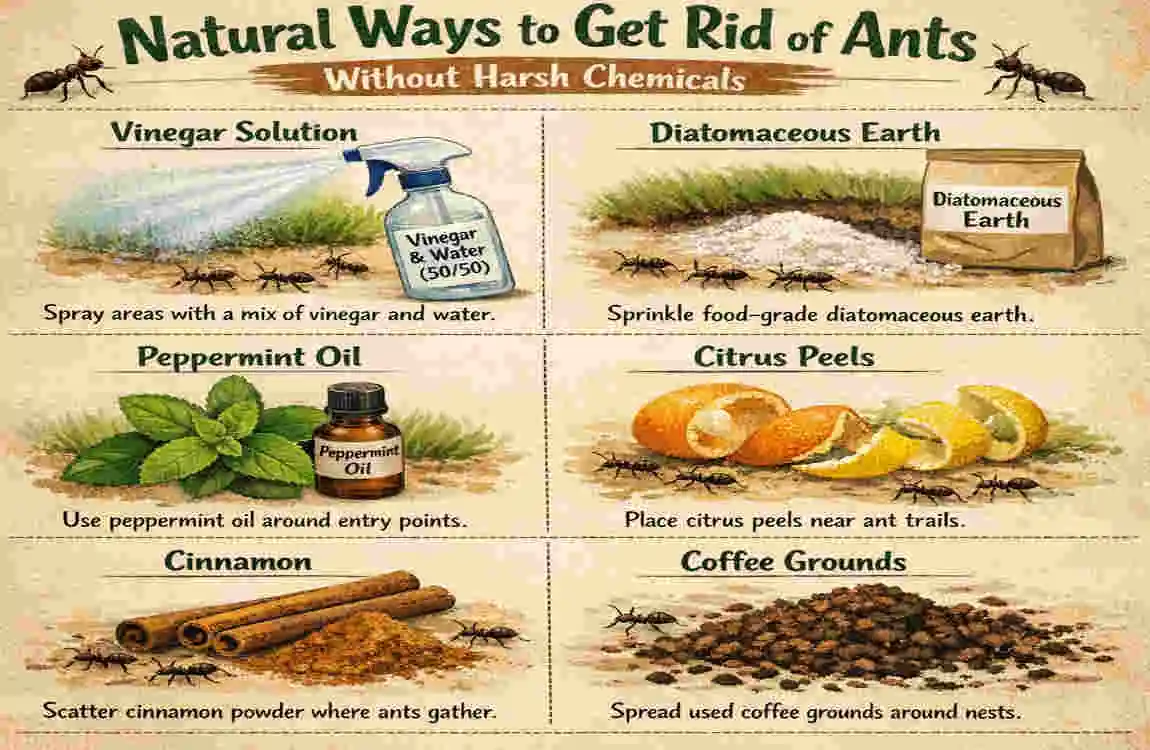
Many homeowners prefer natural ant repellents before resorting to stronger treatments. These methods can work well, especially when paired with good cleaning habits.
White vinegar and water spray
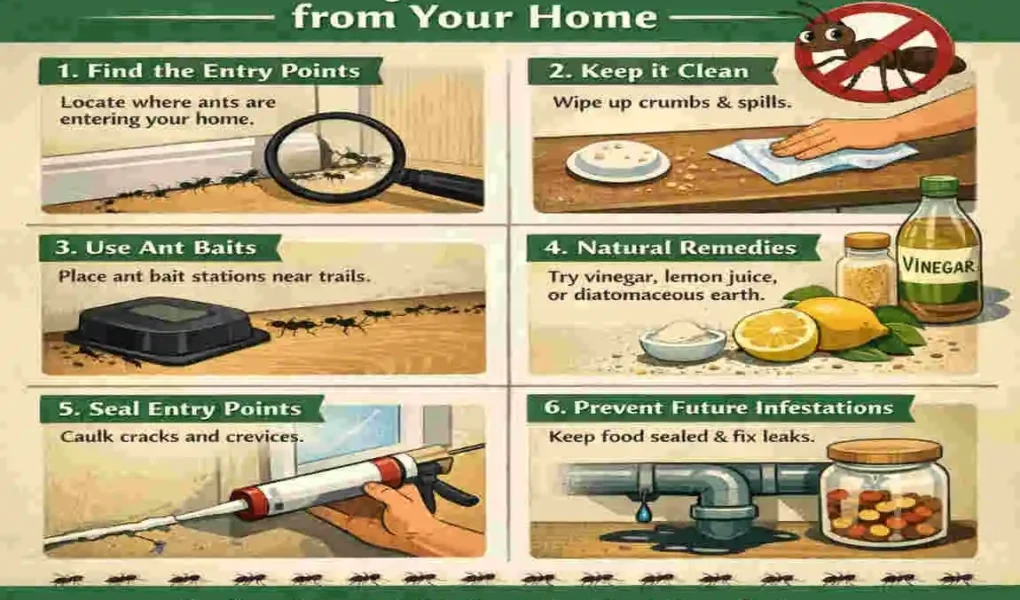
A mix of white vinegar and water can help wipe away ant trails and make surfaces less attractive to ants. Spray it on counters, windowsills, baseboards, and other common ant paths, then wipe it clean.
This method is useful because it does two things at once: it cleans the surface and disrupts the trail ants use to guide each other. It is not a magic fix, but it is a smart part of a larger plan.
Soap and water
Soap and water is one of the simplest ant-cleaning tools you can use. It helps remove food residue and can disrupt the scent markers ants leave behind.
Use it on hard surfaces, around sinks, and near entry points. For visible ants, a soap-and-water wipe can also remove them safely without leaving the area sticky or scented in a way that may attract more ants.
Lemon juice, citrus peels, and strong natural scents
Some people use lemon juice or place citrus peels around problem spots. The idea is not that citrus kills ants instantly, but that its scent may help discourage them from using certain areas.
Other strong smells, such as peppermint or cinnamon, are also commonly used. These may help in small problem areas, especially when ants are just starting to appear. However, they work best as support tools, not as the only solution.
Diatomaceous earth in dry areas
Diatomaceous earth is a dry powder that can help in some situations. It works only in dry spaces and is often used around cracks or along entry points. It is important to use it carefully and only where it makes sense in your home.
Do not apply it where it may become wet or where children and pets can easily disturb it. If you are not sure how to use it properly, stick with safer, simpler cleaning methods first.
What natural methods can and cannot do
Natural methods are helpful, but they are not a replacement for cleaning. If the ants still have access to food, water, or a hidden nest, they may return no matter how many sprays you use.
Think of natural methods as supporting tools. They help reduce activity, but they work best when combined with:
- cleaning up food sources
- removing scent trails
- sealing entry points
- reducing moisture
- storing food properly
That is the most realistic way to use ant cleaning tips at home.
How to Remove Ant Entry Points
If ants can get inside, they will keep trying. That is why sealing their entry paths is just as important as cleaning. You need to block the doors they are using.
Inspect the usual entry areas
Start by checking around:
- Windows
- Doors
- Baseboards
- Plumbing gaps
- Under sinks
- Around vents
- Where wires or pipes enter the wall
Even tiny gaps can be enough for ants. They do not need much space to move through.
Seal cracks and openings
Use caulk to seal small cracks around windows, baseboards, and wall edges. Weather stripping can help around doors and windows that do not close tightly. If you find a larger gap around pipes, you may need a more durable repair.
This step matters because it turns your cleaning work into lasting protection. If you only clean but never seal, ants may simply use another route.
Fix moisture problems
Ants are often drawn to water sources. Leaky pipes, damp cabinets, and condensation under sinks can make a home look more appealing than it actually is.
Check for:
- dripping faucets
- slow pipe leaks
- wet cabinet bottoms
- damp bathroom corners
- condensation near appliances
Dry these areas completely and repair what is causing the moisture. Even a small leak can keep ants interested.
Keep the outside of the home in mind
Ant problems often start outdoors. Trim plants and bushes so they do not touch your walls. Remove leaves, mulch buildup, and debris close to doors and windows. These areas can provide ants with a path to the house.
If you reduce the number of outdoor bridges, you reduce the chances of ants finding a way in.
When to Use Baits or Call a Professional
Sometimes cleaning and sealing are enough. But if the ants keep returning, you may need stronger help.
When ant baits make sense
Bait stations can be useful when ants are active but not fully under control. Unlike sprays that kill only the ants you see, baits are designed to attract workers back to the colony. That can help deal with the source of the problem.
Baits are often a better choice when:
- ants keep coming back after cleaning
- you see long, steady trails
- the problem spreads to more than one room
- you suspect a hidden nest
Why spraying visible ants is not always enough
A spray can make a visible trail disappear for the moment, but it usually does not solve the colony problem. In some cases, spraying can even make ants split into smaller groups and spread out.
That is why many homeowners find better results when they focus on cleaning, sealing, and using the right control method for the situation.
When to call a professional
Professional help is worth considering if:
- you suspect carpenter ants
- the infestation keeps growing
- ants appear in walls or structural areas
- you find damaged wood or damp nesting spots
- your cleaning efforts do not reduce activity
A pest professional can identify the ant type, find the nesting source, and recommend treatment that fits the problem. If the ants are widespread or damaging the home, do not wait too long.
Prevention Tips to Keep Ants Away
Once you get the ants under control, the next goal is to keep them from returning. Prevention is where long-term success really happens.
Build a daily kitchen routine
The kitchen is usually the biggest target. A simple routine can make a huge difference.
Keep these habits going every day:
- wipe counters after meals
- sweep crumbs from floors
- wash dishes before bed
- empty the trash regularly
- store sugar, cereal, snacks, and pet food in sealed containers
- clean under toasters, coffee makers, and other food prep areas
A few minutes of effort each day can prevent a much bigger ant problem later.
Reduce moisture inside the home
Ants like water as much as food. Fixing leaks and keeping things dry will make your home less attractive.
Check under sinks, behind toilets, near dishwashers, and around laundry areas. If you see repeated dampness, fix the source rather than just drying it once.
Inspect what comes into the house
Ants can also hitch a ride inside on boxes, grocery bags, or storage containers. Before bringing items in, check them briefly for ants or debris.
This is especially important for cardboard boxes, paper bags, and packages that have been sitting on the floor or outside for a while.
Keep the area around the home tidy
The outside of your house matters too. Trim plants, remove clutter, and keep yard debris away from the foundation. If ants have fewer places to hide near your home, they will have a harder time getting inside.
Consistency matters most
Prevention is not about one big cleaning session. It is about steady habits. When you keep food sealed, floors clean, moisture low, and entry points closed, ants lose the reasons to stay.
That is the heart of house ant prevention. You are making your home a poor place for ants to live.
Common Mistakes to Avoid
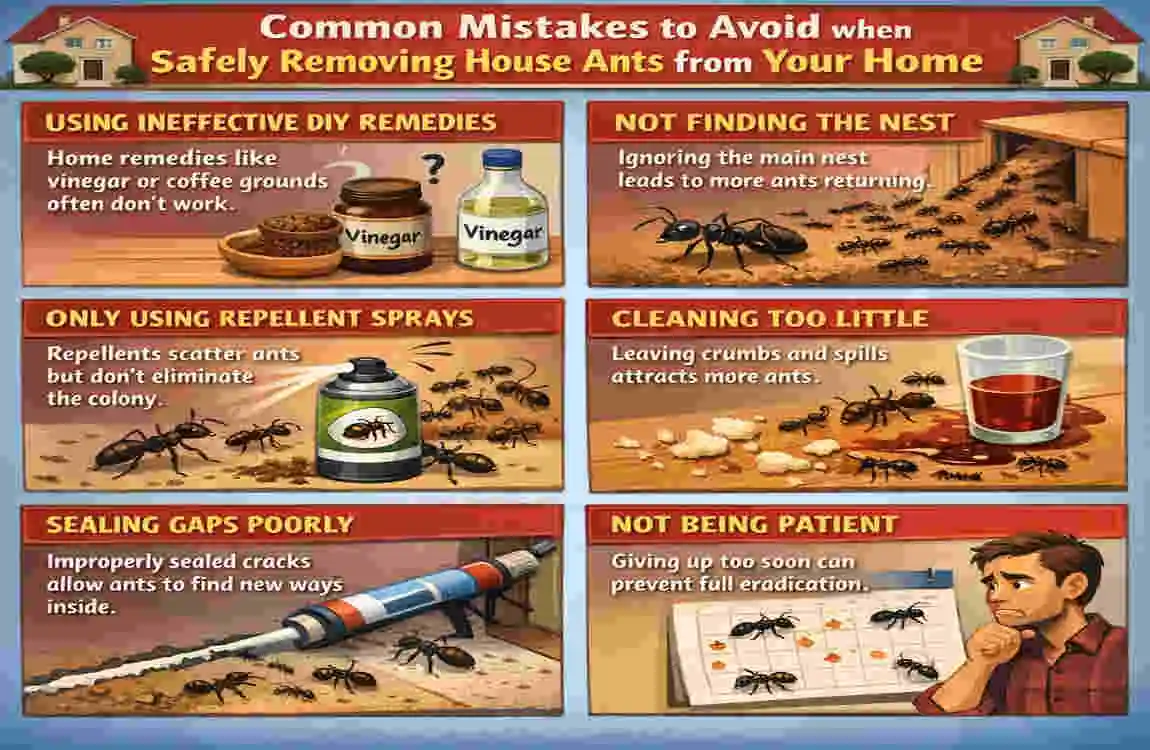
Even with the best intentions, a few simple mistakes can keep the ant problem going.
Killing only the ants you see
This is one of the most common errors. Visible ants are only part of the issue. If you do not clean the trail and remove the food source, more ants may return.
Leaving food out overnight
Open food containers, dirty dishes, and pet bowls can attract ants very quickly. Overnight is often enough time for a small problem to become a trail.
Using too much spray without cleaning
Spraying alone may make you feel like you are solving the problem, but it usually hides the symptom rather than fixing the cause. Cleaning first is more effective.
Ignoring cracks and moisture
If you leave gaps open or let leaks continue, ants may keep finding their way inside. Small repairs can make a big difference.
Waiting too long
The longer you wait, the easier it is for ants to establish a steady path. Early action is almost always simpler than dealing with a large infestation later.
FAQ: Common Questions About House Ants
Are house ants harmful to humans?
Most house ants are not seriously harmful to humans. However, they can contaminate food, bite in some cases, and become a bigger issue if they nest indoors. Certain species, like carpenter ants, can cause more concern than ordinary household ants.
Why do ants keep coming back after cleaning?
They often keep coming back because the scent trail is still there, the food source is still available, or the entry point has not been sealed. Sometimes all three are happening at once.
What is the safest way to kill ants indoors?
For many homes, the safest approach is to use soap and water, vinegar-based cleaning, and good sanitation first. If you need stronger control, bait stations are often a better choice than random spraying because they can reach the colony.
How do I stop ants from entering my kitchen?
Focus on kitchen ant control by cleaning counters and floors daily, storing food in sealed containers, taking out trash often, fixing leaks, and sealing cracks around windows, baseboards, and plumbing.
When should I call pest control for ants?
Call a professional if the ants keep returning, if you suspect carpenter ants, if the infestation spreads quickly, or if you see signs of nesting in walls or wood. Professional help is especially useful when cleaning and sealing no longer reduce activity.