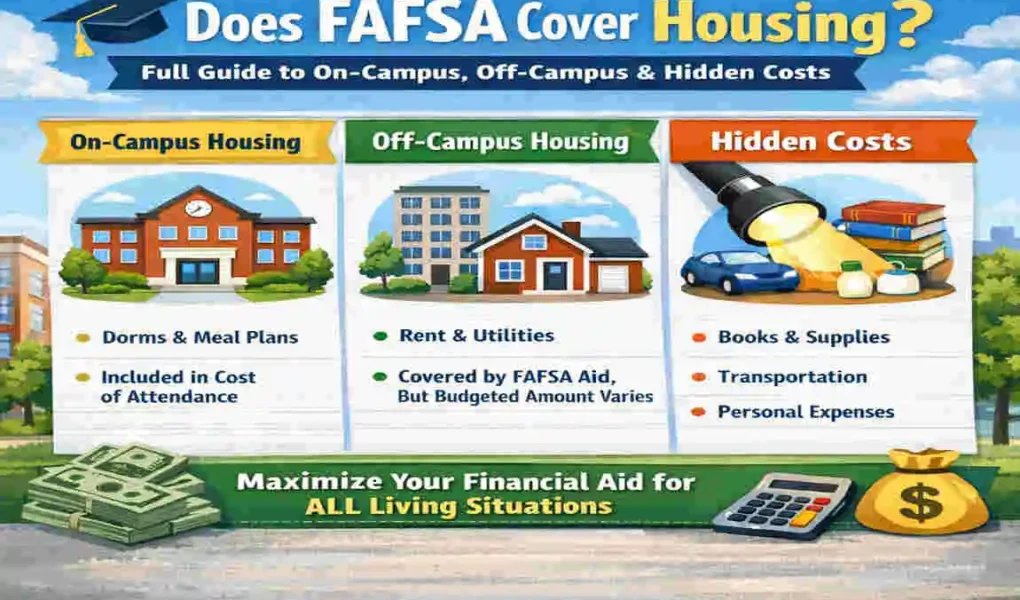
Navigating the financial side of college can feel overwhelming, especially when it comes to housing. For many students, the question arises: Does FAFSA cover housing? The short answer is yes—indirectly. FAFSA (Free Application for Federal Student Aid) helps cover housing costs as part of a school’s Cost of Attendance (COA), which includes tuition, fees, room, and board. However, the specifics depend on your living arrangements, financial aid package, and school policies.
| Aspect | On-Campus Housing | Off-Campus Housing | Hidden Costs & Notes |
|---|---|---|---|
| Coverage Method | Aid auto-applied to dorm fees via school billing | Refund check used for rent/utilities | Deposits, furniture not always fully covered; loans capped (e.g., $5.5K-$12.5K/year) |
| COA Inclusion | Standard dorm rates included | Estimated local rent/food allowance | Varies by school; may exclude extras like parking |
| Pros/Cons | Convenient but pricier | Flexible/cheaper with roommates, self-managed | Budget for gaps; submit FAFSA early |
FAFSA Basics: Understanding the Foundation
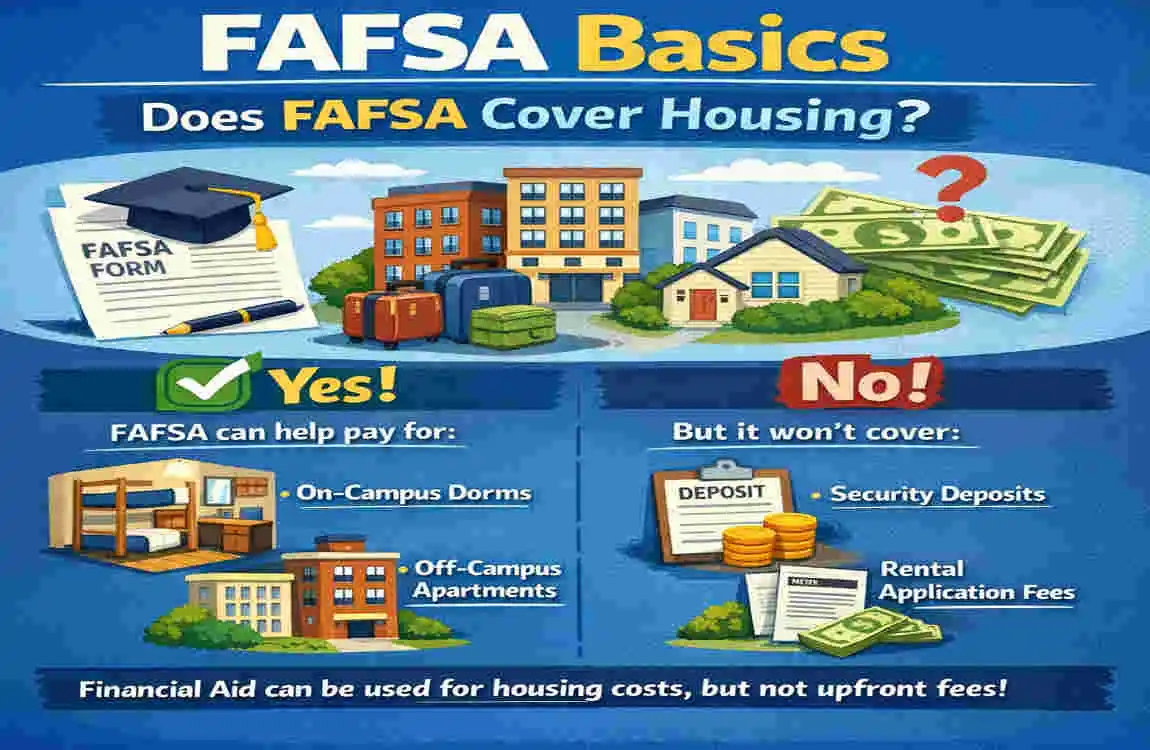
Before diving into housing specifics, let’s start with the basics of FAFSA and its role in funding your education.
What is FAFSA?
FAFSA stands for the Free Application for Federal Student Aid. It’s a form that students in the U.S. fill out to determine their eligibility for financial aid, including grants, loans, and work-study programs. The aid you receive is based on your Expected Family Contribution (EFC), now referred to as the Student Aid Index (SAI), and your school’s COA.
How Does FAFSA Factor in Housing?
When completing the FAFSA form, you’ll indicate your housing plans:
- On-campus (living in dorms or university housing)
- Off-campus (renting an apartment or house)
- With parents (living at home)
Your selection directly impacts your COA, which determines how much financial aid you’re eligible to receive. Housing costs are included under room and board, which averages between $12,000 and $15,000 annually for most students.
Types of Aid That Cover Housing
FAFSA opens the door to various types of financial aid that can help cover housing costs:
- Pell Grants: Non-repayable aid for low-income students.
- Direct Loans: Federal loans that must be repaid with interest.
- Institutional Aid: Scholarships or grants provided by your school.
Once tuition and fees are paid, any remaining aid is refunded to you, which can be used for housing expenses.
On-Campus Housing Coverage
Living on campus is a popular choice for many students, especially first-year students. But how does FAFSA cover on-campus housing?
How On-Campus Housing Works
When you live on campus, your school typically bills you directly for room and board. This cost is included in your COA, and your financial aid is applied to it first. If your aid exceeds tuition and housing costs, you’ll receive a refund for other expenses.
Average Costs of On-Campus Housing
The cost of on-campus housing varies by school type:
- Public 4-Year Universities: $11,000–$14,000 per year
- Private 4-Year Colleges: $14,000–$16,000 per year
- Community Colleges: $9,000 per year
Here’s a quick comparison:
School Type Avg Room/Board Cost FAFSA Aid Potential
Public 4-Year $12,500 Up to full COA minus EFC
Private 4-Year $14,200 Loans + grants cover 70-90%
Community College $9,000 Work-study + partial loans
Pros and Cons of On-Campus Housing
Pros:
- Convenient location near classes and campus resources.
- Simplified billing process (aid directly applied).
- Inclusive amenities like meal plans and utilities.
Cons:
- Higher costs compared to off-campus options.
- Limited flexibility in choosing roommates or meal plans.
Off-Campus Housing Coverage
For students seeking more independence, off-campus housing is an attractive option. But how does FAFSA help with these costs?
How Off-Campus Housing Works
Unlike on-campus housing, schools don’t bill you directly for off-campus rent. Instead, they estimate your housing costs based on local averages and include them in your COA. After tuition and fees are covered, you’ll receive a refund check to pay for rent, utilities, and other living expenses.
Real Costs of Off-Campus Housing
Off-campus housing costs vary widely depending on location. For example:
- Small towns: $800–$1,200 per month
- Urban areas: $1,500–$2,000 per month
- Major cities (e.g., NYC): $2,500+ per month
Here’s a side-by-side comparison of on-campus vs. off-campus housing:
Aspect On-Campus Off-Campus
Aid Disbursement Billed directly, Refund to the student
Avg Monthly Cost $1,000–$1,200 $900–$1,800
Flexibility Low High (choose roommates)
FAFSA Selection Required Estimated COA
Tips for Managing Off-Campus Costs
- Submit your lease to your school’s financial aid office to have your COA adjusted.
- Budget carefully to ensure your refund covers rent and utilities.
- Consider splitting costs with roommates to save money.
Hidden Housing Costs

While FAFSA helps cover major expenses, students often overlook several hidden costs.
Common Overlooked Expenses
- Utilities: Electricity, water, and gas can add $150–$200 per month.
- Groceries: Expect to spend $300–$500 monthly if you’re cooking at home.
- Internet: High-speed internet costs around $60 per month.
- Security Deposits: Landlords often require one to two months’ rent upfront.
- Furnishings: Setting up an apartment can cost $500–$1,000 initially.
Top 5 Hidden Costs to Watch For
- Winter utility surges.
- Mandatory meal plans for on-campus residents.
- Renter’s insurance ($15/month).
- Transportation costs (gas, parking fees).
- Subletting fees for off-campus leases.
Maximizing FAFSA for Housing
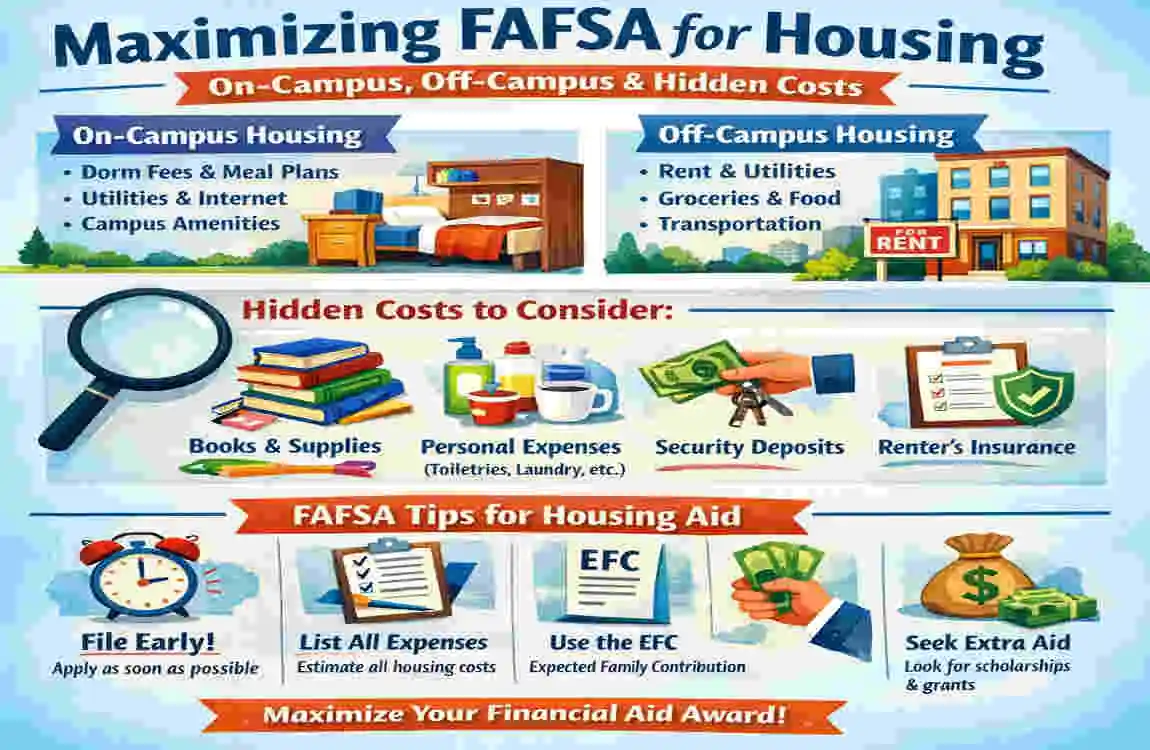
To make the most of your financial aid, follow these strategies:
Appeal Your COA
If your actual housing costs exceed your school’s COA estimate, submit documentation (e.g., lease agreement) to request an adjustment.
Combine Aid Sources
In addition to FAFSA, apply for scholarships, state grants, and work-study programs to cover housing costs.
Meet Deadlines
File your FAFSA as early as possible (starting 1 October) to maximize your aid eligibility. Missing deadlines can result in reduced funding.
FAQ
Does FAFSA cover housing in 2026?
Yes, FAFSA covers housing indirectly through COA refunds.
Is on-campus or off-campus housing better for financial aid?
It depends on your budget and preferences. On-campus housing is more convenient but often pricier.
When do housing refunds arrive?
Refunds are typically disbursed at the start of each semester.
Can FAFSA pay rent directly?
No, refunds are issued to students, who then pay their landlords.