Are you tired of staring at those outdated, floral tiles from the 1990s every time you brew your morning coffee? You aren’t alone. Your kitchen is the heart of your home, and an ugly or damaged backsplash can make the whole space feel dingy and old. But here is the good news: removing backsplash from kitchen surfaces is a project you can absolutely tackle yourself!
According to HomeAdvisor data, nearly 80% of homeowners now choose to DIY at least part of their home renovations. Why? Because it saves money and gives you a massive sense of accomplishment. You don’t need to be a professional contractor to get professional results. With the right tools and a little bit of patience, you can strip away the old and prepare your walls for a stunning new look.tt
Why Remove Your Kitchen Backsplash? Top Reasons for a Quick Update
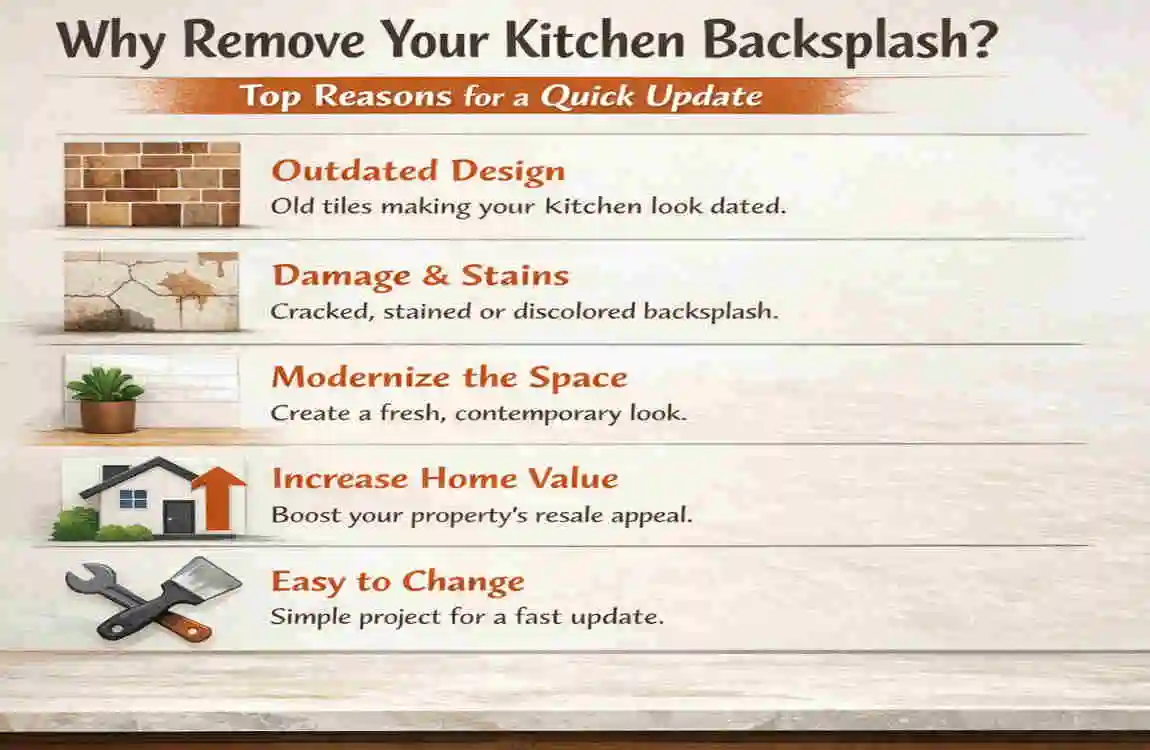
Before we pick up a hammer, let’s talk about the “why.” Removing a backsplash is about more than just aesthetics; it’s a strategic move for your home’s health and value.
Boost Your Home’s Curb Appeal and Value
If you are considering selling your home in the next few years, the kitchen should be your top priority. Zillow data suggests that even minor kitchen updates can offer a 5-10% return on investment (ROI). A fresh, modern backsplash makes your home look “move-in ready,” which is a huge selling point for buyers. When you learn how to remove backsplash from kitchen walls, you are essentially putting money back into your pocket.
Prepare for Modern Design Trends
Design trends move fast. Maybe you’re dreaming of a sleek, full-slab quartz backsplash or the trendy “zellige” handmade tiles. You can’t reach those goals without clearing the canvas first. DIY backsplash removal allows you to strip away the past so you can embrace the future of interior design.
Fix Hidden Damage and Wear
Over time, grease, moisture, and heat can take a toll. If your current backsplash was installed poorly, mold or water damage might be hiding behind those tiles. By removing the old material, you can inspect the drywall and ensure your kitchen remains a healthy environment for cooking and living.
Massive Cost Savings
Let’s talk numbers. Hiring a pro for backsplash removal can cost between $800 and $2,500, depending on the size of your kitchen. If you do it yourself, your main costs are just a few basic tools and some joint compound. You can usually get the job done for $100 to $300. That’s a lot of extra cash you can spend on those high-end tiles you’ve been eyeing!
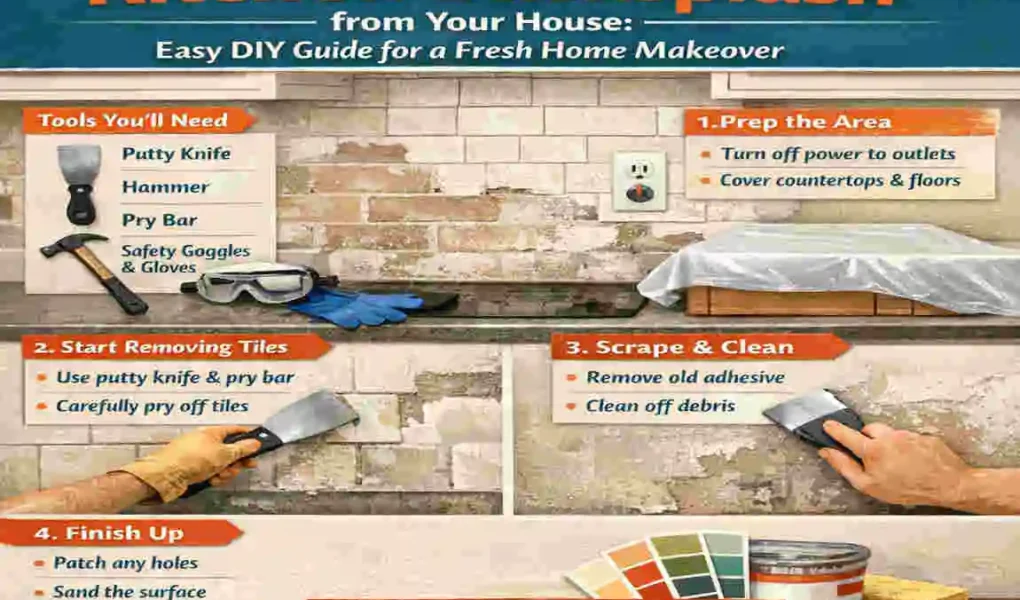
Tools and Materials You’ll Need for Backsplash Removal
To succeed, you need the right gear. Don’t worry—most of these items are probably already sitting in your garage or are very inexpensive at the local hardware store. Having the right tools for removingremoving backsplash in kitchen projects will prevent you from damaging your walls.
The Essential Tool Kit
- Utility Knife or Scoring Tool: Vital for cutting through grout and silicone caulk.
- Pry Bar or Wide Putty Knife: You’ll use this to get behind the tiles and pop them off.
- Hammer: To gently tap the pry bar into place.
- Heat Gun or Hairdryer: Heat is your best friend when it comes to softening old adhesives.
- Safety Gear: Never skip the safety goggles, heavy-duty gloves, and a dust mask.
Optional Upgrades for a Smoother Job
- Oscillating Multi-Tool: If you have a lot of grout, this power tool can help prevent wrist aches.
- Grout Saw: A manual way to clear out grout lines.
- Shop Vac: Trust me, backsplash removal is messy. You’ll want a vacuum that can handle construction dust.
Necessary Materials
- Painter’s Tape: To protect your cabinets and outlets.
- Drop Cloths or Cardboard: To protect your expensive countertops.
- Adhesive Remover: Something like Goo Gone or a professional-grade mastic remover.
- Drywall Patch Kit: Because even the most careful DIYer will likely have a few small holes to fix.
Pro Tip Table: Budget vs. Pro Tools
Tool Purpose Budget Option Pro Option
Pry Bar Lifting tiles from the wall $10 Standard Pry Bar $25 Oscillating Multi-Tool.
Heat Source: Loosening stubborn glue . $0. Hairdryer (already owned) . $40. Industrial Heat Gun.
Scraper Removing leftover residue $5 Stiff Putty Knife $20 Long-handle Floor Scraper
Wall Repair: Fixing drywall gouges costs $15, and a small patch kit costs $45. Large Bucket of Joint Compound.
Preparation Steps: Safety First Before Removing Backsplash
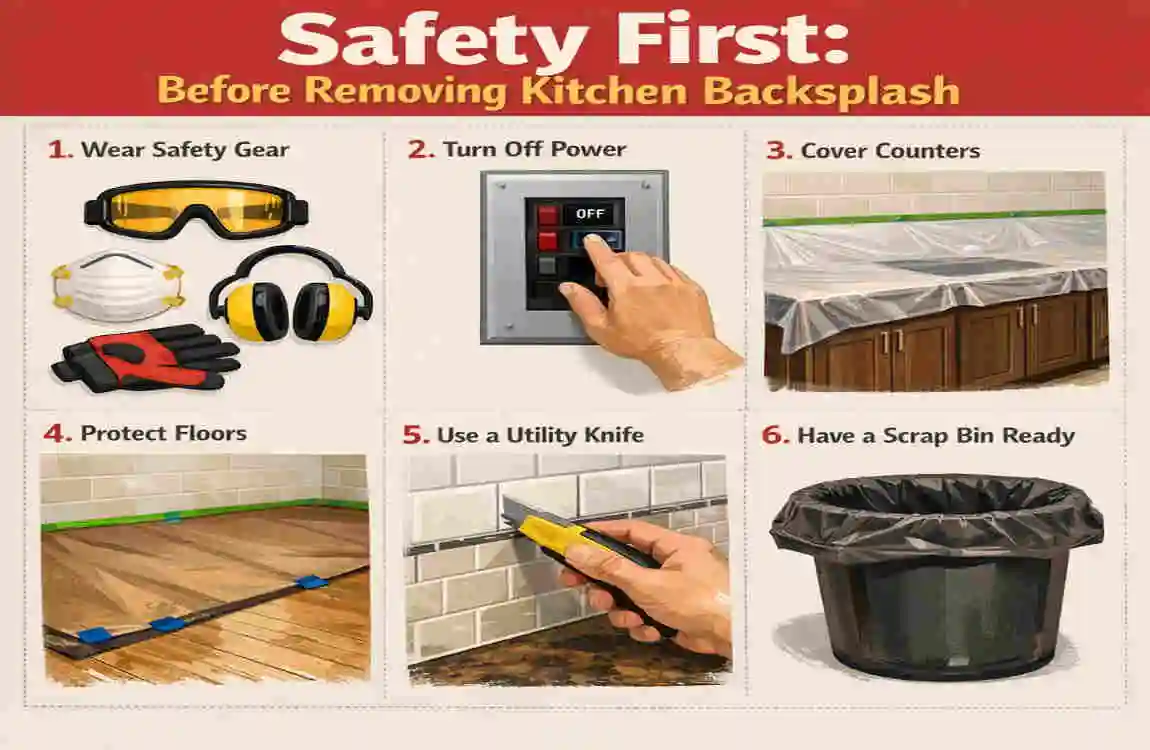
You might be tempted to start hacking away at the wall, but preparation for backsplash removal is the secret to a stress-free weekend. If you skip these steps, you risk breaking your countertops or, worse, hurting yourself.
Clear the Decks
Start by removing everything from your countertops. Move the toaster, the coffee maker, and that jar of wooden spoons. You need an obvious workspace. If you have a slide-in range, pull it out a few inches so you can reach the backsplash behind it.
Protect Your Surfaces
Tile backsplash removal creates sharp shards. Use heavy-duty drop cloths or even old cardboard boxes to cover your countertops. Use painter’s tape to secure the edges. This prevents scratches on your granite or quartz surfaces.
The Safety Check (Asbestos and Electricity)
If your home was built before 1980, you must be careful. Some old mastics and tiles contained asbestos. It is worth buying a $10 test kit or consulting the EPA guide before you start.
Most importantly: Shut off the power! Go to your breaker box and turn off the electricity to the kitchen outlets. You will be working around live wires with metal tools; do not accidentally come into contact with any live wires.
Ventilate the Room
Removing old adhesive often involves dust or chemical removers. Open the windows and set up a fan to keep the air moving.
Safety Warning Box: “Never skip your goggles! When you are learning how to remove backsplash from the kitchen, flying ceramic shards are the most common cause of injury. Protect your eyes at all costs.”
Step-by-Step Guide: How to Remove Backsplash from Kitchen
Now we get to the heart of the project. Follow these steps carefully, and you’ll have a clean wall in no time.
Score and Loosen Grout Lines
The grout is what holds the entire “sheet” of tiles together. If you pry a tile out while the grout is still wet, you might pull a huge chunk of drywall off with it.
Use a utility knife or a grout saw to run along the lines between the tiles. You don’t need to remove all the grout, but you want to break the bond between individual tiles.
Pry Off Tiles or Panels
This is the most satisfying part of removing the backsplash. Find an “entry point”—usually at the end of a row or near an outlet where a tile edge is exposed.
- Insert the Tool: Slide your pry bar or stiff putty knife behind the edge of the tile.
- Tap Gently: Use your hammer to give the tool a light tap. You want the tool to go behind the tile, not into the drywall.
- Apply Leverage: Gently pull the handle toward you. You should hear a “crack” or “pop” as the adhesive lets go.
- Work Top-to-Bottom: Always start at the top and work your way down. This prevents falling tiles from hitting your hands or damaging the tiles you haven’t reached yet.
Remove Adhesive and Residue
Once the tiles are gone, you’ll likely see “pucks” of old glue or a thin layer of mortar left on the wall. You cannot install a new backsplash over this bumpy mess.
Use your putty knife to scrape off as much as possible. If the adhesive is really stuck, a chemical adhesive remover can help. Apply it, let it sit for the recommended time, and then scrape it away.
Sanding is Key: After scraping, use 120-grit sandpaper to lightly sand the area. You want the wall to be as flat as possible. If you see brown paper from the drywall, don’t panic—we will fix that in the next step.
Clean and Repair the Wall
Now that the wall is bare, it’s time for a “health check.” Look for any holes you accidentally made or any signs of moisture damage (dark spots or crumbling plaster).
- Clean: Wipe the entire area with a damp cloth and a bit of TSP (Trisodium Phosphate) or a mild degreaser. This ensures the new adhesive will stick later.
- Patch: Use a joint compound and a wide taping knife to fill in any gouges. Smooth it out and let it dry completely.
- Sand and Prime: Once the patch is dry, sand it smooth. I highly recommend applying a coat of primer. This seals the drywall and creates the perfect surface for your next design choice.
Final Cleanup and Inspection
You’re almost there! Use your shop vac to remove all the dust from the cracks between the counter and the wall.
Check the wall with a level. If there are big humps or dips, the new backsplash won’t sit right. Take the time now to sand down high spots or fill in low spots. Dispose of your old tiles responsibly; many local recycling centers accept ceramic waste.
Common Mistakes to Avoid When Learning How to Remove Backsplash from Kitchen

Even pros make mistakes, but you can avoid them by staying mindful of these common pitfalls:
- Rushing the Process: If you try to rip tiles off too fast without scoring the grout, you will destroy your drywall. If the drywall is ruined, you’ll have to replace the entire board, which turns a 4-hour job into a 2-day job.
- Ignoring the Heat: A heat gun is a “cheat code” for DIY backsplash removal. Use it often to save your muscles and your walls.
- Forgetting the Outlets: Be extremely careful when prying around electrical boxes. If you hit a wire with a metal pry bar, it’s game over. Always double-check that the power is off.
- Over-Scraping: It’s easy to get aggressive with the scraper. Try to keep the tool parallel to the wall rather than digging the corners into the plaster.
Backsplash Removal by Type: Tailored Tips
Not all backsplashes are created equal. Depending on what is currently on your wall, you might need a slightly different approach.
Ceramic or Porcelain Tile
These are the most common. They are brittle and will likely break into many pieces. Focus heavily on the grout-scoring phase to make the removal cleaner.
Glass or Metal Tiles
Glass is dangerous because it shatters into tiny, needle-like shards. Wear long sleeves and double up on eye protection. Metal tiles often have a firm epoxy backing; you will definitely need a heat gun for these.
Vinyl or Peel-and-Stick
This is the easiest way to remove a backsplash from a kitchen. Usually, you can start at a corner and pull. If it’s stuck, a hairdryer is usually enough to melt the “sticker” glue so it slides right off.
Natural Stone (Marble or Travertine)
Natural stone is heavy. These tiles are often installed with thick-set mortar. You might need a heavier hammer and a wider masonry chisel to get these off. Because of the weight, be extra careful about protecting your countertops.
Comparison Table: Removal Difficulty
Backsplash Type Difficulty Level Estimated Time Tool Intensity
Vinyl / Peel-and-Stick Very Easy 1-2 Hours Low (Hairdryer)
Ceramic Tile Medium 4-6 Hours Medium (Pry Bar/Hammer)
Glass Tile Medium-High 5-7 Hours High (Safety Gear Focus)
Natural Stone High 6-10 Hours High (Chisel/Heavy Hammer)
After Removal: Ideas for Your Fresh Kitchen Makeover

Congratulations! You have successfully learned how to remove backsplash from kitchen tiles, leaving a clean wall. So, what’s next?
- The Minimalist Look: If your wall is in great shape, you could paint it with a high-gloss, waterproof kitchen paint.
- Shiplap or Wood: For a farmhouse vibe, you can install horizontal wood planks.
- Subway Tile: It’s a classic for a reason. It’s affordable, easy to clean, and never goes out of style.
- Open Shelving: Instead of a full backsplash, why not install some beautiful reclaimed wood shelves?
Whatever you choose, the hard part is over. You’ve cleared the way for a kitchen that truly reflects your style.
Cost Breakdown: DIY vs. Hiring a Pro
Still on the fence about doing it yourself? Let’s look at the financial impact.
Aspect DIY Approach Professional Contractor
Tools & Materials $50 – $200 (One-time buy) Included in quote
Labor Cost $0 (Your sweat equity) $500 – $1,500
Disposal Fees $20 – $50 (Local dump) Included
Total Estimated Cost $100 – $400 $800 – $2,500
By choosing the DIY route, you are saving enough money to upgrade your countertop material or buy that high-end dishwasher you’ve been wanting!
FAQ: How to Remove Backsplash from Kitchen
How long does it take to remove a kitchen backsplash? For an average-sized kitchen (about 30 square feet), expect to spend 4 to 8 hours. This includes prep, removal, and basic wall repair.
Is backsplash removal messy? Yes! It creates a lot of dust and sharp debris. Always use drop cloths and keep a vacuum nearby to manage the mess as you go.
Can I remove a backsplash without damaging the walls? If you use heat and pry gently, you can minimize damage. However, it is very common to have small gouges in the drywall. Don’t worry—these are easily fixed with a little joint compound.
Do I need to remove my cabinets first? Rarely. You can work around the cabinets by using a smaller putty knife in tight corners. Just be sure to tape the cabinet edges to avoid scratching the finish.
What is the cheapest way to remove a backsplash? The most affordable way is to use a basic hammer and a stiff putty knife you likely already own, combined with a standard hairdryer to soften the glue.