It is a Tuesday morning, and you are already running ten minutes late. You jump into the shower, hoping for a quick, energizing rinse, but instead, you are greeted by a sad, weak trickle of water that barely washes away the soap. Or perhaps you are prepping for a dinner party, and your outdated kitchen faucet—the one that squeaks every time you turn it—looks hopelessly out of place next to your modern appliances.
We have all been there. It is frustrating how much a single malfunctioning or ugly component can disrupt our daily flow. But have you ever stopped to think about what these devices actually are?
These essential devices, known as plumbing fixtures, are the unsung heroes of your home’s functionality. Whether it is the sink you brush your teeth over, the toilet you use daily, or the shower that helps you unwind, plumbing fixtures are the critical connection points between your home’s hidden pipe network and your daily life.
Core Definition

What Are Plumbing Fixtures Exactly?
If we strip away the industry jargon, what is the actual definition of a plumbing fixture?
In the simplest terms, plumbing fixtures are the exchangeable devices connected to a plumbing system that deliver water and drain waste. They are the “user interface” of your home’s mechanical systems. While pipes move water behind the walls, the fixture is the licensed endpoint where you actually interact with it.
According to general construction and engineering standards, a plumbing fixture must serve one of two primary purposes (and often both):
- Supply: Delivering potable (drinkable) water to you.
- Drainage: Removing wastewater and discharging it into the sewer or septic system.
Key Traits of a Fixture
To be officially classified as a fixture under codes such as the Uniform Plumbing Code (UPC) or the International Plumbing Code (IPC), a device usually must meet specific criteria. It is not just a bucket with a hole in it!
- Inlets and Outlets: Every fixture needs a way for water to enter (supply) and a way for it to leave (discharge).
- Trap Seals: Crucial for health and safety. Most drainage fixtures must be equipped with a “trap”—that U-shaped pipe you see under the sink. This trap holds a small amount of water to create a seal, preventing dangerous sewer gases from floating back up into your home.
- Smooth Surfaces: Fixtures must be made of non-absorbent, smooth materials (such as vitreous china or stainless steel) so they can be easily cleaned and do not harbor bacteria.
The Difference Between Fixtures and Fittings
This is where many homeowners get confused. You might hear a plumber say, “I need to replace the fitting, not the fixture.” What’s the difference?
Think of it like a lamp. The fixture is the lamp itself—the base, the shade, the bulb socket. The fittings are the cords, the plugs, and the switches that connect it to the wall.
In plumbing:
- The Fixture is the bathtub, the toilet bowl, or the sink basin.
- The Fittings are the valves, pipes, faucets, and shower arms that connect the fixture to the main system.
While we often group faucets into the “fixture” category in casual conversation because they are visible and decorative, technically, they are the controls for the fixture. However, for upgrading your home’s style, we generally treat them as part of the same package.
Types of Plumbing Fixtures
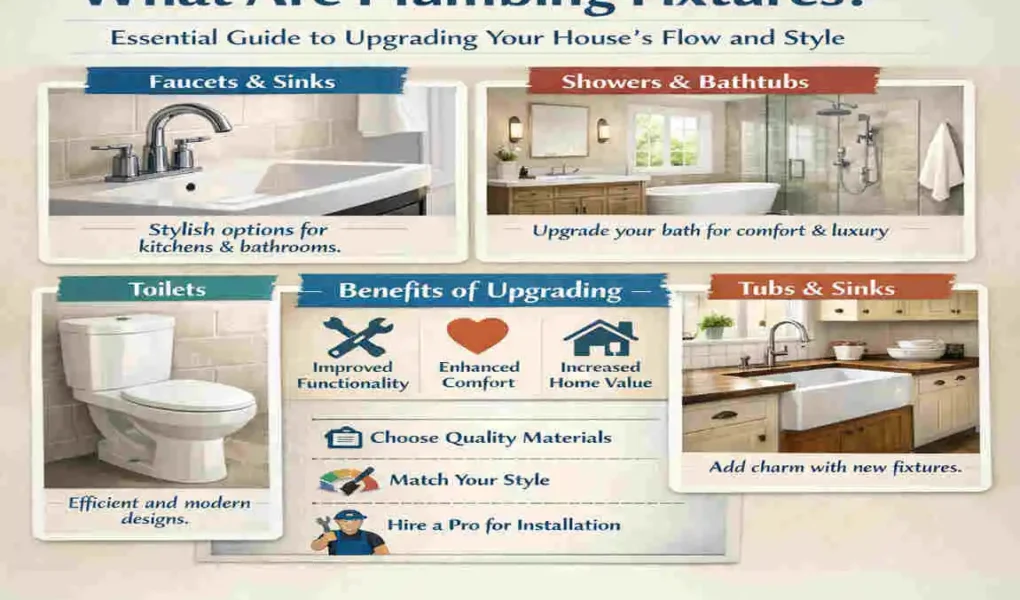
When you start looking into upgrading, the sheer volume of options can be overwhelming. To make this easy, let’s categorize them by room and function. This list covers the essentials you likely have, plus a few upgrades you might want.
Bathroom Fixtures
The bathroom is the workhorse of the home plumbing system. It contains the highest density of fixtures per square foot.
Toilets (Water Closets)
The throne. It is arguably the most essential fixture in modern civilization.
- Gravity-Fed Models: These are the most common. They use the weight of the water in the tank to flush waste. They are quiet and easy to repair.
- Pressure-Assisted Models: These use compressed air to force water into the bowl. They are louder but incredibly powerful—great for preventing clogs in busy households.
- Dual-Flush: A massive trend for 2026. These give you two buttons: a half-flush for liquid waste and a full-flush for solids, saving thousands of gallons of water a year.
- Wall-Hung: For a sleek, modern look, the tank is hidden within the wall, with the bowl floating above the floor. It makes mopping a breeze!
Sinks and Vanity Basins
Gone are the days of the standard drop-in white oval.
- Pedestal Sinks: Ideal for powder rooms with limited space. They hide the plumbing in a ceramic column but offer no storage.
- Vessel Sinks: These sit on the countertop like a bowl. They make a bold style statement and are available in glass, stone, or copper.
- Undermount Sinks: These are clamped to the underside of the countertop, creating a seamless drop-off. They are the easiest to keep clean because you can wipe water straight from the counter into the basin.
Showers and Bathtubs
- Freestanding Tubs: The ultimate luxury upgrade. These deep-soaking tubs stand on their own (like a clawfoot tub) and become the focal point of the room.
- Rainfall Showerheads: These large, flat heads mimic gentle rain. In 2026, we are seeing “monsoon” heads that offer wider coverage for a spa-like experience.
- Walk-In Showers: Curbless designs are trending for accessibility and minimalist aesthetics.
Kitchen and Laundry Fixtures
In the kitchen, functionality is king. You need fixtures that can handle grease, food scraps, and large pots.
Kitchen Sinks
- Farmhouse (Apron Front) Sinks: These have a deep basin and an exposed front face. They are fantastic for washing large baking sheets or pots.
- Double vs. Single Bowl: The debate continues. Single bowls offer more continuous space, while double bowls allow you to wash and rinse simultaneously.
- Workstation Sinks: These come with built-in ledges for cutting boards, colanders, and drying racks, effectively turning your sink into a prep surface.
Faucets
- Pull-Down Sprayers: A high-arc spout with a spray head that pulls down into the sink. Essential for cleaning the basin’s corners.
- Touchless Technology: Wave your hand to turn the water on. This reduces the spread of germs (think raw chicken hands!) and keeps the finish clean.
- Pot Fillers: Cold-water faucets installed on the stove backsplash. It saves you from lugging a heavy pot of water across the kitchen.
Dishwashers and Disposals
Yes, these are considered plumbing fixtures (or appliances connected to fixtures)!
- Garbage Disposals: These grind food waste so it can pass through plumbing. Modern units are much quieter and have multi-stage grinding to handle tougher scraps.
- Dishwashers: These must be connected to the water supply and a drain (usually via the sink’s plumbing).
Specialty Fixtures
If you want to take your home to the next level, consider these additions.
- Bidets: Once rare in North America, they are now mainstream. You can get a dedicated bidet fixture or a “washlet” seat that attaches to your existing toilet. They are eco-friendly and hygienic.
- Urinals: Surprisingly becoming popular in “man caves” or large family basements for convenience.
- Outdoor Hose Bibs: These are the spigots on the side of your house. Frost-free models are essential in colder climates to prevent pipes from bursting in winter.
- Utility Sinks: Deep, durable basins usually found in laundry rooms or garages. Perfect for washing muddy boots or bathing pets.
Comparison Table: Common Plumbing Fixtures
To help you plan your budget, here is a quick look at the average costs and benefits of the most common fixtures in 2026.
Fixture TypePrimary UseAvg. Cost (2026)Water Savings PotentialInstallation Difficulty
Toilet Waste Removal $200 – $800 High (1.28 GPF models can save 16,000 gallons/year) Medium
Kitchen Faucet Water Supply $150 – $600 Medium (Aerators reduce flow without losing pressure) Low (DIY friendly)
Showerhead Bathing $30 – $250 High (EPA WaterSense models max at 1.8 GPM) Low (DIY friendly)
Bathtub Soaking $500 – $3,000 Low (Tubs generally use more water) High (Pro required)
Bidet Seat Hygiene $300 – $700 High (Reduces toilet paper usage significantly) Low/Medium
Why Upgrade Plumbing Fixtures?
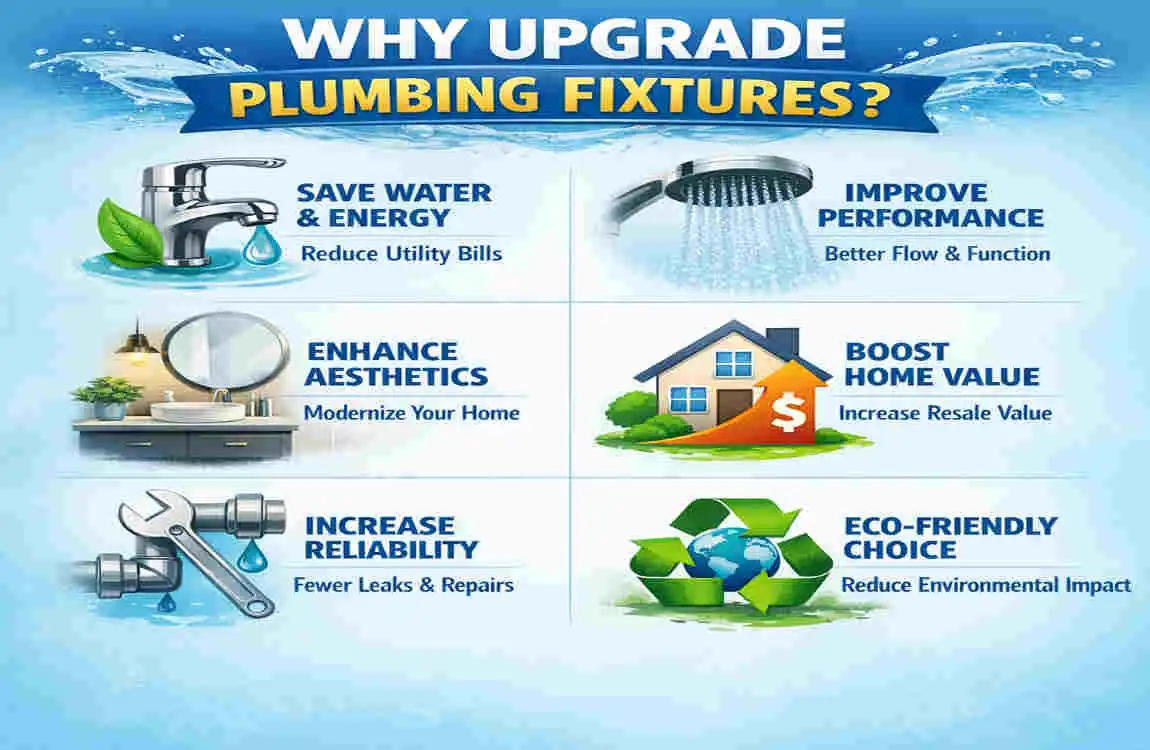
You might be thinking, “If it ain’t broke, why fix it?” That is a fair question. However, holding onto plumbing fixtures from the 1990s (or earlier) is costing you more than you think—in both money and comfort.
Here is why upgrading is a smart move.
Boost Flow and Efficiency
Have you ever tried to rinse shampoo out of your hair under a showerhead that feels like a watering can? Old fixtures often suffer from mineral buildup (limescale) inside the unit, which physically restricts water flow.
Furthermore, older fixtures are water hogs.
- The Numbers: An old toilet might use 3.5 to 7 gallons per flush (GPF). A modern WaterSense model uses 1.28 GPF. That is a massive difference.
- The Impact: Upgrading your toilets and showerheads can help the average family save thousands of gallons of water annually. This translates directly to lower water and sewer bills.
- Performance: Modern fixtures are engineered to feel like they have high pressure, even while using less water. They use aeration (mixing air with water) to create a powerful stream that cleans effectively without waste.
Enhance Style and Home Value
Your bathroom and kitchen are the two most scrutinized rooms when it comes to property value.
- Visual Impact: Replacing a tarnished chrome faucet with a sleek Matte Black or Brushed Gold model instantly modernizes the room. It is a “mini-renovation” that costs a fraction of a full remodel.
- ROI (Return on Investment): Real estate data consistently shows that kitchen and bath upgrades offer the highest ROI. Buyers in 2026 are looking for “move-in ready” homes. Outdated, stained fixtures are a red flag that suggests deferred maintenance.
- Cohesion: Upgrading allows you to unify your home’s design language. If you have a modern farmhouse kitchen, a vintage-style bridge faucet completes the look perfectly.
Convenience and Technology
We are living in the future, so why should your plumbing be stuck in the past?
- Smart Features: Imagine asking your faucet, “Pour two cups of water,” and it dispenses exactly that amount.
- Temperature Safety: Modern shower valves have “thermostatic” controls that prevent sudden scalding if someone flushes the toilet while you are showering. This is a crucial safety upgrade for families with kids or elderly relatives.
Upgrading Guide: How to Get Started
Ready to ditch the drip and embrace the new flow? Upgrading plumbing fixtures is exciting, but it requires a bit of planning to ensure it goes smoothly.
Step-by-Step Process
Assess Your Needs and Space
Before you buy anything, play detective.
- Check the rough-in: For toilets, measure the distance from the wall to the floor bolts (usually 12 inches). If you buy the wrong size, it won’t fit.
- Count the holes: Look at your sink. Does it have one hole, three holes close together (centerset), or three holes far apart (widespread)? You need a faucet that matches this configuration, or you will need a deck plate to cover the gaps.
Choose Your Materials
Not all fixtures are created equal.
- Brass: The gold standard for faucet bodies. It is highly corrosion-resistant and lasts for decades.
- Stainless Steel: Excellent for sinks. Look for “16-gauge” steel (thicker) rather than “22-gauge” (thinner/noisier) for a quality feel.
- Porcelain/Vitreous China: The standard for toilets and bathroom sinks. It is durable, sanitary, and easy to clean.
- Plastic/Acrylic: Often found in cheaper tub or shower kits. They are budget-friendly but can scratch and yellow over time.
Budgeting
- Entry Level: You can outfit a bathroom for under $500 (a basic toilet, faucet, and showerhead).
- Mid-Range: Expect $1,000 – $2,500 per room for high-quality brands and better finishes.
- Luxury: The sky is the limit. A high-end steam shower system alone can cost $5,000+.
- Tip: Don’t forget installation costs! If you aren’t DIY-ing, set aside roughly 50% of your budget for labor.
Installation Tips
- Shut it down: Always, always turn off the main water supply before starting.
- Flex lines are your friend: When installing faucets or toilets, use flexible braided steel supply lines. They are much easier to work with than rigid copper tubing.
- Seal it up: Use plumber’s tape (Teflon tape) on threaded connections to prevent leaks.
Top Trends for 2026
If you want your home to look current, keep these trends in mind:
- Matte Finishes: Matte Black is still huge, but Matte White is the emerging star for a clean, architectural look.
- Mixed Metals: It is okay to mix a gold faucet with black cabinet hardware. It adds depth and character.
- Hygiene-First Design: Touchless faucets and self-cleaning toilets are in high demand following increased global health awareness.
- Industrial Vibes: Exposed pipes and “steampunk” style handles are popular in urban lofts and modern kitchens.
CTA: Feeling overwhelmed by the options? You don’t have to do it alone. Contact our team of expert plumbers today for a free quote. We can help you select the perfect fixtures for your style and handle the installation so you don’t have to lift a finger!
Maintenance Essentials

You have invested in beautiful new fixtures—now let’s make sure they last. Proper maintenance can double the lifespan of your plumbing gear.
Daily and Weekly Care
- No Harsh Chemicals: Avoid using abrasive scrubbers or bleach-heavy cleaners on chrome, gold, or matte black finishes. They can strip the protective coating. Mild soap and water are usually best.
- Wipe Them Down: Mineral deposits from hard water can etch finishes over time. Wiping faucets dry after use prevents spotting.
Annual Inspections
- Clean the Aerators: Unscrew the small mesh tip on your faucets, then soak them in vinegar. This removes sediment and restores that “brand new” water pressure.
- Check for Leaks: Look under the sink with a flashlight. A slow drip can rot your vanity cabinet before you even notice it on the floor.
- Test Shut-Off Valves: Turn the isolation valves (the knobs under the sink/toilet) on and off once a year to ensure they haven’t seized. You will thank yourself if you ever have an emergency leak!
FAQs
What are plumbing fixtures made of? Most toilets and bathroom sinks are made of vitreous china (fired clay with a glass-like glaze) because it is sanitary. Faucets are typically made of brass or zinc alloys plated with chrome, nickel, or bronze. Kitchen sinks vary widely, ranging from stainless steel to cast iron, fireclay, or composites (granite/quartz).
How many plumbing fixtures are in the average house? The average 2-bathroom home usually has between 15 and 20 fixtures. This counts every sink, toilet, shower, bathtub, dishwasher, washing machine, and outdoor hose spigot. Plumbing codes use “fixture units” to calculate pipe sizes based on this count.
What are the best affordable plumbing fixtures brands? For a great balance of quality and price, brands like Moen, Delta, and Kohler are industry leaders. They offer excellent warranties, and replacement parts are easy to find at any hardware store. For budget-conscious renovations, Glacier Bay and American Standard offer good value.
Can I replace plumbing fixtures myself? Yes! Faucets and showerheads are very DIY-friendly. Toilets are heavy but manageable with a helper. However, replacing a bathtub or moving plumbing lines (changing the location of a sink) requires a professional license to ensure it meets code and doesn’t leak inside your walls.